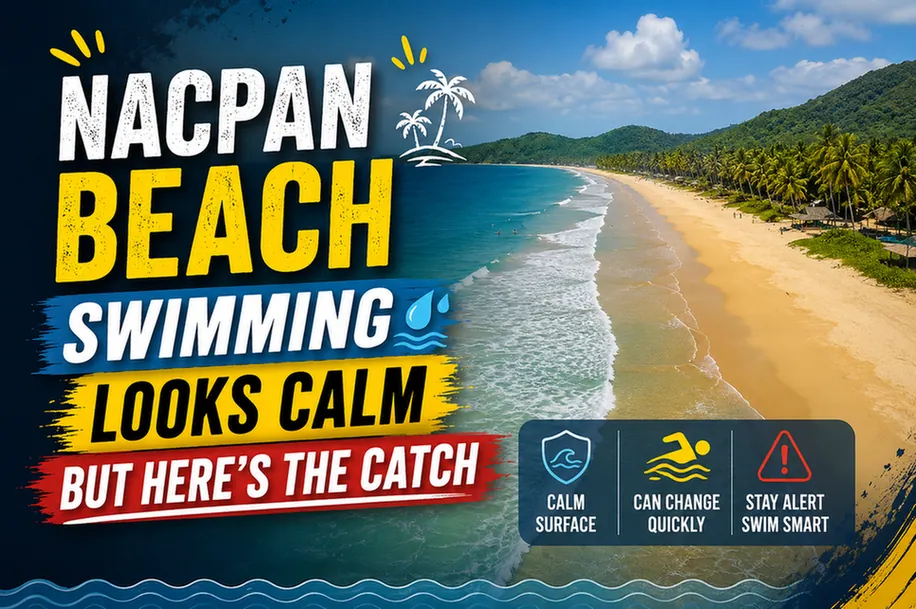
Nacpan Beach swimming is best between 6 a.m. and 10 a.m., when the water is calm, clear, and easy to enter without fighting waves. Water temperature stays around 27 to 29 degrees Celsius all year, so you never need to wait for warmer weather to swim comfortably. The sea floor close to shore is mostly sand, which makes walking in the water simple and safe for most swimmers, including families with kids.
After 11 a.m., onshore wind picks up, and small waves start to form, especially near the rocky points that separate the beach from its neighbors. Nacpan Beach swimming becomes more challenging in the afternoon, so plan your swim early if you want flat, quiet water and the safest conditions.
Is Nacpan Beach Swimming Good for Beginners?
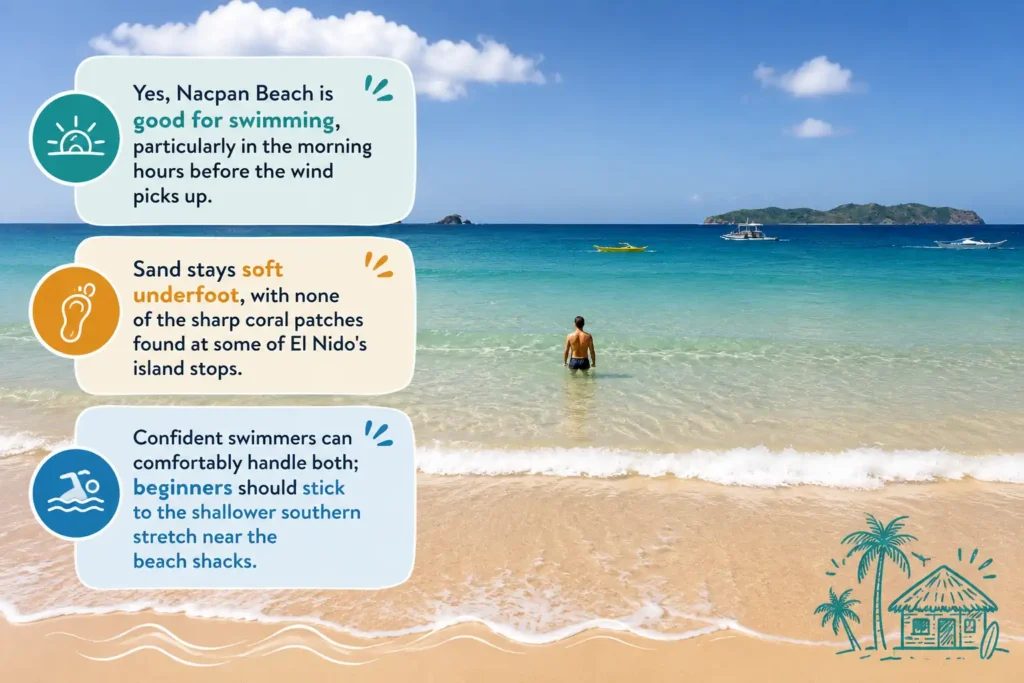
Yes, Nacpan Beach is good for swimming, particularly in the morning hours before the wind picks up. The beach’s long, gently sloping shoreline gives swimmers plenty of shallow water to wade through before the seabed drops off. Sand stays soft underfoot, with none of the sharp coral patches found at some of El Nido’s island stops. Because Nacpan faces north and sits open to the South China Sea, wave size depends heavily on wind direction and season.
Locals and hostel staff generally rate the swimming as easygoing on a calm day, and more demanding once the afternoon breeze sets in. Confident swimmers can comfortably handle both; beginners should stick to the shallower southern stretch near the beach shacks.
Learn If Nacpan’s Waters Are Suitable for Your Swimming Level. Read more about Nacpan Beach in El Nido That Looks Remote but Feels Worth the Ride.
The table below summarizes quick facts worth knowing before you swim at Nacpan Beach.
| Detail | Information |
| Beach length | Roughly 4 km, plus connecting Calitang Beach |
| Water temperature | Approximately 26-29°C year-round |
| Typical wave height | Small to moderate; larger in wet season |
| Lifeguard coverage | Not guaranteed; swim with a companion |
| Best swim window | 6-10 a.m., dry season (November-May) |
Quick Answer: Is Nacpan Beach Good for Swimming?
Nacpan Beach is good for swimming, especially in the early morning when the water stays calm and shallow. Conditions change through the day: afternoon wind creates moderate waves and stronger currents near the rocky points at either end. Confident swimmers can handle most conditions; beginners should stay close to shore during calmer hours.
What Is the Water Like at Nacpan Beach?
The water at Nacpan Beach stays warm year-round, generally sitting around 26 to 29 degrees Celsius, comfortable enough for long swims without a wetsuit. Clarity varies with weather and time of day; mornings tend to bring the clearest, most turquoise water, while wind and boat traffic can stir up sediment later on.
The seabed is mostly fine sand with a gentle slope, so there is little coral to worry about directly off the main beach. Some patches near the rocky headlands hold small coral formations, better suited to snorkeling than swimming through. Jellyfish appear occasionally, more often after rain, but sightings are not a daily concern.
Best Time to Swim at Nacpan Beach
The best time to swim at Nacpan Beach is between 7 and 10 in the morning. The sea is typically glassy calm then, and visibility is at its best. Wind usually builds through late morning. This pushes moderate waves onto the shore by early afternoon. Swimming is still possible after lunch, but it takes more effort. It isn’t ideal for young children or hesitant swimmers.
PAGASA (Philippine Atmospheric, Geophysical and Astronomical Services Administration) tracks seasonal patterns here. Dry months run from November to May and bring calmer, more predictable seas. The wet season runs from June to October. It can bring stronger currents and sudden downpours, especially in July and August. Weekday mornings also tend to be quieter than weekend hours. Day-tour groups from El Nido town arrive on weekends.
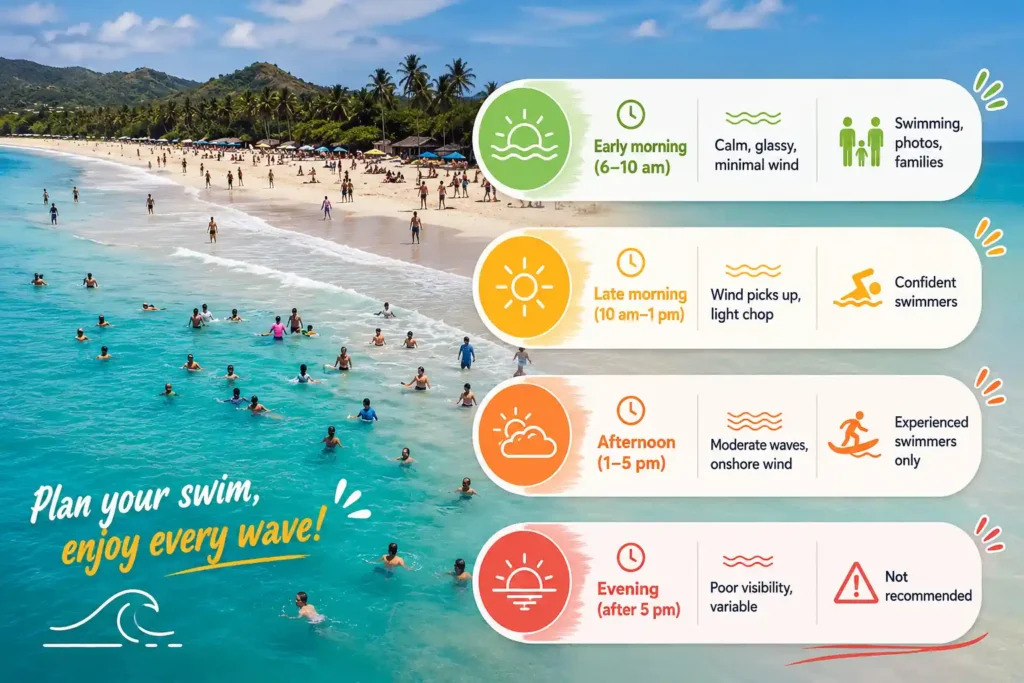
The table below compares swimming conditions by time of day, based on typical wind and tide patterns at Nacpan Beach.
| Time of Day | Typical Water Conditions | Best For |
| Early morning (6-10 am) | Calm, glassy, minimal wind | Swimming, photos, families |
| Late morning (10 am-1 pm) | Wind picks up, light chop | Confident swimmers |
| Afternoon (1-5 pm) | Moderate waves, onshore wind | Experienced swimmers only |
| Evening (after 5 pm) | Poor visibility, variable | Not recommended |
Is Nacpan Beach Safe for Swimming?
Nacpan Beach is generally safe for swimming when visitors follow basic precautions, though it is not a fully supervised beach. Lifeguard coverage is inconsistent and should never be assumed, so swimming with a companion matters more here than at patrolled beaches. The main hazards are rip currents near the rocky points at each end, sudden wave buildup in the afternoon, and occasional strong undertow after heavy rain.
The Philippine Coast Guard advises swimmers caught in a current to swim parallel to shore rather than fighting straight back to the beach. Most incidents happen when swimmers underestimate the pull near the headlands. The Department of Tourism lists Nacpan among El Nido’s flagship swimming beaches, alongside Las Cabanas and Seven Commandos.
Swimming Conditions at Nacpan Beach
Conditions at Nacpan Beach change with the tide, the wind, and the time of year, so it helps to understand each factor before heading in. Waves are usually gentle, but they can build fast once the wind shifts onshore. Water depth changes noticeably between high and low tide, altering how far you can wade before swimming becomes necessary.
Waves, Currents, and Water Depth
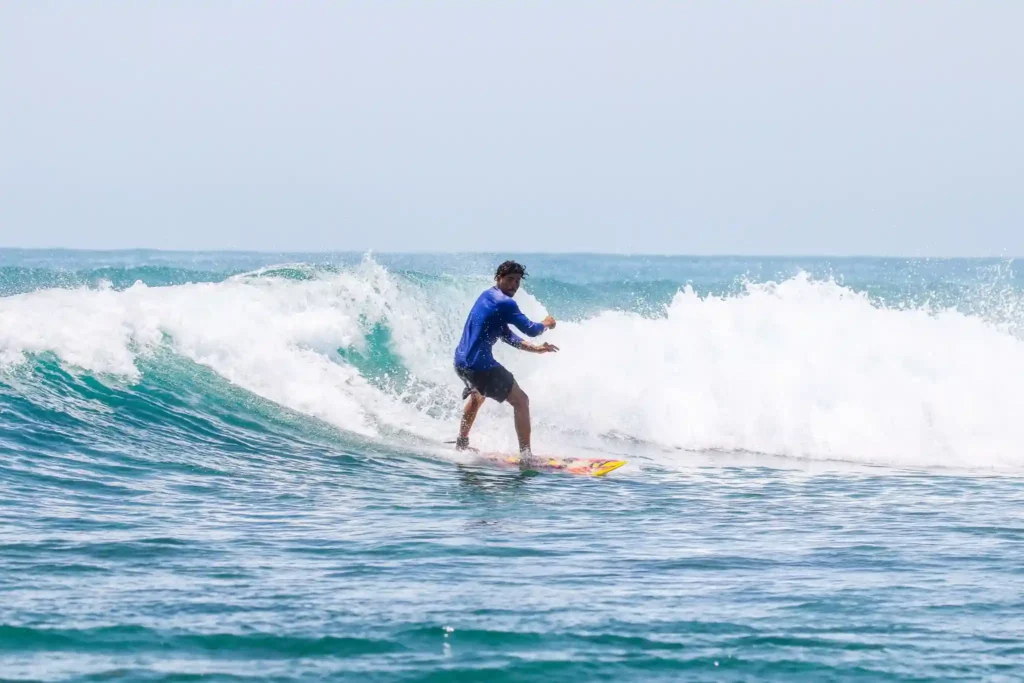
Waves at Nacpan Beach are typically small to moderate, rarely reaching surfable size except during storm swells in the wet season. Currents are the bigger concern, particularly around the rocky points at the north and south ends, where water funnels between the headland and open sea. Water depth increases gradually along most of the main beach, giving swimmers a long stretch of shallow water before it drops off.
Near the points, the seabed can drop more sharply, and that’s where rip currents tend to form. Water quality along this stretch falls under monitoring by the Palawan Council for Sustainable Development (PCSD), which oversees coastal environmental standards across the province.
Nacpan Beach Swimming During High Tide
High tide brings deeper water closer to the tree line, shrinking the dry sand and pushing swimmers closer to where waves break. Currents can feel stronger during the tide’s peak, especially in the two hours around high water. Swimming is still possible, but it suits confident swimmers more than beginners or young children, who may find the deeper water and shifting waves harder to manage comfortably.
Nacpan Beach Swimming During Low Tide
Low tide exposes more sandbar and creates long, shallow stretches that are easier for beginners and kids to wade through safely. Waves tend to break further out, giving swimmers a gentler approach into deeper water. Some rocky patches near the points become visible at low tide, so watch your footing if you wander toward the headlands. Overall, low tide is usually the more forgiving window for a relaxed swim.
Can Kids Swim at Nacpan Beach?
Kids can swim at Nacpan Beach, and the gently sloping shallow water near the main beach shacks makes it more manageable for families than many El Nido beaches. Early morning, when the sea is calmest, is the best window for children to swim without fighting waves or current.
Adults should stay within arm’s reach, since there is no guaranteed lifeguard on duty. Avoid the areas near the rocky points, where currents run stronger, and the seabed drops off more sharply. A simple flotation aid and the central stretch of beach keep things easier to manage.
Tips for Swimming at Nacpan Beach
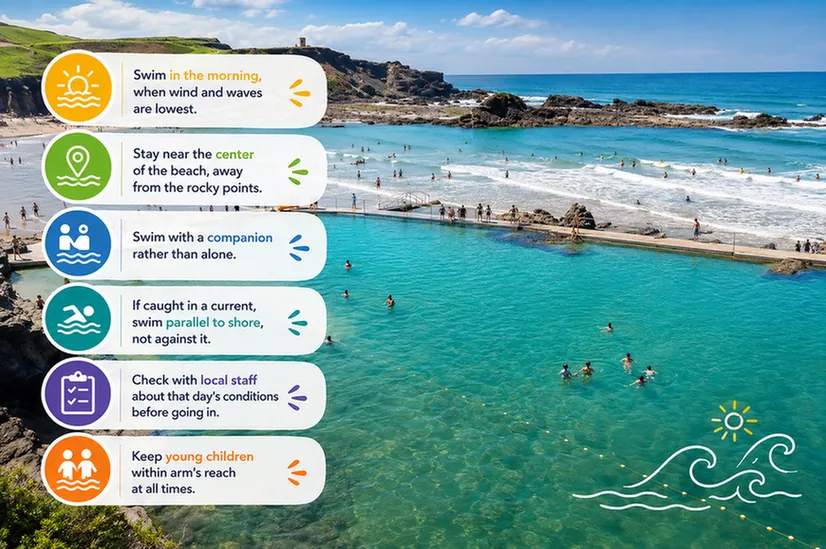
A few habits make Nacpan Beach swimming noticeably safer and more comfortable, especially for visitors unfamiliar with the beach’s layout. Checking conditions with hostel or restaurant staff before heading in is worth the extra minute, since locals track daily wind and current changes closely.
- Swim in the morning, when wind and waves are lowest.
- Stay near the center of the beach, away from the rocky points.
- Swim with a companion rather than alone.
- If caught in a current, swim parallel to shore, not against it.
- Check with local staff about that day’s conditions before going in.
- Keep young children within arm’s reach at all times.
The table below lists safe habits against common mistakes swimmers make at Nacpan Beach.
| Do | Don’t |
| Swim in the morning hours. | Wait until afternoon when waves build |
| Stay near the main beach stretch. | Swim close to the rocky headlands. |
| Ask staff about current conditions. | Assume lifeguards are on duty. |
| Swim parallel to shore in a current | Fight directly against a rip current |
| Watch children closely in the water. | Let kids swim unsupervised. |
Final Takeaway on Nacpan Beach Swimming
Nacpan Beach swimming rewards visitors who plan around the tide and time of day rather than showing up whenever. Mornings offer the calmest, clearest water, while afternoons demand more caution near the rocky points at each end. Stick to the main stretch of beach, swim with a companion, and check conditions with local staff before heading in for the best experience.
Nacpan Beach Swimming FAQs
Can You Swim in Nacpan Beach?
Yes, swimming is one of the main activities at Nacpan Beach. The water is generally calm in the morning and becomes choppier by afternoon, so plan your swim around the tide and wind rather than a fixed schedule.
Is the Water Clear at Nacpan Beach?
The water is usually clear and turquoise in the morning, especially during the dry season. Wind, boat traffic, and rain can reduce visibility later in the day or during the wet season months.
Is Nacpan Beach Safe for Swimming?
It’s safe for most swimmers who stay near the main shoreline and avoid the rocky points. There’s no guaranteed lifeguard, so swim with a companion and check conditions with local staff first.
What Is the Best Time to Swim at Nacpan Beach?
Early morning, roughly 6 to 10 a.m., offers the calmest water. The dry season, from November to May, generally brings more consistent, swimmable conditions than the wetter months.
Are There Strong Waves at Nacpan Beach?
Waves are usually small to moderate, though they build in the afternoon as onshore wind picks up. Stronger waves and currents are more common during the wet season, from June to October.
Are There Lifeguards at Nacpan Beach?
Lifeguard coverage is inconsistent and shouldn’t be relied on. Some reports mention staff watching the busier southern stretch, but visitors should treat the beach as unsupervised and take their own precautions.
Can You Swim at Nacpan Beach at Night?
Night swimming isn’t recommended. There’s no lighting along the shore, visibility is poor, and currents are harder to judge in the dark, which raises the risk of an accident.