
Nacpan Calitang Beach sits 17 kilometers north of El Nido town in Palawan, where two connected shorelines, Nacpan and Calitang, form one long stretch of golden sand known locally as the Twin Beaches. The beach stretches for about four kilometers, yet it stays far less crowded than El Nido’s popular lagoons. You can reach Nacpan Calitang Beach by road in under an hour, with no boat ticket or tour package needed.
This makes it one of the easiest ways to enjoy wide-open sand, clear water, and a peaceful coastline without the usual crowds. Coconut trees line the shore, giving visitors natural shade while they relax or watch the sunset. Small local eateries near the entrance serve fresh seafood, making it easy to spend a full day by the sea without leaving the beach area.
What Is Nacpan Calitang Beach
Nacpan Calitang Beach isn’t a single beach; it’s two adjoining shorelines, Nacpan and Calitang, separated by a low hill and joined at low tide by a narrow sandbar. Together, they form one of the longest unbroken stretches of sand in the El Nido area, backed by coconut palms and open to the South China Sea.
The nickname Twin Beaches comes from that shared, powdery sand, even though the two sides feel distinctly different once you’re standing on them. Nacpan tends to draw more visitors and small food stalls, while Calitang stays quieter, giving you a calmer spot if you just want to relax by the water.
Where Is Nacpan Calitang Beach?
Nacpan Calitang Beach sits on the northern coastline of El Nido, within Sitio Calitang, Barangay Bucana, roughly 17 kilometers from town proper. The road cuts through rural farmland and small villages before dropping toward the coast. Most of it is paved, though the final couple of kilometers can turn dusty in summer and muddy after rain. Since it sits on the mainland rather than an offshore island, no boat, permit, or tour operator is needed, just wheels and a bit of patience.
Explore the Golden Sands and Clear Waters of Nacpan-Calitang. Read more in Nacpan Beach in El Nido That Looks Remote but Feels Worth the Ride.
Nacpan Beach and Calitang Beach: What’s the Difference?
Before planning your day, it helps to see exactly how these two connected beaches compare side by side.
| Feature | Nacpan Beach | Calitang Beach |
| Length | About 4 kilometers | About 800 meters |
| Terrain | Wide, flat, sandy shoreline | Smaller, slightly rockier coves |
| Crowd level | Busier near the main entry point | Quieter, with far fewer vendors |
| Best for | Swimming and long beach walks | Photos and late-afternoon light |
| Facilities | Beach shacks and simple cottages | Minimal, mostly untouched |
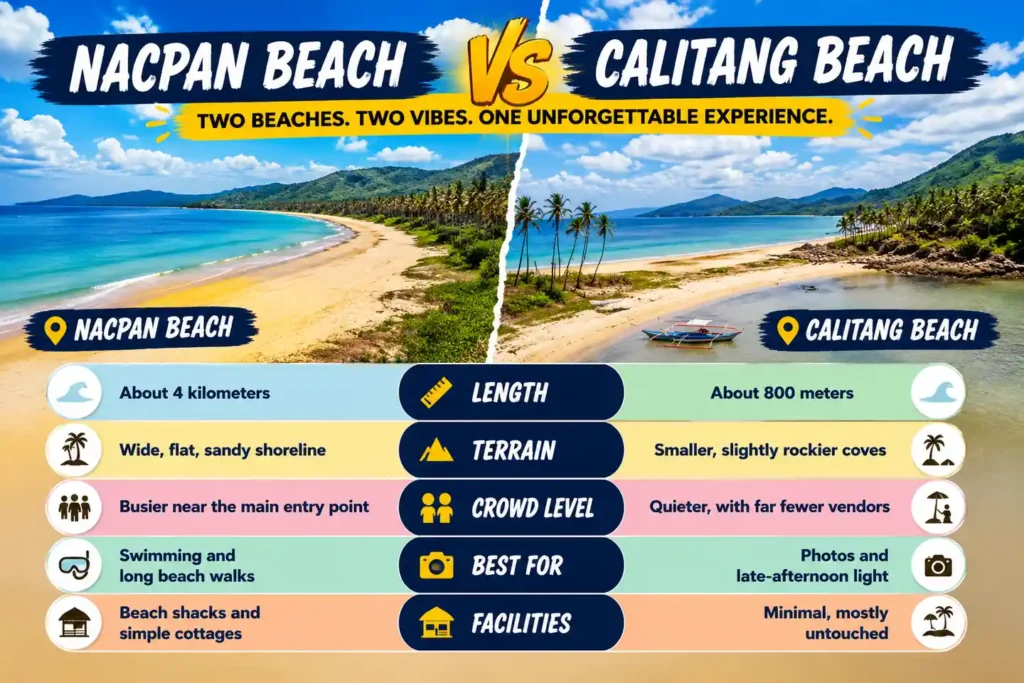
Nacpan is the larger, more developed half, but Calitang rewards the short walk over with a calmer, more private stretch of sand. Most visitors base themselves at Nacpan for lunch and swimming, then cross to Calitang for photos later in the day.
Why Is Nacpan Calitang Beach Famous?
Nacpan Calitang Beach built its reputation the old-fashioned way, through word of mouth from travelers exploring El Nido’s mainland. It was even shortlisted in past traveler-voted rankings of the world’s best beaches, a distinction that pushed it onto more itineraries.
Part of the appeal is scale: four kilometers of sand is hard to find elsewhere in the region, paired with a second beach right next door. Most visitors who come once end up returning, drawn back by the calm water and the wide-open space to simply relax.
What Does Nacpan Calitang Beach Look Like?
Expect wide, pale gold sand that stays firm enough to walk barefoot at midday, backed by a loose curtain of coconut palms leaning toward the water. The shoreline slopes gently, so the shallows stretch out for twenty to thirty meters before the seabed drops away.
Toward Calitang, the sand narrows into a low, grassy hill dotted with rock outcrops, and the water shifts through turquoise, teal, and deep blue depending on depth and cloud cover. Early mornings bring the calmest water and the softest light, making it the best time to walk the full stretch before the day gets busy.
Best Time to Visit Nacpan Calitang Beach
The dry season, roughly November through May, gives Nacpan Calitang Beach its calmest water and clearest skies, a pattern that lines up with general seasonal guidance from the Philippines Department of Tourism for the Palawan region. Late morning, between 7 and 11 a.m., tends to have the flattest water, ideal for swimming.
The wet season, June to October, brings a real risk of afternoon downpours, so plan for morning visits. Weekdays are noticeably quieter than weekends, especially during peak travel months of December through April.
How to Get to Nacpan Calitang Beach
Getting to Nacpan Calitang Beach comes down to a few road-based options, each with its own trade-off between cost and convenience.
| Transport option | Approx. cost | Approx. time |
| Tricycle, one way | PHP 250-350 ($4.30-6.00) | About 45 minutes |
| Tricycle, round-trip charter | PHP 700-900 ($12.10-15.50) | 45 minutes each way |
| Motorbike rental, per day | PHP 400-600 ($6.90-10.30) | About 45 minutes |
| Shared van or shuttle, return | PHP 300-600 ($5.20-10.30) | 45-50 minutes |

A rented motorbike gives you the most freedom to stop at viewpoints along the way, though the last unpaved stretch can be tricky for beginners. Tricycles are the easiest option if you’d rather not drive, and drivers usually wait while you spend the day at the beach. Agree on the price before leaving town, since fares aren’t metered.
How Far Is Nacpan Calitang Beach from El Nido?
Nacpan Calitang Beach is about 17 kilometers from El Nido town, a drive that takes roughly 45 minutes by tricycle or motorbike under normal conditions. Traffic isn’t really a factor; the main variable is the unpaved final stretch, which can push the trip closer to an hour after heavy rain.
Things to Do at Nacpan Calitang Beach
There’s more to do here than simply lie on the sand:
- Swim in the shallow, sandy-bottomed water along Nacpan’s main stretch
- Rent a kayak or paddleboard (PHP 300-500/hour, about $5.20-8.60)
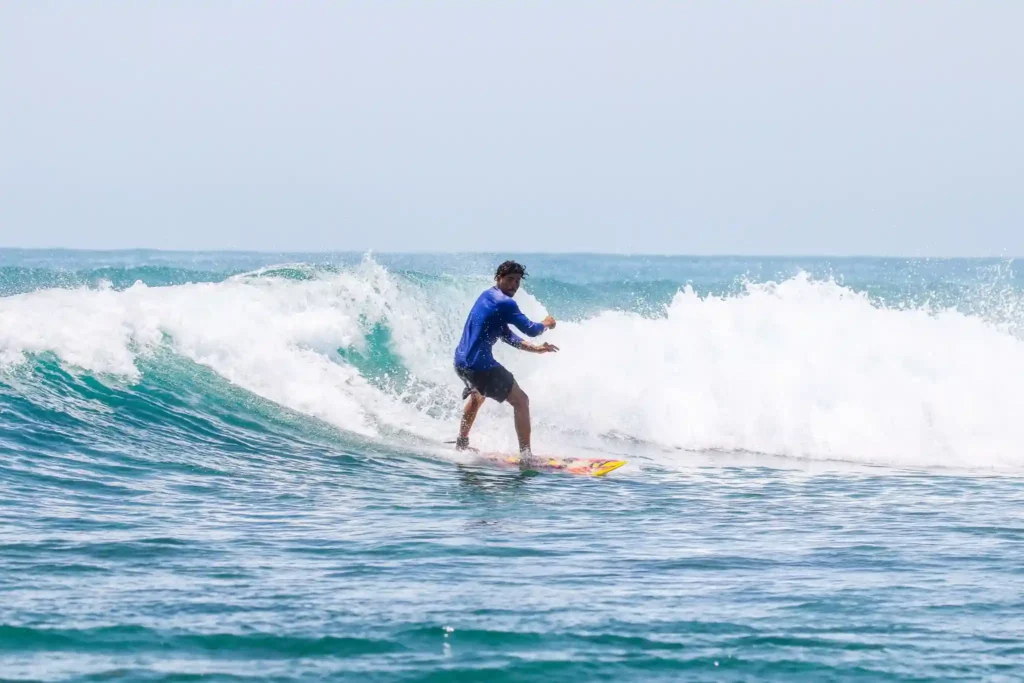
- Try beginner-friendly surfing near the northern end, best from November to March
- Walk the full 4-km length of Nacpan Beach, about 45-60 minutes
- Hike the short trail to the Twin Beach Viewpoint for photos
- Cross over to Calitang Beach for a quieter stretch of coastline
- Stop at Nagkalit-Kalit Falls on the way for a freshwater swim
Can You Swim at Nacpan Calitang Beach?
Yes, and it’s genuinely one of the better swimming spots in the El Nido area. The sandy bottom stays shallow for twenty to thirty meters before deepening, so it suits casual swimmers and families well. There are no coral reefs directly offshore, meaning fewer scrapes but less to see up close. There are no lifeguards on duty, so swim with a buddy and stay aware of currents near the rocky points at either end.
Nacpan Calitang Beach for Sunset
Nacpan faces roughly north, so it doesn’t catch a classic ocean sunset; sunrise here is actually the more dramatic show. Calitang, on the other hand, faces west, giving it a genuinely spectacular late-afternoon light as the sun drops toward the water.
If sunset photography is the goal, cross over to Calitang about an hour before golden hour and find a spot near the rocks. Bring a light jacket, since the breeze picks up once the sun starts to dip. Either way, arrive a bit early and grab a quiet spot before the crowd starts gathering for photos.
How Long Should You Spend at Nacpan Calitang Beach?
Most day-trippers spend three to five hours here, enough time to swim, eat lunch, and walk over to Calitang for photos. If you want to explore both beaches, hike to the viewpoint, and catch sunset, plan for a full day instead. Overnight stays are worth considering, too; a handful of simple guesthouses and beach camps let you catch sunrise over Nacpan without the early-morning ride from town.
Even a short two-hour stop is enough to enjoy the water and get a feel for why this beach is so loved. If you’re traveling with kids or an older family member, a slower half-day visit usually works best.
Nacpan Calitang Beach Entrance Fee and Other Costs
Nacpan Calitang Beach remains one of the more affordable stops in the El Nido area, and here’s roughly what to budget for a day trip.
| Item | Cost (PHP) | Cost (USD, approx.) |
| Motorbike parking | PHP 20 | $0.35 |
| Environmental fee (where collected) | PHP 50 | $0.85 |
| Tricycle, one way | PHP 250-350 | $4.30-6.00 |
| Motorbike rental, full day | PHP 400-600 | $6.90-10.30 |
| Kayak rental, per hour | PHP 300-500 | $5.20-8.60 |
| Simple beach meal | PHP 150-350 | $2.60-6.00 |
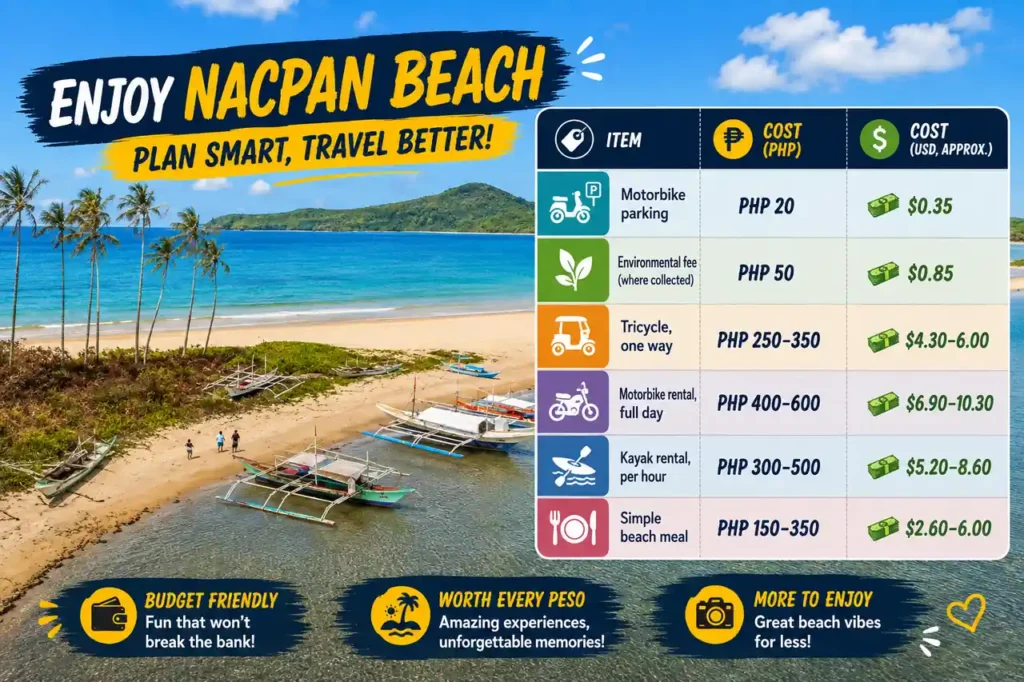
There’s no formal entrance gate at Nacpan Calitang Beach as of 2026, though some access points still collect a small environmental fee, consistent with coastal management guidelines set by the Palawan Council for Sustainable Development. Since there are no ATMs nearby, bring enough cash for the day — around PHP 1,000 (about $17.25) comfortably covers transport, food, and a rental or two.
Where to Stay Near Nacpan Calitang Beach
Accommodation directly on the sand is limited but growing, ranging from basic nipa huts to a handful of small beachfront resorts and a backpacker-friendly hostel. None qualify as luxury; think simple rooms, cold or solar-heated showers, and an emphasis on the view over amenities.
Most places also don’t have air conditioning, so a fan and a sea breeze are usually all you get at night. It’s a good idea to book ahead during peak season, since rooms fill up fast and options are still few. If you’d rather stay in town, El Nido proper has a far wider range of hotels within a short tricycle ride of the main pier.
What to Know Before Visiting Nacpan Calitang Beach
A few practical points, drawn from guidance shared by El Nido’s local tourism office and the Municipal Government of El Nido, make the trip smoother:
- Bring cash; there are no ATMs near the beach
- Pack insect repellent for sand flies, especially near the tree line
- Wear reef-safe sunscreen and reapply often, since shade is limited
- Expect a bumpy final stretch of road, particularly after rain
- Swim with a buddy, since there are no lifeguards on duty
- Support the local community by using barangay-based vendors and drivers
Is Nacpan Calitang Beach Worth Visiting?
For most travelers passing through El Nido, yes, Nacpan Calitang Beach offers a genuinely different experience from the archipelago’s boat-based lagoons and islands. It rewards visitors who enjoy simplicity: wide sand, quiet water, and a slower pace than the packed island-hopping tours. The trade-off is a bumpy access road and minimal facilities, so it’s not the right pick for travelers wanting resort-style comfort.
Most people who visit say the peaceful atmosphere makes the trip worth it, especially if you go early in the day before the sun gets too strong. If you are looking for a beach that feels open and natural rather than crowded, Nacpan Calitang Beach is a great choice.
Frequently Asked Questions About Nacpan Calitang Beach
Is Nacpan Calitang Beach the same as Nacpan Beach?
Not exactly. Nacpan Beach is the larger of the two connected shorelines, while Calitang is the smaller neighboring beach. Together, they’re commonly referred to as Nacpan Calitang Beach or the Twin Beaches.
Why are Nacpan and Calitang called Twin Beaches?
They share a connecting hill and sandbar, and both offer the same wide, pale sand, which gives them a mirrored, “twin” appearance when viewed from above.
How do you get from El Nido to Nacpan Calitang Beach?
By tricycle, rented motorbike, or shared van, all of which take about 45 minutes to cover the 17-kilometer route from town.
Is Nacpan Calitang Beach crowded?
It’s noticeably quieter than El Nido’s island-hopping tours, though weekends and peak season, from December to April, draw more visitors near the main entry point.
How long is Nacpan Beach?
Nacpan Beach stretches for approximately four kilometers, making it one of the longest continuous beaches in the El Nido area.
Can you swim at Calitang Beach?
Yes, though its rockier shoreline and narrower sand make Nacpan the more comfortable choice for extended swimming sessions.
What is the best time to visit Nacpan Calitang Beach?
The dry season, from November to May, offers the calmest water and clearest skies, with late morning being the best window for swimming.