Planning a trip to Morocco? This Morocco Travel Guide covers the best places to visit, travel costs, the best time to go, safety, and a practical itinerary. Marrakech, Fes, Chefchaouen, the Atlas Mountains, and the Sahara are among the main stops for a first trip. Spring and autumn offer the best overall weather, while costs depend on your accommodation, transport, and activities.
Most travelers should allow 7–14 days to see the major highlights without rushing. Morocco also has good options for budget, mid-range, and luxury travelers. You’ll find visa information, daily costs, transport tips, things to do, and safety advice to help plan your trip before booking.
Morocco Travel Guide Basics You Need to Know First
Many travelers, including citizens of the United States, United Kingdom, Canada, Australia, New Zealand, and EU countries, can currently enter Morocco without a visa for stays of up to 90 days. Requirements vary by nationality and can change, so travelers should confirm the latest entry rules before departure. Passport validity requirements can vary by nationality and travel circumstances, so check the latest requirements before departure.
The local currency is the Moroccan dirham (MAD), and cards are accepted in larger hotels and shops, but cash is still king in the medinas and smaller towns. Arabic and French are the main languages, though English is spoken widely in tourist areas.
- Passport validity: check current requirements before travel
- Currency: Moroccan dirham (cash preferred in souks)
- Languages: Arabic, French, Amazigh (Berber); English is common in tourism
- Entry points: Casablanca, Marrakech, Fes, and Rabat airports
Since visa rules and entry requirements can shift with little notice, always confirm current conditions with the Moroccan consulate or embassy in your home country before booking flights.
Best Places to Visit in Morocco
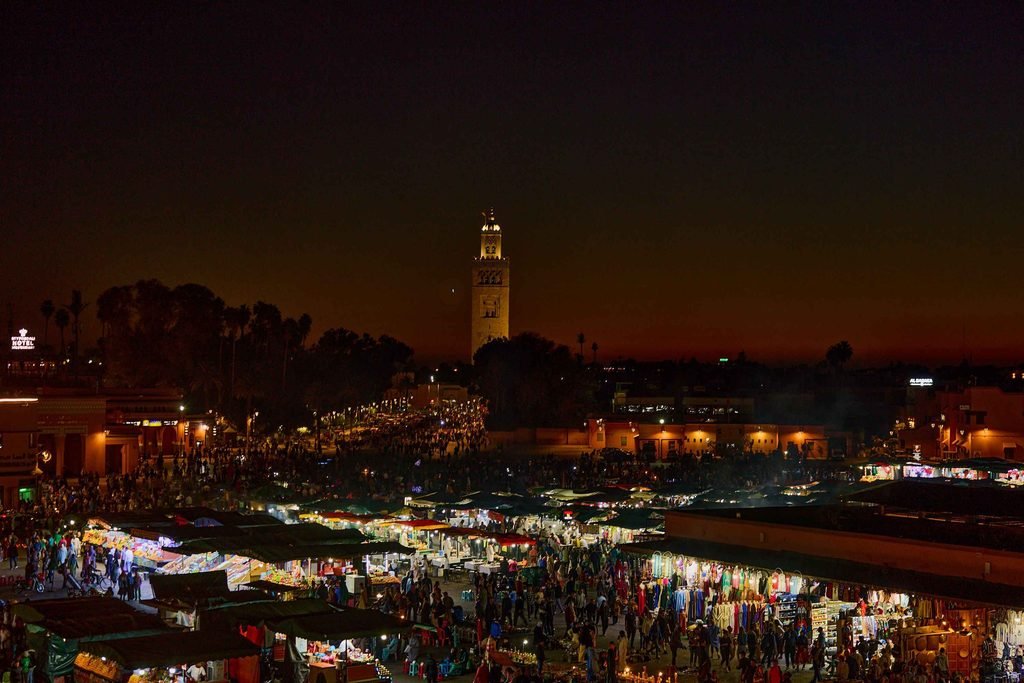
A good Morocco itinerary combines an imperial city with time in the desert and at least one smaller, quieter town. Trying to see too much too quickly can mean long travel days and less time to enjoy each destination.
- Marrakech – souks, gardens, and the Jemaa el-Fnaa square
- Fes – the oldest and largest car-free medina in the world
- Chefchaouen – the blue-painted mountain town
- Essaouira – a relaxed Atlantic coastal city with a working port
- Merzouga or Zagora – gateway towns to the Sahara dunes
- Ait Benhaddou – a fortified clay village used in several film productions
Coastal towns like Essaouira tend to be cooler and calmer, which makes them a useful contrast after a few busy days in the bigger cities.
Things to Do in Morocco
Beyond sightseeing, Morocco offers activities tied directly to local culture and geography rather than staged tourist shows.
- Take a traditional cooking class focused on tagine and couscous
- Visit a public hammam for a steam bath and exfoliation ritual
- Ride a camel into the dunes for sunset or sunrise
- Walk through a working tannery in Fes or Marrakech
- Hike a section of the Atlas Mountains with a local guide
- Shop for handwoven rugs, leather goods, and ceramics in the souks
Bargaining is expected in most souks, so treat the first quoted price as a starting point rather than a fixed cost.
Marrakech Travel Guide
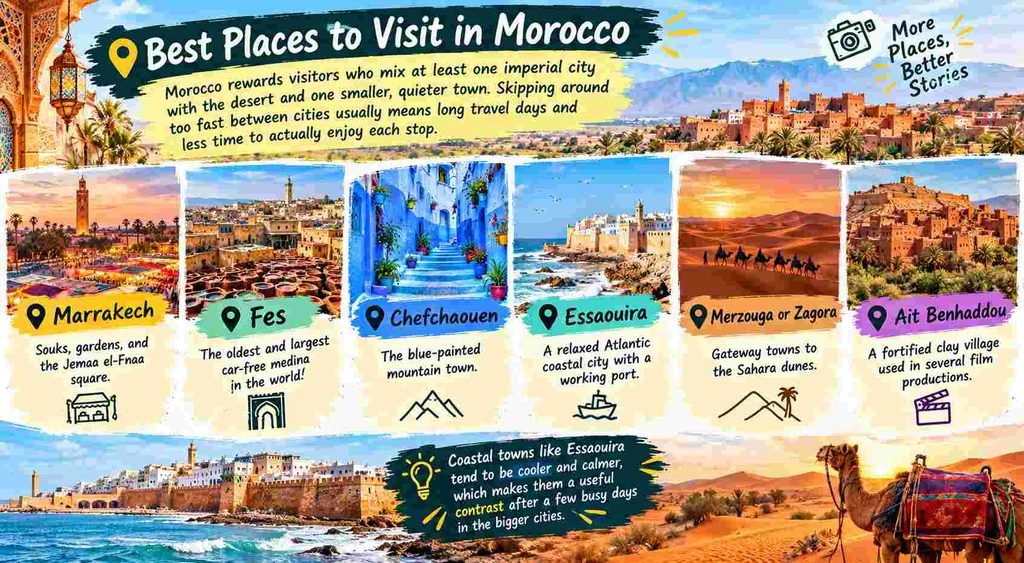
Marrakech works well as a start or end point because of its strong flight connections. The medina’s UNESCO-recognized historic center holds the Koutoubia Mosque, the Bahia Palace, and the Jemaa el-Fnaa square, which turns into a food market and open-air performance space after dark.
Two or three nights usually cover the main sights without rushing, especially with a riad stay. Riads, traditional courtyard houses turned guesthouses, offer a quieter alternative to standard hotels near major landmarks.
Read more about Al Khan Beach in Sharjah, a popular waterfront destination known for its relaxing atmosphere, sandy shores, and range of water activities. Discover what to see, things to do, and useful tips for planning your visit to Al Khan Beach.
Fes Morocco
Fes holds the title of Morocco’s spiritual and cultural capital, and its medina, Fes el Bali, remains largely closed to cars. Donkeys and handcarts still move goods through the narrow lanes, keeping the atmosphere close to what it has been for centuries.
The Chouara Tannery is the most photographed site in the city, with stone dye pits visible from nearby rooftop terraces. The Al Quaraouiyine Mosque and University, founded in the 9th century, ranks among the oldest continuously operating educational institutions in the world.
Chefchaouen Morocco
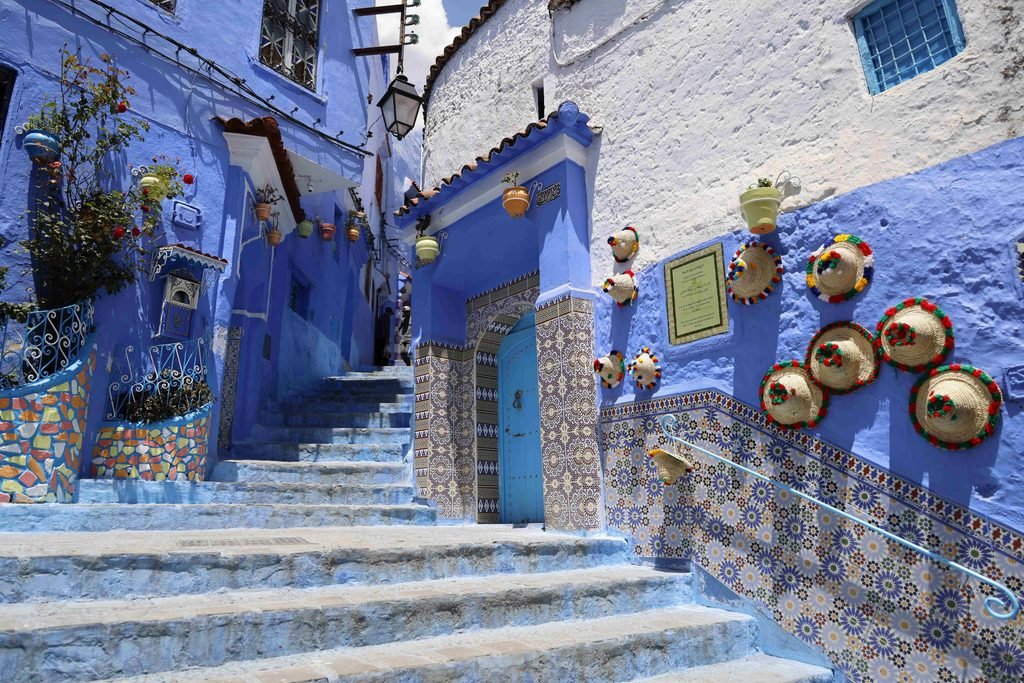
Chefchaouen sits in the Rif Mountains and is known almost entirely for its blue-washed buildings, a look kept up by residents for generations. The town moves at a slower pace than Marrakech or Fes, making it a good break from crowds.
A day and a half typically covers the main streets, the medina, and a partial hike up the nearby Spanish Mosque trail for a viewpoint over the town.
Sahara Desert Morocco
The Sahara is usually reached through Merzouga or Zagora, both accessible on multi-day trips from Marrakech or Fes. A typical desert excursion includes a 4×4 or camel ride into the dunes, an overnight stay in a desert camp, and a sunrise viewing before heading back.
Organized tours booked through established operators currently range widely depending on group size, season, and comfort level, from more basic shared trips to private multi-day journeys. Prices change frequently, so compare a few current listings before booking rather than relying on older figures.
- Merzouga: taller dunes, closer to Fes
- Zagora: shorter drive from Marrakech, smaller dunes
- Best experienced with a licensed local guide for safety and navigation
Atlas Mountains Morocco
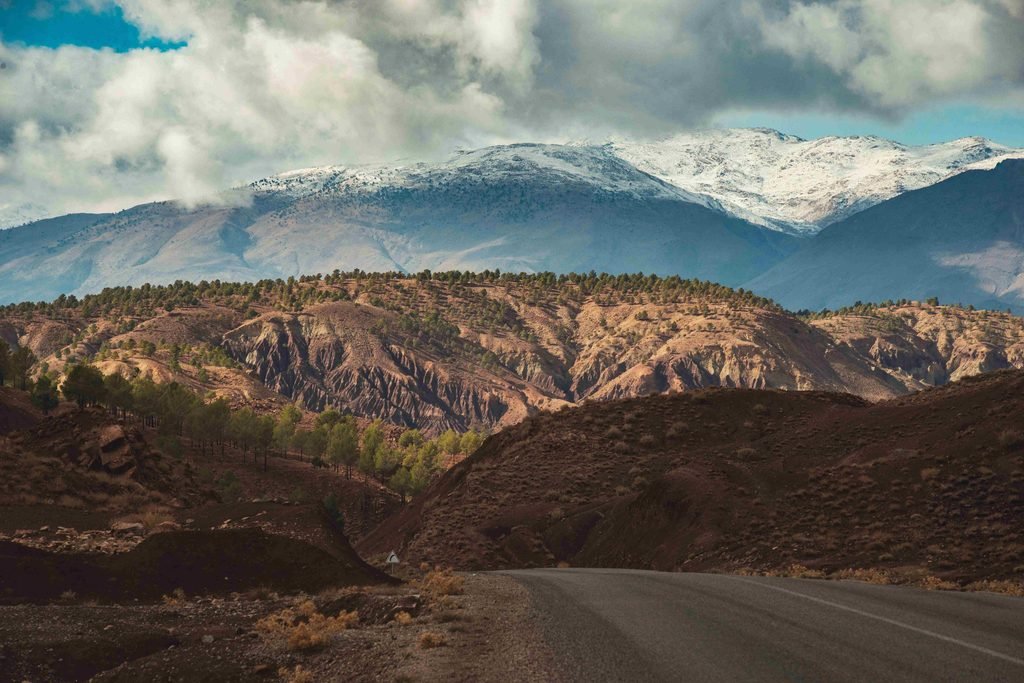
The Atlas Mountains separate Marrakech from the desert regions and hold Berber villages, terraced farmland, and Toubkal, North Africa’s highest peak. A day trip from Marrakech typically covers the Ourika Valley or Imlil, while a full Toubkal summit needs two days and a certified guide.
Mountain weather changes quickly, and snow is common at higher elevations from December through February, so pack layers even if the desert leg feels warm.
Best Time to Visit Morocco
Morocco’s climate varies sharply by region, so the right season depends partly on which parts of the country are on the itinerary. Spring and autumn offer the most balanced conditions for a first-time Morocco trip, since temperatures stay comfortable in both the cities and the desert. Summer works well for coastal towns like Essaouira, while winter suits travelers who want lower prices and don’t mind cooler nights, especially in the Atlas Mountains.
A quick look at seasonal patterns makes it easier to match travel dates with the right destinations.
| Season | Months | General Weather | Best For |
| Spring | March–May | Mild, comfortable | Hiking, city touring |
| Summer | June–August | Hot, especially inland | Coastal towns, early starts |
| Autumn | September–November | Warm, stable | Sahara trips, sightseeing |
| Winter | December–February | Cool, colder in mountains | Snow in the Atlas, lower prices |
What Is the Best Time to Visit Morocco?
Spring and autumn are generally considered the most comfortable seasons for a first Morocco trip, since summer heat in the desert and interior cities can be intense and winter brings cold nights in the mountains and desert camps. Travelers focused mainly on coastal towns have more flexibility, since cities like Essaouira stay milder year-round.
Morocco Travel Itinerary
A one-week trip covers the essentials well: an imperial city, the mountains, and the desert, without constant repacking. If you can stretch to ten or fourteen days, you get room for a second imperial city or a coastal stop, and the pace feels far less rushed. The table below gives a sample day-by-day breakdown to help you plan transport and bookings in the right order. Use it as a starting point, then adjust based on how many cities you want to fit in.
An informative starting point before booking transport is a sample day-by-day breakdown.
| Day | Location | Highlights |
| 1–2 | Marrakech | Medina, souks, Jemaa el-Fnaa |
| 3 | Atlas Mountains | Berber villages, valley hike |
| 4–5 | Sahara Desert (Merzouga or Zagora) | Camel trek, desert camp |
| 6 | Fes | Medina, tanneries, madrasas |
| 7 | Chefchaouen | Blue streets, mountain views |
Sample Morocco Travel Guide Itinerary for One Week
This seven-day structure works because it groups nearby regions, avoiding backtracking across the country. Travelers with less time can drop Chefchaouen and shorten the trip to five days by flying out directly from Fes.
How Many Days Do You Need in Morocco?
Seven days covers the highlights reasonably well for a first visit, while ten to fourteen days allows a slower pace with room for a coastal stop such as Essaouira. Shorter trips of four or five days work best when focused on just one region, such as Marrakech and the nearby desert.
Is Morocco Safe
Morocco is generally considered one of the safer countries in North Africa for tourism, though standard travel precautions still apply.
According to the U.S. Department of State, Morocco currently sits at a Level 2 advisory, meaning travelers should exercise increased caution due to terrorism risk, a category that also applies to several popular European destinations.
Petty theft and pickpocketing can occur in crowded medinas and transportation hubs, so keeping valuables secure and avoiding isolated areas at night is sound advice. Solo female travelers generally report feeling safe with normal precautions, such as dressing modestly in conservative areas and avoiding walking alone late at night.
Is Morocco Safe for Tourists in 2026?
Morocco remains broadly safe for tourists, with the current advisory level matching that of countries like France, Italy, and the United Kingdom. Checking the latest official advisory before departure is still worthwhile, since conditions and guidance can be updated at any time.
Morocco Travel Tips
Small practical habits make a noticeable difference in how smooth a Morocco trip feels, especially for first-time visitors navigating medinas for the first time.
- Learn a few basic Arabic or French greetings
- Carry small dirham bills for tips and souk purchases
- Dress modestly, especially outside beach and resort areas
- Agree on taxi fares before the ride starts, or confirm the meter is used
- Drink bottled water rather than tap water
- Keep a printed or saved copy of your accommodation address in Arabic
The Moroccan National Tourist Office (ONMT) publishes updated seasonal travel information and can be a useful reference for confirming current entry and safety guidance before departure.
Daily costs vary widely depending on travel style, and a rough budget breakdown helps with trip planning.
| Budget Level | Accommodation | Meals | Local Transport |
| Budget | $10–$20 | $8–$15 | $3–$6 |
| Mid-range | $35–$70 | $20–$35 | $6–$12 |
| Luxury | $150+ | $50+ | $15+ |
These figures are general estimates that shift with season and exchange rates, so checking current listings before finalizing a budget is recommended.
Time to Pack Your Bags
A well-planned Morocco trip usually combines one imperial city, a desert excursion, and at least one smaller town for contrast. Marrakech and Fes anchor most itineraries, while Chefchaouen and the Atlas Mountains add variety without much extra travel time. The Sahara Desert experience remains the highlight for many visitors, and pairing it with attention to the best time to visit Morocco helps avoid extreme heat or cold. Safety conditions stay broadly favorable, though checking current advisories is always worth the few minutes it takes. With the right Morocco Travel Guide basics, a sensible itinerary, and a handful of practical travel tips, a first trip to Morocco tends to go smoothly from arrival to departure.
FAQs
What is the best time to visit Morocco?
Spring (March–May) and autumn (September–November) offer the most comfortable weather across most regions, avoiding extreme summer heat and cold winter nights in the mountains.
Do I need a visa to visit Morocco?
Travelers from many countries, including the US, UK, EU, Canada, Australia, and New Zealand, can currently enter visa-free for up to 90 days, but rules vary by nationality and should be confirmed with an official source before travel.
Is Morocco safe for solo travelers?
Morocco is generally considered safe for solo travelers, including women, with standard precautions such as avoiding isolated areas at night and staying alert in crowded medinas.
How many days do I need for a Morocco trip?
Seven days covers the main highlights well, while ten to fourteen days allows a slower pace and additional stops such as the coast.
What currency is used in Morocco?
The Moroccan dirham (MAD) is the official currency, and cash is preferred in souks and smaller towns.
Do I need a guide for the Sahara Desert?
A licensed local guide is strongly recommended for desert excursions, both for navigation and for a smoother, safer experience overall.