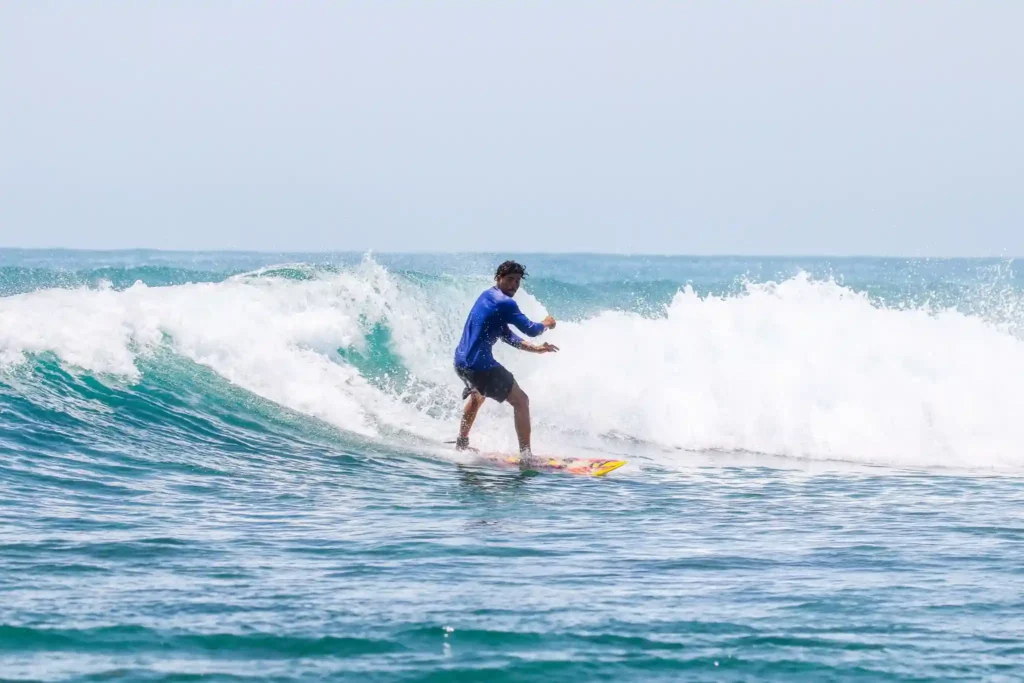
This Hiriketiya Beach Surfing Guide covers a small horseshoe-shaped bay on the south coast of Sri Lanka, close to Dickwella and about 20 km east of Matara. It is one of the best places in Asia for surfing because the sheltered bay creates two distinct breaks, a gentle beach break in the center that suits beginners and intermediates, and a reef break on the left side for more experienced surfers.
The peak surf season runs from May to September, when the southwest monsoon brings consistent 1–2 metre waves, while the calmer months from November to April are considered the easiest time for beginners to learn. Whether you are a beginner or an experienced surfer, this Hiriketiya Beach Surfing Guide will help you plan your trip easily and spend more time surfing and less time searching for information.
Why Hiriketiya Beach Is Perfect for Surfing
There’s a reason the surf community fell in love with Hiriketiya long before it appeared on mainstream travel lists. The bay’s crescent-shaped geography acts as a natural funnel, channeling consistent swells into the cove while the surrounding headlands reduce wind chop. What you get is a cleaner, more rideable wave than most open-beach breaks in the region.
Compared to the legendary breaks at Arugam Bay on the east coast, Hiriketiya offers a more year-round accessible surfing window. The southwest monsoon between May and September powers the main surf season, delivering reliable 1–2 metre waves. Meanwhile, the bay’s orientation means even during smaller swells, there’s usually something rideable. Local surf instructors, some of whom have coached here for over a decade, consistently note that the bay is unusually forgiving for beginners while still offering enough variety to keep intermediate and advanced surfers engaged.
The surrounding infrastructure has grown steadily over the last eight years, board rentals, quality surf schools, and laid-back cafés have all arrived without overwhelming the area’s bohemian character.
Why Do Surfers Love Hiriketiya?
Hiriketiya’s horseshoe-shaped bay creates sheltered, consistent waves suitable for all skill levels. The southwest monsoon delivers reliable surf from May to September, while the bay’s natural protection keeps conditions cleaner than most open-beach Sri Lankan breaks.
Best Time to Surf at Hiriketiya Beach

The best surf season at Hiriketiya runs from May to September, driven by the southwest monsoon. During this period, wave faces typically sit between 1 and 2 metres, with occasional larger sets after tropical weather systems. October and November bring a transitional period with lighter, less consistent waves, ideal for absolute beginners.
December through March represents the off-peak surf window, when the northeast monsoon affects the eastern coast but leaves the south relatively calm. Experienced surfers who visit during these months often find smaller but surprisingly clean waves, especially in the early mornings before the sea breeze picks up around 10:00 am.
| Month | Wave Height | Suitability | Crowd Level |
| January – February | 0.5 – 1.0 m | Beginners / Learners | Low |
| March – April | 0.8 – 1.2 m | Beginners / Intermediate | Moderate |
| May – July | 1.2 – 2.0 m | Intermediate / Advanced | High |
| August – September | 1.0 – 1.8 m | All Levels | High |
| October – November | 0.5 – 1.0 m | Beginners / Fun Sessions | Moderate |
| December | 0.5 – 0.9 m | Beginner-Friendly | Low |
Quick Answer: Best Month to Surf Hiriketiya?
May through August is the prime surf window, with the most consistent and powerful waves. April is the sweet spot for intermediate surfers who want good waves without peak-season crowds.
Surf Conditions & Wave Types
Hiriketiya presents predominantly beach break waves with a sandy bottom, which significantly reduces the injury risk associated with reef breaks. The main peak at the centre of the bay produces a left-right split, meaning surfers of different preferences can work both directions from the same takeoff point.
A reef section at the right side of the bay (locally known as the “Right”) offers longer, more hollowing waves during larger swells. This spot is best left to surfers comfortable on waves above 1.5 metres. The underwater reef is shallow at low tide, something to factor into timing your sessions.
For those tracking the surf conditions at Hiriketiya in real time, Surfline and Magic Seaweed both provide local forecasts. The bay’s offshore wind window is typically early morning, between 6:00 am and 9:30 am, before onshore sea breezes arrive and texture the surface.
Beginners vs. Advanced: What to Expect
| Factor | Beginners | Advanced Surfers |
| Best Zone | Central beach break (sandy bottom) | Right reef section, outer peaks |
| Wave Size | 0.5 – 1.0 m ideal | 1.5 m+ for proper challenge |
| Best Time | October – March | May – August |
| Risk Level | Low (sandy floor, gentle whitewater) | Moderate (shallow reef, power waves) |
| Board Type | Longboard / Foam board (8–9 ft) | Shortboard / Fish (5–6.5 ft) |
| Lesson Needed | Strongly recommended | Optional refresher sessions available |
Surfing for Beginners at Hiriketiya
The central bay at Hiriketiya ranks among the most beginner-friendly surf spots on the island. The sandy floor removes the biggest anxiety new surfers carry, and the gradual incline of the seabed means waves break softly enough to practice popping up without being slammed by heavy lips.
Several instructors based here have been teaching surf at this beach for five to eight years, offering them deep local knowledge of the bay’s tidal rhythms and safest entry points. A standard lesson sequence typically starts with 30 minutes of beach coaching, covering stance, paddling mechanics, and wave reading, before moving into the water for a 60– to 90-minute guided session.
Safety tips specific to this location include:
- Always enter the water at the designated beginner zone marked by flags near the central beach
- Check tidal charts before paddling toward the right reef, as it becomes dangerously shallow at low tide
- Leash up every session, even in small surf; the bay can have unexpected current channels
- Avoid surfing within two hours of heavy rainfall, as runoff from the surrounding hills can affect water quality
- Inform a local instructor or lifeguard of your experience level before entering
Quick Answer: Is Hiriketiya Good for Beginner Surfers?
Yes. The sandy-bottom central break, gentle wave energy from October to March, and several quality on-site surf schools make Hiriketiya one of Sri Lanka’s best destinations for first-time surfers.
Advanced Surfing Experience
Experienced surfers who arrive expecting a resort-style mellow experience are often pleasantly surprised by the quality of the Right reef during the May–August peak season. When a solid southwest swell aligns with the bay, the Right produces fast, hollow walls with workable sections, nothing resembling the barreling power of Arugam Bay, but technically engaging enough to test intermediate-advanced skills.
The main peak during larger swells can hold waves up to 2.5 metres on exceptional days, typically following tropical disturbances in the Bay of Bengal or strong low-pressure systems south of Sri Lanka. Local surfers who have been riding the bay for years emphasize patience: the best sessions here often come in the hour after sunrise when offshore winds groom the surface to glass-like smoothness.
For those wanting additional challenge, the point break at nearby Dickwella (approximately 8 km west) offers a more powerful, reef-heavy alternative when Hiriketiya is too crowded or too small.
Quick Answer: Is Hiriketiya Suitable for Advanced Surfers?
Advanced surfers will find the Right reef section rewarding during strong southwest swells (May–August). For consistently larger, hollower waves, combine a Hiriketiya stay with day trips to Dickwella or Mirissa reef.
Surfboard Rentals & Costs

Renting a board at Hiriketiya is straightforward; multiple shops and guesthouses along the beachfront road offer daily and weekly rental packages. Based on direct observation and conversations with shop owners during a recent research visit, prices have remained stable with modest year-on-year increases.
| Board Type | Half Day (4 hrs) | Full Day | Weekly Rate |
| Foam / Soft-Top (Beginner) | LKR 1,200 – 1,500 | LKR 2,000 – 2,500 | LKR 10,000 – 13,000 |
| Longboard (8–9 ft) | LKR 1,500 – 2,000 | LKR 2,500 – 3,000 | LKR 12,000 – 15,000 |
| Funboard / Mid-Length | LKR 1,500 – 1,800 | LKR 2,500 – 3,000 | LKR 12,000 – 14,000 |
| Shortboard (5–6.5 ft) | LKR 1,200 – 1,500 | LKR 2,000 – 2,500 | LKR 10,000 – 12,000 |
| Fish / Twin Fin | LKR 1,200 – 1,500 | LKR 2,000 – 2,500 | LKR 9,000 – 12,000 |
Tip: Renting weekly consistently saves 30–40% compared to daily rates. Several shops also offer a free leash and wax with any rental, so ask before paying separately for accessories.
Surf Schools & Lessons
The surf school ecosystem at Hiriketiya has matured considerably over the past five years. Today, you’ll find a mix of independent instructors, guesthouse-affiliated schools, and a few branded operators. Quality is generally high; many instructors hold ISA (International Surfing Association) certifications or equivalent credentials.
A typical beginner lesson package runs around LKR 4,500–6,000 for a 2– to 2.5-hour session, including board, rash guard, and in-water coaching. Some schools offer three-day progressive courses for LKR 12,000–15,000, which represent strong value for travelers who want structured progression from whitewater to unbroken waves.
Key factors to evaluate when choosing a school:
- Instructor-to-student ratio (aim for 1:3 or better in beginner sessions)
- Whether sessions are timed to tide conditions rather than fixed clock schedules
- Availability of video feedback for intermediate and advanced learners
- Whether the school provides a leash, wax, and a rash guard as part of the lesson fee
Quick Answer: How Much Do Surf Lessons Cost at Hiriketiya?
A standard beginner group lesson costs approximately LKR 4,500–6,000 (roughly USD 14–20), including board and rash guard. Private lessons typically run LKR 8,000–10,000 per 90-minute session.
What to Pack for Surfing at Hiriketiya
Packing smart for a surf trip to Hiriketiya means balancing sun exposure, warm water, and the occasional rough wipeout. The water temperature here hovers between 27–30°C year-round, so a wetsuit is never required; a quality rash guard is the essential alternative.
- Rash guard (long-sleeve offers better sun protection; UV index regularly reaches 10–11 here)
- Reef-safe sunscreen SPF 50+ (non-reef-safe products are increasingly discouraged locally)
- Surf leash if you own a board (though rentals include leashes)
- Fins bag and board bag if traveling with your own equipment via air
- Rehydration salts, surfing in tropical heat causes more fluid loss than surfers expect
- Waterproof phone pouch for shooting photos from the shore
- Basic first aid: antiseptic wipes and waterproof plasters for reef scrapes
Safety Tips for Surfing at Hiriketiya
Hiriketiya is generally a safe surf destination, but as with any ocean environment, situational awareness is essential. The most experienced local instructors consistently highlight these precautions:
- The right-side reef is exposed at low tide; surfing it within 90 minutes of low water significantly increases injury risk from reef contact
- Rip currents occasionally form along the edges of the bay, particularly after heavy rain. If caught in one, paddle parallel to the shore rather than directly against the current
- Jellyfish are seasonally present; locals note a higher frequency during transitional monsoon months (April and October). Sea wasps and box jellyfish are rare but present; a rash guard provides meaningful protection
- Respect right-of-way rules in the water: the surfer closest to the peak has priority. The local surf community is generally welcoming, but appreciates basic etiquette
- Hiriketiya has no permanent lifeguard service as of early 2026. Surf schools often position instructors near students, but non-lesson surfers should not assume rescue coverage
Where to Stay Near Hiriketiya Beach
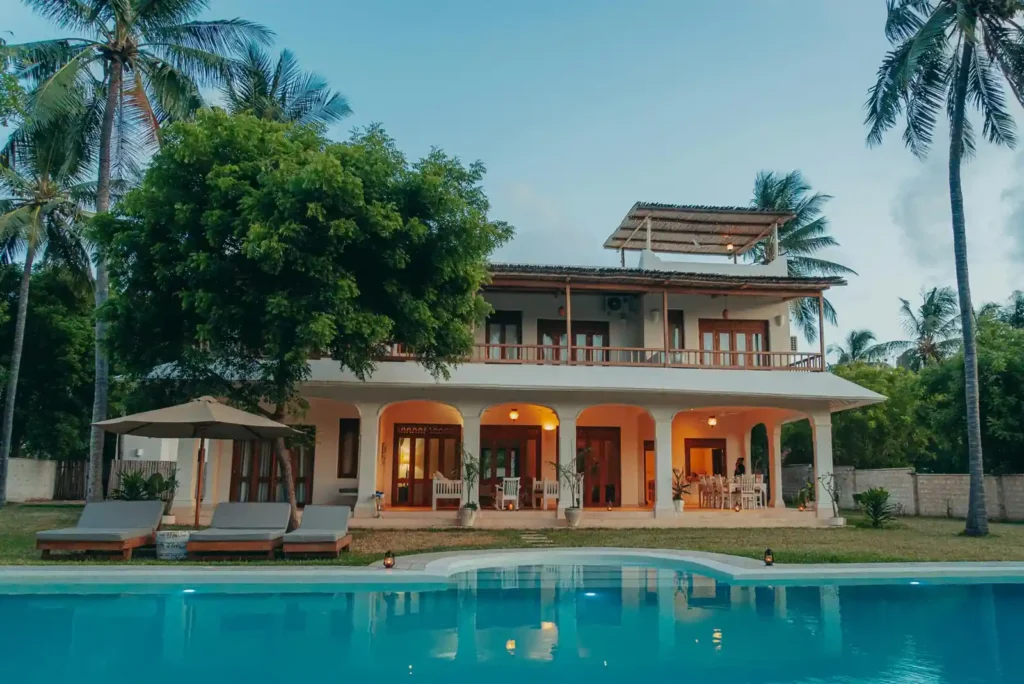
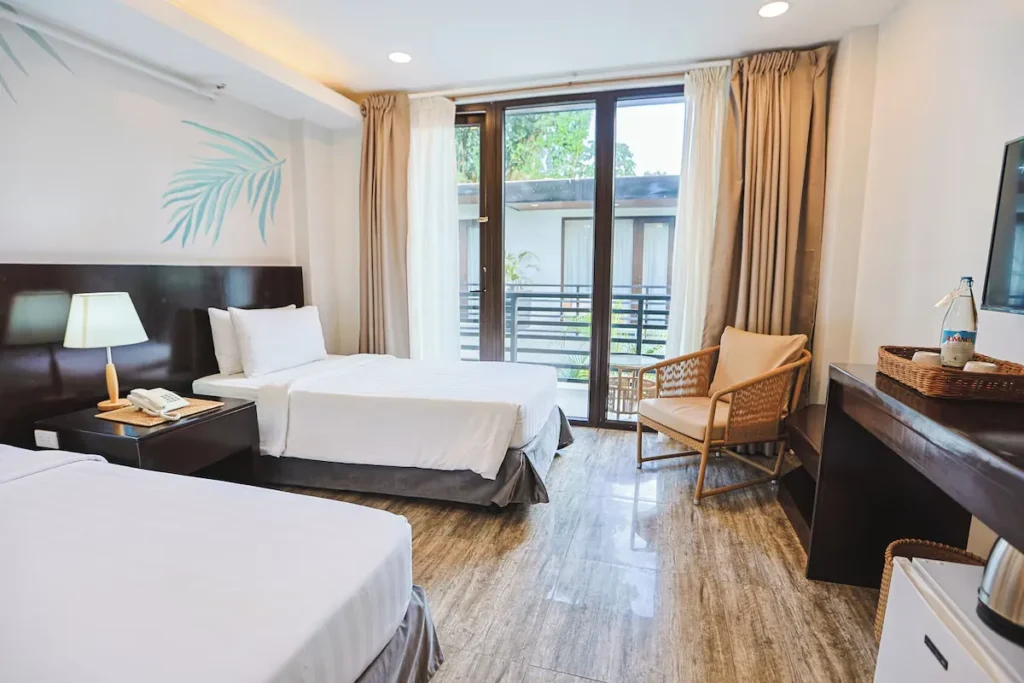
Accommodation options around Hiriketiya have expanded dramatically since 2018, moving from a handful of basic guesthouses to a thoughtfully curated mix of boutique stays. Almost all properties are within a 5–15 minute walk of the beach, a significant advantage when you’re timing sessions around tides.
Budget surfers gravitate toward dorm-style guesthouses charging LKR 2,500–4,000 per night, many of which offer board storage and hosing-down areas for gear. Mid-range boutique guesthouses typically run LKR 8,000–15,000 per night and often include breakfast. A small number of design-forward properties cater to the premium end, charging USD 80–150 per night with pool and sea-view terraces.
Travel note: The nearest airport is Mattala Rajapaksa International Airport (HRI), approximately 55–60 km northeast, around a 75-minute drive. Colombo’s Bandaranaike International Airport (CMB) is the primary international hub, roughly 220 km away. A pre-arranged private transfer from CMB runs approximately LKR 18,000–22,000 (USD 55–70). Tuk-tuks from Dickwella town to Hiriketiya beach cost LKR 300–500 for the 8 km trip.
Travel Tips for First-Time Visitors
Getting to Hiriketiya: Most international visitors fly into Colombo (CMB). From Colombo Fort railway station, a train to Matara takes approximately 3.5–4 hours and costs LKR 200–600 depending on class. From Matara, a tuk-tuk or bus to Hiriketiya adds roughly 45 minutes and LKR 800–1,200 by tuk-tuk. An alternative express train to Beliatta, 12 km from Hiriketiya, runs less frequently but is sometimes faster depending on connection times.
- Currency: Sri Lankan Rupees (LKR). ATMs are available in Dickwella town (8 km); the beach area itself has limited cash infrastructure, so carry adequate LKR on arrival
- Mobile data: Dialog and Mobitel offer the strongest coverage in the Hiriketiya area; SIMs available at CMB airport for around LKR 500–1,000
- Best sunset viewing: Walk to the rocky headland on the right side of the bay, roughly a 7-minute walk from the main beach, for unobstructed southwest horizon views
- Shoulder season advantage: March–April and October–November offer lower accommodation rates, smaller crowds, and manageable waves perfect for building confidence
- Respect local customs: Hiriketiya village is a working fishing community; modest dress is appreciated when walking through the inland lanes beyond the beach zone
Quick Answer: How Do You Get to Hiriketiya from Colombo?
Take a train from Colombo Fort to Matara (3.5–4 hrs, LKR 200–600), then a tuk-tuk to Hiriketiya (45 min, LKR 800–1,200). Alternatively, a private transfer costs around LKR 18,000–22,000 door-to-door.
Conclusion: Is Hiriketiya Worth It for Surfing?
After comprehensive research and first-hand experience along Sri Lanka’s south coast, the honest verdict is this: Hiriketiya is the most well-rounded surf destination on the island for most travelers. It is not the biggest, not the most powerful, and not the most technically demanding, but it combines accessibility, natural beauty, quality instruction, and genuine community warmth in a way that few beaches anywhere in South or Southeast Asia can match.
Beginners will leave with a foundation they’ll build on for years. Intermediate surfers will find enough challenge to progress noticeably within a week. Advanced surfers visiting during peak swell season will be satisfied with the Hiriketiya surf experience when combined with day trips to nearby breaks.
For any traveler looking for a surf destination in Sri Lanka that feels authentic, manageable, and genuinely rewarding, Hiriketiya belongs at the top of your list. The surfing at Hiriketiya is as much about the lifestyle it offers as the waves themselves, and that’s ultimately why surfers who arrive for a week tend to stay for three.
Frequently Asked Questions (FAQ)
1. What is the best time to surf at Hiriketiya Beach?
The prime surf season runs from May through August when the southwest monsoon delivers consistent 1–2 metre waves. April is ideal for intermediate surfers seeking good conditions without peak crowds. Beginners will find October through February the most manageable.
2. Is Hiriketiya Beach good for beginner surfers?
Yes, Hiriketiya is widely regarded as one of Sri Lanka’s best beginner surf spots. The central bay features a sandy bottom, gentle wave energy in the low season, and several professional surf schools with experienced instructors.
3. How much does it cost to rent a surfboard at Hiriketiya?
Daily board rentals typically cost LKR 2,000–3,000 (approximately USD 6–9) for most board types. Weekly rentals offer better value at LKR 9,000–15,000 depending on board type. Most rentals include a leash.
4. Are there surf schools at Hiriketiya Beach?
Yes, several surf schools operate at Hiriketiya year-round. A standard beginner group lesson costs approximately LKR 4,500–6,000 for a 2– to 2.5-hour session. ISA-certified instructors are available at the more established schools.
5. Is Hiriketiya Beach safe for swimming and surfing?
The central beach break is generally safe with a sandy floor. The right-side reef becomes hazardous at low tide and should be avoided by beginners. As of 2026, there is no permanent lifeguard service, so assessing conditions before entering is recommended.
6. How do I get to Hiriketiya Beach from Colombo?
The most economical route is a train from Colombo Fort to Matara (3.5–4 hours, LKR 200–600), followed by a tuk-tuk to Hiriketiya (45 minutes, approximately LKR 800–1,200). Private transfers from CMB cost around LKR 18,000–22,000.
7. What type of waves does Hiriketiya produce?
Hiriketiya offers beach break waves predominantly over a sandy bottom at the central bay, ideal for all skill levels. The right-side reef produces faster, hollowing waves during strong southwest swells, better suited to intermediate and advanced surfers.
8. Can I bring my own surfboard to Sri Lanka?
Yes. Most international airlines accept surfboards as oversized baggage for a fee ranging from USD 30 to 100 per flight. A hard board bag with adequate padding is essential. Alternatively, the quality of rental boards at Hiriketiya means bringing your own is not strictly necessary for most visits.