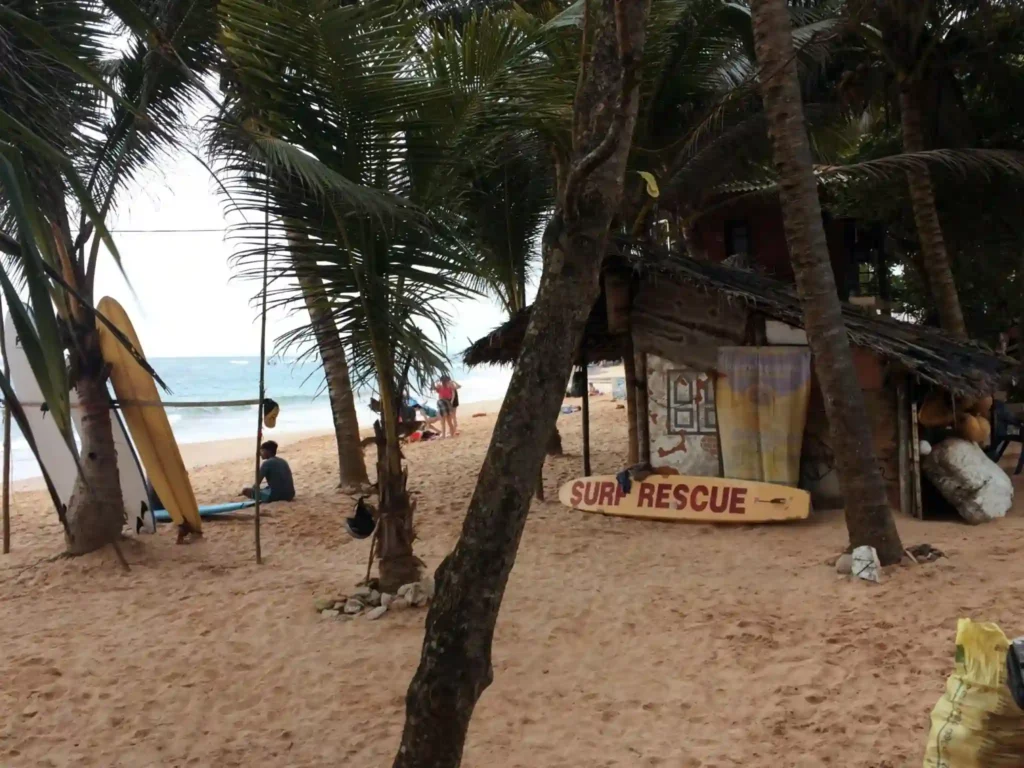
Hiriketiya Beach safety depends on knowing the rip currents, surf patterns, and nighttime risks that make this popular Sri Lankan bay less relaxing than it looks. Strong currents can pull even confident swimmers away from shore, the waves change quickly with the tide, and the beach paths turn dark and hard to navigate after sunset.
This guide covers real traveler experiences, local advice, and current ocean conditions to help you understand Hiriketiya Beach safety and enjoy your trip with confidence.
Overview of Hiriketiya Beach Safety Conditions
Hiriketiya is located on Sri Lanka’s southern coast, close to the town of Dikwella. Unlike busy spots like Unawatuna or Mirissa, it has a much more laid-back and friendly vibe. The curved shape of the bay helps protect it from strong ocean waves most of the time, though the sea can still get rough.
The beach is divided into two main areas. The inner part of the bay is calm and shallow, making it great for beginners. Further out, there’s a reef break where more experienced surfers can catch bigger, stronger waves. Knowing how the beach is set up is an important first step for staying safe.
Key geographical facts at a glance:
| Feature | Detail |
| Bay Type | Horseshoe-shaped, partially sheltered |
| Water Depth (Inner Bay) | Shallow to waist-deep at low tide |
| Reef Break Distance | Approximately 100–150 meters offshore |
| Primary Swell Direction | Southwest (monsoon season) |
| Beach Length | Approximately 300 meters |
Is Hiriketiya Beach Safe for Tourists?
Short answer: Yes, with awareness.
Hiriketiya is often seen as one of the safer beaches on Sri Lanka’s southern coast because its curved bay helps reduce strong waves compared to more open beaches. But that doesn’t mean it’s completely safe. The ocean can still be unpredictable, with changing swells, hidden rip currents, and no lifeguards present all the time. People who stay cautious and respect the sea usually have a much better experience.
Interestingly, many regular visitors, like surfers who stay for months and diving professionals, say that most accidents don’t happen during rough surf. Instead, they tend to occur during the in-between seasons (April–May and October–November). During these months, the water can look calm and inviting, but strong, hidden currents are often at their peak.
Need directions? Our Hiriketiya Beach travel guide covers all routes and transport tips.
Swimming Safety and Ocean Conditions
Swimming at Hiriketiya is usually a great experience, especially in the inner bay during the dry season (November to March). The water stays warm, around 27–29°C, it’s generally clear, and the seabed is mostly sandy, though you might find some rocks around the edges of the bay.
However, it’s important to keep a few safety tips in mind:
- Check the tide before you go in, because low tide can reveal rocks that aren’t visible when the water is higher.
- Try not to swim alone, especially if you don’t know the area well.
- Stick to the areas marked safe by lifeguards, if they’re around.
- Avoid swimming after heavy rain, since it can make the water dirty and unsafe.
Is it safe to swim at Hiriketiya Beach?
Swimming at Hiriketiya Beach is generally safe in the inner bay during the dry season, from November to March. However, it’s best to avoid swimming during the southwest monsoon (May to September), as the waves get much stronger and the currents can be unpredictable.
Surfing Risks and Precautions
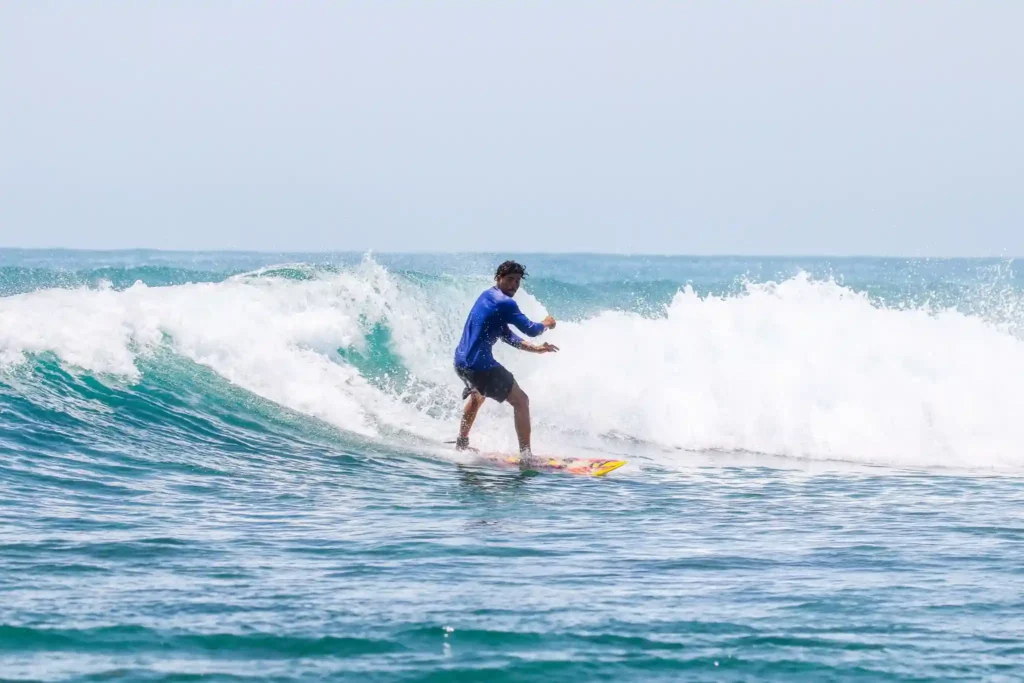
Hiriketiya is well known as a great spot for beginner to intermediate surfers, with several surf schools right on the beach. The main waves are usually steady and easy to handle for those learning, while the reef further out offers bigger challenges for more experienced surfers.
| Surf Level | Recommended Zone | Wave Height | Risk Level |
| Beginner | Inner Bay | 0.5–1.0 m | Low–Moderate |
| Intermediate | Mid Bay | 1.0–2.0 m | Moderate |
| Advanced | Outer Reef | 2.0 m+ | High |
Most surfing injuries here happen from hitting the reef, getting cut by fins, or bumping into other surfers who don’t know the basic rules in the water. If you’re renting a board, it’s important to at least get a quick 15-minute safety briefing before heading out.
Is Hiriketiya good for beginner surfers?
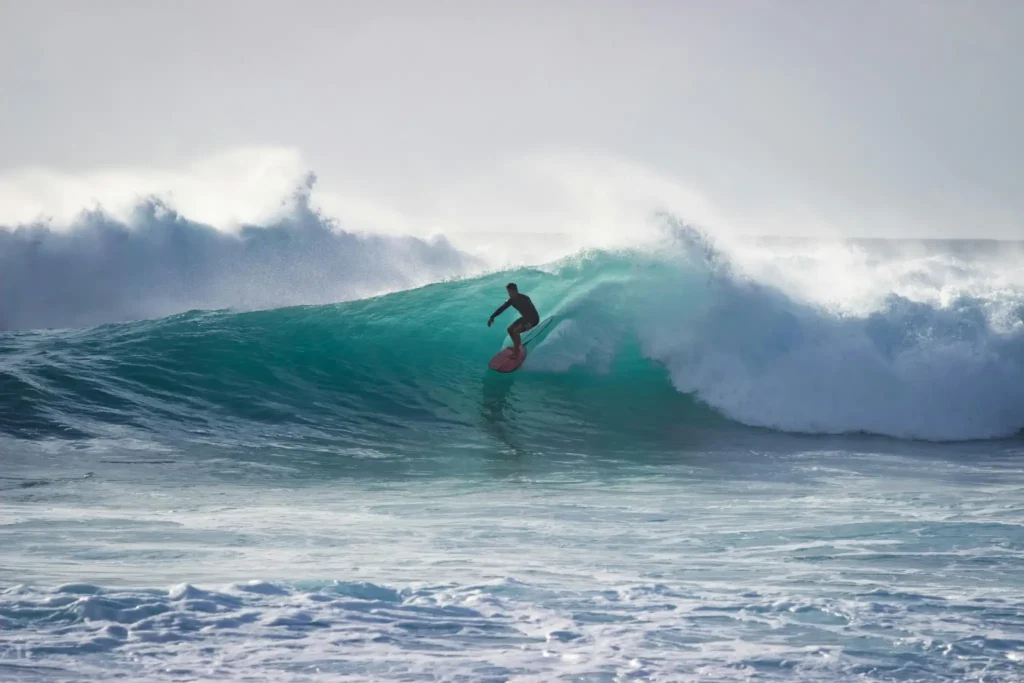
Yes. Hiriketiya is a great spot for beginners. The inner bay is calm and protected, the waves are usually gentle and steady (especially from November to March), and there are plenty of good surf schools that focus on safe, guided lessons.
Rip Currents and Wave Awareness
Rip currents are the most dangerous hazard you’ll find at any beach, and Hiriketiya is no different. The curved shape of the bay helps limit how often they form compared to more open beaches, but they can still appear, especially near the rocky edges and during mid to high tide.
Here’s how you can recognize a rip current at Hiriketiya:
- Look for darker or discolored water, particularly near the sides of the bay
- Notice if the surface looks rough or choppy while the rest of the water is calm
- Watch for foam, seaweed, or debris moving steadily out to sea
- Spot any gap or channel of unsettled water between the breaking waves
What to do if caught in a rip current at Hiriketiya?
Don’t try to fight the current. Stay calm, float to save your energy, and swim along the shore until you’re out of its pull. Once you’re clear, head back toward the beach at an angle. If you need help, signal to others.
It’s also important to pay attention to the waves. Even smaller waves can easily knock someone off balance, especially on a sandy bottom. During the southwest monsoon (May to September), waves can come in sets without much warning, so it’s best to stay cautious, just like the locals do.
Lifeguards and Emergency Services Availability
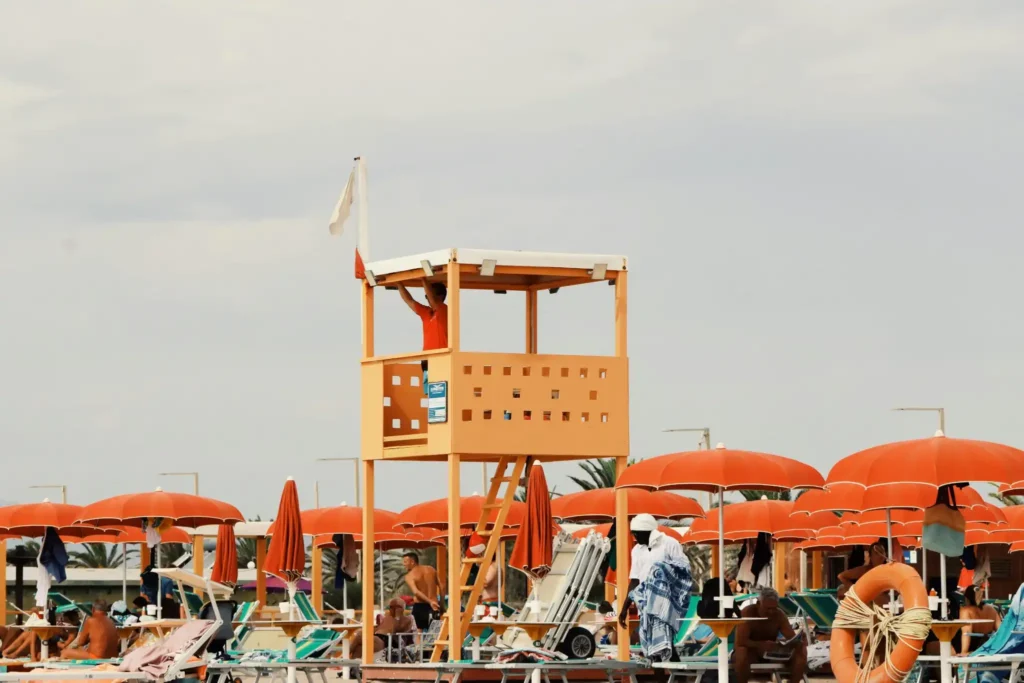
This is one of the most important but often overlooked parts of staying safe at Hiriketiya Beach. Based on recent visitor feedback and local sources, there isn’t a full-time, official lifeguard service there throughout the year.
In the busy tourist season (December to March), some surf schools and nearby hotels keep an eye on the water, but this is informal and not something you should depend on for safety.
Emergency services reference:
| Service | Availability | Notes |
| Surf School Staff | During lesson hours only | Not trained rescue swimmers unless certified |
| Police (Dikwella) | 24 hours | ~5 km from the beach |
| Nearest Hospital | Matara General Hospital | ~30 km, approximately 45 min drive |
| Ambulance (1990) | National hotline | Response time varies significantly |
Always carry your accommodation’s contact number, and consider downloading a local offline map in case of poor connectivity in the Bay Area.
Safety Tips for Solo Travelers
Solo travel in Hiriketiya has become quite popular, especially with digital nomads and long-term surfers. The area is small, friendly, and generally safe, but it’s still important to stay careful.
• Let your accommodation know your daily plans so someone is aware of where you are.
• Don’t go into the water when visibility is poor or close to sunset.
• Keep your valuables secure; things left unattended on the beach can sometimes be stolen.
• At night, use well-lit paths when moving between cafes and your stay.
• Always trust your gut feeling. If the sea looks rough, it probably is.
Is Hiriketiya Beach safe for solo female travelers?
Hiriketiya is often seen as a safe beach spot in Sri Lanka, even for solo female travelers. It has a small, friendly international crowd, which adds to the feeling of safety. Still, it’s smart to take normal precautions like being careful at night and keeping an eye on your belongings on the beach.
Nighttime Safety Around the Beach
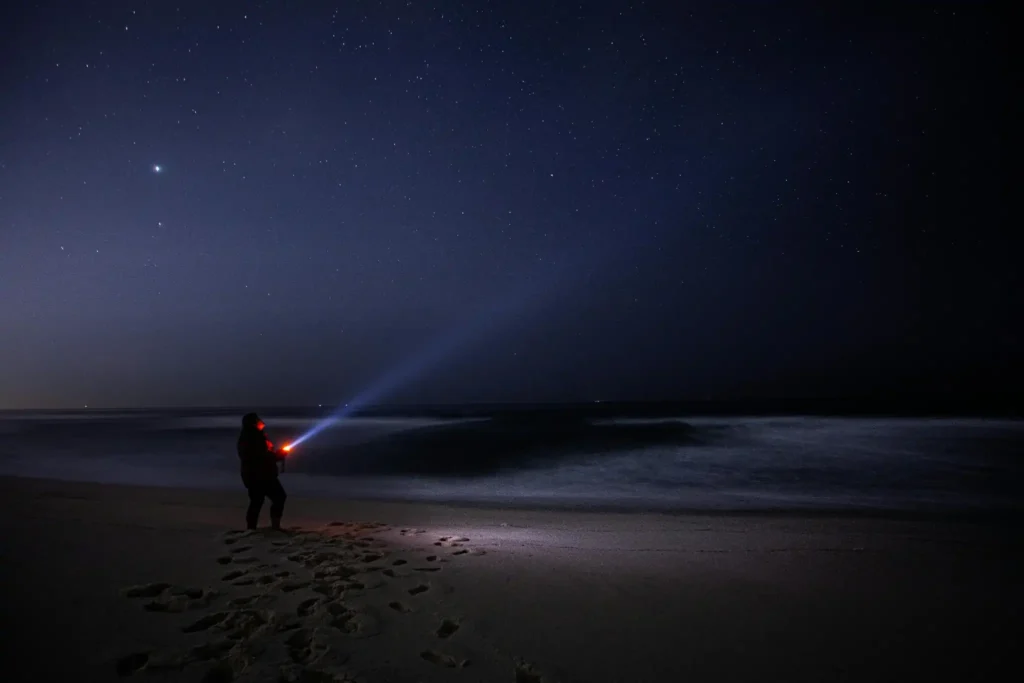
At night, Hiriketiya is much quieter compared to busy party beaches like Unawatuna. Most places shut down around 10–11 PM, and the vibe is more relaxed, with soft live music and cocktails rather than loud late-night parties.
Still, it’s not a good idea to walk on the beach after dark. There are no proper lights, the sand is uneven, and you’re close to the water, which can be risky. It’s safer to stay on the paths near the shops and restaurants and avoid lonely or hidden spots.
Also, don’t go into the ocean at night. Even strong swimmers can get into trouble because it’s hard to see currents, easy to lose direction, and much harder for anyone to notice if you need help.
Health and Hygiene Considerations
Is the water at Hiriketiya Beach clean? (Quick Answer)
Generally, yes, particularly during the dry season. However, water quality can temporarily decline after heavy rains due to agricultural runoff. Avoid swimming near stream outlets or after significant rainfall for at least 24–48 hours.
From a health standpoint, travelers should also be aware of:
- Sea urchins near rocky areas, wearing reef shoes is a simple but effective precaution.
- Jellyfish; occasional blooms occur, particularly in transitional months. Ask locals before swimming.
- Sun exposure: the Sri Lankan sun is fierce year-round. SPF 50+ and a rash guard significantly reduce sunburn risk during long beach days.
- Drinking water: always use sealed bottled water; tap water is not safe to drink.
Local Laws and Cultural Awareness
Sri Lanka has specific laws that tourists routinely overlook, sometimes with serious consequences. Nudity and topless sunbathing are illegal and considered deeply disrespectful. Modest swimwear is culturally appreciated, and completely changing on the beach is frowned upon.
Photographing locals, fishermen, or religious sites without permission is also sensitive. The small temple near the beach access path is a place of worship; enter respectfully or not at all.
Alcohol consumption on the beach itself is technically restricted in some areas of Sri Lanka. Check current local regulations, as rules can change by region, and enforcement varies.
Common Scams and How to Avoid Them
Sri Lanka has some rules that tourists often don’t notice, and breaking them can cause trouble.
- Going naked or sunbathing topless is not allowed and is seen as disrespectful. It’s better to wear modest swimwear, and changing clothes directly on the beach is generally not accepted.
- You should also be careful when taking photos. Don’t photograph local people, fishermen, or religious places unless you ask first. Small temples near the beach are sacred, so visit them respectfully or avoid going in if you’re unsure.
- Drinking alcohol on the beach is also restricted in some areas. Rules can vary depending on the location, and they may be enforced differently, so it’s always good to check local guidelines when you arrive.
Best Time to Visit for a Safer Experience
The best time to enjoy the beach safely, with nice weather and good waves, is from November to March. During these months, the northeast monsoon keeps the south coast of Sri Lanka mostly dry, the sea is calmer, and conditions are more stable and easier to predict.
April and October are in-between months, so the weather and sea conditions can shift, but they’re still okay if you stay careful and aware. From May to September, the southwest monsoon brings bigger waves and rougher seas. This period is mainly suitable for experienced surfers, while others should avoid swimming or spending too much time in the ocean.
Safety Tips for Families and Kids
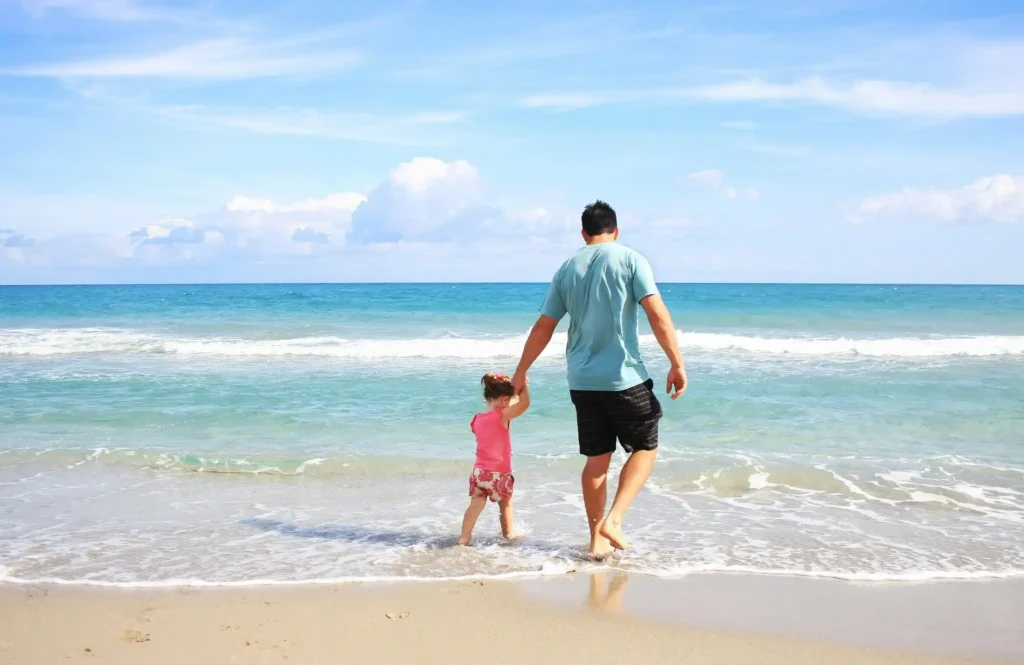
Hiriketiya can be a nice place for families if you visit at the right time of year. The inside part of the bay has shallow, calmer water, so it can be suitable for kids, but only with close adult supervision.
- Keep children in the shallow inner area of the bay.
- Make them wear bright swim vests so they’re easy to spot.
- Decide on a clear meeting spot on the beach before going into the water.
- Don’t go into the sea when the waves are strong, or conditions are rough.
- Reapply sunscreen every 90 minutes, as kids get sunburned much faster than adults.
Want the best experience? Read our 2026 Hiriketiya Beach guide covering travel tips, safety, and hidden spots.
Conclusion
Hiriketiya Beach is one of the most beautiful coastal spots in Sri Lanka, and it can also be very safe if you know a few basics. The main thing is to be aware of the season, respect the ocean, and follow simple safety habits that regular travelers use.
It’s best to visit between November and March, swim inside the calm bay area, avoid going into the water alone at night, and always pay attention to sea conditions. If you do that, Hiriketiya will give you everything it’s known for: warm water, good waves, and unforgettable moments.
Frequently Asked Questions (FAQs)
Q1: Is Hiriketiya Beach safe for non-swimmers?
People who can’t swim can still enjoy the beach and the shallow parts of the inner bay, especially when the tide is low or medium. But they should not go into water deeper than their waist unless they’re using a float. It’s also best to stay out of the water completely when the waves are strong.
Q2: Are there sharks at Hiriketiya Beach?
Shark encounters in the bay are very rare, and there are no known attacks at Hiriketiya. The bay is naturally safer because it is partly enclosed and has shallow waters near the shore. Sometimes whale sharks are seen further out during boat trips, but they are harmless and only eat small sea creatures.
Q3: Can I surf at Hiriketiya without prior experience?
Yes, there are a few good surf schools that teach beginners in the calm inner bay. It’s always better to learn from a certified instructor instead of trying on your own. These lessons also include important safety tips, like how to understand and avoid rip currents.
Q4: Is there a hospital near Hiriketiya Beach?
The closest big hospital is Matara General Hospital, which is about 30 km away. If it’s just a minor injury, you can go to the small medical center in Dikwella, which is only about 5 km away. It’s a good idea to bring a basic first aid kit with you and make sure you have travel insurance that covers emergency evacuation.
Q5: Is Hiriketiya Beach safe during the monsoon season?
From May to September, the southwest monsoon makes the sea much rougher, so swimming at the beach is not safe during this time. Only experienced surfers usually come here because of the bigger waves, while everyone else should avoid going into the water or keep ocean activities to a minimum.
Q6: What should I do in a beach emergency at Hiriketiya?
If something goes wrong, quickly contact the nearest surf school or your accommodation for help. You can also call Sri Lanka’s emergency numbers: 119 for the police and 1990 for an ambulance. The closest hospital for serious injuries is Matara General Hospital. It’s a good idea to save these emergency numbers on your phone so you can use them even without internet.