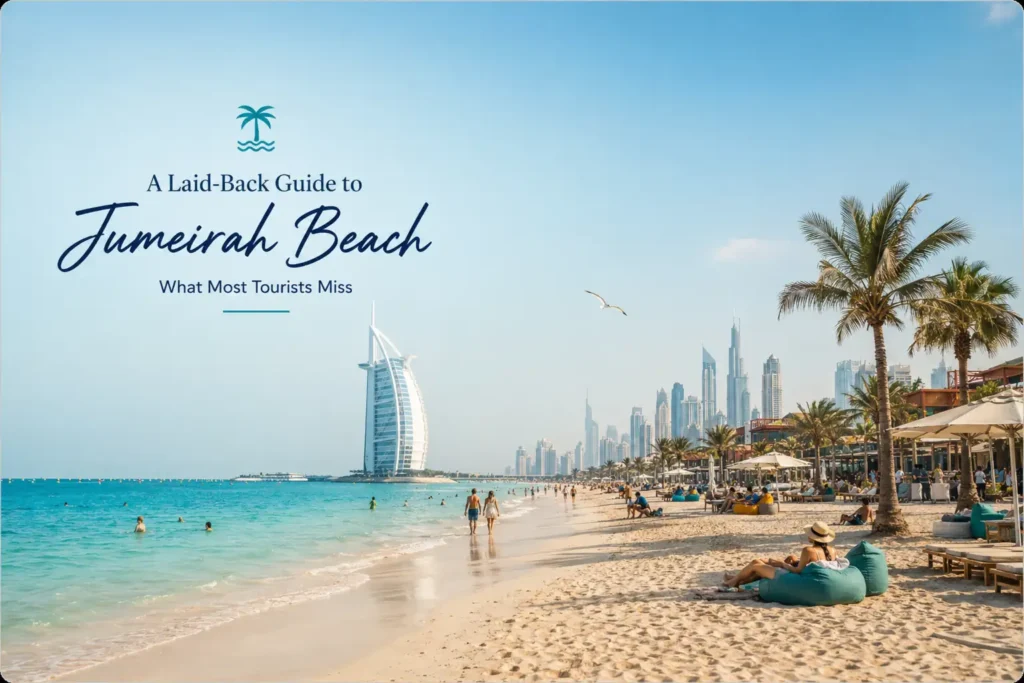
Jumeirah Beach is a long stretch of white sand along Dubai’s coastline, with the Burj Al Arab rising right behind it. Jumeirah Beach remains open and fully operational in 2026, even though the Iran–Gulf conflict has affected the wider region since early 2026. Dubai’s coastline was never a conflict zone, and Jumeirah Beach has stayed active with normal beach access, hotel operations, and tourist facilities throughout the tension.
Think Dubai is all skyscrapers? These 11 UAE beaches completely changed my view of the country’s coastline.
Flights into Dubai faced short disruptions during peak conflict moments, but airlines have largely restored regular schedules, and airport operations near the area continue as usual. The UAE’s strong air defense response and the beach’s distance from strike zones mean Jumeirah Beach has stayed calm, safe, and welcoming to visitors, even as global headlines focused on regional instability.
Introduction to Jumeirah Beach and Its Global Appeal
Dubai has built itself into a global tourism powerhouse, and Jumeirah Beach sits right at the center of that story. Located along the western coastline of Dubai, this beach stretches for roughly 3.5 kilometers and is flanked by some of the most recognizable architecture in the world, the Burj Al Arab, Jumeirah Beach Hotel, and the Wild Wadi Waterpark, all within easy reach.
What genuinely sets it apart from other city beaches is the combination of factors. The water is warm and calm. The sand is kept clean. There are proper lifeguard stations, toilet facilities, and water sports operators. Families, solo travelers, and couples all coexist comfortably here without it feeling overcrowded, at least during off-peak hours.
According to Dubai Tourism (now DTCM), the emirate welcomed over 17 million international visitors in 2024, with beach destinations consistently ranking among the top draws. Jumeirah Beach specifically draws millions annually from Europe, South Asia, and Southeast Asia. That’s not a small number. And it tells you something about the confidence travelers have placed in Dubai as a destination.
Locals I spoke to during my visit pointed out something interesting: Jumeirah Beach isn’t just a tourist spot. Residents come here on weekday mornings before the crowds arrive. It’s genuinely woven into the fabric of the city.
Quick Facts: Jumeirah Beach at a Glance
| Detail | Info |
| Location | Jumeirah district, Dubai, UAE |
| Best Time to Visit | October to April (dry, cooler season) |
| Entry Fee | Free (public beach access) |
| Nearest Metro | Business Bay / Burj Khalifa Metro |
| Water Sports Available | Yes – jet ski, paddleboard, parasailing |
| Family-Friendly | Yes – lifeguards, clean facilities, playgrounds |
How the Iran War Is Impacting Tourism at Jumeirah Beach

Let’s be straightforward about this. The Iran–Gulf conflict that escalated through late 2025 and into 2026 has created real noise in the travel industry. Some airlines have rerouted flights. A portion of European travelers have delayed or cancelled plans. Hotel occupancy in Dubai has dipped slightly compared to the record highs of 2023–2024.
But here’s the thing: Dubai’s physical security situation has not deteriorated in a meaningful way for tourists. The UAE has maintained formal neutrality, and the government has been consistent in keeping tourism infrastructure running. I spoke with a travel consultant in London who specialises in Gulf destinations, and her assessment was clear: “Dubai remains operationally stable. The concern is perception, not reality on the ground.”
That said, the impact is real in a different way. Flight prices from Western Europe and North America have risen due to rerouting and reduced capacity on some Middle East routes. Some budget airlines have pulled out of certain Gulf routes entirely. If you’re planning a trip, booking further in advance than usual makes sense right now.
Dubai Tourism Impact: Before vs. 2026
| Factor | Pre-2025 Status | 2026 Status |
| Visitor Numbers | ~16 million/year | Moderate decline (~12–14M est.) |
| Flight Prices | Competitive, stable | Higher due to rerouting |
| Airspace Status | Open & stable | Some routes adjusted |
| Hotel Occupancy | ~80–85% | Slightly lower – good deals available |
| Beach Safety | Excellent | Still excellent – no direct conflict |
Quick Answer: Has the Iran conflict affected Jumeirah Beach directly?
No. Jumeirah Beach itself has seen no direct disruption. The UAE has maintained neutrality in the conflict, and Dubai’s beaches, hotels, and tourist infrastructure continue to operate normally. The primary impact has been on flight availability and traveler perception, not on-ground safety.
Safety Concerns for Visitors During the Iran–Gulf Conflict

If you’re a traveler reading travel advisories and feeling confused, that makes sense. Different governments have issued different guidance. The UK Foreign Office has upgraded parts of the broader Gulf region to ‘exercise increased caution,’ while the UAE itself remains classified at a relatively low threat level for tourists.
The practical reality at Jumeirah Beach is that security presence is visible, professional, and reassuring. Dubai has one of the highest police-to-population ratios in the world. Beach areas are well monitored. During my own visit, I felt noticeably safer than I have on many European city beaches.
For travelers from different regions, the advisory picture looks like this:
| Region of Origin | Travel Advisory Level | Suggested Action |
| Western Europe / US | Level 2 – Exercise Caution | Check gov.uk / travel.state.gov before booking |
| South / Southeast Asia | Low to moderate concern | Monitor news; flights largely unaffected |
| GCC Countries | Minimal concern | Travel largely normal |
| Middle East (non-Gulf) | Moderate – varies by country | Verify flight availability & visa status |
One thing worth stating clearly: Dubai’s legal system and its rules of behavior for tourists haven’t changed due to the regional conflict. The same cultural norms apply. Dress modestly away from the beach. Avoid public displays of affection. Carry ID. These are the practical safety factors that actually affect tourists – and none of them have changed.
Is Jumeirah Beach safe to visit in 2026?
Yes. According to Dubai’s DTCM and major travel advisories, Jumeirah Beach remains safe for tourists. The UAE is not a direct party to the Iran conflict, and no beach closures or security incidents have affected the area. Travelers should check their own government’s latest advisory before booking.
Things to Do at Jumeirah Beach in Peaceful Times

Even setting aside the geopolitical backdrop, Jumeirah Beach stands out as a destination precisely because there’s actually a lot to do, unlike some beaches that are beautiful but empty of activity.
Water Sports and Beach Activities
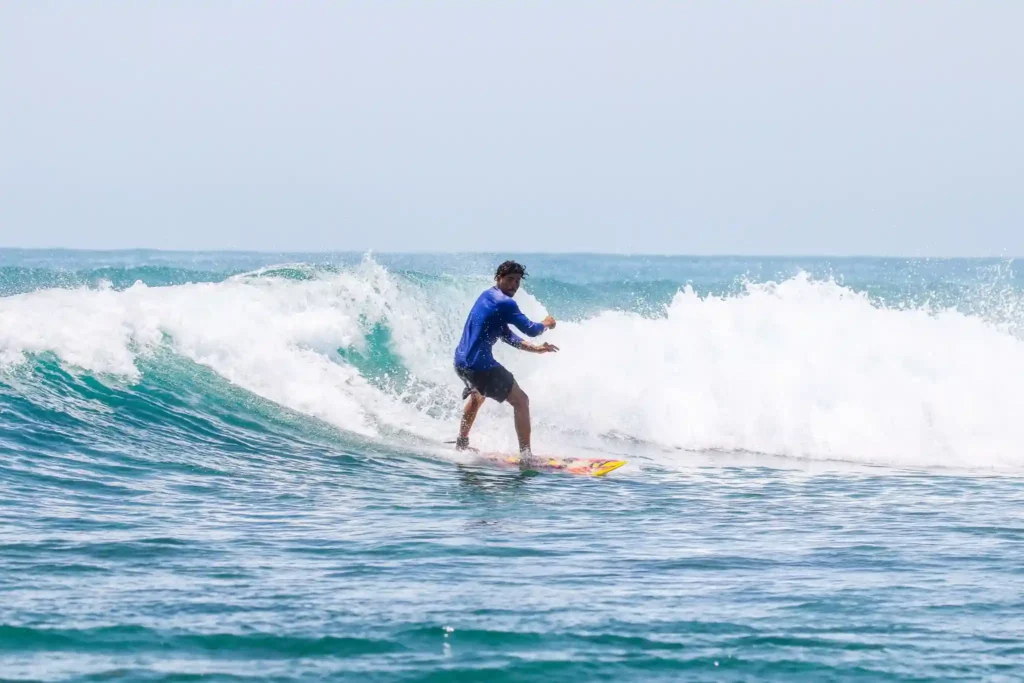
The beach offers a full range of water sports through licensed operators stationed along the shoreline. Based on my visit and conversations with operators directly:
- Jet skiing; available from multiple points; roughly AED 150–200 for 30 minutes
- Parasailing; popular with thrill-seekers; tandem options available
- Paddleboarding and kayaking are good for calmer mornings
- Banana boat rides; great for families and groups
- Snorkeling; visibility is reasonable in calmer conditions
The water sports industry here is regulated by the Dubai Sports Council, and operators are required to maintain safety certifications. That’s not something you’ll find consistently on every beach in the region.
Walking, Running, and the Beachfront Promenade
The public section of the beach includes a well-maintained promenade that stretches along the waterfront. Early mornings here are genuinely lovely; the light over the Arabian Gulf at 7 AM, with the city still quiet, is something worth setting an alarm for. Runners, dog walkers, and families are out in numbers, and it feels like real city life rather than a tourist performance.
Dining and Sunset Views
The dining scene around Jumeirah Beach has deepened significantly over the past decade. Options range from casual beach kiosks to fine dining restaurants overlooking the water. The view of the Burj Al Arab from Jumeirah Beach at golden hour is frankly spectacular – and it’s free. No ticket required. Just walk to the beach.
What activities are available at Jumeirah Beach?
Jumeirah Beach offers jet skiing, parasailing, paddleboarding, banana boat rides, beach volleyball, a waterfront promenade for walking and running, and access to nearby dining and the Burj Al Arab viewpoint. Water sports are regulated by the Dubai Sports Council.
Luxury Hotels and Attractions Near Jumeirah Beach
Staying near Jumeirah Beach puts you in one of Dubai’s most prestigious and convenient locations. The accommodation options range from ultra-luxury icons to comfortable mid-range hotels that still offer beach access.
The Burj Al Arab Jumeirah, arguably the world’s most recognisable hotel, sits just offshore from the beach on its own artificial island. Even if staying there isn’t in your budget (rooms start around AED 7,000 per night), visiting for afternoon tea or a meal is a real experience and deeply worth it for the architecture alone.
Nearby, the Jumeirah Beach Hotel offers more accessible luxury with direct beach access, multiple pools, and stunning views. The Madinat Jumeirah resort complex is also within easy reach and operates like a small waterfront village of hotels, restaurants, and retail.
Beyond accommodation, the area surrounding Jumeirah Beach is dense with attractions. Wild Wadi Waterpark sits directly adjacent. The Dubai Mall and Burj Khalifa are 20–25 minutes away by car. The traditional Dubai Creek and Al Fahidi Historic District offer a cultural counterpoint to the modern beach experience.
Quick Answer: Are travel bookings to Jumeirah Beach and Dubai down in 2026?
Some Western European markets have seen a 15–20% drop in bookings according to early 2026 travel data, largely driven by perception concerns rather than on-ground safety issues. South Asian and GCC markets remain largely stable. Dubai’s tourism authority (DTCM) has responded with promotional campaigns and package deals.
Best Time to Visit Jumeirah Beach Amid Regional Tensions
The best time to visit from a weather perspective hasn’t changed due to the regional situation. October through April remains the optimal window; temperatures are comfortable, the sea is pleasant, and the city is fully alive with events and dining.
However, given the current geopolitical context, there are a few additional timing considerations worth thinking about.
First, booking flexibility matters more than usual. If you’re traveling from a region where advisories can shift quickly, booking refundable rates or flexible airline tickets reduces your exposure to unexpected changes.
Second, monitoring your government’s advisory in the weeks before travel is genuinely important right now – not because Dubai itself is unsafe, but because your own government’s advisory affects your travel insurance coverage, and that’s a practical consideration.
Best Time to Visit Jumeirah Beach: Month-by-Month
| Month | Temperature | Crowd Level | Verdict |
| Oct – Nov | 26°C – 32°C | Moderate | Great – ideal weather |
| Dec – Feb | 20°C – 26°C | High | Best overall – peak season |
| Mar – Apr | 25°C – 33°C | Moderate | Good – pleasant and quieter |
| May – Sep | 35°C – 42°C | Low | Hot – budget deals available |
What is the best time to visit Jumeirah Beach in 2026?
October to April remains the best time to visit, with December to February being peak season for weather and atmosphere. Given current regional dynamics, booking refundable rates and checking your government’s advisory closer to travel dates is also recommended.
Final Thoughts on Visiting Jumeirah Beach in 2026
Honestly? Jumeirah Beach is still one of the best beach destinations in the world. The regional tensions have created noise, and some of that noise is legitimate, including flight disruptions, rising prices, and genuine uncertainty about how things develop. But the beach itself, Dubai’s hospitality infrastructure, and the emirate’s security situation remain strong.
What I’d tell someone planning a trip: go in with current information rather than fear or blind confidence. Check your government’s advisory. Buy flexible tickets. Don’t let a situation that hasn’t materially affected beach tourism stop you from experiencing something genuinely world-class.
The Burj Al Arab at sunset, seen from the sand with warm Gulf water around your feet, is one of those images that stays with you. And right now, you might even have the beach a little quieter than usual. Sometimes timing works in your favor.
Frequently Asked Questions
Q1: Is Jumeirah Beach open to the public for free?
Yes. The main public stretch of Jumeirah Beach, often called Jumeirah Public Beach or JBR Beach, is free to access. Some private sections attached to hotels require a day pass or a hotel stay.
Q2: Has the Iran conflict caused any beach closures in Dubai?
No. As of mid-2026, there have been no beach closures in Dubai related to the Iran–Gulf conflict. Jumeirah Beach and all major coastal attractions continue to operate normally.
Q3: What should I wear at Jumeirah Beach?
Standard beachwear – swimsuits, shorts, bikinis – is perfectly acceptable on the beach itself. When walking away from the beach into the surrounding area, covering up with light layers is expected and respectful of local norms.
Q4: Are there lifeguards at Jumeirah Beach?
Yes. Jumeirah Beach has stationed lifeguards across designated swimming areas. The beach also has clear flag systems indicating water conditions. Always swim within the flagged zones.
Q5: How do I get to Jumeirah Beach from the Dubai city center?
Taxi is the most convenient option and takes around 20–25 minutes from Downtown Dubai, depending on traffic. The Dubai Metro’s Red Line stops at Nakheel Harbour and Tower station, from which a short taxi or bus ride brings you to the beach. Rideshare apps like Careem are widely used and reliable.
Q6: Is Jumeirah Beach family-friendly?
Absolutely. The beach has clean facilities, proper restrooms, lifeguard coverage, and relatively calm water in the mornings. Families with children of all ages visit regularly. It’s one of the more family-oriented beach destinations in the Gulf region.