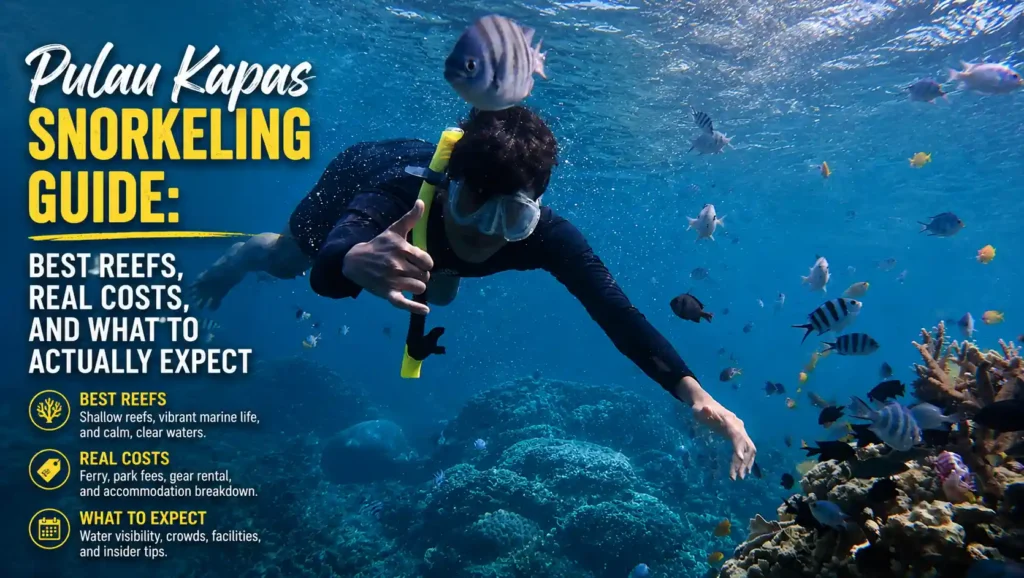
Pulau Kapas snorkeling rewards you with clear water, visibility that often reaches 5 to 10 meters, and coral reefs that sit close to shore, so you don’t need a boat trip to reach good spots. The best areas are found near Coral Beach and the rocky points on the island’s eastern side, where you can see parrotfish, clownfish, small reef sharks, and healthy clusters of hard coral.
Most operators rent full gear, mask, snorkel, and fins, for around RM20 to RM30 a day, and a guided boat snorkeling trip typically costs between RM60 and RM100 per person, depending on the number of stops. Because Pulau Kapas snorkeling happens inside a protected marine park, the reefs stay in better condition than many other spots along the coast, which means clearer sightings and less damaged coral even during peak season.
Where Is Pulau Kapas, and why is the Snorkeling Is Actually Good
Pulau Kapas translates to ‘Cotton Island’ in Malay, and the name fits. The beaches are soft and white, the water is clear, and the whole island covers roughly 3 square kilometers. It sits just off the Marang coast in Terengganu, about a 15 to 25 minute speedboat ride from Marang Jetty.
According to coral reef surveys carried out by Reef Check Malaysia, coral coverage around Kapas is considerably higher than at many comparable Malaysian island sites. Water visibility during the dry season regularly reaches 10 to 15 meters. That’s the kind of clarity that makes underwater photography actually worthwhile rather than just getting murky green photos.
Tourism Malaysia officially lists Pulau Kapas among its top East Coast snorkeling destinations, and researchers from the University Malaysia Terengganu (UMT), which conducts ongoing marine biodiversity studies in Terengganu waters, have documented over 50 coral species and more than 200 fish species in the surrounding marine park zone.
When Is the Best Time to Visit Pulau Kapas for Snorkeling?
The best time is between March and October, with peak conditions from May to August. Water visibility hits 12-15 meters, and conditions are calmest in this window. Avoid November through February entirely as the island closes during the northeast monsoon season.
Best Time to Visit for Clear Water and Marine Life
Timing this trip is honestly the most important decision you’ll make. The Malaysian Meteorological Department classifies the East Coast as subject to the northeast monsoon from November through March. During this period, Pulau Kapas is effectively closed to visitors, and most guesthouses shut down completely.
May to August is the sweet spot. Visibility regularly hits 12 to 15 meters, the current is gentle, and marine life activity is at its peak. September and October remain good options, though visibility can drop slightly as the monsoon transition approaches. Go in July if you can. It’s consistently the best month.
| Month | Water Clarity | Wave Conditions | Snorkeling Quality |
| March to April | Moderate (8-12m) | Calm | Good |
| May to August | Excellent (12-15m) | Very Calm | Best |
| September to October | Good (10-13m) | Mostly Calm | Good |
| November to February | Poor / Closed | Rough | Not Recommended |
How to Reach Pulau Kapas Island
The only way to reach Pulau Kapas is by boat from Marang Jetty. There’s no bridge and definitely no road. That’s exactly why it stays relatively quiet. Ferries and speedboats depart from Marang Jetty daily during the open season, with the ride taking 15 to 45 minutes depending on the boat type.
A return boat ticket costs roughly RM35 to RM50 per person, depending on the operator. Most guesthouse packages include the transfer, so check before booking separately. Marang itself is about 30 minutes by road from Kuala Terengganu. If you’re flying in, Sultan Mahmud Airport in Kuala Terengganu is served by AirAsia and Malaysia Airlines with direct connections from Kuala Lumpur Subang.
| Transport Detail | Info |
| Departure point | Marang Jetty, Terengganu |
| Journey time | 15-45 minutes (speedboat vs ferry) |
| Return boat fare | RM35-50 per person |
| Nearest city | Kuala Terengganu (30 min by road) |
| Nearest airport | Sultan Mahmud Airport, Kuala Terengganu |
| Island access season | March to October only |
What Are the Best Snorkeling Spots Around Pulau Kapas?
The top spots are Tanjung Pauh reef on the northern tip, the channel between Pulau Kapas and Pulau Gemia, and the shallow reef flats near the main beach. Most licensed operators cover 3 to 5 sites per trip.
Best Snorkeling Spots Around Pulau Kapas
There are a few snorkeling spots around Pulau Kapas, but honestly, some are far better than others, depending on what kind of experience you want.
- Tanjung Pauh (Northern Side)
- Usually, the clearest water is around the island
- Healthy coral and loads of colorful fish
- Feels quieter and more untouched than the main beach areas
- Most snorkeling boats stop here first for a reason
- Between Pulau Kapas & Pulau Gemia
- One of the best places to spot sea turtles if you’re lucky
- You’ll often see parrotfish and angelfish moving through the reefs
- Early mornings feel especially peaceful here before more boats arrive
- The water between the islands is calm and easy to snorkel in
- Main Beach Reef Flats
- Best spot for beginners or nervous swimmers
- Shallow water with very little current
- Easy place to practice before heading to deeper reefs
- Not the most dramatic reef, but relaxed and beginner-friendly
A lot of people come expecting “just another island snorkeling trip,” but the calm water and uncrowded reefs here make Pulau Kapas feel surprisingly special once you’re actually in the water.
From ferry tips to the best beaches and budget breakdowns, this Pulau Kapas Travel Guide covers everything you need for a stress-free island tour.
The Moment Pulau Kapas Actually Feels Different
I still remember the first morning we reached the northern reef near Tanjung Pauh. The boat engine cut off, everything suddenly went quiet, and the water looked almost unreal, clear enough to see coral shapes moving beneath the surface before even jumping in. Within minutes, a small hawksbill turtle drifted past the reef edge while schools of yellow butterflyfish moved around the coral like they owned the place.
What surprised me most wasn’t just the marine life, but how calm everything felt compared to busier Malaysian islands. No loud crowds, no packed tour boats hovering nearby, just warm water, soft waves, and that rare feeling that the island still hasn’t been overly commercialized yet.
For a moment, it honestly felt like the kind of place travelers spend years trying to find again after losing it to crowds elsewhere.
What Marine Life Can You See While Snorkeling?
Based on biodiversity data from the University Malaysia Terengganu and field observations by Malaysian Nature Society volunteers active in the Terengganu marine park zone, here’s what’s commonly spotted:
- Hawksbill turtles (Eretmochelys imbricata), frequently seen near deeper reef edges
- Clownfish (anemonefish) in resident anemone clusters close to the reef flat
- Blue-spotted stingrays resting on sandy patches between coral formations
- Parrotfish, wrasse, surgeonfish, and butterflyfish in consistently high numbers
- Blacktip reef sharks in deeper water, occasionally spotted and harmless to snorkelers
- Multiple nudibranch species visible on coral surfaces with close observation
- Hard and soft coral colonies, including table coral, staghorn, and brain coral formations
The WWF Malaysia coastal marine conservation program has identified Terengganu waters, including Kapas, as a priority habitat for sea turtle conservation. The Malaysian Fisheries Department also patrols the marine park perimeter to enforce no-take zones, which directly contributes to the fish density you’ll notice compared to unprotected sites.
Pulau Kapas Snorkeling Packages and Gear Rental Costs
Here’s what’s actually realistic based on current pricing from operators registered with the Terengganu State Tourism Authority. Numbers vary between operators, but these ranges hold for the 2025 and 2026 seasons.
| Package Type | Price (per person) | What’s Included | Suitable For |
| Basic snorkel trip (2-3 spots) | RM40-60 | Boat, guide, equipment | First-timers |
| Half-day snorkeling package | RM70-100 | 4-5 spots, equipment, guide | Most visitors |
| Full-day island + snorkel combo | RM120-180 | Boat, 5-6 spots, light meal | Full experience |
| Gear rental only | RM20-30 per session | Mask, fins, buoyancy vest | Experienced snorkelers |
Most gear available on the island is in decent condition. That said, bring your own mask if you’re particular about fit, because rental masks don’t always seal perfectly for every face shape. A life vest or buoyancy vest is always included by licensed operators, and the Malaysian Maritime Enforcement Agency (MMEA) requires all licensed water activity operators to provide flotation equipment to guests as a standard safety requirement.
Pulau Kapas Budget Breakdown
If you’re trying to estimate your total trip cost, here’s a realistic daily budget breakdown based on current 2025–2026 prices around Pulau Kapas.
| Expense | Budget |
| Boat Transfer | RM35–50 |
| Snorkeling Trip | RM40–100 |
| Accommodation | RM40–250 |
| Food & Drinks | RM20–50/day |
| Kayak Rental (Optional) | RM25–40/hour |
| Marine Park Fee | RM5–30 |
Is Snorkeling in Pulau Kapas Suitable for Beginners?
Yes. The shallow reef flats near the main beach are calm, easy to navigate, and ideal for complete beginners. All licensed operators provide buoyancy vests and a safety briefing before entering the water.
Beginner Tips for Snorkeling in Pulau Kapas
- Spend 10 minutes in knee-deep water first to get comfortable breathing through the tube before heading out to the reef
- Keep your arms at your sides rather than using them to paddle; leg kicks are sufficient, and you’ll disturb less coral
- Never touch or stand on coral: it’s illegal inside a marine park and causes long-term reef damage that takes decades to reverse
- Defog your mask the night before using toothpaste or a commercial anti-fog solution
- Use only reef-safe, biodegradable sunscreen: the Terengganu State Parks Corporation actively encourages operators to enforce this with guests
- If you feel tired, roll onto your back and float: the salt content in the Terengganu waters makes floating remarkably easy
Is Pulau Kapas Good for Non-Swimmers?
Yes, with a buoyancy vest. The shallow sections near the main beach are calm and controlled enough for non-swimmers to enjoy the surface views comfortably. All licensed operators provide flotation equipment on request as required by the MMEA.
Pulau Kapas vs. Other Malaysian Islands for Snorkeling
People frequently ask whether to go to Redang, Perhentian, or Kapas. Honest answer: it depends on what you’re after.
| Feature | Pulau Kapas | Pulau Redang | Pulau Perhentian |
| Crowd level | Low | Medium-High | Medium-High |
| Water visibility | 10-15m | 15-20m | 12-18m |
| Coral health | Good | Excellent | Good |
| Budget friendliness | Best value | Moderate | Moderate |
| Best for | Quiet day trips | Serious divers | Backpackers |
| Marine park protection | Yes (Jabatan Taman Laut) | Yes (Jabatan Taman Laut) | Yes (Jabatan Taman Laut) |
Kapas is the right choice if you want a less commercial experience at a lower cost. Redang has slightly better visibility and more structured dive operations, but it’s significantly more crowded and expensive. The Department of Marine Parks Malaysia manages all three islands under the same conservation framework, so reef protection standards are consistent. What differs is the atmosphere and the crowd size, and Kapas wins on both for anyone who values a quieter trip.
What Should I Pack for a Pulau Kapas Snorkeling Trip?
Pack reef-safe sunscreen (SPF 50+), at least 2 liters of water per person, snacks or a packed lunch, a waterproof bag, cash in Malaysian Ringgit, and a fully charged phone or camera. There are no ATMs on the island.
Other Things to Do Besides Snorkeling
The island is small, but that’s the point. When you’re not in the water, the main beach is perfect for swimming, reading, or doing absolutely nothing at a decent pace. Kayak rentals are available from most guesthouses at around RM25 to RM40 per hour. There’s also a narrow trail that crosses the island, taking about 30 to 45 minutes to walk. It opens onto a quieter stretch of beach on the east side that gets very few visitors even during busy periods.
There are a handful of small chalets and basic restaurants on the island. Nothing fancy, just local-style seafood meals, fried rice, and cold drinks. Don’t expect variety. Bring your own if you have specific needs.
What Time Should I Leave Pulau Kapas to Return Safely?
Book your return boat for no later than 4:30 to 5:00 PM. The last boats typically depart between 5 and 6 PM, depending on the operator. Confirm your return time with the boat captain before going to the beach.
Final Thoughts on Visiting Pulau Kapas for Snorkeling
Pulau Kapas is one of the better-value snorkeling destinations in Malaysia right now. It hasn’t been over-commercialized, the reef is in genuinely good health thanks to consistent enforcement by Jabatan Taman Laut, and the experience of being on a quiet island with clear water is something that’s increasingly hard to find elsewhere on the peninsula.
As someone who has snorkeled across multiple Malaysian marine parks, Kapas consistently stands out for being relaxed and unhurried in a way that Redang and Perhentian no longer quite manage. Bring your own snorkel gear if you can, visit in June or July, get in the water early, and stay off the coral. That’s genuinely all you need to have a great time.
The Ministry of Natural Resources and Environment Malaysia continues to invest in marine park management across Terengganu, and based on what’s visible underwater, that investment is working. Go now while it’s still this good.
Frequently Asked Questions About Pulau Kapas Snorkeling
Q1: Do I need a permit to snorkel in Pulau Kapas?
No separate snorkeling permit is required. A marine park conservation fee of RM5-10 for Malaysian citizens and RM30 for foreign visitors is typically collected at the jetty or included in your package. This fee is managed by the Department of Marine Parks Malaysia.
Q2: How long does a day trip to Pulau Kapas take?
Most day-trippers leave Marang Jetty between 8 and 9 AM and return by 5 to 6 PM. The boat ride is 15 to 25 minutes each way, giving you a full 6 to 8 hours on the island.
Q3: Can I snorkel directly from the beach?
Yes. The shallow reef flat near the main beach starts just a short swim from shore. Depth ranges from 1.5 to 4 meters with minimal current, making it ideal for self-guided snorkeling without a boat trip.
Q4: What is the water temperature in Pulau Kapas?
Water temperature averages between 28 and 30 degrees Celsius during the peak snorkeling season. No wetsuit is required.
Q5: Are there accommodation options on Pulau Kapas?
Yes. There are several guesthouses and chalets on the island, ranging from dormitory bunks at RM40 to RM60 per night to private chalets at RM150 to RM250. Booking in advance during peak season (June through August) is strongly recommended.
Q6: Is snorkeling good for families with kids?
Yes, if children are comfortable in the water and aged 8 or above. The shallow reef flat near the beach is safe and calm. Parents should ensure children wear buoyancy vests at all times, which licensed operators are required to provide.