
If you’re planning a trip to this little slice of paradise in southern Thailand, understanding the Koh Lipe entrance fee and rules before you arrive will save you real money and possibly a lot of stress at the pier. I made the mistake of not knowing exactly what to expect the first time, and the surprise fees plus confusion about payment almost took the shine off an otherwise magical arrival.
So here’s everything laid out clearly, based on experience, updated figures for 2026, and guidance from Thailand’s Department of National Parks, Wildlife and Plant Conservation (DNP), the official body overseeing Tarutao National Marine Park, specifically the Adang-Rawi island group, where Koh Lipe is located. The Koh Lipe entrance fee and rules are not complicated, but you do need to know them.
Is There an Entrance Fee to Visit Koh Lipe?
Yes, there is. Koh Lipe sits within Tarutao National Marine Park, a protected marine area in Satun Province managed by Thailand’s Department of National Parks. This isn’t just a formality; the fee genuinely funds conservation efforts on the reef, beach cleanup operations, and wildlife monitoring across the surrounding islands. As per the DNP’s 2024 fee schedule, last updated in November 2023, foreign visitors must pay a national park entry fee each time they enter the island.
The short version: yes, you pay to get in, and yes, it’s collected at the pier the moment your boat docks.
The National Park Fee Explained
Koh Lipe is part of the Tarutao National Marine Park and belongs to the Adang-Rawi island group in Satun Province. The park protects some of Southeast Asia’s most biodiverse coral reefs, including over 80 species of hard coral and documented populations of whale sharks and dugongs, according to the Marine and Coastal Resources Research and Development Institute (MCRDI).
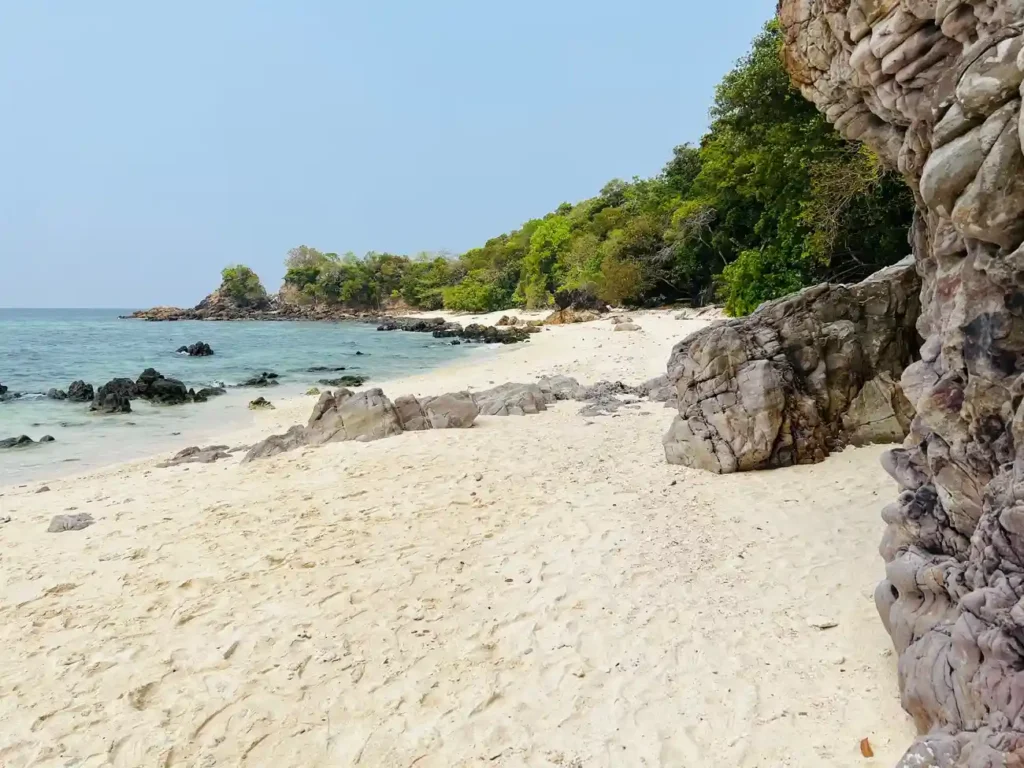
On arrival by speedboat or ferry from Pak Bara, Langkawi (Malaysia), or Ko Lanta, you will need to queue at a small booth on Walking Street beach or at the pier. Staff will collect the fee before you step off. No payment, no entry. It’s that simple.
Quick snapshot: these figures apply per entry per person. Save this before you book.
| Visitor Type | Fee (THB) | Fee (USD approx.) | Notes |
| Foreign adult | 500 THB | ~$14 USD | Per entry, not per day |
| Foreign child (3–14) | 300 THB | ~$8.50 USD | Under 3 is free |
| Thai adult | 40 THB | ~$1.10 USD | National citizen rate |
| Thai child | 20 THB | ~$0.55 USD | Subsidised rate |
Current Koh Lipe Entrance Fee for Tourists
As of 2026, the standard Koh Lipe entrance fee for foreign tourists is 500 Thai Baht per adult and 300 Thai Baht per child aged 3 to 14. Children under three years old enter free. Thai nationals pay a heavily subsidised rate of 40 THB for adults and 20 THB for children.
The dual-pricing structure is standard across all Thai national parks and has been in place since the DNP’s nationwide fee reform in 2018. It’s not unique to Koh Lipe, and arguing about it at the booth won’t get you anywhere, trust me, I’ve watched people try.
Important: the fee is charged per entry, not per day or per week. If you leave the island and come back, say, for a day trip to Koh Adang or to catch a ferry to Langkawi, you’ll pay again on return.
How much is the Koh Lipe entrance fee in 2026?
The Koh Lipe entrance fee in 2026 is 500 THB for foreign adults and 300 THB for foreign children aged 3 to 14. Thai nationals pay 40 THB for adults and 20 THB for children. The fee is charged per entry, not per day, so visitors should keep cash ready before arriving.
Who Needs to Pay the Fee?
All foreign nationals visiting Koh Lipe must pay the national park entrance fee, regardless of age (children 3 and above). There are no exemptions for travel agents, tour operators, bloggers, journalists, or long-stay visitors. If you’re arriving by private boat or chartered vessel, the fee still applies at the pier.
Some guesthouses say the fee is included in the accommodation package, but this is often not true—so it’s best to double-check. Locals who work on the island regularly tell arriving tourists to just keep 500 THB in cash handy at all times for exactly this moment.
Do you have to pay the Koh Lipe national park fee?
Yes, visitors must pay the Koh Lipe national park fee because the island is part of a protected marine park area. The fee is usually collected when your boat arrives at the pier or beach checkpoint. It applies to foreign visitors, children above three years old, and people arriving by private boat.
Where and How the Fee Is Collected
They collect fees at two main points: the Walking Street pier checkpoint and the Sunrise Beach checkpoint, depending on your arrival boat. DNP rangers in khaki uniforms staff these booths during peak hours (roughly 8 am to 5 pm). If you arrive outside these hours—such as at night—officials may collect payment the following morning or, in some cases, onboard your boat.
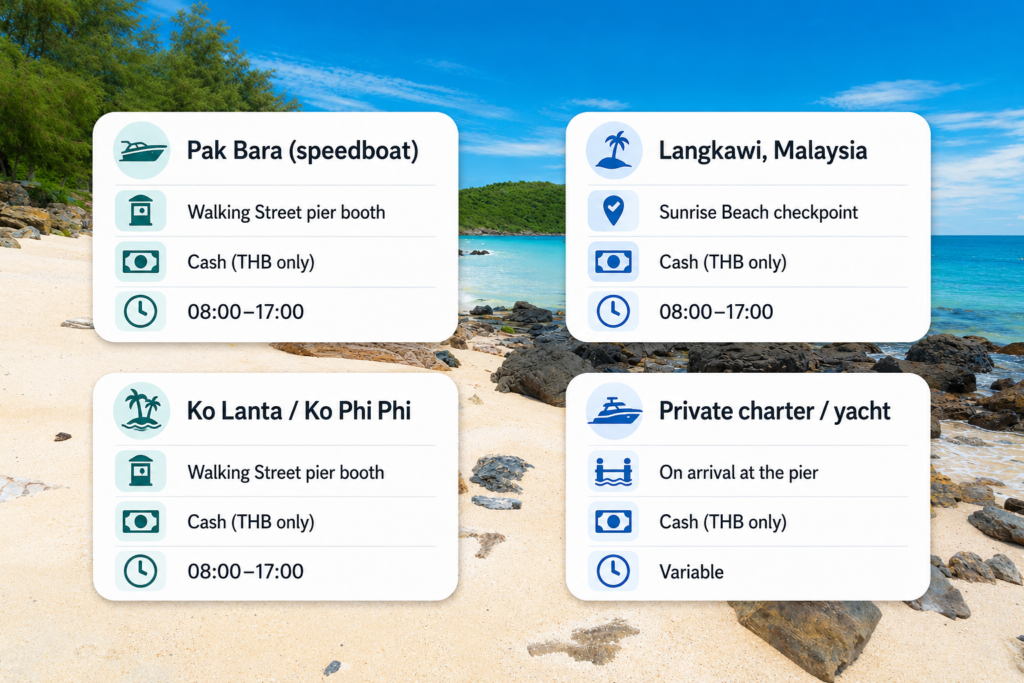
Payment is cash only. There are no card readers at the booths as of early 2026. Bring Thai Baht; there’s an ATM near Walking Street, but it frequently runs out of cash during high season (November to April). Exchange currency before arriving at Pak Bara port if you can.
Use this at-a-glance reference to plan your cash before boarding at Pak Bara.
| Arrival Point | Fee Collection Location | Payment Method | Operating Hours |
| Pak Bara (speedboat) | Walking Street pier booth | Cash (THB only) | 08:00–17:00 |
| Langkawi, Malaysia | Sunrise Beach checkpoint | Cash (THB only) | 08:00–17:00 |
| Ko Lanta / Ko Phi Phi | Walking Street pier booth | Cash (THB only) | 08:00–17:00 |
| Private charter/yacht | On arrival at the pier | Cash (THB only) | Variable |
What’s Included in the Entrance Fee?
The 500 THB fee covers access to all national park areas within Tarutao National Marine Park during your stay on that entry. This includes:
- Access to Koh Lipe’s three main beaches: Walking Street Beach, Sunrise Beach, and Sunset Beach
- Permission to snorkel in national park waters around Koh Lipe and nearby Koh Adang
- Access to the Koh Adang day-use area (if you take a boat across, no additional fee within the same visit window)
- Visitor information resources at the DNP ranger station near Sunrise Beach
It does not cover boat transport, dive tours, equipment rental, or accommodation. It also doesn’t cover any special permits for drone use or night camping, which require separate applications.
Additional Costs to Expect on Koh Lipe
Beyond the park fee, here’s what catches most visitors off guard:
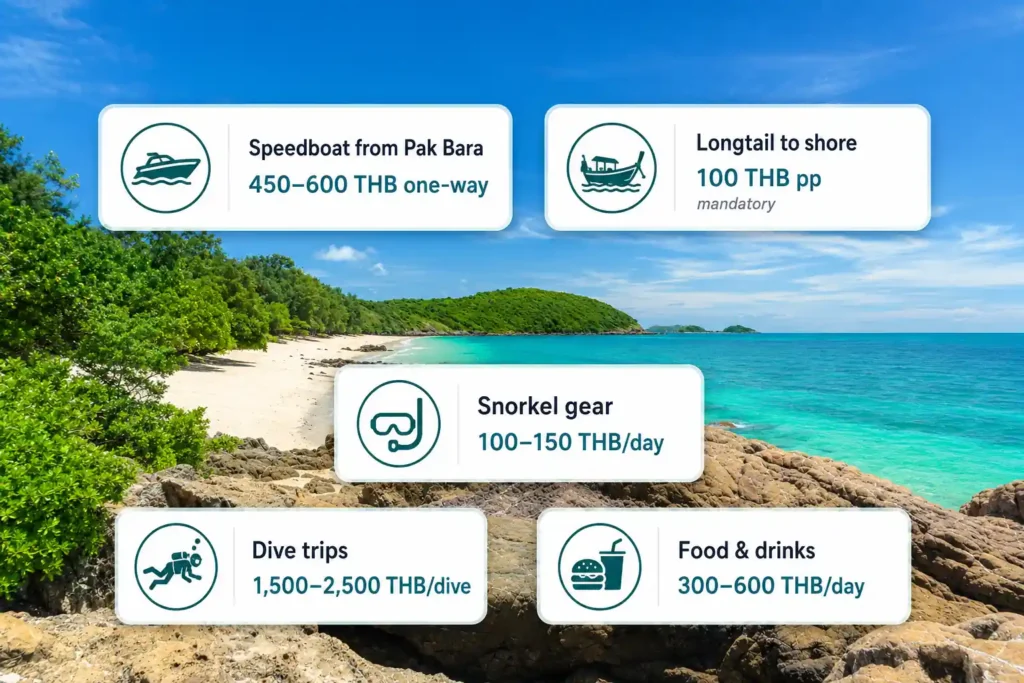
- Speedboat from Pak Bara: 450–600 THB per person one-way (varies by operator and season)
- Longtail boat transfer from speedboat to shore: 100 THB per person (mandatory on most arrival routes)
- Snorkel gear rental: 100–150 THB per day
- Dive trips with certified PADI operators: 1,500–2,500 THB per dive
- Food and drink: budget around 300–600 THB per day for casual meals on Walking Street
The longtail boat transfer in particular surprises people. Your speedboat can’t dock directly; smaller boats ferry you to shore. It’s 100 THB and non-negotiable.
What extra costs should you expect on Koh Lipe? Read more in Koh Lipe Cost Breakdown: What This Beautiful Island Really Costs.
Best Time to Visit Koh Lipe and Save Money
High season runs from November through April, this is when the sea is calm, visibility for snorkelling is at its best (often 15–20 metres, according to the Thai Meteorological Department), and the island is at full buzz. Flights into Hat Yai and boat connections from Pak Bara operate daily.
Low season (May to October) sees reduced boat schedules and some guesthouses shut entirely due to monsoon conditions. The island is quieter, accommodations are cheaper by 30–50%, and the fee remains the same. If you want a more laid-back experience and can handle occasional rain, early May or late October are genuinely underrated windows.
Match your budget and style to the right season; costs vary more than most expect.
| Season | Months | Park Fee | Hotel Avg/Night | Sea Conditions |
| Peak / High Season | Nov – Apr | 500 THB | 1,500–4,000 THB | Calm, clear |
| Shoulder Season | Oct, May | 500 THB | 900–2,000 THB | Variable |
| Low / Off Season | Jun – Sep | 500 THB | 600–1,500 THB | Choppy, monsoon |
When is the best time to visit Koh Lipe and save money? Read more in Best Time to Visit Koh Lipe: When to Go and When to Avoid.
Koh Lipe Travel Rules Visitors Should Know
The national park entrance fee is just the beginning. Koh Lipe has a clear set of rules that every visitor is expected to follow, and enforcement has noticeably tightened over recent years. The Satun Provincial Office of Natural Resources and Environment and the DNP jointly manage compliance on the island, particularly around marine and beach conservation.
What rules should visitors follow on Koh Lipe?
Visitors on Koh Lipe should avoid touching coral, collecting shells, littering, fishing, flying drones without permission, and using chemical sunscreen in the water. Reef-safe sunscreen, respectful beach behavior, and keeping the national park receipt are simple ways to avoid fines.
Environmental Rules That Tourists Must Follow
These are non-negotiable and actively enforced:
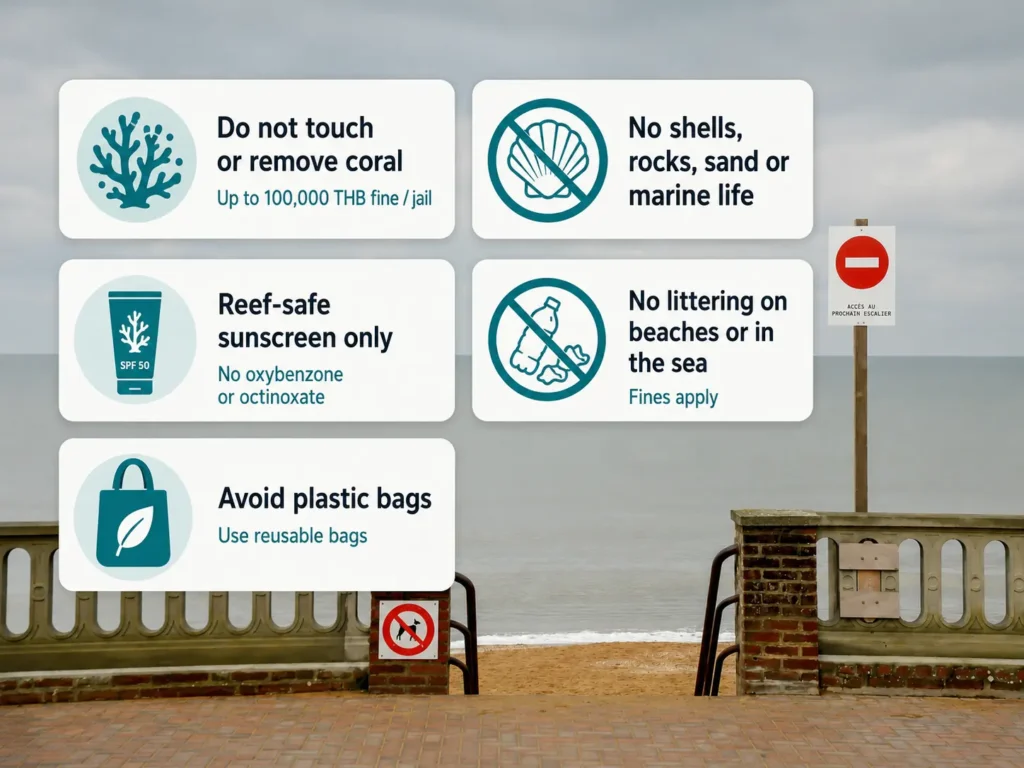
- Do not touch, stand on, or remove coral. This is a criminal offence under Thailand’s Wildlife Conservation and Protection Act and can result in fines of up to 100,000 THB or imprisonment
- Do not collect shells, rocks, sand, or any marine life from the national park area
- They regulate sunscreen use, allowing only reef-safe, biodegradable sunscreen in the water. They ban chemical sunscreens that contain oxybenzone or octinoxate. Thailand’s Ministry of Natural Resources and Environment confirmed this rule in 2021, and it applies across all Thai marine national parks
- No littering on beaches or in the sea. Fines apply, and rangers do issue them
- Plastic bags are discouraged; reusable bags are available at most shops on Walking Street
Reef-Safe Sunscreen Rule: What It Means for Visitors
Since 2021, Thailand has banned chemical sunscreens containing oxybenzone, octinoxate, 4-methylbenzylidene camphor, and butylparaben across all marine national parks, including Koh Lipe. This is based on research from Thailand’s Department of Marine and Coastal Resources showing these chemicals cause coral bleaching at concentrations as low as 62 parts per trillion. Use mineral-based sunscreens with zinc oxide or titanium dioxide instead. Most dive shops on the island sell compliant brands.
What Is Allowed and Not Allowed on Koh Lipe Beaches?
On Koh Lipe beaches, you can swim, snorkel, kayak, relax on the sand, take photos, and enjoy the sunset without any problem. Just be respectful while you’re there.
Don’t leave trash behind, touch coral, collect shells, disturb marine life, or play loud music late at night. Some things, like drones, bonfires, camping, or drinking alcohol, may depend on the beach rules, so it’s better to check the signs or ask your resort first.
Beach and Marine Conservation Guidelines
Allowed: swimming, snorkelling with a reef-safe sunscreen, non-motorised water activities, picnicking in designated areas, photography (personal use).
Not allowed: campfires on the beach, glass bottles on the sand (plastic bottle restrictions also apply near the waterline), motorised watersports in protected zones, feeding fish or wildlife, taking any natural material from the beach.
The WWF-Thailand has a recorded presence in this region as part of its Coral Triangle Initiative, and local dive operators like Forra Dive and Idyllic Concept Resort actively participate in reef monitoring surveys run jointly with Kasetsart University’s Faculty of Fisheries.
Drone, Fishing, and Camping Regulations
Are Drones Allowed at Koh Lipe?
Drone use at Koh Lipe requires prior written permission from the DNP regional office in Satun. Recreational drone flights over national park areas are restricted under Thailand’s Civil Aviation Authority Act and the national park management regulations. Violating this can result in drone confiscation and fines. A handful of licensed operators on the island hold the relevant permits. If you want aerial footage, hire one of them rather than risking it yourself.
Is Fishing Allowed at Koh Lipe?
The authorities ban recreational fishing within 3 nautical miles of Koh Lipe in Tarutao National Marine Park waters and prohibit all commercial fishing. The Royal Thai Navy and DNP marine patrol units carry out enforcement through regular patrols. Violations carry fines starting at 40,000 THB under the National Park Act B.E. 2562 (2019).
Can You Camp Overnight at Koh Lipe?
Visitors cannot camp on Koh Lipe’s beaches unless they obtain a special permit from the DNP. The national park authority operates a designated campsite on nearby Koh Adang and requires advance reservations through its official booking system. Facilities are basic but clean. Camping anywhere outside designated zones is an offence.
Know what’s allowed before you arrive; rangers enforce these more actively each season.
| Activity | Allowed? | Permit Required? | Fine if Violated |
| Snorkelling | Yes | No | N/A |
| Drone flying | Restricted | Yes (DNP) | Confiscation + fine |
| Fishing | No | N/A | 40,000+ THB |
| Beach camping | No (without permit) | Yes (DNP) | Fine + removal |
| Chemical sunscreen in water | No | N/A | Fine |
| Coral touching/collection | No | N/A | Up to 100,000 THB |
Penalties for Breaking Local Rules
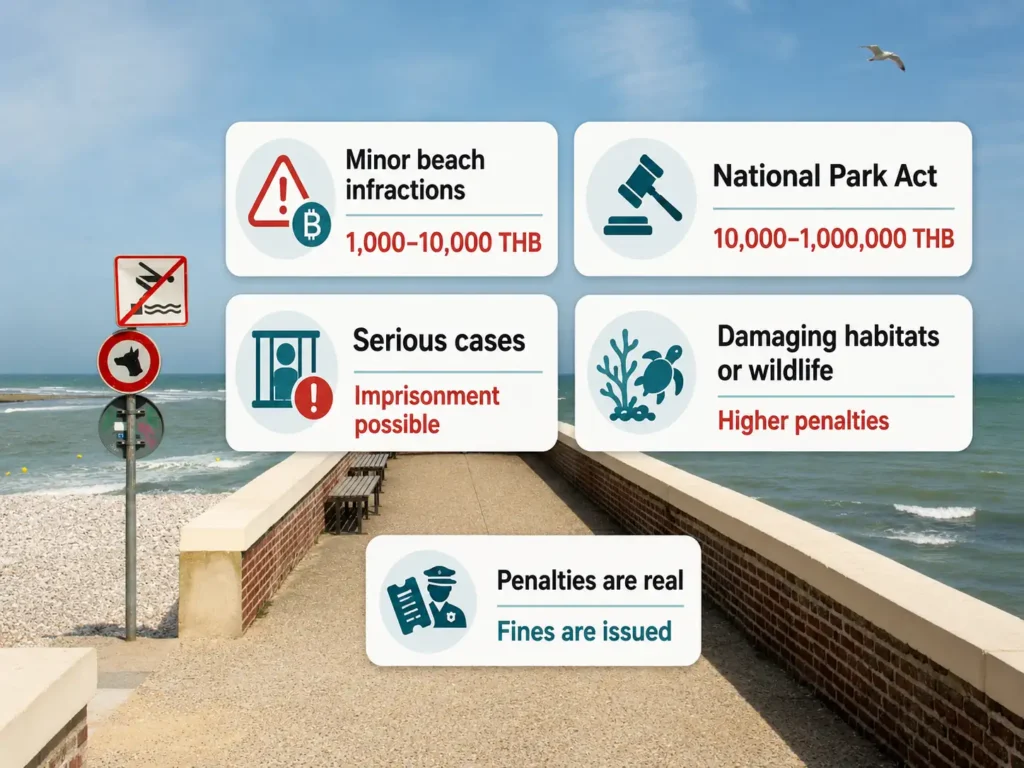
Penalties at Koh Lipe are real and issued. Under the National Park Act B.E. 2562 (2019), violations within a national park can carry fines from 10,000 THB up to 1 million THB, plus imprisonment in serious cases (damaging protected habitats, wildlife poaching). In practice, on-the-spot fines for minor beach infractions tend to range from 1,000 to 10,000 THB.
I spoke to a ranger near Sunrise Beach on one visit who said the most common violations they issue are for coral touching during snorkelling and drone flights without permits. Both are treated seriously, especially during peak months when tourist numbers push past 3,000 visitors per day.
Koh Lipe Travel Tips for a Smooth Visit
A few things that genuinely help:
- Bring 1,500–2,000 THB in cash on arrival day (covers entrance fee, longtail transfer, and first meals)
- Keep your national park receipt, rangers occasionally check for it on trails and beaches
- Download offline maps before departure; mobile signal is patchy in parts of the island
- Book the Pak Bara to Koh Lipe ferry through Tigerline Travel or Satun Pakbara Speed Boat Club, the two main licensed operators, to avoid inflated prices from resellers
- If you’re visiting from Langkawi, check the visa exemption rules; you may need to clear Thai immigration at the Koh Lipe checkpoint, which is a separate process from the park fee
- Respect the no-shoes rule at certain guesthouses and temple areas near the village
- The rainy season closes all ferry routes; check Tigerline’s official schedule at tigerlinetravel.com before finalising dates
Make your Koh Lipe trip smooth and easy with these tips. Read more in Koh Lipe Travel Guide: The Thai Island That Changes How You See Beaches.
A Simple Reminder Before You Visit Koh Lipe
Koh Lipe is one of those islands that feels dreamy the moment you arrive, but it is still part of a protected marine park, so the rules matter. The entrance fee may feel like an extra cost at first, especially if you are already paying for boats, transfers, and hotels, but it helps protect the reefs, beaches, and marine life that make the island worth visiting in the first place.
The best thing you can do is arrive prepared. Keep enough Thai Baht in cash, save your park receipt, use reef-safe sunscreen, and respect the beach and marine rules while you are there. Most problems visitors face on Koh Lipe come from not knowing the rules before arrival, not from the rules being difficult.
So, before you step onto the sand, treat the Koh Lipe entrance fee and rules as part of the trip, not a burden. Once that is taken care of, you can unwind, swim in clear waters, snorkel around reefs, visit nearby islands, and enjoy Koh Lipe slowly and stress-free.
Frequently Asked Questions About Koh Lipe Entrance Fees and Rules
How much is the entrance fee at Koh Lipe in 2026?
The Koh Lipe national park entrance fee in 2026 is 500 THB per foreign adult and 300 THB per foreign child aged 3 to 14. Thai nationals pay 40 THB (adults) and 20 THB (children). Children under three years old are free.
Do I pay the Koh Lipe entrance fee every day?
No. You pay once per entry, not once per day. However, if you leave the island for a day trip or take a ferry to another island, authorities charge you again when you return.
Is the Koh Lipe entrance fee included in ferry prices?
No, not usually. DNP rangers collect the entrance fee separately at the pier. Some all-inclusive packages offer coverage, but you should confirm everything in writing before assuming it is included.
Can I pay by card at the Koh Lipe entrance fee booth?
As of early 2026, payment is cash only in Thai Baht at the DNP booths. Bring enough cash before boarding your ferry, as the island’s ATM is unreliable during high season.
What happens if I refuse to pay the entrance fee?
Rangers will not permit you to enter the island. They station themselves at all arrival points and have the authority to refuse entry. They treat attempts to bypass payment as a violation under the National Park Act.
Are drones allowed at Koh Lipe?
Only with prior written permission from the DNP regional office in Satun. Unauthorised drone flights over national park areas are prohibited and can result in fines and confiscation of equipment.
What sunscreen is safe to use at Koh Lipe?
They only allow reef-safe, mineral-based sunscreens with zinc oxide or titanium dioxide in the water. They ban chemical sunscreens containing oxybenzone, octinoxate, 4-methylbenzylidene camphor, or butylparaben across all Thai marine national parks.