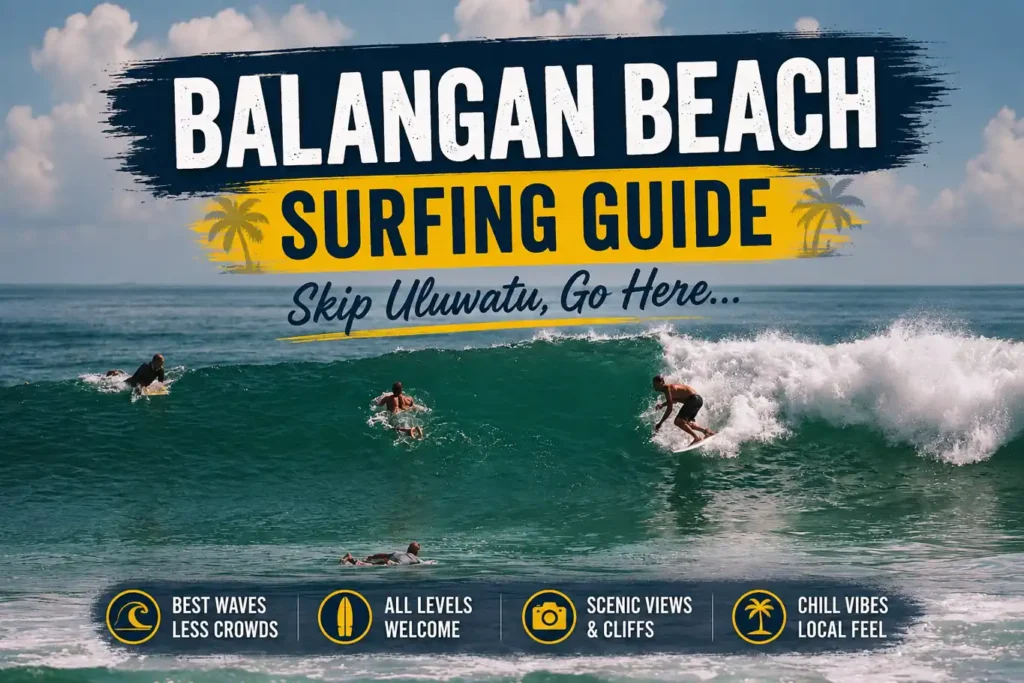
If you’ve scrolled through Instagram enough, you’ve probably seen those stunning cliff photos from Bali’s south coast. But what you haven’t seen yet is the actual reason those cliffs are packed with surfers. That reason is Balangan. This Balangan Beach surfing guide exists because we’re tired of seeing travelers show up unprepared, rent the wrong board, and miss the actual magic of this place.
I’ve spent enough mornings paddling out here to understand what separates a frustrating wipeout session from an incredible day in the water. Balangan isn’t just another beach break. It’s a proper reef setup with character, moods, and quirks that deserve respect. Whether you’re a first-timer thinking about your first surfing lesson or an intermediate surfer hunting for cleaner waves than Uluwatu, this Balangan Beach surfing guide covers everything you actually need to know, not the generic stuff you’ll find everywhere.
Balangan Beach vs. Other Popular Surf Spots in Bali: Quick Comparison
How Balangan compares to other major Bali breaks:
| Feature | Balangan | Uluwatu | Padang Padang | Keramas |
| Difficulty | Intermediate | Advanced | Intermediate–Advanced | Beginner–Intermediate |
| Crowd level | Moderate | Very high | High | Low–Moderate |
| Bottom type | Reef | Reef | Reef | Sand/Reef mix |
| Wave size | 2–6 ft | 3–8+ ft | 2–6 ft | 1–4 ft |
| Best for | Improving surfers | Experts/tube riding | Photographers / skilled surfers | Learners & mellow sessions |
| Access | Moderate | Moderate (cliffs) | Moderate (cave access) | Easy |
| Board rental (2026) | IDR 120k–200k/day ($8–13) | IDR 150k–250k/day ($10–16) | IDR 150k–250k/day ($10–16) | IDR 80k–150k/day ($5–10) |
| Lesson incl. board (2 hrs) | IDR 350k–550k ($22–35) | IDR 500k–800k ($32–52) | IDR 450k–700k ($28–45) | IDR 200k–350k ($13–22) |
Why Balangan Beach Is Actually Different for Bali Surfers
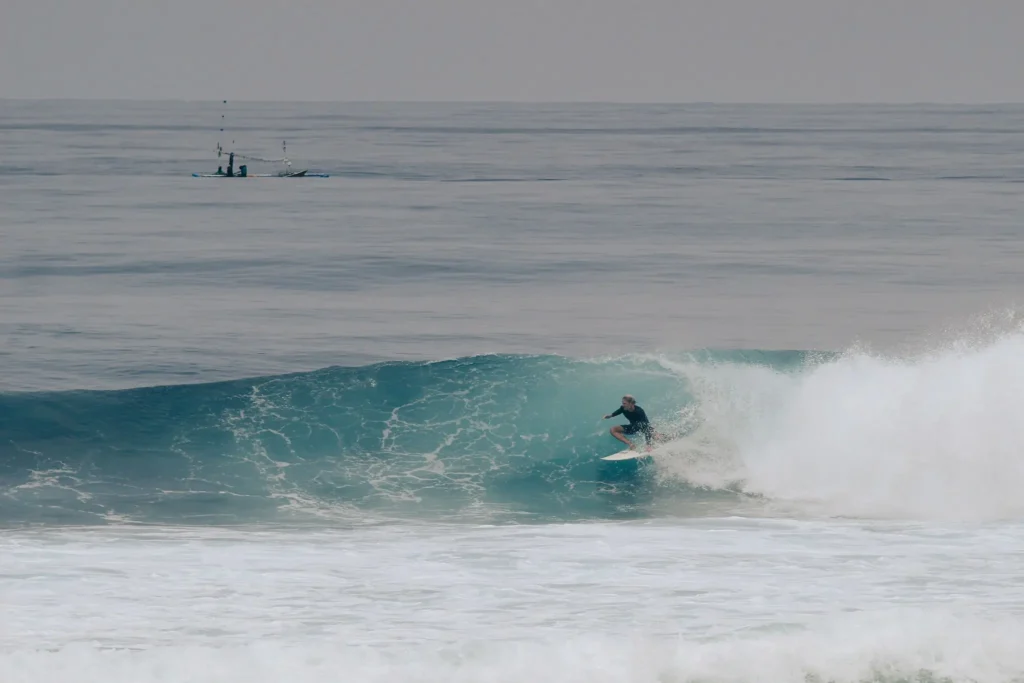
Honestly, Balangan gets overshadowed by the bigger names like Uluwatu and Padang Padang. That’s weirdly lucky for people who know about it. You get consistent, rideable waves without the circus atmosphere. The reef here produces A-frames that work left and right, which means more opportunities in a single session compared to spots that only work one direction.
The real appeal? Balangan breaks when everything else is waist-high and forgettable. We’re talking about 15-20 surfers instead of 150. That changes everything about your experience.
Where Balangan Beach Is and How to Get There
Balangan sits on Bali’s Bukit Peninsula, literally below the Balangan village. If you’re staying in Canggu or Seminyak, it’s roughly 30-40 minutes, depending on traffic. Kuta is closer, maybe 25 minutes. The access road drops down from Jl. Balangan, which runs along the clifftops. You’ll spot it when you see Omak Bali bar (the one with the epic sunset deck). From there, it’s a steep walk down, not quite as brutal as Padang Padang’s 4-minute scramble, but close.
The walk takes about 8-10 minutes, and honestly, it filters out casual onlookers. By the time you reach the sand, you’ve already committed, so everyone down there is actually there to surf.
Practical note: There’s a small parking area at the top. Cost is around 5,000 IDR (30 cents). Seriously. Almost free. Which tells you something about how under-touristed this beach still is.
Your guide to Balangan Beach’s location and access: read more in How to Get to Balangan Beach Without Getting Lost or Overpaying.
Best Time to Surf at Balangan Beach: Seasons Matter More Than You Think
Dry Season vs. Rainy Season: What Actually Changes
From May through October, Balangan turns into something special. The dry season winds blow offshore, cleaning up the reef and creating those glassy mornings everyone dreams about. Water temperature hovers around 28-29°C (82-84°F), so a rashguard is fine. Crowds are bigger during these months because, well, everyone knows it’s good.
November through April gets weird. The rainy season turns the ocean into something unpredictable. Winds shift onshore. The water gets murky sometimes. And honestly? The vibe changes. You get fewer surfers (which sounds good until you realize it’s because the conditions are genuinely mediocre).
That said, some locals swear by February and March for specific swell directions. If you’re building a Balangan trip, aim for July-September. That’s when the reef really performs.
Best Time of Day: Morning Gloss vs. Afternoon Chaos
The first session of the day, roughly 6 to 9 AM, is when Balangan feels like a secret. The wind hasn’t switched yet. The light is soft. You might paddle out with 20 people instead of 70. By 11 AM, afternoon winds kick in, the sea gets choppy, and the novelty wears off.
If you’re a morning person, you already know what to do. If you’re not, prepare yourself. Balangan rewards early risers.
Understanding Balangan’s Surf Conditions Before You Paddle Out
Wave Type and Break Characteristics
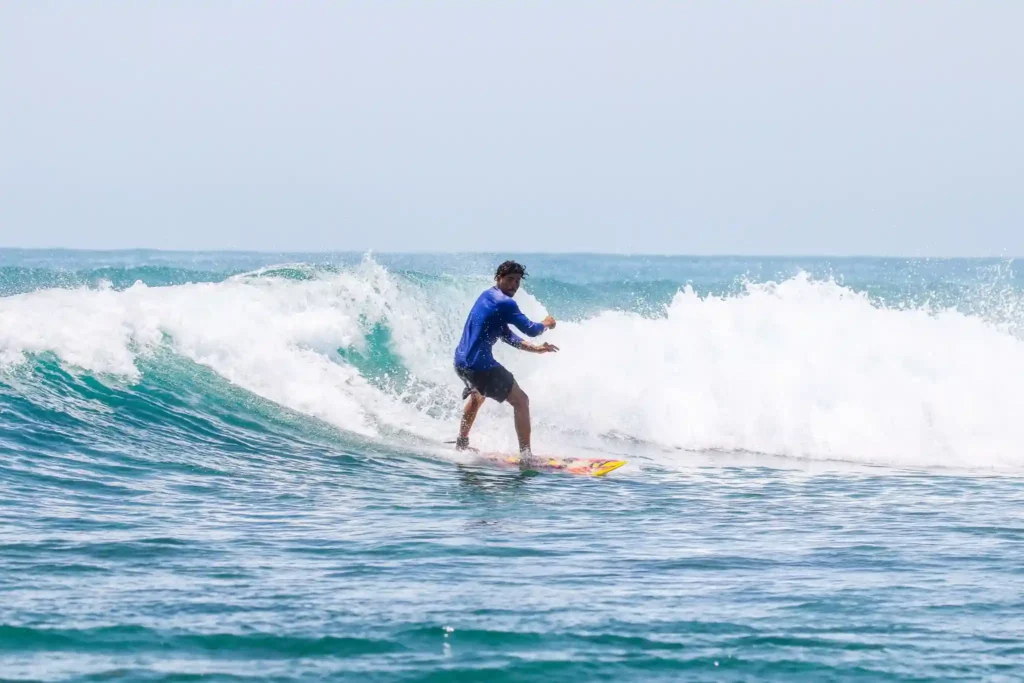
Balangan is a right-hand-dominant reef break, though the left can be fun on bigger swells. The right breaks consistently, peeling off with decent walls for turning. It’s not a barrel factory like Uluwatu, but it’s not mushy either. Think ‘solid, workable, fun’ rather than ‘holy-crap-I-almost-died.’
Wave face heights typically run 2-5 feet (3-6 foot Hawaiian scale), though during solid Southern Ocean swells, you can see 6-8 feet faces. The bottom isn’t a sea urchin-covered death trap; it’s a manageable reef with sand pockets.
Tide Conditions That Actually Matter
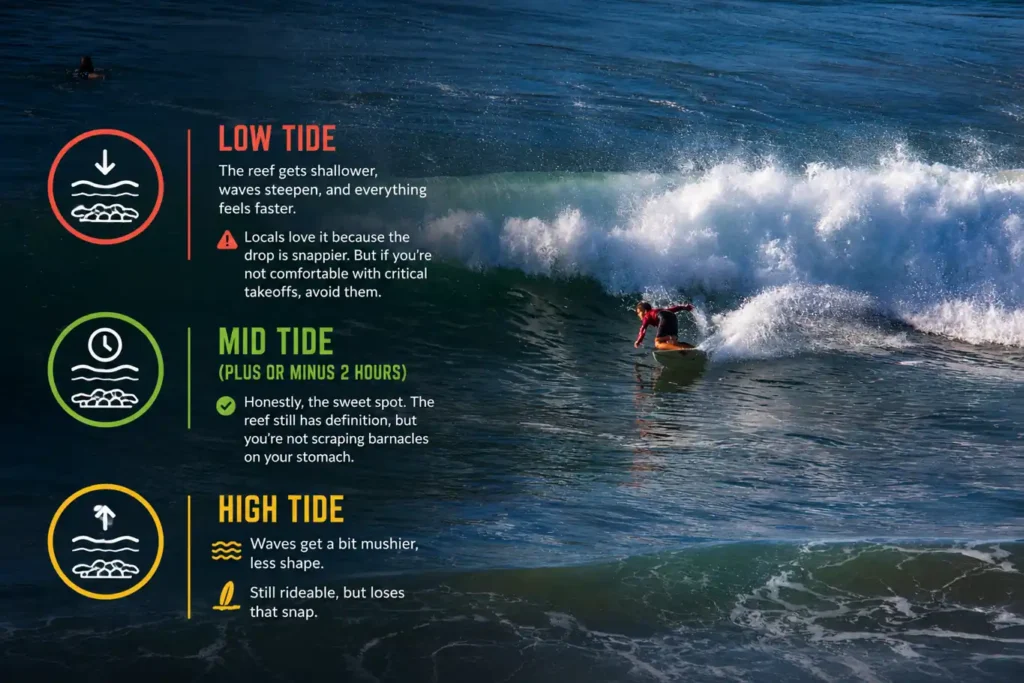
Low tide: The reef gets shallower, waves steepen, and everything feels faster. Locals love it because the drop is snappier. But if you’re not comfortable with critical takeoffs, avoid them.
Mid tide (plus or minus 2 hours): Honestly, the sweet spot. The reef still has definition, but you’re not scraping barnacles on your stomach.
High tide: Waves get a bit mushier, less shape. Still rideable, but loses that snap.
Check the tides before you go. The difference between a fun session and a frustrating one can literally be two hours.
How Wind Affects the Surf (And It Absolutely Does)
Offshore winds (blowing from land to ocean) = clean, shaped waves. You want this.
Onshore winds (blowing from ocean toward land) = crumbly, sloppy mess. You don’t want this.
Balangan’s geography actually protects it somewhat from the absolute worst wind corruption. Even when the wind is moderately onshore, the reef produces enough shape to make it worth paddling out. Bigger, more exposed beaches would be completely unrideable.
A quick guide to Balangan’s surf conditions: read more in Balangan Beach Bali Guide: What Nobody Tells You.
Is Balangan Beach Good for Beginners or Better for Experienced Surfers?
What First-Time Surfers Should Know
Here’s the truth: Balangan isn’t ideal for absolute beginners who’ve never surfed before. The reef demands respect. Falling is one thing; falling on a reef is another thing entirely. Most beginner-friendly spots (Kuta, Keramas, Canggu) have sand bottoms. This doesn’t.
That said, surfers with 20-30 sessions under their belt? Balangan becomes genuinely fun. The waves are forgiving enough that you’re not getting destroyed, but fun enough that you’re actually progressing instead of just paddling around.
If you’re a genuine beginner: Book a lesson at one of the beach clubs (we’ll cover this in a second). A proper instructor will teach you how to respect the reef and pick the safest sections.
Challenges Intermediate and Advanced Surfers Enjoy
This is where Balangan shines. Intermediate surfers get to work on rail-to-rail transitions without constant closeouts. The waves are consistent, which means you can focus on technique instead of just survival. You’re not getting barreled in 4 feet, but you’re also not frustrated by waist-high mushiness.
Advanced surfers come for the left-hand walls (when the swell allows) and the option to hunt deeper sections during smaller days. The reef has personality, which means there’s always something to figure out.
Balangan Beach Surf Spot Breakdown: Where to Position Yourself
Main Peak Area
The A-frame near the center-left of the reef is what everyone paddles toward. It’s obvious, it’s consistent, and frankly, it’s fun. On small days, this is literally your entire playground. Waves peel cleanly, and you can set up for turns.
The main peak gets crowded during prime hours, which is just the nature of good breaks. Morning sessions, you’ll find space. Afternoon, you’re negotiating a position constantly.
Left-Hand Reef Wave Explained
When the swell angle is right (usually larger Southern Hemisphere swells), the left-hand wall opens up. This is longer than the right, with more room to maneuver. Locals specifically check forecasts for days when the left is firing. It’s less forgiving than the right, so save it for when you’re feeling confident.
The left breaks near the cliff base, which means you’re surfing in front of the actual topography. It’s dramatic, slightly intimidating, and absolutely worth experiencing once.
Crowd Patterns Throughout the Day
6-8 AM: Maybe 15-20 people. Mostly serious surfers and locals.
8 AM-12 PM: Swells to 40-60 people. Still manageable. The session is fun.
12 PM-3 PM: Afternoon winds + peak tourist hours = 70+ surfers. This is when it feels crowded.
3 PM onward: Wind conditions usually deteriorate, and people start leaving. By 4-5 PM, you’re back to 20-30 people.
If you hate crowds, adjust your timing. If you don’t mind people, any time works.
Surfboard Choices for Balangan Beach Conditions: Your Board Matters
Best Boards for Smaller Days
When Balangan is 2-3 feet, you need volume. A board with decent width and thickness lets you catch waves easier and generate speed on the mushier sections. Most shops rent soft-tops in the 6’0″-6’6″ range, which work perfectly.
The sweet spot for smaller days is a 5’10”-6’2″ board with good float. You’re not trying to look cool; you’re trying to have fun.
Honestly? A quality soft-top from a reputable shop beats a mediocre hard board every time. Soft-tops are forgiving on the reef, and your wrists will thank you after a hard wipeout.
What Works When the Swell Picks Up
When Balangan pumps, and you’re looking at 5-6 foot faces, you need a more refined board. Think 5’4″-5’8″ with lower volume. You’re looking for drive and responsiveness, not flotation.
If you own a board, bring it. If you’re renting, most shops have a progression of sizes. Don’t rent something too big just because you’re intimidated. A proper-sized board in slightly bigger surf is way more fun than a whale in waist-high mush.
Best Surfboard Rental Options and Prices Near Balangan Beach
| Shop Name | Price (IDR/day) | Notes |
| Balangan Surf Shop | 75,000 | Newest equipment, helpful staff, reliable |
| Omak Bali Rentals | 50,000 | Cheaper option, boards well-used but functional |
| Local Beach Stalls | 50,000-100,000 | Variable quality, risky but potential deals |
What to Expect From Local Surf Schools
A 1.5-hour lesson runs about 300,000-400,000 IDR ($18-25) per person. Most instructors teach the same progression: getting you comfortable in white water, then introducing you to unbroken waves. They’ll teach you reef awareness, which is honestly the most valuable thing for this specific break.
The better schools (run by actual surfers, not just tourism operators) give smaller group lessons. Three people max instead of eight. Worth the extra money.
Safety Tips Before Surfing at Balangan: Real Talk
Reef Awareness and Entry Points
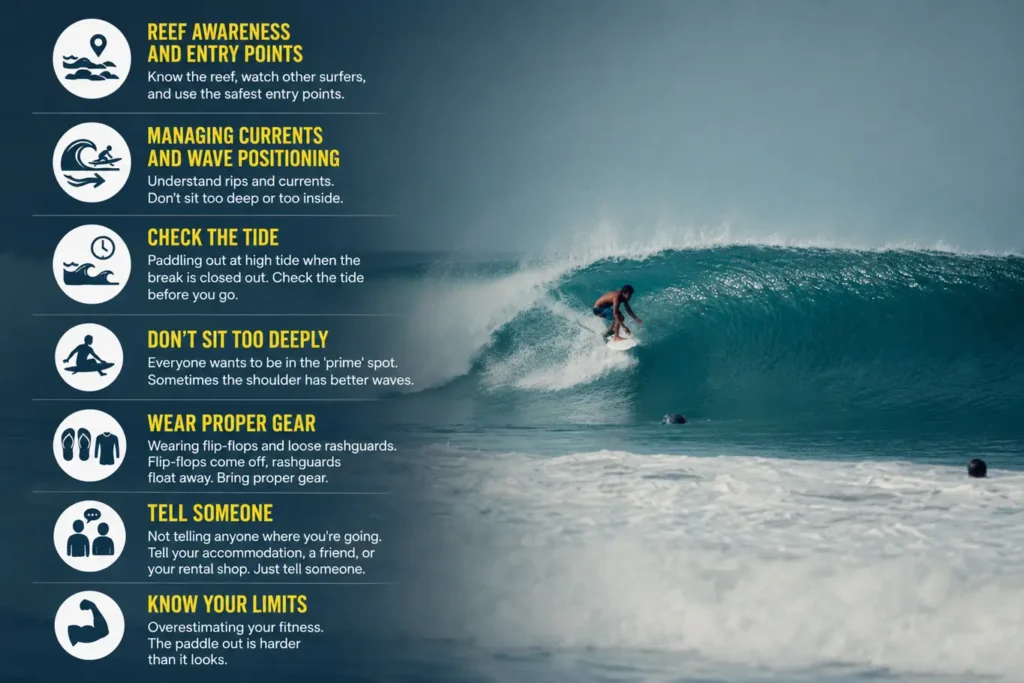
The reef isn’t life-threatening, but it’ll cut you. Wear reef booties. Seriously. They’re 50,000 IDR and prevent half the injuries that happen here.
There’s a designated entry/exit area where the reef is lowest and least sharp. Ask your instructor or rental shop staff where it is. Don’t just wander into the water wherever you feel like it.
Managing Currents and Wave Positioning
Balangan has a rip current that runs out the left side of the reef. It’s not Teahupoo-level dangerous, but it’ll push you outside faster than you expect. Use it to get outside when paddling out, but be aware of where you are.
The key is not fighting it. If you feel the current pulling you left, paddle toward the right to counter it. Don’t panic and tire yourself out.
Common Mistakes Visitors Make
• Paddling out at high tide when the break is closed out. Check the tide before you go.
• Sitting too deeply on the peak. Everyone wants to be in the ‘prime’ spot. Sometimes the shoulder has better waves.
• Wearing flip-flops and loose rashguards. Flip-flops come off, rashguards float away. Bring proper gear.
• Not telling anyone where you’re going. Tell your accommodation, tell a friend, tell your rental shop. Just tell someone.
• Overestimating your fitness. The paddle out is harder than it looks on Instagram. Go in with a humble attitude.
What a Typical Surf Session at Balangan Actually Feels Like
You start in darkness, paddling out around 6:30 AM with the cliff gradually becoming visible. The water is already warm, which is weird if you’re used to cold-water breaks. Your first duck dive happens before you’ve even woken up properly.
Twenty minutes of paddling, and you’re in position. The first set rolls through, maybe 4-5 waves. You’re nervous, then you catch one, and suddenly the nervousness disappears. That first wave is always the defining moment of a Balangan session. By hour two, you’ve found your rhythm. The beach below is still quiet. The sun is climbing. You’re trying different sections of the reef, experimenting with where you want to be. Some waves are fun, some are closeouts, some are better than you deserve.
The crowd starts arriving around 10 AM. You don’t mind yet because you’ve already had prime session time. By 11 AM, the wind picks up, and you’re thinking about paddling in.
You come out tired, hungry, and genuinely happy. The walk up the cliff is harder than the walk down, but it feels shorter because you’re satisfied.
Beyond Surfing: Things to Do Around Balangan Beach
Relaxing on the Beach After Your Session
The beach itself is narrow but beautiful. After surfing, most people collapse on the sand, eat something, and recover for 20 minutes. There’s not a ton of beach real estate, but there’s enough to sit without feeling crowded if you’re there mid-morning.
Some people bring a book and stay for hours. The quietness of Balangan makes it easy to just exist without needing entertainment.
Nearby Viewpoints and Sunset Spots
Omak Bali (the bar at the cliff top) has one of the best sunset views on the south coast. Order a drink, watch the sun drop into the Indian Ocean, and pretend you’re in a movie. It’s touristy, but the view is legitimately stunning.
The clifftop walk between Balangan and Padang Padang is also spectacular. Takes about 20-30 minutes and offers completely different perspectives of the coastline.
Food and Drinks Close to the Surf Area
Omak Bali: Overpriced by local standards ($5-8 for a beer), but the vibe is worth it. The food is decent if you’re not expecting authentic Indonesian cooking.
Warung stalls near the parking area: Much cheaper ($2-3 for meals), actually tasty, and run by actual locals instead of tourism operators. This is where you actually want to eat.
Cafe Balangan: Located at the top, decent coffee, good breakfast bowls. Quieter than Omak Bali if you want to actually have a conversation.
What to Pack for a Surf Day at Balangan Beach: The Real Essentials
Essential items for Balangan:
• Reef booties (50,000 IDR, prevent cuts)
• Sunscreen SPF 50+ (seriously, the sun here is insane)
• A towel (not just for drying; for dignity when changing out of your wetsuit)
• Water bottle (at least 500ml, more if you’re staying all day)
• Light snacks (bananas, rice cakes, something for energy)
• Phone in a dry bag (just in case)
• Light layer if you get cold easily (water is warm, but mornings can be cool at 6 AM)
• Any specific medication (there’s no pharmacy on the beach)
And honestly? Reef booties are the single most important item. More important than a fancy board. Your feet will thank you.
Balangan Beach Surfing Costs and Budget Expectations
Here’s what an actual day breaks down to:
| Cost Item | Price (USD) | Price (IDR) |
| Board rental (8 hrs) | $15-25 | 50,000-100,000 |
| Reef booties (to buy) | $8-12 | 25,000-50,000 |
| Parking | $0.30 | 5,000 |
| Warung lunch | $2-4 | 10,000-20,000 |
| Drinks (coffee/beer) | $2-5 | 10,000-25,000 |
| Total per person | ~$27-47 | ~180,000-300,000 |
If you want a lesson instead of renting solo:
| Item | Price (USD) | Price (IDR) |
| 1.5-hour group lesson | $18-25 | 300,000-400,000 |
| Board included | Included | Included |
| Staff instruction | Included | Included |
| Total (group lesson) | ~$18-25 | ~300,000-400,000 |
Lessons are a better value if you’ve never surfed, honestly. The instruction pays for itself in confidence.
Where to Stay for Easy Access to the Waves
Budget Options ($15-30 per night)
Gunung Payung Homestay: Basic but clean, 10-minute drive from Balangan. Breakfast is included. You’ll meet other surfers here.
Pengubengan Guesthouse: Even cheaper, friendly owner, located in the Uluwatu area. Slightly farther (20 minutes), but worth the savings if you’re budget-conscious.
Mid-Range Stays ($30-80 per night)
The Loft Boutique: Modern rooms, good coffee shop, walking distance to Balangan cliff (literally 5 minutes). Worth every rupiah.
Ungasan Clifftop Resort: A step up in comfort, infinity pool, restaurant on-site. Still reasonably priced for what you get.
Luxury Stays ($80+ per night)
Bvlgari Resort Bali: If you’re treating yourself. Right on the clifftops. You can watch surfers from your room.
Sundays Beach Club: Ultra-modern, expensive, but the location is ridiculous. Some rooms have direct cliff views.
Honestly? The mid-range options are the best value. You get comfort without the ridiculous markups of ultra-luxury places.
Local Surf Etiquette Every Visitor Should Know
Balangan’s vibe is chill compared to more competitive spots, but there are still rules.
- Drop-in rule: If someone is already riding a wave, don’t paddle for the same wave. It’s basic respect and prevents collisions.
Respect the locals: They were here before you. If a local is paddling toward a wave, let them have it. They know the reef better anyway.
Don’t paddle out if you can’t handle the conditions: This isn’t about ego; it’s about everyone’s safety.
Share the peak: Don’t camp directly on the A-frame if the break is firing. Spread out, let others get waves.
No aggressive attitude: Balangan surfers are genuinely nice. Don’t be the reason that changes.
Chat between sets: The surfers here are chill. It’s normal to talk, laugh, and actually enjoy the human aspect of surfing.
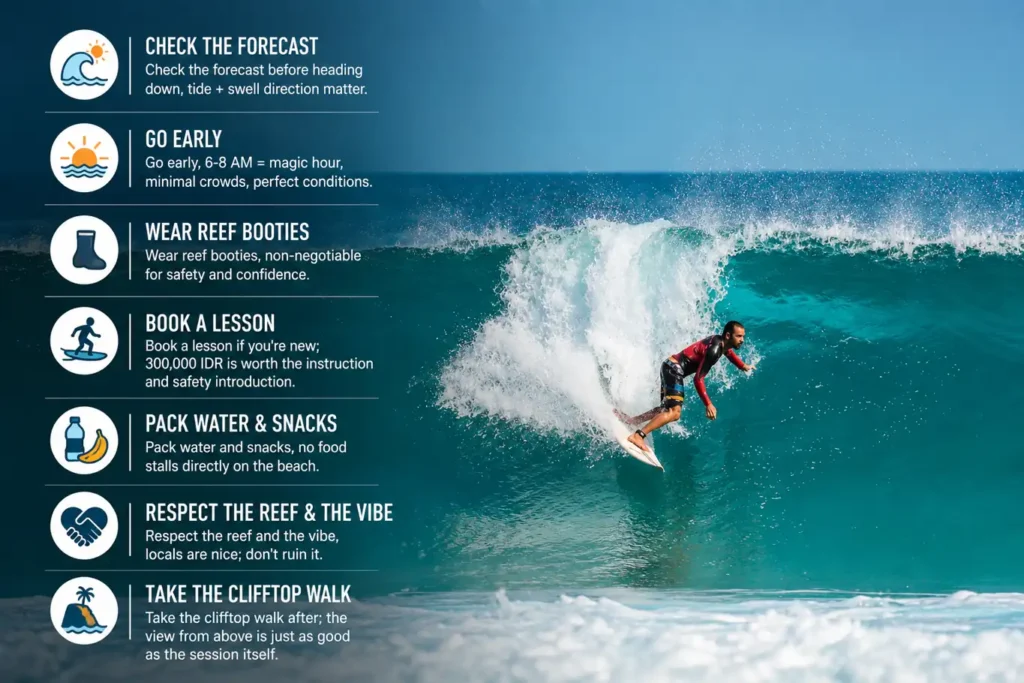
Key Takeaways: Your Balangan Beach Surfing Checklist
- Check the forecast before heading down, tide + swell direction matter.
- Go early, 6-8 AM = magic hour, minimal crowds, perfect conditions.
- Wear reef booties, non-negotiable for safety and confidence.
- Book a lesson if you’re new; 300,000 IDR is worth the instruction and safety introduction.
- Pack water and snacks, no food stalls directly on the beach.
- Respect the reef and the vibe, locals are nice; don’t ruin it.
- Take the clifftop walk after; the view from above is just as good as the session itself.
Balangan Beach is genuinely worth experiencing. It’s one of those spots that works for improving surfers, fits in any Bali itinerary, and somehow stays chill despite being objectively excellent.
Get there. Paddle out. Catch some waves. Enjoy the quiet. That’s the Balangan Beach surfing guide in its entirety.
Final Thoughts: Is Balangan Beach Worth Surfing? A Real Answer
Yes. A thousand times, yes. But with caveats.
If you’re a complete beginner with zero surfing experience, take a lesson at Keramas first. Build confidence. Then come to Balangan as your next step. If you’re already surfing, Balangan becomes one of your favorite spots. The combination of consistent waves, manageable crowds, solid infrastructure, and genuinely nice people creates something you can’t always find in Bali.
The cliffs are dramatic. The water is at the perfect temperature. The reef produces an actual shape. The vibe is chill without being sleepy. And somehow, despite being a legitimate quality surf break, it still feels like a secret.
Maybe don’t tell too many people about this Balangan Beach surfing guide, actually. The whole appeal is that it doesn’t feel overrun yet.
Get there early. Respect the reef. Pack properly. Have fun.
Frequently Asked Questions: Everything Else You’re Wondering
Q: Can I surf Balangan Beach year-round?
A: Technically yes, but May-October is genuinely better. Dry season = cleaner, more organized swells. Rainy season = more unpredictable conditions and occasional closures due to poor visibility.
Q: What if I’m scared of reefs?
A: Reef booties make a massive difference. Wear them, respect the entry point, and the reef becomes manageable. The fear is usually worse than the reality.
Q: Is there a best moon phase for surfing Balangan?
A: Not really. Tide matters way more than moon phase. Check tide charts, pick the right time of day, and conditions are usually good regardless of the moon
Q: Can I bring my own board on the plane to Bali?
A: Yes, but it’s expensive and risky. Most surfers just rent. If you’re here for 2+ weeks and serious about your own setup, it’s worth considering. Otherwise, rental is simpler.
Q: Do I need a wetsuit at Balangan?
A: No. Water temperature is 28-29°C year-round. A rashguard provides sun protection. Wetsuits are optional for cold-blooded people.
Q: What should I do if I get cut on the reef?
A: Exit carefully, rinse with fresh water immediately, and apply pressure to stop bleeding. Most cuts are shallow. The rental shop should have first aid supplies. If it’s serious, the nearest clinic is 15 minutes away in Uluwatu.
Q: Are there ATMs near Balangan Beach?
A: Yes, at the top near the parking area. But bring cash anyway because some smaller vendors don’t take cards.
Q: Can I swim instead of surf at Balangan?
A: Sure, but it’s a surf spot first. Swimmers should only enter during calm conditions and respect surfers.