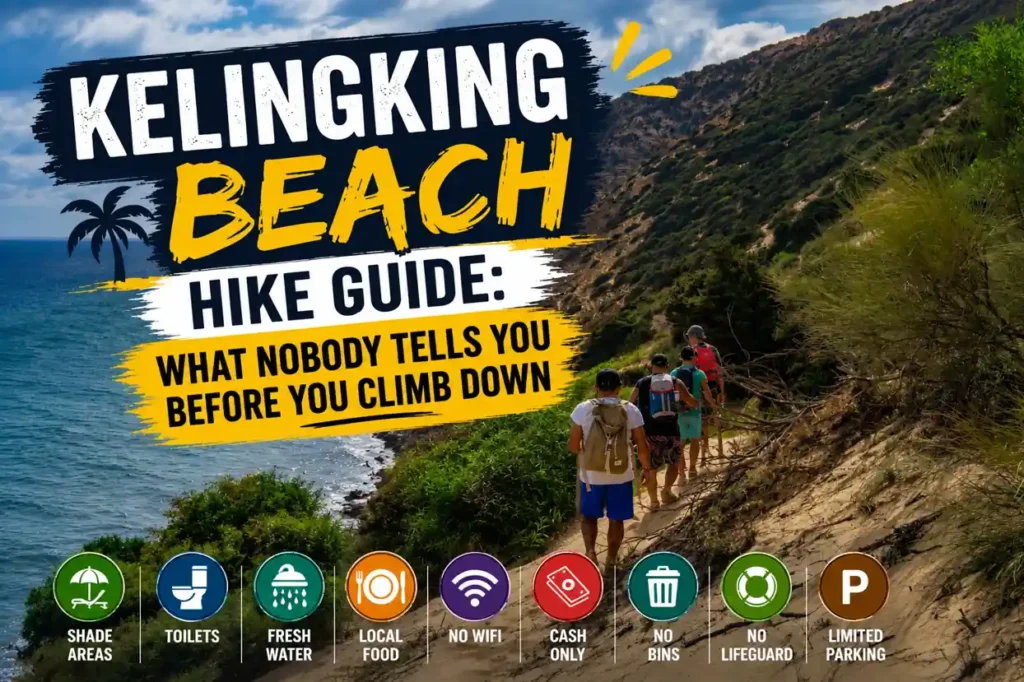
If you’ve seen the photos, you already know why people come here. That dinosaur-head cliff with turquoise water below it is genuinely one of the most dramatic views in all of Southeast Asia. But a solid kelingking beach hike guide will tell you something the Instagram posts leave out: getting down there is hard, getting back up is harder, and not everyone who starts the descent actually makes it to the beach.
This Kelingking beach hike guide covers everything from the first step at the clifftop viewpoint to what you’ll find when you finally reach the sand. Trail difficulty, timing, safety, what to wear, where to stop for photos, all of it. Because Kelingking Beach deserves more than a pretty picture. It deserves a real plan.
Getting to Kelingking Beach and What to Expect on Arrival
Kelingking Beach sits on the western coast of Nusa Penida, a small island about 45 minutes by fast boat from Sanur, Bali. Once you’re on Nusa Penida, the drive to Kelingking takes roughly 45–60 minutes from Toyapakeh port, depending on road conditions and your driver. The road is narrow, bumpy in places, and beautifully chaotic.
Most visitors arrive by scooter rental (around 80,000–100,000 IDR per day) or private driver (roughly 350,000–500,000 IDR for a half-day tour). The parking area at the top is basic but functional, with a small ticket booth. Entrance to the Kelingking viewpoint costs 10,000 IDR per person as of 2024. Simple, affordable, and totally worth it.
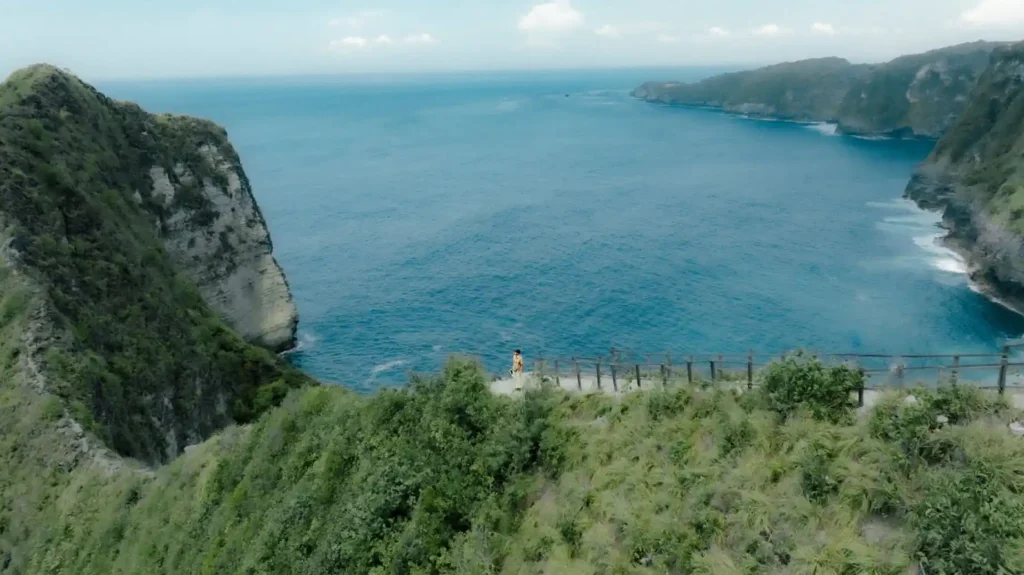
When you first arrive at the top, that view hits you hard. The T. rex-shaped limestone peninsula juts into the blue water far below. Most people stop here, take photos, and turn around. The actual trail down to the beach begins just a few metres from the main viewpoint sign.
How to Reach Kelingking Beach and What Awaits You There. Read more in How to Get to Kelingking Beach in 2026: The Bumpy, Beautiful Truth.
Best Time to Start the Hike for Easier Conditions
Start between 6:30 AM and 8:00 AM. That’s the honest answer. Before the heat builds, before the trail gets crowded, and before the sun turns the steep sections into a sauna. The light at that hour is also extraordinary for photography, the water looks impossibly blue, and the cliffs are still half in morning shadow.
If you can’t make it early, aim for after 4:00 PM when the temperature drops. Just be careful about the return timing. You’ll want at least 2–3 hours to hike down, spend time at the beach, and climb back up before sunset.
Avoid the 10 AM–2 PM window entirely. The heat on the exposed cliff face is brutal; the rope sections become slippery with sweat, and the trail fills with groups moving slowly in both directions. It’s genuinely miserable. First-timers who have done it in midday heat all say the same thing: they wish someone had warned them.
What Is the Best Time of Year to Hike Kelingking Beach?
The dry season (April to October) is the best time to hike Kelingking Beach. Trails are drier, less slippery, and visibility is clearest. May, June, and September are ideal, with cooler mornings, smaller crowds, and better beach conditions at the bottom. Avoid the wet season (November to March) when rain makes the clay sections dangerously slippery.
How Difficult Is the Kelingking Cliff Descent Really?
Honestly? It’s harder than most travel blogs make it sound. The trail drops approximately 400 metres in elevation over about 700 metres. The gradient is steep, sections exceed 45 degrees, and some parts require you to hold the rope with both hands and face the slope while descending. There are loose rocks, clay sections that get slippery with moisture, and narrow paths where passing another hiker requires a bit of awkward shuffling.
It’s not technical climbing. You don’t need gear or experience. But you do need decent fitness, knee strength, and the confidence to handle heights without freezing up. People have been injured here. A few serious accidents have been reported over the years, mostly from rushing or wearing the wrong footwear.
Here’s exactly what difficulty level to expect at each section of the Kelingking descent. Save this before you go.
| Trail Section | Difficulty | What to Watch For |
| Top viewpoint to first rope | Moderate | Narrow path, loose gravel |
| First rope section | Hard | A steep angle requires arm strength |
| Middle clay path | Moderate–Hard | Slippery when wet or sweaty |
| Second rope descent | Hard | Longest rope, most exposed section |
| Final stretch to the beach | Easy–Moderate | Rocky beach approach, uneven stones |
Step-by-Step Trail Breakdown from Top to Beach
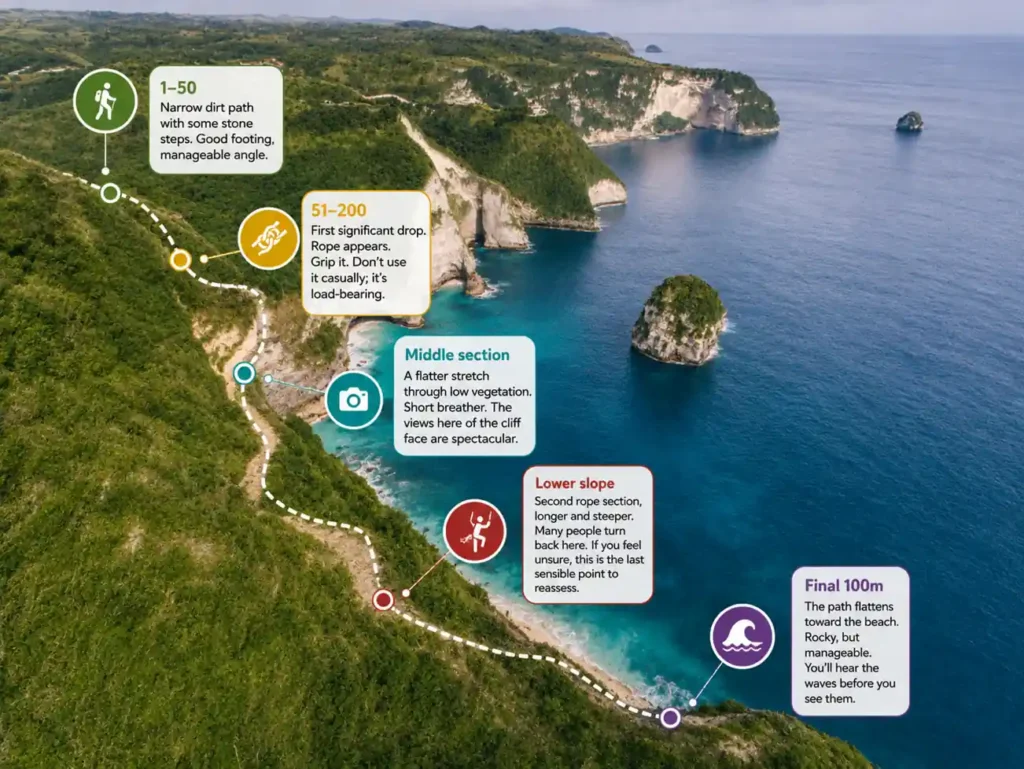
The trail begins at the main viewpoint. Here’s a rough breakdown of what to expect as you descend:
- Steps 1–50: Narrow dirt path with some stone steps. Good footing, manageable angle.
- Steps 51–200: First significant drop. Rope appears. Grip it. Don’t use it casually; it’s load-bearing.
- Middle section: A flatter stretch through low vegetation. Short breather. The views here of the cliff face are spectacular.
- Lower slope: Second rope section, longer and steeper. Many people turn back here. If you feel unsure, this is the last sensible point to reassess.
- Final 100m: The path flattens toward the beach. Rocky, but manageable. You’ll hear the waves before you see them.
When you step onto the sand, the feeling is something else. There’s nobody from the road who can see you. It’s just the beach, the cliffs, the waves, and whoever else made it down. Something about that shared effort makes it feel earned.
How Long Does the Kelingking Beach Hike Take Down and Back Up?
Going down takes 30–45 minutes for fit hikers and up to 60 minutes for those taking it slow. The climb back up takes 45–75 minutes on average. Most visitors spend 30–60 minutes at the beach, making the full round trip 2 to 3 hours. Budget 3 hours total to be safe and not rush.
Safety Tips You Should Not Ignore on This Hike
According to Bali’s search and rescue agency BASARNAS, several hiking incidents on Nusa Penida’s clifftop trails have involved dehydration, poor footwear, and solo hiking without informing anyone. These are preventable. Do not ignore the basics.
- Never hike alone. Go with at least one other person.
- Tell your driver or accommodation where you’re going and when to expect you back.
- Do not attempt the descent if the trails are wet from rain. The clay sections become dangerously slippery.
- Rest at the rope sections. Don’t rush through the hard parts.
- If you feel dizzy or your legs are shaking, stop and sit. Heat exhaustion is real here.
- Swimming at the bottom is possible, but the beach has a powerful shore break. Check conditions carefully before entering the water.
Is the Kelingking Beach Hike Safe for Beginners?
The Kelingking beach hike is not recommended for complete beginners, elderly visitors, or those with knee or hip problems. It is manageable for people with moderate fitness and some experience on uneven terrain. Children under 10 should not attempt the descent. If you’re unsure, hiking to the viewpoint (no rope required) is still an incredible experience.
What to Wear and Carry for a Comfortable Trek
Footwear is the most important decision you’ll make. Closed-toe hiking shoes or grippy trail runners are ideal. Flip-flops will get you hurt. Sandals without ankle support are also risky on the rope sections. Several visitors attempt the descent in sandals every day. Several also turn back ten minutes in.
Lightweight, breathable clothing makes a huge difference in the heat. Shorts and a moisture-wicking top are standard. A hat is not optional; the exposed sections have zero shade. Pack light, but don’t skip anything on this list:
- Minimum 1.5 litres of water per person (2L+ in hot months)
- Reef-safe sunscreen SPF 50+
- Snacks — bananas, energy bars, or something simple
- Waterproof bag or dry bag if you plan to swim
- Phone fully charged for navigation and emergency
- First aid essentials: plasters, antiseptic wipes
How Long the Hike Takes (Up and Down Timing)
Plan your time at Kelingking with this timing guide so you’re not racing back up in the dark.
| Hiker Type | Descent Time | Ascent Time | Total Round Trip |
| Fit, experienced hiker | 25–35 min | 40–50 min | 1.5–2 hrs |
| Average fitness | 40–55 min | 55–70 min | 2–2.5 hrs |
| Slower pace/breaks | 60–75 min | 75–90 min | 3+ hrs |
| With children (older kids) | 60–80 min | 80–100 min | 3.5–4 hrs |
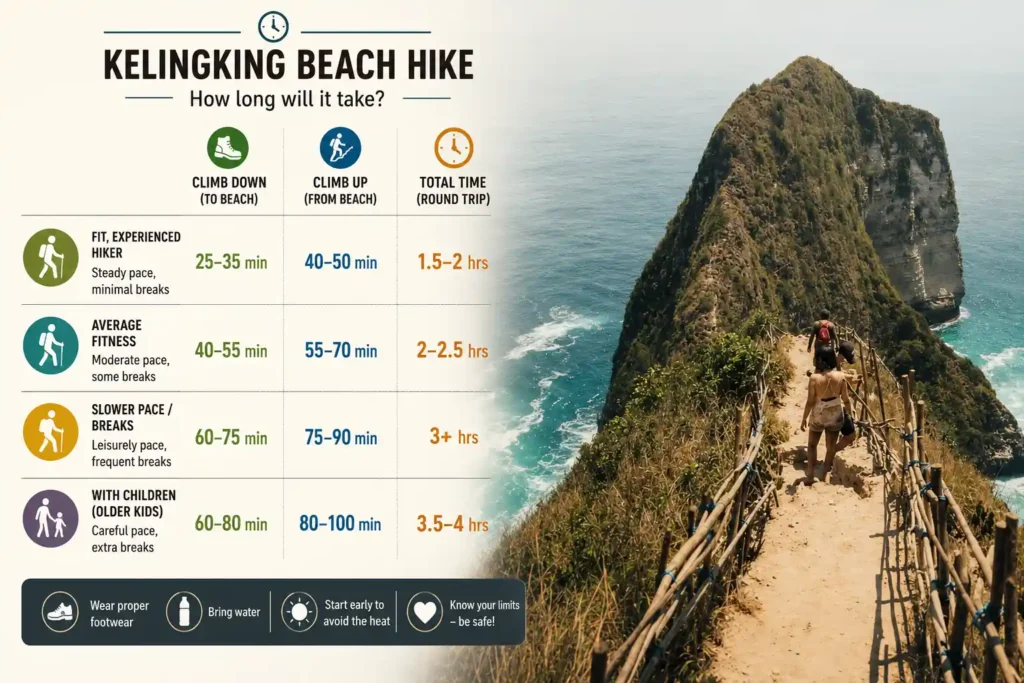
Add at least 30–60 minutes of beach time to those numbers. Nobody rushes away from the bottom. You just climbed down a cliff; you deserve a sit-down on that sand.
Viewpoints Along the Way You Should Stop At
The main viewpoint at the top is the most photographed spot in Nusa Penida. But the hike itself offers several secondary viewpoints that most visitors walk straight past.
- First rope landing: A small flat area with a clear view back up toward the cliff face. Excellent for scale photos.
- Mid-trail vegetation gap: A break in the shrubs on the left side reveals the open ocean. Easy to miss but worth pausing.
- Pre-beach rocky ledge: About 100 metres from the beach, there’s a natural platform that gives a perfect low-angle view of the T. rex peninsula from below. Completely different perspective from the top.
Most travel photos show Kelingking from above. The view from the base, looking up at that dramatic cliff, is just as stunning and far less photographed. Don’t skip it.
What Does Kelingking Beach Look Like at the Bottom?
Kelingking Beach at the bottom is a narrow crescent of white sand flanked by sheer limestone cliffs on both sides. The water is turquoise and clear. Waves can be strong, with shore break reaching 1–2 metres on bigger swell days. There are no facilities at the bottom, no toilets, no food stalls, no shade structures. Bring everything you need from the top.
Swimming at Kelingking Beach: Is It Safe or Not?
According to Nusa Penida’s local tourism coordination office, swimming at Kelingking Beach carries genuine risk due to strong currents, unpredictable shore break, and the absence of lifeguards. That said, many visitors do swim here, particularly experienced swimmers during calm conditions at high tide.
The honest answer is: it depends. During calm conditions, the water is beautiful. During bigger swells, powerful waves crash directly onto the shore with nowhere to escape easily. If the water looks rough when you arrive, trust that instinct. The views are enough on their own.
- Check wave conditions before attempting to swim
- Never swim alone at this beach
- Exit the water before the tide changes if you’re unsure
- Reef shoes are useful; the seabed has rocks near the cliff edges
Things to Know About Tides, Waves, and Weather Conditions
This weather and tide breakdown helps you pick the right day to hike, the difference between a great trip and a dangerous one.
| Condition | Best For | Caution Level |
| Dry season, morning calm | Hiking + swimming | Low |
| High tide + small swell | Swimming only | Low–Moderate |
| Mid-tide, moderate swell | Hiking only | Moderate |
| Wet season, afternoon | Neither recommended | High |
| Post-rain, any season | Hiking only (careful) | High — slippery trail |
Windy.com and Magic Seaweed both give Nusa Penida-specific swell forecasts that are reliable. Check them the morning of your hike. A 1-minute check can prevent a genuinely dangerous situation at the beach.
Photography Spots That Are Worth the Effort
You’ll take your best photo of the trip at Kelingking. Almost everyone does. Here’s where to position yourself:
- Main viewpoint (top): Classic wide shot of the T. rex peninsula. Best in the early morning when the light is golden, and the cliff face isn’t in shadow.
- Viewpoint path to the right: Walk about 50 metres right from the main platform. Less crowded, different angle, better compositional framing.
- Mid-trail gap: As mentioned above, ocean backdrop, dramatic cliff close-up.
- Beach level, facing upward: This shot rarely appears in travel content. It’s extraordinary. Bring a wide lens if you have one.
Drone photography is popular here, but Nusa Penida has drone regulations in certain zones. Check local rules before flying. Some local guides can point out where it’s permitted.
What Is the Famous T-Rex View at Kelingking Beach?
The T-Rex view at Kelingking Beach refers to the natural shape of the limestone headland when seen from the main clifftop viewpoint. The peninsula resembles the profile of a Tyrannosaurus Rex with its head extended over the water. This view is Nusa Penida’s most iconic image and one of the most photographed natural landmarks in Indonesia.
Common Mistakes First-Time Visitors Make
People make the same errors at Kelingking over and over. It’s not because they’re careless; it’s usually because nobody told them what to expect. Here are the big ones:
- Arriving at 11 AM in the heat. The midday window is genuinely unpleasant and potentially risky.
- Wearing sandals or flip-flops on the descent. This is how twisted ankles happen.
- Not bringing enough water. Two litres sounds excessive until you’re halfway up in 32°C heat.
- Attempting the hike after a rainy morning. The clay sections become treacherous.
- Trying to rush the climb back up. Your legs will protest loudly. Take your time.
- Skipping the mid-trail viewpoints in a hurry to reach the beach.
- Swimming without checking conditions. The shore break at Kelingking is not forgiving.
Nearby Facilities, Food Stalls, and Rest Areas
At the top of the cliff, there are a handful of warungs (small local food stalls) near the parking area. You can get bottled water, coconuts, simple snacks, and Indomie noodles for very reasonable prices, typically 10,000–25,000 IDR per item. There are also basic toilet facilities near the parking area (usually 5,000 IDR to use).
At the bottom of the hike, on the beach itself, there is nothing. No toilets, no food, no water. Whatever you need, bring it down with you.
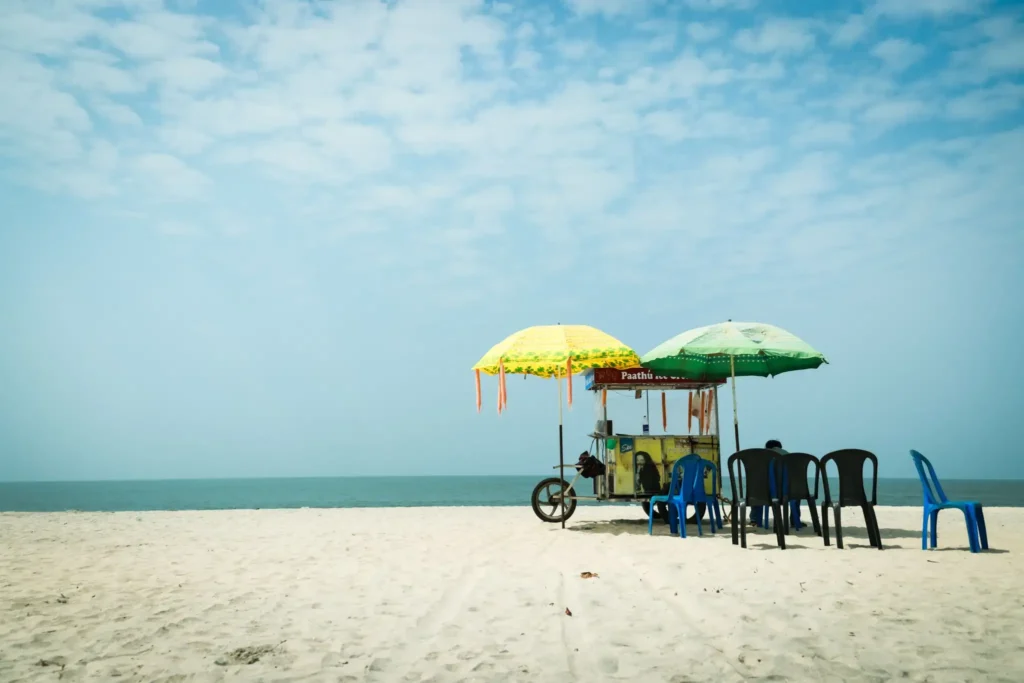
The closest proper restaurants are back along the main road toward Ped or Crystal Bay, about a 20–35 minute drive. Most visitors grab food after the hike rather than before. Trying to hike on a full stomach in the heat is not recommended.
Are There Toilets at Kelingking Beach?
Toilets are available near the parking area at the top of Kelingking Beach for approximately 5,000 IDR. There are no toilet facilities at the bottom of the hike on the beach itself. Use the facilities at the top before starting your descent.
Kelingking Beach Travel Tips for a Smooth Experience
These practical tips are the difference between a smooth visit and a stressful one. Check them before you book transport.
| Tip | Detail |
| Book a fast boat early. | High-season boats sell out; book 1–2 days ahead from Sanur. |
| Hire a driver for the day. | Nusa Penida roads are rough; local drivers know the fastest routes. |
| Bring cash only | Most Nusa Penida vendors and entrances don’t accept cards. |
| Combine with Crystal Bay | 30 min drive away; excellent, calm swimming after the hike |
| Download offline maps | Mobile signal is patchy in western Nusa Penida. |
| Start Kelingking first | Hike it early before other island stops; energy levels matter. |
According to Lonely Planet Bali & Lombok’s Nusa Penida chapter, Kelingking is consistently rated among the top 3 most visited sites on the island, which means the viewpoint gets genuinely crowded between 9 AM and 1 PM. Arriving early isn’t just about the heat; it’s also about having that view to yourself for even a few minutes.
Avoid Common Mistakes at Kelingking Beach. Read more in Kelingking Beach Guide: I Almost Turned Back on Bali’s Famous T-Rex Hike.
Do You Need a Guide for the Kelingking Beach Hike?
A guide is not officially required for the Kelingking beach hike, but hiring a local guide (roughly 150,000–200,000 IDR) is recommended for solo travelers, first-timers, and anyone less confident on steep terrain. Local guides know the rope sections well, can help with pacing, and can assist in an emergency. They also tend to know the best photo spots most visitors miss.
Final Advice for Making the Most of Your Visit
Kelingking is not a tick-box attraction. It’s the kind of place that people genuinely remember for years, not just because of the view but because of the effort it took. The hike earns you the experience. Rushing it, underestimating it, or showing up unprepared will strip away exactly what makes it special.
Take your time on the descent. Sit for a while at the beach. Look up at the cliff from below and try to understand the scale of what you just climbed down. Then take your time going back up. Your legs will feel every metre of it, and that’s fine. That’s the point.
And if you get to the top and the trail looks more than you’re comfortable with, staying at the viewpoint is still worth the entire trip to Nusa Penida. The view from the top is remarkable. You don’t owe the beach anything.
Frequently Asked Questions
Q: How hard is the Kelingking Beach hike?
A: The hike is rated moderate-to-hard. It involves two rope sections, steep clay paths, and about 400 metres of elevation change. Average fitness is the minimum requirement. People with knee or hip problems should avoid the descent.
Q: How long does the Kelingking Beach hike take?
A: The descent takes 30–60 minutes. The climb back up takes 45–75 minutes. Budget at least 2.5–3 hours total, including time at the beach.
Q: Can beginners do the Kelingking Beach hike?
A: Not recommended for complete beginners or those without experience on uneven terrain. People with moderate fitness and decent footwear can manage it carefully. The viewpoint at the top is excellent and requires no rope work.
Q: Is swimming safe at Kelingking Beach?
A: Swimming is possible during calm conditions at high tide, but carries risk due to shore break and absence of lifeguards. Always check wave conditions before entering the water. Never swim alone.
Q: What should I wear for the Kelingking hike?
A: Closed-toe shoes with grip are essential. Light breathable clothing, a hat, and sunscreen are necessary. Avoid flip-flops or sandals without ankle support.
Q: Is there an entrance fee for Kelingking Beach?
A: Yes. As of 2024, the entrance fee is 10,000 IDR per person. Parking fees are additional. Bring cash as cards are not accepted.
Q: Can I visit Kelingking Beach with children?
A: The viewpoint at the top is suitable for all ages. The hike down is not recommended for children under 10 or those who are not comfortable on steep terrain. Older teenagers with good fitness can usually manage it with adult supervision.