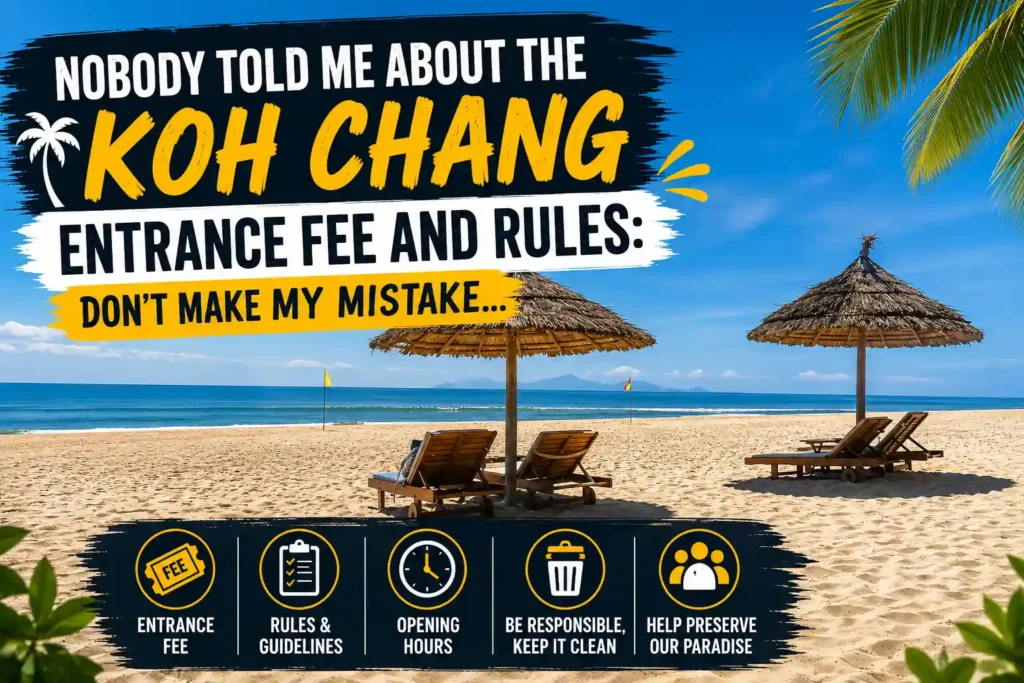
Most travelers board the ferry from Laem Ngop pier without a clue about what’s waiting on the other side. A checkpoint. A fee. And rules that actually carry fines if you ignore them.
Koh Chang sits inside a national park. That means it’s protected, and that protection comes with conditions. You pay to enter, you follow the rules, and you enjoy one of Thailand’s most beautiful islands without any surprises.
The Koh Chang entrance fee and rules are straightforward, but only if someone tells you first. Ignore them, and you risk fines, being turned away at checkpoints, or ruining the first hour of your holiday over something totally avoidable.
Here’s exactly what you need to know before you arrive.
Do You Need to Pay an Entrance Fee to Enter Koh Chang?
Yes, and no. It depends on which part of the island you’re visiting. Koh Chang sits inside Mu Ko Chang National Park, managed by Thailand’s Department of National Parks. If you pass through the national park checkpoint, which most visitors do, you’ll pay an entry fee. Thai nationals enter free, but foreign visitors pay.
If you’re staying at a private resort with its own access road, you might avoid the fee. But realistically? Most tourists pass through the main checkpoint on Route 3155, and that means paying up.
Everything You Need to Know About Koh Chang Entry Costs: Read more in White Sand Beach Koh Chang: Don’t Book Your Trip Until You Read This.
Current Koh Chang Entry Costs for Visitors
Here’s a clear breakdown of fees at the national park checkpoint, verified through the Department of National Parks, Wildlife and Plant Conservation, Thailand:
| Visitor Type | Entry Fee (THB) | Notes |
| Thai Nationals | Free | ID card required |
| Foreign Adults | 200 THB (~$5.50 USD) | Paid at main checkpoint |
| Foreign Children (under 14) | 100 THB (~$2.80 USD) | Age verified if needed |
| Thai Children (under 14) | Free | Guardian’s ID needed |
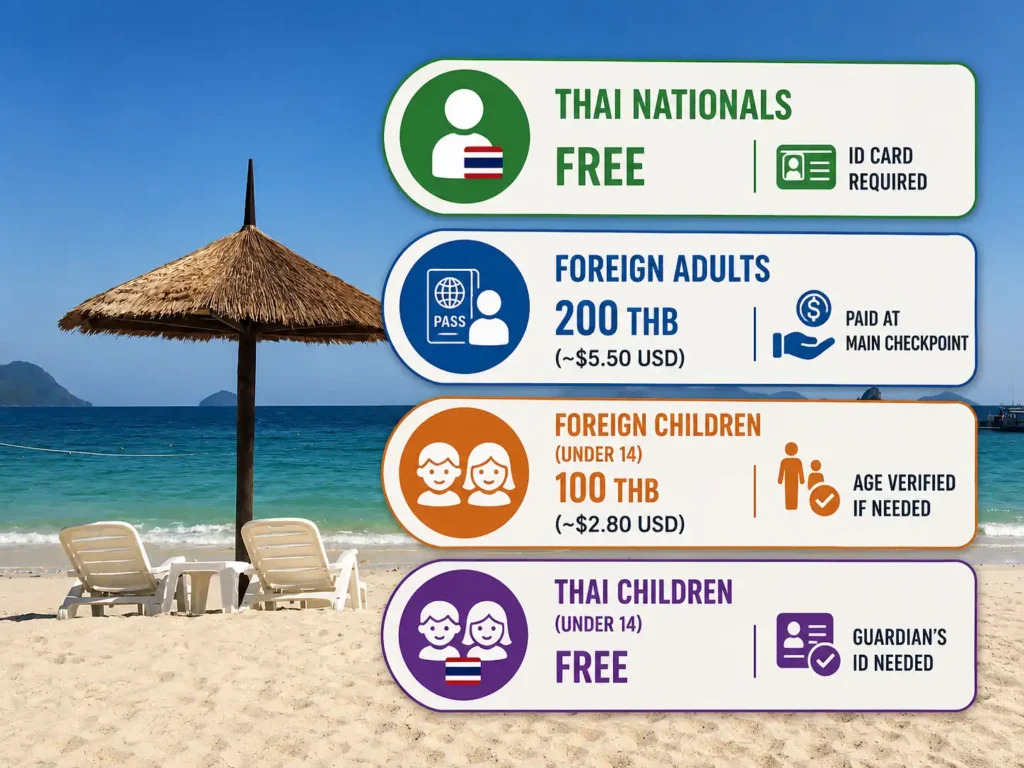
You pay in cash at the checkpoint booth; no card machines available. ATMs are in Klong Prao town if you need to withdraw first. Fees fund trail upkeep, marine protection, and waste management on the island.
National Park Fees Around Koh Chang (If Applicable)
The main fee covers general island access. But if you’re heading to specific protected zones, waterfalls, outer reef snorkeling sites, expect additional charges per location.
- Klong Plu Waterfall entry: 200 THB for foreigners
- Snorkeling trips around Koh Rang: 800–1,200 THB per person (typically bundled with licensed tour operators)
- Koh Wai or Koh Mak access via boat: separate from Koh Chang park fee
What Is Included in the Entrance Fee?
The entrance fee is basically a day pass to the national park zone. It covers the main roads, viewpoints, and public beaches within protected territory. It doesn’t include accommodation, snorkeling gear, boat tours, or meals.
The money funds real conservation work. According to the Marine National Park Division, the Koh Chang marine area supports over 70 documented reef fish species. The fee helps keep that intact.
What Does the Koh Chang National Park Fee Actually Cover?
The 200 THB entry fee covers access to the Mu Ko Chang National Park zone for foreign adult visitors. This includes public beaches, jungle viewpoints, waterfall access roads (separate site fees apply), and protected forest trails. It does not include accommodation, guided tours, or boat access to outer islands.
Entry Rules Every Visitor Should Know
Most visitors don’t get briefed at the checkpoint; staff often take your money and wave you through. But that doesn’t mean the rules don’t apply.
- Valid passport or ID may be requested at the checkpoint
- Vehicle registration required for motorbike renters at some checkpoints
- No unauthorized commercial activities within park boundaries
- Littering is a fineable offense, minimum 2,000 THB
Beach Access Rules and Restricted Areas
Most beaches on Koh Chang are publicly accessible, but some zones have restrictions. White Sand Beach (Hat Sai Khao) and Lonely Beach (Hat Tha Nam) are the most popular, both open to all, but with informal rules enforced by locals and resort staff.
I once wandered onto a beach section near a luxury resort thinking it was public; a staff member politely redirected me. Worth knowing in advance rather than feeling awkward mid-walk.
- Hat Sai Khao (White Sand Beach): Public access, no vehicle entry after sunset
- Lonely Beach: Open but rowdy after 10 PM due to nightlife bars
- Bang Bao Pier area: Commercial fishing zone, swimming near boats discouraged
- Interior forest trails: Some require a guide for safety
Environmental Rules to Follow on Koh Chang
This is where Koh Chang gets serious. The island has experienced coral bleaching and marine degradation over the years. The IUCN Red List and Reef Check Thailand flagged coral cover decline in this region, which is why authorities tightened environmental rules significantly after 2019.
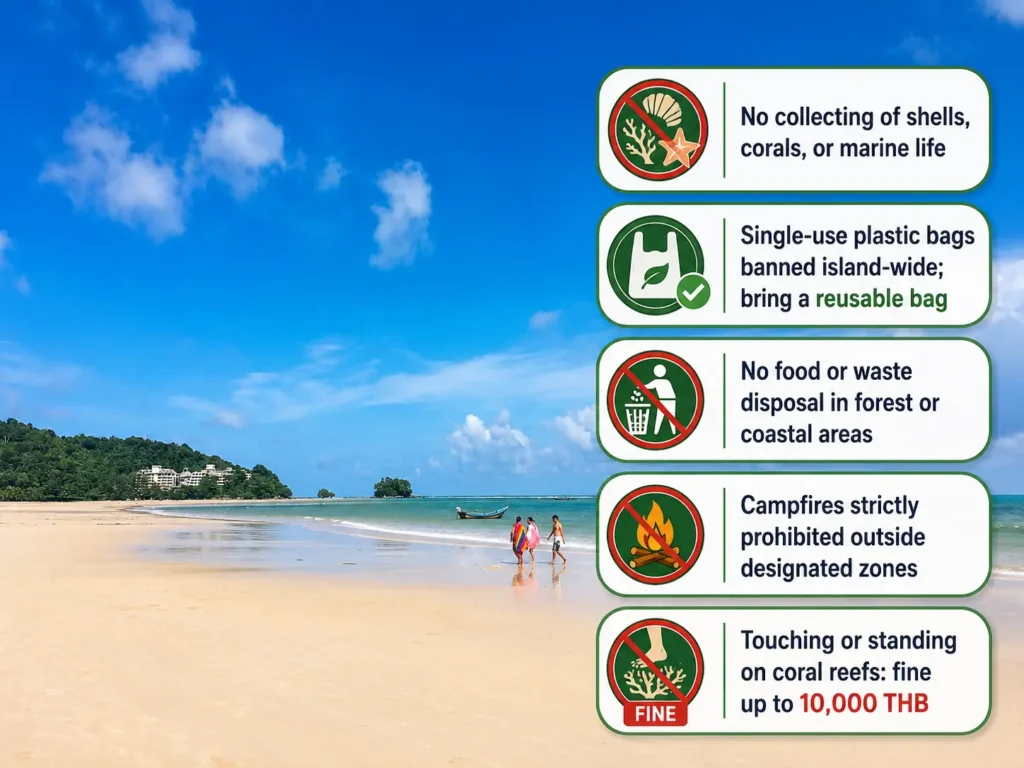
- No collecting of shells, corals, or marine life
- Single-use plastic bags banned island-wide; bring a reusable bag
- No food or waste disposal in forest or coastal areas
- Campfires strictly prohibited outside designated zones
- Touching or standing on coral reefs: fine up to 10,000 THB
Drone, Photography, and Filming Guidelines
Drone use is increasingly regulated across Thai national parks. On Koh Chang, commercial filming or content creation with drones requires permission from the park authority. Recreational flying in open beach areas is a grey zone, but flying near wildlife, resorts, or populated areas is not allowed.
Commercial filming permits must be obtained from the national park office near the main checkpoint. Allow 2–3 working days for approval.
Can You Fly a Drone on Koh Chang?
Drone use on Koh Chang requires a permit from the Mu Ko Chang National Park office for commercial purposes. Recreational flying in open public areas is not explicitly banned but restricted near wildlife zones, resort properties, and flight paths. Always confirm with park staff before flying to avoid fines.
Rules for Swimming, Snorkeling, and Water Activities
Snorkeling around Koh Rang has some of the clearest waters in the Gulf of Thailand. Life jackets are mandatory on licensed tour boats. Buoyed-off reef zones must be respected; stay outside the markers.
Swimming at night is strongly discouraged. Most Koh Chang beaches have no lifeguards after 6 PM, and currents can shift sharply, especially May through October during monsoon season.
Use this quick-reference table when planning your water and beach activities:
| Activity | Rule / Restriction |
| Swimming | Allowed at designated beaches only |
| Drone Flying | Permit required; no-fly zones near resorts |
| Campfires / BBQ | Prohibited in national park zones |
| Fishing | Recreational only; no spear fishing |
| Coral Touching | Strictly prohibited; fines up to 10,000 THB |
| Glass Bottles on Beach | Banned at most public beach areas |
Vehicle and Parking Regulations on the Island
Motorbike rentals run 200–350 THB per day from local shops in Klong Prao. International driving licenses are technically required but inconsistently enforced. Speed limits in village areas are 40 km/h, and parking near beach entrances is regulated.
- Park only in designated roadside areas near beaches
- No overnight parking near restricted forest zones
- Motorbikes must not enter beach sand areas
Best Time to Visit and Avoid Entry Issues
Here’s a quick month-by-month guide so you can plan around weather and crowds:
| Month | Weather | Visitor Tips |
| Nov – Feb | Cool, dry, clear skies | Peak season; book early |
| Mar – May | Hot, less crowded | Great deals, good visibility |
| Jun – Oct | Rainy season, rough seas | Some beaches may close |
November through February is peak season. Checkpoint queues can hit 20–30 minutes in late December. If you’re arriving during peak times, aim for early morning or late afternoon.
What Is the Best Time to Visit Koh Chang?
The best time to visit Koh Chang is November to February, with clear skies and calm seas at 28–32°C. March to May suits budget travelers, with fewer crowds and lower hotel prices. June to October is rainy season, with rough seas and limited access to outer islands like Koh Rang.
Common Visitor Mistakes to Avoid
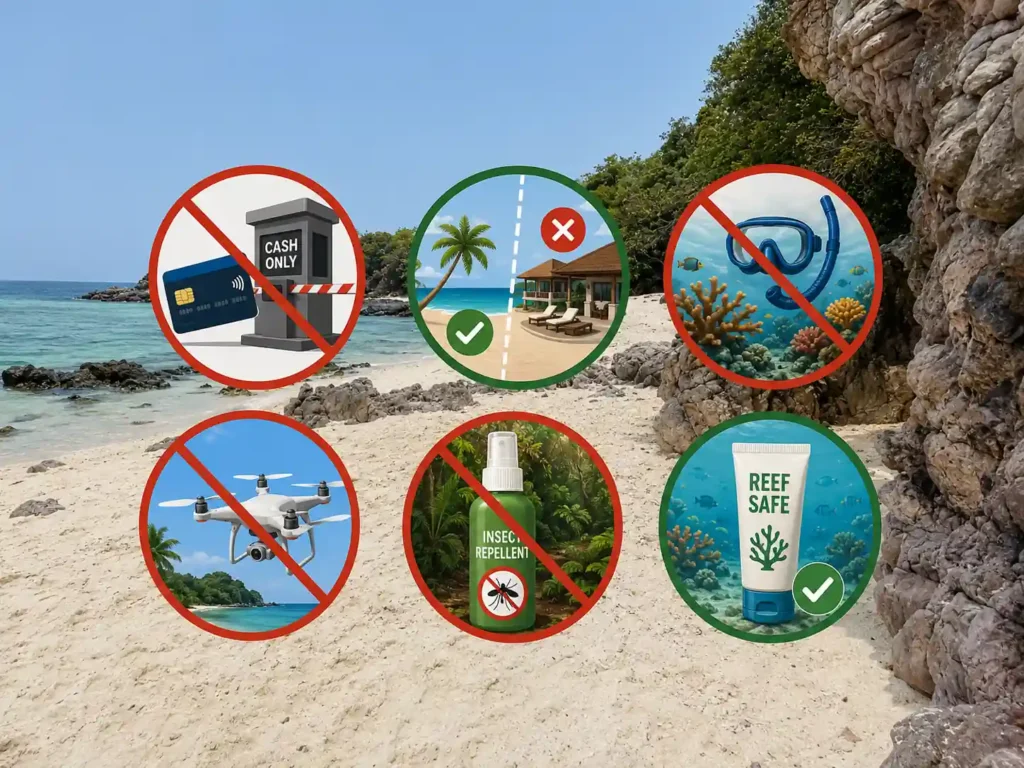
- Bringing only cards; the checkpoint is cash only
- Assuming all beaches are public; some resort stretches are private
- Snorkeling without checking for restricted coral zones
- Flying drones without asking first; locals notice and report it
- Skipping insect repellent; jungle trails are no joke
- Using chemical sunscreen near reefs; reef-safe only is the rule
Quick Tips for a Smooth Visit to Koh Chang
- Carry at least 500 THB cash for checkpoint fees and waterfall entries
- Download an offline map: mobile signal drops in forested areas
- Ferry from Laem Ngop pier: two operators run daily, first at 6:30 AM
- Reef-safe sunscreen only near any snorkeling zone
- Ask your hotel about local beach restrictions before heading out
Final Thoughts: Understanding Koh Chang Fees and Rules Before You Go
The Koh Chang entrance fee and rules are far simpler than they might seem on paper. Pay a small fee, follow reasonable environmental guidelines, and you get one of Thailand’s most beautiful island experiences in return. That’s a fair deal.
The rules exist because Koh Chang has been worth protecting. The forests are real, the reefs are still alive, and the beaches haven’t been completely overrun. A little respect for the system keeps the island worth visiting for everyone who comes after you.
Frequently Asked Questions
Is there an entrance fee to Koh Chang?
Yes. Foreign adult visitors pay 200 THB (~$5.50 USD) at the Mu Ko Chang National Park checkpoint. Thai nationals enter free. Foreign children under 14 pay 100 THB.
Can I pay the Koh Chang entrance fee by card?
No. The checkpoint is cash only. Bring Thai baht before arriving at the island.
Are Koh Chang beaches open to the public?
Most beaches are publicly accessible. White Sand Beach and Lonely Beach are fully open. Some sections near private resorts may be restricted to guests only.
What are the fines for breaking environmental rules on Koh Chang?
Fines range from 2,000 THB for littering to 10,000 THB for coral damage. These are actively enforced in protected snorkeling zones.
Do I need a permit to snorkel near Koh Chang?
General snorkeling at public beaches needs no permit. For protected reef zones like Koh Rang, booking with a licensed tour operator keeps you automatically compliant.
Is Koh Chang worth visiting in the rainy season?
It can be for budget travelers. However, some boat tours and outer island access are limited or suspended June through October due to rough seas.