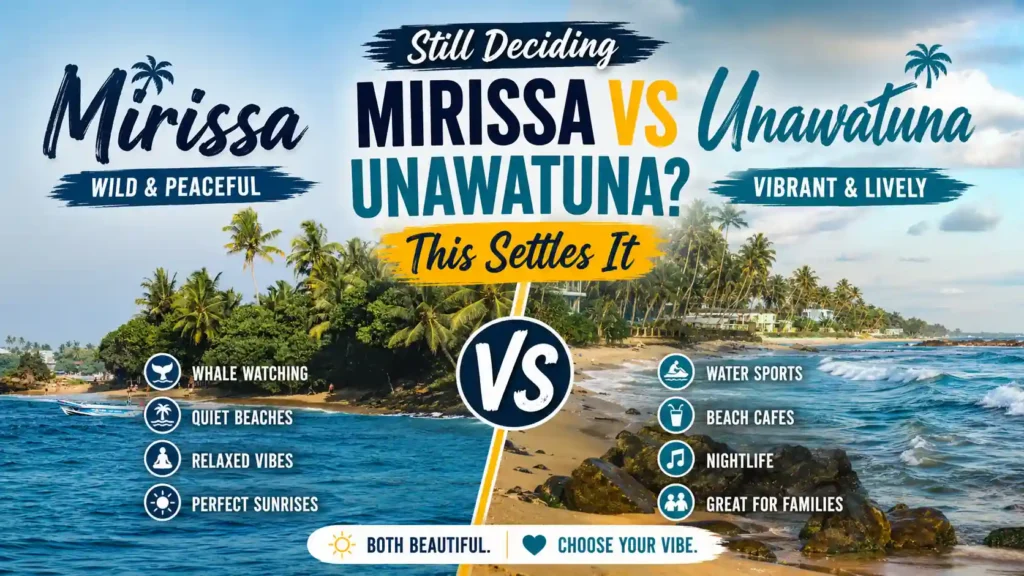
Mirissa and Unawatuna are two popular beach towns on Sri Lanka’s southern coast. They are only about 20 km apart, but many travelers still find it hard to choose between Mirissa vs Unawatuna. Mirissa is known for whale watching, which usually happens from November to April, and it has a calm, relaxed feel.
Unawatuna has calmer water, so it’s a great place for snorkeling. It also has more hotels, restaurants, and services, which makes it easier for first-time visitors. This Mirissa vs Unawatuna guide will compare both beaches so you can pick the best one for your trip.
Location and How Easy They Are to Reach
Both towns sit on the southern coast of Sri Lanka, a few kilometers apart. Mirissa is roughly 150 km from Colombo, about a 3-hour drive or a 3.5-hour train ride via Matara. Unawatuna is just 5 km east of Galle, making it one of the easiest beach destinations to reach from the Sri Lanka Tourism Development Authority (SLTDA), promoted Galle Fort area. If you’re arriving from Colombo, Unawatuna is roughly 2.5 hours by express train, noticeably faster than getting to Mirissa.
Mirissa’s location gives it a slightly wilder feel. You’re farther from the main tourist circuit, the roads narrow a bit, and the whole place has an “end of the road” energy that some travelers love. Unawatuna is more connected, which is great for day trips to Galle Fort but does mean slightly more foot traffic.
Getting There Is Easier Than You Think: Read more in How to Get to Mirissa Beach Without Overpaying.
Beach Vibes and Overall Atmosphere
Mirissa has a long, curved bay with palm trees right at the water’s edge, soft golden sand, and a laid-back scene. It’s the kind of place where beach bars play Bob Marley at a respectful volume, seafood is grilled fresh every evening, and nobody’s in a rush. That said, Mirissa has grown significantly over the past decade, and it can get genuinely crowded during whale watching season.
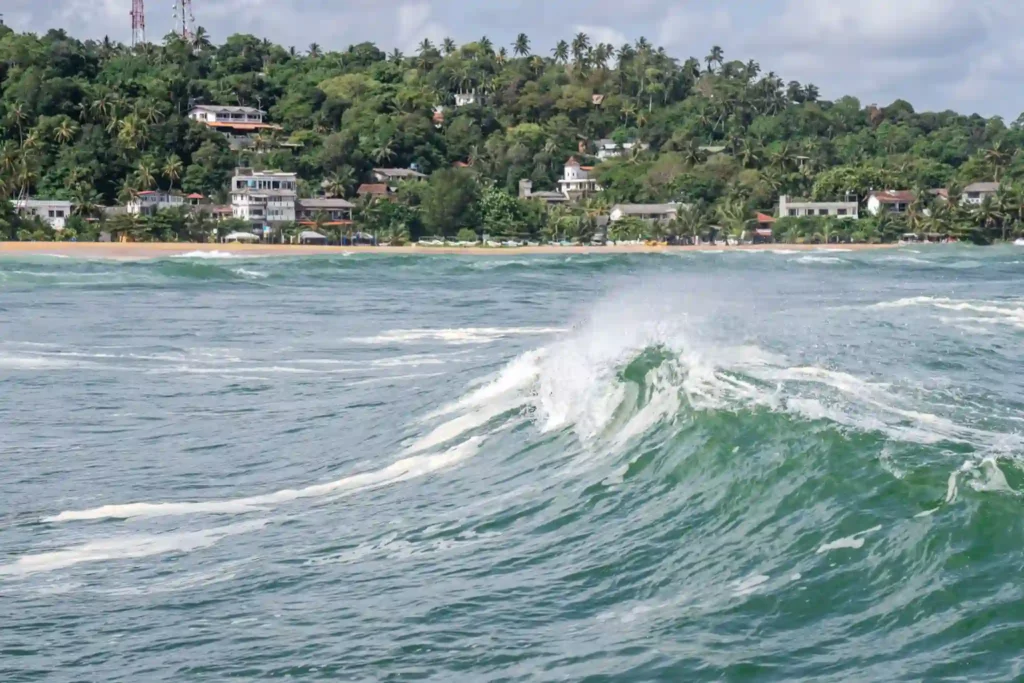
Unawatuna wraps around a sheltered bay that makes it calmer and safer for swimming than most Sri Lankan beaches. The water is turquoise, the curve of the beach is postcard-perfect, and there are beachfront restaurants right on the sand. It’s more tourist-friendly in the conventional sense: beach clubs, yoga studios, guesthouses within walking distance of everything.
Which beach is better for first-time visitors to Sri Lanka, Mirissa or Unawatuna?
For first-time visitors, Unawatuna is generally the easier choice. It has a sheltered, swimmable bay, good accommodation variety across all budgets, and proximity to Galle Fort, which is a UNESCO World Heritage Site and one of Sri Lanka’s top cultural attractions. Mirissa is better for travelers who already know they want whale watching, surf, or a quieter scene.
Beach Quality and Swimming Conditions
Here’s an honest comparison of what each beach delivers in terms of sand, water, and swimming safety, useful details to check before booking.
| Feature | Mirissa | Unawatuna |
| Water conditions | Moderate waves, some current | Calm, sheltered bay |
| Sand quality | Soft, golden, wide | Fine white, slightly narrower |
| Swimming safety | Moderate, check conditions | High, suitable for most swimmers |
| Reef nearby | Some reef on the western end | Coral reef, great for snorkeling |
| Beach length | ~1 km curved bay | ~800 m horseshoe bay |
| Lifeguards | Limited presence | Occasional, not guaranteed |
Unawatuna’s sheltered bay genuinely makes a difference for casual swimmers. The natural headlands reduce wave energy significantly, so the water stays calmer most of the time. Mirissa’s open bay is beautiful, but can carry stronger currents, especially toward the western headland near Parrot Rock.
Whale Watching and Water Activities
This is where Mirissa clearly leads. According to WWF Sri Lanka’s research data, the waters off Mirissa are among the most reliable locations in the world to spot blue whales. The peak whale watching season runs from November to April, with blue whales regularly appearing just 10–20 km offshore. Tours depart from Mirissa harbor, typically leaving at 6:30 AM and lasting 4–6 hours. Prices in 2026 generally range from 4,000 to 6,500 LKR per person (~$13–$21 USD).
Unawatuna has its own strengths in the water. The coral reef running along the western side of the bay is excellent for snorkeling and beginner diving. Sea turtles are frequently spotted here, and the visibility on calm mornings is often exceptional. Several dive shops along the beach offer guided reef dives and PADI courses.
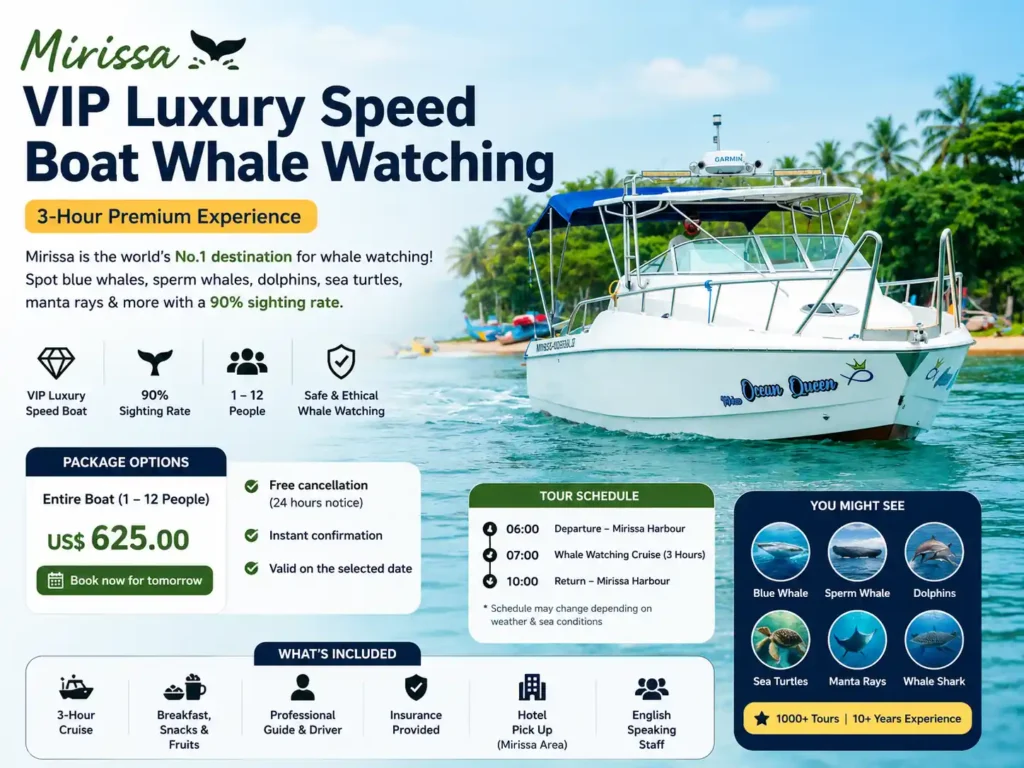
For a premium whale watching experience in Mirissa, I’d definitely choose this VIP private sports boat.
Is Mirissa better than Unawatuna for whale watching?
Yes, Mirissa is significantly better than Unawatuna for whale watching. Mirissa Harbor is the main departure point for Sri Lanka’s whale watching tours, and the deep ocean trench nearby makes blue whale sightings far more common than from any other point on the southern coast. Unawatuna does not operate whale watching tours due to its location and shallower offshore waters.
Food, Nightlife, and Accommodation Options
Both towns punch above their weight when it comes to food. Mirissa has a string of excellent seafood restaurants near the beach, with grilled prawns, fresh tuna, and the wildly popular crab rice. Hangtime Bar and Mirissa Hills are popular sunset spots. Unawatuna has more variety overall; Japanese, Italian, Indian, and Sri Lankan options all sit within walking distance on the main strip.
For nightlife, neither town goes very late. Mirissa has more beach bars with live music, while Unawatuna tends to wind down a bit earlier. Both suit travelers who want early mornings and laid-back evenings rather than clubbing.
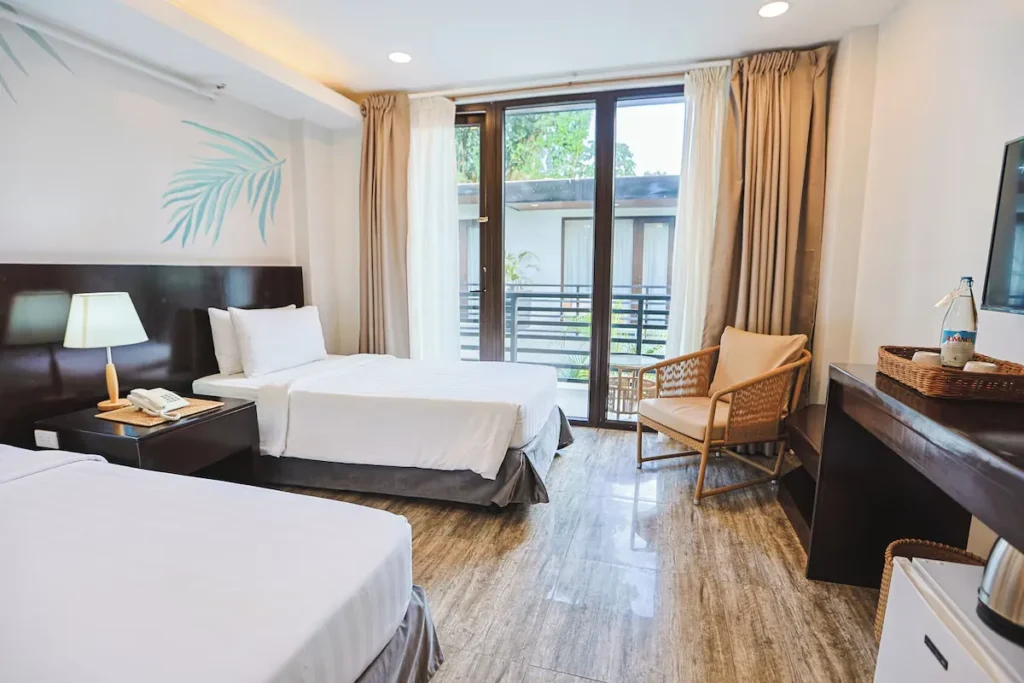
This table covers accommodation across both towns to help you plan based on budget.
| Category | Mirissa (per night, 2026) | Unawatuna (per night, 2026) |
| Budget guesthouses | $10–$25 USD | $12–$30 USD |
| Mid-range hotels | $35–$75 USD | $40–$90 USD |
| Boutique hotels | $80–$150 USD | $85–$160 USD |
| Luxury resorts | $150–$300+ USD | $130–$280+ USD |
| Hostel dormitory | $6–$12 USD | $8–$15 USD |
Unawatuna runs slightly more expensive on average, largely because of its proximity to Galle and the higher demand from tourists doing the Galle Fort day trip combo. Mirissa offers better value if you’re staying purely for beach time and whale watching.
Budget, Best Time to Visit, and Key Differences
This side-by-side summary captures the essential planning information for a Mirissa vs Unawatuna comparison, based on the most current 2026 data available.
| Factor | Mirissa | Unawatuna |
| Best season | Nov–Apr (whale watching); May–Oct (off-peak) | Dec–Mar (peak); Jun–Sep (shoulder) |
| Whale watching | Yes — world class | No |
| Snorkeling/diving | Basic snorkeling | Excellent — reef & turtles |
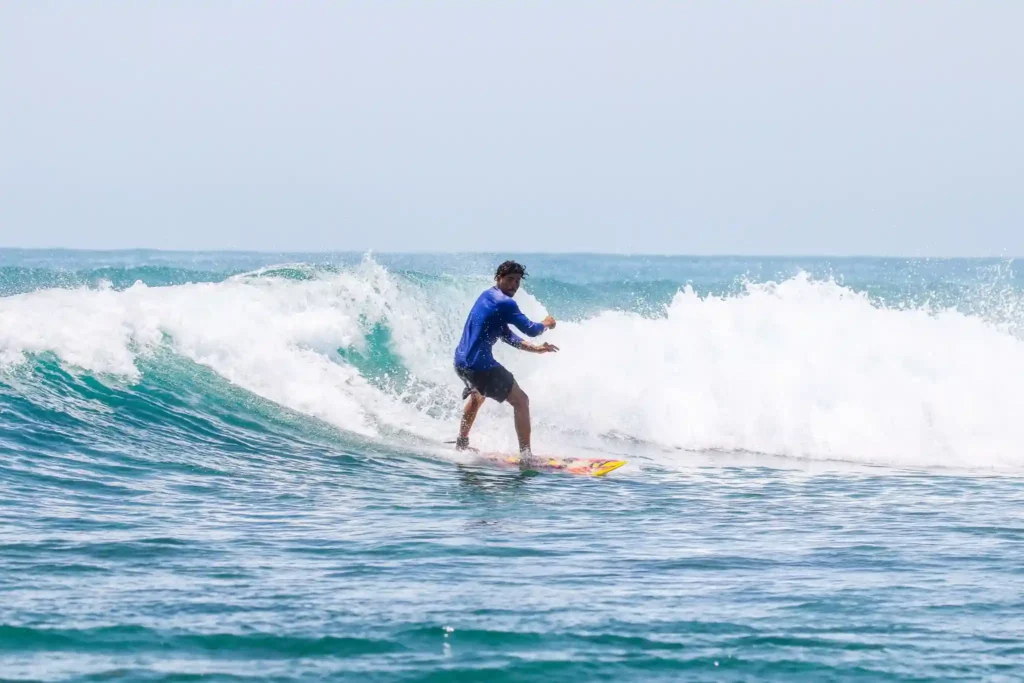
| Surfing | Small beach break | Not a surf destination |
| Family friendly | Moderate | High (calmer water) |
| Galle day trip | 45-min drive | 10-min drive |
| Overall vibe | Chill, barefoot, local | Polished, convenient, international |
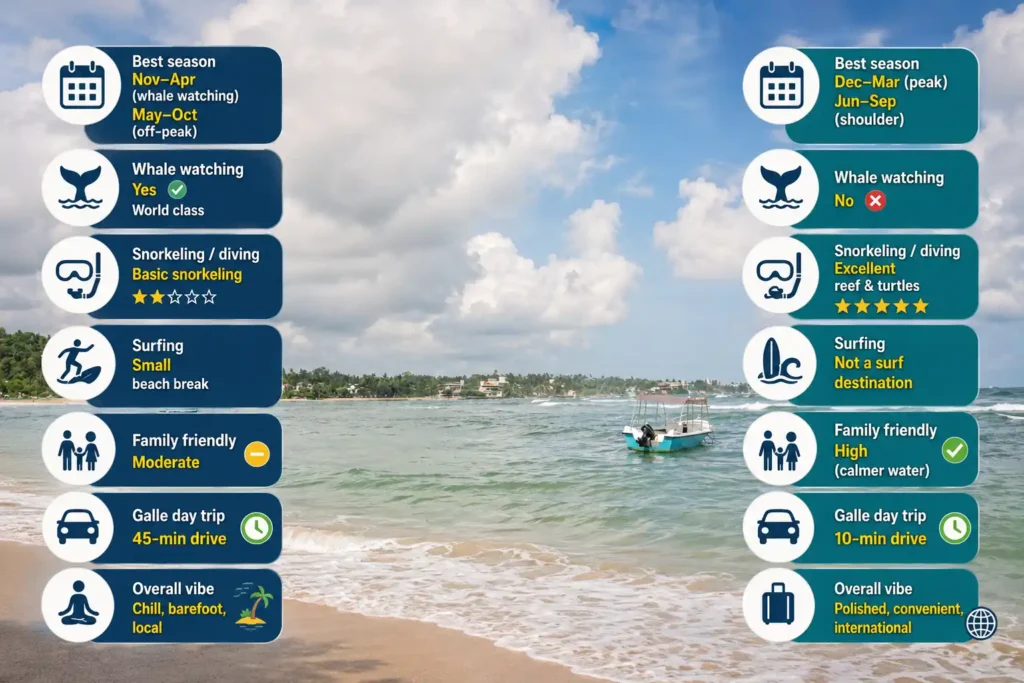
According to Sri Lanka’s Department of Meteorology, the southern coast experiences the Southwest Monsoon from May to September and the Northeast Monsoon from December to February. Interestingly, both towns sit close enough geographically that their weather patterns are nearly identical, but the whale watching season in Mirissa tilts the scales toward November to April as the busiest and most rewarding period for that town specifically.
What is the best time to visit Mirissa and Unawatuna?
The best time to visit Mirissa is between November and April, when the seas are calm and blue whale sightings are most frequent. For Unawatuna, December to March offers the most settled weather and ideal snorkeling visibility. Both towns are quieter and cheaper from May to October, though Unawatuna’s protected bay means swimming remains reasonable even during the shoulder months.
Mirissa vs Unawatuna: Which One Should You Choose?
If whale watching is on your bucket list, Mirissa wins with no debate. It’s also the right pick if you prefer a slightly slower, more local atmosphere and don’t need everything within walking distance. Plan for 3–4 nights minimum to properly settle in.
If you’re traveling with family, new to Sri Lanka, or want the convenience of snorkeling, reef swimming, and a day trip to Galle Fort all rolled into one, Unawatuna makes more practical sense. It rewards short stays of 2–3 nights but can hold your attention longer too.
Mirissa Beach Guide for First-Time Visitors: Read more Stop! Don’t Book Mirissa Beach Before Reading This.
Honestly? If your schedule allows it, visit both. They’re only about 40 minutes apart by road. Spend 3 nights in Mirissa for the whale watching and sunsets, then 2 nights in Unawatuna for the snorkeling and Galle Fort. That combination is genuinely hard to beat on Sri Lanka’s southern coast.
Frequently Asked Questions (FAQs)
Is Mirissa or Unawatuna better for families?
Unawatuna is better for families with young children because of its calm, sheltered bay. The water is easier to manage, and facilities are generally more convenient. Mirissa is suitable for older children and adults, but its open bay can carry stronger currents.
How far apart are Mirissa and Unawatuna?
Mirissa and Unawatuna are approximately 35–40 km apart by road, and the drive takes around 40–50 minutes. It’s an easy trip if you want to visit both in the same journey.
Which beach is cheaper, Mirissa or Unawatuna?
Mirissa is slightly cheaper on average, especially for mid-range accommodation and food. Unawatuna’s proximity to Galle drives prices up a little, but both destinations are excellent value compared to most Southeast Asian beach destinations.
Can you snorkel in Mirissa?
Snorkeling is possible in Mirissa, particularly around Parrot Rock, but the reef quality is far less impressive than Unawatuna. Unawatuna’s coral reef and regular turtle sightings make it the better snorkeling choice between the two.
Is it safe to swim at Mirissa beach?
Swimming at Mirissa is generally safe in the calmer months from November to April during the whale watching season. The eastern part of the bay near the beach bar strip is the most swimmable section. Avoid the western end near Parrot Rock during bigger swells.