
Is Mirissa safe? Yes, Mirissa is safe for most travelers, including solo visitors and families. It is a small, friendly beach town on the south coast of Sri Lanka, and local police keep a regular watch on the main beach and tourist areas.
Still, like any coastal town, it has a few risks you should know about, such as strong rip currents in the sea and small scams near the market. So if you are asking “is Mirissa safe,” the honest answer is: yes, with basic precautions, you can enjoy your trip without any major problems.
Is Mirissa Safe for Tourists?
Overall, Mirissa is considered safe for tourists. Sri Lanka has been rebuilding its tourism sector steadily since the economic recovery from 2022, and Mirissa remains one of its most visited coastal destinations. Crime against tourists is not common, but it’s not zero either.
According to the UK Foreign Commonwealth & Development Office (FCDO), Sri Lanka is generally low-risk for tourists, with petty theft and opportunistic scams being the most common concerns rather than serious crime. The overall travel risk in Mirissa specifically is rated low to moderate.
That said, being aware of local dynamics helps. The town has grown quickly as a tourist hub, which brings both better infrastructure and a few more opportunistic vendors. Keeping your wits about you, especially in crowded areas, is simply good travel sense.
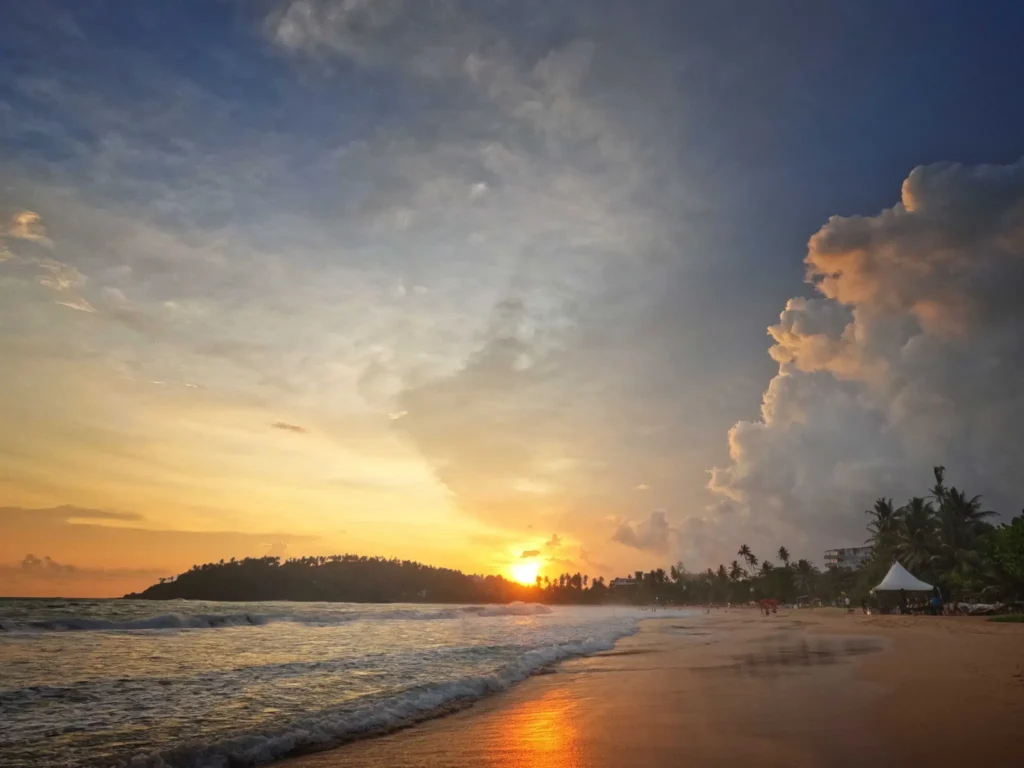
Stay Safe While Exploring Mirissa: Read more in Stop! Don’t Book Mirissa Beach Before Reading This.
Crime and Common Scams in Mirissa
Violent crime targeting tourists in Mirissa is rare. Petty theft, bag snatching, and pickpocketing on busy beach strips are more of a concern than anything serious. Keep valuables out of sight, especially on the beach.
The more common issues are scams rather than crime. A few patterns travelers report include:
- Tuk-tuk drivers quoting one price and attempting to charge more on arrival
- “Friendly locals” offering whale-watching tours at heavily inflated prices
- Gem scams: someone befriends you and suggests a “great deal” on gems to sell back home
- Fake tour operators collecting payment for trips that never run
The fix for most of these is simple. Agree on prices before getting in a tuk-tuk, book whale-watching tours through your accommodation or a verified operator, and politely decline unexpected offers of friendship that come with a financial angle.
Is It Safe to Swim at Mirissa Beach
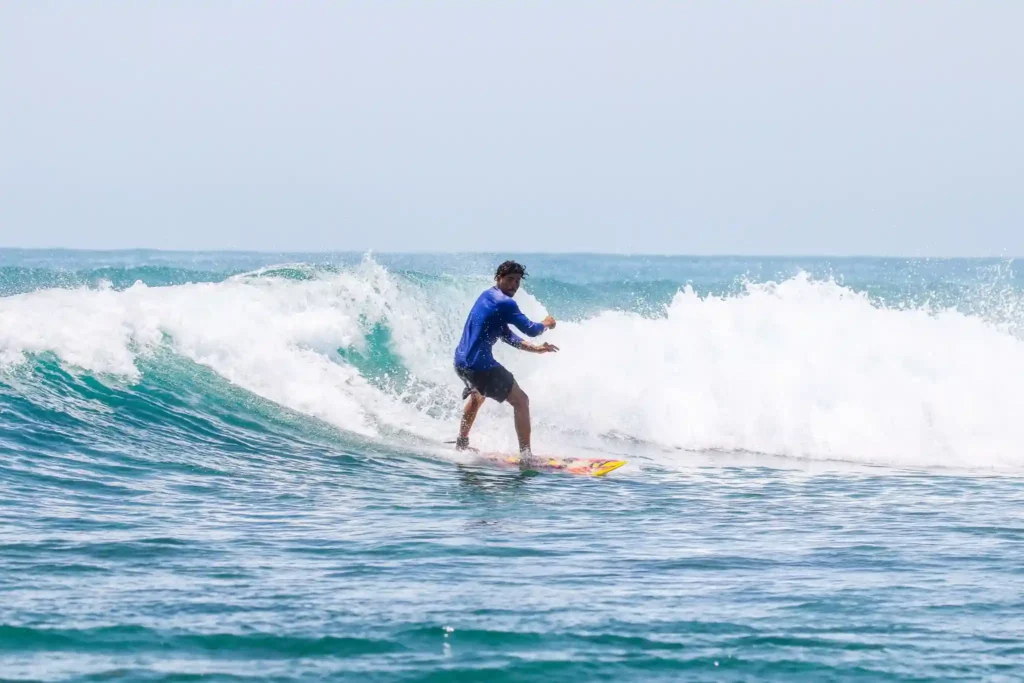
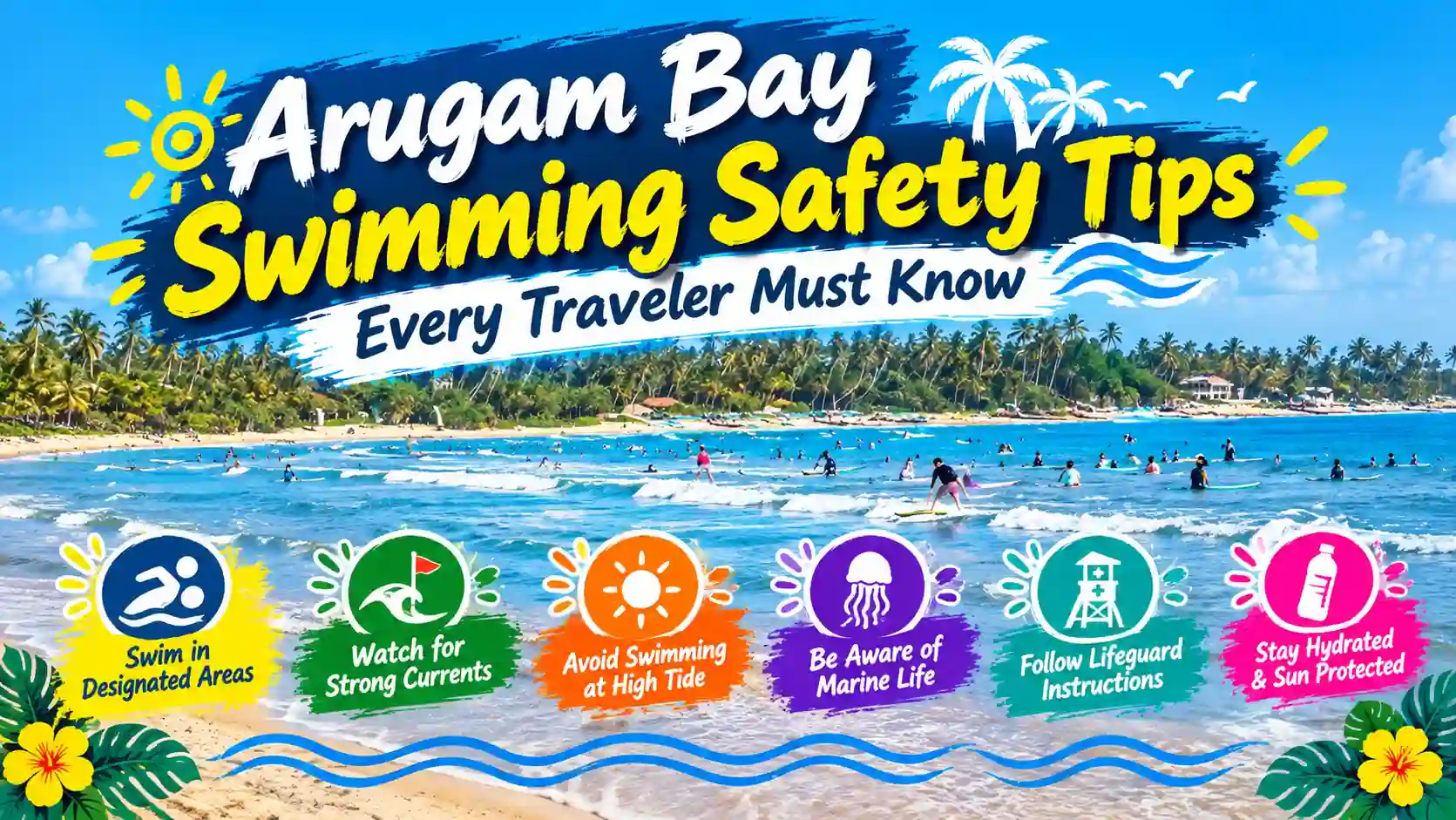
Swimming at Mirissa Beach is generally safe during the calm season from November to April, when the sea is usually calmer. However, conditions can change quickly, and strong currents and rough waves are common from May to October, making swimming unsafe in some areas. As there are no permanent lifeguards, always check sea conditions before entering the water and avoid swimming if the sea looks rough.
Here’s a quick overview of monthly swimming safety at Mirissa to help you plan your visit.
| Month | Sea Conditions | Swimming Safety |
| November – April | Calm, clear | Generally safe |
| May – June | Swell increasing | Caution advised |
| July – September | Rough, strong currents | Not recommended |
| October | Transitional | Variable — check daily |
Is Mirissa Beach Safe for Swimming?
Mirissa Beach is safe for swimming from November to April when the sea is calm. Between May and October, the southwest monsoon brings rough conditions and strong currents that make swimming hazardous. There are no permanent lifeguards on the beach, so checking local sea conditions before entering the water is essential.
Ocean Safety and Rip Currents
Rip currents are a real hazard at Mirissa, particularly during the monsoon months. The Sri Lanka Tourism Development Authority (SLTDA) advises tourists to observe flag warning systems where present and to swim in designated safe zones. If a beach flag system is visible, always follow it before entering the water.
If you’re caught in a rip current, the key rule is: don’t fight it. Swim parallel to the shore until you’re out of the current’s pull, then swim back in at an angle. Fighting directly against a rip current exhausts even strong swimmers quickly.
Avoid swimming alone at Mirissa, especially during the shoulder months. Having someone on shore watching is not paranoia; it’s practical safety in a spot with unpredictable water.
Is Mirissa Safe for Solo Female Travelers?
Mirissa is one of the more comfortable beach destinations in Sri Lanka for solo female travelers, thanks to its popular backpacker community. While it’s generally safe, unwanted attention can occasionally occur after dark in quieter areas.
Stay in well-lit places at night, choose secure accommodations, trust your instincts, and dress modestly away from the beach. Swimwear is widely accepted on Mirissa Beach.
Safety Tips for Families with Kids
Families do visit Mirissa and enjoy it. However, the beach is better suited to older children than toddlers, mainly because of the ocean’s unpredictability. During the calm season, the beach is relaxed and manageable. During rough months, it’s a place to watch waves rather than swim in them.
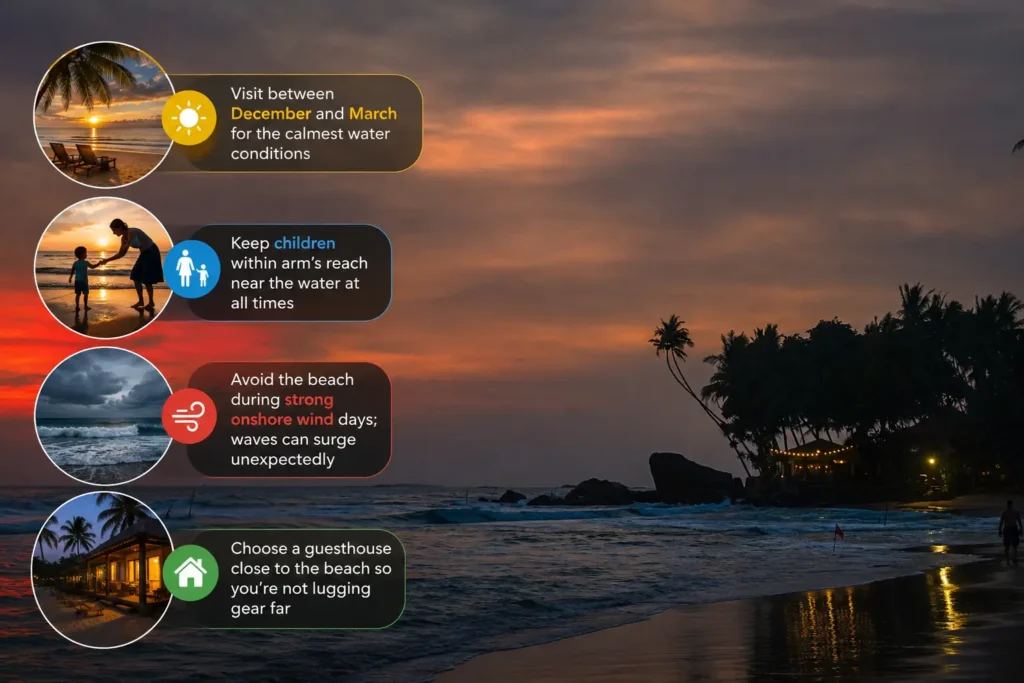
For families traveling with young children:
- Visit between December and March for the calmest water conditions
- Keep children within arm’s reach near the water at all times
- Avoid the beach during strong onshore wind days; waves can surge unexpectedly
- Choose a guesthouse close to the beach so you’re not lugging gear far
The town area is family-friendly, with good restaurants, fresh seafood, and a relaxed pace. Mirissa is not a party town in the way some beach destinations are, which actually makes it more comfortable for families.
Food, Water, and Health Safety
Food safety in Mirissa is generally good, particularly in established restaurants and guesthouses. Stick to places with visible turnover; busy kitchens tend to be fresher. Fresh seafood and Sri Lankan rice-and-curry dishes from reputable spots are consistently well-reviewed and safe.
Don’t drink tap water in Mirissa. Bottled water is widely available and cheap, typically around 50–80 Sri Lankan Rupees (LKR) for a 1.5L bottle at local shops. Using a refillable bottle with a filter is both more economical and better for reducing plastic waste.
Use this health and safety checklist to avoid the most common traveler issues in Mirissa.
| Health Area | Risk Level | Practical Advice |
| Tap water | High | Never drink — use bottled or filtered |
| Street food | Low-moderate | Choose busy stalls, avoid lukewarm food |
| Sun exposure | High | SPF 50+ sunscreen, hat, hydrate often |
| Mosquitoes | Moderate | Use repellent, especially at dusk |
| Medical facilities | Limited | Nearest hospital in Matara (~20 km) |
Travel insurance is strongly recommended for Mirissa. The nearest hospital with full facilities is in Matara, around 20 kilometers away. For serious medical situations, the World Health Organization (WHO) recommends that travelers to Sri Lanka ensure vaccinations for Hepatitis A and Typhoid are up to date before visiting.
Transportation Safety in and Around Mirissa
Getting around Mirissa is easy, but road safety requires extra caution. Traffic can be chaotic, and local driving habits may differ from what many visitors are used to.
If you rent a scooter, always wear a helmet and drive carefully, as tourist motorcycle accidents are not uncommon. For longer journeys, the coastal train to nearby Weligama Station (about 5 km from Mirissa) is a safe and scenic option. When using tuk-tuks, agree on the fare in advance or book through PickMe for transparent pricing.
How Do You Get Around Mirissa Safely?
The safest way to get around Mirissa is by tuk-tuk, with agreed fares before departure, or by using the PickMe app for verified drivers. The coastal train to Weligama (5 km away) is reliable and scenic. If renting a scooter, always wear a helmet and avoid night riding on unfamiliar roads.
The Safest Ways to Get Around Mirissa: Read more in How to Get to Mirissa Beach Without Overpaying.
Wildlife and Nature Safety
Mirissa is famous for whale watching between December and April, when blue whales and sperm whales are commonly spotted. Choose a reputable tour operator that follows responsible practices and provides life jackets.
Stray dogs are common but usually harmless. Avoid approaching them, especially at night, as rabies is present in Sri Lanka. Seek immediate medical care if you’re bitten.
Some parts of the beach have sharp coral, so reef shoes are recommended for snorkeling or walking in rocky areas.
Safety at Night: What to Expect
Mirissa has a low-key nightlife scene compared to places like Hikkaduwa or Unawatuna. A few beach bars and restaurants with live music keep things relaxed rather than raucous. The vibe is generally calm, and serious incidents are not commonly reported.
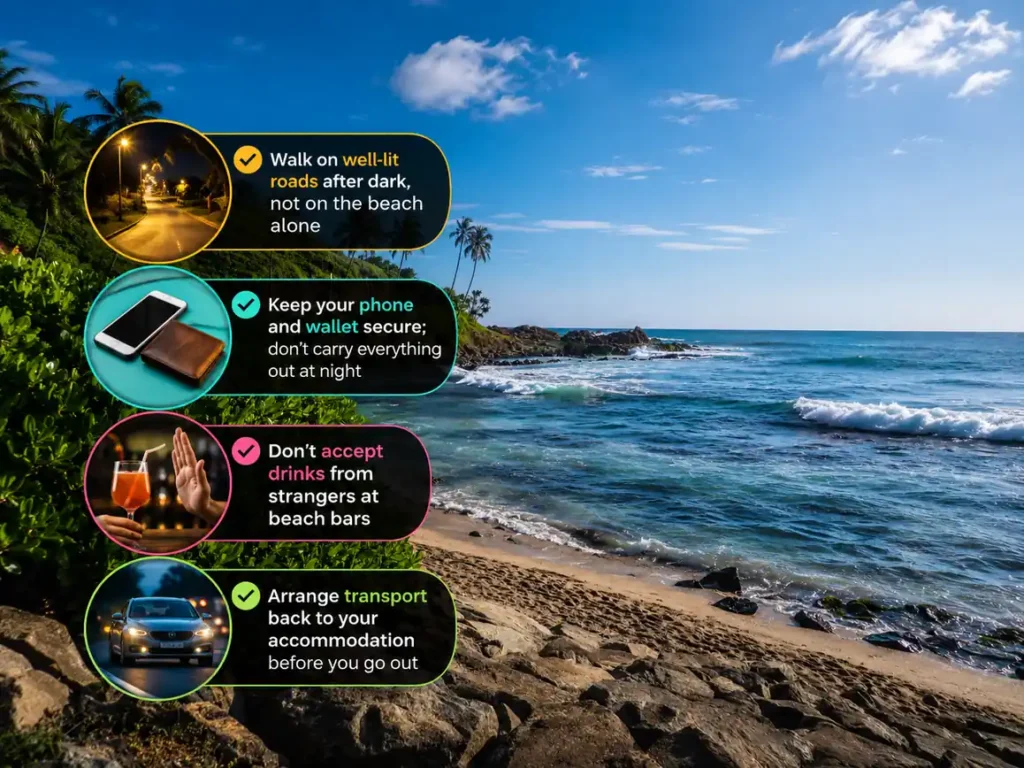
That said, common-sense night safety still applies:
- Walk on well-lit roads after dark, not on the beach alone
- Keep your phone and wallet secure; don’t carry everything out at night
- Don’t accept drinks from strangers at beach bars
- Arrange transport back to your accommodation before you go out
The beach itself after midnight becomes quieter and less well-lit. It’s generally fine, but isolated stretches are better avoided by solo travelers, particularly solo women.
This safety overview by activity and time of day helps you plan your Mirissa itinerary with confidence.
| Activity | Time of Day | Safety Level | Notes |
| Beach swimming | Morning | Good (calm season) | Best conditions, fewest people |
| Whale watching | Early morning | Good | Book reputable operators only |
| Town exploration | Daytime | Very good | Low risk, busy area |
| Restaurants/bars | Evening | Good | Stick to popular, visible venues |
| Beach walks | Night | Moderate | Use well-lit areas, avoid isolation |
Is Mirissa Safe at Night?
Mirissa is generally safe at night, with a calm bar and restaurant scene rather than heavy nightlife. Stick to well-lit areas, avoid isolated beach stretches after dark, and arrange transport home before going out. Petty theft risk increases slightly at night, so keep valuables secured.
Emergency Contacts and Local Help
Knowing who to call in an emergency before you need to call them is just good preparation. Here are the key contacts for travelers in Mirissa:
- Sri Lanka Police Emergency: 119
- Ambulance / Fire: 110
- Tourist Police (Galle): +94 91 222 2222
- Nearest hospital: Matara General Hospital, ~20 km from Mirissa
- Sri Lanka Tourism Development Authority helpline: 1912
Save these before you arrive. Most guesthouses in Mirissa will also have a contact sheet for local emergencies; it’s worth asking at check-in.
Simple Safety Tips for a Worry-Free Trip
Mirissa is not a high-risk destination. Most travelers leave with nothing but good memories. But a few sensible habits make the difference between a smooth trip and an avoidable problem:
- Buy comprehensive travel insurance before you fly, not after you arrive
- Keep digital and physical copies of your passport and travel documents
- Inform your accommodation of your daily plans, especially for boat trips or hikes
- Only exchange money at banks or authorized money changers, not strangers on the street
- Respect Sri Lankan cultural norms; modesty near temples and religious sites is expected
- Don’t leave valuables unattended on the beach, even briefly
Mirissa rewards travelers who arrive with an open mind and basic common sense. It’s a genuinely beautiful part of Sri Lanka, and the vast majority of visitors have an excellent experience here.
FAQs About Mirissa Safety
Is Mirissa safe for solo travelers?
Yes, Mirissa is generally safe for solo travelers. The town has a well-established backpacker community, making it easy to meet others. Standard solo travel precautions apply: keep valuables secure, avoid isolated areas at night, and trust your instincts.
Is Mirissa safe for female travelers?
Mirissa is considered one of the more comfortable beach destinations in Sri Lanka for solo female travelers. Unwanted attention occasionally occurs in quieter areas after dark, so sticking to well-lit, busy areas at night and dressing modestly away from the beach is advised.
What is the best time to visit Mirissa for safety?
November to April is the best and safest period to visit Mirissa. Sea conditions are calmer for swimming, the weather is more predictable, and whale watching is at its peak. The southwest monsoon between May and October brings rough seas and some road flooding.
Are there rip currents at Mirissa Beach?
Yes, rip currents can occur at Mirissa Beach, particularly between May and October during the southwest monsoon season. If caught in a rip current, swim parallel to the shoreline rather than fighting it. Avoid swimming during rough conditions, and always check sea flags if visible.
Is tap water safe to drink in Mirissa?
No. Tap water in Mirissa is not safe to drink. Use bottled water, which is cheap and widely available, or bring a water bottle with a built-in filter. Brushing teeth with tap water is generally fine for most travelers, but drinking it is not recommended.
Is Mirissa safe for families with children?
Mirissa can be a good family destination, especially during the calm season from December to March. The beach has unpredictable surf at times, so young children should always be closely supervised near the water. The town itself is relaxed and family-friendly.