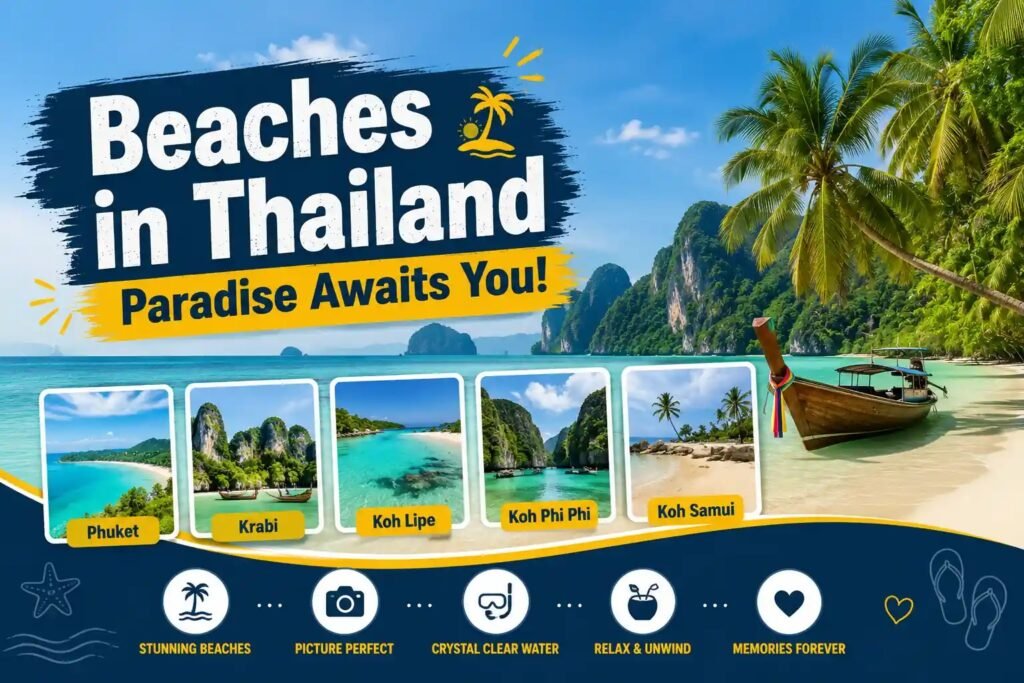
Most people who visit Thailand end up on the same handful of islands. Phuket, Koh Samui, Koh Phi Phi- beautiful, yes, but crowded in ways that can feel exhausting, especially in peak season. The hidden islands in Thailand are a completely different world. Smaller, quieter, more genuine somehow.
These hidden islands in Thailand barely make it onto mainstream itineraries, and that’s exactly what makes them worth going to. You get empty beaches, real fishing communities, and the kind of pace that actually lets you breathe.
Best Hidden Islands in Thailand
Thailand has over 1,400 islands. Most tourists see maybe five of them. That leaves a lot of shoreline to discover, and some of the country’s finest beaches sit on islands that barely get a mention in any travel guide.
Here’s a quick comparison of Thailand’s most underrated hidden islands; bookmark this before planning your route.
| Island | Location | Crowd Level | Best For | Open Season |
| Koh Kood | Trat Province | Very Low | Beaches & Jungle | Year-round |
| Koh Mak | Trat Province | Very Low | Slow Travel | Year-round |
| Koh Phayam | Ranong | Low | Backpackers / Yoga | Nov – Apr |
| Koh Jum | Krabi | Low | Local Culture | Nov – Apr |
| Koh Yao Noi | Phang Nga Bay | Low–Medium | Cycling & Scenery | Year-round |
| Koh Libong | Trang | Very Low | Wildlife & Dugongs | Nov – Apr |
| Koh Bulon Leh | Satun | Very Low | Diving & Snorkelling | Oct – Apr |
| Koh Kradan | Trang | Low | Snorkelling & Beaches | Nov – Apr |
| Koh Mook | Trang | Low | Emerald Cave | Nov – Apr |
| Koh Tarutao | Satun | Very Low | Raw Nature / Camping | Nov – May |
| Koh Wai | Trat Province | Very Low | Day Trips & Snorkelling | Year-round |
Koh Kood Thailand
Koh Kood is the fourth-largest island in Thailand but one of the least visited. It sits in Trat province near the Cambodian border, with waterfalls running through dense jungle and beaches with sand so white it looks almost artificial.
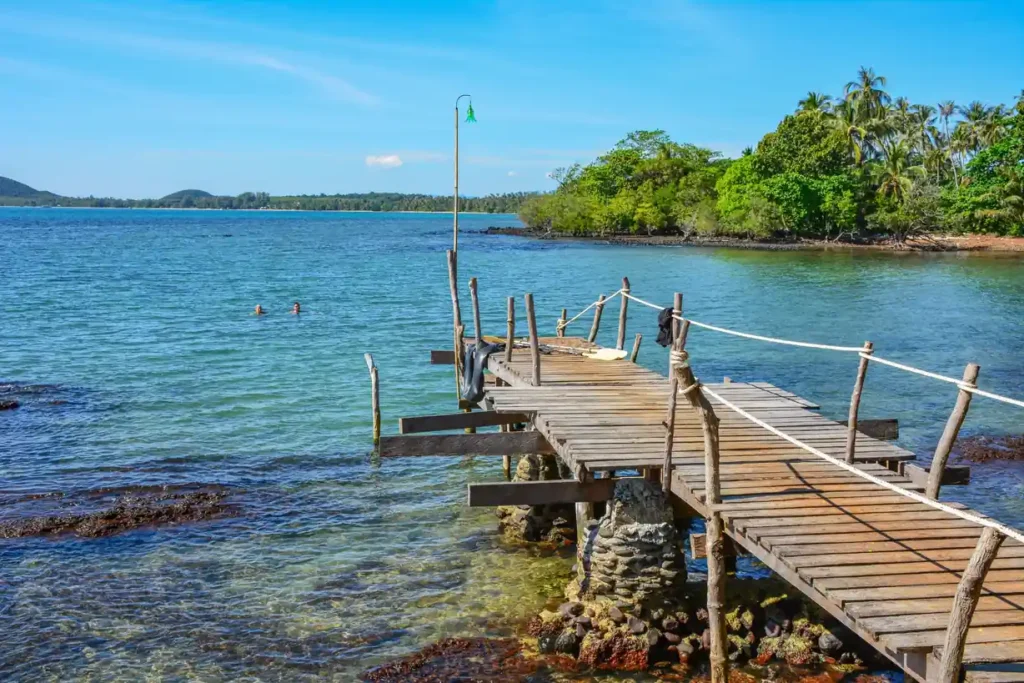
No chain restaurants, no full moon parties, just actual jungle trails, fishing villages, and warm, clear water. According to the Tourism Authority of Thailand (TAT), Koh Kood receives fewer than 50,000 visitors annually, compared to Phuket’s 9+ million. That contrast tells you everything.
Koh Mak Thailand
Smaller than Koh Kood and even less commercial, Koh Mak has made a deliberate choice to stay low-impact. Cars are barely present. Most people get around by bicycle or scooter. The island covers around 16 km² with a resident population of roughly 800. On a busy day you’ll share the beach with maybe ten other people.
Koh Phayam Thailand
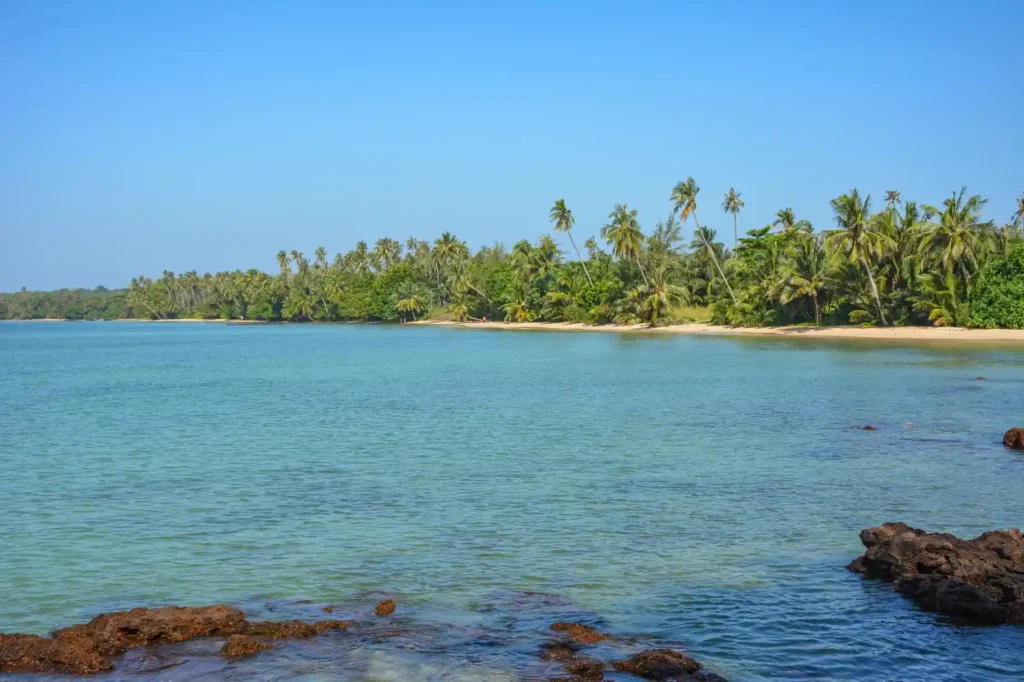
Up in the Andaman Sea near Ranong, Koh Phayam pulls in longer-stay backpackers, digital nomads, and yoga retreaters. ATMs are unreliable. Wi-Fi is patchy. Buffalo wander the roads. It’s charming in the most wonderfully disorganised way, and once you settle into the rhythm, leaving feels harder than expected.
Koh Jum Thailand
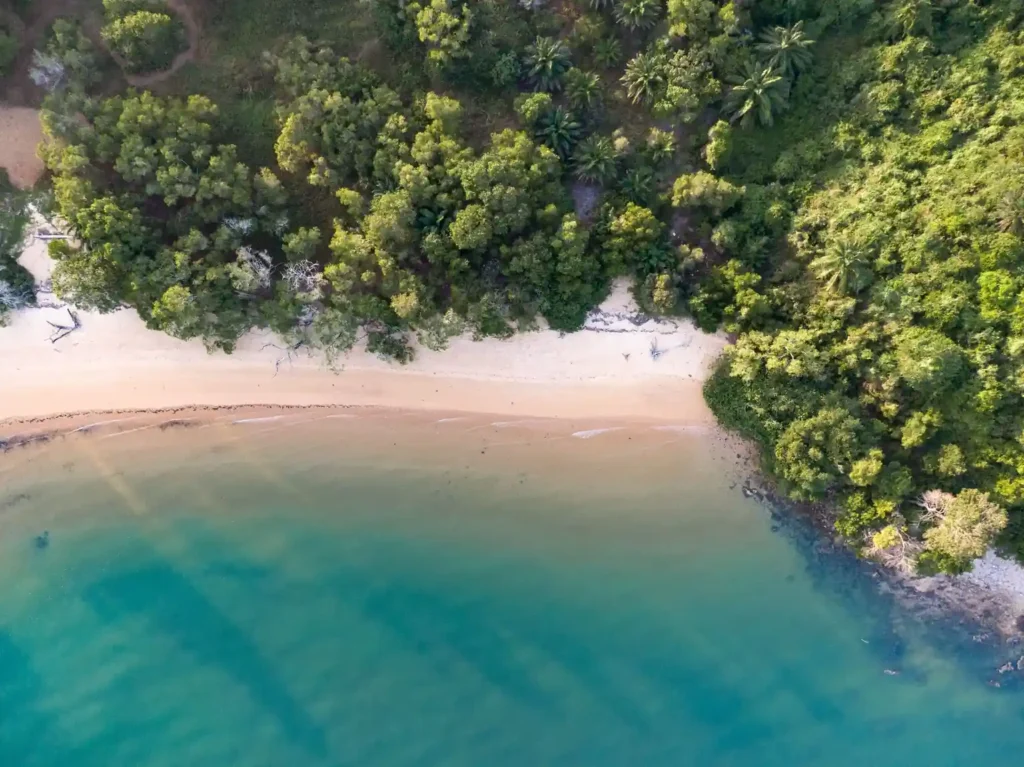
Koh Jum sits between Krabi and Ko Lanta and somehow gets overlooked by visitors doing both. It’s a mixed Muslim and Buddhist community where fishing is the main livelihood, and the pace reflects that. Some guesthouses still don’t have hot water. The sunsets here are genuinely something special.
Koh Yao Noi, Thailand
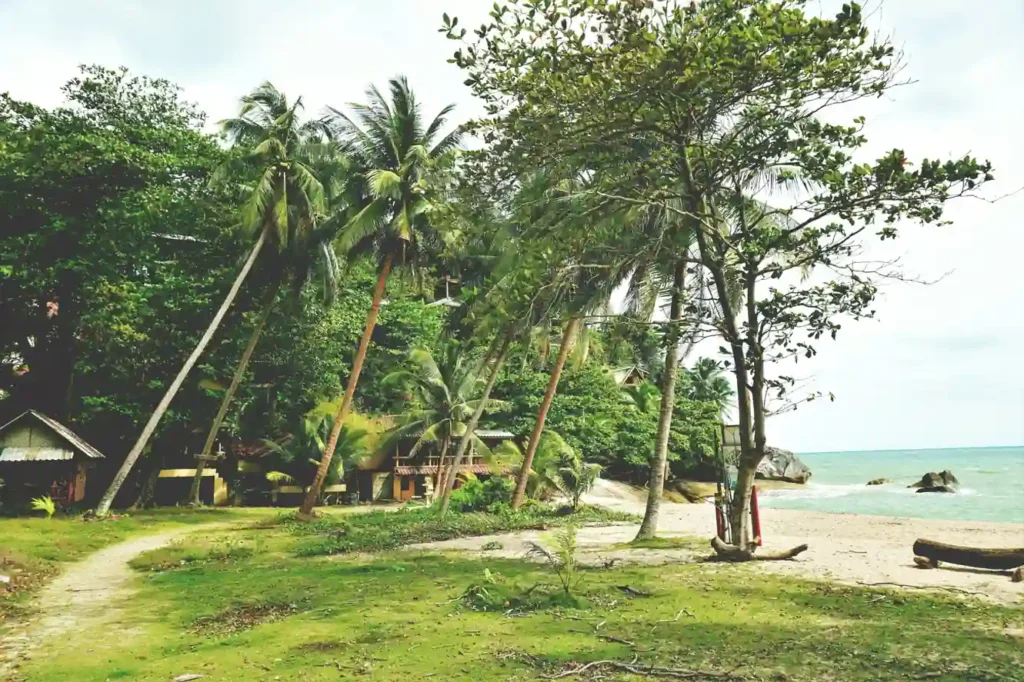
Koh Yao Noi floats in Phang Nga Bay, surrounded by the limestone karst scenery that Thailand is famous for. It’s reachable by speedboat from both Phuket and Krabi in under an hour. Tourism exists here, but it’s controlled and low-key. Cycling the island’s quiet roads is one of the best ways to spend a morning.
Koh Libong Thailand
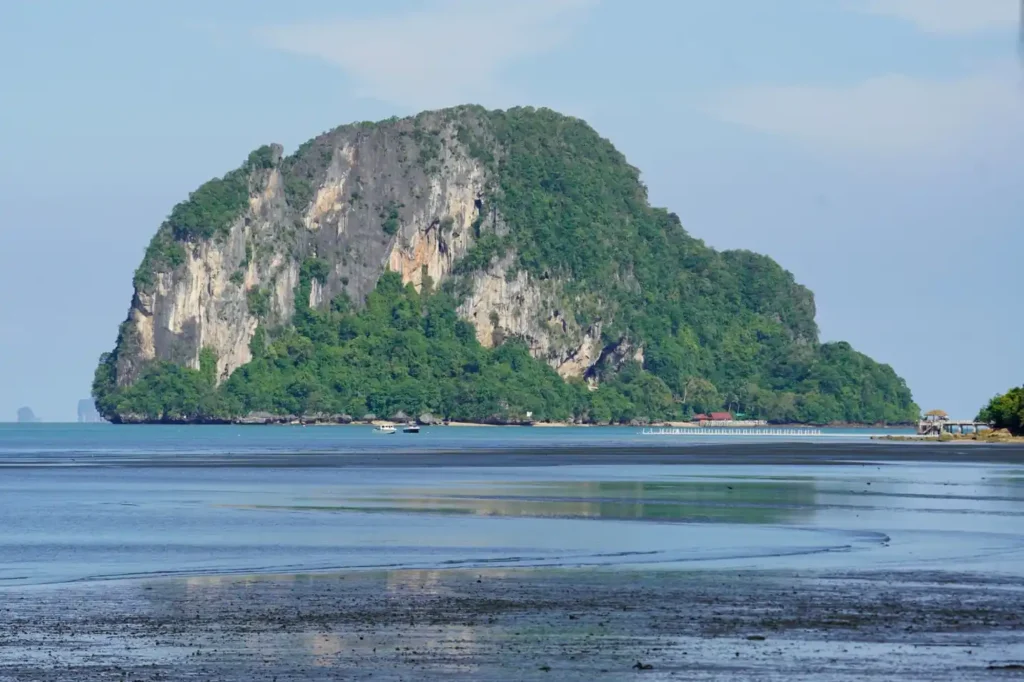
Koh Libong near Trang is one of the last places in Thailand where you can realistically see dugongs in the wild. The Dugong Conservation Centre in Trang estimates fewer than 250 dugongs remain in Thai waters, and Libong’s seagrass beds form a critical feeding ground for the species. Bird migration adds a second reason to visit. It’s not a classic beach resort island, but it’s genuinely remarkable.
Koh Bulon Leh, Thailand
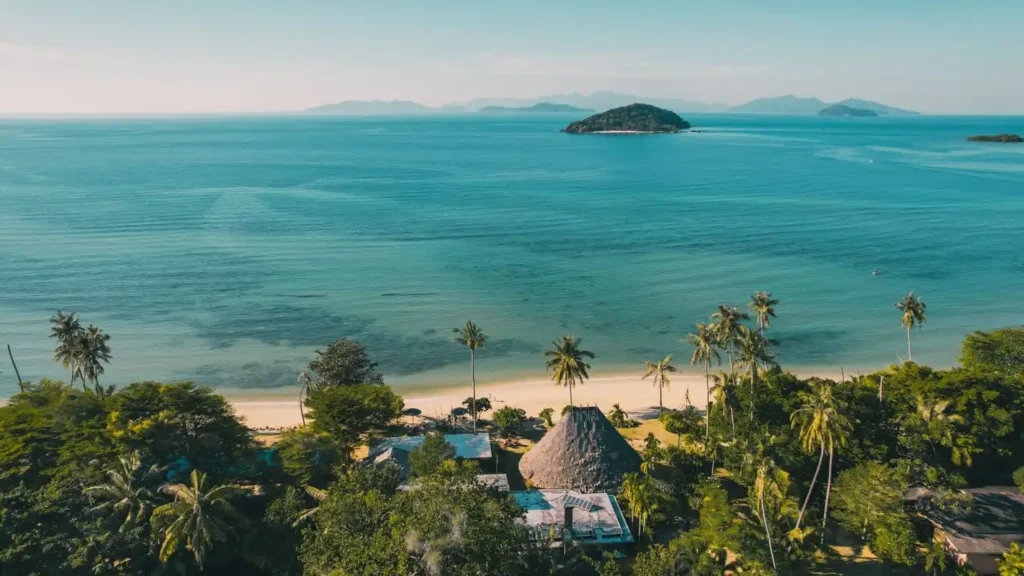
Located in Satun province near the Malaysian border, Koh Bulon Leh is tiny, undeveloped, and only accessible from October to April when the Andaman Sea calms down. The diving and snorkelling around its reefs is outstanding, the kind of underwater experience that makes you realise how spoiled these waters are.
What Makes Hidden Islands Thailand Different from the Mainstream?
Thailand’s hidden islands stand apart for five key reasons:
- No large-scale tourism development or resort chains
- Working fishing communities with genuine local culture
- Wildlife still present: dugongs, sea turtles, rare birds
- Limited electricity and facilities (part of the charm)
- Empty beaches even in peak season
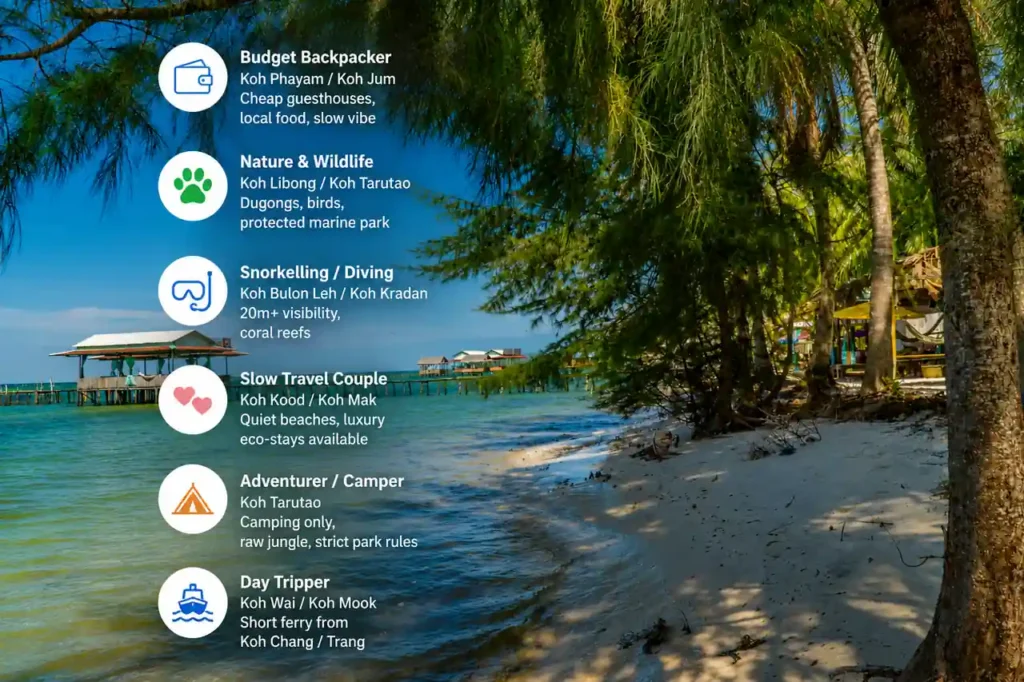
Use this table to match your travel style to the right island; it could save you from a mismatched trip.
| Traveller Type | Best Match | Why |
| Budget Backpacker | Koh Phayam / Koh Jum | Cheap guesthouses, local food, slow vibe |
| Nature & Wildlife | Koh Libong / Koh Tarutao | Dugongs, birds, protected marine park |
| Snorkelling / Diving | Koh Bulon Leh / Koh Kradan | 20m+ visibility, coral reefs |
| Slow Travel Couple | Koh Kood / Koh Mak | Quiet beaches, luxury eco-stays available |
| Adventurer / Camper | Koh Tarutao | Camping only, raw jungle, strict park rules |
| Day Tripper | Koh Wai / Koh Mook | Short ferry from Koh Chang / Trang |
Koh Kradan Thailand
Koh Kradan is part of Hat Chao Mai National Park in Trang and consistently comes up as one of the most beautiful beaches in the country, even though most tourists have never heard of it. Water visibility can hit 20+ metres on a clear day. No cars, no motorbikes, and limited power after dark.
Koh Mook Thailand
Koh Mook is famous for the Emerald Cave (Tham Morakot), a sea cave you swim through in near-total darkness to reach a hidden beach inside. The swim is roughly 50 metres through blackness. It sounds frightening until you come out the other side. Then it becomes one of those memories you talk about for years.
Koh Tarutao Thailand
Koh Tarutao National Marine Park was closed to visitors for several years to allow the ecosystem to recover. It’s the most serious of the hidden islands on this list, strictly regulated, camping-based, and deliberately minimal. Thailand’s Department of National Parks, Wildlife and Plant Conservation (DNP) designates Tarutao as one of the highest-protected marine areas in the country. If you want raw, undisturbed Thailand, this is it.
Koh Wai Thailand
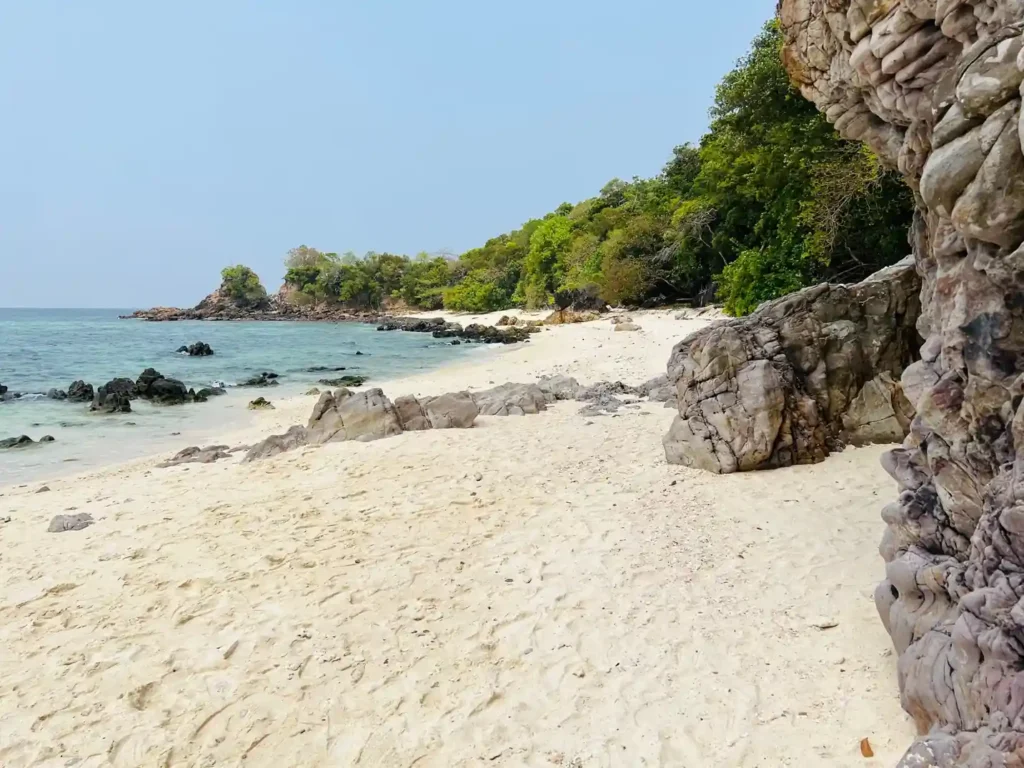
Koh Wai is a tiny island in the Koh Chang archipelago with one or two small guesthouses and absolutely nothing else. Day trippers come from Koh Chang, but very few people actually stay overnight. Snorkelling directly from the beach is possible without a boat, which is rarer than it sounds.
Which Hidden Island in Thailand Should You Visit First?
A quick decision guide:
→ Want beaches + jungle? Go to Koh Kood (Trat)
→ Want wildlife? Go to Koh Libong (Trang)
→ Want snorkelling? Go to Koh Kradan or Koh Bulon Leh
→ Want slow travel on a budget? Go to Koh Phayam (Ranong)
→ Want total wilderness? Go to Koh Tarutao (Satun), Nov to May only
Best Time to Visit Hidden Islands Thailand
Timing really does matter here. Thailand’s Andaman Sea islands and Gulf of Thailand islands have opposite monsoon seasons, which is actually useful if you plan your trip correctly.
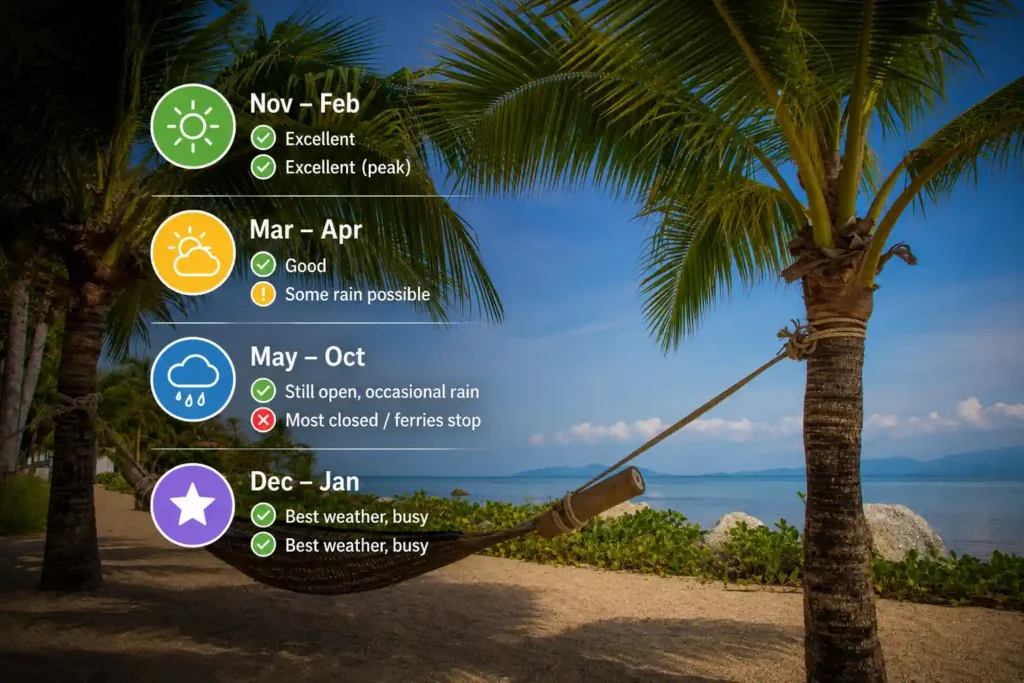
Check this seasonal guide before booking ferries or accommodation; the monsoon split is the most common mistake first-time visitors make.
| Season | Months | Gulf Islands (Koh Kood, Koh Mak) | Andaman Islands (Koh Phayam, Koh Kradan) |
| High Season | Nov – Feb | Excellent | Excellent (peak) |
| Shoulder | Mar – Apr | Good | Some rain possible |
| Monsoon | May – Oct | Still open, occasional rain | Most closed / ferries stop |
| Sweet Spot | Dec – Jan | Best weather, busy | Best weather, busy |
One thing worth knowing: Koh Tarutao National Marine Park closes entirely from mid-May through October to protect the ecosystem. That’s non-negotiable; rangers enforce it.
Choose the Perfect Season for Your Koh Chang Trip: Read more in Best Time to Visit Koh Chang: What 32°C Days & Surprise Rains Really Mean.
How to Reach Hidden Islands Thailand
Most of these islands require at least one ferry, speedboat, or longtail transfer after flying into a regional airport. None of them are direct connections from Bangkok, but none are particularly difficult either.
Fastest Ferry Routes to Each Hidden Island in Thailand
- Koh Kood, Koh Mak & Koh Wai: Fly to Trat, then continue by ferry from Laem Sok Pier (1–2 hours).
- Koh Phayam: Fly to Ranong and take a speedboat from Ranong Pier (about 1 hour).
- Koh Jum: Reach Krabi by air, then board a longtail boat from Laem Kruat Pier (around 45 minutes).
- Koh Yao Noi: Take a ferry from Tha Bang Rong Pier in Phuket, with a crossing time of about 30 minutes.
- Koh Kradan, Koh Mook & Koh Libong: Fly to Trang, then transfer by songthaew and boat from Hat Yao Pier.
- Koh Bulon Leh: Travel via Trang or Hat Yai before catching a ferry from Pak Bara Pier (approximately 1.5 hours).
- Koh Tarutao: Take a ferry from Pak Bara Pier in Satun, which reaches the island in about 1 hour.
Discover Where Koh Chang Is Located: Read more in White Sand Beach Koh Chang: Don’t Book Your Trip Until You Read This.
Hidden Islands Thailand Travel Tips
A few things worth knowing before you board that ferry:
- Bring enough cash. ATMs are rare or unreliable on almost all of these islands. Withdraw before you leave the mainland.
- Pack your medications. Pharmacies don’t exist on most small islands. Bring anything you might need.
- Book accommodation in advance between December and February. Limited rooms fill fast, especially on Koh Kood and Koh Yao Noi.
- Check ferry schedules carefully. Many longtail boats run once or twice daily. Missing one changes your entire plan.
- Respect local customs. Several islands have Muslim-majority communities. Dress modestly away from the beach.
- Lower your expectations for luxury. Some guesthouses run on solar and go dark after 10 pm. That’s part of the experience; lean into it.
FAQs About Hidden Islands Thailand
What are the best hidden islands in Thailand?
Koh Kood, Koh Mak, Koh Phayam, Koh Tarutao, and Koh Kradan are consistently the best hidden islands in Thailand for different travel styles: beaches and jungle, slow travel, wildlife, and untouched national parks, respectively.
Are hidden islands in Thailand safe for solo travellers?
Generally yes. Most are safe, peaceful, and welcoming to solo visitors. Ferry connections and basic accommodation are straightforward without tour packages. Use common sense on boats at night, and always check weather conditions before heading out on water.
Which hidden island in Thailand is best for snorkelling?
Koh Kradan, Koh Wai, and Koh Bulon Leh offer the best snorkelling conditions, with underwater visibility often reaching 15–20 metres in calm weather. Koh Mook’s Emerald Cave is also unmissable for a completely different kind of experience.
Can I visit Koh Tarutao independently?
Yes, but access is strictly regulated. The national park is only open November to mid-May. Accommodation is limited to official national park bungalows and designated camping spots. Booking ahead through the DNP is strongly recommended.
What is the cheapest hidden island to visit in Thailand?
Koh Phayam and Koh Jum are the most budget-friendly options, with guesthouse rooms starting from around 400–600 THB per night and simple local food available at very low cost. Both islands have a backpacker history that keeps prices honest.