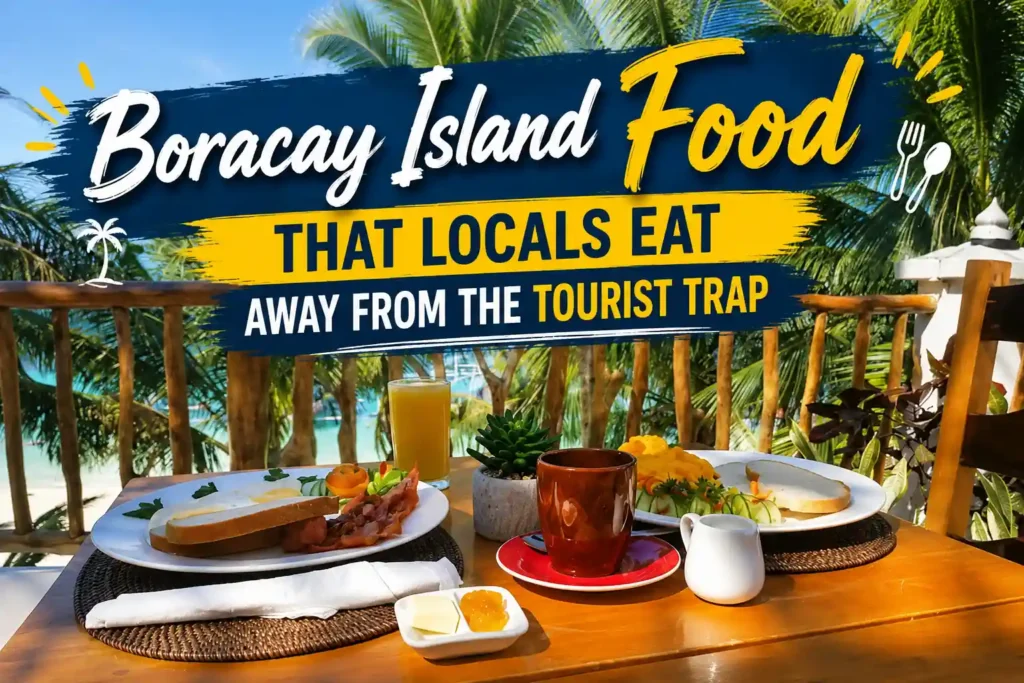
Boracay Island Food covers three main styles: cheap street snacks, wet-market seafood, and beachfront restaurant meals. The most famous street snack is the chori burger, a grilled chorizo patty in a soft bun that costs around $1.60 and started with a vendor named Merly back in 1988. For seafood, most people go to D’Talipapa Market, where you pick fresh fish, shrimp, or crab from a stall and pay a nearby restaurant a small fee to cook it for you.
Prices at the market depend on the catch of the day, but a full seafood meal for two usually costs between $15 and $30. Beyond seafood and street food, Boracay Island Food also includes Filipino comfort dishes like laing, a spicy dish made with taro leaves and coconut milk, brought to the island by settlers from the Bicol region. Night markets like D’Mall stay busy until late, selling grilled skewers, isaw, and fresh fruit shakes to visitors walking between restaurants and bars.
What Is the Best Boracay Island Food to Try?
The chori burger stands out as the single most iconic Boracay Island Food, followed closely by fresh seafood paluto at D’Talipapa and mango shakes from Jonah’s. Grilled isaw, calamansi muffins, and kinilaw round out the dishes most food guides and local vendors recommend first. Each dish links to a specific place on the island, so location matters almost as much as the recipe itself.
Best Must-Try Foods in Boracay
Eight dishes define the island’s food scene more than any others, according to local guides, longtime residents, and repeat visitors. Chorizo burgers, fresh seafood, grilled street meats, and fruit shakes appear on nearly every recommendation list published about the destination. Prices vary by vendor, but most dishes cost under $5 USD per serving, even at stalls along the beachfront.
Preparation styles shift slightly from stall to stall, though the core recipes stay remarkably consistent across the island. Vendors near D’Mall and Station 2 tend to charge a bit more than stalls tucked along the back roads, so wandering a block off the main path often saves a dollar or two per meal. Bargaining works well at wet markets but rarely applies at sit-down restaurants, which keeps set-price menus predictable for first-time visitors.
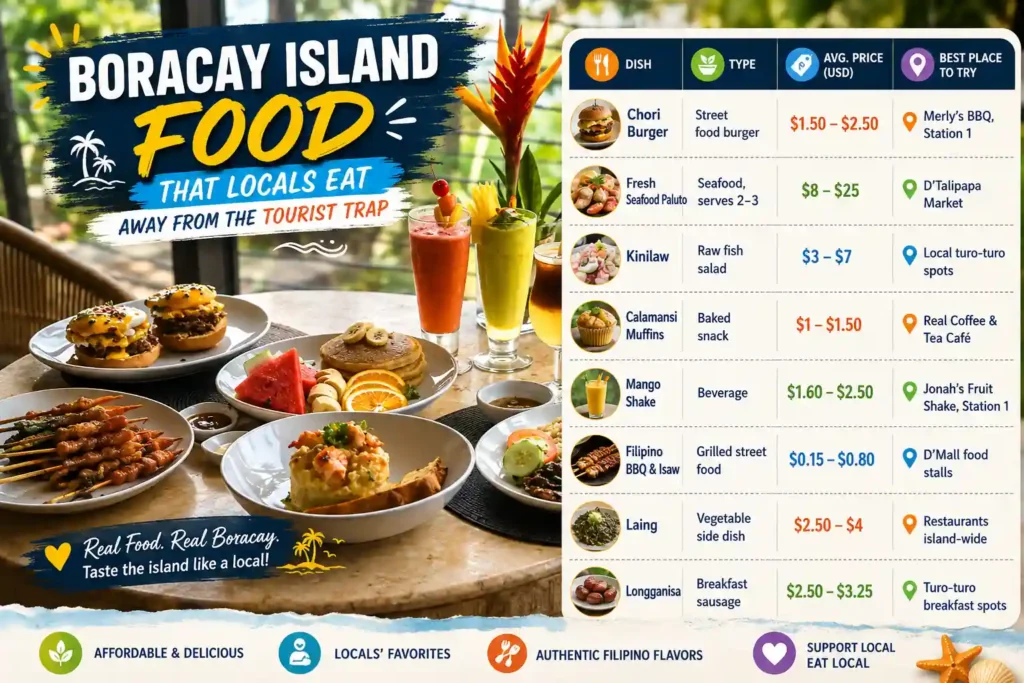
This table breaks down the eight essential dishes by type, average 2026 price, and the best place to try each one.
| Dish | Type | Avg. Price (USD) | Best Place to Try |
| Chori Burger | Street food burger | $1.50 – $2.50 | Merly’s BBQ, Station 1 |
| Fresh Seafood Paluto | Seafood, serves 2-3 | $8 – $25 | D’Talipapa Market |
| Kinilaw | Raw fish salad | $3 – $7 | Local turo-turo spots |
| Calamansi Muffins | Baked snack | $1 – $1.50 | Real Coffee & Tea Café |
| Mango Shake | Beverage | $1.60 – $2.50 | Jonah’s Fruit Shake, Station 1 |
| Filipino BBQ & Isaw | Grilled street food | $0.15 – $0.80 | D’Mall food stalls |
| Laing | Vegetable side dish | $2.50 – $4 | Restaurants island-wide |
| Longganisa | Breakfast sausage | $2.50 – $3.25 | Turo-turo breakfast spots |
Chori Burger
Chori burger holds the top spot on almost every Boracay food list, and the dish actually originated on the island rather than arriving from Manila. According to Wikipedia, Merly’s BBQ first served the chorizo-patty burger back in 1988, and the stall along Station 1 still sells a version of the original recipe today.
A standard order costs around 100 pesos, or roughly $1.60, and comes topped with banana ketchup, mayonnaise, and atchara (pickled papaya). Upscale versions with truffle mayo and brioche buns now appear at restaurants like Spicebird, running closer to $6 to $8. Either version delivers the sweet-savory combination that made this burger famous nationwide, not just on the island.
Fresh Seafood and Seafood Paluto
Seafood paluto turns a wet-market trip into an actual meal, and the process works the same way at every stall in D’Talipapa: buy raw seafood by the kilo, then pay a nearby restaurant to cook it. Lobster runs around 700 to 750 pesos per kilo ($11 to $12), crab costs closer to 400 pesos per kilo ($6.50), and mussels or oysters stay under 50 pesos per kilo (under $1).
Cooking fees typically add 100 to 200 pesos per dish ($1.60 to $3.25), depending on how the vendor prepares it. Sinigang, grilled, and adobo-style preparations remain the most requested cooking methods among visitors. Negotiating the price before buying matters more here than almost anywhere else on the island, since posted prices often target tourists specifically.
Kinilaw
Kinilaw counts as the Filipino answer to ceviche, made from raw fish cured in vinegar, calamansi juice, chili, ginger, and onions. Tuna and tanigue (Spanish mackerel) work best for this dish because of their firm texture, which holds up well against the acidic marinade.
Restaurants along Station 2 and several turo-turo spots near D’Talipapa serve kinilaw as an appetizer for roughly 200 to 400 pesos ($3.25 to $6.50). Texture matters more than heat level here, so first-timers should expect a tangy, refreshing dish rather than a spicy one. Pairing kinilaw with a cold San Miguel beer counts as a near-universal local habit.
Calamansi Muffins
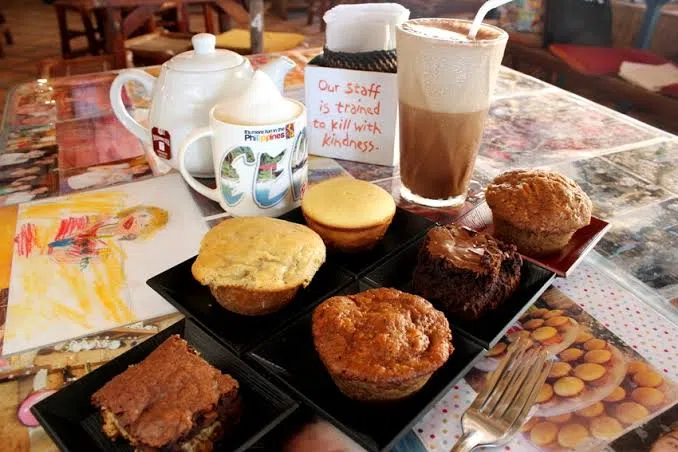
Calamansi muffins earned island-wide fame through a couple of bakeries near D’Mall, most notably Real Coffee & Tea Café. Local calamansi, a small citrus fruit similar to lime, gives the muffin a tart edge that balances the sweetness of the batter nicely. A single muffin costs around 60 to 90 pesos ($1 to $1.50), and most visitors end up buying a full box to share or bring home.
Freshness varies by time of day, so muffins bought in the morning taste noticeably better than late-afternoon leftovers. Pairing one with locally brewed Filipino coffee from the same café rounds out a solid breakfast.
Mango Shake
Mango shake culture in Boracay centers almost entirely on Jonah’s Fruit Shake and Snack Bar, a Station 1 institution that has operated since 1983. Philippine mangoes rank among the sweetest in the world, and Jonah’s blends them fresh with milk and ice rather than syrup or powder. A regular-sized shake costs around 100 to 150 pesos ($1.60 to $2.50), with combination flavors like mango-banana or mango-melon priced slightly higher.
Edible straws replaced plastic ones several years ago, a small but genuine sustainability move for a shop this popular. Long lines form during peak lunch hours, so early morning or late afternoon visits tend to move faster.
Filipino BBQ and Isaw
Filipino BBQ and isaw dominate the street food scene after dark, especially around D’Mall and the side streets near Station 2. Isaw refers to grilled chicken or pork intestines, skewered and brushed with a smoky glaze before hitting the charcoal, and a single stick typically costs 10 to 50 pesos ($0.15 to $0.80). Pork barbecue skewers run closer to 20 to 40 pesos ($0.30 to $0.65), depending on the size and marinade used.
Vinegar-chili dipping sauce comes standard at nearly every stall, and it makes a real difference in overall flavor. Trying isaw counts as something of a rite of passage for first-time visitors to the Philippines, not just to Boracay specifically.
Laing
Laing brings a Bicolano specialty to menus across the island, made from dried taro leaves slow-cooked in coconut milk, chili, and shrimp paste. Coconut milk gives the dish its rich, creamy texture, while the chili adds steady background heat rather than an overpowering burn.
Most Filipino restaurants serve laing as a side dish alongside rice and grilled meat or fish, priced around 150 to 250 pesos ($2.50 to $4). Vegetarian versions skip the shrimp paste and swap in extra vegetables, though the flavor shifts noticeably as a result. Laing pairs particularly well with grilled seafood from a D’Talipapa paluto order.
Longganisa
Longganisa shows up on nearly every Filipino breakfast plate across Boracay, served alongside garlic fried rice and a fried egg in the classic silog combo. Sweet, garlicky, and slightly greasy in the best way, this small sausage links directly back to the same chorizo tradition behind the island’s famous burger.
A full longsilog breakfast plate costs around 150 to 200 pesos ($2.50 to $3.25) at most turo-turo restaurants near the main road. Regional variations exist across the Philippines, though Boracay’s versions tend to lean sweeter than those found in Manila or Cebu. Breakfast spots near Station 1 tend to serve the freshest batches before the morning rush begins.
Best Boracay Food to Try at D’Talipapa
D’Talipapa Market operates as Boracay’s central wet market, tucked a short walk from Station 2 and packed with vendors selling fresh catch straight off local boats. Lobster, crab, prawns, squid, and reef fish fill the ice-packed stalls, and nearly every vendor expects some bargaining before settling on a final price. Shoppers pick their seafood by weight, then carry it a few steps to one of the surrounding restaurants for cooking.
Cooking fees generally run 100 to 200 pesos per dish, which usually works out cheaper than ordering the same seafood at a beachfront restaurant. Reviews of the market vary widely, since pricing depends heavily on which vendor a visitor ends up dealing with. Visiting with a local guide or asking hotel staff for a trusted vendor recommendation tends to prevent the worst overcharging.
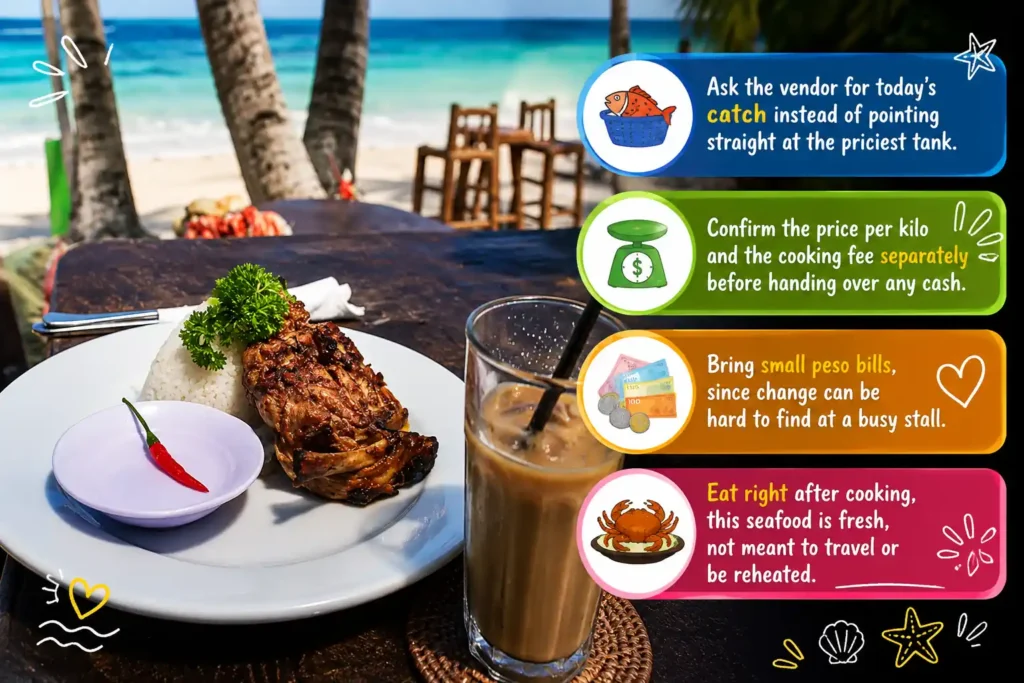
A few habits go a long way toward a fair deal and a good meal:
- Ask the vendor for today’s catch instead of pointing straight at the priciest tank.
- Confirm the price per kilo and the cooking fee separately before handing over any cash.
- Bring small peso bills, since change can be hard to find at a busy stall.
- Eat right after cooking, this seafood is fresh, not meant to travel or be reheated.
The table below lists typical per-kilo prices at D’Talipapa, though prices shift with catch availability and negotiating skill.
| Seafood Item | Price per Kilo (PHP) | Price per Kilo (USD) |
| Lobster | ₱700 – ₱750 | $11 – $12 |
| Crab | ₱400 | ~$6.50 |
| Prawns / Shrimp | ₱500 – ₱600 | $8 – $10 |
| Mussels / Oysters | Under ₱50 | Under $1 |
| Grilled Whole Fish | ₱150 – ₱250 (w/ cooking) | $2.50 – $4 |
| Cooking Fee (per dish) | ₱100 – ₱200 | $1.60 – $3.25 |
How Much Does Seafood Cost at D’Talipapa?
A full seafood meal at D’Talipapa for two people typically costs between 800 and 1,500 pesos ($13 to $24), including the cooking fee. Lobster and large prawns push that total higher, while crab and grilled fish keep costs on the lower end. Bargaining before paying can shave 10 to 20 percent off the initial quoted price at most stalls, based on Bangko Sentral ng Pilipinas exchange data from late August 2026, when the peso traded near 61.6 to the US dollar.
Best Boracay Street Food
Street food stalls line the side streets near D’Mall and Station 2, serving snacks that cost less than a dollar for most items on the menu. Fishballs, kwek-kwek, isaw, and banana cue dominate the offerings, with nearly every cart offering the same sweet and spicy dipping sauces. Prices stay remarkably low across the board, generally landing between 10 and 50 pesos ($0.15 to $0.80) per stick or serving.
Evenings bring out the biggest crowds, since locals and tourists both treat street food as a nightly ritual rather than an occasional treat. Standing and eating alongside strangers at a cart counts as part of the experience, not just a way to save money. Hygiene standards vary by vendor, so choosing stalls with visible turnover and hot oil tends to be the safer bet.
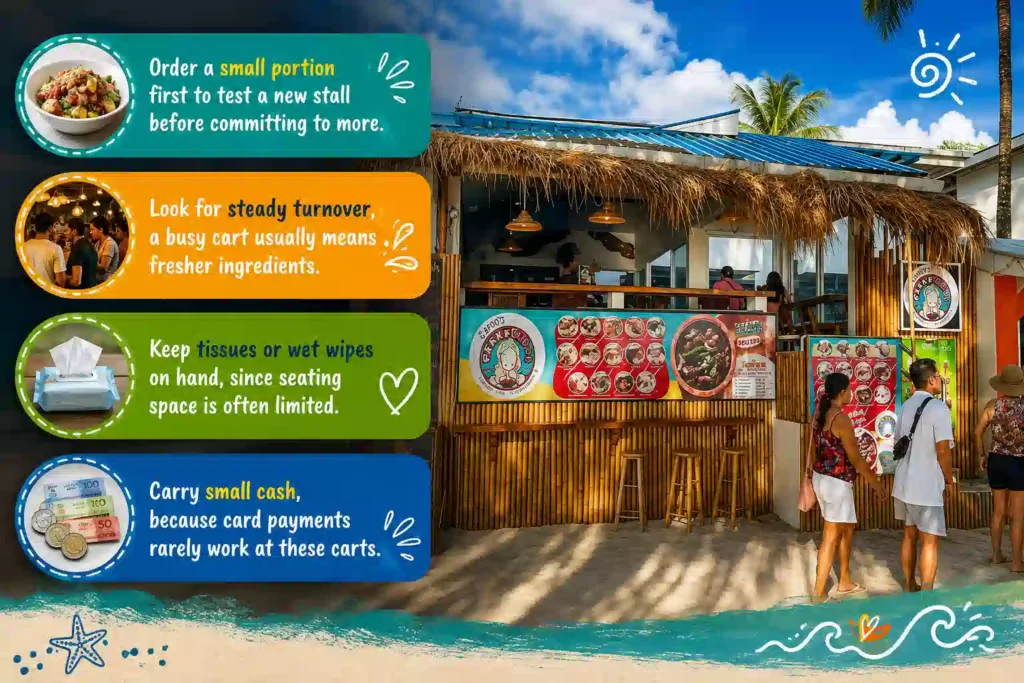
A short mental checklist helps first-time street food eaters:
- Order a small portion first to test a new stall before committing to more.
- Look for steady turnover, a busy cart usually means fresher ingredients.
- Keep tissues or wet wipes on hand, since seating space is often limited.
- Carry small cash, because card payments rarely work at these carts.
This quick-reference table covers the street food snacks visitors ask about most, along with what each one typically costs.
| Street Food | Description | Price (PHP) | Price (USD) |
| Isaw | Grilled chicken or pork intestines | ₱10 – ₱50/stick | $0.15 – $0.80 |
| Kwek-Kwek | Battered, fried quail eggs | ₱50 / 5-6 pcs | ~$0.80 |
| Fishball | Fried fish paste balls | ₱20 – ₱30/serving | $0.30 – $0.50 |
| Banana Cue | Caramelized fried banana | ₱20 – ₱30/stick | $0.30 – $0.50 |
| Betamax | Grilled coagulated pork blood | ₱10 – ₱20/stick | $0.15 – $0.30 |
Is Boracay Street Food Safe to Eat?
Boracay street food is generally safe when bought from stalls with steady customer turnover and visibly hot cooking oil or charcoal. Vendors near D’Mall and Station 2 see enough daily traffic that ingredients rarely sit out for long. Travelers with sensitive stomachs should still start with small portions and stick to fully cooked items rather than anything raw or lukewarm, and the Philippine Department of Tourism continues to promote food-safety awareness as part of its post-rehabilitation campaign for the island.
Final Thoughts: Eating Well on Boracay
Eight core dishes, three market stalls, and a handful of street corners cover most of what defines eating well on this island. Budget travelers can eat extremely well here for under $15 a day by mixing street food, D’Talipapa seafood, and the occasional sit-down meal. Splurge-worthy moments still exist too, especially a full lobster paluto shared between friends after a day at the beach.
Seasonal availability affects seafood quality more than most visitors realize, so asking vendors what came in that morning almost always leads to a better plate. Small, family-run stalls near Station 1 and Station 2 tend to offer better value than the larger restaurants closer to the main beachfront. Planning even one meal around each dish on this list turns a standard beach trip into something closer to a proper food tour. Boracay rewards visitors who wander a block or two off the main path, and the local food scene proves that every single time.
Boracay Island Food FAQs
What food is Boracay famous for?
Boracay is famous for its chori burger, fresh seafood paluto, and mango shakes, alongside grilled street snacks like isaw and fishball. This food scene blends Visayan seafood traditions with influences from across the Philippines, which explains the variety packed into such a small island.
What is the most famous food in Boracay?
Most food guides name the chori burger as the single most famous dish associated with the island, largely because of its unique local origin story at Merly’s BBQ. Fresh mango shakes from Jonah’s come in as a close second in most polls and travel write-ups.
Where can you eat the best seafood in Boracay?
D’Talipapa Market offers the best combination of freshness and value, since visitors buy directly from the source and pay a nearby restaurant to cook it. Beachfront restaurants along Station 1 and Station 2 also serve high-quality seafood, though prices run noticeably higher than the wet market.
What is a Chori Burger?
A chori burger is a Filipino hamburger made with a chorizo-style longganisa patty, topped with banana ketchup, mayonnaise, and atchara, and typically served on a soft bun. Merly’s BBQ first popularized the dish in Boracay back in 1988, and the original stall still operates today near Station 1.
What is the famous dessert in Boracay?
Calamansi muffins count as Boracay’s signature dessert-adjacent treat, though halo-halo, the classic Filipino shaved-ice dessert with mixed fruits and beans, also appears widely across the island. Both options cost under $2 USD and pair well with a cold fruit shake.