
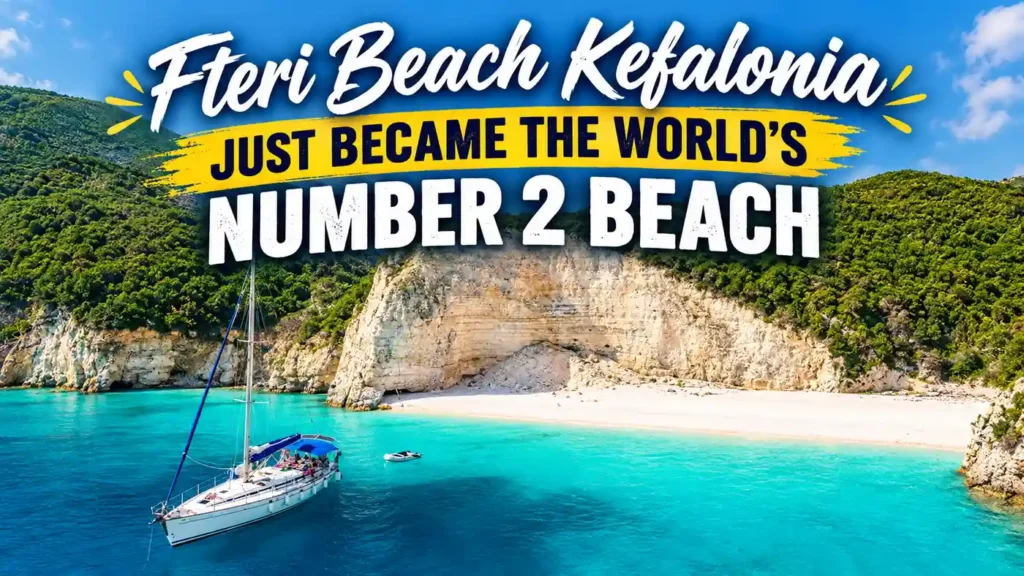
Fteri Beach sits on Kefalonia’s west coast, hidden below steep white cliffs with no road access. To reach Fteri Beach, visitors take a short water taxi from Zola harbour or hike down a rocky path for about an hour. The reward is clear turquoise water and soft pale pebbles, with no tavernas, umbrellas, or crowds nearby.
Visitors must bring their own food, water, and shade, since the beach has no facilities at all. Most people arrive early to avoid the heat and the busiest boat times. The narrow strip of sand fills up fast in July and August, so early arrival also means a better spot to settle in. Strong swimmers can explore the small sea caves along the cliffs, but the water gets deep quickly near the rocks.
Where Is Fteri Beach?
Fteri lies on the northwestern tip of Kefalonia’s Paliki peninsula, one of the island’s quieter corners. Zola, a tiny fishing hamlet, sits closest to the cove and works as the main gateway for boats heading toward the bay. Agia Kyriaki Beach, a short walk from Zola harbour, is where most water taxis depart. Lixouri, the peninsula’s main town, sits roughly 20 to 25 minutes south by car and connects to Argostoli, the island’s capital, by a short ferry crossing.
That ferry runs every 30 minutes during peak season and takes about 15 to 20 minutes each way. Drivers who skip the ferry can instead take the scenic coastal road around Argostoli’s gulf, known locally as the “gyra,” which adds around 45 minutes. A wide, semicircular bay wraps around Fteri, closed in on both sides by sheer white cliffs rising straight from the water.
How to Get to Fteri Beach
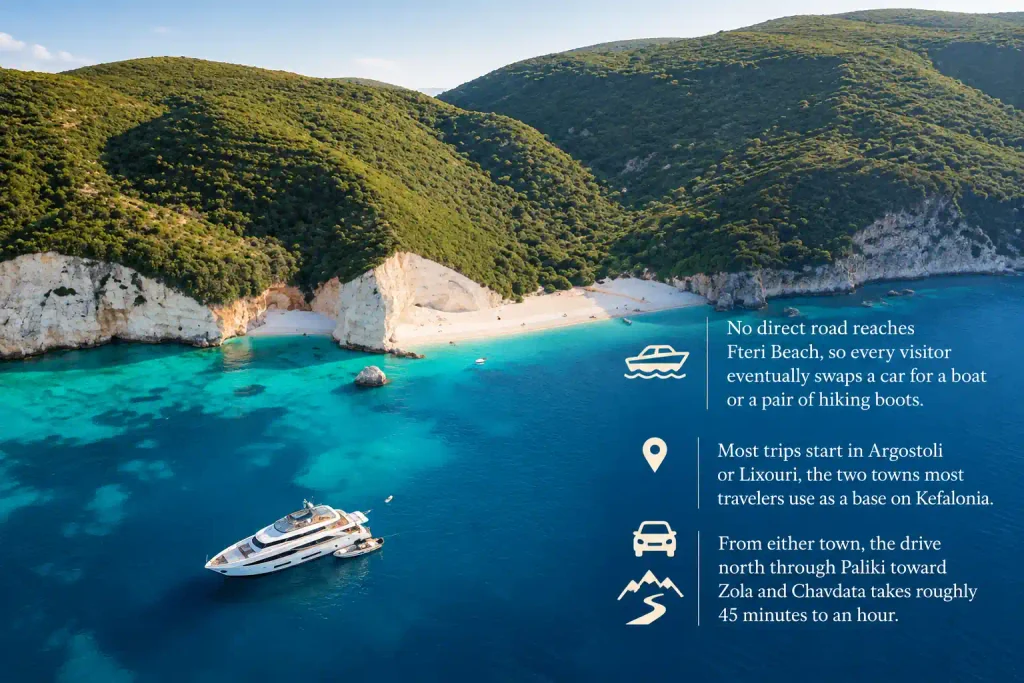
No direct road reaches Fteri Beach, so every visitor eventually swaps a car for a boat or a pair of hiking boots. Most trips start in Argostoli or Lixouri, the two towns most travelers use as a base on Kefalonia. From either town, the drive north through Paliki toward Zola and Chavdata takes roughly 45 minutes to an hour. Signage stays minimal along the way, so downloading offline map coordinates beforehand saves real frustration later.
Parking near the trailhead and Zola harbour is limited and unpaved, and it fills quickly during July and August. Renting a car remains the most practical choice overall, since public buses do not serve this remote stretch of the peninsula.
Organised day cruises from Argostoli, Lixouri, and Fiskardo often include Fteri as one stop along the Paliki coastline, removing the parking hassle completely. This option suits travelers without a rental car, since local operators handle harbour logistics on their own.
Planning a Trip to Fteri Beach? Find the Best Route. Read more in How to Get to Fteri Beach by Water Taxi or a Steep Hiking Trail.
A quick route breakdown:
- Drive to Lixouri, then continue north through Chavdata toward Zola village.
- For the boat option, park near Zola harbour or Agia Kyriaki Beach and board a water taxi.
- For the hike, continue toward the marked trailhead near Mount Agrilli and park roadside.
Fteri Beach by Boat and Water Taxi
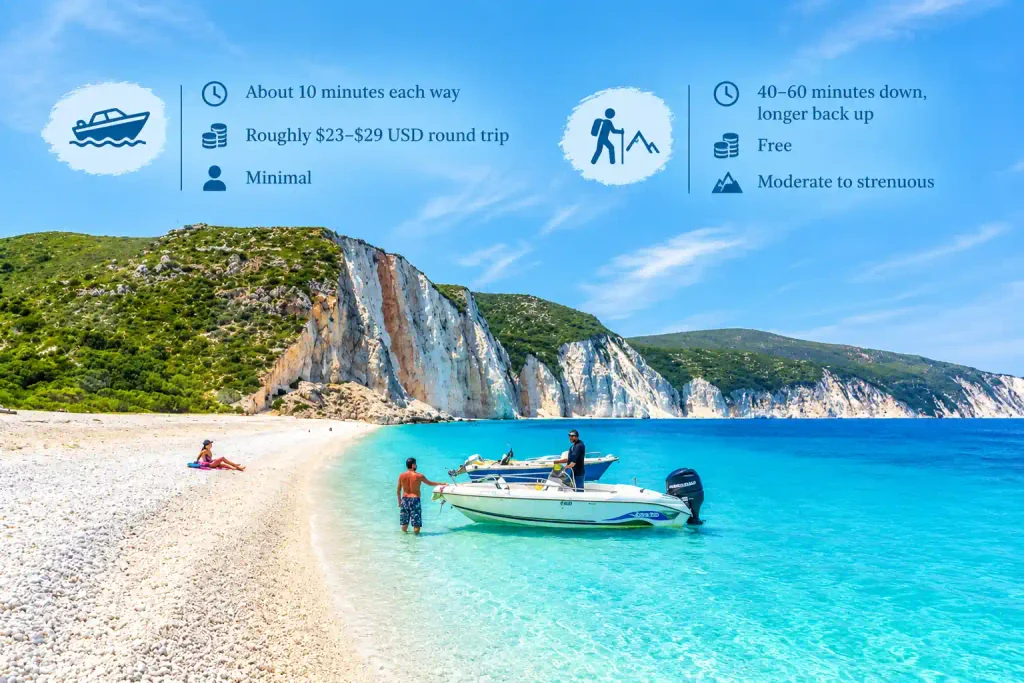
Zola harbour, right beside Agia Kyriaki Beach, works as the main departure point for boats heading to Fteri. The crossing itself takes under ten minutes, since the bay sits just around the headland from the harbour. Expect to pay somewhere between $23 and $29 USD for a round trip, based on current pricing of roughly €20 to €25. Confirming the exact rate at the harbour on the day of travel avoids surprises later.
Water taxis generally operate from June 1 through September 30, closing entirely outside the main swim season. Buyers must select a return time at the moment of purchase, and that slot cannot change afterward. Boats arrive on a steady rotation, often every 30 minutes through peak hours, which keeps this small cove busier than its remote reputation suggests.
Before booking a water taxi:
- Buy tickets directly at Zola harbour, or reserve online during peak weeks.
- Choose the earliest departure possible to beat the midday rotation.
- Carry some cash as backup in case card readers lose signal near the coast.
Hiking to Fteri Beach
A marked trailhead near Mount Agrilli, north of Zola, starts the hike down to Fteri Beach. Descending takes about 40 to 60 minutes, while the climb back up typically takes longer and demands more effort. Rated as moderately difficult, the path mixes loose gravel, exposed rock, and a few genuinely steep drops near the bottom.
Red and green trail markers painted on rocks guide hikers along the route, since the path itself is unofficial and unmaintained. Sturdy shoes with real grip matter here, since flip-flops make the descent noticeably riskier. Shade barely exists along the trail, so starting early avoids the worst of the midday heat. Anyone with limited mobility or young children should choose the boat instead.
Planning the Fteri Beach Hike? Find Out More. Read more in Hike to Fteri Beach: The Only Free Way to Reach the Water.
Trail essentials worth packing:
- At least one litre of water per person, since nothing gets sold along the route.
- Closed-toe hiking shoes or trail sandals with solid tread.
- A hat and sunscreen applied before starting, not halfway down.
Fteri Beach Boat vs. Hike
Choosing between the boat and the trail mostly comes down to time, budget, and physical ability. The table below lines up both options side by side, which makes the decision considerably easier before committing to either one.
| Factor | Water Taxi | Hiking Trail |
| Duration | About 10 minutes each way | 40–60 minutes down, longer back up |
| Cost | Roughly $23–$29 USD round trip | Free |
| Physical effort | Minimal | Moderate to strenuous |
| Availability | June 1 – September 30 only | Year-round, weather permitting |
| Best suited for | Families, older travelers, limited time | Fit hikers, budget travelers |
Discover the Best Boat Options for Reaching Fteri Beach. Read more in Fteri Beach Access Comes Down to a Boat or a Steep Hike.
Neither option guarantees a quiet beach, since boats arrive in batches and hikers tend to cluster around mid-morning. Arriving right at sunrise, by either route, remains the most reliable way to beat both crowds.
What Is Fteri Beach Like?
A tight, semicircular bay defines Fteri Beach, framed by pale limestone cliffs that rise almost vertically from the shoreline. Smooth white pebbles cover most of the shore, mixed with small patches of coarse sand closer to the waterline. Water clarity stands out immediately, shifting from pale turquoise in the shallows to a deeper sapphire blue further out.
A rocky outcrop near one end of the bay attracts confident swimmers looking to jump into deeper water. Because the cove sits low and enclosed, wind rarely disturbs the surface, keeping conditions calm through most of the swim season. Space runs limited, though, since the beach only stretches a short distance before the cliffs close in again.
Things to Do at Fteri Beach
Swimming remains the main draw at Fteri, thanks to water clear enough to see the pebbled bottom several metres down. Snorkelling adds another layer of value here, since rocky edges around the bay host small fish and interesting underwater textures. Photography enthusiasts consistently rank Fteri among Kefalonia’s most photogenic spots, largely because of the contrast between white cliffs and turquoise water.
Popular things to do once you arrive:
- Swim out toward the rocky outcrop for a better view of the cliffs.
- Snorkel along the edges of the bay, away from boat traffic.
- Cliff jump from the lower ledges, only if conditions look calm and other swimmers are around.
- Take photos early morning or late afternoon, when light hits the cliffs at a dramatic angle.
- Simply sit and enjoy the quiet, since loud music and beach bars do not exist here.
Find the Best Ways to Enjoy Your Time at Fteri Beach. Read more in Things to Do at Fteri Beach Where Reaching It Is Part of the Fun.
Fteri Beach Facilities and Amenities
Fteri offers essentially no infrastructure, and that absence is intentional rather than neglected. No taverna, kiosk, or drink stand operates anywhere near the cove, so every visitor needs to bring their own food and water. Sunbeds and umbrellas do not exist either, meaning natural shade stays extremely limited throughout the day. Toilets are unavailable, and no lifeguard monitors the water at any point during the season.
Free camping is also illegal on Greek beaches outside registered sites, according to guidance from the Greek Ministry of Tourism. Visitors should treat a trip here as fully self-sufficient, similar to a remote hike rather than a typical organised beach day.
Best Time to Visit Fteri Beach
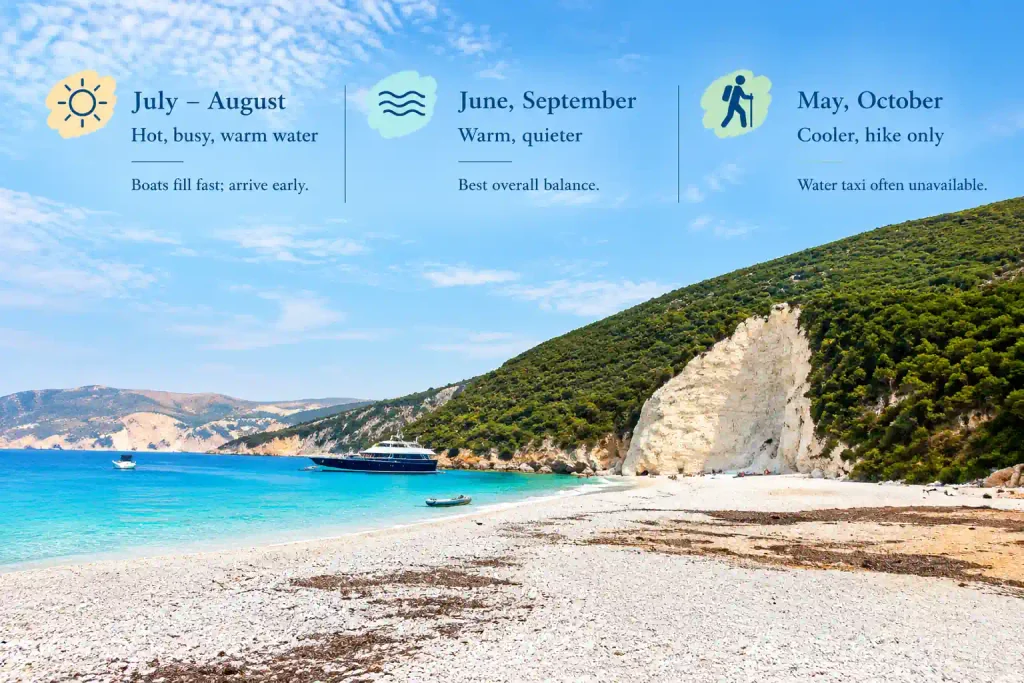
June through September marks the main swim season at Fteri Beach, matching the window when the water taxi actually operates. June and September stand out as the sweet spots, offering warm water and noticeably thinner crowds than the peak of July and August.
July and August bring the busiest boat traffic and the hottest midday temperatures, both of which affect comfort on an already shadeless beach. Shoulder months like May and October occasionally allow a hike-only visit, though sea temperatures drop and the water taxi service typically stops running.
A season-by-season snapshot:
| Season | Months | Conditions | Notes |
| Peak Dry Season | July – August | Hot, busy, warm water | Boats fill fast; arrive early |
| Sweet Spot | June, September | Warm, quieter | Best overall balance |
| Shoulder Season | May, October | Cooler, hike only | Water taxi often unavailable |
| Off Season | November – April | Cold, closed | Not recommended for swimming |
What Is the Best Month to Visit Fteri Beach?
June and September are the best months for a visit, combining warm sea temperatures with noticeably smaller crowds than midsummer. Water taxis run reliably during both months, and the trail stays dry and manageable underfoot.
Fteri Beach Weather and Sea Conditions
Kefalonia follows a typical Mediterranean pattern, with hot, dry summers and mild, wetter winters, according to seasonal data from the Hellenic National Meteorological Service (EMY). Sea temperatures around the island generally climb into the mid-to-high 20s Celsius (roughly 77–82°F) between June and September.
Because Fteri sits on Kefalonia’s western coast, it avoids much of the stronger meltemi wind pattern that affects the Aegean side of Greece in summer. Waves inside the enclosed bay stay small most days, though wind can pick up in open water just beyond the cliffs. Morning visits tend to feel noticeably more comfortable, since both light and heat intensify by midday.
What to Bring to Fteri Beach
Nothing gets sold here, so packing correctly beforehand makes a real difference to comfort levels once there.
Essentials worth packing:
- Plenty of drinking water, more than feels necessary at first.
- Food or snacks, since no shop or taverna operates nearby.
- Reef-safe sunscreen, applied before arrival rather than after.
- A hat, sunglasses, and light cover-up for shade-free hours.
- Sturdy shoes for the hike, or water shoes for pebble comfort.
- Snorkel gear, cash for the water taxi, and a basic first aid kit.
Beaches Near Fteri Beach
Several strong alternatives sit within a short drive of Fteri, making a multi-beach day trip fairly easy to plan.
Nearby beaches worth considering:
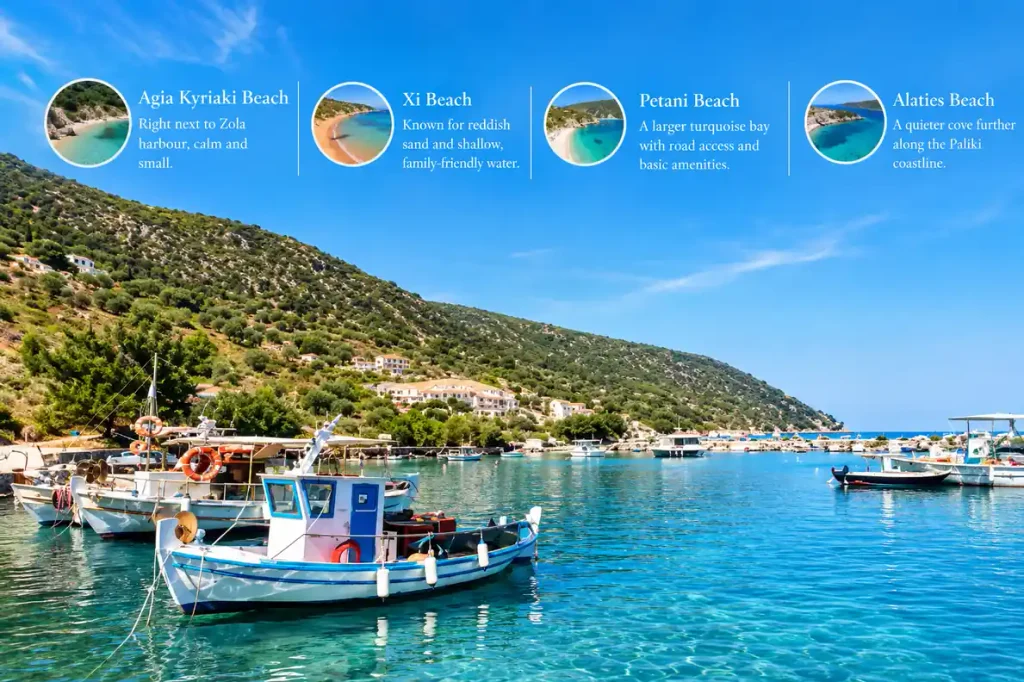
- Agia Kyriaki Beach – right next to Zola harbour, calm and small.
- Xi Beach – known for reddish sand and shallow, family-friendly water.
- Petani Beach – a larger turquoise bay with road access and basic amenities.
- Alaties Beach – a quieter cove further along the Paliki coastline.
Combining two or three of these in a single day works well, especially for travelers renting a car around Lixouri.
Where to Stay Near Fteri Beach
Lixouri offers the most practical base for visiting Fteri, with restaurants, shops, and a short drive to Zola village. Argostoli, the island’s capital, sits across the bay and provides a wider range of hotels, though it adds ferry or driving time each way. Small villages like Chavdata and Zola offer limited rooms and rentals, appealing mainly to travelers who want to be as close to the beach as possible. Assos and Fiskardo, both in Kefalonia’s northeast, sit much farther away but reward the extra drive with scenic harbours worth a separate day trip.
Fteri Beach vs. Myrtos Beach
Myrtos Beach, Kefalonia’s most photographed shoreline, differs from Fteri in almost every practical way despite sharing a similar cliff-backed look.
| Feature | Fteri Beach | Myrtos Beach |
| Road access | None; boat or hike only | Yes, paved road down |
| Crowd level | Moderate, boat-dependent | High, especially midsummer |
| Facilities | None | Basic sunbeds and a canteen |
| Best for | Adventure, photography | Convenience, larger groups |
Myrtos wins on ease of access, while Fteri wins on seclusion and the sense of discovery that comes with actually working to get there.
Fteri Beach vs. Petani Beach
Petani Beach sits on the same Paliki peninsula as Fteri, sharing similar turquoise water but offering a dramatically easier visit. Road access reaches Petani directly, and a couple of relaxed beach bars provide food, drinks, and sunbeds through the season. Petani’s bay stretches longer than Fteri’s, giving visitors more room to spread out even during busy weeks.
However, that convenience comes at the cost of the untouched, remote feeling that makes Fteri stand out on global rankings. Travelers short on time or mobility will likely prefer Petani, while those chasing something rarer should still make the effort toward Fteri.
Is Fteri Beach Worth Visiting?
Visiting Fteri makes sense for travelers who value dramatic scenery over convenience, especially given its recent recognition as one of the world’s top beaches. Effort remains the main trade-off here, since reaching the cove always demands either a boat fare or a genuinely tough hike. Families with very young children, or travelers who need shade and facilities, may find the lack of infrastructure more frustrating than charming.
Adventurous swimmers, photographers, and anyone chasing a quieter alternative to Myrtos will likely find the trip worthwhile. Early arrival matters more here than at almost any other Kefalonia beach, since both boats and hikers cluster around mid-morning.
Fteri Beach FAQs
Is Fteri Beach hard to get to?
Yes, reaching Fteri Beach takes real effort, since no road leads directly to the cove. Visitors choose between a short water taxi ride or a steep, roughly one-hour hike down a rocky trail.
How much does the Fteri Beach water taxi cost?
The water taxi to Fteri typically costs between $23 and $29 USD for a round trip, based on current pricing of roughly €20 to €25.
Can you drive to Fteri Beach?
No, a car cannot reach Fteri directly. Drivers can only get as far as the parking area near Zola harbour or the marked trailhead.
Is Fteri Beach good for kids?
Fteri suits older, confident children better than toddlers, mainly because of the hike’s difficulty and the complete lack of shade or facilities. Families with very young kids often find the boat option more manageable than the trail.
Do I need to book the water taxi in advance?
Booking ahead is recommended during July and August, since boats fill quickly and return times get locked in at purchase. Early morning or shoulder-season visits usually allow walk-up bookings at the harbour.
Is Fteri Beach really the world’s second-best beach?
Yes, this beach was ranked second globally and first in Europe by The World’s 50 Best Beaches for 2026, based on votes from over 1,000 travel professionals.

9 Responses