
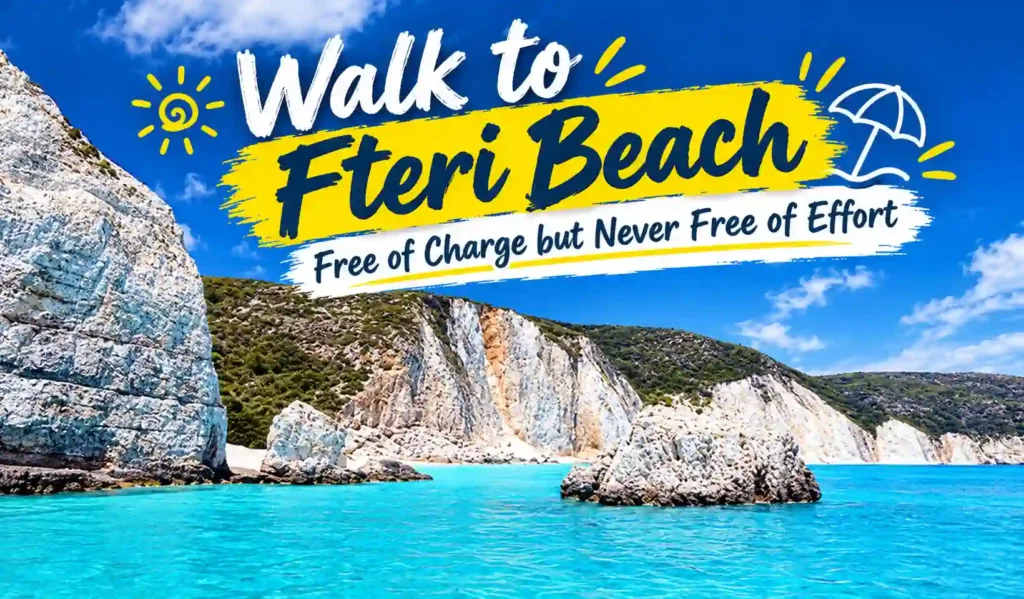
The walk to Fteri Beach starts from a small dirt parking area above the cliffs, where a marked path leads down through rocky, uneven ground to the cove below. You need sturdy shoes, since the trail has loose stones and some steep, narrow sections that can be slippery after rain.
Most hikers reach Fteri Beach in 30 to 45 minutes, while the climb back usually takes 45 to 90 minutes. The pace depends on fitness, trail conditions, heat, and how often you stop. Bring water, wear a hat, and start early to avoid the strongest heat, especially in July and August when the exposed sections can feel intense.
How to Walk to Fteri Beach
There are two main ways visitors reach Fteri Beach: the walking trail from the Zola-Lixouri road and a water taxi from Zola harbour. The walking route begins at a free dirt-road parking area, located roughly two kilometers past a rural waste-disposal site. Green and red paint marks help guide hikers along the trail, although dedicated signage is limited.
Loose stones, dry riverbeds, and small gorges make up most of the terrain, so trekking shoes matter here. Roughly 40 minutes gets most hikers down to the cove, though fitness level changes that number quite a bit. Sturdy footwear, a full water bottle, and an early start turn this into a manageable walk rather than a grueling trek. No shortcuts exist; hikers who wander off the marked path often end up on steeper, riskier ground.
Where Does the Fteri Beach Trail Start?
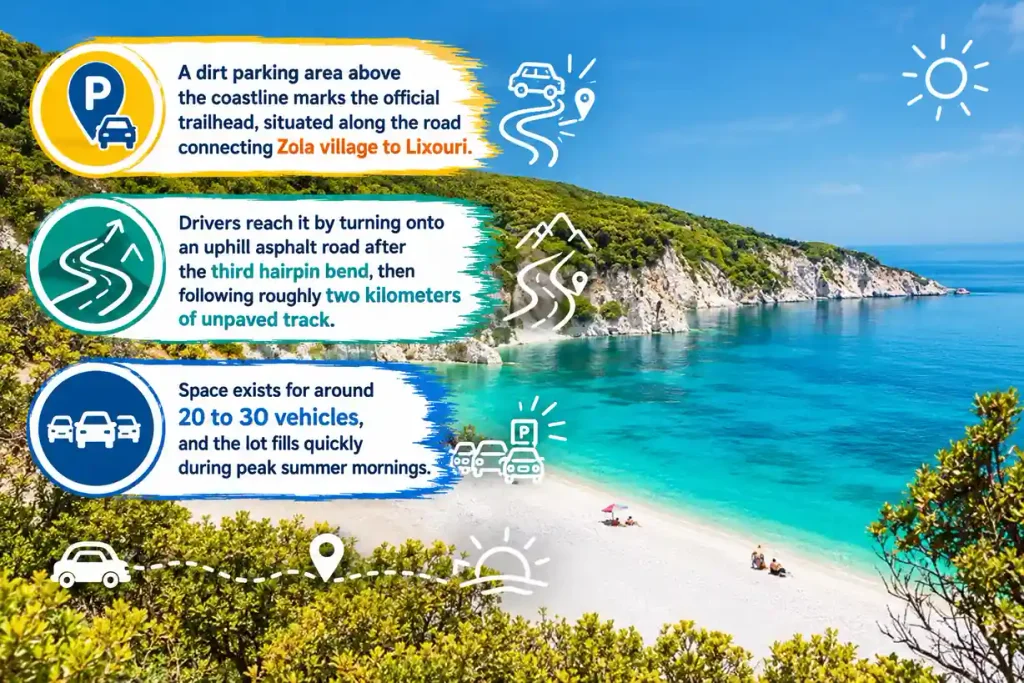
A dirt parking area above the coastline marks the official trailhead, situated along the road connecting Zola village to Lixouri. Drivers reach it by turning onto an uphill asphalt road after the third hairpin bend, then following roughly two kilometers of unpaved track. Space exists for around 20 to 30 vehicles, and the lot fills quickly during peak summer mornings.
Free parking makes this the more budget-friendly option compared to the paid water taxi. Zola village sits close by, offering the nearest fuel stop, taverna, and harbor before the drive up. GPS apps sometimes misdirect visitors near this turn, so an offline trail map from AllTrails or Wikiloc saves real frustration. Arriving before 8 AM practically guarantees a parking spot and a quieter start.
Uncover Why Fteri Beach Is Worth the Journey. Read more in Fteri Beach Kefalonia Just Became the World’s Number 2 Beach.
How Long Is the Walk to Fteri Beach?
Most hikers can reach Fteri Beach in around 30 to 45 minutes from the trailhead. The return journey is slower, usually taking 45 to 90 minutes, because you’re climbing back up the steep, rocky route.
The trail covers roughly 4.6 kilometers (2.9 miles) round trip, with an elevation drop of about 170 meters on the way down. Allow around 1.5 to 2.25 hours for the walking itself, depending on your pace and breaks. Once you add time for swimming, relaxing on the beach, and taking photos, a realistic visit takes around 2.5 to 4 hours.
This quick breakdown covers the core trail numbers worth saving before you set off:
| Trail Detail | Measurement |
| Round-trip distance | ~4.6 km (2.9 miles) |
| One-way descent | ~170 meters |
| Walk down | 30-45 minutes average |
| Walk back up | 45-90 minutes average |
| Trail markers | Green and red paint dots |
| Difficulty rating | Moderate to challenging |
How Difficult Is the Fteri Beach Hike?
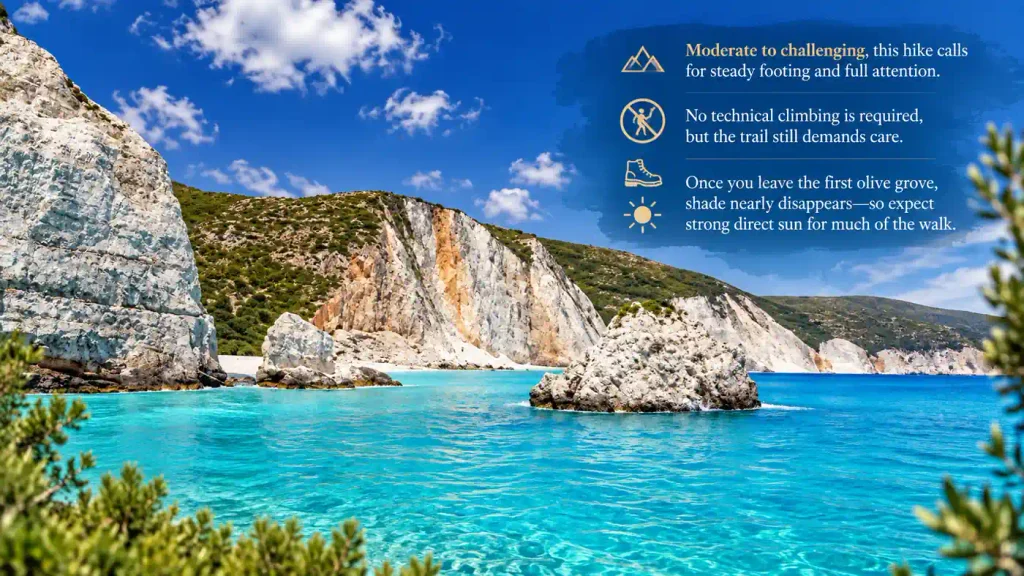
Moderate to challenging best describes this hike, according to trail ratings on AllTrails, where the route carries a “challenging” tag despite its short length. Rocky, uneven ground dominates most of the descent, with loose stones that shift underfoot. Technical climbing plays no part in this trail, yet steady footing and full attention still matter. Shade disappears almost entirely once the path leaves the initial olive grove, leaving hikers exposed to direct sun.
Young children, visitors with knee or mobility issues, and anyone carrying heavy gear often struggle more than the short distance suggests. Fitness level, footwear, and timing change the difficulty far more than the trail’s length does on paper. Rating the hike as “easy” undersells it; treating it as a proper coastal trek sets more realistic expectations.
Is Hiking to Fteri Beach Difficult for Beginners?
Beginners can complete the hike to Fteri Beach, though the steep, loose terrain and lack of shade make it tougher than a typical beach walk. Sturdy shoes, an early start, and slow, steady pacing turn this moderate trail into a manageable one, even for casual hikers.
What Is the Fteri Beach Trail Like?
Olive groves greet hikers first, providing brief shade before the path dips into a dry streambed lined with rock and scrub. Small gorges cut through the landscape next, channeling the trail between low hills covered in sparse, bushy vegetation. Wildflowers and low shrubs decorate the middle section during spring, adding color that fades by peak summer heat. Dramatic limestone cliffs begin appearing as the path opens toward the coast, offering the first glimpse of Fteri’s turquoise water.
Footing becomes trickiest on the final descent, where loose gravel and a short scramble lead onto the beach’s white pebbles. Silence and open landscape define most of the walk, since the trail sees far less traffic than Kefalonia’s main beach roads. Photographers should budget extra time here, as the final stretch ranks among the most photographed spots on the island.
What to Wear for the Walk to Fteri Beach
Sturdy trainers or hiking shoes rank as the single most important item, given the loose rock and uneven ground throughout. Flip-flops and sandals cause the most reported injuries on this route, according to repeated visitor warnings on AllTrails. Lightweight, breathable clothing works best, since shade barely exists and temperatures climb fast.
Swimwear under hiking clothes saves a change of clothes at the bottom, where no changing facilities exist. A wide-brim hat and sunglasses cut down on sun exposure during the most exposed section. Quick-dry fabrics beat cotton here, particularly for the sweaty climb back up. Socks matter more than expected, since blisters from loose-fitting shoes turn a 40-minute walk into a miserable one.
Do You Need Hiking Boots for the Fteri Beach Trail?
Full hiking boots aren’t strictly required, but sturdy trainers with good grip are essential on this rocky, uneven route. Flip-flops, sandals, and worn-out shoes account for most of the reported slips and injuries along the way.
What to Bring on the Fteri Beach Walk
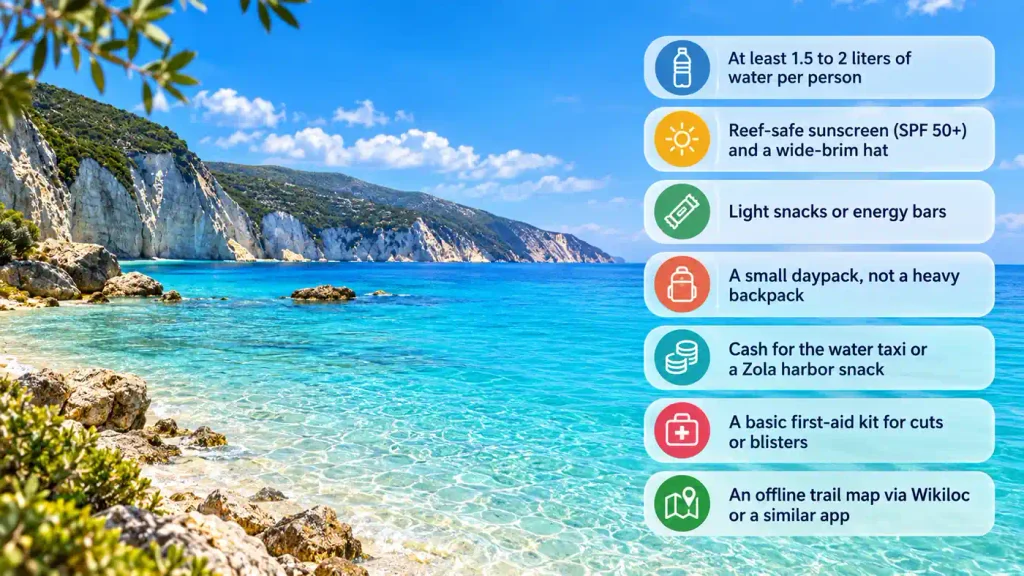
Packing light but smart makes the real difference between an enjoyable trip and an uncomfortable one. No facilities exist on the beach itself, so every item below needs to be carried down and back up again.
- At least 1.5 to 2 liters of water per person
- Reef-safe sunscreen (SPF 50+) and a wide-brim hat
- Light snacks or energy bars
- A small daypack, not a heavy backpack
- Cash for the water taxi or a Zola harbor snack
- A basic first-aid kit for cuts or blisters
- An offline trail map via Wikiloc or a similar app
Beach umbrellas or portable shade tents add real comfort, since natural shade stays scarce along the entire shoreline.
Is the Walk to Fteri Beach Safe?
Generally safe describes this trail for anyone in reasonable fitness with proper footwear, though real risks deserve respect. Steep, loose terrain causes the occasional slip, particularly during the harder climb back up in full sun. Cell signal drops out in parts of the gorge, so telling someone your plans beforehand adds a useful safety net. No lifeguard patrols the beach or the trail, which means self-sufficiency matters more here than at Kefalonia’s developed beaches.
Heat exhaustion poses a bigger risk in July and August than the terrain itself, given the total lack of shade. Sticking to the marked green and red trail markers avoids the unofficial shortcuts that cause most reported accidents. Hiking alone isn’t recommended, and neither is attempting the trail after dark or during rain.
Best Time to Walk to Fteri Beach
Early morning, roughly 6:30 to 9:00 AM, offers the best window for this hike, combining cooler temperatures with a near-empty trail. Midday hiking between May and September turns punishing fast, with direct sun and little airflow along the exposed sections. Late afternoon works as a solid backup, particularly from 5 PM onward, when the heat eases, and the light flatters the cliffs.
Dry season, running roughly from April through October across the Ionian Islands, gives the most stable footing. Winter visits remain possible, since the trail stays open year-round, though rain turns the rocky sections noticeably more hazardous. Weekday mornings see far fewer hikers than weekends, when day-trip boats and rental cars fill the small lot early. Checking a short-term weather forecast the night before saves a wasted trip more often than expected.
This season-by-season snapshot makes planning the trip considerably easier:
| Season | Months | Trail Conditions | Notes |
| Dry Season | April – October | Best footing, stable weather | Busiest: July-August |
| Shoulder Season | March / November | Good, occasional rain | Fewer crowds |
| Wet Season | December – February | Caution advised | Slippery rocks |
| Early Morning | 6:30-9:00 AM daily | Coolest, quietest | Best light for photos |
Walk to Fteri Beach vs Water Taxi
Two very different experiences define the choice between hiking to Fteri Beach and the water taxi from Zola harbour. Water taxis operate during the main summer season, but departure times vary by operator, demand and weather. Confirm the schedule at Zola harbour before your trip. A return water taxi ticket from Zola harbour costs around €20, depending on the operator and season. Prices and schedules can change, so confirm the current fare and departure times locally before setting out.
Free access defines the walking trail’s biggest advantage, alongside scenery and a sense of achievement a boat ride can’t match. Physical demands separate the two options most clearly, since the trail suits fit, prepared hikers, while the boat suits young children or older travelers. Combining both works well too, with many visitors walking down in the cool morning and taking a water taxi back once the heat sets in. Neither option runs on a fixed public schedule, so confirming current times with a local operator avoids a wasted trip.
How Much Does the Fteri Beach Water Taxi Cost?
A return water taxi ticket from Zola harbour costs around $22, roughly 20 euros, during the main season from June through September. Prices can vary slightly by operator, so confirming the current rate before boarding is worth the extra minute.
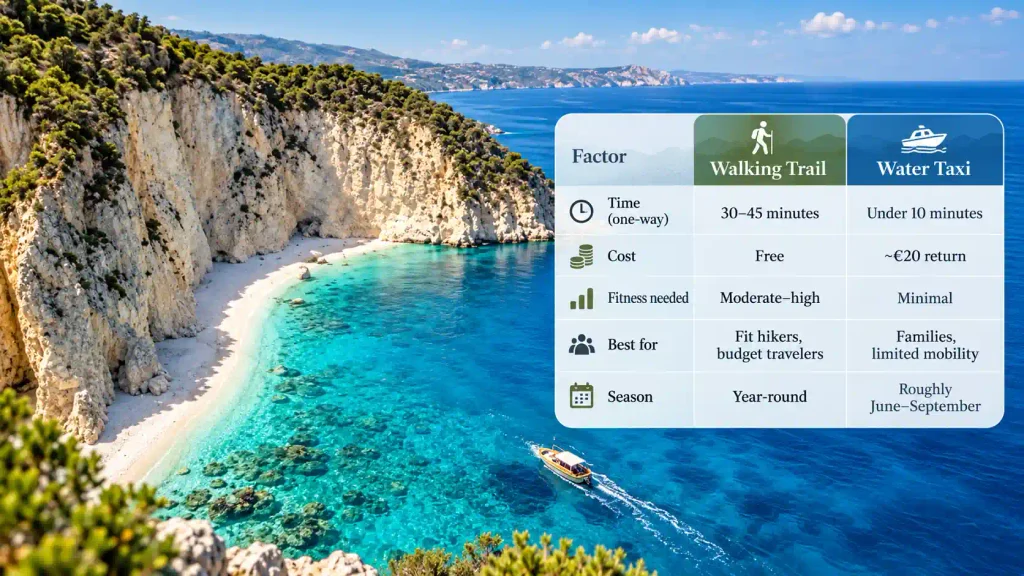
This side-by-side comparison sums up the trade-offs at a glance:
| Factor | Walking Trail | Water Taxi |
| Time (one-way) | 30-45 minutes | Under 10 minutes |
| Cost | Free | ~$22 (20 euros) return |
| Fitness needed | Moderate-high | Minimal |
| Best for | Fit hikers, budget travelers | Families, limited mobility |
| Season | Year-round | Roughly June-September |
Fteri Beach Walking Tips
A handful of practical habits separate a smooth Fteri Beach hike from a stressful one, based on common mistakes reported by past visitors.
- Start early, ideally before 9 AM, to beat both heat and crowds
- Wear broken-in trekking shoes, never new or slip-on footwear
- Carry more water than feels necessary; there’s no refill point on the trail
- Follow the green and red trail markers strictly; shortcuts cause most accidents
- Pack out all trash, as Fteri has no bins and no cleanup crew
- Check the weather forecast the night before, and skip the hike after heavy rain
- Tell someone your plan before hiking solo, given the patchy cell signal
Small preparation steps like these turn Fteri’s steep trail into one of Kefalonia’s most rewarding short hikes rather than its most regretted one.
Walking Back from Fteri Beach
Harder than the descent, the climb back up adds 15 to 30 extra minutes for most visitors, purely from the steeper effective grade. Heat builds fast on the return trip, especially for anyone leaving after midday rather than in the cooler morning hours. Pacing matters more going up, and short rest stops in whatever shade exists help avoid overheating. Water runs out faster than expected on the way back, which is why carrying more than feels necessary pays off later.
Tired legs and loose gravel make this the section where most minor slips happen, so trekking poles help hikers who struggle with balance. Starting the return before 4 PM in summer avoids finishing the climb in the day’s hottest hours. A water taxi pickup remains an option for anyone who underestimates the climb, if arranged with a boat operator in advance.
FAQs
Is hiking to Fteri Beach difficult?
Moderate to challenging sums up the trail, mainly due to steep, rocky ground and a complete lack of shade along most of the route.
How long does the hike to Fteri Beach take?
The walk down takes around 30 to 45 minutes, while the return climb usually takes 45 to 90 minutes. Allow about 1.5 to 2.25 hours for the walking itself, or 2.5 to 4 hours for the complete beach visit.
Where does the Fteri Beach trail start?
A free dirt-road parking area on the Zola-Lixouri road marks the trailhead, reached after the third hairpin bend on the coastal road.
Is the Fteri Beach trail safe for children?
Young children and hikers with mobility issues generally struggle with the steep, uneven terrain, so the water taxi suits families better.
What should I wear on the Fteri Beach trail?
Sturdy trainers or hiking shoes work best, paired with lightweight clothing and swimwear underneath; flip-flops cause most reported injuries.
Is the water taxi better than hiking to Fteri Beach?
Water taxis suit families and anyone short on time, while the trail suits fit hikers wanting a free, scenic route down.







One Response