

Whitehaven Beach sits on Whitsunday Island in Queensland, Australia, and it is one of the few beaches on earth made almost entirely of silica sand. Whitehaven Beach stretches for roughly seven kilometres along the eastern coastline of the island, with no resorts, no restaurants, and no built structures anywhere along the shore. Visitors reach it by boat, seaplane, or helicopter, since there is no road access and no town nearby.
The sand here is not just white; it is genuinely unusual. With about 98% pure silica, the sand stays surprisingly cool even at midday. Geologists still aren’t sure how the silica got there. Most believe ancient currents carried quartz sand north along Queensland’s coast over millions of years.
The entire beach sits inside Whitsunday Islands National Park, managed by the Queensland Parks and Wildlife Service, which keeps strict rules in place around camping, fires, and waste to protect the ecosystem. This guide covers how to get there, when to go, what the water is really like, and what to expect from stinger season, using publicly available and current information rather than guesswork.
Whitehaven Beach Location and Sand Composition
Whitehaven Beach sits on the eastern side of Whitsunday Island, the largest of the 74 Whitsunday islands. This beach faces the Coral Sea, bringing in clean ocean swells rather than calmer western waters.
The sand is about 98% silica, giving Whitehaven its bright look and cool feel underfoot. Fine sand and a gently sloping shore create the pale turquoise color seen in almost every aerial photo.
No permanent buildings sit on the beach itself. A basic campsite with toilets and picnic tables is available with a permit. Most day-trippers simply enjoy the beach for a few hours before heading back by boat. Dogs, drones without a permit, and open fires are not allowed on the beach.
What is Whitehaven Beach famous for?
Whitehaven is known for its 7-km stretch of pure white silica sand, swirling turquoise Hill Inlet, and protected, untouched shoreline.
How to Get to Whitehaven Beach
Whitehaven has no direct road, bridge, or ferry access, as there’s no town or airstrip nearby. Visits usually start from Airlie Beach or Hamilton Island, followed by a boat, seaplane, or helicopter ride to Whitehaven.
Most travellers book a seat on an organised day cruise, since these operators already hold the permits needed to anchor and land passengers on national park land. Private boat owners can also anchor off Whitehaven Beach, and access is possible at most tide levels, though no public moorings exist directly off the beach itself.
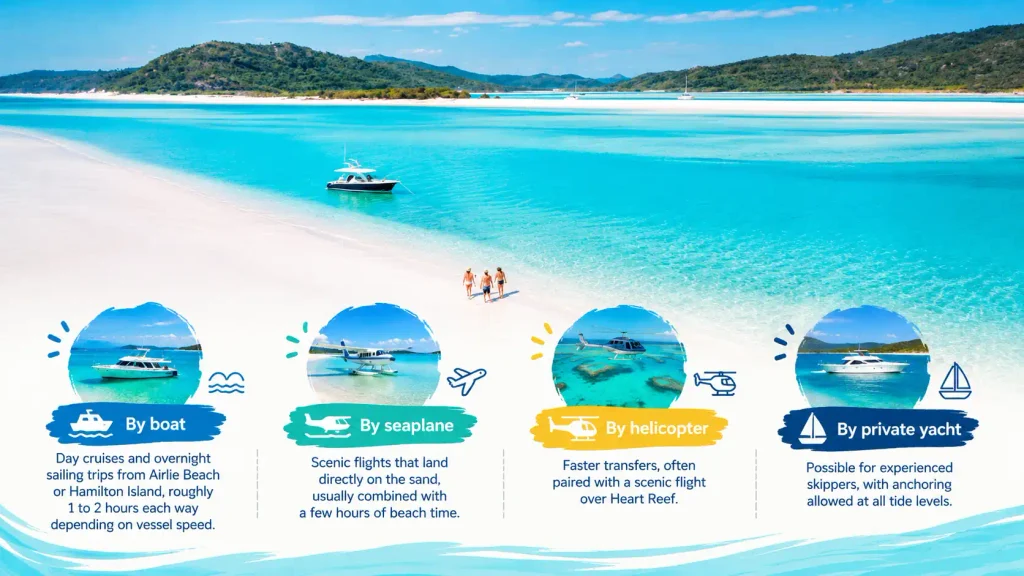
- By boat: day cruises and overnight sailing trips from Airlie Beach or Hamilton Island, roughly 1 to 2 hours each way depending on vessel speed.
- By seaplane: scenic flights that land directly on the sand, usually combined with a few hours of beach time.
- By helicopter: faster transfers, often paired with a scenic flight over Heart Reef.
- By private yacht: possible for experienced skippers, with anchoring allowed at all tide levels.
Whitehaven Beach Tours
Dozens of licensed operators run trips to Whitehaven Beach, ranging from large day-cruise catamarans to small-group sailing charters and multi-day yacht itineraries. Prices, inclusions, and departure points vary, so checking current listings through a registered tour operator or the regional visitor centre is worth doing before booking.
Day tours typically include a stop at the main beach for swimming and relaxing, followed by a walk or short boat transfer to the Hill Inlet lookout. Snorkelling gear, stinger suits during stinger season, and lunch are commonly included in the ticket price, though this varies by operator, so confirming inclusions directly with the tour company is a sensible step.
Whitehaven Beach from Airlie Beach
Airlie Beach is the main departure hub for Whitehaven Beach, with dozens of daily sailings from the Port of Airlie marina and Abell Point Marina. Most day cruises take around 90 minutes to reach the beach by boat, and itineraries usually combine a few hours on the sand with a walk to Hill Inlet lookout or a snorkelling stop at a nearby reef site.
Overnight and multi-day sailing trips also depart from Airlie Beach, giving travellers more flexibility around tide times and crowd levels. Because Airlie Beach has the largest concentration of operators, comparing several company reviews and inclusions before booking usually pays off.

Turn a day in the Whitsundays into a reef adventure you’ll remember. Enjoy a scenic cruise, delicious lunch, and plenty of time to snorkel or dive.
Whitehaven Beach from Hamilton Island
Hamilton Island sits closer to Whitehaven Beach than Airlie Beach does, so transfer times from the island’s marina typically run shorter, often under an hour by fast boat. Travellers staying at Hamilton Island resorts can usually book half-day or full-day tours directly through resort tour desks.
Seaplane and helicopter transfers also commonly depart from Hamilton Island’s airport, which makes it a practical base for visitors who want a scenic flight combined with beach time, without the longer transfer from the mainland.
The table below compares the two most common departure points so travellers can weigh transfer time against convenience.
| Departure Point | Typical Transfer Time | Best For |
| Airlie Beach | Around 60–90 minutes by boat | Widest choice of operators and price points |
| Hamilton Island | Often under 60 minutes by boat | Shorter transfers, resort-based bookings |
| Seaplane (either base) | 15–30 minutes flight time | Scenic aerial views plus beach landing |
Things to Do at Whitehaven Beach
Swimming and sunbathing are the obvious draws, but the beach and surrounding national park offer more than a place to lay a towel. The sand itself is worth exploring on foot, since the texture and colour shift noticeably between the northern and southern ends.
- Walk the full 7-kilometre stretch of sand at low tide, when the beach is widest.
- Hike to Hill Inlet lookout for the swirling sand and water view.
- Snorkel near the fringing reef areas on calmer, higher-tide days.
- Watch for gentle marine life such as rays and small reef fish in the shallows.
- Take a scenic flight for an aerial view of the sand patterns.
- Camp overnight at the designated camping area with a valid permit.
Photography is one of the biggest draws for visitors, particularly around the northern end near Tongue Point, where the contrast between white sand, turquoise shallows, and deep blue water creates the images most people associate with the Whitsundays.

Crystal-clear water, colorful reefs, and plenty to see beneath the surface. Add a little underwater adventure to your Whitehaven Beach day.
Hill Inlet Whitehaven Beach
Hill Inlet sits at the northern tip of Whitehaven Beach and is best known for the constantly shifting pattern of sand and water that forms as the tide moves in and out. The swirling cream and turquoise shapes change throughout the day, so no two visits look quite the same.
A walking track through tropical bushland connects the northern end of the beach to the Tongue Point and Hill Inlet lookout platforms, both maintained by the Queensland Parks and Wildlife Service. The track is well-formed but includes some uneven ground and steps, so sturdy footwear is recommended over thongs or sandals.
Tour operators often time their visits to Hill Inlet around mid to high tide, since this is when the colour contrast in the swirling patterns is most vivid. Checking a current tide chart before visiting independently helps avoid arriving when the inlet is mostly exposed sand or fully submerged.
How long is the walk to Hill Inlet lookout?
The walk to Hill Inlet lookout from the northern end of Whitehaven Beach takes about 10 to 20 minutes each way, depending on fitness level and how many photo stops are taken along the track.

Want to see more than just Whitehaven Beach? This full-day cruise pairs the famous sands with Hill Inlet and plenty of time to explore. It’s the kind of day you’ll be talking about long after the cruise ends.
Best Time to Visit Whitehaven Beach
The dry season, running roughly from May to September, brings the most reliable conditions for visiting Whitehaven Beach, with lower humidity, less rainfall, and generally calmer seas. This period sits outside the main stinger season, which makes swimming more relaxed for visitors who prefer not to wear a full stinger suit.
The shoulder months of April and October can also work well, often with fewer crowds than the peak July and August period. Winter months in Queensland still bring plenty of sunshine, though water and air temperatures drop slightly compared with the tropical summer.
What is the best month to visit Whitehaven Beach?
June, July, and August generally offer the most consistent weather at Whitehaven Beach, with warm days, low rainfall, and conditions outside the peak stinger season, though this period also draws the largest crowds.
The overview below breaks down what to expect across the main travel seasons.
| Season | Months | What to Expect |
| Dry season | May – September | Lower rainfall, calmer seas, outside the main stinger season |
| Shoulder season | April, October | Warm weather, thinner crowds, transitional stinger risk |
| Wet/stinger season | November – March | Higher humidity, more rain, stinger suits recommended |
Whitehaven Beach Weather
Whitehaven Beach sits in a tropical climate zone, with warm temperatures holding fairly steady across the year and rainfall varying far more by season. Daytime temperatures typically range from the low-20s°C in winter to the low-30s°C in summer, with humidity climbing noticeably during the wet season.
Rainfall concentrates heavily between December and March, often arriving as short, heavy tropical downpours rather than steady all-day rain. Cyclone activity is also possible in the region during this period, so checking current forecasts before travel matters more between November and April than at any other time of year.
Conditions can shift quickly in a tropical marine environment, and forecasts should always be checked close to your travel date through the Bureau of Meteorology rather than relied on from older articles or guesswork.
Whitehaven Beach Swimming
Swimming at Whitehaven Beach is a highlight for most visitors, with warm, shallow water along much of the shoreline and a gently sloping entry in the main central section. The water sits over sand for most of the beach’s length, without the reef hazards found at some other Whitsunday swimming spots.
Conditions do shift with tide and season, so checking with a tour operator or local safety signage before entering the water is a sensible habit rather than an optional extra. During stinger season, most operators supply full-body stinger suits, which also double as useful sun protection given the strength of tropical UV rays.
No lifeguard patrols operate permanently on Whitehaven Beach, so swimmers should stay within sight of their group, avoid swimming alone in isolated sections, and pay attention to any signage posted by park rangers about current hazards.
Is it safe to swim at Whitehaven Beach?
Swimming is generally safe in Whitehaven’s central section during calm conditions. Wear a stinger suit in stinger season and check local safety advice before entering the water.
Whitehaven Beach Stinger Season
Stinger season across the Whitsundays, including Whitehaven Beach, typically runs from around late October through to May, covering the warmer, wetter months of the year. During this window, warm water temperatures create favourable breeding conditions for marine stingers such as box jellyfish and the much smaller Irukandji.
Confirmed stings within the Whitsunday Islands remain uncommon relative to the large number of annual visitors, and most licensed tour operators actively manage the risk by supplying stinger suits at little or no extra cost. Sheltered, low-wave areas of sandy beach are generally considered higher risk than open reef water, so caution matters most in calm, shallow sections.
Because stinger presence and safety guidance can change from season to season, checking current alerts through the Great Barrier Reef Marine Park Authority or a local tour operator before entering the water is the most reliable approach, rather than relying on general date ranges alone.
From June to mid-October, stinger encounters drop sharply, so many visitors swim without a stinger suit during the cooler, drier months.
A quick reference for stinger season precautions is set out below.
| Precaution | Why It Helps | When to Use |
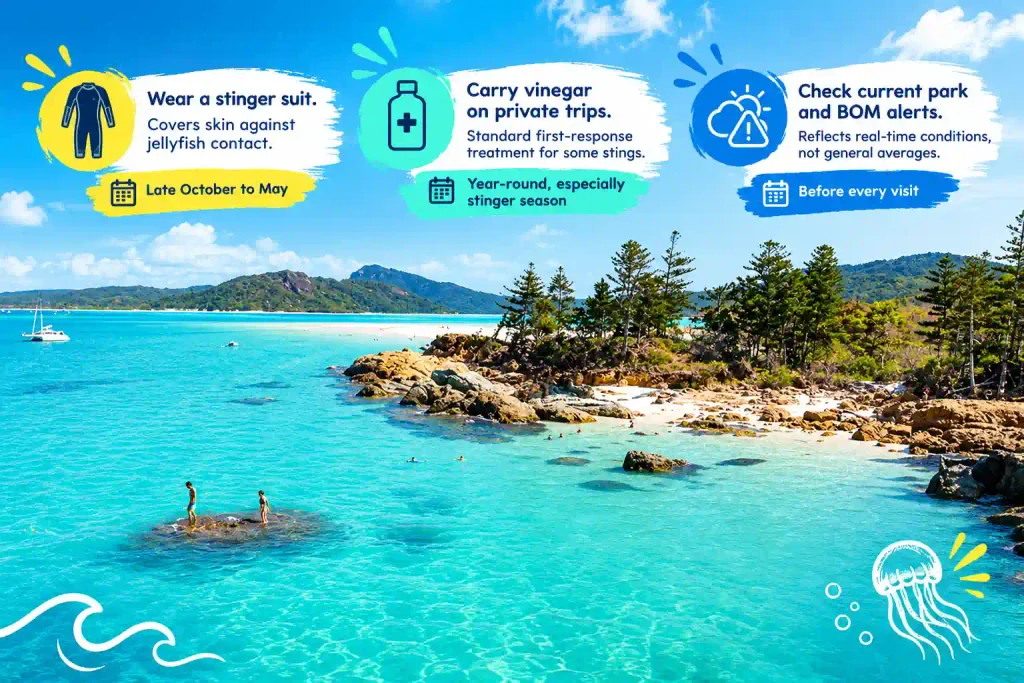
| Wear a stinger suit. | Covers skin against jellyfish contact | Late October to May |
| Carry vinegar on private trips. | Standard first-response treatment for some stings | Year-round, especially stinger season |
| Check current park and BOM alerts. | Reflects real-time conditions, not general averages | Before every visit |
Making Whitehaven Beach Work for Your Trip
Whitehaven is known for its pure silica sand, protected setting, and ever-changing Hill Inlet. Get there by boat, seaplane, or helicopter from Airlie Beach or Hamilton Island, with trips from a few hours to overnight sails. Timing a visit around the dry season generally brings calmer weather and lighter stinger risk, though checking current weather and marine stinger alerts before any trip remains the safest approach.
The central beach is usually easy to swim, with a stinger suit helping for much of the year. Check official guidance before you go, especially for seasonal conditions.
Frequently Asked Questions
How do you get to Whitehaven Beach?
You can reach Whitehaven only by boat, seaplane, or helicopter from Airlie Beach or Hamilton Island. There’s no road or bridge to the island.
Is Whitehaven Beach good for swimming?
Yes, the central section has shallow, sandy waters suited to most swimmers. Check conditions and wear a stinger suit during stinger season.
When is stinger season at Whitehaven Beach?
Stinger season usually runs from late October to May, with extra caution needed during the warmer, wetter months.
How long does it take to walk to Hill Inlet lookout?
The northern beach walk takes about 10–20 minutes each way along a well-formed bush track.
What is the best time of year to visit?
The dry season, from around May to September, offers the most reliable weather and sits outside the main stinger season.
Can you camp on Whitehaven Beach?
Camping is allowed at the southern end with a Queensland Parks permit, but there are no resorts or permanent settlements on the beach.