

The Fteri Beach Trail starts near Zola village on Kefalonia and drops about 170 meters over 1.4 kilometers to reach the beach below. This path is steep, with loose gravel and sharp switchbacks, and it offers almost no shade, so hikers should bring water and wear sturdy shoes.
Most people finish the Fteri Beach Trail in 30 to 40 minutes going down, though the climb back up takes longer and feels harder in the summer heat. Anyone who prefers to skip the walk can take a short boat ride from the harbor instead, arriving at the same white cliffs and clear blue water in about ten minutes.
Fteri Beach Trail Starting Point
The trailhead sits on the Paliki Peninsula, near the small village of Zola on Kefalonia’s northwest coast. Drivers reach it along the road connecting Zola to Lixouri, turning off after the third hairpin bend onto an uphill asphalt road toward the island’s waste site. About two kilometers further, a dirt road branches downhill for roughly one kilometer to a fenced enclosure and a water tank.
Free parking sits right there, with room for 20 to 30 cars, though space fills fast in July and August. From the car, the path heads west past an olive grove before dropping toward the coast.
Is the Fteri Beach Trail Hard to Hike?
Moderate-to-challenging difficulty describes the Fteri Beach Trail accurately, given steep, rocky terrain and almost no shade. Forty to sixty minutes covers the descent, while the climb back up typically takes sixty to ninety minutes. Sturdy hiking shoes count as essential gear here, and the route doesn’t suit young children.
How to Get to the Fteri Beach Trail
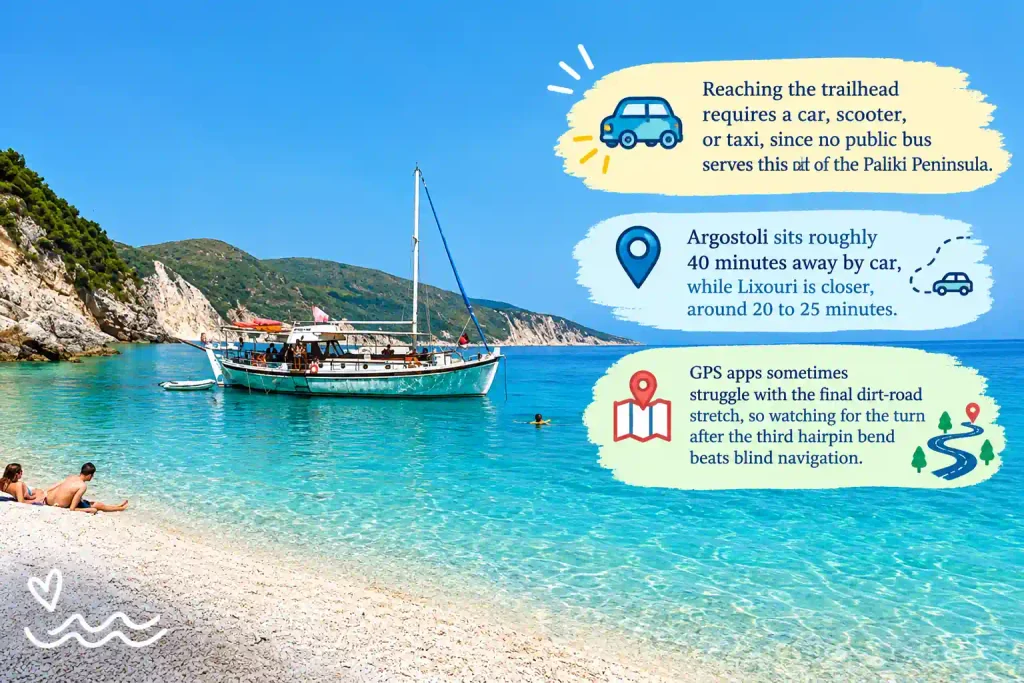
Reaching the trailhead requires a car, scooter, or taxi, since no public bus serves this part of the Paliki Peninsula. Argostoli sits roughly 40 minutes away by car, while Lixouri is closer, around 20 to 25 minutes. GPS apps sometimes struggle with the final dirt-road stretch, so watching for the turn after the third hairpin bend beats blind navigation.
Rental cars handle the paved sections fine, though the last unpaved kilometer suits higher-clearance vehicles better than compact cars. Travelers without a rental can book a taxi from Argostoli or Lixouri and confirm pickup times in advance.
Fteri Beach Trail Distance
Total distance for the Fteri Beach Trail runs about 2.8 kilometers (1.7 miles) round trip, measured out-and-back from the parking area to the beach. Elevation loss on the way down reaches roughly 170 meters, concentrated in the final third of the descent. One-way distance covers about 1.4 kilometers, though rocky, uneven ground makes it feel longer than the number suggests. Footing and heat matter more than raw mileage here. A quick snapshot of the trail’s core numbers appears below.
| Metric | Detail |
| Round-trip distance | 2.9 miles (4.7 km) |
| Elevation change | About 170 m descent |
| Time down | 40-60 minutes |
| Time up | 60-90 minutes |
| Trail markers | Green and red dots painted on rocks |
| Terrain | Rocky, unpaved, old donkey path |
| Trailhead facilities | Free parking, no shade, no water |
Fteri Beach Trail Difficulty
Difficulty ratings for the Fteri Beach Trail generally land in the moderate-to-challenging range, driven by loose gravel, exposed rock, and a steady incline. AllTrails classifies the route as challenging, based on reviews from hundreds of hikers. Footing shifts constantly on the descent, and a few short sections require careful scrambling over boulders.
Heat compounds the challenge, since the path offers almost no shade and summer temperatures on the peninsula regularly pass 30°C. Families with toddlers, or hikers using mobility aids, should consider the water taxi instead.
Can Beginners Attempt This Hike?
Beginners with reasonable fitness can complete the hike, provided they wear proper shoes and carry enough water. Technical climbing plays no part in this route, though steep, loose sections still call for caution, especially during the hotter midday hours.
How Long Does the Fteri Beach Trail Take?
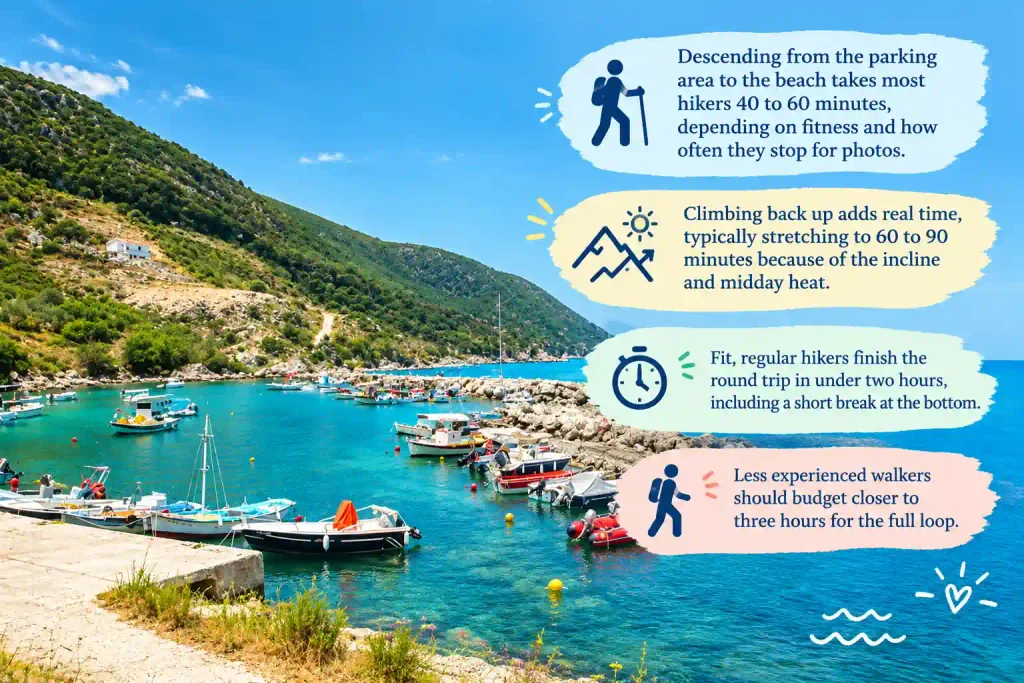
Descending from the parking area to the beach takes most hikers 40 to 60 minutes, depending on fitness and how often they stop for photos. Climbing back up adds real time, typically stretching to 60 to 90 minutes because of the incline and midday heat.
Fit, regular hikers finish the round trip in under two hours, including a short break at the bottom. Less experienced walkers should budget closer to three hours for the full loop. Resting several times during the climb is completely normal. Starting early in the morning keeps both directions cooler and faster.
Fteri Beach Trail Route
Route conditions shift along the way, starting with a gentle walk past an old olive grove near the parking area. A dry stream bed crosses the path shortly after, requiring a short scramble across smooth rocks before a brief climb on the opposite bank. A steep, switchbacking descent takes over from there, with loose gravel underfoot and dramatic sea views opening up on the left.
Green and red painted dots mark the correct path at irregular intervals, though some sections lack visible markers, especially after rain. Wrong turns are common enough that an offline GPS track, from a resource like Wikiloc, helps avoid getting lost. Four distinct stages make up the descent, summarized in the table below.
| Stage | What to Expect |
| Olive grove approach | Flat, partly shaded walking near the parking area |
| Dry stream crossing | Short scramble over smooth rock, no water most months |
| Steep switchbacks | Loose gravel, main elevation loss, exposed to sun. |
| Final descent to cove | Sharp drop to pebble beach, cliffs on both sides |
Best Time for the Fteri Beach Trail
Timing changes everything on this hike, mostly because of heat and crowding rather than trail conditions themselves. Early departures, ideally before 9:00 AM, keep temperatures manageable and the parking area from filling up. Seasonal data from the Hellenic National Meteorological Service shows daytime highs regularly topping 30°C in June through August, making midday descents uncomfortable.
June and September offer the best balance of warm water, thinner crowds, and gentler heat than peak July and August. Winter and spring bring cooler hiking conditions, though swimming at the bottom loses its appeal.
Monthly conditions vary enough to matter for planning, summarized by season below.
| Season | Months | Trail Conditions | Notes |
| Peak Summer | July-August | Hot, crowded, best swimming | Busiest parking, arrive early |
| Shoulder Season | June, September | Warm, fewer crowds | Sweet spot for most visitors |
| Off-Season | October-May | Cooler, quieter | Water taxi service not running |
What Is the Best Time of Day to Hike Down to Fteri Beach?
Early morning, between 7:00 and 9:00 AM, offers the coolest temperatures and the least crowded parking area. Afternoon descents mean climbing back up during peak heat, the hardest version of this route. Sunset hikes need a headlamp for the return.
What to Bring for the Fteri Beach Trail
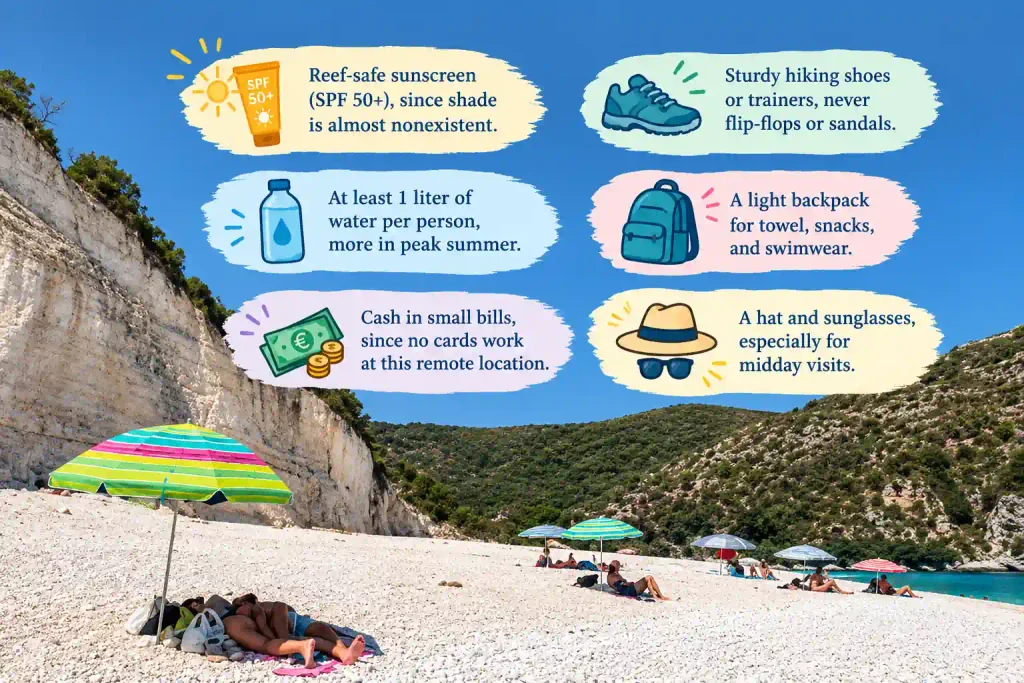
Packing correctly matters more on this route than on most beach days, since zero facilities exist once the descent begins. Water ranks as the single most important item, and one liter per person is a bare minimum in hot months. Sturdy footwear beats fashion every time here; supportive trainers handle loose gravel far better than sandals. A few essentials make the difference between a comfortable outing and a miserable one:
- Reef-safe sunscreen (SPF 50+), since shade is almost nonexistent
- Sturdy hiking shoes or trainers, never flip-flops or sandals
- At least 1 liter of water per person, more in peak summer
- A light backpack for towel, snacks, and swimwear
- Cash in small bills, since no cards work at this remote location
- A hat and sunglasses, especially for midday visits
Fteri Beach Trail Tips
Local knowledge separates a smooth visit from a frustrating one, starting with footwear chosen well before arrival day. Checking recent trail reviews the night before reveals current conditions, since heavy rain can wash out sections or expose slicker rock.
Watching other hikers’ pace, rather than rushing, prevents ankle injuries on the loose gravel near the bottom. Leaving with enough daylight for the uphill return avoids climbing unmarked terrain after dark. Bringing more water than feels necessary rarely goes wrong, while running short does.
Fteri Beach Trail vs Water Taxi
Choosing between the hike and the boat comes down to fitness, time, and how much adventure feels appealing that day. The water taxi from Zola Harbour takes under 10 minutes and costs around $21 USD round trip, running daily from June 1 through September 30. Hiking costs nothing beyond parking and takes two to three hours round trip, plus real effort on the climb back up.
Families with small children or anyone with joint concerns get a safer ride by boat. Adventure-focused visitors, or anyone on a tighter budget, generally prefer the trail for the views and sense of accomplishment. Return boat times must be booked in advance and can’t be changed once purchased.
Fteri Beach Trail Final Thoughts
The Fteri Beach Trail rewards effort with one of the most striking coves in Greece, but it demands real preparation. A 1.4-kilometer descent with a 170-meter drop sounds short on paper, yet loose gravel, steep switchbacks, and zero shade make it a genuine workout, especially on the climb back up. Fit hikers with sturdy shoes, enough water, and an early start handle the route comfortably in under two hours.
Anyone traveling with young kids, managing joint issues, or simply short on time gets the same white cliffs and clear water through a ten-minute water taxi ride instead. Either way, checking trail conditions, packing water, and timing the visit for early morning or the shoulder season turns this hike from a challenge into one of Kefalonia’s best experiences.
FAQs About the Fteri Beach Trail
Is the Fteri Beach Trail hard?
Fteri Beach Trail difficulty falls into the moderate-to-challenging range, with steep, rocky terrain and no shade along the route. Forty to sixty minutes covers the descent, and sixty to ninety minutes typically covers the climb back up.
How long does the hike to Fteri Beach take?
Round-trip time runs close to two hours for fit hikers and up to three hours for beginners or families taking frequent breaks. Early morning starts keep both directions cooler and noticeably faster.
Is there parking at the Fteri Beach trailhead?
Free dirt-road parking exists near the trailhead, with space for roughly 20 to 30 cars. Arriving before 9:00 AM during July and August improves the chances of finding a spot.
Can I drive all the way down to Fteri Beach?
Driving to the beach itself isn’t possible, since the final descent is footpath only. Some visitors drive partway down the dirt access road to shorten the walk, though this isn’t recommended without a high-clearance vehicle.
Is the Fteri Beach Trail safe for children?
Young children and hikers with mobility limitations generally struggle with the steep, uneven terrain. Families traveling with small kids typically find the water taxi a safer, faster alternative.
How much does the Fteri Beach water taxi cost?
At the time of checking, round-trip water taxi tickets from Zola Harbour were around $21 USD. Prices and operating dates can change by season. Return times must be selected at purchase and cannot be changed later.
What shoes should I wear on the Fteri Beach Trail?
Sturdy hiking shoes or supportive trainers work best on the loose gravel and rocky sections. Flip-flops and sandals significantly increase the risk of slipping or injury.





One Response