
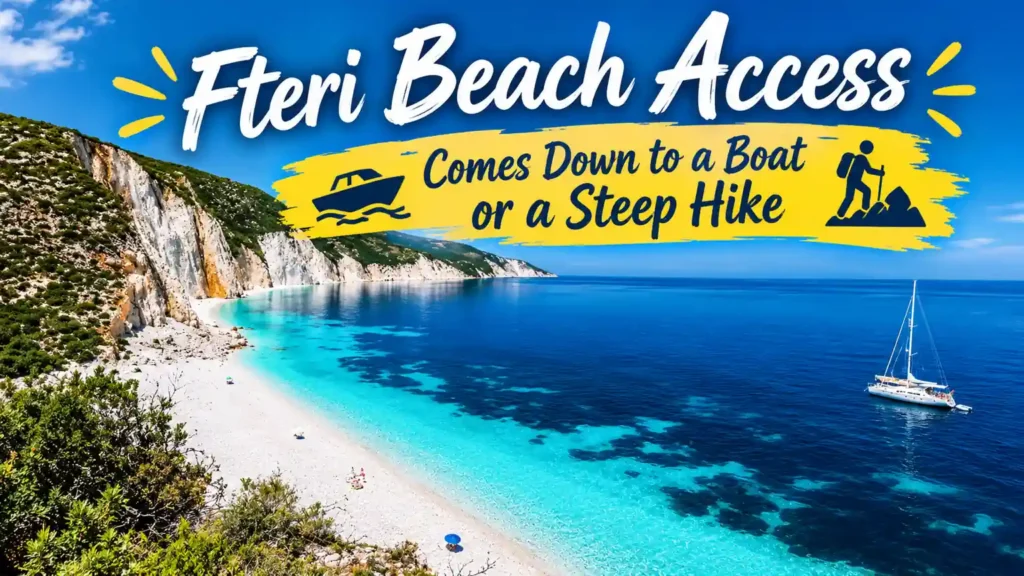
Fteri Beach is accessible only by boat or on foot. Most visitors take a water taxi from Zola, which takes under 10 minutes, while the roughly 2-kilometer hiking trail takes around 40–60 minutes.
Fteri Beach access matters because there is no road leading directly to the sand. The choice between the boat and the steep trail depends on your time, fitness level, budget, and the weather on the day of your visit. The beach itself has no toilets, shops, shade, or sunbeds, so everything you need for the day must be carried in.
The World’s 50 Best Beaches panel ranked Fteri Beach second in the world for 2026, behind Entalula Beach in the Philippines, and first among the beaches listed in Europe. That ranking has made knowing how to reach the beach even more important, especially during the busy summer months.
How Do You Get Fteri Beach Access?
Two methods work: a water taxi from Zola harbor, which takes under 10 minutes each way, or a hiking trail of roughly 2 kilometers that takes 40 to 60 minutes going down. Both options start near the small village of Zola on Kefalonia’s Paliki peninsula, and neither one involves driving directly to the beach.
How to Get to Fteri Beach
Fteri Beach sits on the northwestern coast of Kefalonia, close to the fishing village of Zola and roughly 25 kilometers north of Argostoli, the island’s capital. Reaching Zola itself is simple with a rental car, since paved roads connect it to the rest of the island, but reaching the beach from Zola is where the real decision begins.
A car works fine for the first leg of the trip. Drivers can reach either the Zola harbor area, where water taxis depart, or a small parking area near the hiking trailhead. From either point, the final stretch down to the sand only happens by boat or on foot.
Visitors flying into Kefalonia International Airport typically rent a car for the 30 to 40 minute drive to Zola. The Greek National Tourism Organisation lists Kefalonia among the most visited of the Ionian Islands, and Fteri’s new global ranking has only added to that draw. A few practical basics before setting out:
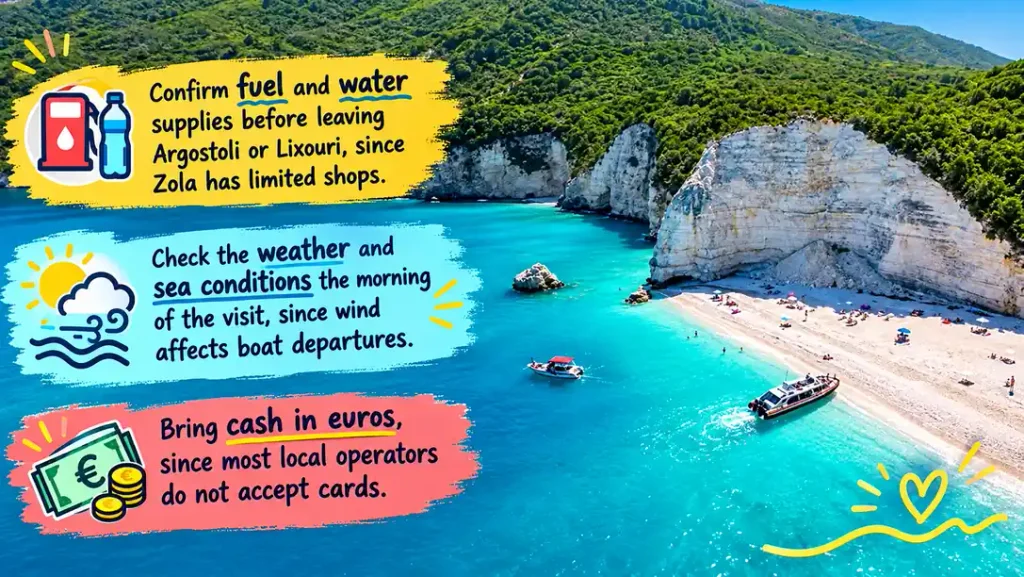
- Confirm fuel and water supplies before leaving Argostoli or Lixouri, since Zola has limited shops.
- Check the weather and sea conditions the morning of the visit, since wind affects boat departures.
- Bring cash in euros, since most local operators do not accept cards.
Fteri Beach by Boat
Arriving by boat remains the more popular and far less demanding way to reach the cove. Small open motorboats run back and forth from the harbor throughout the day in the warmer months, carrying a handful of passengers on each short crossing.
Weather still plays a role even on the water. High winds or rough swell can pause the service entirely, since safety rules for small passenger boats fall under the Hellenic Coast Guard, which oversees licensing for local water taxi operators. A few reasons push most visitors toward the boat over the trail:
- Almost no physical strain beyond a short walk to the harbor
- Faster overall, especially useful with young children or heavy bags
- A safer choice on very hot days when the hike feels risky
Fteri Beach Water Taxi
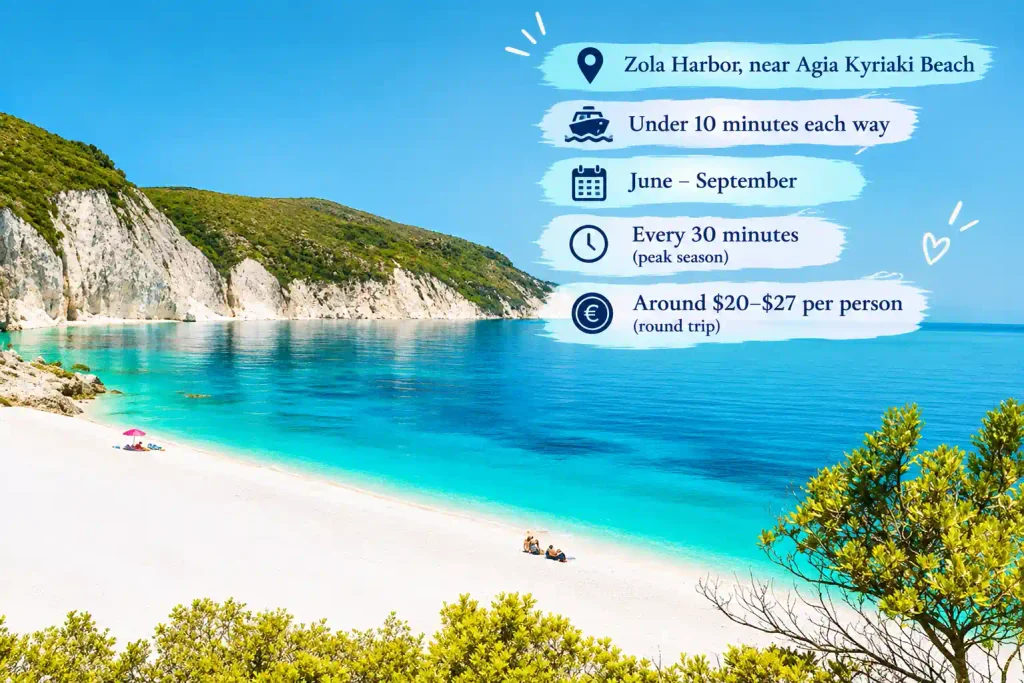
A single operator runs the main Fteri Beach water taxi service from Zola harbor, with boats departing roughly every 30 minutes during peak summer hours. The crossing takes under 10 minutes, and round-trip tickets typically cost around $20 to $27 per adult, paid in cash at the harbor kiosk.
Tickets are sold first-come, first-served rather than through advance online booking for most walk-up visitors. Riders choose a return time when buying the ticket, and that slot is generally fixed rather than flexible. Arriving before 10 a.m. avoids both the midday queue and the strongest afternoon sun.
Here is a quick snapshot of what to expect from the crossing before booking a spot.
| Detail | What to Expect |
| Departure point | Zola Harbor, near Agia Kyriaki Beach |
| Crossing time | Under 10 minutes each way |
| Typical season | Roughly June through September |
| Frequency | About every 30 minutes in peak season |
| Typical price | Around $20–$27 per person, round trip |
Prices, schedules, and operating months shift from year to year, so confirming current details on the operator’s official website or by phone before the trip is worth the extra step.
Fteri Beach Water Taxi from Zola
Zola itself is a small fishing hamlet rather than a resort town, with a modest harbor doubling as the main departure point. A ticket kiosk near the water sells tickets on the spot, and staff generally speak enough English to explain timing and pricing clearly.
Parking near the harbor tends to fill quickly once the first boats of the day start running, especially in July and August. Arriving with plenty of time before the planned departure avoids the stress of circling for a space. A few points make the Zola departure smoother:
- Buy the return ticket at the same time as the outbound ticket to lock in a pickup slot.
- Keep the paper ticket safe, since it may need to be shown again for the return trip.
- Ask the captain directly about the last boat of the day before settling in on the sand.
Fteri Beach Hiking Trail
Walking down offers a free alternative for visitors comfortable with steep, uneven terrain and warm conditions. The Fteri Beach hiking trail runs for roughly 2 kilometers one way, dropping around 150 to 170 meters in elevation through dry, scrubby hillside above the Ionian Sea.
Trail markers along the route consist mainly of painted green and red dots on rocks rather than formal signposts. Sturdy trainers or hiking shoes make a real difference, since loose gravel and rocky sections appear throughout the descent. Sandals or flip-flops turn a demanding walk into a genuinely uncomfortable one.
Hiking to Fteri Beach
Starting the hike means finding the correct dirt-road trailhead first, since the path carries little formal signage. Most descriptions point hikers toward a dirt track branching off near the road connecting Zola to Lixouri, close to the island’s waste transfer site, before narrowing into a footpath through olive groves and a dry streambed.
Midday heat turns this hike from moderate into genuinely tough, particularly in July and August when temperatures regularly climb past 30°C. An early start, ideally before 9 a.m., avoids the worst sun on both the descent and the harder climb back. Pack light but smart for the walk:
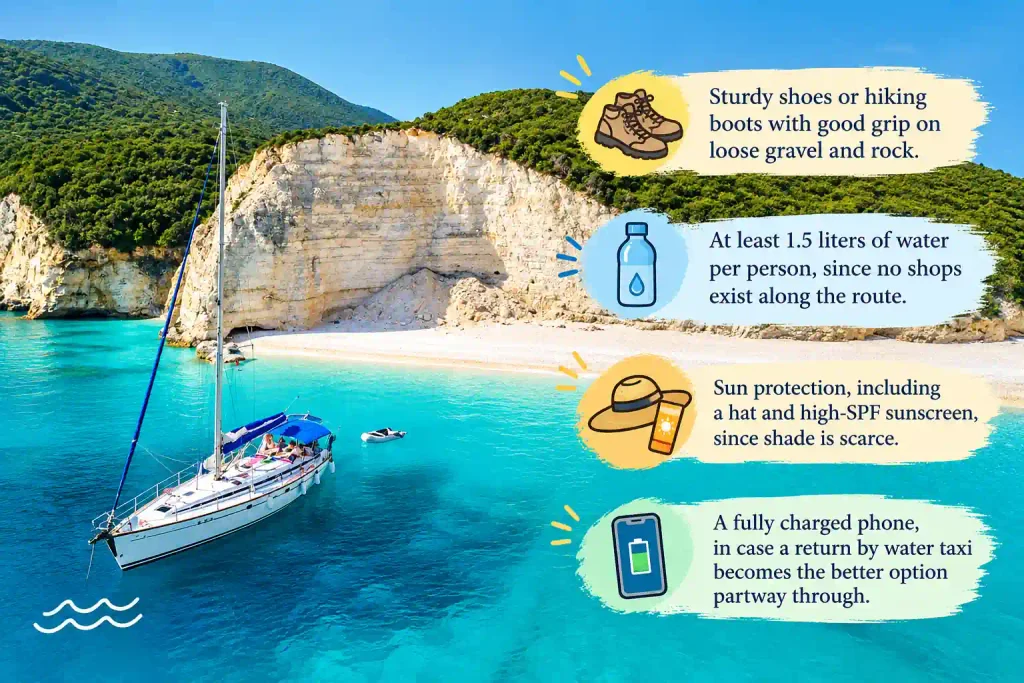
- Sturdy shoes or hiking boots with good grip on loose gravel and rock.
- At least 1.5 liters of water per person, since no shops exist along the route.
- Sun protection, including a hat and high-SPF sunscreen, since shade is scarce.
- A fully charged phone, in case a return by water taxi becomes the better option partway through.
Fteri Beach Parking
A free dirt-road parking area sits near the top of the hiking trailhead, with informal space for roughly 20 to 30 cars. Space fills early once summer mornings get underway, particularly on calm-sea days that bring out both hikers and boat passengers at once.
Separate parking exists closer to Zola harbor for anyone taking the water taxi instead of hiking. That area is smaller and tends to fill even faster during peak July and August weeks. A few tips help secure a spot before the lot fills:
- Arrive before 9 a.m. in July and August for the best chance at a space
- Carry small euro notes, since some informal lots accept optional donations
- Avoid blocking the dirt track, since local vehicles still use it daily
The table below lays out what to expect from each parking option before setting off.
| Parking Option | Location | Approximate Capacity | Cost |
| Trailhead parking | Dirt road near hiking trail start | 20–30 cars | Free |
| Harbor parking | Near Zola harbor water taxi dock | Limited, varies by day | Free, though space is tight |
Can You Drive to Fteri Beach?
No road leads directly to Fteri Beach, so driving all the way to the sand is not possible under any circumstances. Cars can reach the trailhead parking area or the Zola harbor, but the final stretch always happens on foot or by boat.
How Long Is the Fteri Beach Hike?
The hike down typically takes 40 to 60 minutes at a steady pace, covering roughly 2 kilometers of steep, rocky terrain. Climbing back up generally takes longer than the descent and feels noticeably harder in the midday heat.
Fteri Beach Boat or Hike
Choosing between the boat and the trail comes down to fitness level, budget, and how much of the day is available. Neither option is wrong, and plenty of visitors mix the two by hiking down in the cool morning and catching a water taxi back once the climb starts to look less appealing.
Cost plays a role too. The hike costs nothing beyond parking, while the water taxi carries a per-person fare that adds up for larger groups. A side-by-side comparison makes the decision faster.
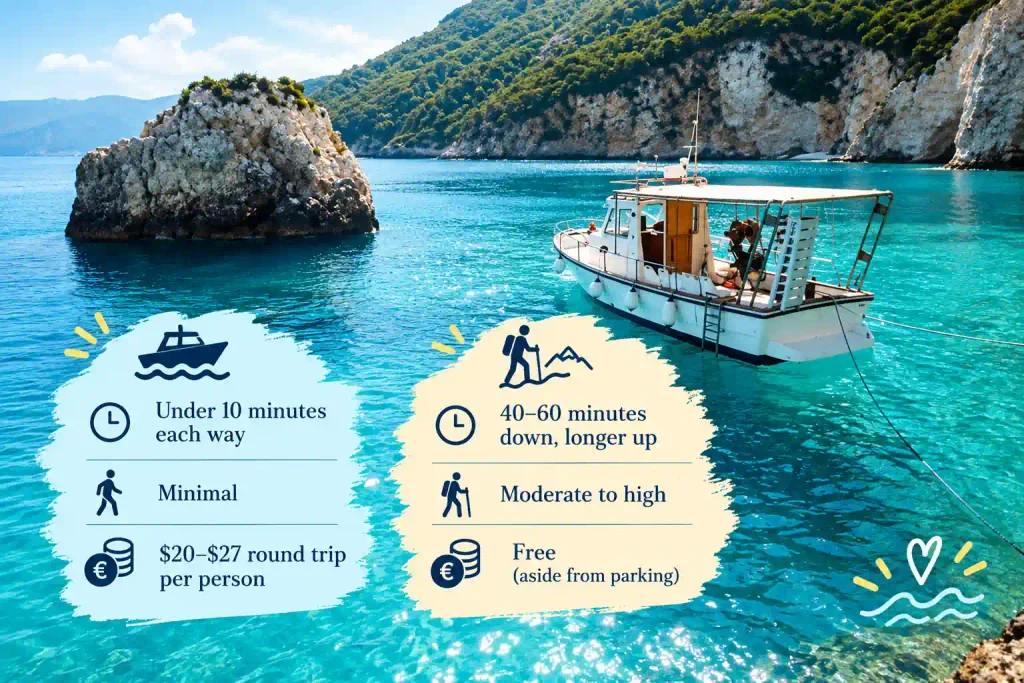
| Factor | Water Taxi | Hiking Trail |
| Time required | Under 10 minutes each way | 40–60 minutes down, longer up |
| Physical effort | Minimal | Moderate to high |
| Approximate cost | $20–$27 round trip per person | Free (aside from parking) |
| Best for | Families, limited time, hot days | Fit hikers, budget travel, adventure |
| Weather dependency | High, wind can cancel service | Low, though heat is a real factor |
The water taxi suits:
- Families with young children or anyone with mobility concerns
- Visitors short on time or short on sun tolerance
- Groups who would rather rest all day than exercise
The hiking trail suits:
- Experienced hikers looking for a genuine outdoor challenge
- Budget travelers who want to skip the per-person fare
- Early risers comfortable with a steep climb back up in the heat
Two Ways to Reach Fteri Beach: Which One Fits Your Trip?
Choosing one method forever isn’t required, either. A hike down followed by a booked water taxi back is a common combination among visitors who want the adventure without facing the uphill climb in the afternoon sun.
Fteri Beach earns its reputation the moment the trail opens onto the cove or the boat rounds the final headland into the bay. Reaching it by water taxi from Zola takes minutes and costs a modest fare, while the hiking trail rewards effort with a free, memorable approach through wild hillside. Parking stays limited at both the trailhead and the harbor, so arriving early solves most headaches before they start. Whichever route gets chosen, the payoff at the bottom- white pebbles, cliffs, and startlingly clear water- explains exactly why this small cove now ranks among the best beaches on the planet.
Fteri Beach Access FAQs
Is Fteri Beach accessible by car?
No. Cars can reach the trailhead parking area or Zola harbor, but no road continues to the beach itself, so the final stretch always happens by boat or on foot.
How much does the Fteri Beach water taxi cost?
Round-trip tickets typically run around $20 to $27 per adult, paid in cash at the harbor. Prices can shift by season and operator, so confirming the current rate at the kiosk is worth doing.
What months does the Fteri Beach water taxi operate?
Service generally runs from around June through September, though exact dates depend on the operator and weather. Checking the current schedule before the trip avoids a wasted drive to Zola.
Is the hike to Fteri Beach difficult?
The trail is not technical, but it is steep, rocky, and roughly 2 kilometers each way, with a tougher climb back up than the walk down. Sturdy shoes and enough water make a real difference in comfort.
Is Fteri Beach suitable for young children?
Families with small children generally have an easier and safer visit taking the water taxi rather than the hiking trail, since the steep, uneven path is not ideal for young kids.
Are there toilets or shops at Fteri Beach?
No. The beach has no facilities of any kind, so food, water, shade, and anything else needed for the day has to be carried in.


2 Responses