

Things to do at Whitehaven Beach include swimming in the calm, shallow water, walking up to Hill Inlet Lookout for that famous view of swirling white sand, snorkelling near the rocky edges, and flying over it all on a scenic flight. The sand is pure silica, so it feels soft and stays cool under your feet, even at midday. The beach is 7 kilometres long, so you can always find a quiet spot.
Most people arrive by boat from Airlie Beach or Hamilton Island, and once you land, you’re on your own, because there are no roads, shops, or lifeguards. Bring plenty of water, put on sunscreen, and plan your day around the tide. If one day feels too short, you can camp here with a national park permit and wake up to the sunrise. Whether you have three hours or three days, the best things to do at Whitehaven Beach depend on the season and the tide, so check both before you go.
10 Best Things to Do at Whitehaven Beach at a Glance
A short table makes it easier to match each activity with the right conditions before reading the full breakdown below.
| Activity | Best For | Typical Time Needed |
| Swimming | Warm-water dips, families in the central zone | 30-60 min |
| Walking | Photographers, fitness walkers | 1-3 hr depending on track |
| Hill Inlet Lookout | Panoramic photos, first-time visitors | 20-40 min |
| Hill Inlet Walk | Active travellers wanting the full view | 40 min return |
| Snorkeling | Reef lovers on multi-stop tours | 30-45 min |
| Photography | Sunrise and sunset shooters | 1 hr or more |
| Scenic Flights | Splurge-worthy aerial views | 30 min-2.5 hr |
| Kayaking | Paddlers exploring the sea trail | 1-2 hr |
| Paddleboarding | Calm-morning explorers | 30-60 min |
| Camping | Overnight, low-key travellers | 1-3 nights |
What Are the Best Things to Do at Whitehaven Beach in One Day?
A single day at Whitehaven Beach fits comfortably around three activities: a swim in the central sandy zone, the short walk up to Hill Inlet Lookout for the swirling sand view, and relaxed time near the boat mooring, snorkeling if the tour includes a reef stop. Most day tours from Airlie Beach or Hamilton Island combine these three automatically, leaving longer walking tracks and overnight camping for visitors staying longer.
Whitehaven Beach Swimming
Whitehaven Beach delivers some of the calmest, clearest swimming water in the Whitsundays, especially along the wide central stretch of sand. The seabed here stays sandy rather than reef-heavy, so waders and swimmers rarely deal with coral underfoot the way they might elsewhere in the island chain. Warm water sits around 24-29°C for most of the year, and the beach has no permanent lifeguard service, so conditions depend on the tour operator or skipper managing the visit.
Marine stinger season runs roughly from late October to May across tropical Queensland, and Whitehaven is no exception. Most day-tour operators supply lightweight stinger suits during these months, and wearing one is worth the slight discomfort for the protection it offers. Checking swell and wind forecasts from the Bureau of Meteorology before entering the water gives a clearer picture than judging by eye alone, particularly on windier days when the northern end can feel choppier than the sheltered south.
- Swim within sight of your boat or tour group, since no lifeguards patrol the beach.
- Wear a stinger suit between October and May.
- Stick to the central, sandier section rather than the reef-fringed edges.
- Rinse off with fresh water back on the boat if sunscreen or salt residue builds up.
Is Swimming Safe at Whitehaven Beach?
Swimming at Whitehaven Beach is generally safe in the sandy central section, particularly outside marine stinger season and during calmer tides. The beach has no lifeguards, so most visitors swim under the supervision of their tour operator or skipper. Wearing a stinger suit between October and May and staying within the group’s sightline covers most of the practical risk.
Whitehaven Beach Walking
Walking the full 7-kilometre length of Whitehaven Beach ranks among the simplest ways to see how dramatically the sand changes character from one end to the other. Low tide exposes an even wider stretch of the almost-pure silica sand, which stays cool underfoot even at midday because it reflects rather than absorbs heat. Several shorter tracks branch off from the southern camping area for visitors who want more than a straight beach stroll.
The table below lists the main walking tracks around Whitehaven Beach, based on official park track information.
| Track | Distance | Time |
| Solway circuit | 1.2km circuit | 40 min |
| Chance Bay | 3.6km return | 2.5-3 hr |
| Beach track | 500m return | 20 min |
| Hill Inlet lookout track | 1.3km return | 40 min |
Each of these tracks connects to the wider Whitsunday Ngaro Sea Trail, a mix of walking and paddling routes across several islands recognised as one of Queensland’s ten Great Walks.
Hill Inlet Lookout
Hill Inlet Lookout sits at Tongue Point, on the northern tip of Whitsunday Island, and delivers the view that shows up on nearly every Whitsundays postcard. Swirling patterns of turquoise water and white sand form as the tide moves through the inlet, and the effect looks strongest anywhere from low to mid tide rather than at the peak of high water. Three separate viewing platforms spread the crowds out, so a busy first platform rarely means a ruined photo.
The Queensland Parks and Wildlife Service maintains the walking tracks, signage, and platforms across Whitsunday Island, including the route up to Hill Inlet. Interpretive signs along the path describe the cultural significance of the area to the Ngaro People, adding context that’s easy to miss on a rushed visit.
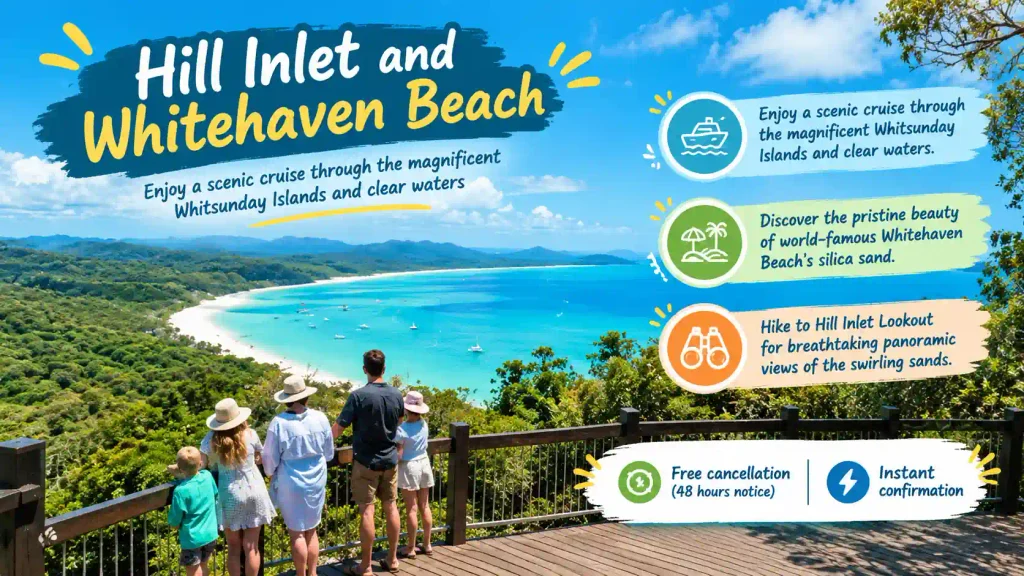
Dreaming of sunny skies and warm seas? Save this for your Boracay getaway and start planning your beach days!
Hill Inlet Walk
Reaching the lookout involves a short but genuinely uphill walk starting from Tongue Bay, where tour boats and private charters typically anchor. The return distance runs close to 1.3 kilometres, and most walkers finish in around 40 minutes at a relaxed pace, including stops for photos. Loose gravel and a handful of steps make the grade moderate rather than easy, so flat sandals aren’t the best choice.
- Closed or sturdy sandals rather than flip-flops
- A refillable water bottle, since there’s no tap at the top
- Sun protection, as much of the track sits in open sun
- A charged phone or camera for the lookout views
Whitehaven Beach Snorkeling
Snorkeling directly off Whitehaven’s main sandy stretch tends to disappoint visitors expecting coral gardens, since the seabed here is mostly sand rather than reef. Most day tours solve this by adding a stop at a nearby fringing reef site, such as Border Island or the reef around Hook Island, where coral cover and fish life stay far more consistent.
The Great Barrier Reef Marine Park Authority asks snorkelers to avoid standing on or touching coral, wear reef-safe sunscreen, and keep a respectful distance from turtles and rays. Sticking to these guidelines protects fragile coral that can take decades to recover from a single careless kick.
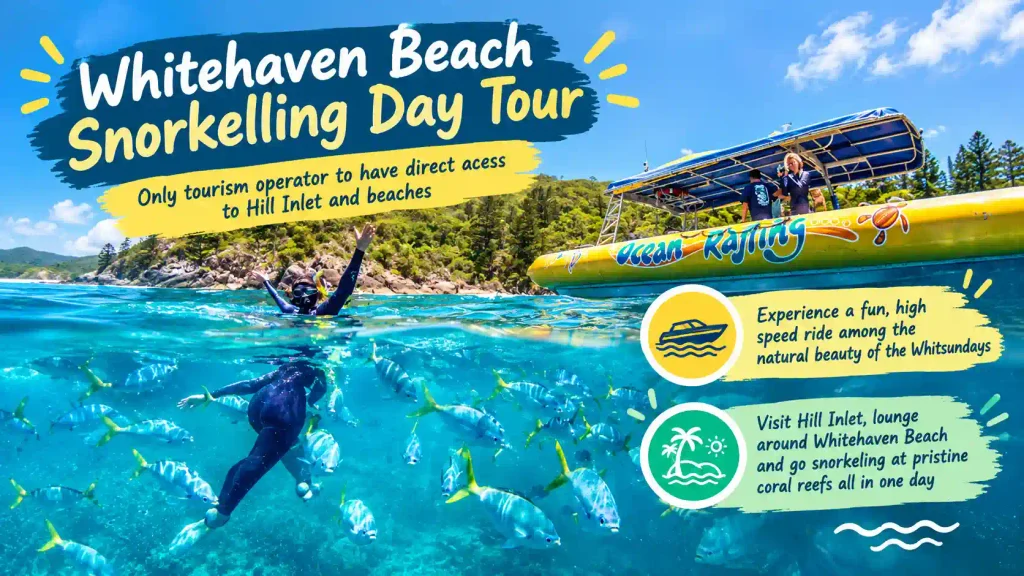
Ready for a day on the water? Snorkel vibrant reefs, explore Hill Inlet, and relax on Whitehaven Beach. Book your Whitsundays adventure and make a day of it.
Whitehaven Beach Photography
Photographers chasing the swirling sand patterns at Hill Inlet usually get the strongest colour contrast in the hour after sunrise, when the light sits low and the tide has dropped enough to reveal the sandbanks. Midday shots tend to wash out the turquoise tones that make the location famous, so timing matters more than gear.
- Hill Inlet Lookout’s upper platform, for the classic swirling-sand shot
- The waterline looking back toward the cliffs at high tide
- Tongue Bay’s Beach track, for a quieter, uncrowded angle
- From the air, on a scenic flight or helicopter transfer
Drone flights inside Whitsunday Islands National Park require prior approval, so checking current rules through Queensland’s national park permit system before packing a drone saves a wasted trip.
Whitehaven Beach Scenic Flights
Seeing Whitehaven Beach from above turns the postcard view into something closer to abstract art, with the white sand curling into Hill Inlet’s blue water in shapes that are hard to appreciate from ground level. Helicopter and seaplane operators run flights from Whitsunday Airport, Shute Harbour, and Hamilton Island, ranging from short scenic loops to packages that land directly on the sand.
Prices and flight lengths vary by operator, so comparing typical options before booking helps set expectations.
| Flight Type | Duration | Approx. Price (USD) |
| Scenic flyover | 30 min | From $280 |
| Reef and Whitehaven combo | 60 min | From $520 |
| Landing package with beach time | 2-2.5 hr | From $630 |
Prices above are approximate, converted from AUD at current exchange rates, and change by season and operator. Confirming current rates directly with the operator before booking avoids surprises.
Longer packages with a beach landing usually add ninety minutes to two hours on the sand, plus snacks or drinks with some operators. Booking a few days ahead helps, since flights depend on weather and only run when conditions allow a safe landing.
Whitehaven Beach Kayaking
Paddling a sea kayak along Whitehaven’s shoreline offers a slower, quieter way to take in the coastline compared with a tour boat’s engine noise. The Whitsunday Ngaro Sea Trail links several islands through a combination of boating, paddling, and walking legs, and the stretch around Whitehaven and Tongue Bay fits naturally into that route.
- Check tide and wind forecasts before setting out, since conditions shift quickly around the islands.
- Carry enough drinking water, as none of the islands have freshwater sources.
- Paddle with at least one other person or as part of an organised tour.
Whitehaven Beach Paddleboarding
Stand-up paddleboarding suits Whitehaven’s sheltered central bay best, particularly in the calmer morning hours before wind picks up. No permanent rental shop operates on the beach itself, since the island has no fixed commercial infrastructure, so most paddleboards arrive with a private charter, sailing tour, or overnight camping trip.
- Morning sessions, before onshore breeze builds
- The calm water between the camping area and the central beach
- A leash and sun-safe clothing, since shade is limited on the water
Whitehaven Beach Camping
Camping at Whitehaven Beach means an actual night under the stars on one of the world’s most photographed stretches of sand, a step up from a rushed day-trip visit. The campground sits at the southern end of the beach, tucked into the bush just behind the dunes, with walk-in sites and a separate area for larger groups.
A camping permit from Queensland Parks and Wildlife Service is required before arrival, currently priced at roughly $7 AUD (about $5 USD) per person per night, though fees adjust yearly and should be confirmed on the current QPWS website. Facilities stay basic: drop toilets, picnic tables, and a couple of sheltered areas, with no power, shop, or fresh water on site.
- At least 5 litres of drinking water per person, per day
- A gas or fuel stove, since open fires aren’t permitted
- Insect repellent and reef-safe sunscreen
- A dry bag for phones, permits, and other essentials
- Vinegar, for treating minor marine stings
How Much Does It Cost to Camp at Whitehaven Beach?
Camping at Whitehaven Beach requires a Queensland Parks and Wildlife Service permit priced at approximately $7 AUD per person per night, roughly $5 USD at current exchange rates. Most campers also pay separately for a boat transfer from Airlie Beach or Shute Harbour, since the campground is boat-access only and permit fees don’t cover transport.
Whitehaven Beach Activities for Every Traveller
Whitehaven Beach rewards visitors who match the activity to the conditions rather than showing up and hoping for the best. Swimming works best in the calm central zone with a stinger suit during warmer months, while the full beach walk and Hill Inlet Lookout track reward those willing to put in a bit of effort for the view.
Snorkeling shines brightest on a nearby reef stop rather than right off the sand, and photography and scenic flights both depend heavily on timing and light. Kayaking and paddleboarding suit the calmer morning hours, and camping turns a rushed few hours into a proper overnight stay. Together, these things to do at Whitehaven Beach cover most travel styles, budgets, and energy levels.
Frequently Asked Questions About Whitehaven Beach
What are the best things to do at Whitehaven Beach?
The best things to do at Whitehaven Beach include swimming in the central sandy zone, walking or paddling toward Hill Inlet Lookout, and joining a scenic flight for an aerial view. Visitors staying overnight can add camping and early-morning paddleboarding to the list.
Can you swim at Whitehaven Beach?
Yes, swimming is allowed and popular at Whitehaven Beach, especially in the sandy central section. There are no lifeguards, so most visitors swim under the supervision of a tour operator or skipper, and a stinger suit is recommended from October to May.
How do you get to Hill Inlet Lookout?
Hill Inlet Lookout is reached by boat to Tongue Bay, followed by a walking track of around 1.3 kilometres return. The walk takes roughly 40 minutes and passes three separate viewing platforms.
Is Whitehaven Beach good for snorkeling?
Whitehaven Beach itself has a mostly sandy seabed, so snorkeling is better a short boat ride away at nearby reef sites. Most day tours include one of these stops alongside beach time.
Can you camp overnight at Whitehaven Beach?
Yes, camping is permitted at the designated Whitehaven Beach campground on the southern end of the beach, with a Queensland Parks and Wildlife Service permit required in advance. Facilities are basic, and visitors need to bring their own water and cooking equipment.
How much does a scenic flight over Whitehaven Beach cost?
Scenic flights over Whitehaven Beach typically start around $280 USD for a 30-minute flyover, with landing packages that include beach time costing $600 USD or more. Prices vary by operator, season, and flight length.
What is the best time of year to visit Whitehaven Beach?
Dry season months from roughly May to September bring calmer weather and sit outside the main marine stinger season, making them a comfortable time to visit. Whitehaven stays accessible year-round, though wet season months bring a higher chance of rain and rougher boat crossings.




One Response