

Whitehaven Beach Swimming is best from September to May, when the water is warm, and the sea is usually calm along the seven-kilometre stretch of white sand. The shallow water near the shore makes it easy for most people to walk in and swim safely. From November to May, however, marine stingers may be present, so wear a full-body stinger suit and follow the local safety signs.
Whitehaven Beach Swimming also depends on the tide: low tide leaves wide, shallow pools, while high tide provides deeper water for a proper swim. There are no lifeguards on the beach, so always swim where you can stand, stay close to your tour group, and ask your boat crew where the safest spots are.
Can You Swim at Whitehaven Beach?
Swimming at Whitehaven Beach is allowed and genuinely popular, with the shallow lagoon areas near Hill Inlet drawing families and first-time snorkellers. The seabed stays soft and sandy rather than rocky, so wading out feels comfortable on bare feet. Most tour operators build in dedicated swim stops along the seven-kilometre stretch of coastline.
Conditions do shift depending on which end of the beach a visitor reaches. The southern end near the main tour drop-off tends to have gentler waves, while the northern end near Hill Inlet offers calmer, almost lake-like water. Tour crews usually pick whichever end suits the day’s wind and tide.
A few practical points worth knowing before entering the water:
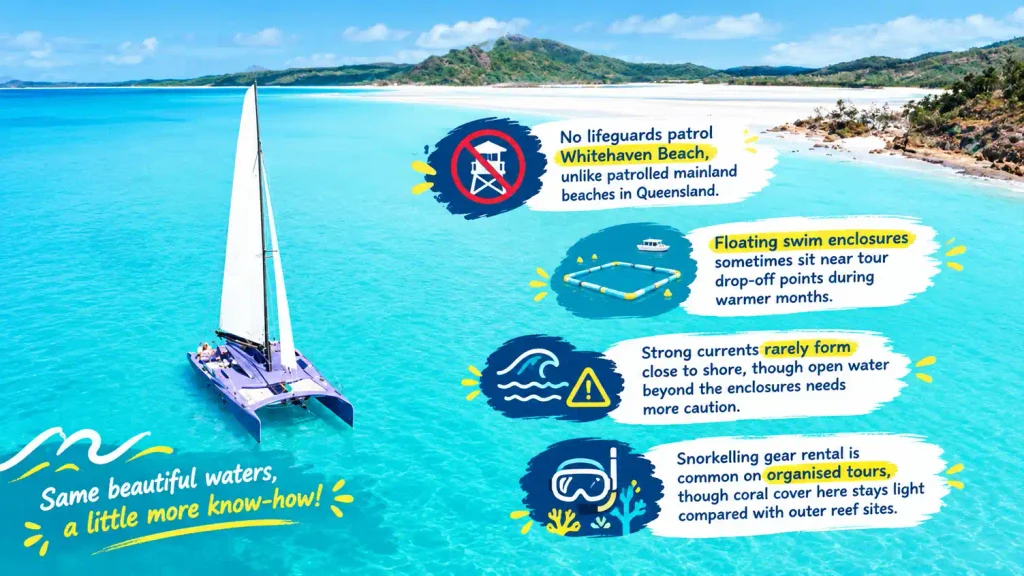
- No lifeguards patrol Whitehaven Beach, unlike patrolled mainland beaches in Queensland.
- Floating swim enclosures sometimes sit near tour drop-off points during warmer months.
- Strong currents rarely form close to shore, though open water beyond the enclosures needs more caution.
- Snorkelling gear rental is common on organised tours, though coral cover here stays light compared with outer reef sites.
Is Whitehaven Beach Safe to Swim?
Safety at Whitehaven Beach depends heavily on timing and basic precautions, rather than the beach itself being risky. Maritime Safety Queensland publishes updated marine safety advice for the Whitsunday region, and checking current conditions before any swim remains a sensible habit.
Sharks do live in Whitsunday waters, though larger species such as tiger sharks and hammerheads generally stay in deeper outer reef channels away from the shallow lagoon. Encounters at Whitehaven Beach itself are rare, and most reported sightings come from deeper anchorage spots rather than the swimming areas.
The bigger safety factor involves marine stingers rather than sharks. Box jellyfish and Irukandji jellyfish inhabit Whitsunday waters during warmer months, and stings from these species can range from painful to medically serious. Wearing a stinger suit during the risk period removes most of this danger, and tour operators supply them as standard kit.
A short comparison of the main safety considerations helps put things in perspective:
| Safety Factor | Risk Level | Main Precaution |
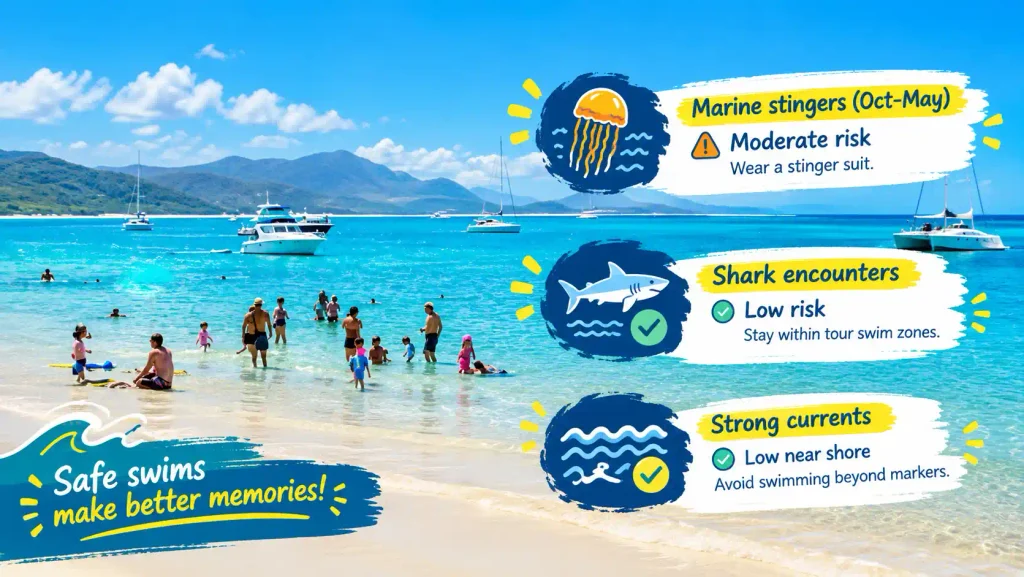
| Marine stingers (Oct-May) | Moderate | Wear a stinger suit |
| Shark encounters | Low | Stay within tour swim zones |
| Strong currents | Low near shore | Avoid swimming beyond markers |
| Sun exposure | Moderate to high | Reef-safe sunscreen and shade breaks |
Is It Safe To Swim At Whitehaven Beach Right Now
The honest answer changes by season. Swimming stays generally safe year-round with sensible precautions, though stinger suits become close to essential between late October and May. Outside that window, the main risks drop to sun exposure and normal open-water awareness.
Whitehaven Beach Water Temperature
Water temperature around Whitehaven Beach sits warm for most of the year, which explains why swimming feels pleasant even in the cooler months. Average sea temperatures hover near 26°C through the tropical wet season, dropping into the low-to-mid twenties during the Southern Hemisphere winter between June and August.
Winter swims still feel comfortable for most visitors, particularly since the surrounding air temperature rarely drops sharply in this part of Queensland. A light rash vest suits winter conditions for anyone sensitive to cooler water, though a wetsuit generally isn’t necessary.
Monthly averages give a clearer picture of what to expect:
| Month | Approx. Water Temp | General Feel |
| December-March | 27-29°C | Warm, tropical |
| April-May | 25-27°C | Warm, comfortable |
| June-August | 22-24°C | Mild, refreshing |
| September-November | 24-26°C | Warm, pleasant |
These figures represent general seasonal averages rather than exact daily readings, and conditions can shift with weather systems. Checking a current marine forecast before travel gives the most accurate picture for specific dates.
Whitehaven Beach Swimming Conditions
Conditions at Whitehaven Beach change noticeably depending on tide, wind direction, and which section of the beach a visitor reaches. Low tide exposes wide stretches of sand near Hill Inlet, creating the famous swirling pattern of white sand and turquoise water photographed from the lookout above.
Wind plays a bigger role than most visitors expect. Trade winds from the southeast can make the exposed southern end choppier on certain days, while the more sheltered northern coves stay calmer. Tour operators generally know which spot suits the day’s weather and adjust the itinerary accordingly.
Water clarity stays excellent almost year-round thanks to the fine silica sand, which doesn’t cloud the water the way regular sand does elsewhere. Visibility for snorkelling near the shallows typically reaches several metres on calm days.
Quick facts about typical swimming conditions:
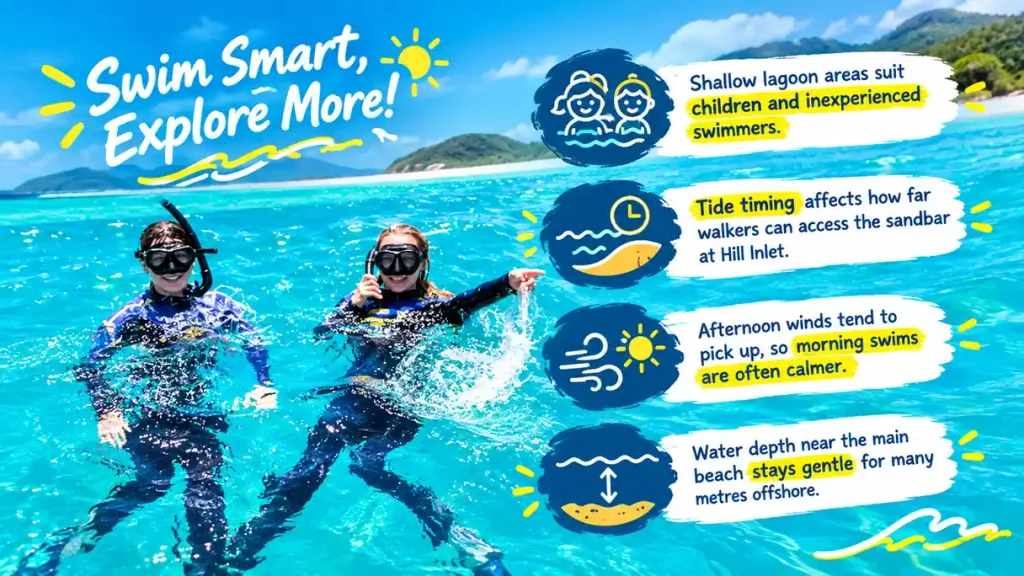
- Shallow lagoon areas suit children and inexperienced swimmers.
- Tide timing affects how far walkers can access the sandbar at Hill Inlet.
- Afternoon winds tend to pick up, so morning swims are often calmer.
- Water depth near the main beach stays gentle for many metres offshore.
Whitehaven Beach Jellyfish
Jellyfish present the most talked-about swimming concern at Whitehaven Beach, and understanding which species matter helps put the risk in context. Harmless jellyfish such as moon jellies drift through Whitsunday waters year-round and pose no real threat to swimmers.
The species that actually matter are box jellyfish and Irukandji jellyfish, both found in tropical Queensland waters during the warmer months. Box jellyfish stings can cause severe pain and, in rare serious cases, require emergency treatment. Irukandji stings are smaller and harder to spot, with symptoms sometimes appearing later.
Queensland Health provides official guidance on marine stinger first aid, including the standard advice to pour vinegar over a suspected box jellyfish sting before seeking medical help. Vinegar doesn’t work the same way for Irukandji stings, which is another reason professional medical advice matters after any serious sting.
A brief look at common jellyfish encountered in the area:
| Jellyfish Type | Season | Sting Severity |
| Moon jellyfish | Year-round | Harmless or mild |
| Box jellyfish | Oct-May | Severe, seek medical care |
| Irukandji | Nov-May | Severe, seek medical care |
Whitehaven Beach Stinger Season
Stinger season across the Whitsundays typically runs from late October through to May, though exact dates shift slightly year to year based on water temperature. Warmer sea temperatures create ideal breeding conditions for both box jellyfish and Irukandji jellyfish during this stretch.
December through March tends to carry the highest risk period within stinger season, coinciding with the warmest water and the wet season across tropical Queensland. Visitors travelling during these peak months should treat stinger suits as a standard part of packing, not an optional extra.
Winter months between June and August fall completely outside stinger season, making this period genuinely stinger-free for swimming at Whitehaven Beach. Many travellers who dislike wearing a suit choose this window specifically for that reason, alongside the bonus of whale watching season overlapping these months.
What Months Are Stinger Season At Whitehaven Beach
Stinger season runs from late October to May, with December to March carrying the highest risk. June through August sits outside the season entirely, offering stinger-free swimming conditions.
Whitehaven Beach Stinger Suit
A stinger suit resembles a lightweight wetsuit, though it’s designed for sun and jellyfish protection rather than warmth. The thin fabric covers most of the body, including arms and legs, while remaining breathable enough for tropical conditions.
Most day tours and overnight sailing trips to Whitehaven Beach include stinger suits in the ticket price during risk season, so packing one separately usually isn’t necessary for organised tours. Independent travellers or boat owners can rent suits from outlets in Airlie Beach before heading out.
Fit matters more than most visitors expect. A properly sized suit should sit snug at the wrists, ankles, and neck, since gaps at these points reduce the protection against small jellyfish. Rental staff at Airlie Beach outlets typically help with sizing on the spot.
Reasons a stinger suit earns its place in the packing list:
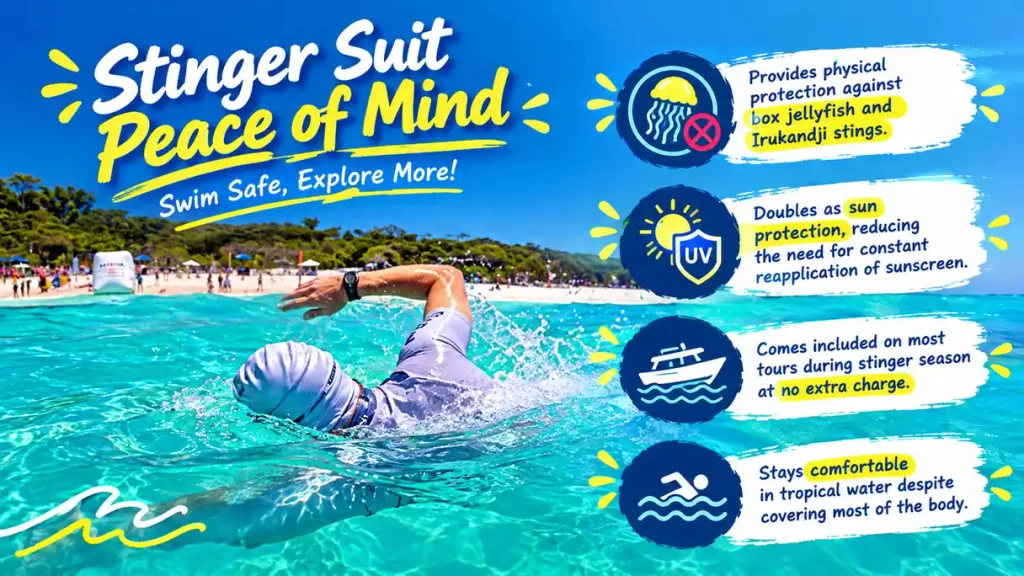
- Provides physical protection against box jellyfish and Irukandji stings.
- Doubles as sun protection, reducing the need for constant reapplication of sunscreen.
- Comes included on most tours during stinger season at no extra charge.
- Stays comfortable in tropical water despite covering most of the body.
Best Time to Swim at Whitehaven Beach
Choosing the best time to visit depends on individual priorities, whether that’s avoiding jellyfish, catching whale season, or dodging crowds. June through October offers stinger-free water alongside the added appeal of whale watching in the surrounding channels.
Shoulder months such as April, May, September, and November bring fewer crowds and generally good weather, with a lower stinger risk than the December to March peak. These months suit travellers wanting decent weather without the heaviest tourist numbers.
Peak wet season, running December through March, brings the warmest water and lush green scenery across the islands, though stinger suits become essential and afternoon storms are more common. Travellers comfortable wearing a suit still enjoy swimming through this stretch without major issues.
A simple seasonal comparison:
| Season | Months | Best For |
| Dry, cooler | June-August | Stinger-free swimming, whale watching |
| Shoulder | Apr-May, Sep-Nov | Fewer crowds, mild stinger risk |
| Wet, warm | December-March | Warm water, lush scenery, suit essential |
Whitehaven Beach Swimming Tips
Practical preparation makes the difference between an average visit and a genuinely enjoyable swim at Whitehaven Beach. Checking current conditions and stinger advice before departure remains the single most useful habit for any visitor.
Tourism and Events Queensland encourages travellers to book through licensed tour operators, since these companies carry current safety equipment, local knowledge, and updated marine advice for the day.
Helpful tips for a smoother swimming experience:
- Book through a licensed operator for access to stinger suits and safety briefings.
- Apply reef-safe sunscreen before arrival, since regular sunscreen can harm the surrounding marine park.
- Swim within any marked enclosures where they’re provided, especially without lifeguards present.
- Carry a reusable water bottle, since Whitehaven Beach has no shops or drinking water on the sand.
- Time visits around low tide for the best Hill Inlet sandbar views alongside a swim.
- Pack a lightweight rash vest even outside stinger season for extra sun coverage.
Simple Steps for a Great Whitehaven Beach Swim
Whitehaven Beach Swimming rewards a little planning more than it demands caution. Swimming itself stays open and welcoming most of the year; safety mainly comes down to stinger suits and sensible timing, and water temperature rarely drops uncomfortably low. Conditions shift with tide and wind, jellyfish risk concentrates in the warmer months, and stinger season runs roughly October through May.
A proper stinger suit solves most of that risk, while the cooler months between June and August offer a stinger-free stretch that pairs nicely with whale season. Pack sensibly and book through a licensed operator for a smooth, enjoyable swim at one of Australia’s most photographed beaches.
Whitehaven Beach Swimming FAQs
Can you swim at Whitehaven Beach all year round?
Yes, swimming is possible year-round, though stinger suits are strongly recommended between late October and May.
Is Whitehaven Beach safe for children to swim?
The shallow, calm lagoon areas suit children well, though no lifeguards patrol the beach, so adult supervision matters.
Do I need to bring my own stinger suit?
Most organised tours provide stinger suits during risk season, so bringing one isn’t usually necessary unless travelling independently.
What is the water temperature at Whitehaven Beach in winter?
Winter water temperatures generally sit between 22°C and 24°C, still comfortable for most swimmers.
When is the safest time to swim without a stinger suit?
June through August falls outside stinger season, offering the lowest jellyfish risk for swimming without a suit.







One Response