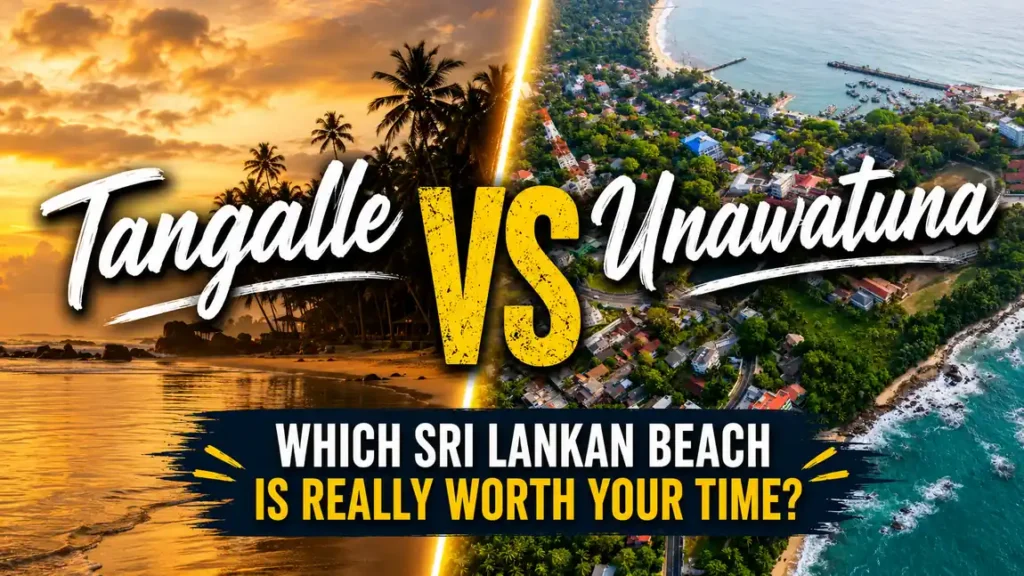
If you’ve spent more than five minutes researching Sri Lanka’s southern coast, the debate around tangalle vs unawatuna beaches has almost certainly come up. And honestly, it should. These two spots sit on the same coastline but feel like completely different countries. One is wild, windswept, and delightfully quiet. The other is social, walkable, and buzzing with backpacker energy. Picking the wrong one for your travel style isn’t a disaster, but it’s the kind of thing you’ll think about on your flight home.
I’ve spent time at both beaches, talked to local guesthouse owners, and dug into traveler reviews going back several years. The tangalle vs unawatuna beaches question isn’t really about which is better in general. It’s about which one fits you. This guide breaks that down properly.
Tangalle and Unawatuna at a Glance
Tangalle sits roughly 190 kilometers south of Colombo along the A2 coastal highway in the Southern Province. It’s a working fishing town first and a tourist destination second. That order matters. Unawatuna, just 6 kilometers south of Galle and about 125 kilometers from Colombo, has been on the tourist map far longer and has developed accordingly.
According to the Sri Lanka Tourism Development Authority (SLTDA), Unawatuna consistently ranks among the country’s top five most-visited beach destinations. Tangalle, by comparison, still draws a smaller but deeply loyal crowd, mostly travelers looking to escape exactly the kind of scene Unawatuna has become.
| Detail | Tangalle | Unawatuna |
| Distance from Colombo | ~190 km | ~125 km |
| Nearest city | Hambantota (30 km) | Galle (6 km) |
| Vibe | Quiet, local, raw | Lively, social, developed |
| Tourist infrastructure | Basic to mid-range | Developed a wide range |
| Main draw | Emptiness, wildlife, peace | Reef snorkeling, nightlife, food |
The Beach Vibe: Quiet Escape or Social Beach Town?
Tangalle’s beaches, there are several separated by rocky headlands, are the kind you’d see in a travel magazine spread titled “Unspoiled Sri Lanka.” Medaketiya Beach is the main strip, and on a weekday morning, you might share it with a handful of other visitors and a fishing boat or two. The quiet is real.
Unawatuna is different. It’s a curved bay with a proper beach road lined with restaurants, dive shops, tour operators, and guesthouses stacked one behind the other. It’s genuinely fun if that’s what you want. Locals in Galle describe it as the “most international” beach town in the south, and that’s both a compliment and a caveat, depending on who you ask.
Which Beach Has Better Sand and Scenery?
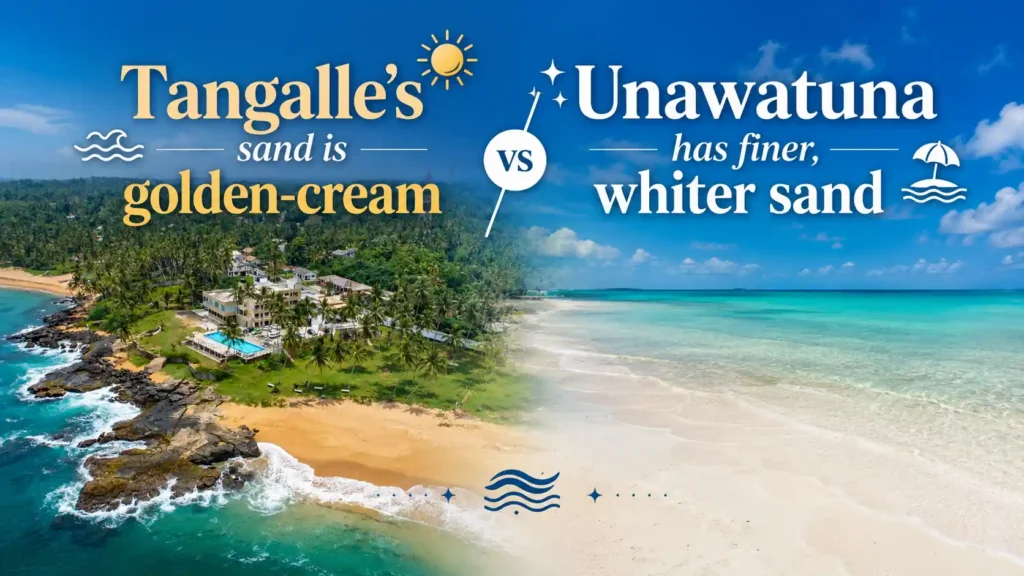
Tangalle’s sand is golden-cream and coarser than Unawatuna’s, stretching across multiple bays. The surrounding landscape includes rocky outcrops, lagoon backwaters, and thick coastal vegetation. It’s scenically varied in a way that photographs differently every hour.
Unawatuna has finer, whiter sand and a sheltered bay shape that gives it a postcard-perfect look. The presence of coral close to shore adds underwater color, and the bay is lined with coconut palms in a way that feels almost deliberately picturesque. For sheer beach aesthetics from the sand itself, Unawatuna probably has the slight edge. For wildness and raw scenery, Tangalle wins.
Is Tangalle or Unawatuna safer for swimming?
Unawatuna is generally safer for swimming. Its sheltered bay reduces wave intensity, and the reef provides some natural protection. Tangalle can have strong currents, especially outside the sheltered Medaketiya end, and conditions vary significantly by season.
Swimming Conditions: Where Is It Safer to Get in the Water?
The Sri Lanka Surf and Lifesaving Association notes that Unawatuna’s natural bay shape makes it one of the calmer swimming spots on the south coast. Tangalle’s open-water sections carry a higher current risk, which experienced swimmers handle fine, but beginners should approach carefully.
Both beaches are calmer from November through April during the southwest monsoon’s off-season. May through October brings rougher conditions to the west-facing coast, which affects Unawatuna more significantly than Tangalle’s southerly exposure.
The Crowd Factor: Peaceful Shores vs Lively Atmosphere
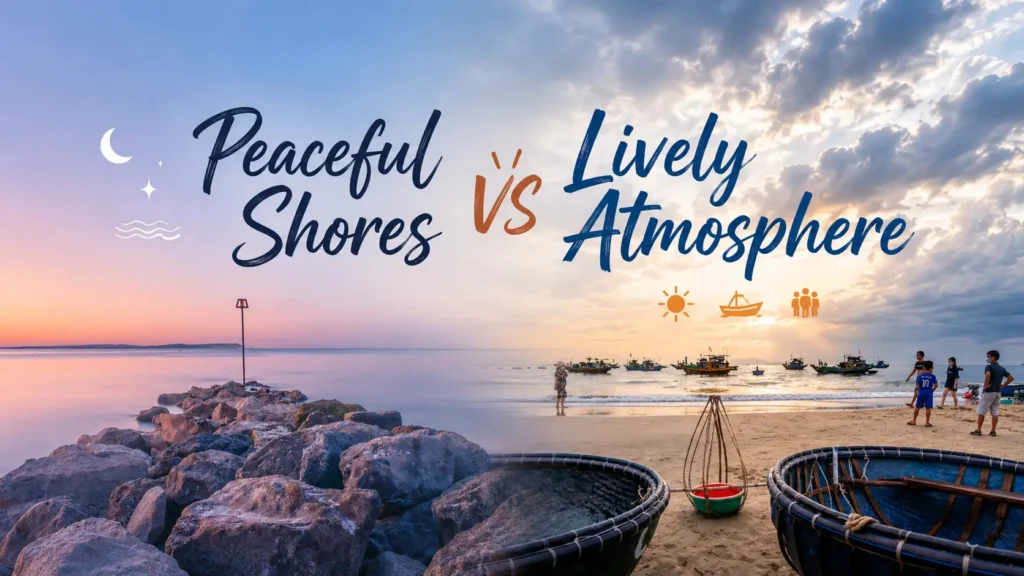
Let’s be direct. If you want space, go to Tangalle. Peak season at Unawatuna in December and January brings real crowds to that bay, beach chairs set up end to end, vendors walking the shoreline, and restaurants competing loudly for your attention. It’s not unbearable, but it’s definitely not solitude.
Tangalle, even during peak season, feels comparatively empty. A family running a guesthouse near Medaketiya told me they could count their December guests on two hands, and that was a good month for them. The infrastructure simply hasn’t scaled to attract mass tourism yet.
Quick Answer: What are the top things to do in Tangalle?
Top activities in Tangalle include turtle watching at Rekawa Beach (one of Sri Lanka’s five main nesting beaches), visiting the Mulkirigala Rock Temple (a 2nd-century BC Buddhist cave complex), exploring the Tangalle lagoon by kayak, and taking day trips to Bundala National Park, a Ramsar-designated wetland with over 150 bird species.
Best Things to Do Around Tangalle
Rekawa Beach, about 12 kilometers east of Tangalle town, is managed by the Turtle Conservation Project Sri Lanka and offers legally supervised nesting watching most nights between May and September. This is not a tourist show, it’s a proper conservation program, and the experience is genuinely moving.
Bundala National Park, designated a UNESCO Biosphere Reserve in 2005, sits just 22 kilometers from Tangalle and is one of the country’s best birding destinations. Expect flamingos, painted storks, and, if you’re very lucky, sloth bears near the waterhole.
Quick Answer: What are the best activities in Unawatuna?
Unawatuna’s top experiences include snorkeling around the coral reef just offshore, visiting the Japanese Peace Pagoda on the hill above the bay, taking a tuk-tuk to Galle Fort (a UNESCO World Heritage Site 6 km away), and diving with established operators like Unawatuna Diving Centre, which has been operating since 1997.
Not sure what to do in Tangalle? Read more in Things to Do in Tangalle That Feel More Special Than Famous Beach Towns for a complete guide to local experiences.
Best Things to Do Around Unawatuna
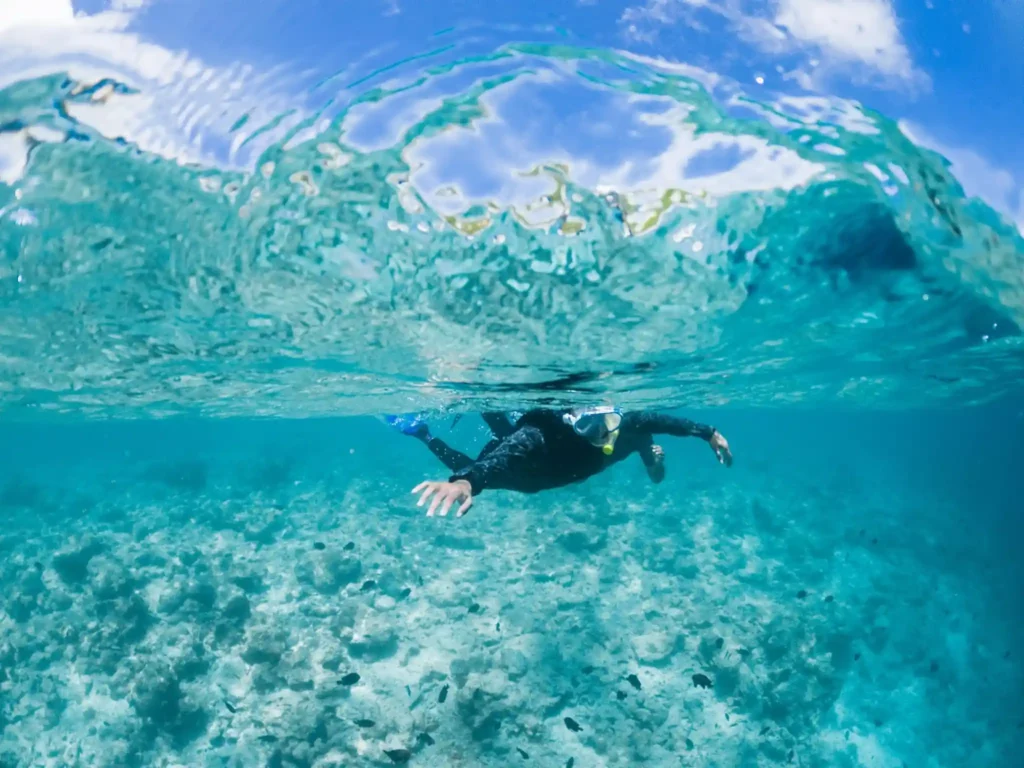
The reef at Unawatuna is accessible without a boat; you can swim out from the beach in 10 to 15 minutes. Marine biologists working with the Coastal Conservation Department of Sri Lanka have documented over 80 fish species around this reef, though coral bleaching events in recent years have reduced coverage in some sections.
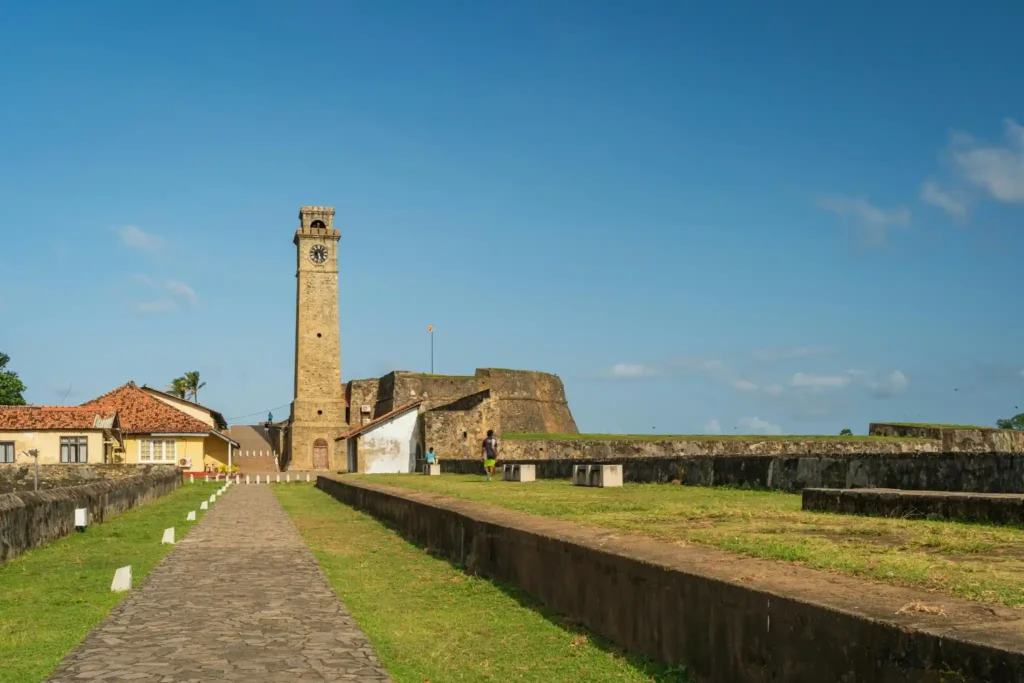
Galle Fort is genuinely one of the best day trips from any beach in Sri Lanka. The Dutch-colonial fortified city, built originally by the Portuguese in the 1500s and expanded by the Dutch East India Company in 1663, is a UNESCO World Heritage Site that rewards two to three hours of wandering easily.
Food, Cafes, and Beachfront Dining Compared
Unawatuna has the stronger food scene, full stop. The beach road has everything from proper Italian restaurants to Sri Lankan rice and curry spots, fresh seafood shacks, and smoothie cafes. Prices range from 300 LKR for a local kottu to 3,500 LKR for a grilled seafood platter at a beachfront restaurant.
Tangalle’s food scene is smaller but surprisingly good. The town itself has excellent local eateries serving fresh fish caught that morning. Several guesthouses along Medaketiya Beach cook outstanding home-style Sri Lankan meals for guests. It’s not as varied as Unawatuna, but the quality of the fresh catch is hard to beat anywhere in the country.
| Dining Aspect | Tangalle | Unawatuna |
| Variety of cuisine | Limited (local focus) | High (local + international) |
| Average meal cost (local) | 250–500 LKR | 300–700 LKR |
| Average meal cost (tourist restaurant) | 700–1,500 LKR | 1,000–3,500 LKR |
| Beachfront dining | A few guesthouses | Multiple dedicated restaurants |
| Fresh seafood quality | Excellent (fishing town) | Good |
Where to Stay: Budget, Mid-Range, and Luxury Options
Accommodation in both places has expanded significantly over the past decade, but they sit in different price brackets overall.
In Tangalle, a clean guesthouse near Medaketiya Beach runs roughly $12 to $25 USD per night for a double room with a fan. Mid-range options, some with pools overlooking the bay, sit between $40 and $90. For luxury, a handful of boutique properties like Amanwella (set on its own private beach outside town) charge $500+ per night, and they’re worth it if that’s your category.
Unawatuna has more options across all tiers. Budget dorms start at $8 to $12 USD. Mid-range guesthouses cluster between $30 and $80. Boutique hotels with rooftop pools and design finishes run $100 to $200. The sheer density of accommodation means you can negotiate more in the low season.
Quick Answer: Which beach has better nightlife: Tangalle or Unawatuna?
Unawatuna has a genuine nightlife scene with multiple beach bars, live music on weekends, and rooftop spots that stay open until midnight or later. Tangalle is almost entirely quiet after 9 PM. If nightlife matters to you, Unawatuna is the clear choice.
Nightlife: Is There Anything to Do After Sunset?
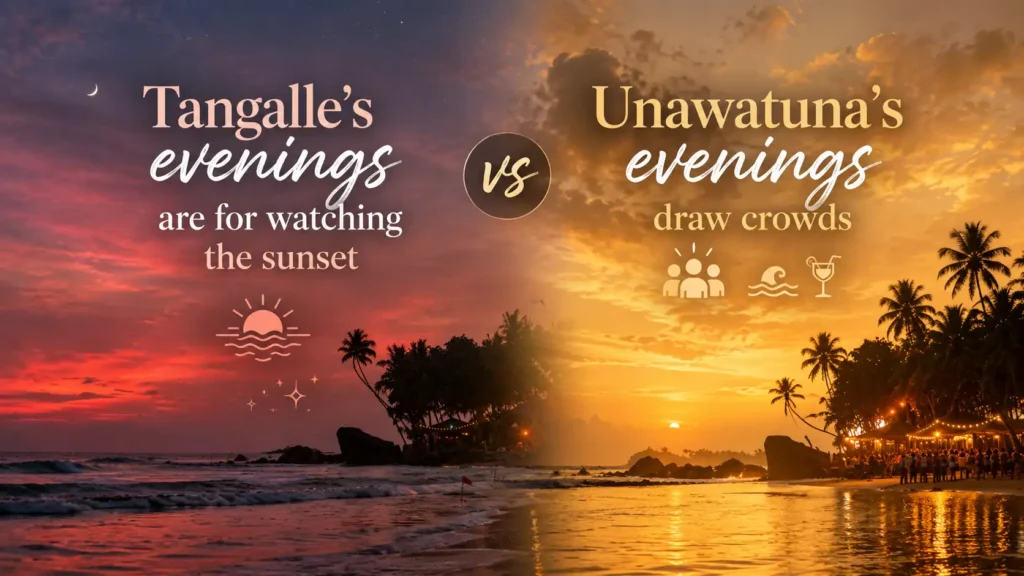
Tangalle’s evenings are for watching the sunset from your guesthouse porch and falling asleep to the sound of the ocean. That’s genuinely its appeal after dark. There’s a handful of local bars in the town center, but nothing resembling a party scene.
Unawatuna’s Kingfisher Restaurant and Bedspace Kitchen are among the spots that regularly draw evening crowds. The bar strip picks up after 8 PM and stays lively on weekends through peak season. It’s not Koh Samui, but it’s a proper beach-town night out.
Which Beach Is Better for Families?
Unawatuna edges ahead here, primarily because of its calm bay, developed amenities, and easy access to Galle for downtime or rainy-day activities. The sheltered water is safe for children, the beach path is walkable with small kids, and there are enough restaurants and cafes to keep different family members happy.
Tangalle works for families with older children who enjoy nature-focused travel. The turtle watching at Rekawa is a genuinely unforgettable experience for kids old enough to appreciate it (roughly 8 and above, per the Turtle Conservation Project’s own guidelines). But the thinner infrastructure and stronger currents at some beach sections require more parental planning.
The Better Choice for Couples and Honeymooners
Both beaches work well for couples, but in different ways. Tangalle wins on romance if your idea of a perfect honeymoon involves a private-feeling beach, candlelit dinners at your guesthouse, and no one around. The secluded feel is genuinely hard to replicate elsewhere in Sri Lanka at this price point.
Unawatuna is better for couples who want a mix of beach days, evening meals at nice restaurants, a shared snorkeling trip, and maybe a day trip to Galle Fort together. It’s social romance rather than secluded romance.
Which beach is better for snorkeling, Tangalle or Unawatuna?
Unawatuna is significantly better for snorkeling. Its accessible reef, calm bay conditions, and the presence of established dive operators make it the clear choice. Tangalle has limited snorkeling opportunities, though dive trips to offshore sites can be arranged through operators based in Dikwella, about 20 km away.
Surfing, Snorkeling, and Other Water Activities
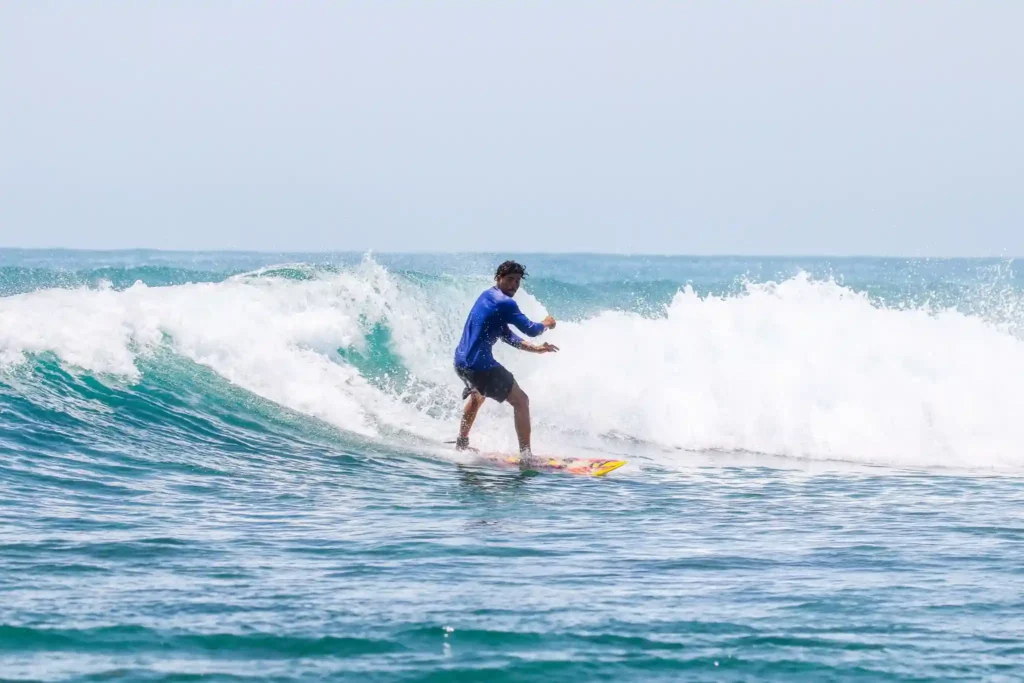
For surfing, neither beach is a standout destination. The closest quality surf breaks to Tangalle are at Midigama (25 km west), rated by the Sri Lanka Surfing Association as one of the country’s top beginner-friendly reef breaks. Near Unawatuna, Weligama Bay (15 km east) is Sri Lanka’s most famous learn-to-surf destination with a gentle wave ideal for first-timers.
| Activity | Tangalle | Unawatuna |
| Snorkeling | Limited | Excellent (reef accessible from beach) |
| Scuba diving | Via Dikwella operators | On-site operators (since 1997) |
| Surfing | Not ideal (nearby at Midigama) | Not ideal (nearby at Weligama) |
| Kayaking | Lagoon kayaking available | Sea kayaking tours available |
| Whale watching | Mirissa (35 km away) | Mirissa (25 km away) |
Getting There and Getting Around
From Colombo’s Fort Railway Station, the coastal train to Matara (the end of the southern rail line) is one of Sri Lanka’s most scenic journeys. From Matara, Tangalle is about 35 kilometers further by bus or tuk-tuk. The full journey takes roughly 3.5 to 4.5 hours, depending on the train.
Unawatuna is more accessible. The nearest train station is Unawatuna Station (opened 2019 as part of the Colombo-Matara line extension), or you can disembark at Galle and take a tuk-tuk for 6 kilometers. Journey time from Colombo is around 2.5 to 3.5 hours.
Once at either beach, tuk-tuks are the standard local transport. A ride within Tangalle or Unawatuna typically costs 150 to 300 LKR. Renting a scooter for the day runs about 1,200 to 1,800 LKR from most guesthouses.
Costs Compared: Is Tangalle or Unawatuna More Affordable?
Quick Answer: Is Tangalle cheaper than Unawatuna?
Yes, Tangalle is generally cheaper than Unawatuna across accommodation, food, and activities. A daily budget of $25 to $35 USD is comfortable in Tangalle, whereas Unawatuna typically runs $35 to $55 USD per day for a similar level of comfort and similar activities.
| Budget Category | Tangalle (USD/day) | Unawatuna (USD/day) |
| Budget traveler | $20–30 | $30–45 |
| Mid-range traveler | $45–80 | $60–110 |
| Luxury traveler | $150–500+ | $120–250 |
| Average meal cost | $2–7 | $3–12 |
| Tuk-tuk ride | $0.50–1.50 | $0.80–2 |
The Best Time to Visit Both Beaches
Sri Lanka’s southern coast is governed by two monsoon cycles. The southwest monsoon runs from May through September, bringing rain and rough seas to the west and south. The northeast monsoon affects the east coast from October through January.
For both Tangalle and Unawatuna, the ideal window is November through April. December and January are peak season with the best weather, but also the most visitors. February and March are the sweet spot, with good weather, calmer crowds, and better availability at guesthouses.
The Sri Lanka Meteorological Department data shows that Tangalle receives an average annual rainfall of 1,300 mm, slightly less than Unawatuna’s coastal area, which sits closer to Galle’s wetter microclimate. In practical terms, Tangalle gets fractionally more dry-weather days per year.
Tangalle vs Unawatuna: Side-by-Side Comparison
Quick Answer: What is the main difference between Tangalle and Unawatuna?
Tangalle is a quiet, nature-focused fishing town with an ideal beach for solitude, wildlife, and budget travel. Unawatuna is a developed, social bay beach better suited for snorkeling, dining, nightlife, and travelers who want easy access to Galle. The core choice is between peace and convenience.
| Factor | Tangalle | Unawatuna | Winner |
| Beach scenery | Wild, varied, raw | Postcard-perfect bay | Tie |
| Swimming safety | Variable, some strong currents | Sheltered bay, generally calm | Unawatuna |
| Snorkeling | Limited | Excellent reef access | Unawatuna |
| Food scene | Local, fresh, limited variety | Wide variety, international options | Unawatuna |
| Nightlife | Essentially none | Lively beach bar scene | Unawatuna |
| Value for money | Very good | Good | Tangalle |
| Wildlife experiences | Excellent (turtles, birds, parks) | Limited | Tangalle |
| Family-friendly | Good (older kids) | Better (all ages) | Unawatuna |
| Couples/honeymoon | Secluded romance | Social romance | Tie |
| Crowds | Very low | Moderate to high in season | Tangalle |
So, Should You Choose Tangalle or Unawatuna?
Here’s the honest answer. Most first-time visitors to Sri Lanka’s south coast are better served by Unawatuna’s combination of beach, reef, food, and easy access to Galle. The infrastructure is there, the activities are excellent, and you won’t feel like you’ve made a logistical mistake.
But if you’ve been to Sri Lanka before, if you’re traveling slowly, if you value silence over convenience, or if the idea of a beach mostly to yourself sounds more appealing than a beach bar at sunset, Tangalle is genuinely special. The turtle nesting program at Rekawa, the lagoon, Bundala’s flamingos at dawn, and the raw, empty beach in the morning. There’s a version of Sri Lanka travel that Tangalle delivers, and Unawatuna simply doesn’t.
Some travelers, especially those spending two weeks or more on the south coast, do both. A few nights in Unawatuna for the Galle Fort experience and the reef, then a slower stretch in Tangalle for the wildlife and quiet. That combination is hard to fault.
The tangalle vs unawatuna beaches debate doesn’t have a universal winner. It has a winner for you, based on exactly the kind of trip you want to have.
Frequently Asked Questions
Q1: Can I do a day trip from Unawatuna to Tangalle?
Yes, it’s doable but long. The journey is roughly 65 kilometers each way and takes about 1.5 to 2 hours by bus or hired vehicle. Most travelers prefer to spend at least one night in Tangalle to properly experience its morning beach atmosphere and evening quiet.
Q2: Which beach is better for solo female travelers?
Both are generally considered safe. Unawatuna’s higher tourist footfall and well-lit beach road make it more comfortable for solo travelers arriving after dark. Tangalle is quieter but still reasonably safe with standard precautions. Several solo female travelers in recent reviews specifically praised Tangalle’s local guesthouse community as welcoming and secure.
Q3: Is the water at Unawatuna clean enough for snorkeling?
Water clarity varies by season and weather. Outside of monsoon months, visibility is generally 5 to 10 meters at the reef. The Coastal Resources Management Project has flagged some water quality concerns near the beachside restaurant area in peak season, so snorkeling slightly offshore tends to offer better conditions.
Q4: Are there ATMs in Tangalle?
Yes. Tangalle town has several ATMs from Commercial Bank, People’s Bank, and Sampath Bank. The town center is about a 5-minute tuk-tuk ride from most Medaketiya Beach guesthouses. Carry some cash regardless, as guesthouses and smaller restaurants often don’t accept cards.
Q5: How far is the whale watching at Mirissa from each beach?
Mirissa, Sri Lanka’s primary whale watching departure point and home to the highest density of blue whale sightings in the Indian Ocean according to the Department of Wildlife Conservation, is roughly 35 kilometers from Tangalle and 25 kilometers from Unawatuna. Season runs November through April, with peak activity in January and February.
Q6: Which beach is better for Instagram photography?
Honestly, both are excellent for different reasons. Unawatuna’s curved bay and clear water photograph beautifully in the afternoon. Tangalle’s dramatic sky, rocky outcrops, and fishing boat scenes work better for early morning golden hour photography. If you’re choosing purely for visuals, visit both.