
Nobody talks about the beaches that made them genuinely stop walking and just stare. The ones that don’t have a hashtag yet, a shuttle service, or a Grab pickup option. The hidden beaches of the Philippines, scattered across more than 7,600 islands, are a different category entirely, and finding even one of them feels like an accident most travelers never have. The best hidden beaches in the Philippines include Cresta de Gallo, Onuk Island, Jomalig Island, Palaui Island, and the quieter sections of Calaguas.
This isn’t a listicle of repackaged destinations you’ve already seen on travel reels. These are the hidden beaches that Philippine coastal travelers and island-hopping guides quietly mention to each other, places where the sand is still unmarked in the morning and the only sound is the tide. Some take effort to reach. Some require asking around. A few will probably look very different by the time you read this.
That said, here’s what’s real: the Philippines Tourism Promotions Board has documented over 400 distinct island groups, and the vast majority receive zero formal visitor infrastructure. That gap between what exists and what gets discovered is exactly where this guide lives.
Why the Philippines Still Has Beaches Most Travelers Never See
Part of it is logistics. The Philippines doesn’t have one airport hub that funnels everyone to the same coastlines. Getting to a truly remote island often means a budget flight to a secondary city, a tricycle to a fishing port, and a pump boat that may or may not leave on schedule. That friction is a filter. Most people don’t push through it.
Part of it is infrastructure bias. International media consistently covers El Nido, Coron, and Boracay, which are genuinely beautiful, but they represent a tiny fraction of what’s accessible with a little more planning. The Department of Tourism Philippines has actively promoted dive tourism in lesser-known provinces like Romblon, Eastern Samar, and Camiguin, but these regions still don’t receive proportional traveler attention.
The result is a country where you can still find a beach with no crowd, no entrance fee, and no smartphone signal. That’s increasingly rare anywhere in Southeast Asia.
What Makes a Beach Truly ‘Hidden’ in the Philippines?
A beach earns that label when it lacks formal tourist infrastructure, when arriving there requires local knowledge or multiple transport connections, and when the majority of visitors are either local fishermen or determined independent travelers. It doesn’t mean uncomfortable; it means undeveloped in the commercial sense. Facilities are minimal, the water is usually cleaner, and the experience is genuinely quieter.
Before You Go: Things to Know About Visiting Remote Beaches
A few honest, practical points that don’t make it into most travel blogs. First, many remote beaches in the Philippines have no mobile signal at all, or an intermittent signal at best. Globe Telecom generally outperforms Smart in rural coastal areas, but neither is reliable on small outer islands. Download offline maps via Maps.me or Google Maps before you leave town.
Second, bring more cash than you think you need. Rural municipalities run entirely on cash. ATMs can be 40 minutes away, and the nearest one might be empty. Local banks in towns like San Jose (Romblon) or Sta. Cruz (Marinduque) often runs low on cash near long weekends.
Third, respect local fishing communities. Many of the beaches on this list are working coastlines. The families who live near them aren’t there for your Instagram backdrop. Ask before walking through private land, bring your own trash out, and don’t camp on beaches without asking the barangay (local village unit).
Know these tips before visiting remote beaches: read more in the Anda Beach Bohol Travel Guide: Where the Crowds End and Real Bohol Begins.
Essential checklist for visiting remote Philippine beaches, before you leave your last town stop:
| What to Prepare | Why It Matters | Practical Tip |
| Cash (PHP) | No ATMs on remote islands | Bring 2x what you expect to spend |
| Offline maps | Zero signal on many islands | Download Maps.me + area maps ahead |
| Water supply | No stores on most hidden beaches | Minimum 3 L per person per day |
| Barangay contact | For camping or permission | Ask the municipal tourism office |
| Sun protection | Full exposure, no shade structures | SPF 50+, hat, rash guard |
Calaguas Island – The White Sand Escape Without the Crowds
Calaguas sits off the coast of Camarines Norte, roughly five to six hours by road and boat from Manila. For years, it was genuinely unknown outside of local backpacker circles. Now it’s better known, but it still draws a fraction of the visitors that Boracay or Palawan receive, partly because getting there is still an adventure.
The main beach, Mahabang Buhangin, is consistently listed by the Philippine Department of Environment and Natural Resources (DENR) monitoring teams as one of the cleanest shorelines in Luzon. The sand is fine, white, and long enough that you can walk its full length and still feel alone even on a busy weekend.
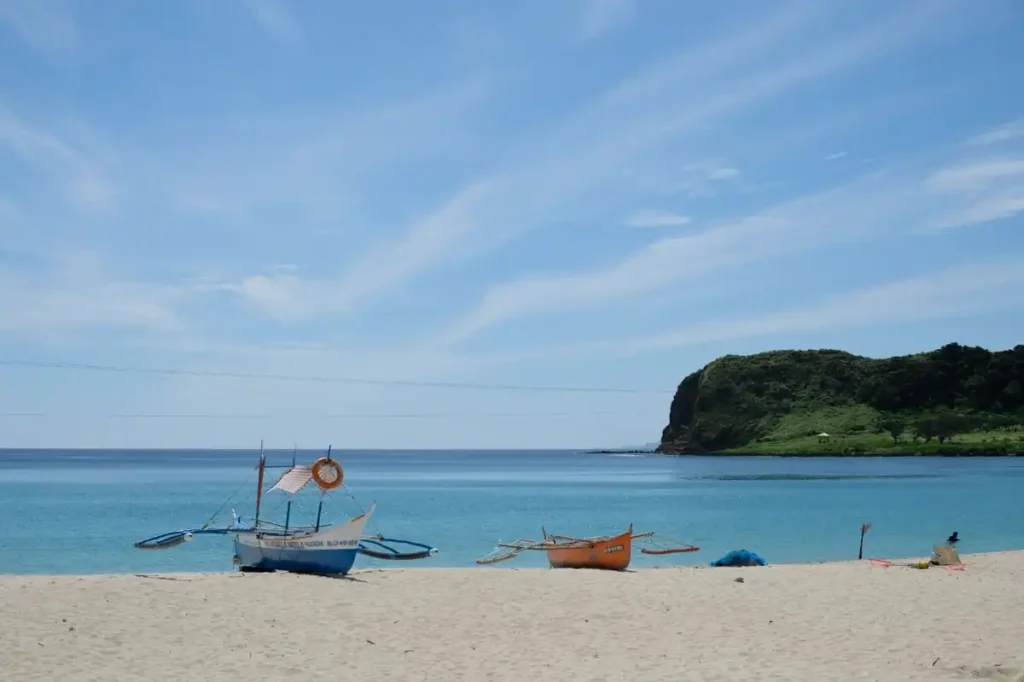
Go in March or April. The sea is calm, the weather is predictable, and the overnight camping experience, with a local guide from Vinzons municipality, is genuinely one of the best in the country.
Palaui Island, Where Untouched Nature Meets the Sea
In the far northeastern tip of Luzon, Palaui Island sits inside a protected seascape declared by the Department of Environment and Natural Resources as a UNESCO-recognized biosphere zone. The Cape Engano lighthouse, built during the Spanish colonial period, stands on a headland above beaches that see maybe a few dozen visitors on any given week.
The hike to Cape Engano takes two to three hours through dense forest with local Agta community guides from Santa Ana, Cagayan. Their participation is not optional but is very much worth it. They know which trails flood, where the eagles nest, and which side of the island has calmer waters in different months.
Tinaga Beach, A Quiet Paradise Beyond the Usual Tourist Route
Tinaga is the larger island in the Calaguas group, often overlooked because visitors make straight for the more famous Mahabang Buhangin. That oversight works in your favor. Tinaga’s beaches are less visited, the reef just offshore is healthier, and the island has a slow fishing-village rhythm that feels completely genuine.
A handful of basic cottages are available through the local barangay council. Don’t expect electricity all day; generators run for a few hours in the evening. That’s part of the deal, and it’s a good one.
Nacpan’s Lesser-Known Corners, Escaping the El Nido Rush
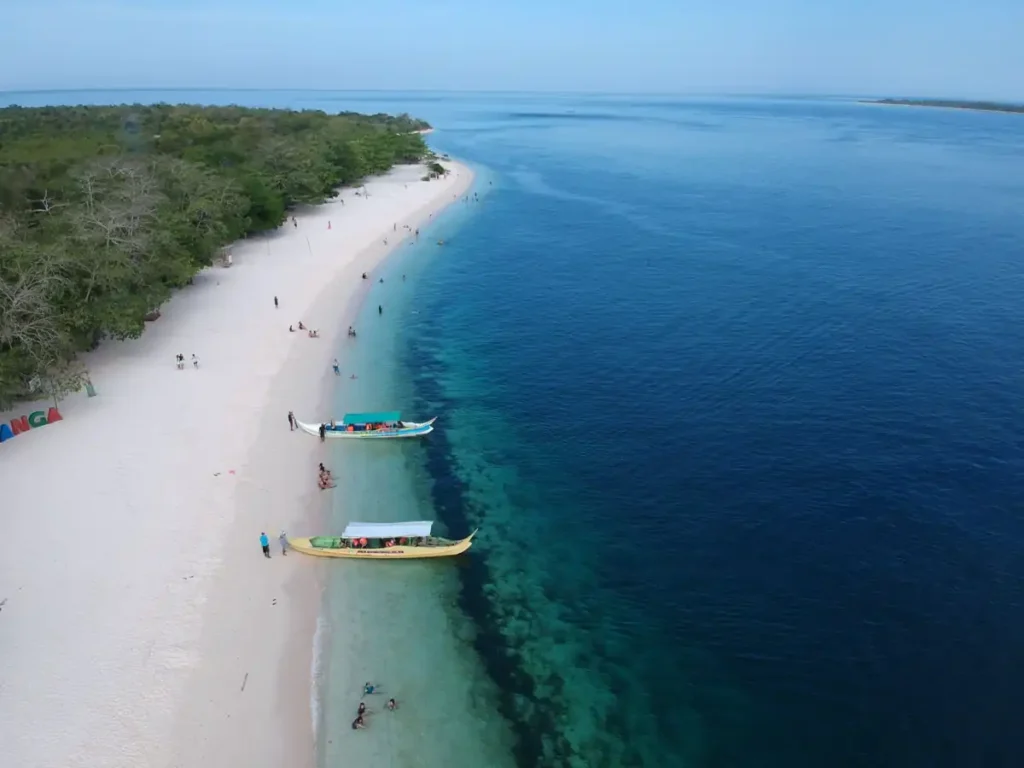
Nacpan Beach near El Nido is technically not a secret anymore, but the northern half and the twin beach at Calitang still see very few visitors even during peak season. Most tourists turn around at the midpoint. If you keep walking past the last nipa hut with a cooler of drinks, the beach changes completely, wider, emptier, and dramatically more beautiful.
Local tricycle drivers from El Nido town will tell you the road isn’t good enough for cars past a certain point. They’re right, but it’s fine on foot or a motorbike with decent suspension.
Quick Reference: Access Guide for Popular Hidden Beaches in the Philippines
How to reach each beach, roughly how long it takes, and what kind of transport you’ll need from the nearest regional hub:
| Beach | Nearest Hub | Approx. Travel Time | Main Transport |
| Calaguas Island | Daet, Cam. Norte | 5–6 hrs (Manila) | Bus + pump boat |
| Palaui Island | Santa Ana, Cagayan | 10–12 hrs (Manila) | Bus/fly + boat |
| Cresta de Gallo | Romblon Town | 6–8 hrs (Manila) | Fly/bus + bangka |
| Jomalig Island | Real, Quezon | 5–6 hrs (Manila) | Bus + pump boat |
| Ditaytayan Island | Coron, Palawan | 30–45 min | Bangka day tour |
| Alibijaban Island | San Andres, Quezon | 6–7 hrs (Manila) | Bus + bangka |
| Onuk Island | Balabac, Palawan | 2–3 hrs from Brooke’s Pt. | Bangka |
Cresta de Gallo, A Tiny Sandbar Island Few Travelers Reach
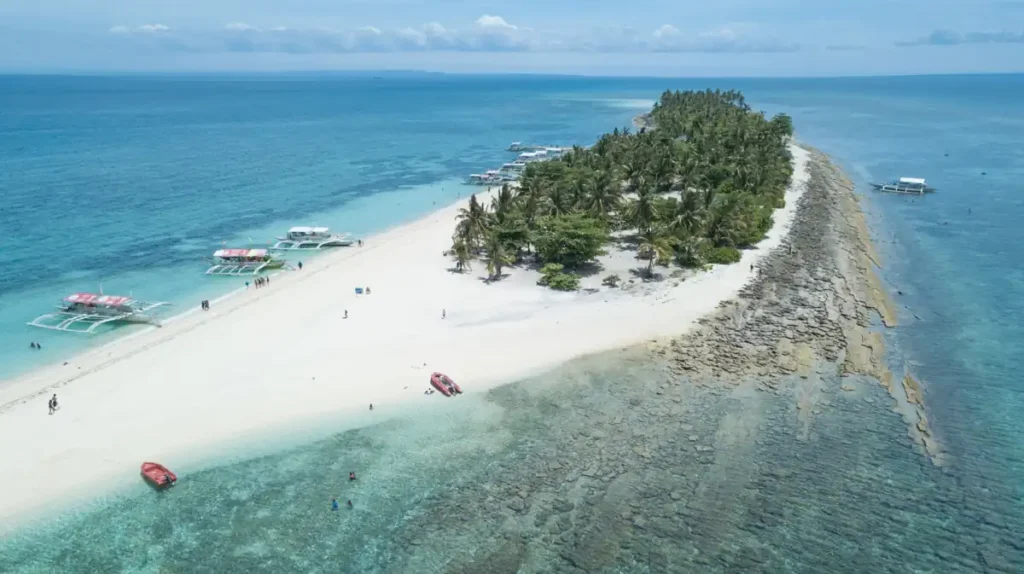
Cresta de Gallo is a sandbar island in Romblon province that appears and partially disappears depending on the tide. During low tide, a white crescent of sand extends into the Sibuyan Sea with views in every direction and no permanent structures of any kind. It is, simply put, one of the most arresting natural spectacles in the country.
Getting there involves a bangka from Romblon Town or from Looc, trips that local fishermen run informally and that the Romblon Provincial Tourism Office can help coordinate. The crossing is around two to three hours and can be rough. Don’t book this on a day with strong wind advisories from PAGASA, the national weather agency.
Alibijaban Island, The Secret Beach Destination You’ve Probably Never Heard Of
Alibijaban is in Quezon Province, reachable from San Andres town, and it receives almost no attention in mainstream Philippine travel content. The island has mangrove lagoons, several undeveloped beach stretches, and a small community that welcomes visitors who arrive with some basic courtesy and a working knowledge of how to pack out what they pack in.
The beaches here have a rougher, more raw quality than the polished white-sand imagery you see from Palawan. Meaning: they’re not Instagram-ready in the conventional sense, but they’re real in a way that’s harder to find.
Ditaytayan Island: Coron’s Hidden Slice of White Sand
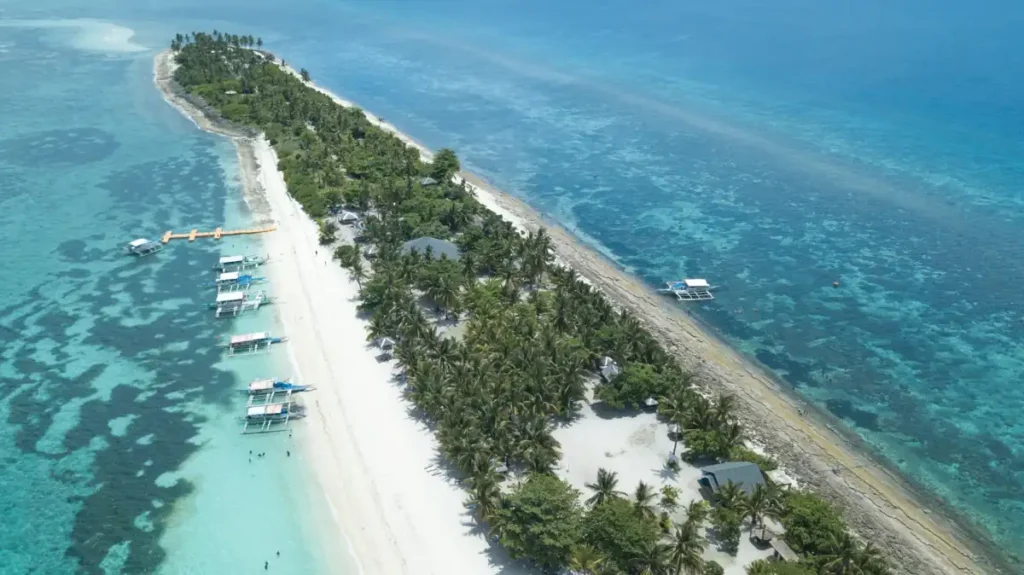
Most Coron itineraries skip Ditaytayan entirely in favor of the more famous Kayangan Lake and Twin Lagoon. That’s a mistake, or at least a missed opportunity. Ditaytayan is a sandbar island reachable by bangka from Coron town in about 30 to 45 minutes, and on a quiet day — midweek, off peak — it can be nearly deserted.
The shallow waters around the island are calm enough for children and non-swimmers, which makes this an unusual pick among hidden beaches Philippines enthusiasts who travel with family. Coron-based tour operators registered with the Palawan Council for Sustainable Development (PCSD) can arrange the trip.
Anawangin Cove: The Beach That Feels Nothing Like the Philippines
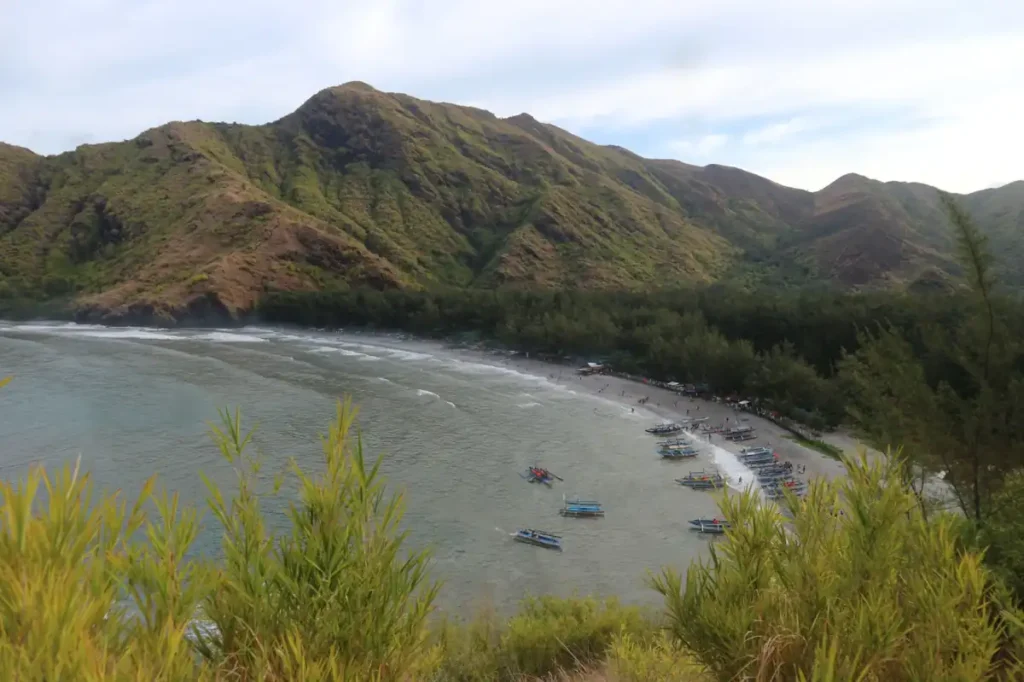
Anawangin is in Zambales, accessible by boat from Pundaquit, and it genuinely looks unlike anywhere else in the archipelago. The beach is lined with agoho pine trees that washed down from Mount Pinatubo’s eruption in 1991, creating a shoreline that feels cooler, shadier, and almost alpine in contrast to the tropical coast you’d expect.
Overnight camping is the way to experience it properly. Local boat operators from Pundaquit can arrange permits through the San Antonio Municipal Environment and Natural Resources Office. Bring firewood and food; there are no shops here.
Silanguin Cove: The More Peaceful Alternative Next Door
Next door to Anawangin and even quieter. Most boat operators will take you to Silanguin for the same fare as Anawangin, but fewer visitors ask for it. The cove is smaller, more sheltered, and has better snorkeling just off the shoreline. If you’re camping in the area, alternating between both coves over two days is genuinely ideal.
Jomalig Island: The Golden-Sand Secret of Quezon Province
Jomalig is unusual because its sand is golden rather than white, a warm amber color that comes from the mineral composition of local rock. It sits off the Pacific coast of Quezon Province and sees very little tourist traffic because the boat crossing from Real can be rough, and the island has limited accommodation. But the Quezon Provincial Tourism Office has been quietly developing basic facilities, and the window of ‘genuinely undiscovered’ may be closing.
The most striking beach, Salibungot, stretches for about a kilometer with no development in sight. Come before the infrastructure catches up.
Bonbon Beach: Romblon’s Stunning Hidden Sandbar
Romblon Island’s Bonbon Beach is a narrow sandbar that juts out from the mainland and curves into the sea with almost geometric precision. It’s reachable by tricycle from Romblon Town in about 15 minutes, which makes it one of the more accessible entries on this list — but it still receives a fraction of the visitors that comparable beaches in Boracay or El Nido attract.
The local marble industry, for which Romblon is well known, means the surrounding coastline has an unusual geological texture. Rock formations along the beach have a smoothness and color you won’t find elsewhere in the Philippines.
White Island, Camiguin: A Bare Sandbar Surrounded by Volcano Views
White Island is a sandbar off the coast of Mambajao, Camiguin, the island province that locals describe as having more volcanoes per square kilometer than anywhere else on Earth. The sandbar itself is completely undeveloped: no trees, no shade, just white sand and 360-degree views of volcanic mountains and the Bohol Sea.
Bangkas depart from near the Camiguin Tourism Council office in Mambajao. The crossing is about 10 minutes. Go early in the morning before the sun makes the bare sand genuinely uncomfortable to stand on.
Best Time of Year to Visit Secluded Philippine Beaches
November through May is broadly considered the dry season across most of the Philippines, but this varies significantly by region. The eastern coast (Samar, Surigao, eastern Quezon) receives its heaviest rain from November through January. The western coast and Palawan are best from November through April. Camiguin and Mindanao’s south coast peak in March through May. Always check PAGASA seasonal outlooks before booking remote island trips; isolation and bad weather are a combination worth avoiding.
Find the perfect time to visit hidden Philippine beaches: read more in Best Time to Visit Anda Beach: Month-by-Month Guide You Actually Need.
Nagtabon Beach: Palawan’s Quiet Alternative to Busy Beach Towns
While Puerto Princesa’s Honda Bay gets the buses and the package tours, Nagtabon sits on the opposite side of the city and is practically ignored by the tourist infrastructure. It’s a long, curved beach with dark, fine sand and a fishing village at one end. Tricycles from Puerto Princesa city center reach it in about an hour.
Nagtabon is the kind of beach you visit if you want to actually swim without worrying about boats, or have lunch at a small family eatery where the fish was caught that morning. It’s not glamorous. It’s better than glamorous.
Onuk Island: The Remote Tropical Dream Most Visitors Miss
Onuk is in the Balabac archipelago at the very southern tip of Palawan, one of the most biodiverse marine zones in the Philippines, according to assessments by the Tubbataha Reefs Natural Park management office. The water clarity here is exceptional, the coral coverage is high, and the island is far enough from any developed town that visiting requires genuine commitment.
Permits are needed through the Balabac Municipal Tourism Office. The Bangka journey from Balabac town is two to three hours, depending on conditions. This is not a day trip; overnight stays on the island or in Balabac town are necessary.
Cagbalete Island: A Hidden Coastal Escape Close to Manila
Cagbalete is a genuine surprise given how close it sits to Metro Manila, about five to six hours by bus to Mauban, Quezon, then a short bangka ride. It’s a tidal island, meaning large sections of the coast become walkable flats at low tide, and the ecosystem shifts dramatically between high and low water.
It’s popular with Manila weekenders who know about it, but that’s still a small group. The island has a handful of basic resorts, and the Mauban Municipal Tourism Office coordinates boat schedules and permits.
Lesser-Known Beaches in Siargao Beyond the Surfing Scene
Cloud 9 and General Luna have been thoroughly covered. But Siargao is a large island, and its western coast, facing Mindanao rather than the Pacific, has a completely different character. Beaches near Del Carmen, adjacent to the Siargao Island Protected Landscape and Seascape (which encompasses the country’s largest mangrove forest), are calm, shallow, and almost completely unknown to surf tourists.
A few families near Del Carmen offer overnight homestays. The mangrove boat tours at sunrise are, without exaggeration, one of the better things you can do on the island.
Hidden Beaches in Mindanao That Rarely Make Travel Guides
Mindanao’s reputation keeps most international visitors away, which is a real loss. Specific areas, particularly Samal Island near Davao, the Camiguin-Misamis Occidental coast, and the beaches around General Santos City, have excellent natural coastlines with minimal infrastructure and very few foreign visitors.
The Davao Regional Tourism Council and local dive operators consistently recommend Samal’s Vanishing Island as a natural phenomenon worth visiting. It’s a sandbar that emerges at low tide and disappears completely within hours, a kind of geological impermanence that’s oddly moving if you’re there to watch it go.
Safety Tips for Exploring Remote Islands and Beaches
Key safety considerations before heading to any remote Philippine beach, practical points from experienced island travelers:
| Risk Factor | What to Do | When It Matters Most |
| Strong currents | Always check sea conditions locally | Wet season, eastern coasts |
| No signal | Download offline maps, bring a satellite beacon if possible | Outer islands, Palawan south |
| Medical access | Carry basic first aid, and know the nearest clinic | All remote destinations |
| Weather changes | Monitor PAGASA updates | June–October, typhoon season |
| Boat safety | Only use registered bangka operators | Any island crossing |
How to Reach These Remote Beaches Without the Stress
The Philippines has an improving inter-island flight network, with Cebu Pacific and AirAsia both expanding routes to secondary airports in Masbate, Romblon, and Camiguin. But for the last mile, from the small city to the actual island, boats are almost always the answer.
RORO (Roll-On Roll-Off) ferries operated by companies like 2GO Travel and Montenegro Lines connect the major island groups reliably, if slowly. For smaller islands, informal pump boats arranged through local barangay offices or tourism desks are the norm. The Philippine Coast Guard requires all commercial bangka operators to be registered ask to see documentation for any boat you hire for an inter-island crossing.
Travel to remote beaches without the hassle: read more in How to Get to Anda Beach, Bohol (Without Getting Lost or Overpaying in 2026).
Where to Stay Near the Philippines’ Hidden Beaches
Most remote beaches won’t have accommodation directly on the beach. The working model for most of these destinations is: base yourself in the nearest municipality, day-trip or overnight camp with local arrangements. A few practical options by region:
- Calaguas / Tinaga: Camping on the beach with permits from Vinzons LGU, or basic guesthouses in Daet town
- Romblon (Bonbon / Cresta de Gallo): Small hotels in Romblon Town, family guesthouses in Looc
- Jomalig: Community homestays arranged through Jomalig municipality, basic but genuinely hospitable
- Camiguin: Mambajao has proper hotels and beach cottages, a good base for White Island and crater lakes
- Balabac / Onuk: Very limited accommodation in Balabac town; bring a tent as backup
Responsible Travel: Helping Keep These Beaches Undiscovered Gems
The places on this list are still beautiful, partly because they haven’t been overwhelmed yet. That’s a fragile condition. The DENR Environmental Management Bureau has flagged coastal degradation in several previously pristine Philippine beach areas as a direct result of rapid tourism growth without corresponding waste management infrastructure.
Pack out every piece of trash you bring. Don’t take coral or shells. Pay fairly for local boat services and homestays rather than negotiating down to the minimum. If a beach has a barangay-level tourism fee, pay it; those funds, when managed locally, go toward actual coastal maintenance.
And maybe don’t tag the GPS coordinates in public posts if a place is clearly still pristine. You already know you want to go back. That’s reason enough to keep some things quiet.
Key Principles for Visiting Remote Philippine Beaches Responsibly
- Carry all waste out; no bins exist on most undeveloped islands
- Hire local boat operators registered with the Philippine Coast Guard
- Get barangay or LGU permission before camping on any beach
- Pay tourism fees even when they seem optional; they fund coastal care
- Avoid visiting seasonally closed areas during nesting or spawning seasons
Hidden Beaches in the Philippines That Are Still Worth Visiting Before Everyone Else Finds Them
The hidden beaches Philippines coastal explorers keep coming back for aren’t hidden because they’re inferior. They’re hidden because they require something most modern travel doesn’t: actual effort, some discomfort, and the willingness to figure things out as you go. That’s not a drawback. It’s the entire point.
Calaguas rewards your six-hour bus ride with a kilometer of empty white sand. Cresta de Gallo rewards your rough boat crossing with a sandbar that looks like it was placed there as a joke about beauty. Onuk rewards your commitment to Balabac with water that stops you mid-swim because you can’t believe it’s real.
None of these places needs your Instagram validation. But if you do go, you’ll probably understand immediately why some travelers never really stop talking about them.
Frequently Asked Questions
What is the easiest hidden beach in the Philippines to reach from Manila?
Anawangin Cove in Zambales is the most accessible, reachable in about three to four hours by bus from Pasay to San Antonio, then a short boat ride from Pundaquit. Cagbalete Island in Quezon is another solid option at five to six hours total. Both require minimal planning relative to far-flung alternatives.
Do I need permits to visit remote Philippine beaches?
Most uninhabited islands require a barangay clearance or local government unit (LGU) permit, especially for overnight camping. These are typically arranged through the nearest municipal tourism office and cost between PHP 50 and 500. The DENR also manages permits for protected areas like Palaui Island.
Which hidden beaches in the Philippines are safe for non-swimmers or families?
Ditaytayan Island near Coron has calm, shallow water. Bonbon Beach in Romblon is accessible, and the water is generally gentle. White Island in Camiguin is also manageable for beginners. Anawangin Cove is calm enough for casual swimmers in fair weather.
What’s the best season to visit hidden beaches in the Philippines?
Broadly, November through May for most western-coast and central Philippines destinations. Eastern-coast and Pacific-facing beaches are better from March through October. Always confirm with PAGASA forecasts before booking remote island transport.
Are there budget-friendly options for visiting these remote beaches?
Yes. Camping with a barangay permit is the most affordable option on most islands. Homestays in Jomalig and Cagbalete are inexpensive. The main costs are transport, buses, and pump boats, which can be kept low by traveling during off-peak days and booking local boats directly rather than through Manila-based tour agencies.