
The best Anda Beach photos & views are captured between 5:30 and 7:00 AM along the eastern shoreline, fishing-boat area and quieter southern coves. For elevated views, use the northern coastal road, while the shallow reef is best photographed around mid-morning on calm days.
Anda is a small coastal municipality in Bohol, Philippines. It sits far enough from the Panglao tourist circuit that most visitors skip it entirely, which is both a shame and secretly wonderful for those who do make the trip. The beach stretches in a gentle arc with powdery white sand, calm turquoise waters, and a backdrop of coconut palms that manage to look both wild and perfectly composed. Photographers, travel bloggers, and just everyday people who stumbled in have all left with the same verdict: the visuals here are almost unfairly good.
What makes anda beach photos & views so compelling isn’t one single dramatic scene. It’s the variety. Sunrise colors, mirror-flat water, golden sand stretching into the distance, local fishing boats drifting past, underwater clarity that makes snorkeling feel cinematic, the place layers its visual gifts. This guide walks through every angle worth your time, from the obvious to the genuinely hidden.
Best Anda Beach photo conditions
- Best overall time: 5:30–7:00 AM
- Best water clarity: 7:00–10:00 AM
- Best underwater light: 10:00 AM–2:00 PM
- Best quiet location: Southern shoreline
- Best elevated view: Northern coastal road
Crystal Clear Water Views That Feel Unreal
Standing at the shoreline and looking out toward the horizon is Anda’s simplest pleasure and also one of its most photographable moments. The water visibility here averages between 15 and 25 meters on calm days, which means even from the surface, you can often see the sandy floor below.
Here’s a quick comparison of water clarity by time of day to plan your shot:
| Time of Day | Water Clarity | Light Quality | Best For |
| 5:30 – 7:00 AM | Excellent | Soft golden | Seascape, reflection shots |
| 7:00 – 10:00 AM | Very good | Bright, clean | Wide beach views, swimming photos |
| 10:00 AM – 2:00 PM | Good | Harsh, high contrast | Underwater snorkel footage |
| 4:00 – 6:30 PM | Good to excellent | Warm, golden-orange | Sunset panoramas, silhouettes |
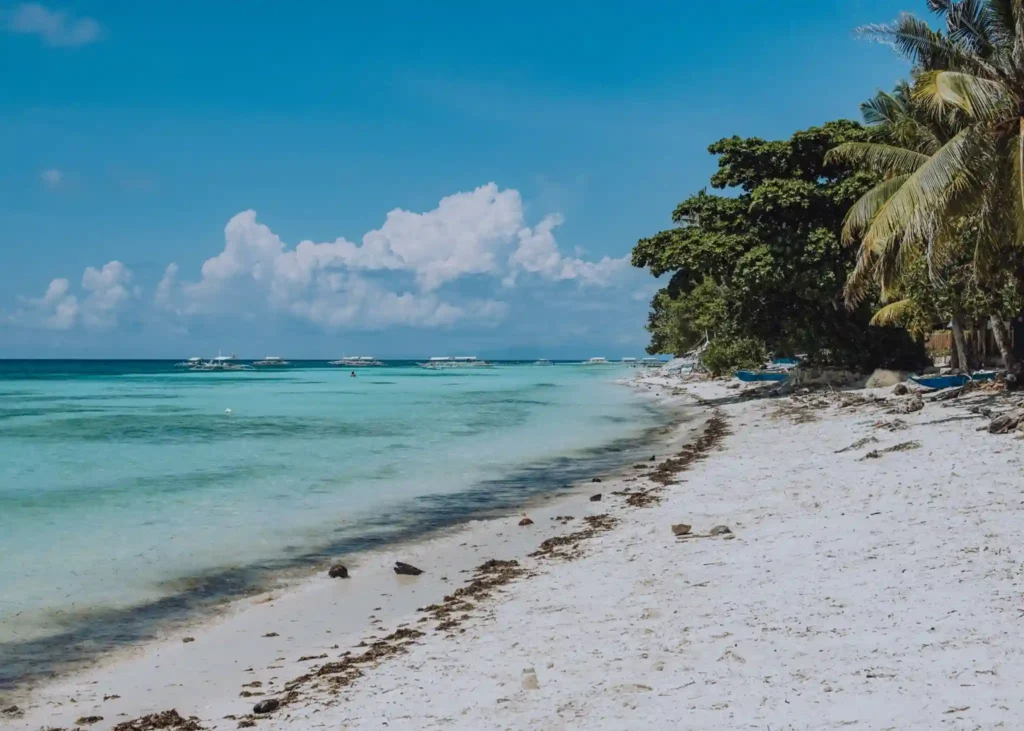
The teal-to-turquoise gradient that appears about 20 to 30 meters from shore is something wide-angle lens users specifically love. You’re essentially getting three visual zones, white sand, shallow turquoise, and deeper blue, all in one frame. On windless mornings, the surface reflection turns almost mirror-like, and that’s when the photos go from good to genuinely special.
Golden Sand Shoreline and Peaceful Walks
The beach itself runs for roughly 2 kilometers with very few interruptions. On weekdays, you might walk the full length and pass fewer than a dozen other people. The sand is fine-grained, pale cream, and stays relatively cool until mid-morning, which makes early barefoot walks feel genuinely indulgent rather than scorching.
For photography, the shoreline’s curve is an asset. If you walk toward either end and shoot back toward the center, the natural arc of the beach creates leading lines that pull the eye through the frame. Add a lone palm tree, a colorful boat, or a single person walking, and you have the kind of composed shot that takes ten seconds to capture but looks like it took half a day.
Honest note: the middle stretch of the beach near the main resorts can feel slightly groomed and less raw than the ends. If you want a more untouched look in your shots, walk south toward the quieter section past the small fishing outriggers. The visual quality changes considerably in about 300 meters.
Best Sunrise Views at Anda Beach
What Makes Anda’s Sunrise Different
Anda faces east, which is the entire reason sunrise here is exceptional. The sun rises directly over the ocean, and for roughly 20 to 30 minutes during golden hour, the whole beach goes orange-pink. It’s the kind of light that flatters everything and forgives a lot of photographic mistakes.
Set your alarm for 5:15 AM. That sounds painful, and it is, but arrive at the waterline before 5:40, and you’ll find the sky already shifting. By 5:50 or so, the actual colors begin. Bring a tripod if you have one. Long-exposure shots of the gentle waves during this window produce silky, ethereal results that are almost impossible to achieve at any other time.
Local fishermen typically head out between 4:30 and 6:00 AM, so there’s often a small fleet of bangka boats either launching or returning during sunrise. Getting a silhouette of a fisherman pushing off against an orange sky is one of the most iconic anda beach views you can capture, and it requires almost no effort if your timing is right.
Magical Sunset Moments Over the Horizon
Here’s the slight paradox: Anda faces east, so technically the sun sets behind the land rather than over the water. But that doesn’t ruin the sunset experience at all. What you get instead is the reflection of warm sunset light over the ocean while the sky behind you goes gold and pink. The water picks up that color beautifully, especially in the last 20 minutes before dark.
The real magic happens when the colors intensify between 5:30 and 6:00 PM during the dry season. Some photographers prefer this lighting for portraits and beach shots over the more conventional ocean-facing sunsets of west-coast beaches. The reflected light is softer, the contrast less extreme, and the resulting photos have a genuinely unusual warmth.
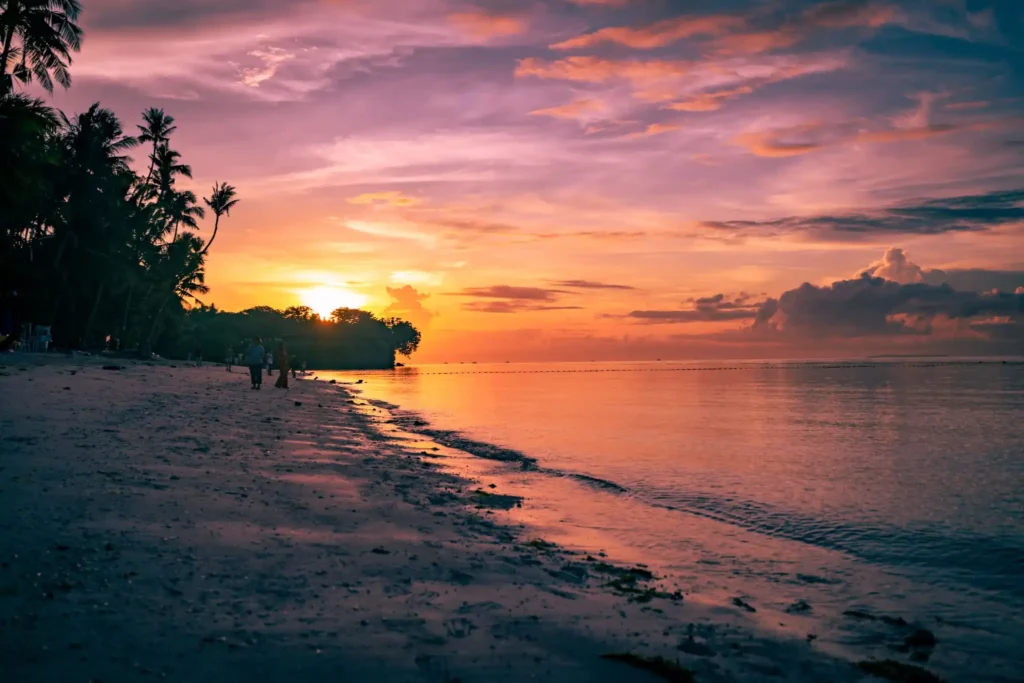
Watching a few content creators work this angle during their stays in Anda is actually instructive. They consistently shoot low, close to the waterline, using the wet sand’s reflection to double the sky’s colors. It’s a technique that works remarkably well here and one worth stealing.
Top Spots for Photography Lovers at Anda Beach
The 7 Best Photo Locations Around Anda
These locations are ranked by visual variety and ease of access for photographers:
| Location | Best Shot Type | Best Time | Difficulty |
| North end shoreline curve | Wide-angle beach arc | Early morning | Easy |
| Fishing boat dock area | Local life, boats, silhouettes | Sunrise / late afternoon | Easy |
| South end rocky outcrop | Seascape, waves on rocks | Mid-morning or sunset light | Moderate |
| Shallow reef entry point | Underwater snorkel shots | 10 AM – 2 PM | Moderate |
| Coconut grove behind the beach | Shaded portraits, texture | Midday (shade) | Easy |
| Elevated road viewpoint (north) | Aerial-style beach overview | Morning | Easy (drive) |
| Sandbar at low tide (seasonal) | Minimal, isolated seascape | Low tide, morning | Moderate (wade) |
The south end rocky outcrop deserves special mention. It’s only about a 15-minute walk from the main beach area, but very few visitors go there. Waves hit the rocks with enough energy to create spray and movement, which is visually dramatic in a way the flat sandy beach isn’t. Wear shoes you don’t mind getting wet.
Drone Shots Ideas for Capturing Full Beach Views
Anda is one of the better places in Bohol for drone photography, partly because there’s no military restriction zone nearby and partly because the visual variety from above is exceptional. The contrast between white sand, turquoise shallows, and darker deep water reads beautifully from altitude.
If you’re planning drone work, a few compositions consistently produce strong results for capturing anda beach photos from above:
- The full beach arc shot from 80–100m looking south: captures the entire curve of the shoreline with the reef line visible below the water’s surface
- The fishing village at the north end from low altitude (30–40m): colorful bangka boats, palm trees, and rustic structures compose beautifully
- The water gradient shot: position directly above the transition zone between shallow reef and open water for a dramatic color gradient frame
- Sunrise launch from the beach access road: the early light from the east hits the water at a low angle, creating long shadow textures in the sand
- The coconut grove + beach edge: the line where dense green palms meet white sand reads incredibly from above, especially in morning light
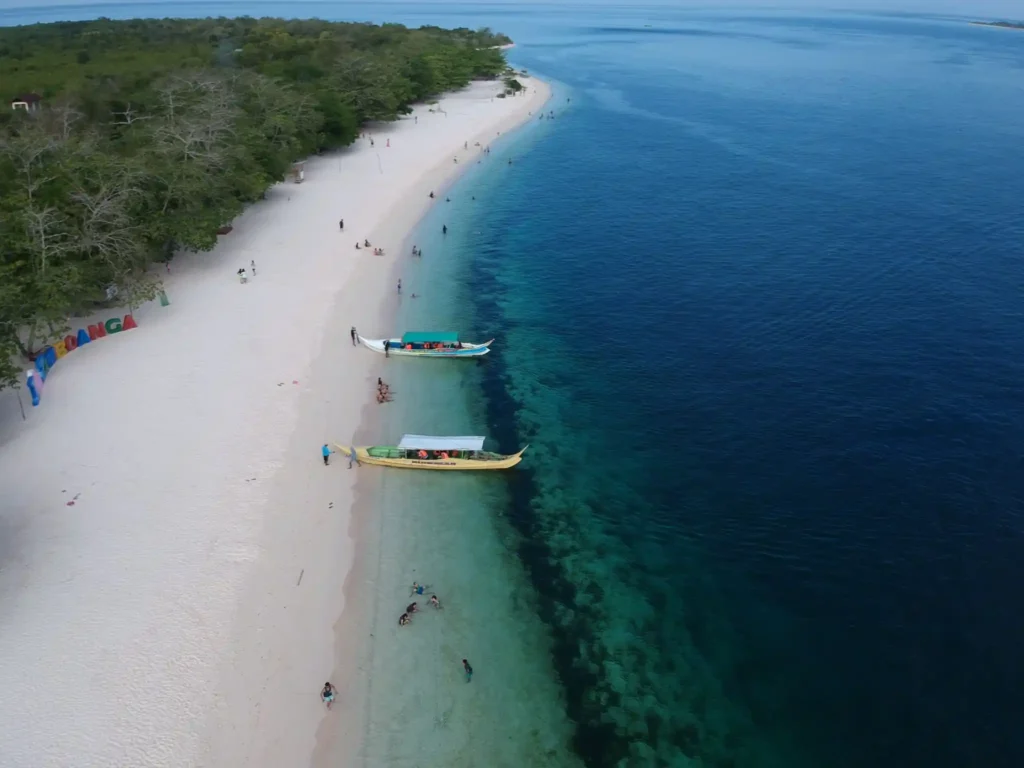
Check local regulations and always fly responsibly. DJI geo-zones don’t flag this area as restricted, but conditions matter. Strong wind days (common from December to February) make stable footage difficult. Dry season mornings are nearly ideal.
Hidden Corners of Anda Beach for Quiet Views
Where to Find Solitude and Untouched Scenery
The resorts and guesthouses cluster in the central and northern sections of the beach. Walk south for about 15 to 20 minutes, and the scene changes noticeably. Fewer footprints, less human interference, and a version of the beach that still looks the way it probably did 30 years ago.
There’s a small rocky cove roughly 1.5 km south of the main beach entrance that most visitors never find. It’s not signposted, and you’ll need to scramble over some loose rocks to reach it. The reward is a completely enclosed pocket of water, calmer than the open beach, ringed by low cliffs, and entirely private on most days. The light in this cove between 8 and 10 AM is among the best anda beach views available anywhere in the area.
Behind the beach on the inland side, a coconut grove stretches for several hundred meters. The quality of light filtering through the palm canopy in the early morning creates natural dappled patterns that are genuinely beautiful for portrait or detail photography. It also provides real shade if you’ve been shooting in the sun for a few hours.
Underwater Views: Snorkeling & Sea Life Shots
The reef system off Anda’s shore is one of the least-damaged in Bohol. That’s a real claim, not tourist-brochure language; the relative absence of mass tourism has kept boat traffic low and the coral in noticeably better condition than sites near Alona Beach on Panglao.
Snorkeling is possible directly from the beach without a boat. The reef edge begins about 50 to 80 meters from shore, depending on the tide. Visibility in calm conditions reaches 15 to 20 meters underwater, and the fish diversity is genuinely good; surgeonfish, wrasse, clownfish, and occasional sea turtles have all been documented by visitors.
For underwater photography, the best window is mid-morning on calm days when sunlight penetrates cleanly, and there’s minimal surface disturbance. A basic waterproof phone case produces decent results in the shallows. Dedicated underwater housings for mirrorless cameras open up the deeper reef sections beautifully. The coral formations at roughly 3 to 5 meters depth have particularly strong color and structure.
Capture the beauty beneath the waves: read more in Anda Snorkeling Guide: Reefs So Good You’ll Forget Panglao.
Local Boats and Coastal Life Photography Scenes
Authentic Visual Stories Along the Shore
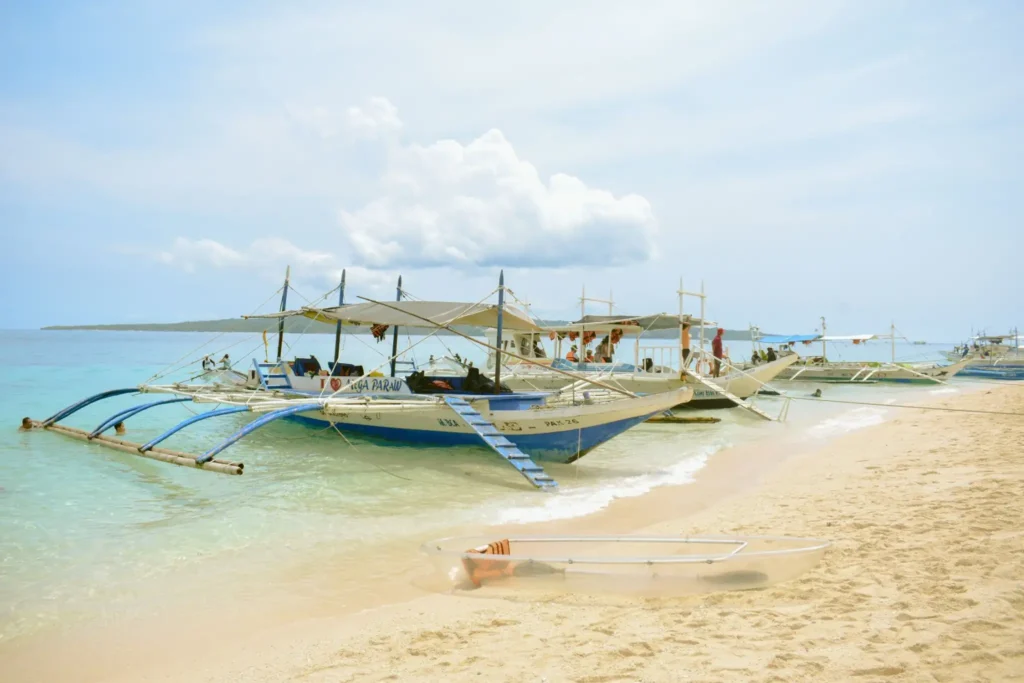
One of the most overlooked aspects of Anda’s visual appeal is the everyday coastal life that still happens here. This isn’t a beach that’s been converted entirely to tourism. Local fishermen work the water daily, traditional bangka outriggers sit in colorful rows along the northern section, and the pace of the village near the shoreline is genuinely unhurried.
Early mornings and late afternoons are the ideal times to photograph this. Fishermen sorting nets, children playing at the water’s edge, women selling the morning catch, these scenes exist, and they’re entirely accessible. Unlike some destinations where photographing locals feels intrusive or staged, Anda’s community tends to be open and unbothered, probably because visitors are still relatively rare here.
The painted bangka boats are specifically worth your time. Each one is slightly different, with color schemes, names painted on the hull, the weathering, and repairs that tell a working life. Shooting them at low angles with the water and sky behind produces results that feel more like documentary work than tourist photography. That contrast is part of what makes the beach photos taken here look different from anywhere else.
Best Time of Day for Perfect Beach Lighting
A practical breakdown of Anda’s lighting windows throughout the day for photographers:
| Time Window | Light Type | Ideal Subject | Rating |
| 5:30 – 6:30 AM | Golden hour (sunrise) | Seascapes, silhouettes, reflections | ★★★★★ |
| 6:30 – 9:00 AM | Soft morning light | Beach walks, water clarity, portraits | ★★★★☆ |
| 9:00 AM – 12:00 PM | Bright overhead | Underwater, snorkeling, wide shots | ★★★☆☆ |
| 12:00 – 3:30 PM | Harsh midday | Avoid unless using shade | ★★☆☆☆ |
| 3:30 – 5:30 PM | Afternoon gold | Detail shots, coastal life | ★★★★☆ |
| 5:30 – 6:30 PM | Reflected sunset light | Water surface, panoramas | ★★★★★ |
Midday light at tropical beaches is notoriously unforgiving. The sun at its highest point creates shadows directly below subjects, bleaches color from sand and water, and produces a harshness that even post-processing can’t fully fix. Most experienced beach photographers use 10 AM to 3 PM for rest, editing, or snorkeling rather than shooting topside.
Seasonal Changes in Views and Water Color
Anda’s appearance genuinely changes across the year, and knowing this helps you plan. During the dry season (roughly March through October), the water achieves its most vivid turquoise-to-blue gradient. Less rain means less runoff, which keeps visibility exceptional and the beach itself cleaner.
The wet season from November through February brings a moodier palette. The water turns a slightly darker, more olive-green tone in places, and the sky often carries dramatic cloud formations that can actually be spectacular for wide landscape photography, just not in the same way. Rain squalls moving across the horizon look genuinely impressive from the beach, and the post-rain light when everything clears is some of the most saturated you’ll encounter here.
February and March catch an interesting in-between period where seas begin to calm, but humidity is still high. The water color shifts toward that iconic teal. If your primary goal is capturing the classic anda beach photos with vivid water color and clean skies, April through June sits in a sweet spot before the main Philippine summer heat peaks.
Nearby Viewpoints and Scenic Areas Around Anda Beach
Extending Your Photo Journey Beyond the Shoreline
Nearby locations within 30 minutes of Anda Beach that offer complementary views:
| Location | Distance from Anda | View Type | Best Time |
| Quinale Beach | ~4 km north | Wild, rocky cove with coral | Morning |
| Candijay Hills Road | ~8 km inland | Coastal panorama from elevation | Early morning or late afternoon |
| Anda lighthouse area | ~2 km south | Cliff-edge sea views | Sunset direction walk |
| Lamanoc Island | ~3 km offshore (boat) | Island seascape, cave views | Mid-morning |
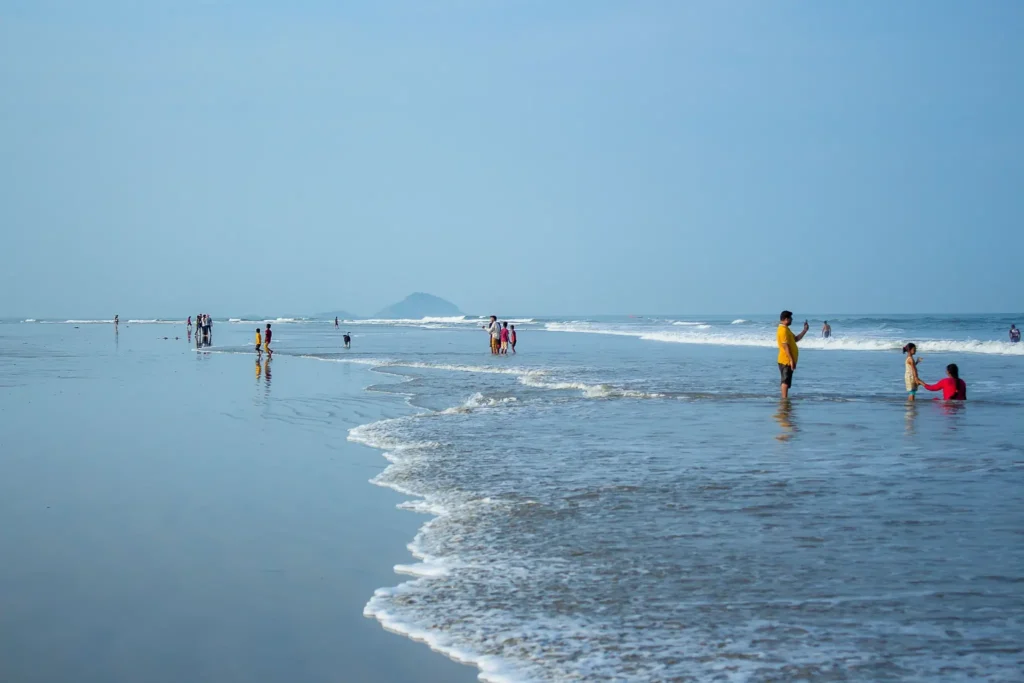
Quinale Beach is the most useful nearby option for photographers who’ve already covered Anda’s main stretch. It’s rockier, less developed, and completely unmanicured, the kind of place where you’re genuinely exploring rather than following a path. The coral coverage visible from the surface, even before snorkeling, is impressive, and the cove’s natural framing makes for dramatic wide compositions.
Travel Tips for Getting the Best Photos Here
A few genuinely practical notes that rarely appear in polished travel guides:
- Arrive the day before your main shoot. Walk the beach in the afternoon, identify your morning positions, and note where the eastern horizon sits. Pre-visualizing saves you 30 minutes of fumbling around in the dark at 5 AM.
- The road to Anda from Tagbilaran takes roughly 2 to 2.5 hours. Most visitors travel by rented motorbike or hired van. Buses exist but are slow and infrequent. Factor travel time into your planning if you want to be there for sunrise.
- Bring more memory cards and batteries than you think you need. The nearest camera equipment shop is back in Tagbilaran, over two hours away. This is not an exaggeration.
- The beach has very little shade past 9 AM. A wide-brim hat and reef-safe sunscreen are genuinely essential, not optional. Sunburn at this latitude happens faster than most visitors from temperate countries expect.
- Underwater photography tip: shoot with the sun behind you or at a 45-degree angle. Shooting directly toward the surface creates backlit silhouettes, which is a valid creative choice but dramatically different from the bright, color-rich coral shots most people are aiming for.
- Ask permission before photographing locals. In almost every case, people here are friendly and happy to be photographed. The act of asking, even with a gesture and a smile, makes the interaction better and the resulting portrait more genuine.
Make your trip smoother with these tips: read more in the Anda Beach Bohol Travel Guide: Where the Crowds End and Real Bohol Begins.
Final Thoughts: Why Anda Beach Feels Like a Natural Photo Album
There’s a reason people who visit Anda tend to describe it the same way: quietly overwhelming. The scale of anda beach views doesn’t hit you all at once. It accumulates. The early morning light on the water. The boats. The unbroken horizon. The sand texture up close. The colors underwater. Each element is straightforward on its own, but together they create a visual environment that rewards almost any photographer, beginner or experienced, casual or obsessive.
What Anda doesn’t have is spectacle in the traditional sense. No dramatic cliffs are dropping into the sea, no famous landmark, no iconic branded viewpoint. What it has instead is a sustained, consistent beauty that reveals itself slowly across a full day spent here. That’s rarer than it sounds.
If you go, stay for at least two nights. One day isn’t enough to feel the rhythm of the place, and the second morning, when you already know where to stand and when to be there, is when the best anda beach photos actually happen. Not by accident, but because you took the time to actually look.
Frequently Asked Questions
What is the best time to visit Anda Beach for photography?
The best time for photography is during the dry season (April to October), specifically in the early morning between 5:30 and 9:00 AM. The eastern-facing shore means golden sunrise light hits the water directly during these hours, producing the warm, vivid tones that make Anda Beach photos so striking. Late afternoon light (4:00 to 6:30 PM) is the second-best window for warm, flattering natural light.
How do I get to Anda Beach from Tagbilaran?
The journey from Tagbilaran City takes roughly 2 to 2.5 hours by private vehicle or rented motorbike. Public buses serve the Anda route but operate infrequently, and the trip takes longer. For photographers aiming for sunrise, renting a motorbike the night before and staying in Anda is by far the most practical approach.
Is drone photography allowed at Anda Beach?
Anda Beach falls outside active military restriction zones, and DJI’s geo-zone system doesn’t flag it as restricted. That said, Philippine aviation rules require drone pilots to register with the Civil Aviation Authority of the Philippines (CAAP) and follow standard airspace rules. Always check for any local or temporary restrictions before flying, and avoid flying over people without their consent.
What camera gear should I bring to Anda Beach?
For beach and landscape work, a wide-angle lens (16–24mm equivalent) handles seascapes and the beach curve well. A mid-range zoom (24–70mm) covers coastal life photography and candid moments. For underwater photography, a waterproof housing or a dedicated underwater camera like the GoPro series produces strong results at snorkeling depths. A tripod is valuable for long-exposure sunrise and sunset work. Bring extra batteries; heat drains them faster, and the nearest camera shop is two hours away.
Are there any hidden photo spots at Anda Beach that most tourists miss?
Yes, several. The small rocky cove about 1.5 km south of the main beach area is largely unknown to visitors and offers enclosed, dramatic seascape compositions. The coconut grove behind the beach provides natural light filtering and shade-based portrait opportunities. The fishing boat dock area at the northern end gives access to authentic coastal life scenes with painted bangka boats and fishing activity. Low tide also sometimes exposes a sandbar further south that produces an isolated, minimal composition unavailable at any other time.
What is Anda Beach like compared to Alona Beach in Bohol?
The difference is significant. Alona Beach on Panglao is considerably more developed, busier, and more commercialized. Anda Beach is quieter, less crowded, and more visually raw. The reef at Anda is generally in better condition due to lower boat traffic. Alona offers more services and dive operators. For photographers prioritizing natural, uncluttered views and authentic coastal life scenes, Anda is the stronger choice. For those who want organized dive trips and more amenities, Alona serves better.
Is Anda Beach safe for swimming and snorkeling?
Swimming is generally safe during the dry season (April to October) when seas are calmer. Conditions during the wet season can produce stronger currents and rougher surf that make swimming inadvisable. There are no lifeguards stationed at the beach, so personal judgment and awareness are essential. Snorkeling is excellent in calm conditions, with the reef edge starting about 50 to 80 meters from shore. Strong swimmers handle the paddle out comfortably; less experienced swimmers should stay in the shallower areas closer to the shoreline.