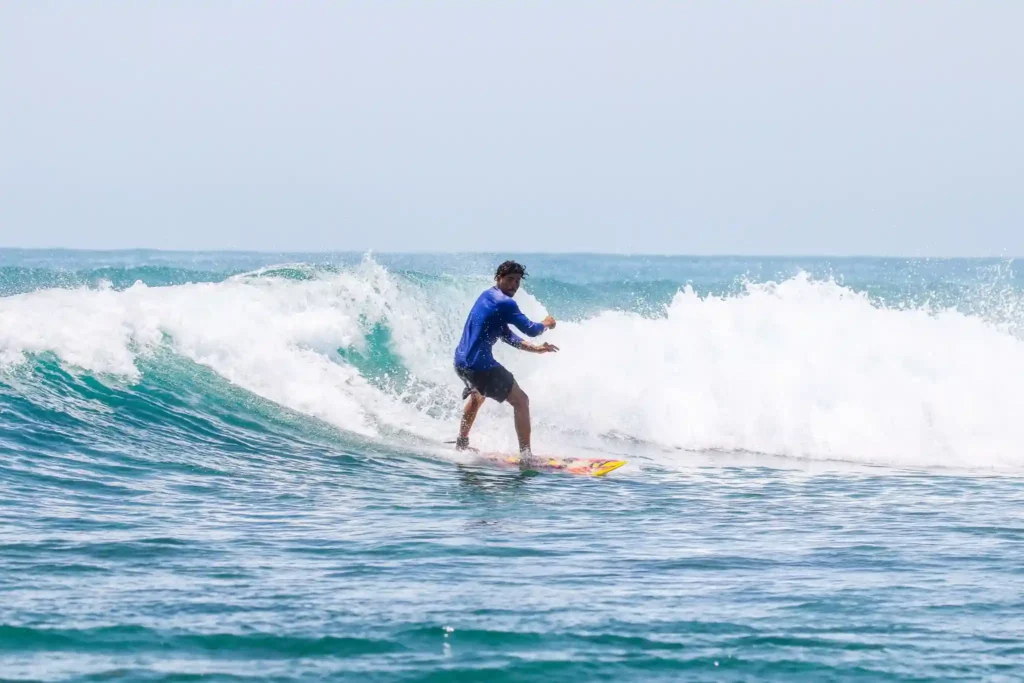

San Juan Beach surfing takes place in a small coastal town called San Juan, in La Union province, only four to five hours from Manila by bus or car. The government and local surf schools call this area the Surfing Capital of the North because it has one of the most reliable waves in the Philippines.
The main surf spot is Urbiztondo Beach, where the waves are good for both beginners and advanced surfers, especially during the Amihan season from October to March. San Juan Beach surfing is popular because you can rent a board, hire an ISA-certified coach, and start your first lesson for around $6.50 an hour. This guide will show you the best time to visit, the top surf spots, what the waves feel like, and common mistakes new surfers should avoid.
Why Surfers Love San Juan Beach Surfing
Three distinct breaks sit within walking distance of each other here, so beginners, intermediates, and advanced riders all get a wave without leaving town. Add cheap board rentals, friendly local surfers, and a surf-town atmosphere with hostels, cafes, and sunset bars, and it is easy to see why so many Manila-based surfers treat San Juan as their weekend default rather than a once-a-year trip.
Best Time to Surf at San Juan Beach
Unlike most Philippine destinations that peak during summer, San Juan runs on two swell windows. Plan around them rather than the usual dry-season calendar.
Wave Conditions Throughout the Year
The Amihan or north swell season runs October through April, driven by northeast trade winds, and December to January usually brings the most consistent, well-formed waves. July through September is the Habagat or south swell season; waves still arrive, but expect rain and gustier onshore wind. April to June are transition months, with smaller and less reliable swell, so many locals use this window for lessons instead of wave-chasing.
Is San Juan Beach Good for Beginners?
Yes. Urbiztondo’s main beach break produces small, forgiving whitewater almost year-round, which is exactly why nearly every surf school in town runs lessons there rather than at the reef points.
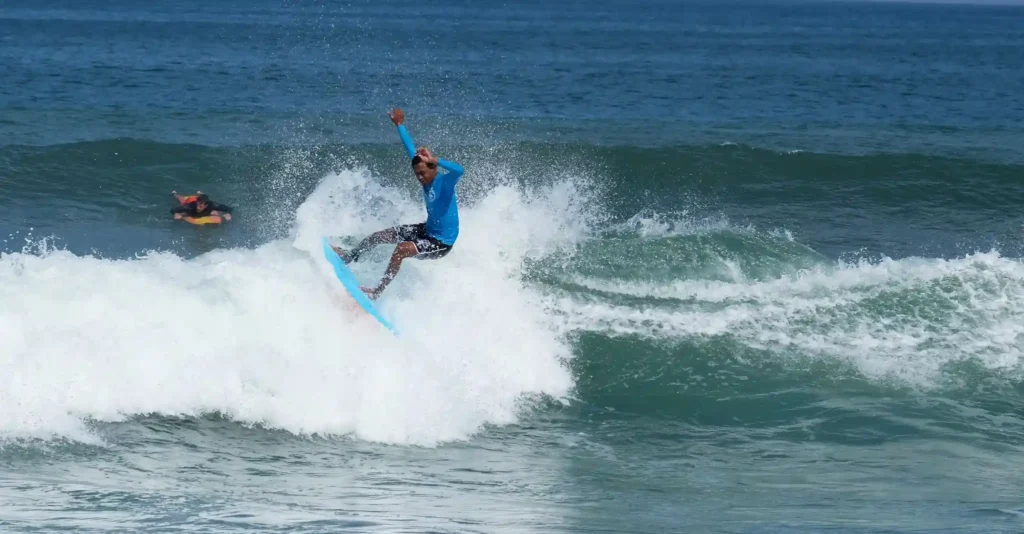
Surf Spots Along San Juan Beach
Each break here suits a different comfort level, so picking the right one matters more than picking the “best” one.
Use this table to match your skill level to the right break before you rent a board.
| Spot | Skill Level | Break Type | Best For |
| Urbiztondo Beach | Beginner | Beach break | First lessons, soft whitewater |
| Monaliza Point | Intermediate/Advanced | Reef right-hander | Longer rides, faster walls |
| The Bowl | Intermediate/Advanced | Beach break section | Steeper drops, short barrels |
| Carrile Point | Advanced | Reef point | Long rides on bigger swell |
| Bacnotan | Beginner/Longboard | Sandy point | Quieter, uncrowded rides |
Where to Rent a Surfboard
Board rental shacks line the main road through Urbiztondo, and almost every surf school rents independently of lessons. Standard soft-top boards run about $3.25 to $4 an hour, with half-day and full-day discounts widely offered. No advance booking is usually needed outside peak weekends in December and January.
Surf Schools and Lessons
San Juan has dozens of surf schools, and several instructors hold Academy of Surfing Instructors International certification, which is a genuine trust signal if you are learning from scratch.
Here’s a quick look at typical 2026 lesson pricing so you can budget before you arrive.
| Service | Typical Price (USD) | Notes |
| 1-hour lesson (board + instructor) | $6.50–$8 | Most common package |
| Advanced coaching session | $8–$9.75 | Reef breaks, technique focus |
| Board rental, 1 hour | $3.25–$4 | Soft-top or foam board |
| Board rental, full day | $13 | Best value for repeat sessions |
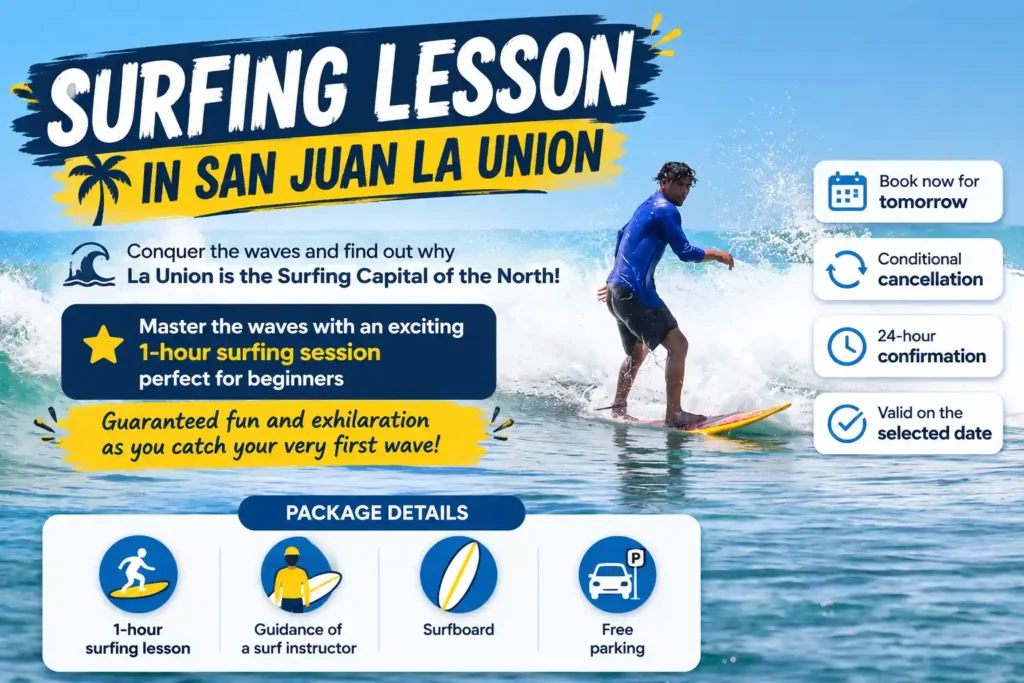
Always wanted to surf? This beginner-friendly lesson is designed to get you started with confidence.
What to Expect from the Water Conditions
Water stays warm year-round, so a rash guard is usually enough; wetsuits are rarely necessary. Visibility can be murky close to river mouths, and Carrile Point in particular can carry runoff after heavy rain, so check conditions before paddling out there.
Safety Tips Before You Paddle Out
- Surf with an instructor for your first sessions, especially at reef breaks.
- Watch for rip currents, which are common along the main beach break.
- Avoid Monaliza Point on low tide if you are still a beginner; the reef sits close to the surface.
- Check the forecast, since San Juan Beach surfing conditions change quickly between swell windows.
Essential Gear for Surfing Here
A rash guard, reef-safe sunscreen, and booties for the reef points cover most of what you need. Bring your own leash and wax if you are particular about your setup, though rental shops supply everything for lessons.
Best Time of Day to Catch Waves
Early morning, before onshore wind picks up around late morning, tends to offer the cleanest conditions, along with a calmer, less crowded lineup.
Surf Etiquette Every Visitor Should Know
Don’t drop in on a surfer already riding a wave, wait your turn in the lineup, and give local surfers priority at crowded breaks like Monaliza. A friendly nod goes a long way; the local surf community here is famously welcoming to visitors who show basic respect.
Other Water Activities Besides Surfing
Stand-up paddleboarding, bodyboarding, skimboarding, and kayaking are all available through the same shacks that rent surfboards, usually for less than surfing costs.
Where to Eat After Your Surf Session
Urbiztondo’s main road is packed with beachfront cafes, pizza spots, and casual Filipino diners, most within a five-minute walk of the water. Prices stay reasonable, and several spots serve food late enough for a post-sunset surf dinner.
Where to Stay Near the Surf Area
Budget hostels, mid-range surf resorts, and a handful of upscale beachfront properties all cluster around Urbiztondo, so you can walk to the water regardless of budget. Booking two to three weeks ahead is smart during December and January.
Find the Best Stays Just Steps from the Waves. Read more in La Union Hotels & Stays That’ll Make You Book Your Flight Right Now.
How to Get to San Juan Beach
From Manila, buses to San Fernando, La Union run roughly four to five hours and cost around ₱400 to ₱600. From San Fernando, a short tricycle or jeepney ride covers the last stretch to San Juan for a small additional fare.
How to Reach San Juan Beach Without the Hassle. Read more in How to Get to La Union Without Breaking the Bank.
Common Mistakes First-Time Surfers Make
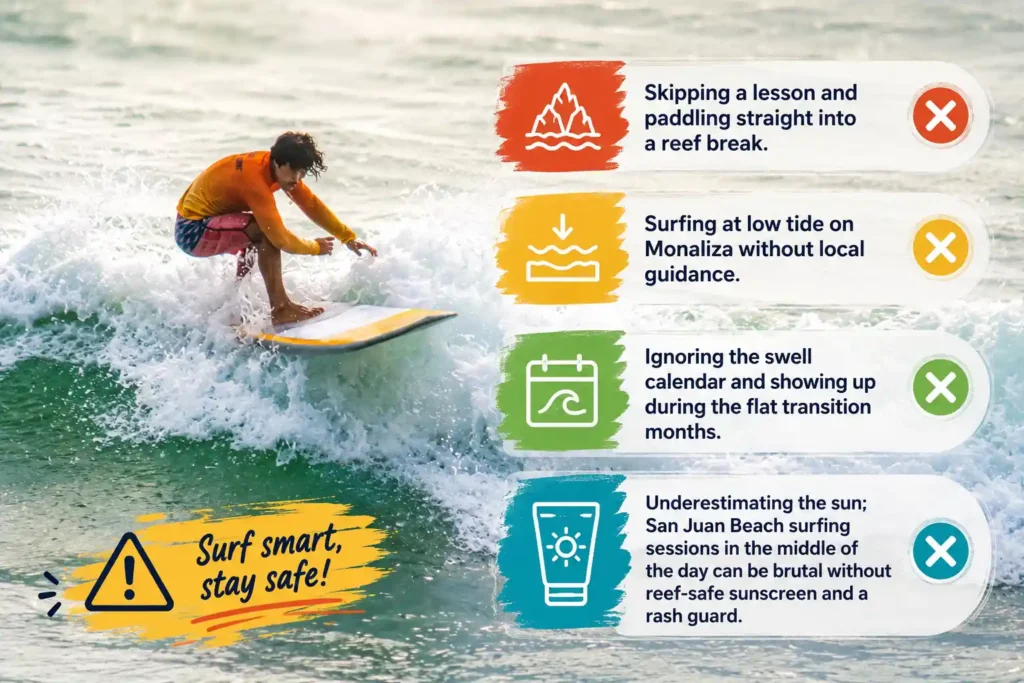
- Skipping a lesson and paddling straight into a reef break.
- Surfing at low tide on Monaliza without local guidance.
- Ignoring the swell calendar and showing up during the flat transition months.
- Underestimating the sun; San Juan Beach surfing sessions in the middle of the day can be brutal without reef-safe sunscreen and a rash guard.
How Much Does San Juan Beach Surfing Cost?
A one-hour lesson including board and instructor typically costs $6.50 to $8, while board rentals alone run $3.25 to $4 per hour or $13 for a full day.
This breakdown helps you plan a realistic daily surf budget.
| Expense | Estimated Cost (USD) |
| Lesson (1 hour) | $6.50–$8 |
| Board rental (full day) | $13 |
| Budget meal | $1.60–$3.25 |
| Budget accommodation (per night) | $13–$24 |
Is San Juan Beach Surfing Safe for Solo Travelers?
Generally yes. The Philippine National Police maritime and tourism units are visible around Urbiztondo, and the local surf community tends to look out for solo visitors, though basic precautions like securing valuables and surfing with an instructor still apply.
San Juan Beach surfing rewards anyone willing to show up with reasonable expectations. Start with a lesson at Urbiztondo, work up to Monaliza once you’re comfortable on a board, and build your trip around the Amihan season for the most consistent waves. Between the community, the price point, and the sheer convenience of being a few hours from Manila, it’s easy to understand why this stretch of Ilocos coast keeps pulling surfers back.
Why San Juan Beach Surfing Keeps Surfers Coming Back
San Juan Beach surfing proves that you don’t need to fly to Bali or Hawaii for a real surf trip. This small town in La Union gives you consistent waves, cheap lessons, and a laid-back beach community, all just a few hours from Manila. Start at Urbiztondo if you’re new, move up to Monaliza Point once you’ve built confidence, and plan your trip around the Amihan season for the best swells.
Whether you’re chasing your first wave or your fiftieth, San Juan Beach surfing has a spot, a school, and a price that works for you. Grab a board, watch the tide, and paddle out.
Your Guide to Finding La Union: Read more in San Juan La Union Travel Where All of Manila Goes to Catch a Wave.
FAQs About San Juan Beach Surfing
Is San Juan Beach good for beginner surfers?
Yes, Urbiztondo’s beach break offers small, forgiving whitewater that suits first-timers almost year-round.
When is the best time for San Juan Beach surfing?
October through April, during the Amihan north swell season, offers the most consistent waves, with December and January as peak months.
How much does a surf lesson cost in San Juan?
Most one-hour lessons, including board rental and an instructor, cost between ₱400 and ₱500.
Do I need my own surfboard?
No. Rental shacks throughout Urbiztondo rent boards by the hour, half-day, or full day.
Is Monaliza Point suitable for beginners?
Not usually. It breaks over a shallow reef and is better suited to intermediate and advanced surfers.
How do I get to San Juan Beach from Manila?
Buses to San Fernando, La Union take about four to five hours, followed by a short tricycle or jeepney ride to San Juan.