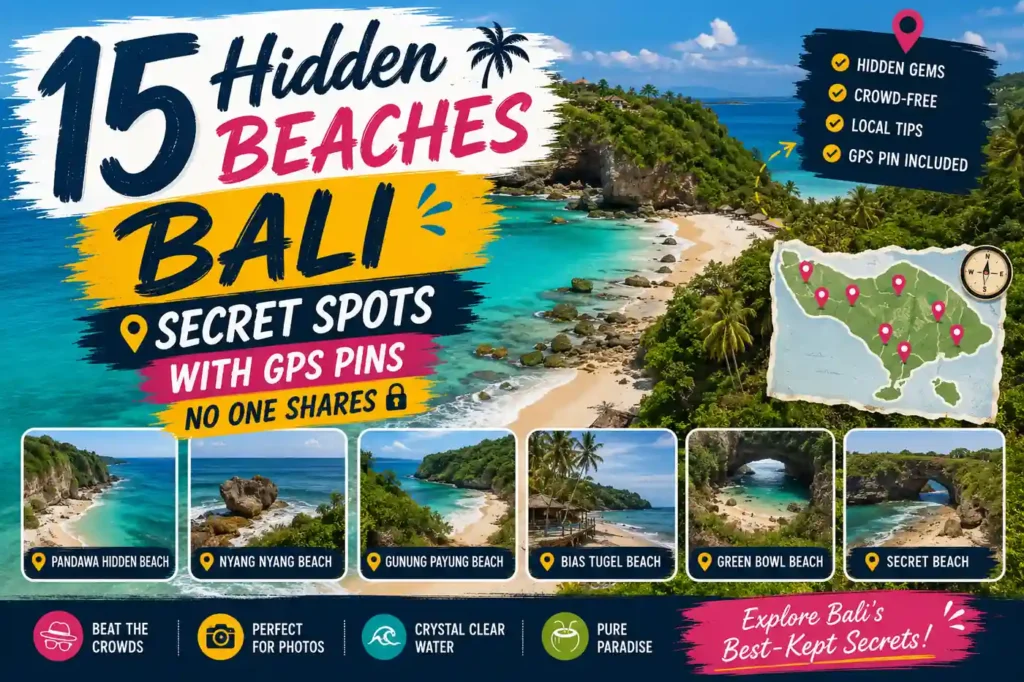
Bali is home to more than 80 beaches, but most tourists only ever see the same 10 or 12 famous ones. The hidden beaches Bali offers are usually far from the busy tourist areas, tucked behind cliffs, hidden down small dirt paths, or reached only by boat. These quiet places do not have big crowds, loud music, or rows of sunbeds. Instead, you get calm water, soft sand, and a peaceful feeling that is hard to find in places like Kuta or Seminyak. This guide focuses only on real hidden beaches Bali travelers can actually visit in 2026, with clear directions, entry prices, and safety tips for each one.
Why Visit Hidden Beaches in Bali?
Bali’s main beaches can get packed with sun loungers and vendors before 10 am, especially in high season. Hidden beaches trade a bit of convenience for space, cleaner sand, and views that haven’t been reshaped by beach clubs. They’re also usually cheaper, since most charge only a small parking or entry fee instead of a resort day-pass rate.
What Makes a Beach “Hidden” in Bali?
In practice, a hidden beach usually means one thing: awkward access. That could be a set of steep stairs cut into a cliff, a dirt track a normal taxi won’t drive, or simply a spot with no big resort marketing it. None of that makes them unsafe, but it does mean fewer facilities and, often, no lifeguard.
Map of Hidden Beaches in Bali
Most of the beaches in this guide cluster in three zones: the Bukit Peninsula around Uluwatu, the Karangasem coast in East Bali, and Nusa Penida just offshore. Below is a quick snapshot before we go area by area.
| Beach | Region | Best For | Entry Fee (approx.) |
| Nyang Nyang | Uluwatu, South Bali | Surfing, sunset | IDR 5,000 ($0.30) |
| Green Bowl | Ungasan, South Bali | Surfing, caves | IDR 10,000 ($0.65) |
| Thomas Beach | Uluwatu, South Bali | Relaxed swimming | IDR 10,000 ($0.65) |
| Bias Tugel | Padang Bai, East Bali | Swimming, families | IDR 10,000 ($0.65) |
| Atuh Beach | Nusa Penida | Cliff views, photos | IDR 25,000 ($1.60) |
| Diamond Beach | Nusa Penida | Photography | IDR 25,000–35,000 ($1.60–2.30) |
Hidden Beaches Bali at a Glance: Quick Snapshot
If you only have one day, pair Nyang Nyang or Green Bowl near Uluwatu with a sunset stop, or head to Bias Tugel in East Bali for calmer swimming water. Both routes stay under two hours from Denpasar.
Discover Bali’s Most Peaceful Beach Escapes. Read more in The Best Beaches in East Bali That Google Maps Still Doesn’t Know About.
Best Hidden Beaches in South Bali
The Bukit Peninsula, south of Jimbaran, holds Bali’s most dramatic hidden coastline. Limestone cliffs drop straight into the sea, and reaching the sand almost always means a staircase.
Hidden Beaches Near Uluwatu
Nyang Nyang Beach is reached by roughly 500 steps down a cliff path, but it opens onto one of the longest, emptiest stretches of white sand on the Bukit. Green Bowl Beach, near Ungasan, sits below limestone caves and draws surfers for its reef break, though the descent involves a long staircase too.
Thomas Beach is the gentler option nearby, with soft sand, a couple of low-key beach bars, and calmer water for swimming.
Hidden Beaches Near Canggu
Canggu itself is busy, but the coastline just north around Pererenan and Batu Mejan still has quieter black-sand patches away from the main surf breaks. They’re not dramatic, but they’re an easy scooter ride if you’re already staying in the area.
Early morning is the best time to visit, before the beach clubs open and the crowds arrive. You’ll often share the sand with just a few local fishermen and surfers. It’s a simple, low-key spot, but that’s exactly what makes it feel different from the rest of Canggu.
Hidden Beaches Near Ubud (Worth the Drive)
Ubud sits inland, so there’s no beach on its doorstep. The nearest hidden coves, on the Bukit or in East Bali, are usually 45 to 90 minutes away, which is worth knowing before you plan a same-day trip.
Most travelers pair a beach trip with something along the way, like a stop at a rice terrace or a small coffee farm. Renting a scooter or hiring a driver for the day makes this much easier than trying to use public transport. Just start early, since traffic near Ubud gets heavy by mid-morning.
Best Hidden Beaches in East Bali
East Bali, around Padang Bai and Amed, trades cliffs for calmer bays and volcanic sand. It’s a better fit if swimming matters more to you than dramatic scenery.
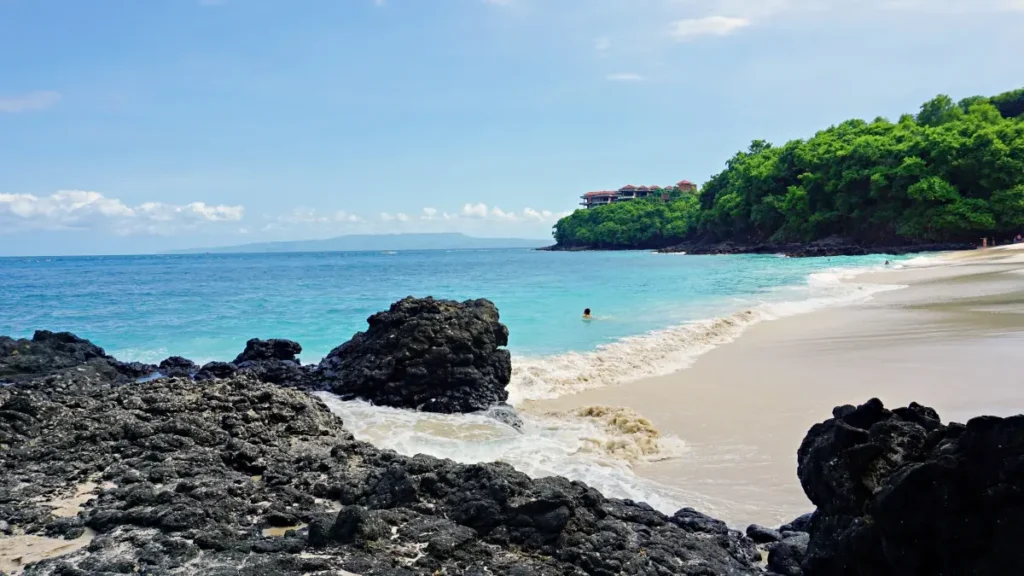
Bias Tugel Beach is the standout here: a small crescent bay a short walk from Padang Bai’s harbour, with clear, protected water and a couple of warungs selling drinks and snacks. Amed, further east, is known for black volcanic sand and easy snorkeling right off the shore.
Secret Beaches in Nusa Penida Near Bali
Technically a separate island reached by a 30 to 45 minute fast boat from Sanur, Nusa Penida has some of the region’s most photographed hidden coves. Atuh Beach and Diamond Beach share a car park and a single combined ticket, while Crystal Bay offers calmer water that’s easier for casual snorkeling than Nusa Penida’s bigger cliff beaches.
Getting down to these beaches usually means a steep staircase cut into the cliffside, so wear proper shoes and take your time on the way back up. Most spots charge a small entry fee at the parking area, and it’s best to arrive early before the tour buses show up. Bring cash, water, and sun protection, since there is little shade and few shops once you reach the sand.
Hidden White Sand Beaches in Bali
Bias Tugel and Nyang Nyang both have soft, bright white sand, closer in colour to beaches you’d expect in the Gilis than mainland Bali. Diamond Beach and Atuh Beach on Nusa Penida match that colour too, framed by pale limestone cliffs.
These white sand beaches stay cooler underfoot than the darker volcanic sand found in most of Bali. The water here is usually clearer too, since fewer boats and swimmers pass through. If bright turquoise water and soft sand are what you picture when you think of Bali, these beaches match that image far better than the popular ones.
Hidden Black Sand Beaches in Bali
Bali’s volcanic geology means the northeast coast, around Amed and Tulamben, has dark grey to black sand instead. It photographs less dramatically but tends to have calmer water and better snorkeling right off the beach.
The black sand comes from ancient lava flows off Mount Agung, Bali’s tallest volcano. This same volcanic activity created rocky reefs just offshore, which is why the snorkeling here is often better than on the white sand beaches. Fewer tourists make the trip out this way, since the sand looks less “postcard perfect” in photos, but that’s exactly what keeps these beaches quiet and clean.
Hidden Beaches for Swimming
Bias Tugel’s sheltered bay is the safest pick for casual swimming among the hidden beaches Bali offers, thanks to headlands on both sides that block most of the swell. Atuh Beach on Nusa Penida is calmer than its neighbour Diamond Beach, where the waves are noticeably rougher.
Green Bowl Beach also offers relatively calm water, especially in the morning before the tide pulls stronger currents in from the open sea. The shallow reef near the shore helps break up bigger waves, making it easier for average swimmers to relax without constantly fighting the current. Just check the tide times before you go, since low tide can expose sharp rocks near the entry point.
Hidden Beaches for Snorkeling
Amed and Crystal Bay both offer decent reef right off the shore without needing a boat trip. Visibility is generally best in the early morning before wind picks up the sediment.
Bring your own mask and fins if you can, since rental gear at these smaller beaches is often old and leaks easily. Reef shoes are worth packing too, as both spots have rocky entry points that can be sharp underfoot. If you’re new to snorkeling, ask a local warung owner about current conditions before heading in, since currents can shift quickly with the tide.
Discover Why Amed Beach Is One of Bali’s Hidden Gems. Read more in Amed Beach Bali Isn’t Trying to Impress Anyone.
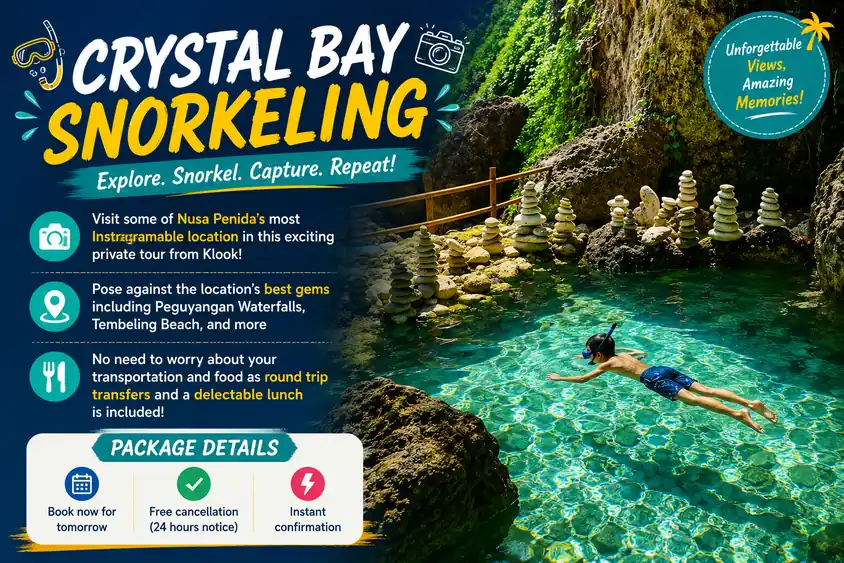
A full day in Nusa Penida without worrying about transport is hard to beat. The private tour covers the island’s most famous viewpoints, includes lunch, and even comes with a free whole coconut.
Hidden Beaches for Surfing
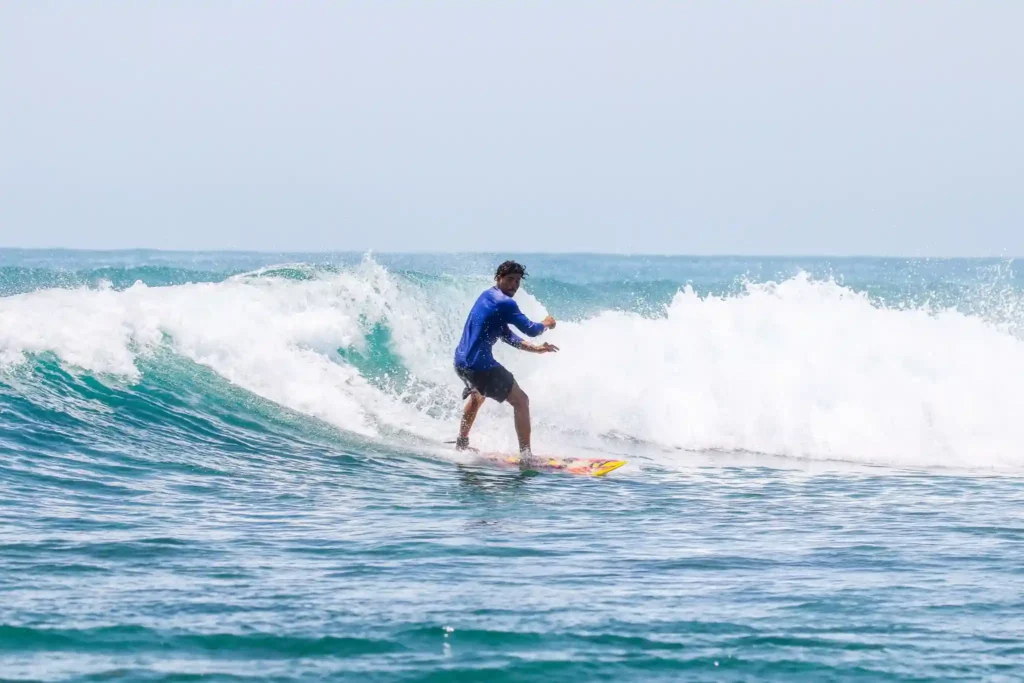
Nyang Nyang and Green Bowl both have reef breaks that draw intermediate to advanced surfers, largely because the walk down keeps beginner crowds away. Neither is a good spot to learn.
The waves here break over sharp coral reef, not sand, so a wipeout can mean real cuts and scrapes. Local surfers usually check the tide charts before heading down, since low tide exposes the reef and makes the break both better and more dangerous. If you’re set on surfing one of these spots, renting a board with reef fins and wearing a rash guard is a smart move, not just a style choice.
Hidden Beaches with Cliff Views
The whole Uluwatu coastline and Nusa Penida’s east side deliver the most dramatic cliff backdrops, with Diamond Beach’s carved limestone staircase being one of the most photographed viewpoints on the island.
These beaches sit at the bottom of cliffs, so most of them need a short but steep walk down. The view from the top is often just as good as standing on the sand, so it’s worth stopping to take photos before you climb down. Early morning or late afternoon light works best here, when the cliffs cast long shadows over the turquoise water below.
Hidden Beaches for Sunrise
Because it faces east, Diamond Beach is genuinely worth an early alarm, and arriving near sunrise also means beating both the heat and the tour groups.
The sky turns soft shades of pink and gold as the sun climbs over the limestone cliffs, and the only sounds you’ll hear are waves and the occasional rooster from a nearby warung. By the time most tourists show up around 9 or 10 am, you’ll already have your photos and be settling in for a quiet swim.
Hidden Beaches for Sunset
Uluwatu’s cliffs face west, so Nyang Nyang and Green Bowl both work well for sunset, with the bonus of far fewer people than the crowded viewpoints near Uluwatu Temple.
Get there at least 30 minutes before sunset to grab a good spot on the rocks and still have enough light to climb back up safely. Bring a torch or use your phone’s flashlight, since the path can get dark fast once the sun drops.
Least Crowded Beaches in Bali
Generally, the more stairs or hiking a beach requires, the fewer people you’ll share it with. Nyang Nyang and Green Bowl consistently rank among the quietest, simply because the descent puts off casual visitors.
Most day-trippers stick to beaches they can reach by car or scooter, which means anything needing 15+ minutes of walking naturally filters out the bigger crowds. If you’re willing to sweat a little on the way down, you’ll often have long stretches of sand almost entirely to yourself.
Quick Answer: Which Hidden Beach in Bali Is Least Crowded?
Nyang Nyang Beach near Uluwatu is generally considered the least crowded, mainly because reaching it involves a steep, roughly 500-step descent that discourages casual visitors.
Hidden Beaches You Can Reach Without a Long Hike
Bias Tugel is the easiest of the group, needing only a flat five-to ten-minute walk from the parking area near Padang Bai.
Hidden Beaches That Require Stairs or a Short Trek
Nyang Nyang involves around 500 uneven steps, Green Bowl has a long straight staircase carved into limestone, and Diamond Beach’s descent takes roughly ten minutes down a narrow, chalky stairway. None of these are ideal in flip-flops.
Best Hidden Beaches for Couples
Quieter beaches with dramatic cliffs and sunset views, like Nyang Nyang and Green Bowl, tend to suit couples looking for privacy away from busier tourist areas.
The climb down to these spots keeps day-trippers away, so you often end up with long stretches of sand almost to yourselves. Bring a small mat and arrive an hour before sunset to grab the best view without any crowds.
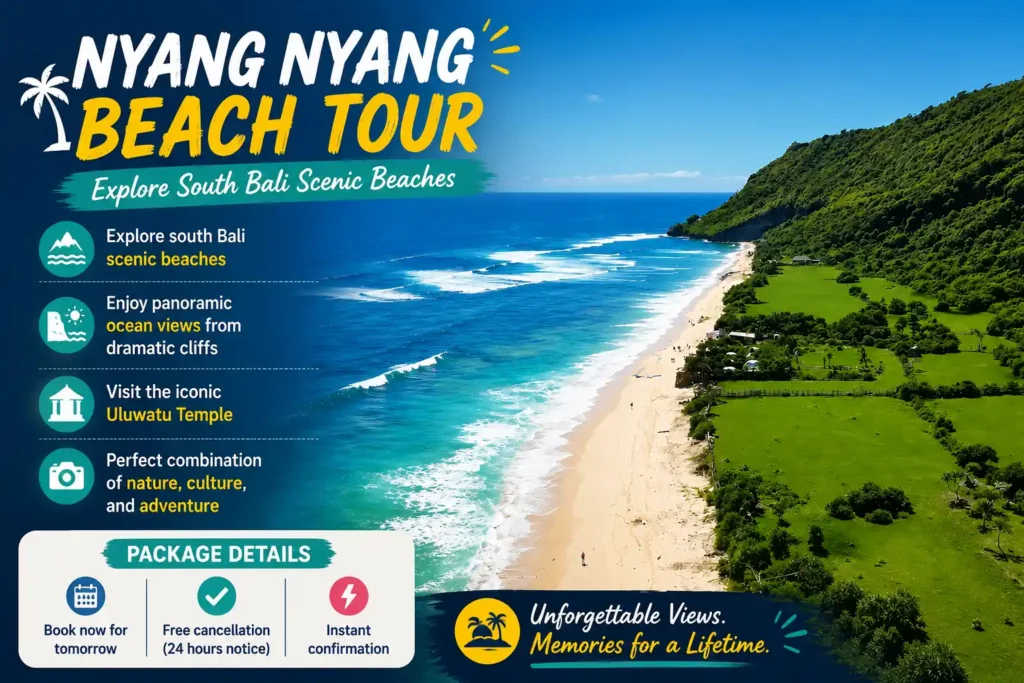
Looking for one day that captures the best of South Bali? This private tour brings together hidden beaches, stunning viewpoints, and the iconic Uluwatu Temple in a smooth 8–10 hour journey.
Family-Friendly Hidden Beaches
Bias Tugel’s calm, protected bay and Amed’s gentle shoreline are the two most practical choices for families with younger kids, since both avoid the steep staircases and strong shore breaks found elsewhere.
Hidden Beaches for Photography
Diamond Beach and Atuh Beach on Nusa Penida are the most photographed, largely thanks to their limestone cliffs and turquoise water. Green Bowl’s sea caves also make for striking, less predictable shots.
Best Hidden Beaches for a Peaceful Picnic
Bias Tugel works well for this, since its warungs mean you’re not stuck carrying everything down the path, and the sheltered bay keeps the wind manageable.
If you’d rather have the whole beach to yourselves, go early on a weekday morning before the day-trip crowds arrive from Padang Bai. Bring a mat and settle in near the rocks on the northern end, where the shade lasts longest into the afternoon.
When Is the Best Time to Visit Hidden Beaches in Bali?
The dry season, roughly April through October, gives the calmest seas and clearest access roads. Early morning or midweek visits are the most reliable way to avoid the crowds that do exist, even at hidden spots.
Find Out When Bali’s Secret Beaches Are at Their Best. Read more in Best Time to Visit Amed and Why May Beats July.
Are Bali’s Hidden Beaches Safe?
Generally yes, but with real caveats. Most hidden beaches have no lifeguard, and the Indonesian National Search and Rescue Agency (BASARNAS) regularly responds to swimmer incidents along Bali’s south coast, where rip currents are common. Stick to beaches with a visible headland or bay, like Bias Tugel or Atuh, if strong swimming isn’t your thing.
Quick Answer: Are Bali’s Hidden Beaches Safe for Swimming?
Sheltered bays such as Bias Tugel and Atuh Beach are generally safe for confident swimmers, while open-ocean beaches like Nyang Nyang and Diamond Beach have stronger currents and are better suited to surfing or sightseeing than swimming.
Strong Currents and Swimming Safety Tips
Rip currents can appear even on calm-looking days, so check conditions before wading in past your knees, and never swim alone at an unstaffed beach.
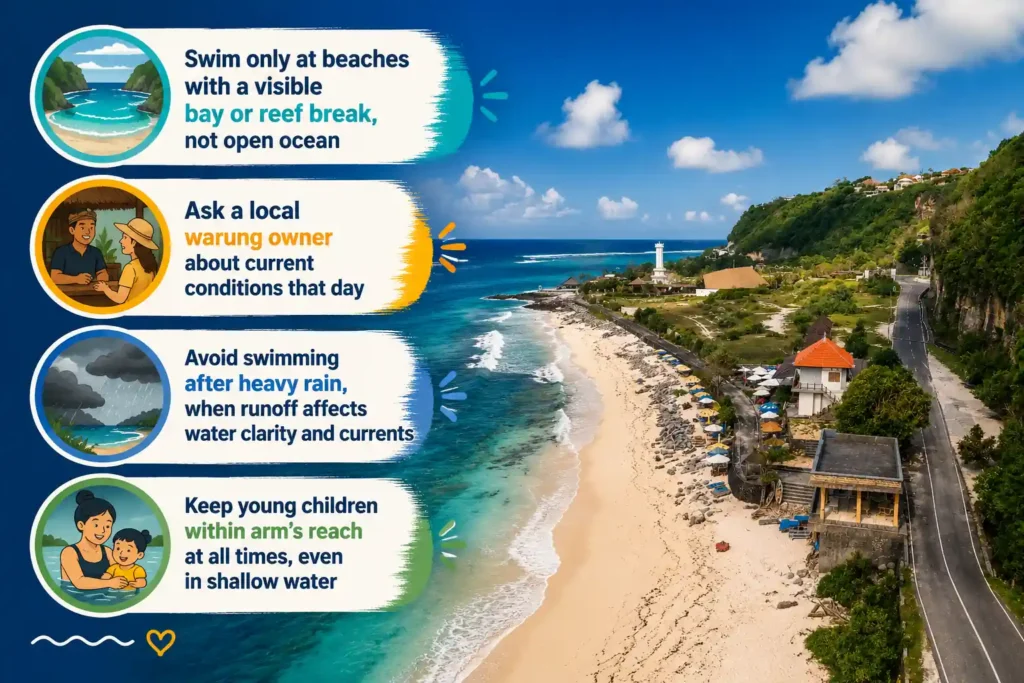
- Swim only at beaches with a visible bay or reef break, not open ocean
- Ask a local warung owner about current conditions that day
- Avoid swimming after heavy rain, when runoff affects water clarity and currents
- Keep young children within arm’s reach at all times, even in shallow water
What to Pack for Bali’s Hidden Beaches
- Cash in small Rupiah notes, since most entry fees are cash-only
- Reef-safe sunscreen and a hat, since shade is rare at most hidden coves
- Water shoes or sturdy sandals for rocky paths and stairs
- At least 1.5 litres of water per person for the hike back up
Entrance Fees and Parking Costs
Fees are modest almost everywhere, and the Indonesia Ministry of Tourism’s Wonderful Indonesia portal notes that most local attraction fees across Bali fall well under $5. The table below summarises what to expect.
| Beach | Entry Fee | Parking | Notes |
| Nyang Nyang | IDR 5,000 ($0.30) | Included | Cash only, no card machines |
| Green Bowl | IDR 10,000 ($0.65) | IDR 5,000 ($0.30) | Fee collected at cliff top |
| Bias Tugel | IDR 10,000 ($0.65) | Included | Paid to attendant at entrance |
| Diamond/Atuh (combined) | IDR 25,000–35,000 ($1.60–2.30) | IDR 5,000 ($0.30) | One ticket covers both beaches |
Quick Answer: Are Hidden Beaches in Bali Free to Visit?
Most hidden beaches in Bali are not completely free, but fees are small, typically between IDR 5,000 and IDR 35,000 ($0.30–$2.30) per person, usually covering parking as well.
How to Reach Bali’s Hidden Beaches
A rented scooter, around $4–$5 a day, gives the most flexibility, since many access roads are too narrow or rough for a car. If you’d rather not drive, hiring a private driver for the day, roughly $30–$50, covers most South and East Bali routes comfortably. Ride-hailing apps like Grab and Gojek often can’t reach the more remote car parks, so confirm pickup logistics before relying on them.
Hidden Beach Etiquette Every Visitor Should Know
- Carry your rubbish out if there are no bins, which is common at less-developed spots
- Dress modestly when passing through nearby villages on the way down
- Ask before flying a drone, since some areas restrict it near cliffs and temples
- Support local warungs rather than bringing all your own food and drink
Common Mistakes Tourists Make at Hidden Beaches
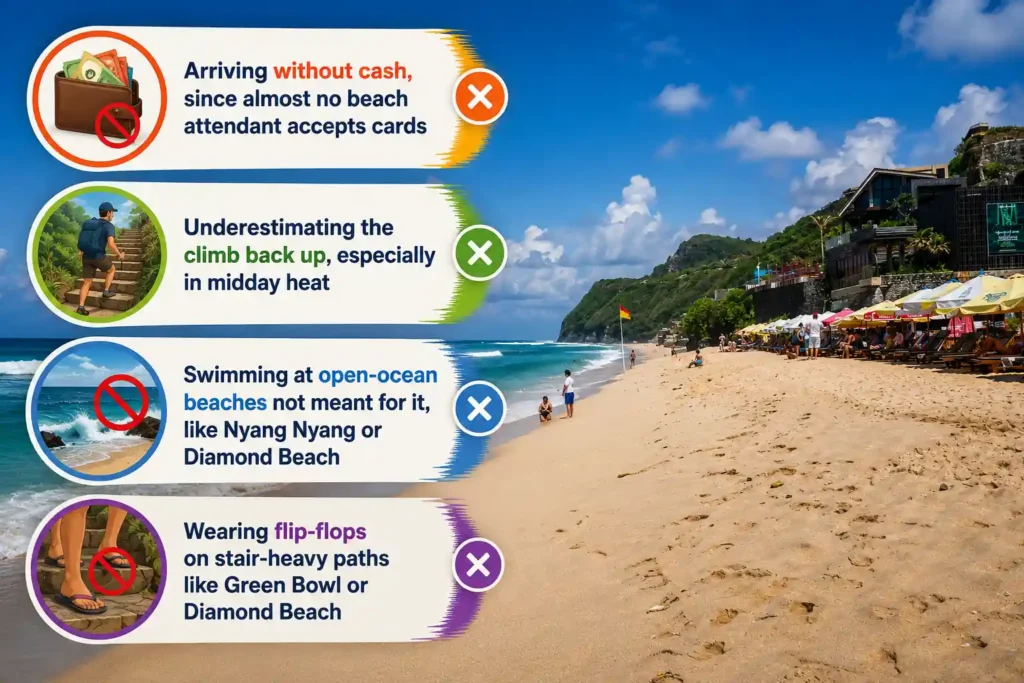
- Arriving without cash, since almost no beach attendant accepts cards
- Underestimating the climb back up, especially in midday heat
- Swimming at open-ocean beaches not meant for it, like Nyang Nyang or Diamond Beach
- Wearing flip-flops on stair-heavy paths like Green Bowl or Diamond Beach
Hidden Beaches vs Popular Bali Beaches
The trade-off comes down to convenience versus crowds. Popular beaches like Kuta and Seminyak offer easy parking, restaurants, and sun loungers right on the sand, but that convenience brings constant foot traffic and vendors.
| Factor | Hidden Beaches | Popular Beaches |
| Crowds | Low to moderate | High, especially midday |
| Access | Stairs, dirt roads, hikes | Paved roads, easy parking |
| Facilities | Few or none | Restaurants, loungers, shops |
| Typical Entry Fee | $0.30–$2.30 | Often free, but paid extras common |
Sample Hidden Beach Road Trip Itinerary
- 7:00 AM – Leave Uluwatu area, head to Nyang Nyang Beach for sunrise light and quiet sand
- 10:00 AM – Drive to Green Bowl Beach, explore the sea caves at low tide
- 1:00 PM – Lunch at a warung near Thomas Beach
- 4:00 PM – Return toward Uluwatu for a sunset viewpoint stop
Frequently Asked Questions
Which hidden beach is the most beautiful in Bali?
Diamond Beach on Nusa Penida is widely considered the most striking, thanks to its limestone staircase, turquoise water, and dramatic cliff backdrop.
What is the cleanest hidden beach in Bali?
Bias Tugel is regularly noted for clean, clear water since its sheltered bay sees less boat traffic and fewer visitors than the open coast.
Which hidden beach has the clearest water?
Bias Tugel and Crystal Bay both offer notably clear, calm water thanks to their protected, bay-like shape.
Are hidden beaches in Bali free to visit?
Most charge a small fee, usually IDR 5,000 to IDR 35,000 ($0.30–$2.30), which typically includes parking.
Which hidden beaches are best for snorkeling?
Amed and Crystal Bay both have decent reefs accessible directly from the shore, without needing a boat.
Which hidden beaches are good for beginner surfers?
Neither Nyang Nyang nor Green Bowl is beginner-friendly; both have reef breaks better suited to intermediate or advanced surfers.
Can you visit Bali’s hidden beaches without a scooter?
Yes, by hiring a private driver for the day, though a scooter offers more flexibility on narrow access roads.
Which hidden beaches are best for couples?
Nyang Nyang and Green Bowl both offer quiet, scenic settings that suit couples looking for privacy.
Are Bali’s hidden beaches suitable for families?
Bias Tugel and Amed are the most practical choices for families, thanks to calmer water and easier access.
What time should you visit hidden beaches to avoid crowds?
Early morning, generally before 9 am, or midweek visits both tend to be noticeably quieter.