
The best time to visit Amed is between May and October, when the sky stays clear, the sea stays calm, and the water reaches a warm 27°C. During these months, visibility for diving and snorkeling can reach up to 30 meters, and hotel prices often drop by around 30% compared to peak season.
If you are trying to find the best time to visit Amed for diving, beach days, or just a quiet break away from busy Kuta, this dry season window gives you the easiest and most reliable conditions. Even outside these months, Amed stays calmer and less crowded than most other parts of Bali, so it is never a bad choice; plan around the weather for the best experience.
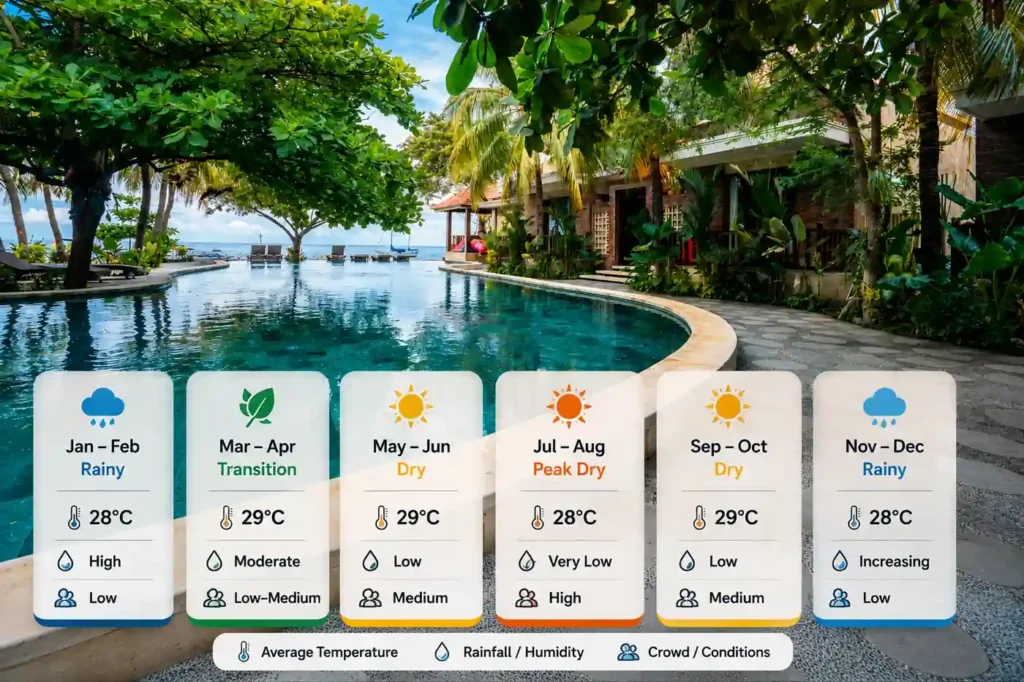
Amed Weather by Month: Quick Overview
Amed sits on Bali’s northeast coast, which means it’s drier and calmer than the south. The rain here isn’t as brutal as in Ubud. Still, there’s a clear split between the dry and wet seasons.
Here’s a snapshot of what each month actually feels like on the ground:
| Month | Season | Avg Temp | Rainfall | Crowd Level |
| Jan – Feb | Rainy | 28°C | High | Low |
| Mar – Apr | Transition | 29°C | Moderate | Low–Medium |
| May – Jun | Dry | 29°C | Low | Medium |
| Jul – Aug | Peak Dry | 28°C | Very Low | High |
| Sep – Oct | Dry | 29°C | Low | Medium |
| Nov – Dec | Rainy | 28°C | Increasing | Low |
What Is the Best Time to Visit Amed, Bali?
The best time to visit Amed is May to October, during Bali’s dry season. Underwater visibility reaches up to 30 meters, water temperatures stay around 27°C, and you get reliable sunshine. July and August are peak months, busiest but also the clearest.
Dry Season vs Rainy Season in Amed: Real Talk
Most guides push you firmly toward dry season, and yes, it’s better for the beach. But the rainy season in Amed isn’t as grim as people make it sound.
During dry season (May–October), you get clear skies, flat seas, and underwater visibility that can hit 25–30 meters around the USAT Liberty wreck in nearby Tulamben. This is when snorkeling and diving are at their absolute best.
During rainy season (November–April), mornings are usually fine. Rain tends to come in the afternoon, heavy, short bursts. The sea can get choppy, which affects visibility during dives. But accommodation prices drop by 20–35%, and you’ll have the black sand beaches almost to yourself. I’ve met solo travelers in January who absolutely loved it there.
- Dry season: better diving, clearer water, more tourists
- Rainy season: cheaper rates, fewer crowds, still diveable on good days
- April and November are ‘shoulder months’, sweet spot for many travelers
Best Month to Visit Amed for Snorkeling and Diving
If snorkeling is your main thing, aim for June to September. Visibility is at its peak, currents are manageable, and the coral gardens right off Amed’s beach are stunning. You literally walk in from the shore, no boat needed.
For scuba diving, the USAT Liberty wreck in Tulamben (15 minutes from Amed) is diveable almost all year, but May through October gives you the clearest conditions. Water temperature stays between 26–28°C, which is comfortable without a thick wetsuit.
According to Bali Dive Academy (balidiveacademy.com), Amed’s best dive visibility (up to 30m) occurs between June and September, with mola mola sightings occasionally reported in August–October at deeper sites.
Discover Why Amed Beach Is a Snorkeling Paradise. Read more in Why Amed Snorkeling Is the $11 Bali Secret Everyone’s Sleeping On.
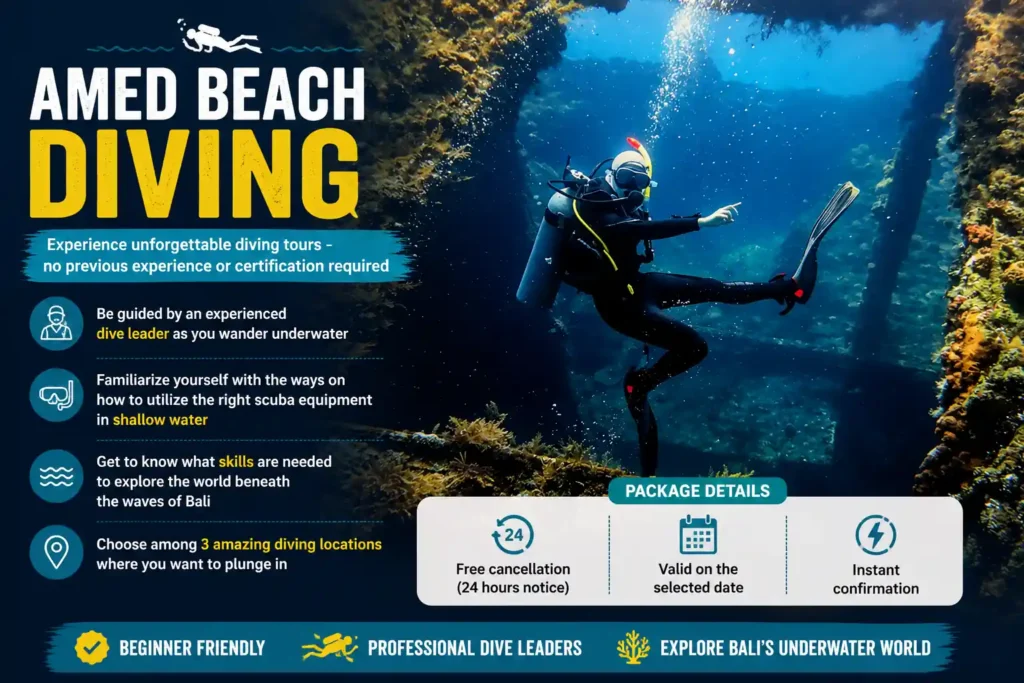
Dive into Bali’s crystal-clear waters and explore colorful marine life without needing a diving certification. Everything you need is included for a full day underwater.
Best Time to See Clear Water in Amed
June through September offers the clearest water in Amed. Underwater visibility regularly hits 20–30 meters. Water temperature stays between 26–28°C. These months are ideal for both snorkeling and scuba diving.
Cheapest Time to Visit Amed, Budget Breakdown
Amed is already one of Bali’s more affordable corners, but timing still matters for your wallet. Here’s what prices actually look like across seasons:
| Category | Peak Season (Jul–Aug) | Shoulder (May–Jun, Sep–Oct) | Off Season (Nov–Apr) |
| Budget guesthouse | $20–$35/night | $15–$25/night | $10–$18/night |
| Mid-range hotel | $50–$90/night | $35–$65/night | $25–$45/night |
| Dive trip (2 dives) | $55–$75 | $45–$60 | $40–$55 |
| Snorkel rental | $5–$8/day | $4–$6/day | $3–$5/day |
| Warung meal | $2–$4 | $2–$4 | $2–$3 |
November and December offer the lowest accommodation prices, often 30–40% cheaper than peak July rates. If you’re mainly interested in relaxing, eating fresh fish on the beach, and doing the occasional snorkel, the off-season is genuinely great value.
Best Time to Visit Amed for Fewer Crowds
Amed is never as chaotic as Seminyak or Canggu; that’s kind of its whole thing. But July and August do bring more visitors, especially European tourists and serious divers.
For a quieter experience, May, June, and September are the sweet spot. You still get dry season weather, but without the full peak-season crowds. Accommodation is 15–20% cheaper than peak rates. I went in early June once and had entire stretches of Jemeluk Bay practically to myself before 9 AM.
- May–June: dry, calm, 20% fewer tourists than July–August
- September–October: post-peak quiet with still-good dive conditions
- January–February: almost empty, but sea can be rougher
Is Amed Better Than Canggu or Ubud in Different Seasons?
This comes up a lot, especially for people doing a 10–14 day Bali trip. Here’s an honest take:
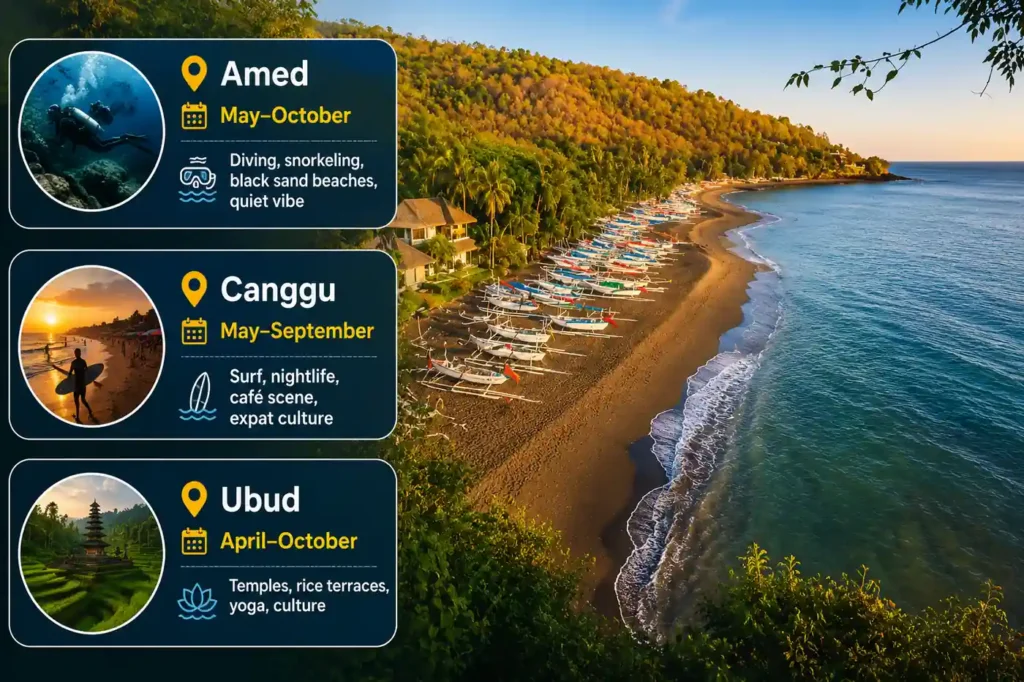
Amed beats Canggu for beach + diving all year round; Canggu’s beach is darker, rougher, and not swimmable most of the year. Ubud, meanwhile, is inland and jungle-based, so seasons affect it differently. Ubud gets more rain overall but is fine to visit year-round for culture and trekking.
| Destination | Best Season | Why Go There |
| Amed | May–October | Diving, snorkeling, black sand beaches, quiet vibe |
| Canggu | May–September | Surf, nightlife, café scene, expat culture |
| Ubud | April–October | Temples, rice terraces, yoga, culture |
How Many Days Should You Spend in Amed?
Most travelers spend 3–5 days in Amed. This gives you enough time to snorkel Jemeluk Bay, dive the USAT Liberty wreck in Tulamben, visit a sunrise viewpoint, and explore the local fishing villages at a relaxed pace.
Amed or Canggu? Discover Which One Fits Your Travel Style. Read more in Amed vs Canggu Bali Reveals Which Coast Wins on Price and Vibe.
Best Time to Visit Amed for Sunrise Views and Photography
Amed faces east, which means sunrise is spectacular here; Mount Agung and Mount Rinjani (in Lombok) frame the horizon on clear mornings. The best months for sunrise photography are May through August, when skies are clearest, and the light is sharp.
According to the Bali Tourism Board (balitourismboard.or.id), Amed is one of Bali’s top sunrise destinations, with Mount Agung visible nearly every morning from April to September.
Early morning, around 5:30–6:30 AM, is when the fishing boats (jukung) head out too. The sight of those colorful outriggers against a pink sky is honestly one of the most genuinely beautiful things I’ve seen in Southeast Asia. Don’t sleep through it.
What to Pack for Amed in Every Season
Your packing list shifts a little depending on when you go:
- Dry season (May–Oct): reef-safe sunscreen, rash guard, snorkel mask, lightweight layers for evenings
- Rainy season (Nov–Apr): compact rain jacket, waterproof bag for electronics, flip-flops that dry fast
- Year-round: cash in USD or IDR (Amed ATMs can be unreliable), mosquito repellent, reusable water bottle
One thing most people forget: Amed’s beaches are black volcanic sand, which gets extremely hot midday. Pack sandals or water shoes if you’re sensitive to heat.
Common Mistakes to Avoid When Planning an Amed Trip
- Going in peak July–August without booking accommodation ahead; good places fill fast
- Underestimating the road from Ubud or Seminyak; it’s 2.5–3 hours, not a quick hop
- Skipping Tulamben; it’s only 15 minutes away, and the USAT Liberty wreck is unmissable
- Bringing only cards; many warungs and dive shops are cash-only
- Expecting a party scene; Amed is quiet and slow-paced, and that’s the whole point
Plan a Stress-Free Amed Getaway with These Tips. Read more in Amed Beach Bali Isn’t Trying to Impress Anyone.
Also, according to Lonely Planet’s Bali Guide (lonelyplanet.com), travelers who skip Amed in favor of staying only in south Bali often cite it as their biggest trip regret. That’s saying something.
FAQs Best Time to Visit Amed
What is the best month to visit Amed?
June and September are often ideal: dry weather, clear water, and fewer tourists than peak July–August.
Is Amed worth visiting?
Absolutely. It’s one of Bali’s most underrated spots, with great diving, quiet beaches, and a genuine local atmosphere.
Is Amed good during the rainy season?
Yes, with caveats. Mornings are usually fine. Afternoons can bring heavy rain. Diving visibility drops, but prices drop 30–40% too.
Can you snorkel in Amed year-round?
Yes. The coral gardens at Jemeluk Bay are accessible all year. May–October gives the clearest conditions.
Which month has the clearest water in Amed?
June through August. Visibility peaks at 25–30 meters during this window.
How many days do you need in Amed?
3–5 days is the sweet spot for most travelers. Budget 5–7 days if you’re doing multiple dives.
Is Amed crowded?
Not by Bali standards. July–August brings more visitors but nothing like Seminyak or Kuta.
What is the cheapest time to visit Amed?
November through February. Budget guesthouses start from $10–$15 per night during this window.
Is Amed better than Ubud or Canggu?
Different vibes. Amed wins for diving and beach relaxation. Canggu is better for surf and nightlife. Ubud is best for culture and nature inland.
Can you swim at Amed Beach?
Yes, though the beach is black volcanic sand and there’s no surf. The water is calm and great for swimming and snorkeling.
Is Amed safe for solo travelers?
Very safe. It’s a small, quiet village. Solo travelers, especially divers, love it here.
When is the best time to dive in Amed?
May through October for optimal conditions. The USAT Liberty wreck in nearby Tulamben is diveable year-round.