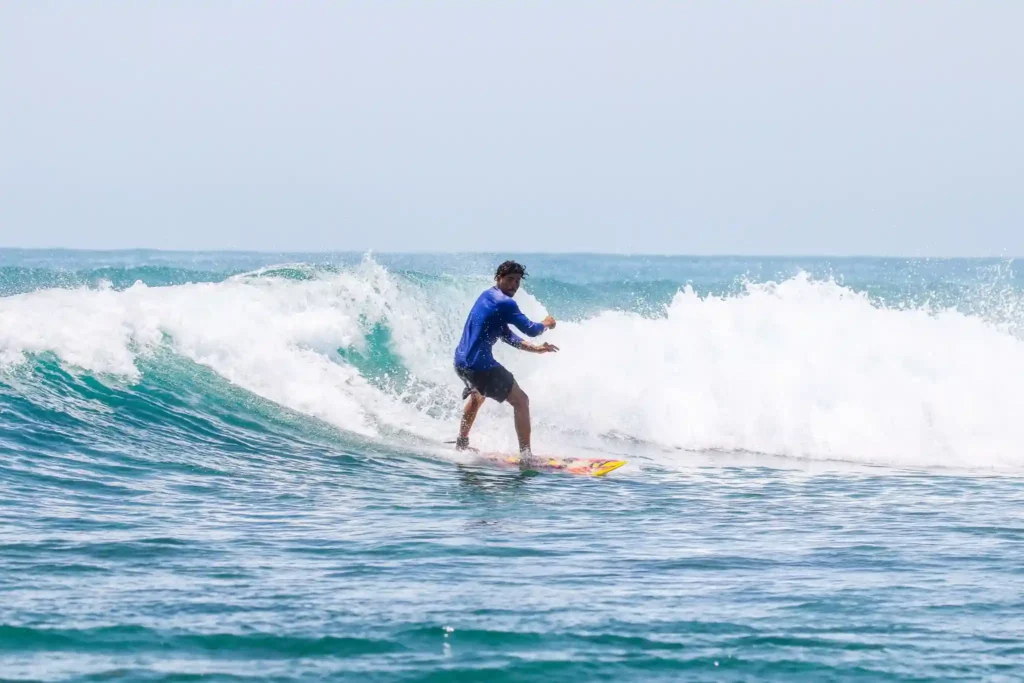

Things to Do in Siquijor start with Cambugahay Falls, a three-level turquoise waterfall where you can swim, jump off small cliffs, and try the rope swing for free. Other top spots include cliff diving at Salagdoong Beach for about ₱50, visiting the 400-year-old balete tree with its fish spa, and meeting traditional folk healers in Siquijor town.
Siquijor is a small island in the Central Visayas, and you can reach it by a one-hour ferry from Dumaguete. Most travelers rent a scooter for about ₱350 a day and see the whole island in three or four days. This guide lists all 21 things to do in Siquijor, with real prices and locations so that you can plan your trip easily.
What Is Siquijor Best Known For?
Siquijor is best known for three things: glowing turquoise waterfalls, centuries-old folk healers called mananambal, and quieter beaches than Boracay or Cebu. The island sits in Central Visayas and is reachable by ferry from Dumaguete, Cebu, or Bohol in under two hours.
Things to Do in Siquijor: Quick-Look Overview
Here’s a snapshot of the island’s top spots, useful for mapping a route around the 72-kilometer ring road that circles Siquijor.
Looking for Paradise? Start with Siquijor. Read more in Siquijor Beach That Locals Call Magical for a Reason.
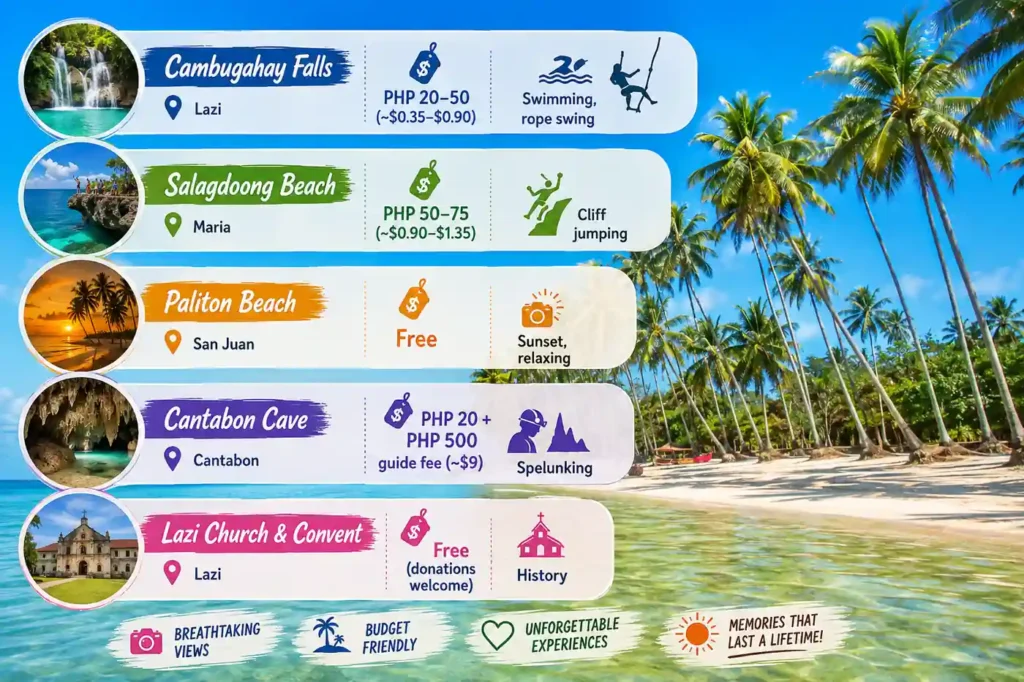
Top Siquijor Attractions at a Glance
| Attraction | Location | Entrance Fee (approx.) | Best For |
| Cambugahay Falls | Lazi | PHP 20–50 (~$0.35–$0.90) | Swimming, rope swing |
| Salagdoong Beach | Maria | PHP 50–75 (~$0.90–$1.35) | Cliff jumping |
| Paliton Beach | San Juan | Free | Sunset, relaxing |
| Cantabon Cave | Cantabon | PHP 20 + PHP 500 guide fee (~$9) | Spelunking |
| Lazi Church & Convent | Lazi | Free (donations welcome) | History |
1. Visit Cambugahay Falls
This three-tier waterfall near Lazi tops nearly every visitor’s itinerary, and the turquoise pools look almost too blue to be real in morning light. A rope swing and bamboo raft each cost around PHP 20–50, on top of the PHP 20–50 entrance fee. Go before 8 a.m. to beat the tour buses. Bring water shoes, since the rocks turn slippery fast. It’s about a 30-minute scooter ride from San Juan, where most travelers base themselves.
2. Swim at Salagdoong Beach
This government-run beach in Maria town fuels Siquijor’s adrenaline reputation. Two coral coves sit beneath jumping platforms roughly 5 to 10 meters high. Entry runs about PHP 50–75, plus PHP 20 for scooter parking. Jump only at high tide, and check with attendants first. The offshore reef also makes a decent snorkel. Arrive early, since day-tour groups fill the beach by late morning.
3. Relax at Paliton Beach
Paliton is the antidote to Salagdoong’s crowds, quiet white sand backed by coconut palms in San Juan, with no real entrance fee. Shallow, calm water makes it easy for families or anyone who just wants to float. Vendors are limited, so bring your own snacks and drinks. It’s a short ride from most San Juan stays, pairing well with a morning Cambugahay Falls trip, and its sunsets deserve their own mention later.
4. Explore Lugnason Falls
Lugnason Falls sits close to San Juan but draws a fraction of Cambugahay’s crowd. A short jungle walk leads to a single-tier drop into a deep, swimmable pool. Entrance runs around PHP 20, and queues are rare. The setting feels wilder, with thick tree cover and fewer man-made add-ons. If Cambugahay felt too commercial, this is the quieter alternative.
5. Visit the Century-Old Balete Tree
Just outside San Juan stands a balete tree believed to be several hundred years old, its roots spreading wide enough to cradle small pools of spring water. It’s one of the more atmospheric things to do in Siquijor, thanks to its scale and the folklore around old balete trees islandwide. Entrance is usually under PHP 50. The tangled roots make for striking photos, and it pairs naturally with the fish spa below.
6. Experience the Balete Tree Fish Spa
Beneath those roots sits a small natural pool where tiny fish nibble at your feet, a free-range version of the spas you’d otherwise pay for in a mall. It’s included with the balete tree fee, no separate ticket needed. The sensation is ticklish at first, then oddly relaxing. Shade from the canopy keeps the water cool year-round.
7. Explore Cantabon Cave
Cantabon Cave sits near the island’s center and requires a licensed guide, included in the fee. Entrance runs about PHP 20, plus roughly PHP 500 for a guide covering up to three people, so budget close to $9–$10 total. The one-hour route passes stalactites, stalagmites, and an underground stream. Helmets and headlamps come with the guide; water shoes rent on-site. Heavy rain sometimes forces closures.
How Many Days Do You Need in Siquijor?
Three to four days is enough to cover the island’s major waterfalls, beaches, churches, and at least one healing or diving experience without rushing. Siquijor is small enough to circle by scooter in a day, but spreading visits out avoids exhaustion and lets you catch both sunrise and sunset spots.
8. Visit St. Francis of Assisi Church
This coral-stone church in San Juan town dates to the Spanish colonial period and remains an active parish today. Its thick walls and bell tower echo the defensive architecture common across old Visayan churches, built partly to withstand pirate raids. The interior is modest next to Lazi’s grander convent, but worth a quick stop. Early morning or late afternoon avoids mass-time crowds, and it pairs well with nearby Capilay Spring Park.

Exploring Siquijor becomes much more enjoyable with a guide who knows the island inside out. Guests consistently praise the smooth experience, friendly service, and flexible schedule.
.57Best Time to Visit Siquijor by Activity
| Season | Months | Best For |
| Dry season peak | February–April | Diving, snorkeling, clearest water |
| Dry season | November–January | Waterfalls, beaches, comfortable temperatures |
| Wet season | June–October | Fewer crowds, lower prices, occasional cave closures |
Know the Best Months to Explore Siquijor. Read more in Best Time to Visit Siquijor Without the Rain Ruining Your Trip.
9. Explore Lazi Church and Convent
The Church of San Isidro Labrador and its adjoining convent form one of the island’s most significant heritage sites, with the convent ranking among the largest of its kind in Asia. Local legend claims egg whites were mixed into the original mortar. The complex is recognized by the National Museum of the Philippines
as an Important Cultural Property. Entry is free, though donations are welcome. Combine with nearby Lugnason or Cambugahay Falls for an efficient southern loop.
10. Relax at Capilay Spring Park
Right in San Juan town, this public spring-fed pool has served as a local gathering spot for generations, long before tourism reshaped the island. Entry is free, and residents genuinely use it for laundry, bathing, and swimming, not just tourist photos. The water stays clear and cool even at midday. Shaded benches make it easy to sit and watch island life for a while, especially in quieter evening hours.
11. Enjoy the Views from Pitogo Cliff
Pitogo Cliff offers one of the island’s better coastal viewpoints, with optional cliff jumping for those wanting more than a photo stop. The platform overlooks clear water and rocky shoreline that catches beautiful late-afternoon light. It feels less commercial than Salagdoong, without the resort setup. Always check depth and tide before jumping. Many island-hopping tours include a short stop here.
12. Visit Tulapos Marine Sanctuary
Located in Maria town, this protected sanctuary features a mangrove boardwalk leading to a snorkeling area known for giant clams and healthy coral. A small guide or entrance fee funds conservation work. The boardwalk alone is worth the stop, with good views over the mangrove ecosystem. Gear can usually be rented on-site. Visibility peaks roughly November through May.
13. Chase Tulapos Falls
Less documented than Cambugahay or Lugnason, this smaller waterfall near San Juan rewards travelers willing to ask locals for directions. The setting is rustic, with fewer facilities and almost no crowds. It isn’t the tallest fall on the island, but seclusion is the point. Wear sturdy footwear, since the trail turns slick after rain, and treat it as a bonus stop rather than a must-see.
14. Experience Siquijor’s Traditional Healing
Long before wellness tourism became a buzzword, Siquijor’s mananambal, or folk healers, were practicing bolo-bolo, using a bamboo pipe, a stone, and a glass of water to diagnose and cleanse illness. Healing huts such as Balay Pahauli operate on donations rather than fixed pricing. Some healers have reportedly trained through the Philippine Institute of Traditional and Alternative Health Care. Approach it with curiosity and respect. Many day tours bundle a healer visit with Cambugahay Falls and the balete tree.
15. Go Cliff Jumping
Salagdoong Beach and Pitogo Cliff are the island’s main cliff-jumping spots, with platforms roughly 5 to 10 meters high. Always jump feet-first, check depth with a local first, and skip it right after heavy rain, when debris makes it risky. Morning sessions, around 8 to 11 a.m., bring calmer water and fewer spectators. It’s one of the more thrilling things to do in Siquijor, but a quick safety check beats a hospital visit.
16. Snorkeling in Siquijor
Between Tulapos Marine Sanctuary, the reef off Salagdoong, and patches near Paliton, snorkeling here rivals better-known Philippine spots without the crowds. Giant clams, healthy coral, and the occasional turtle are realistic expectations, not marketing promises. Gear rental runs a few hundred pesos if you didn’t pack your own. Visibility peaks roughly February through April. Guided trips through local shops cost around PHP 500–1,000 per person.
17. Scuba Diving in Siquijor
Siquijor has quietly become a respected diving spot, known for healthy coral walls, resident turtles, and macro life like nudibranchs and frogfish. Several PADI–affiliated centers operate out of San Juan, with Open Water certification priced around PHP 21,500 (roughly $375). Best conditions run November through May, with February to April usually clearest. Boats rarely feel crowded, even in peak season. Many shops also run day trips to nearby Apo Island.
Why These Things to Do in Siquijor Make It the Philippines’ Most Underrated Island
There’s a reason travelers who “just pass through” Siquijor often extend their stay. The things to do in Siquijor aren’t flashy the way Boracay’s white sand or El Nido’s lagoons are; they’re layered, cultural, and often free or nearly free. You get waterfalls without the queues, cliff jumps without influencer crowds, and a living folk-healing tradition found nowhere else. That mix keeps this small island climbing “hidden gem” lists.
Activity Costs at a Glance (2026 Estimates)
| Activity | Cost (PHP) | Cost (USD) |
| Waterfall entrance fees | 20–50 | $0.35–$0.90 |
| Cliff jump/rope swing extras | 20–50 | $0.35–$0.90 |
| Cave guide (group of 3) | 500 | ~$9 |
| Guided snorkel trip | 500–1,000 | $9–$18 |
| PADI Open Water course | 21,500 | ~$375 |
| Scooter rental (per day) | 250–350 | $4.50–$6 |
| Day tour with guide/driver | 2,700–3,400 | $50–$62 |
18. Join an Island-Hopping Tour
Guided tours are the easiest way to hit multiple things to do in Siquijor in one day, especially if you’re uneasy on a scooter. Full-day packages run about $50–$62 per person, including driver, guide, and admission to stops like Cambugahay Falls, the balete tree, and a healer visit. Tours depart early from San Juan and wrap up around sunset. Group sizes stay small, keeping the pace relaxed. Booking a day ahead is usually enough.
19. Watch the Sunset at Paliton Beach
Paliton Beach faces west, making it one of the island’s most reliable sunset spots. Arrive about 30 minutes early to claim a good stretch of sand before the modest evening crowd. There’s no entrance fee, so it’s a budget-friendly way to close out a day of falls and cliff jumps. A few stalls sell cold drinks nearby, but bring your own just in case. The palm silhouettes against the sky are among the most photographed on the island.
20. Try Local Food in Siquijor
Food here leans on fresh seafood, coconut, and Visayan comfort dishes over elaborate presentation. Look for grilled fish, kinilaw (a Filipino-style ceviche), and budbud, a sticky rice snack sold near markets. Small carinderias in San Juan serve full meals for roughly $2–$4, far below resort prices. Roadside coconuts cost next to nothing and make the best rehydration after a day outdoors. Don’t skip unbranded eateries; they’re often the best value on the island.
21. Shop for Local Souvenirs
Siquijor’s markets sell handmade goods tied to the island’s healing reputation, including herbal oils, amulets, and dried medicinal plants. San Juan has the highest concentration of shops, with fair prices that rarely need haggling. Woven baskets, coconut-shell crafts, and small wood carvings make practical gifts. Buying directly from healers or family stalls, rather than large gift shops, puts more money into local hands. Expect $2–$10 for most souvenirs.
What Are the Top Things to Do in Siquijor?
The top things to do in Siquijor include swimming at Cambugahay Falls, cliff jumping at Salagdoong Beach, visiting the century-old balete tree, exploring Cantabon Cave, and joining a traditional bolo-bolo healing session. Most attractions charge modest fees under $1, making the island one of the more affordable adventure destinations in the Philippines.
FAQs About Things to Do in Siquijor
Is Siquijor safe for tourists in 2026?
Yes. Siquijor remains one of the safer Philippine provinces for travelers, with low crime and a tourism-focused economy. Standard precautions still apply around scooters and cliff jumping.
How do you get to Siquijor?
Ferries run from Dumaguete (about 1 hour), Cebu, and Bohol. There’s no airport, so sea travel is the only option.
What currency should I bring?
The Philippine peso (PHP) is used everywhere, including small attraction booths, so carry small bills for fees under $1.
Is Siquijor a good day trip from Dumaguete?
It’s possible but rushed. Two nights lets you see waterfalls, beaches, and cultural sites without racing the ferry schedule.
Do I need a guide for Cantabon Cave?
Yes, a licensed local guide is required and included in the fee, for safety and to protect the cave’s formations.