

The best time to visit Siquijor is between November and May, when the island enjoys its dry season with clear skies, calm seas, and warm temperatures of 25-32°C. During this period, the water stays calm and clean, so island hopping and snorkeling trips run smoothly without delays.
Ferries also stay on schedule, and you get more sunny days for beach time and diving. If you plan your trip in these months, you will get the best experience, and the best time to visit Siquijor also lines up with the famous April Healing Festival, giving you a chance to see local traditions up close.
What Is the Best Time to Visit Siquijor?
The best time to visit Siquijor is from November to May, during the dry season, when rainfall drops sharply and daytime temperatures sit between 25°C and 32°C. March to May runs warmest, while November and December feel cooler and less humid.
Why the Best Time to Visit Siquijor Matters
Timing changes almost everything about the trip. Ferries between Dumaguete and Siquijor run more reliably in calm weather, and rough seas during storm season occasionally force cancellations. Waterfalls like Cambugahay look their best when water runs clear instead of churned brown. Scooter routes around the island are safer when roads aren’t slick with rain.
Diving and snorkeling visibility also depends heavily on swell and runoff. Even a simple beach picnic can get rained out in the wrong month. Choosing the right season genuinely shapes whether your itinerary survives contact with reality.
Best Time to Visit Siquijor for Sunny Weather
Aim for February through April for the most reliable sunshine. These months sit inside the dry season, with minimal rain and long stretches of clear sky. Humidity stays lower than in peak summer, making hikes to Mt. Bandilaan more comfortable. Mornings tend to be clearest, so schedule outdoor plans before 10 a.m. Midday heat can still climb near 32°C, so sun protection matters. Occasional afternoon showers do sneak in even during dry months, so keep some flexibility either way.
Best Time to Visit Siquijor for Beach Activities
Beach days work best from December through May, when seas stay calm and sand isn’t churned by storm surge. Paliton Beach and Salagdoong Beach both benefit from flatter dry-season water. Strong winds in rainy months can stir up seaweed near shore, taking some shine off a lazy beach day. A few things worth knowing:
- High tide usually means deeper, more swimmable water.
- Weekday mornings are far quieter than weekends and holidays.
- Shade is limited at several beaches, so bring your own cover.
- Currents can strengthen fast during sudden weather shifts, even in dry season.
Best Time to Visit Siquijor for Swimming and Snorkeling
Swimming and snorkeling peak from March to May, when water runs warmest and clearest. Reefs around Paliton and Solangon see better clarity once rainy-season runoff settles. Trips to the Marine Sanctuary in San Juan also depend on calm surfaces, since choppy water stirs up sediment fast.
Locals and dive shops usually recommend checking conditions the morning of, since weather can shift within hours even in dry season. Families with less confident swimmers should stick to sheltered coves rather than open water outside this window.
Best Time to Visit Siquijor for Diving
Divers get the best visibility from November through May, when calmer seas keep sediment settled, and sightlines stretch further. Sites like Tongo Point and Salagdoong reward calm-swell days with clear coral walls. Rainy-season diving isn’t impossible, but stronger currents and murkier water make it less predictable for casual divers.

I think this is one of the best ways to experience Siquijor beyond its beaches. Exploring the underwater world at Tulapos Marine Sanctuary is well worth it.
Operators typically recommend early morning sessions before wind builds later in the day. Always confirm a dive shop’s certification and safety standards before booking, regardless of season. Divers chasing macro life like nudibranchs may still find rainy months workable, since visibility matters less for spotting small creatures.
Is Siquijor Good for Diving All Year Round?
Siquijor can technically be dived year-round, but visibility and safety are noticeably better from November to May. Rainy-season dives from June to October face stronger currents, murkier water, and a higher chance of cancelled boat trips.
Best Time to Visit Siquijor to Avoid Crowds
For fewer crowds without giving up too much sunshine, target the shoulder weeks of November and early June. These weeks still offer decent weather while missing the tourist waves of Holy Week and the December-January holidays. Rooms are easier to book last-minute, and Cambugahay Falls feels far less like a queue. Locals often describe these transition weeks as the island’s quietest, most laid-back stretch. A few tips:
- Skip Holy Week entirely if crowds bother you; it’s the busiest week of the year.
- Mid-week travel almost always beats weekends for smaller crowds.
- Early mornings dodge both heat and tour groups at popular spots.
- December 20 to January 5 is peak holiday season and books out fast.
Best Time to Visit Siquijor for Budget Travelers
Budget travelers tend to find the best deals from June through October, when hotel rates often drop and bargaining power improves. Resorts charging premium rates in March routinely discount rooms once low season hits. Ferry tickets and scooter rentals stay roughly the same price year-round, so savings mostly come from accommodation and fewer tour upsells.
Meals at local carinderias stay inexpensive year-round, often just a few dollars. Keep a small buffer for unexpected ferry delays caused by weather, since rebooking can add unplanned cost.
Siquijor Weather by Season
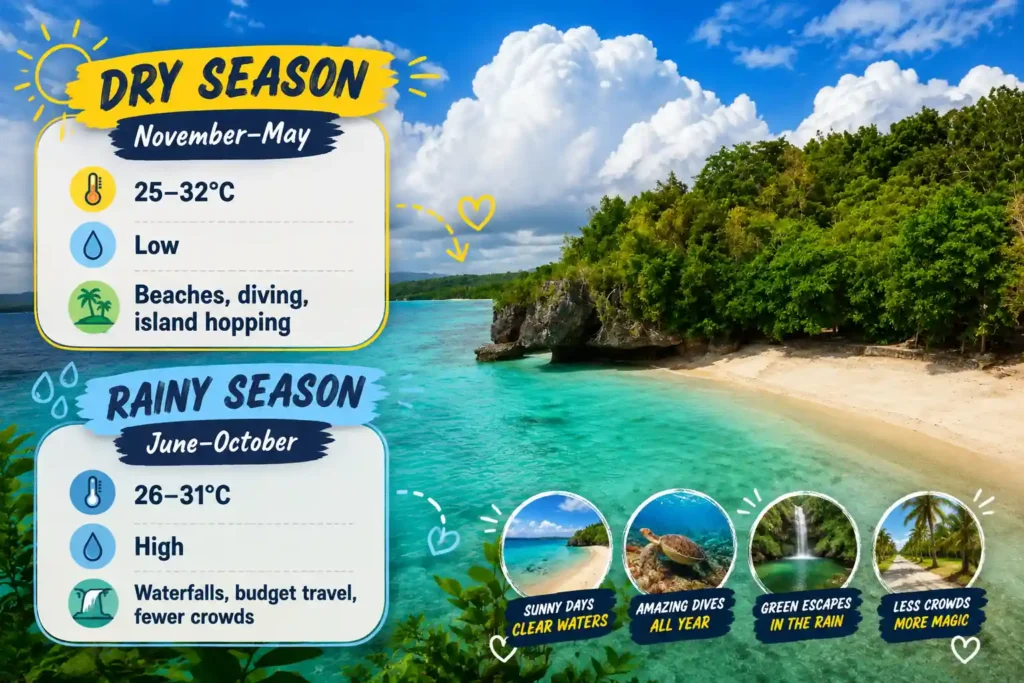
Siquijor’s climate splits fairly cleanly into two seasons, which simplifies planning compared to other Philippine regions. Dry season runs roughly November through May; rainy season covers June through October.
Neither is extreme by local standards, and the island sits outside the main typhoon corridor, though it can still catch a storm’s edge. Humidity climbs noticeably during rainy months, while dry-season air feels crisper, especially December to February. Here’s a quick snapshot of what to expect each season before locking in dates.
| Season | Months | Typical Temp | Rainfall | Best For |
| Dry Season | November–May | 25–32°C | Low | Beaches, diving, island hopping |
| Rainy Season | June–October | 26–31°C | High | Waterfalls, budget travel, fewer crowds |
Siquijor Weather by Month
Many travelers search month by month rather than season by season, so here’s a closer look. Conditions can vary year to year, so treat this as a general guide. The clearest, driest window sits between January and April, while August through October usually brings the heaviest rain.
Wind patterns shift with the season too, affecting ferry comfort and surf on the western coast. The table below summarizes expected trends month by month.
| Month | Weather Trend | Sea Conditions |
| Nov–Feb | Cool, dry, low humidity | Calm |
| Mar–May | Hot, dry, occasional showers | Calm to slightly choppy |
| Jun–Jul | Warm, humid, afternoon showers | Moderate |
| Aug–Oct | Wettest months, possible storms | Choppy, ferry delays possible |
Dry Season in Siquijor (November to May)
Dry season shows off the island’s best side. Rainfall drops considerably, and clear mornings are the norm. November and December run cooler, while March through May heats up.
Ferries run more predictably, and outdoor plans rarely need a backup date. Accommodation prices climb alongside demand. Waterfalls run lower and clearer, suiting swimmers more than photographers chasing dramatic flow.
Rainy Season in Siquijor (June to October)
Rainy season doesn’t mean constant downpours; most days bring short, heavy bursts rather than all-day rain. Mornings are frequently clear, with showers rolling in later. August through October tends to be wettest, occasionally affected by storm systems passing through the wider Visayas region. Waterfalls turn far more dramatic, which photographers tend to love. Ferry crossings can face delays when swells pick up, so build flex days into your itinerary.
Peak Season vs Off-Season in Siquijor
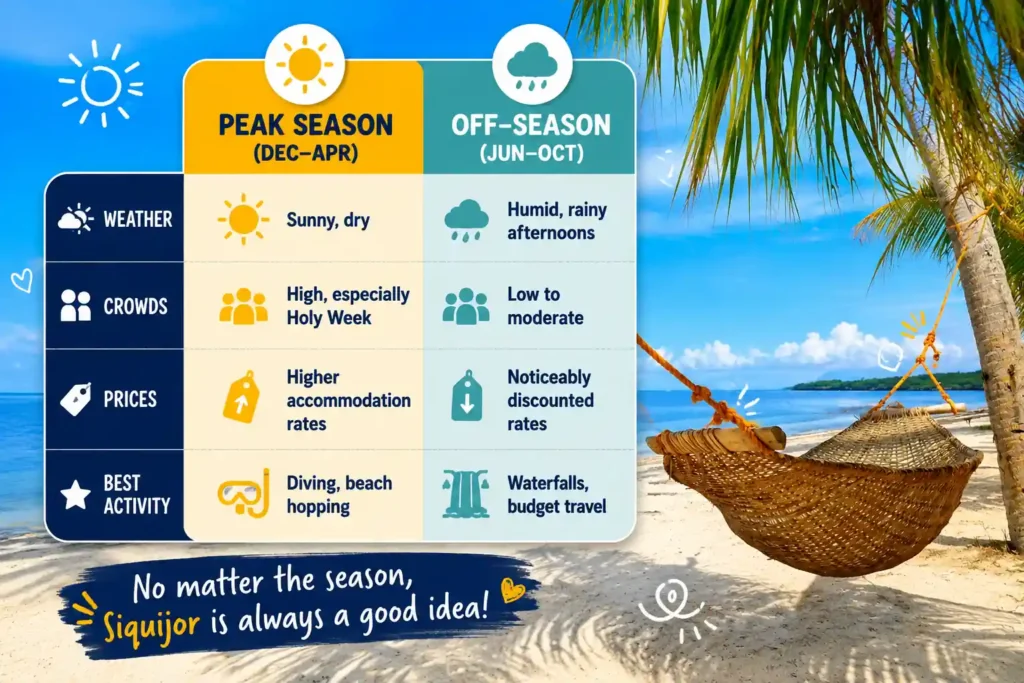
Peak season runs roughly December through April, overlapping the best weather with the busiest crowds. Off-season, June through October, trades some sunshine for lower prices and a quieter island. Neither is objectively better; it depends on whether weather or value matters more.
Holy Week deserves a mention, since it combines dry-season weather with the heaviest crowd surge of the year. Off-season travelers can expect more flexible cancellation policies, since operators know weather can disrupt plans. Here’s the practical trade-off side by side.
| Factor | Peak Season (Dec–Apr) | Off-Season (Jun–Oct) |
| Weather | Sunny, dry | Humid, rainy afternoons |
| Crowds | High, especially Holy Week | Low to moderate |
| Prices | Higher accommodation rates | Noticeably discounted rates |
| Best Activity | Diving, beach hopping | Waterfalls, budget travel |
Best Month to Visit Siquijor
If forced to pick one month, April usually wins for combining good weather with the island’s most distinctive cultural event. Seas stay calm, rainfall is minimal, and temperatures suit beach days and hikes alike. April also falls close to Holy Week most years, though the exact date shifts since Easter moves annually.
Travelers who prefer quieter beaches over cultural events might like November better, since dry season has just started and crowds haven’t arrived yet. Either month sits firmly within the best time to visit Siquijor window, so the choice comes down to personal priorities.
How Many Days Do You Need in Siquijor?
Most travelers find three to four days enough to cover Siquijor’s main highlights, including waterfalls, beaches, and a scooter loop around the island. Those adding diving trips or a slower pace often extend to five or six days.
Festivals That Can Affect Your Visit
Siquijor’s most famous event is the Holy Week Folk Healing Festival, centered in the barangay of San Antonio. Local healers, called mananambal, spend seven Fridays gathering herbs before preparing traditional potions in large cauldrons on Black Saturday. In 2026, Holy Week falls in late March into early April, with Easter Sunday landing on April 5.
The event draws healers from across the Visayas and Mindanao, along with curious travelers, which pushes prices up and availability down. According to the Siquijor Provincial Tourism Office, the festival remains one of the island’s most significant cultural traditions. Book rooms well ahead if visiting during this week, since options fill fast even outside peak season.
Tips for Choosing the Best Time to Visit Siquijor
Picking dates gets easier once you know what matters most for your trip:
- Prioritize November to May if calm seas and reliable ferries are non-negotiable.
- Choose June to October if lower prices matter more than guaranteed sun.
- Avoid Holy Week if you dislike crowds, unless the healing festival is the draw.
- Check the Philippine Atmospheric, Geophysical and Astronomical Services Administration (PAGASA) forecast a few days before travel, since tropical weather shifts quickly.
- Build at least one flexible day into any itinerary depending on ferry crossings.

Weather here is generally milder than in typhoon-prone parts of the Philippines, but not entirely predictable, so a planning buffer helps.
Which Month Wins for Your Siquijor Trip?
There’s no single “perfect” month for every traveler, but dry season from November to May remains the safest bet for calm seas, sunny days, and reliable ferries. Budget travelers and waterfall chasers might actually prefer the rainy months, trading sunshine for lower prices and quieter trails. Whichever window you pick, checking real-time conditions through a source like the Philippine Statistics Authority or local weather updates before booking ferries is always smart. At the end of the day, the best time to visit Siquijor comes down to matching the season to what you actually want from the trip.
Plan Your Dream Siquijor Trip at the Perfect Time. Read more in Siquijor Beach That Locals Call Magical for a Reason.
Frequently Asked Questions
What is the best time to visit Siquijor?
The best time to visit Siquijor is between November and May, during the dry season, when seas are calm and rainfall is low.
Is Siquijor safe to visit during rainy season?
Yes, generally. Expect occasional ferry delays and stronger currents at some beaches.
What month has the best weather in Siquijor?
March and April usually offer the best mix of sunshine, warmth, and calm seas.
How many days should I spend in Siquijor?
Three to four days suit most first-time visitors; five to six suit those adding diving or a slower pace.
When is the Siquijor Healing Festival held?
During Holy Week, culminating on Black Saturday, which falls on April 4 in 2026.
Is Siquijor good for diving year-round?
Yes, but visibility and conditions are noticeably better from November to May.