

The best time to go to Nacpan Beach is during the dry season, from December through May, when the sea stays calm, and the four-kilometer shoreline is easiest to enjoy without rain cutting a day short. Conditions shift between June and October, when rain and stronger currents move in, though the beach still draws visitors who prefer thinner crowds over guaranteed sunshine. Timing a trip to Nacpan Beach also depends on what matters most to you: swimming, sunset photos, or just quiet sand without a tour van parked nearby. This guide breaks the best time to go to Nacpan Beach down by month, time of day, and budget, using current conditions in El Nido, Palawan.
Best Time to Go to Nacpan Beach in El Nido, Palawan
What Is the Best Time to Go to Nacpan Beach?
The best time to go to Nacpan Beach is between December and March, when the northeast monsoon keeps skies clear, seas calm, and rainfall low. February and March typically offer the driest, most consistent conditions. Outside this window, visits are still possible, just with more variable weather.
Nacpan Beach Weather by Season
Nacpan Beach follows the same two-season pattern as the rest of Palawan: a dry Amihan season and a wet Habagat season. The Philippine Atmospheric, Geophysical and Astronomical Services Administration (PAGASA) tracks the shift between these two systems each year, and the change usually plays out in a predictable order.
Palawan also sits in what locals call a typhoon shadow, so it sees fewer direct storm hits than Luzon or the Visayas, though tropical systems can still pass close enough to bring rain and rough seas. Nacpan and its sister beach, Calitang, also sit inside a protected area jointly managed with the Department of Environment and Natural Resources (DENR), which helps regulate development along this stretch of coastline.
The table below breaks down what to expect from Nacpan Beach’s weather across the year.
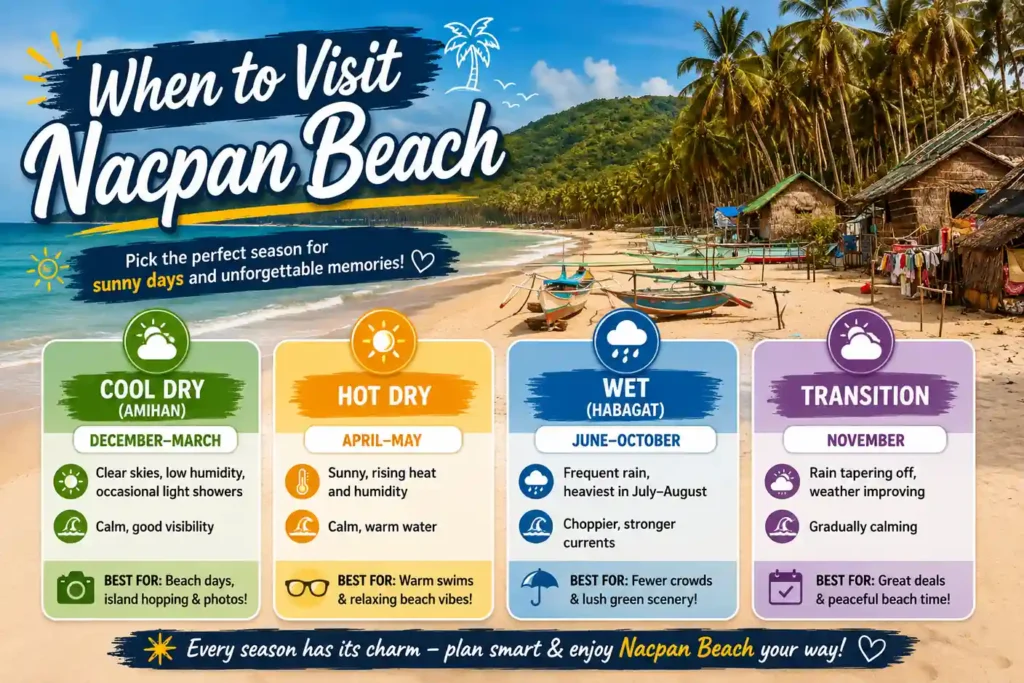
| Season | Months | General Weather | Sea Conditions |
| Cool dry (Amihan) | December–March | Clear skies, low humidity, occasional light showers | Calm, good visibility |
| Hot dry | April–May | Sunny, rising heat and humidity | Calm, warm water |
| Wet (Habagat) | June–October | Frequent rain, heaviest in July–August | Choppier, stronger currents |
| Transition | November | Rain tapering off, weather improving | Gradually calming |
December to March: Best Time for Good Weather
This stretch is the clearest and driest window at Nacpan Beach, driven by the Amihan or northeast monsoon. Mornings tend to be calm and sunny, with the sea flat enough for easy swimming. It’s also the busiest stretch of the year, especially around Christmas, New Year, and the February to March weekends. Book accommodation early if you’re planning a visit in this window.
April to May: Hotter but Less Crowded
The dry weather holds through April and May, but the heat climbs noticeably, often making midday visits uncomfortable without shade. Fewer tourists show up compared to the December to March rush, aside from a brief spike around Holy Week. Water stays calm and clear, so early mornings or late afternoons work best for avoiding the strongest sun.
June to October: Rainy Season
The southwest monsoon, or Habagat, brings frequent rain from June through October, with the heaviest downpours typically in July and August. Roads to Nacpan can get muddy in spots, and the sea often turns choppier with stronger currents.
Tropical cyclones can also form during these months, so it’s worth checking PAGASA’s forecasts before committing to travel dates. On the upside, the beach empties, and rates for accommodation tend to drop.
November: A Good Shoulder Season
November marks the transition back to dry weather, as the Amihan gradually takes over from the Habagat. Rain becomes less frequent as the month goes on, though it isn’t fully gone yet. Crowds stay lighter than the December peak, making this a reasonable middle-ground choice for travelers who want decent weather without the busiest season’s price tags.
Best Time of Day to Visit Nacpan Beach
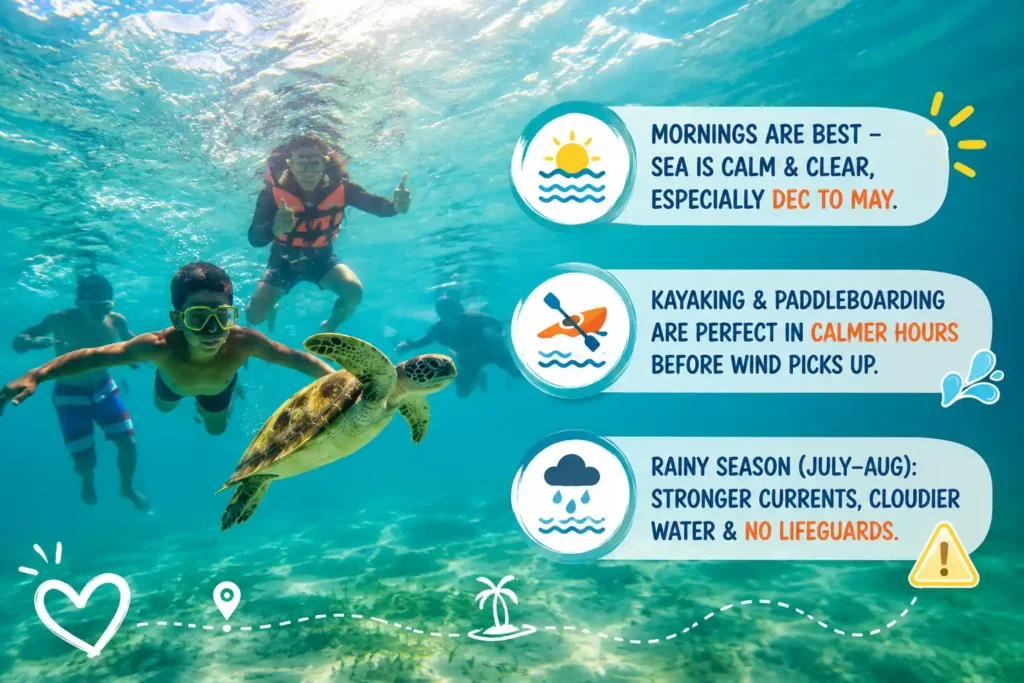
Morning, roughly 7 to 11 a.m., is the best window at Nacpan Beach, when the water is glassy and calm, and the light is soft for photos. Onshore wind tends to pick up by early afternoon, creating choppier water that’s still swimmable but less relaxing. Arriving before 10 a.m. also means beating the day-tour groups that roll in by midmorning. Late afternoon works well too, mainly for the walk along the sand and the sunset.
Best Time for Swimming and Beach Activities
Swimming conditions are best in the morning, when the sea is calmest and clearest, particularly during the dry season from December to May. Kayaking and paddleboarding also work well in these calmer hours, before wind picks up the chop. During the rainy season, especially July and August, stronger currents and cloudier water make swimming less appealing, and lifeguards aren’t stationed on the beach at any time of year.
Is It Safe to Swim at Nacpan Beach During Rainy Season?
Swimming is possible during the rainy season, but conditions are less predictable, with stronger currents near the headlands and choppier water in the afternoons. There are no lifeguards at any time of year, so caution matters more, not less, when the sea looks rough. Dry-season mornings remain the safer, calmer choice for swimming.
Best Time to See the Sunset
Nacpan Beach sunset is a beautiful experience, thanks to the beach’s west-facing position. The hill between Nacpan and its sister beach, Calitang, offers one of the best sunset viewpoints. Sunset usually takes place around 5:30 to 6:00 p.m., so arriving about an hour early gives you time to find a good spot on the sand. During the dry season, clearer skies often create vibrant sunset colors, while rainy-season clouds can sometimes hide the sun.
Best Time to Avoid Crowds
Weekday mornings, outside the December to March peak, are the quietest stretch at Nacpan Beach. The four-kilometer length means even busy days rarely feel packed, since day-tour groups tend to cluster near the southern entrance. Walking north toward Calitang puts more distance between you and the crowd almost immediately. Rainy season, despite its downsides, is the most reliable way to get long stretches of sand to yourself.
What Time Should You Arrive at Nacpan Beach to Avoid Crowds?
Arriving before 10 a.m. is the most reliable way to avoid crowds at Nacpan Beach, since day-tour groups from El Nido town typically arrive by midmorning and stay through early afternoon. The beach thins out again by late afternoon. Weekday visits, especially outside peak dry-season months, add another layer of quiet.
Best Time to Visit Nacpan Beach on a Budget
Rainy season, from June through October, offers the lowest Nacpan Beach accommodation prices, as tourist demand drops significantly. Entrance to Nacpan Beach is free, although every tourist visiting El Nido must pay the Eco-Tourism Development Fee, which supports environmental protection across the municipality. The Municipality of El Nido, through its ETDF Management Board, sets and collects this fee under Municipal Ordinance No. 01, Series of 2024.
Use this table to plan a rough day-trip or overnight budget for Nacpan Beach.
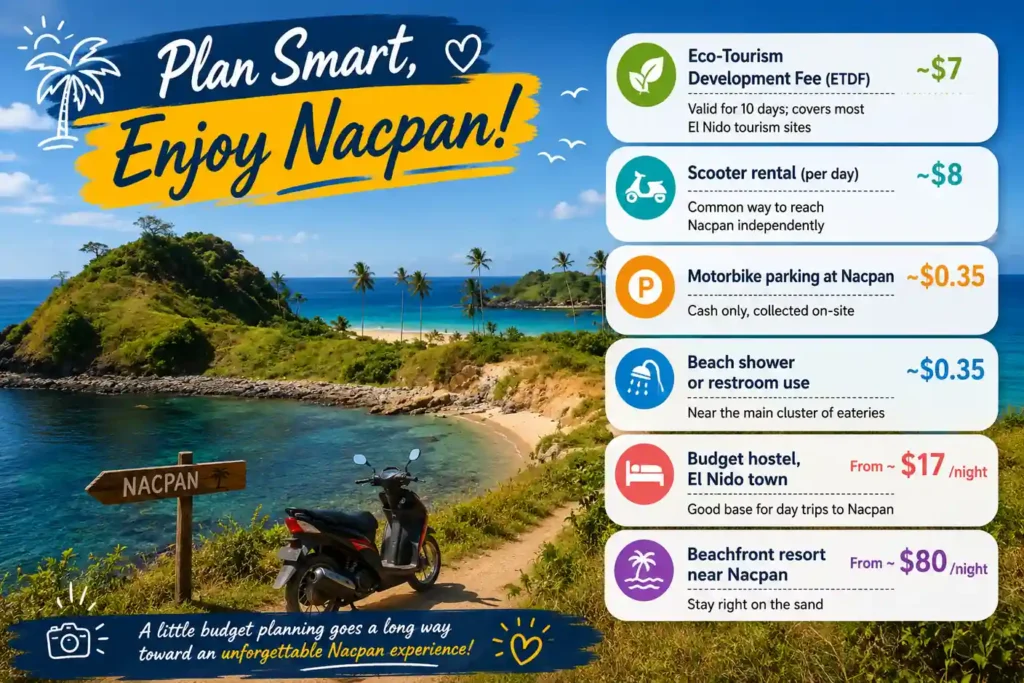
| Expense | Approximate Cost (USD) | Notes |
| Eco-Tourism Development Fee (ETDF) | ~$7 | Valid for 10 days; covers most El Nido tourism sites |
| Scooter rental (per day) | ~$8 | Common way to reach Nacpan independently |
| Motorbike parking at Nacpan | ~$0.35 | Cash only, collected on-site |
| Beach shower or restroom use | ~$0.35 | Near the main cluster of eateries |
| Budget hostel, El Nido town | From ~$17/night | Good base for day trips to Nacpan |
| Beachfront resort near Nacpan | From ~$80/night | Stay right on the sand |
Peak Season vs. Off-Season at Nacpan Beach
Peak season at Nacpan Beach runs roughly December through March, when dry weather draws the most visitors and accommodation prices climb. Off-season, covering June through October, trades guaranteed sunshine for thinner crowds and softer prices. Shoulder months, April, May, and November, sit in between, with decent weather and moderate demand.
This comparison shows how peak and off-season conditions differ at Nacpan Beach.
| Factor | Peak Season (Dec–Mar) | Off-Season (Jun–Oct) |
| Weather | Sunny, dry, calm seas | Frequent rain, choppier water |
| Crowds | Busiest, especially weekends | Quiet, especially weekdays |
| Accommodation prices | Higher, book ahead | Lower, easier availability |
| Best suited for | First-time visitors, swimming, photos | Budget travelers, solitude |
Is Nacpan Beach Better in Peak Season or Off-Season?
Peak season suits visitors who want reliable sunshine, calm swimming, and classic sunset photos, despite the crowds and higher prices. Off-season suits travelers chasing quiet sand and lower costs, provided they can tolerate rain and rougher water. Neither is objectively better; it depends on what the trip is built around.
What Weather to Check Before Visiting
Before locking in dates, check PAGASA’s short-range forecast and any active tropical cyclone bulletins for Palawan, since conditions can shift quickly even in dry season. The Philippine Department of Tourism and local operators in El Nido also post advisories when rough seas affect boat transport or beach access.
Road conditions matter too, since the route to Nacpan includes unpaved stretches that turn muddy after heavy rain. A flexible day or two protects against one bad-weather day ruining the trip.
So, What Is the Best Time to Go to Nacpan Beach?
The best time to go to Nacpan Beach is during the dry season, from December through May, with February and March offering the clearest skies and calmest water. Early mornings beat both the heat and the crowds, no matter which month you choose. Rainy season isn’t a dealbreaker if quiet sand matters more to you than guaranteed sunshine, but it does mean packing more flexibility into the trip.
Frequently Asked Questions About the Best Time to Visit Nacpan Beach
What is the best time of year to visit Nacpan Beach?
December through May, during the dry Amihan season, offers the calmest water and clearest skies. February and March are typically the driest months overall.
Does Nacpan Beach have an entrance fee?
Nacpan Beach itself has no entrance fee. Visitors do need to pay El Nido’s Eco-Tourism Development Fee, which covers access to tourism sites across the municipality for 10 days.
How do I get to Nacpan Beach from El Nido town?
Nacpan Beach sits about 17 kilometers from El Nido town, roughly a 45-minute to one-hour drive. Scooter rental, tricycles, and shuttle vans are the main options.
Is Nacpan Beach affected by typhoons?
Palawan sits in a relative typhoon shadow compared to Luzon and the Visayas, but tropical cyclones can still bring rain and rough seas, mostly between June and October. Check PAGASA bulletins before traveling in this window.
Is the water different in the morning versus the afternoon?
Yes. Mornings, roughly 7 to 11 a.m., bring calm, glassy water, while afternoons often turn choppier as onshore wind builds. This pattern holds across most of the year.
Is November a good time to visit Nacpan Beach?
November works as a shoulder-season option, with rain tapering off and crowds lighter than the December peak. Weather can still be inconsistent early in the month.
Should I stay overnight at Nacpan Beach or visit as a day trip?
Most visitors treat Nacpan as a day trip from El Nido town, but staying overnight lets you experience the beach in the early morning and evening with far fewer people around.