There’s a moment, and every photographer who’s been here knows it, when you first crest the limestone path down to Balangan and the whole scene just hits you. White sand, crashing surf, warung huts draped in fishing nets, and those dramatic cliffs turning amber in the late afternoon. It’s genuinely one of those places where even a mediocre shot can look incredible.
Balangan Beach photography has quietly become a bucket-list obsession among travel photographers, couples, and social creators. Unlike the crowded chaos of Seminyak or Kuta, Balangan sits about 20 kilometers south of Denpasar in the Bukit Peninsula area of Badung Regency. According to Bali Tourism resources, the beach remains one of the Bukit Peninsula’s most photogenic coastal destinations.It’s accessible but not overrun, and that balance matters enormously when you’re trying to capture something that feels real, not staged.
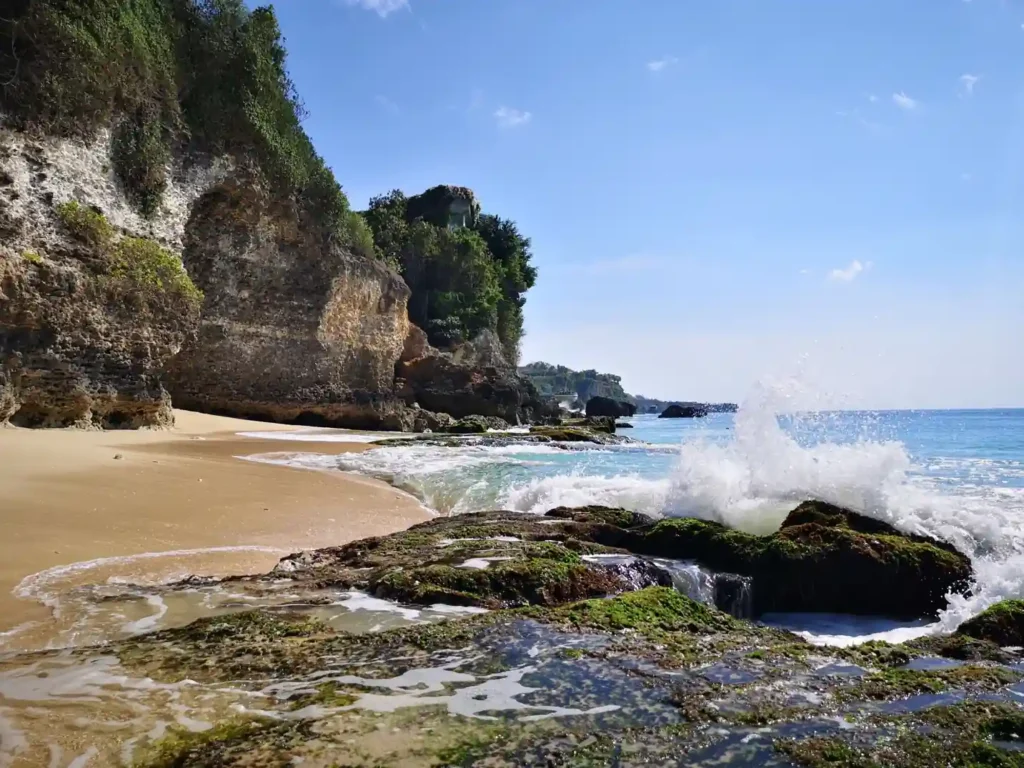
The beach stretches roughly 500 meters of pale golden sand backed by tall coconut palms and reef-framed waves. The surf break here, favored by intermediate to advanced surfers, adds natural motion and energy to photos without turning your frame into a chaotic mess. And those cliffs to the north? They’re not just backdrop material; they’re the whole drama.
Getting there is straightforward. From Kuta, it’s about a 25-minute drive via Jalan Uluwatu. Grab a scooter or hire a driver; most Go-Car drivers know it by name. The road narrows toward the end, so if you’re renting a car, park at the top and walk the last 300 meters down the stone path. Worth every step.
The Best Time of Day for Balangan Beach Photography
Here’s the honest answer: 3:30 PM to 6:00 PM is the sweet spot for most shots. The light comes in from the west-northwest, which means it side-lights the cliffs beautifully, hits the breaking waves at a low angle, and creates long, warm shadows across the sand that give portraits an unreal dimension.
That said, mornings aren’t wasted here. Between 6:30 AM and 8:00 AM, the beach is nearly empty. Families set up later, surfers are already out, and the light is softer, almost diffused. Great for sand texture and calm water shots.
Here’s a simple breakdown of what each time window gives you:
Quick reference: Balangan light by time of day. Use this table to plan your exact shooting window before you arrive.
| Time of Day | Light Quality | Best For | Crowd Level |
| 6:00 – 8:00 AM | Soft, diffused golden | Wide landscapes, an empty beach | Very low |
| 8:00 – 11:00 AM | Bright, slightly harsh | Candid surf shots, colors | Low–Moderate |
| 11:00 AM – 3:00 PM | Flat, overhead | Avoid for portraits | Moderate–High |
| 3:30 – 5:30 PM | Warm side light | Portraits, cliffs, surf action | Moderate |
| 5:30 – 6:30 PM | Golden hour + magic hour | Everything, this is the goal | Moderate |
Midday, between 11 AM and 3 PM, is genuinely unflattering for portraits. Harsh overhead sun creates deep eye shadows and blows out sand detail. If you’re stuck shooting, then use the cliff shade on the north end as a natural softbox.
Find the best time of day to capture Balangan Beach at its most photogenic. Read more in Best Time to Visit Balangan Beach: Why May Beats July.
Sunrise vs Sunset: Which Delivers Better Shots at Balangan?
Sunset wins, and it’s not particularly close. Because Balangan faces roughly southwest, the setting sun aligns almost perfectly with the beach axis between May and September. This creates that iconic “sun melting into the horizon behind the waves” effect that makes Balangan shots go viral on Instagram.
Sunrise here is still beautiful, but you’re shooting into backlight with the sun rising behind the eastern cliffs. Silhouette shots are possible, but color fills are trickier. Unless you specifically want moody, dramatic dark-foreground compositions, sunset is the move.
The best sunset dates at Balangan, if you want to plan precisely, tend to fall between April 25 and September 15, when the sun sets between 270° and 290° true west. Planning tools such as PhotoPills and Sun Surveyor can help photographers calculate exact sunset alignment and golden-hour positioning for their chosen shoot date.
Balangan Beach Photography Spots You Shouldn’t Miss
The Cliff Overlook Above the North End
Walk past the warungs and follow the worn stone path up the north cliff. At around 35 meters above sea level, you’ll find an informal viewpoint where photographers line up for that classic Balangan overview shot, the long arc of sand, the turquoise break zone, the reef shadow beneath.
Two tips nobody tells you: First, get there by 5:00 PM because after 5:15 the direct sun angle crosses into the frame and blows out the sky. Second, stand further back than you think you need to; you want the full curve of the beach in frame, not just the section directly below.
The Reef-Line Wave Zone
About 80 meters offshore, waves jack up quickly over the shallow reef. From the beach, using a 200mm or longer lens, you can isolate surfers in the curl or capture wave details without getting wet. The reef also creates beautiful aquamarine banding in the water, visible in wide shots, a natural color gradient that no filter can properly replicate.
The Southern Palm Row
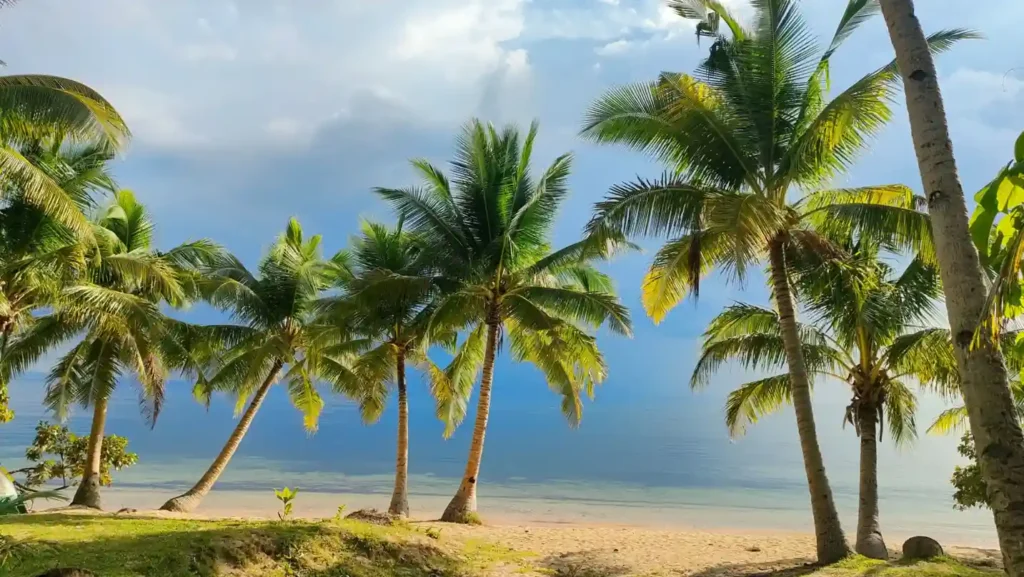
The row of leaning coconut palms along the southern half of the beach is one of the most underused foreground elements at Balangan. Using a wide-angle lens (16–24mm) and placing yourself low, you can draw the eye along the palm trunks toward the breaking waves. Morning light is actually better here because it backlit the palms without silhouetting.
What Camera Settings Work Best for Bright Beach Conditions?
This comes up constantly, so here it is clearly:
- Aperture: f/8 – f/11 for landscapes; f/2.8 – f/4 for portraits in open shade
- Shutter speed: 1/1000s or faster to freeze waves; 1/8 – 2 seconds for silky water blur (use ND filter)
- ISO: Keep at 100–200 in daylight; push to 400–800 in magic hour if needed
- White balance: Shade (6500K) for warmth, or shoot RAW and decide in post
- Metering: Spot meter on your subject’s face for portraits; evaluative/matrix for landscapes
One thing worth knowing is that beach sand reflects a surprising amount of light upward, which often fools matrix metering into underexposing faces. Dial in +0.7 to +1.0 EV exposure compensation when shooting people against bright sand backgrounds.
Capturing Natural Portraits and Candid Shots
Posed beach photos look dated. The frames that actually resonate are the ones where something real is happening: a laugh mid-conversation, someone watching the waves, a kid chasing the surf edge, a surfer waxing their board with full concentration.
The trick is giving your subject something to do rather than somewhere to stand. Walking slowly away from the camera. Looking for shells. Sitting cross-legged, watching the break. These small actions break the self-consciousness that makes people look stiff in photos.
For couples specifically, avoid the “look at each other” prompt; it’s done to death. Instead, ask them to walk into the water together and react to the temperature. Or whisper something that makes them laugh. The resulting frames almost always have more life in them than anything choreographed.
Couple Photography Ideas That Actually Look Good at Balangan
Here are approaches that consistently deliver strong results at this location:
- Silhouette against the golden hour break: Stand them at the waterline and shoot slightly upward. Keep them about 3 meters apart so both silhouettes read clearly.
- Cliff backdrop portraits: The textured limestone face on the north cliff makes a stunning environmental backdrop. No ocean needed.
- Looking out together: Both facing the horizon, arms around each other. Simple, timeless, always works with a strong backlight.
- Water play: Walking into waist-deep water and reacting. The genuine expressions are worth a wet camera bag.
- Warung bokeh: Shoot through the hanging nets and fairy lights of the beach warungs at sunset. The out-of-focus bokeh creates a magical frame for a sharp couple in the midground.
Surf Photography at Balangan Beach
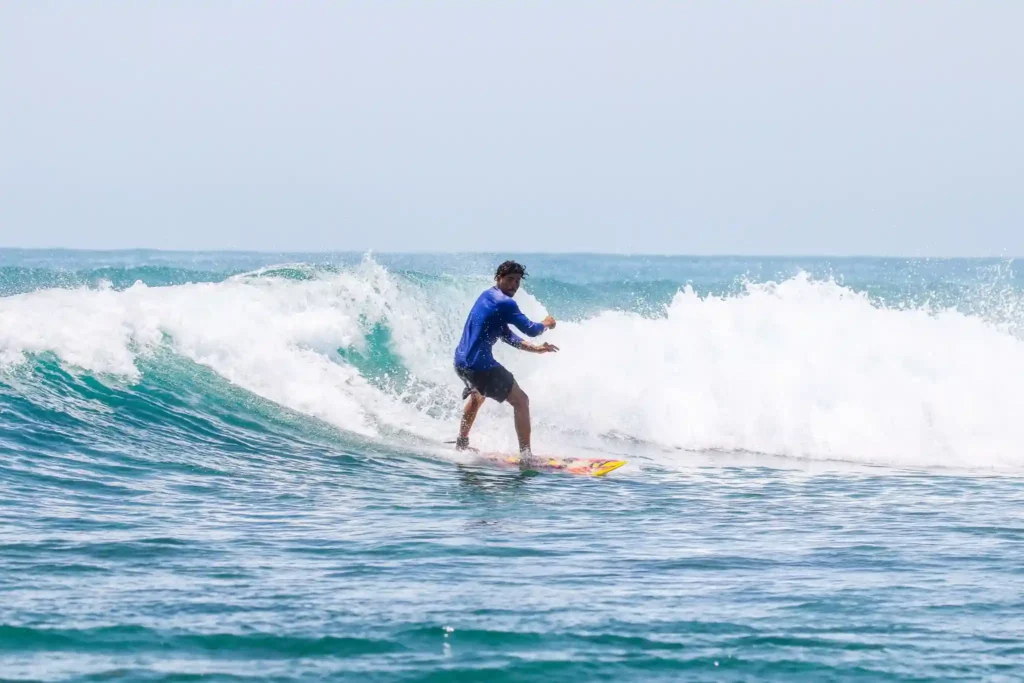
Balangan is an intermediate-to-advanced surf break, mostly right-handers over a reef bottom. From a photography standpoint, this means the action repeats in roughly predictable locations, so once you clock where the wave jacks up and where the surfer tends to ride the section, you can pre-focus and wait.
Gear comparison for surf photography at Balangan: Choose your setup based on position and budget before your shoot day.
| Setup | Focal Length | Position | Good For | Limitation |
| DSLR / Mirrorless + 300mm | 300–400mm | Beach or cliff | Isolated action, clean backgrounds | Heavy, expensive |
| DSLR + 70-200mm f/2.8 | 200mm end | Close shoreline | Surfer + wave context | Needs good timing |
| Waterhousing + wide | 15–24mm | In water (at break) | Dramatic POV | Needs swimming ability |
| Smartphone + tele clip | 3–5x zoom | Shoreline | Casual, lightweight | Limited detail at distance |
Burst mode is non-negotiable for surf photography. Even at 10 fps, you’ll throw away 80% of frames, and that’s fine. The 2 that survive will be worth it. Surf forecasting platform Surfline classifies Balangan as a reef break best suited to intermediate and advanced surfers under favorable swell conditions.
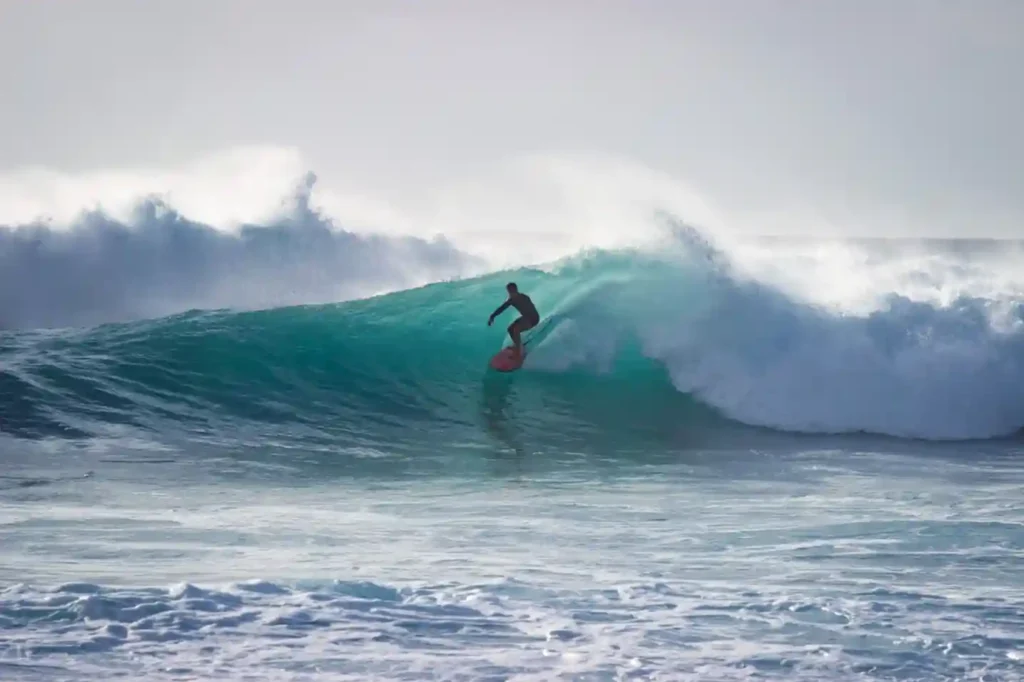
Capture Balangan’s surfers, waves, and dramatic scenery with these surf photography tips. Read more in Balangan Beach Surfing Guide: Skip Uluwatu, Go Here.
How to Capture Motion in Ocean Shots Without Losing Detail
Two techniques, depending on what look you want:
Freeze the wave: 1/1500s or faster. Captures water droplets suspended in mid-air. Works brilliantly in bright afternoon light without any ND filter needed.
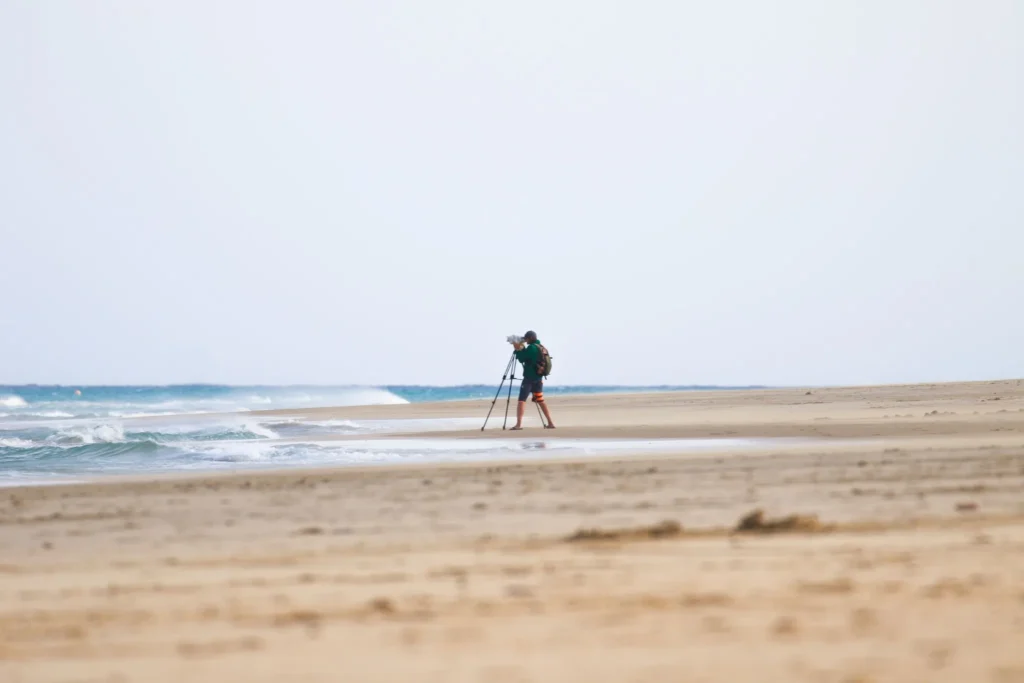
Blur the water: 1/4s to 2s. Requires a solid tripod (bring one, the sand isn’t as stable as it looks), a 6-stop or 10-stop ND filter, and patience. The result is a silky-smooth surf effect with sharp, static elements like rocks or cliffs in the frame.
A small personal note here, I used to underestimate tripods for beach work. Then I tried shooting 1-second exposures handheld and ended up with nothing usable. The mini-travel tripods from brands like Joby or Peak Design hold up surprisingly well on wet sand.
Drone Photography at Balangan Beach
Drone shots of Balangan are stunning, the reef color banding, the cliff face geometry, the arcing shoreline, all of it reads beautifully from above. But there are real-world considerations.
Rules (as of 2024–2025 Indonesian aviation regulations):
- Drones under 250g (e.g., DJI Mini 4 Pro) are generally permissible for personal/non-commercial use
- You must stay below 120 meters AGL
- Commercial drone work typically requires approval from Indonesia’s Directorate General of Civil Aviation (DGCA) and operators should always review the latest aviation requirements before flying.
- Avoid flying directly over people or the active surf zone
Drone altitude and angle guide for Balangan: These combinations consistently produce the most compelling aerial compositions at this beach.
| Altitude | Angle | What You Get | Notes |
| 30–50m | 45° looking north | Cliff + beach curve together | Best at golden hour |
| 60–80m | 90° (straight down) | Reef color gradients, wave shadows | Midday light works fine |
| 80–120m | 30° looking southwest | Full beach + horizon | Best for sunset silhouette |
| 20–30m | Low angle over waves | Dramatic surf + spray | Wind dependent |
Morning is typically calmer for drone flight, afternoon sea breezes at Balangan can hit 15–20 knots by 4 PM, which makes stable hovering tricky with smaller drones.
Smartphone Photography Tips at Balangan Beach
Not everyone carries a mirrorless system, and honestly? Some of the most emotionally compelling Balangan shots I’ve seen were taken on an iPhone 15 Pro or Samsung Galaxy S24 Ultra. Modern smartphone cameras handle beach light well if you know the workarounds.
Key moves:
- Lock exposure and focus manually. On iPhone, tap-hold to lock AE/AF before shooting. On Samsung, use Pro mode and dial your exposure manually.
- Avoid digital zoom past 3x. Optical zoom on modern flagships is solid to 3x or 5x. Past that, quality degrades fast in high-contrast beach light.
- Use portrait mode selectively. It’s great for isolated subjects but falls apart on wave textures or complex backgrounds.
- Shoot RAW if your phone supports it. ProRAW on iPhone, Expert RAW on Samsung. The editing latitude is genuinely transformative.
- Enable the histogram if available. Prevents the overexposed sky problem that ruins beach shots.
What to Wear for Better-Looking Balangan Beach Photos
Color choices matter more than most people expect. Against the pale sand and blue-green ocean, these work best:
- Earthy terracottas, burnt oranges, deep reds: warm tones complement the sand and create natural contrast with blue water
- Cream, linen white, ivory: timeless, doesn’t distract, reflects light beautifully for portraits
- Deep teal or ocean blue: surprisingly works with the water rather than blending in, especially in cliff backgrounds
- Avoid: Neon yellow, bright white (overexposes), and black in direct midday sun (absorbs heat and looks flat)
Flowy fabrics photograph beautifully in Balangan’s afternoon breeze: linen, silk, light cotton. The wind does half the styling work for you.
Editing Tips to Keep Your Beach Photos Looking Natural
Over-edited beach shots are immediately identifiable: the luminous-skin preset, the crushed blacks, the over-saturated teal-and-orange LUT. They look dated within a year. Here’s what actually holds up:
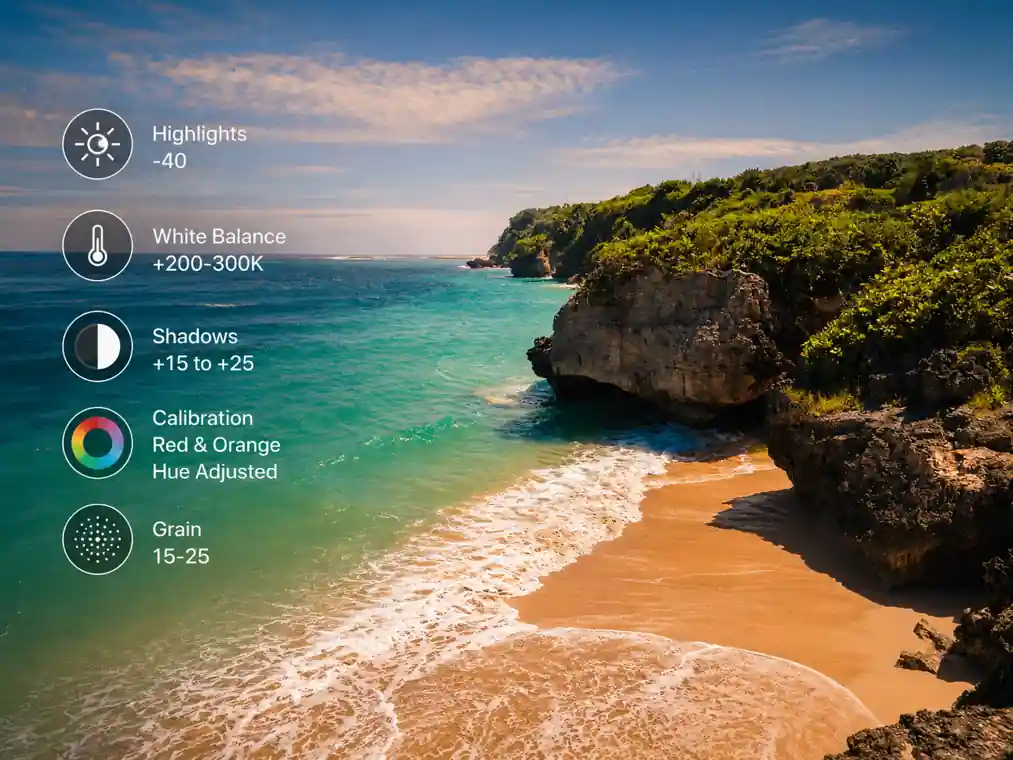
- Reduce highlights before adding exposure. Beach sand blows out fast. Pull highlights to –40 before touching exposure.
- Add warmth gently. Shift white balance 200–300K warmer in Lightroom rather than using a heavy orange filter.
- Lift the shadows slightly. Underexposed shadow detail in coastal shots tends to go muddy. +15 to +25 shadow recovery usually works.
- Calibration panel, not HSL. For skin tones, adjust the red and orange primary hue in the Camera Calibration panel. More natural than HSL.
- Grain at 15–25 ISO. A small amount of film grain removes the “digital plastic” look from skin in bright light.
Common Photography Mistakes to Avoid at Balangan Beach
Real talk, these are the ones that cost people their best shots:
- Shooting at noon on day 1. Almost everyone does this because they arrive excited. Almost everyone regrets not coming back at 5 PM.
- Standing too close to the subject. Wide open ocean needs breathing room in the frame.
- Ignoring the tide. High tide at Balangan narrows the sand to almost nothing and changes the reflections entirely. Low tide exposes reef patterns and tidal pools that are gorgeous in photos.
- Not checking the surf report. Flat days mean calm, glassy water. Big swell days mean dramatic action. Neither is wrong, but knowing which one you’re walking into changes your approach completely.
- Over-posing. Already covered above, but worth repeating, genuine beats perfect here.
Hidden Corners for More Unique Balangan Beach Photos
The main beach gets all the attention, but walk south past the last warung, and you’ll find a small rock ledge that juts into the water. It creates beautiful natural framing and isolation, and almost nobody goes there. Similarly, the cave-like overhang halfway up the north cliff path offers a natural frame for shots of the beach below.
Early morning, the warungs themselves become photogenic subjects, shutters still down, chairs stacked, fishing nets strung between poles, low raking light catching the textures. It’s a different Balangan than the sunset crowd sees.
How to Respect the Beach While Shooting
Balangan has local families who live near and around the beach. Some warungs have been run by the same family for 20+ years. A few things worth keeping in mind:
- Always ask before photographing local people, especially children
- Don’t wade into the surf zone during active surf sessions; it’s a safety and etiquette issue
- The reef is fragile, don’t wade on it for a “cool angle”
- Support the warungs, buy a coconut, eat there, tip well. You’re getting the backdrop of their home
Shoot responsibly and help keep Balangan Beach beautiful. Read more in Balangan Beach Bali Guide: What Nobody Tells You.
Gear Essentials Without Overpacking
Balangan Beach photography kit by priority level, pack smart, and leave the unnecessary weight at the villa.
| Priority | Item | Why It Matters |
| Essential | Camera + 1 zoom (24–70mm or 18–135mm) | Covers most shots without carrying 3 lenses |
| Essential | Circular polarizer | Cuts glare, deepens water color, essential at midday |
| Highly recommended | ND filter (6-stop or 10-stop) | Long exposure wave blur |
| Helpful | Small travel tripod | Stability for long exposures, cliff-edge shots |
| Helpful | Extra battery + memory card | No charging options at the beach level |
| Optional | 70–200mm f/2.8 | Surf isolation, compressed portraits |
| Optional | Drone (sub-250g) | Aerial views, if you’re comfortable with regulations |
Leave the studio strobes, reflector panels, and extra camera bodies at home unless it’s a paid professional shoot. Balangan rewards mobility and spontaneity.
Creating a Complete Balangan Beach Photo Story
The best photo projects from Balangan aren’t single images; they’re sequences. Think about variety: one establishing a wide shot of the full beach, a mid-range environmental portrait, a close-up wave detail, a candid moment, a golden-hour silhouette. Five images that together tell the full story of being there.
That variety also helps if you’re building content for social media, a travel blog, or a portfolio. Single-image posts are forgettable. A carousel or mini-story that takes someone through arrival, exploration, sunset, and reflection? That’s the kind of content that gets saved.
Final Thoughts: Taking Home More Than Just Pictures
Balangan Beach photography rewards patience more than gear. The photographers who come away with genuinely memorable frames aren’t necessarily the ones with the heaviest kit or the most Instagram followers; they’re the ones who stayed an extra hour after everyone left, or came back a second morning because the first one had flat light.
This place has a way of giving back to whoever slows down enough to actually be there. The light changes fast. The waves never repeat exactly. And there’s always one more frame you didn’t expect. That’s the real magic of shooting here, not the perfect composition you planned, but the one you almost missed.
Bring sunscreen, charge your batteries, and get there before 5 PM. The rest tends to take care of itself.
FAQs: Balangan Beach Photography
Q: Is Balangan Beach good for photography beginners?
A: Yes, especially at golden hour. The light is so flattering that even basic compositions look strong. Just avoid midday and bring a polarizing filter.
Q: Do I need a permit to do a professional photoshoot at Balangan Beach?
A: For personal and travel photography, no permit is required. For commercial shoots (ad campaigns, paid client work), it’s worth checking with local authorities or hiring a local fixer who knows the current rules.
Q: What is the best month to visit Balangan for photography?
A: May through September offers the clearest skies and best sunset alignment. April and October can be transitional but still beautiful. Avoid January–February during the peak wet season if clear skies matter to you.
Q: Can I swim while doing a couple of photoshoots at Balangan?
A: Yes, but check conditions first. Balangan has a strong shore break. Wade in knee-to-waist depth for photos; deeper water for non-swimmers in surf is not advisable.
Q: What’s the best lens for Balangan Beach photography?
A: A 24–70mm f/2.8 covers most situations, landscapes, portraits, and candids. Add a 70–200mm if you want surf action or compressed cliff portraits.
Q: Is parking available at Balangan Beach?
A: Yes, there’s an informal parking area at the top of the path. Scooter parking is free or very low-cost. Car parking is around IDR 5,000–10,000 (less than $1 USD).
Q: How do I protect my camera gear at Balangan Beach?
A: Use a weather-sealed body if possible, keep lens changes to a minimum in blowing sand, and bring a dry bag for transport to and from the beach. A circular polarizer also doubles as a front element protector.