
Balangan Beach swimming is possible, but conditions vary dramatically depending on tide, swell, and season. While the beach offers clear water and beautiful scenery, reef sections and changing currents make some areas safer than others. Here’s what swimmers need to know before entering the water.
But here’s the thing about Balangan Beach swimming that a lot of travel posts skip over: this beach has a personality. It’s not a calm lagoon. It’s a reef break with real waves, a coral floor, and currents that change with the tides. And whether Balangan Beach swimming is right for you depends a lot on when you go, where you enter the water, and what level of swimmer you are. This guide covers all of it, and specifically, so you actually enjoy your day instead of getting caught off guard.
Is Balangan Beach safe for swimming?
Yes, Balangan Beach is safe for swimming during high tide in the dry season, especially in the central sandy zone. Low tide and large swells can expose reef hazards and stronger currents.
Where Balangan Beach Is Located and Why Swimmers Visit
Balangan Beach sits on the Bukit Peninsula in South Bali, about 20 km south of Kuta and roughly 30–40 minutes from Ngurah Rai International Airport. It’s tucked between Bingin Beach to the south and the famous Uluwatu surf break further west, which already tells you something about the water here.
Most swimmers visit because the beach is genuinely beautiful and feels far less commercial than Kuta or Seminyak. You get white sand, dramatic cliff views, cheap coconuts from the local warungs, and a vibe that still feels like real Bali rather than a resort strip. There’s a reason travel blogs keep calling it “Bali’s most beautiful beach”; that’s not hype. It earns it.
Discover where Balangan Beach is and what makes it a favorite spot for swimmers: Read more in the Balangan Beach Bali Guide: What Nobody Tells You.
Is Balangan Beach Good for Swimming? What to Expect Before You Go
Short answer: yes, but conditionally. Balangan is suitable for swimming, especially during the dry season from April to September, when the water is warm, clearer, and the wave energy tends to be lower. However, it is not a calm, beginner-friendly swimming bay by default.
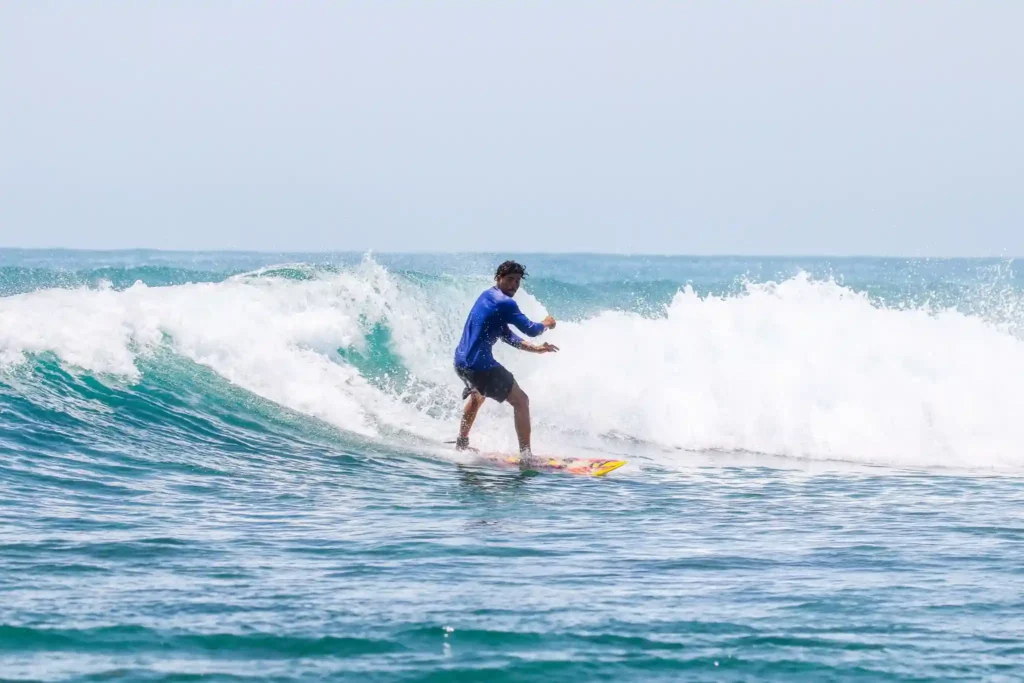
The beach sits over a reef break. Coral sits beneath parts of the water. Currents shift with the tides. During bigger swells, Surfline data regularly reports surfable swells at Balangan throughout the year, with larger swell events producing overhead waves. That’s great news for surfers, and impressive to watch from the sand, but it means casual swimmers need to be selective about where and when they enter the water.
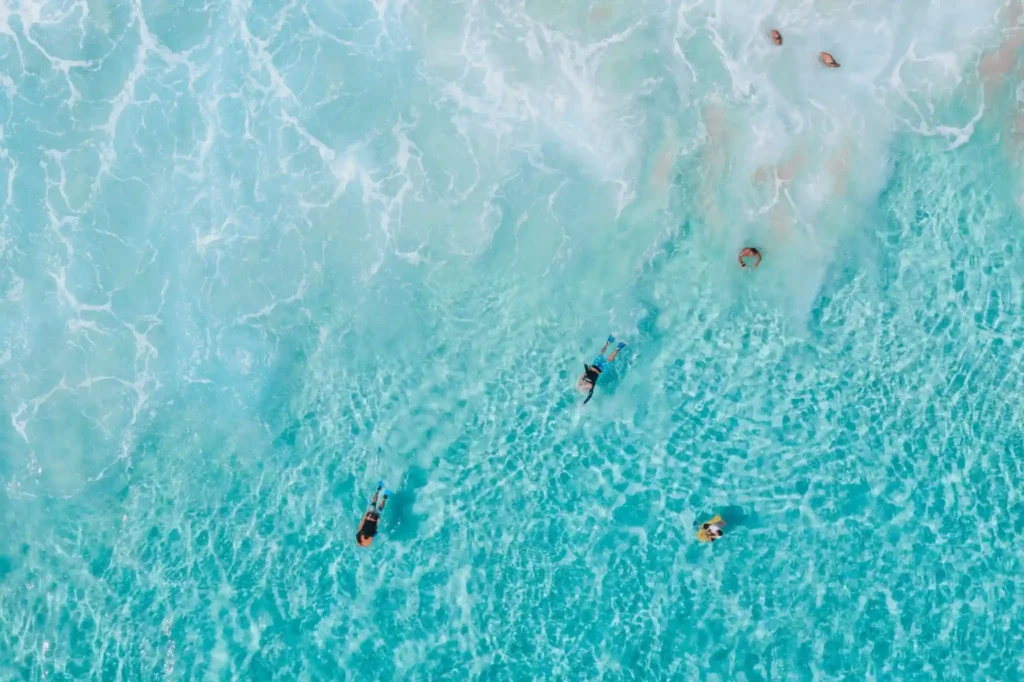
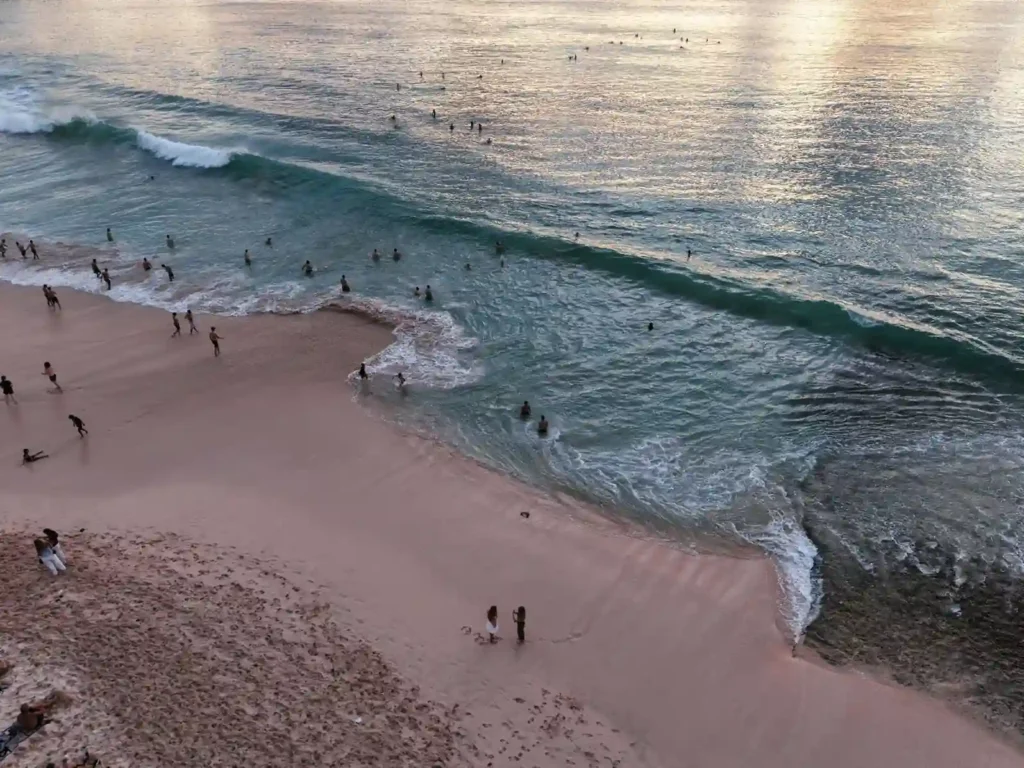
The central sandy section of the beach, away from the reef-heavy areas and the surf break zone, is the most practical area for swimming. During calmer conditions at higher tide, this area becomes manageable even for moderate swimmers. But honestly? Always check conditions before you go in. Don’t just look at how blue the water is and assume it’s fine.
Understanding Balangan Beach Waves and Water Conditions
Balangan is known as a fast left-hand reef break. The surf break sits past the exposed reef, out toward deeper water, which is actually reassuring for swimmers who stay in the shallower, central beach zone.
Here’s the water condition snapshot at a glance. Save this before you visit.
| Wave Condition | Tide Level | Suitable For |
| Small, mellow waves | High tide (above 1.4m) | Moderate swimmers, beginners (central zone) |
| Steep, fast left-handers | Low tide + big swell | Experienced surfers only |
| Closing-out sections | Mid-tide | Mixed, can be unpredictable |
| Flat/very calm | Early morning, dry season | Best for casual swimming |
Southwesterly winds, which blow consistently across Balangan, create reliable waves year-round. That’s a surfer’s dream. For swimmers, it means you should never assume the sea is calm just because it’s a sunny day.
What Does “Reef Break” Actually Mean for Swimmers?
According to Surfline’s surf education resources, reef breaks occur when waves break over coral or rocky bottoms instead of sand. At Balangan, the reef is exposed at lower tides, which creates two problems: the waves become more powerful and unpredictable, and the coral itself becomes a hazard if you fall or drift. Water shoes or reef booties are useful here, not just an optional accessory.
Best Time of Day for Swimming at Balangan Beach
Early morning is the best time to swim at Balangan, between 7:00 AM and 9:30 AM. The wind is usually calmer, the surf tends to be smaller, and the beach itself has barely any people on it. There’s something peaceful about being at Balangan before the day crowd arrives. The light hits the cliffs differently at that hour, too.
Midday swimming is possible but comes with two issues: the sun is brutal (no exaggeration, bring strong reef-safe SPF 50+ sunscreen and a hat), and the beach fills up with surfers, which means more activity in the water. Late afternoon can see wind picking up and swell building from the south.
If you can only visit in the afternoon, aim for around 4:00–5:30 PM when the light softens, and conditions sometimes ease again. Plus, you catch the sunset, which at Balangan is genuinely something.
Best Season to Swim at Balangan Beach
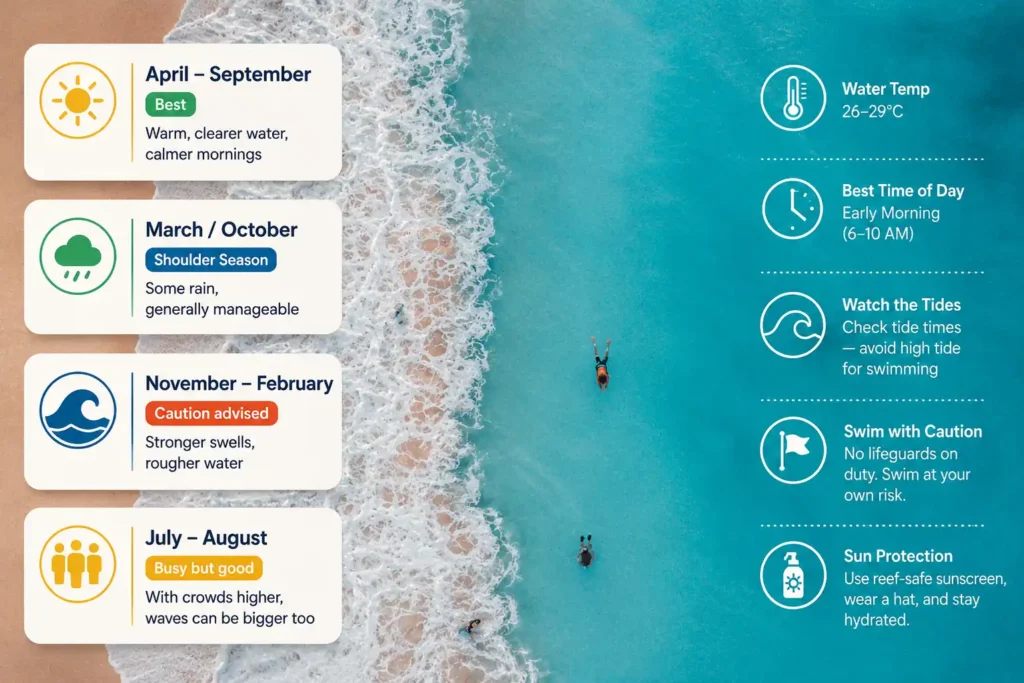
BMKG climate data shows Bali’s dry season generally runs from April through September, bringing lower rainfall and sunnier conditions. During these months, the skies are consistently sunny, the humidity drops, and the ocean is warmer and clearer. May and June are often considered the sweet spot: good conditions, smaller crowds than July and August.
This seasonal guide will save you from showing up on the wrong week; check it before booking.
| Season | Months | Swimming Conditions | Notes |
| Dry Season | April – September | Best | Warm, clearer water, calmer mornings |
| Shoulder Season | March / October | Good | Some rain, generally manageable |
| Wet Season | November – February | Caution advised | Stronger swells, rougher water |
| Peak Dry Season | July – August | Busy but good | With crowds higher, waves can be bigger too |
The wet season (November to March) doesn’t make Balangan off-limits, but the swell picks up noticeably. If you’re not a strong swimmer, those months shift Balangan more firmly into “watch from the shore” territory.
When Swimming at Balangan Beach Is Not Recommended
Avoid swimming at Balangan when:
- Low tide is extreme. The reef becomes dangerously shallow and partially exposed.
- Swell is above head-height. Even experienced swimmers struggle with the current and impact zones.
- After heavy rain, Water quality can drop temporarily near coastal runoff points.
- You don’t know your swimming ability. This is not the place to find out you’re a weak swimmer.
- No one else is in the water. If locals and surfers are watching from shore, there’s usually a reason.
Areas of the Beach That Feel Safer for Swimming
The central section of Balangan Beach offers the safest and most consistent area for swimming. This part of the bay has a sandier bottom and fewer exposed reef sections than the southern end.
For the best experience:
- Stay in the middle section of the beach.
- Swim during high tide when the reef is better covered.
- Avoid areas where surfers are entering the water.
- Wear reef shoes for extra protection.
The northern end near the cliff viewpoint is more exposed to waves, while the southern end is closer to the main surf break and better suited to experienced surfers.
During very high tide, a small pool-like area sometimes forms near the rocks. It’s a lesser-known spot that locals occasionally recommend for a calmer dip.
Tide Conditions and How They Affect Swimming Experience
Tides at Balangan follow a semi-diurnal pattern, roughly two high tides and two low tides every 24 hours. This matters more here than at many other Bali beaches because the reef responds dramatically to tidal changes.
Check tide times before you arrive. This table shows exactly what each level means for safety.
| Tide Level | Water Depth Over Reef | Swimming Suitability |
| High (above 1.4m) | Deeper coverage | Most suitable for swimming |
| Mid-tide | Variable | Unpredictable — check conditions |
| Low tide | Reef exposed/shallow | Not recommended for swimming |
| Very low tide | Tidal pools visible | Walk to explore, don’t swim |
A good tip: Check local tide forecasts using Tide Alert or other reliable tide forecasting services before entering the water. Cross-reference with the weather and swell forecast, and you can plan your swim window with a lot more confidence.
Water Depth and What Beginners Should Know
Water depth at Balangan varies with the tide and your location on the beach. In the central sandy zone at high tide, the water is usually around 1–2 metres deep, making it manageable for most adults. However, the seabed isn’t sandy everywhere. Coral patches and rocks can appear in some areas, which is why reef shoes are strongly recommended.
If you’re a beginner:
- Stay in water no deeper than chest height.
- Remain within the central sandy section of the beach.
- Watch where the waves are breaking before moving farther out.
If you feel an unexpected pull from the water, head back toward shore immediately. While strong rip currents are less common here, lateral currents along the reef can still catch inexperienced swimmers off guard.
Is Balangan Beach Suitable for Families and Children?
This is where you need to be straightforward with yourself. Balangan Beach is beautiful for families, but it’s not a classic family swimming beach in the way Nusa Dua or Sanur are. Those beaches have calm, shallow water with minimal current, genuinely safe for young children.
At Balangan, the waves and reef conditions make unsupervised wading risky for small kids. That said, families visit and enjoy themselves here all the time, just not primarily in the water. The beach is great for:
- Building sandcastles in the dry sand section
- Watching surfers (kids often love this more than swimming anyway)
- Exploring tidal pools at low tide, which have small sea life
- Having lunch at the warungs with incredible ocean views
- Photography along the cliff trail
If swimming with children is your priority, visit Balangan for the scenery and warungs, then head to Pandawa Beach (about 15 minutes drive) for the actual swimming. Pandawa has calmer, shallower water and better facilities for young kids.
Swimming vs Surfing at Balangan Beach: Which Experience Fits You Better?
Swimming vs surfing at Balangan, use this to decide which suits your trip before you arrive.
| Factor | Swimming | Surfing |
| Skill needed | Moderate swimmer minimum | Intermediate–Advanced preferred |
| Best tide | High tide | High tide for intermediates, low for experts |
| Best season | April–September (dry season) | Year-round, peaks in the dry season |
| Risk level | Low-moderate (central zone) | Moderate-high (reef, shallow sections) |
| Gear needed | Reef shoes recommended | Board, leash, reef booties |
| Lessons available | N/A | Yes, from beachfront warungs |
A lot of visitors end up doing neither; they sit in a sun lounger rented for around 50,000 IDR (~$3 USD) per day, order a cold Bintang from a warung, and just watch the surfers work the waves. And genuinely? That’s a perfectly good way to spend four hours at Balangan.
Swimming vs Surfing at Balangan Beach: The Real Difference
Surfing at Balangan rewards experience; the reef break produces fast, powerful left-handers that experienced surfers love. Beginners can take lessons from the surf schools near the warungs. Swimming, on the other hand, is a quieter, more spontaneous activity here. You don’t need lessons, but you do need good judgment about conditions.
If you’re unsure, ask one of the local warung owners. They’ve watched this beach for years and will give you a straight answer about whether the water is okay today.
Not sure whether to swim or surf at Balangan? Discover the key differences: Read more in the Balangan Beach Surfing Guide: Skip Uluwatu, Go Here.
Essential Safety Tips Before Entering the Water
- Always check the swell forecast before swimming. Surf forecast sites like Surfline or Magic Seaweed give Balangan-specific data.
- Enter slowly and observe. Watch how the water moves for a few minutes before getting in.
- Never swim alone. Even confident swimmers should have someone watching from shore.
- Stay in the central zone. Avoid the areas near the main surf break.
- If caught in a current, swim sideways. Don’t fight it directly. Move laterally until you’re out of the current path.
- Hydrate before entering the water. The Bali heat is real, and you’ll feel it.
What to Bring for a Comfortable Swimming Day
Pack smart for Balangan. The walk from the main parking area involves around 50 steps down to the beach, so keep your bag light but complete:
- Reef-safe sunscreen (SPF 50+). The cliffs offer limited shade, especially around midday.
- Reef shoes or aqua shoes, Non-negotiable if you’re swimming.
- Reusable water bottle, Warungs sell water, but having your own is easier.
- Small dry bag, Useful for your phone and wallet near the water.
- Towel and change of clothes. Shower facilities exist but are basic.
- Cash (IDR), Most warungs don’t take cards. Bring small bills.
- Snorkel mask (optional). Some visitors bring their own to explore the tidal zone under the right conditions.
Beach Facilities Available for Swimmers
Balangan is relatively undeveloped compared to Kuta or Seminyak, and that’s part of the charm. Don’t expect resort-level facilities. What you do get:
- Several local warungs selling Indonesian food, grilled seafood, fresh coconuts, cold drinks, and smoothies
- Sun lounger and umbrella rentals (~50,000 IDR/day)
- Basic toilets and changing areas near the parking zones
- Two parking areas, northern (larger, ~10,000 IDR for cars) and southern (donation-based, scooters only, closer to the beach)
- Surfboard rentals from beachside vendors
- Surf lessons available through local operators near the warungs
There’s also a small beach club at the southern end, nothing fancy, but it’s a comfortable spot with decent drinks and good ocean views.
Places to Relax After Swimming
After a swim, Balangan Beach offers several great spots to unwind and enjoy the scenery. For the best experience:
- Cliff-Top Viewpoint: The famous clifftop viewpoint overlooking Balangan Beach is one of the best places to relax. From here, you can watch surfers riding the reef break while enjoying panoramic views of the coastline.
- Beachfront Warungs: Several local warungs line the beach, serving fresh coconuts, Indonesian dishes, smoothies, and cold drinks. Many visitors spend hours here enjoying the ocean view from shaded seating areas.
- Sun Loungers and Umbrellas: Beach vendors rent loungers and umbrellas along the central section of the beach. They’re ideal if you want to dry off, read a book, or simply enjoy the atmosphere.
- Sunset Viewing Spots: Balangan is known for its beautiful sunsets. The cliff trail above the beach provides an excellent location to watch the sun drop into the Indian Ocean.
- Small Beach Club: Near the southern end of the beach, you’ll find a relaxed beach club offering drinks, snacks, and comfortable seating with ocean views.
Photography Spots Around Balangan Beach After a Swim
Balangan is one of the more photogenic beaches on the Bukit Peninsula, which is saying something given the competition:
- The clifftop viewpoint, Panoramic shots of the bay, waves, and beach. Go late afternoon for warm golden light.
- The limestone cliff wall at the northern end of the beach, dramatic texture and framing.
- Looking back from the waterline toward the cliffs, especially effective during high tide when the water is calm.
- Sunset from the cliff trail, the sky turns remarkable colours here. Bring your phone fully charged.
- Tidal pools at low tide, Small and detailed, but interesting for close-up shots of sea life.
Common Mistakes Visitors Make While Swimming Here
This is the real-talk section. A few things people consistently get wrong at Balangan:
- Entering the water at low tide is probably the most common mistake. The reef is shallower and more exposed, currents behave differently, and the waves pack more punch. Check the tide before you go in, not after.
- Ignoring what the surfers are doing. If experienced surfers are all clustered in one spot and giving a wide berth to another area, that’s information. Read the scene.
- Not bringing reef shoes. Every year, people cut their feet on coral. It happens, it’s preventable, and coral cuts in Bali’s tropical environment can take weeks to fully heal.
- Overestimating your swimming ability. Balangan’s water looks inviting, and the beach feels relaxed. People sometimes walk in with more confidence than the conditions warrant. The reef break doesn’t care how good a pool swimmer you are.
- Going in during the wet season without checking the swell. November through February, swell regularly builds to levels that make Balangan unsafe for casual swimmers. It doesn’t always look dangerous from the shore, but the currents tell a different story.
Nearby Beaches to Visit If You Want Calmer Water
If you arrive at Balangan and the conditions are rough, or you have young children, these nearby beaches offer calmer swimming:
- Pandawa Beach (~15 min drive), Calm, shallow turquoise water, good facilities, great for families. Entrance around 15,000 IDR.
- Nusa Dua Beach (~25 min drive), Protected bay, very calm water, lifeguards present, best for non-swimmers and children.
- Sanur Beach (~35–40 min drive north), Reef-protected, shallow, calm water year-round. One of Bali’s most consistently swimmable beaches.
- Jimbaran Bay (~20 min drive), Calm and shallow, especially good in the morning. Known for beachside seafood restaurants in the evening.
Each of these beaches has a different personality, but all offer safer, calmer swimming conditions than Balangan on most days.
Final Thoughts: Is Balangan Beach Worth Visiting for Swimming?
Yes, but with realistic expectations. Balangan Beach is one of the most beautiful beaches in Bali, and Balangan Beach swimming is possible and enjoyable when you go at the right time, in the right conditions, in the right spot. The dry season morning window at high tide in the central sandy zone is where the magic happens.
But Balangan isn’t trying to be Nusa Dua. It’s a surf beach with a strong personality. It rewards visitors who come prepared, who check the tides, bring reef shoes, stay aware of the wave pattern, and know when to stay on the sand with a coconut instead of pushing into rough water.
The beach is absolutely worth visiting regardless. The scenery alone justifies the trip. The warungs are excellent. The sunset from the cliff is one of the best in southern Bali. And on the right day, in the right conditions, a swim at Balangan Beach is one of those experiences you’ll remember.
Just go in knowing what you’re dealing with. This isn’t the beach that meets you halfway; you meet it on its terms. And when you do, it’s pretty spectacular.
FAQs About Balangan Beach Swimming
Is Balangan Beach safe for swimming?
Balangan Beach is safe for swimming under the right conditions, specifically during the dry season (April–September), at high tide, in the central sandy section of the beach. It is not recommended during low tide, during big swell events, or for weak or non-swimmers without supervision.
What is the best time to swim at Balangan Beach?
The best time is early morning between 7:00 AM and 9:30 AM during the dry season (April–September), when winds are calmer, swell is typically smaller, and the beach is less crowded. High tide windows during these months offer the safest swimming conditions.
Can beginners swim at Balangan Beach?
Beginners with basic swimming skills can swim in the central zone during calm, high-tide conditions. However, Balangan is not a beginner-friendly swimming beach overall. Absolute non-swimmers and young children are better served at Nusa Dua or Pandawa Beach nearby.
Are there currents at Balangan Beach?
Yes. Balangan has a reef break which creates lateral currents, especially at mid and low tide. Swimmers should stay in the central zone, watch wave patterns before entering, and avoid the areas near the main surf break. If caught in a current, swim sideways rather than fighting it directly.
Is Balangan Beach good for families?
It depends on what you’re looking for. The beach is beautiful, and the warungs are great for families. However, the water conditions are not ideal for young children swimming. For family swimming, Pandawa Beach or Nusa Dua are safer options. Balangan is excellent for families who want scenery, tidal pool exploration, and watching surfers.
Do I need reef shoes at Balangan Beach?
Strongly recommended, yes. The seafloor has coral sections, especially outside the central sandy zone. Reef shoes prevent cuts from coral, which can become infected quickly in Bali’s tropical climate.
What is the water temperature at Balangan Beach?
Water temperature at Balangan Beach typically ranges between 27°C and 29°C (80–84°F) during the dry season, and stays warm year-round due to Bali’s equatorial location.