
The best time to visit Mirissa is between November and April. During these months, the weather is dry, the sea is calm, and whale watching is at its best. If you want good weather and a chance to see whales, this is the best time to visit Mirissa.
December to March is the busiest part of this season, so beaches and hotels can get crowded. If you prefer a quieter trip, November or April is a good choice, with fewer tourists and still good weather. In this guide, we will look at the weather, whale season, and costs for each month so that you can plan your trip easily.
Quick Tips for Visiting Mirissa
- Best overall time: November to April for sunny weather and calm seas.
- Best months for whale watching: February and March offer the highest chance of spotting blue whales.
- For fewer crowds: Visit in November or April for good weather and better hotel prices.
- Peak season: December to March; book accommodation 4–6 weeks in advance.
- Budget travel: May to October has the lowest prices, but expect heavy rain and rough seas.
- Best for swimming and beach days: January to March, when the water is clearest and calmest.
What Is the Best Time to Visit Mirissa?
The best time to visit Mirissa is between November and April, during Sri Lanka’s dry season on the south coast. December through March offers the most consistent sunshine, calmest seas, and peak whale watching conditions. Beach activities, snorkelling, and boat tours are all most reliable during this four-month window.
Best Time to Visit Mirissa at a Glance
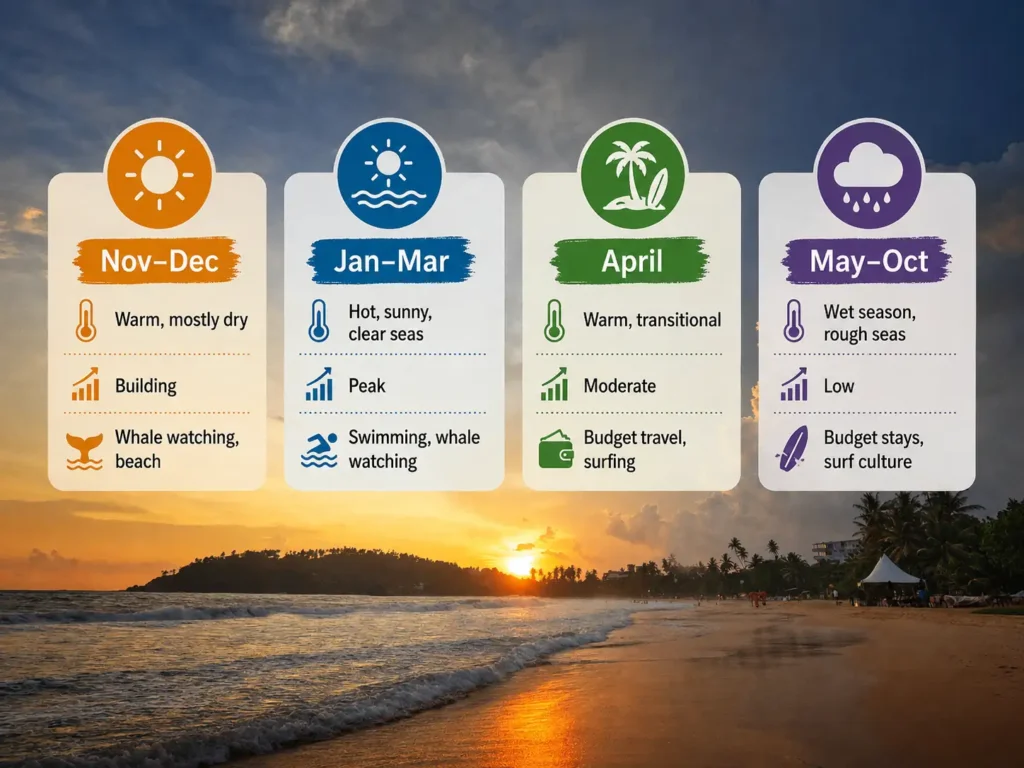
Here’s a quick seasonal snapshot so you can see at a glance which months suit your plans best.
| Period | Weather | Crowds | Best For |
| Nov–Dec | Warm, mostly dry | Building | Whale watching, beach |
| Jan–Mar | Hot, sunny, clear seas | Peak | Swimming, whale watching |
| April | Warm, transitional | Moderate | Budget travel, surfing |
| May–Oct | Wet season, rough seas | Low | Budget stays, surf culture |
Mirissa Weather Throughout the Year
Mirissa sits on Sri Lanka’s south coast, which means its weather follows the southwest monsoon pattern. According to the Sri Lanka Meteorological Department, the southwest monsoon typically arrives between May and September, bringing heavy rainfall and rough conditions to this coastline. From November onward, the northeast monsoon delivers dry, clear weather to the south.
Average temperatures stay warm year-round, ranging from about 26°C to 32°C (79°F to 90°F). Temperature isn’t the variable that matters most here; it’s rain and sea conditions that decide whether your trip delivers what the photos promise.
Best Time to Visit Mirissa by Season
Mirissa has two clearly defined seasons. The dry season (November to April) is when most visitors arrive, with calm seas, reliable sunshine, and daily whale watching departures. The wet season (May to October) is driven by the southwest monsoon, with heavy rainfall and rough ocean conditions making most water activities impractical for extended stretches.
Monthly Weather Guide: January to December
This month-by-month breakdown gives you the clearest picture of what to expect throughout the year, useful for pinpointing your exact travel window.
| Month | Rainfall | Sea Conditions | Visitor Rating |
| January | Low | Calm | ★★★★★ |
| February | Low | Calm, excellent | ★★★★★ |
| March | Low | Calm | ★★★★★ |
| April | Increasing | Moderate | ★★★★ |
| May | Heavy | Rough | ★★ |
| Jun–Aug | Very heavy | Very rough | ★ |
| September | Easing | Choppy | ★★ |
| October | Reducing | Mixed | ★★★ |
| November | Light | Improving | ★★★★ |
| December | Mostly dry | Calm | ★★★★★ |
Peak Season in Mirissa
Peak season runs from December through March, and Mirissa feels it. Hotels fill quickly, restaurants get busy, and prices reflect the demand. A basic beachfront guesthouse room that costs around LKR 5,000 (~$17 USD) in the off-season can jump to LKR 15,000–20,000 ($50–$65 USD) or more in January. Booking accommodation at least four to six weeks in advance is strongly recommended.
The trade-off is that the beach is genuinely at its best. The sea is calm and clear, whale watching boats head out from Mirissa Harbour daily, and mornings are reliably golden. For most visitors, this is exactly what they came for.
Shoulder Season in Mirissa
April and November are the shoulder months, and honestly, they’re worth serious consideration. You still get largely decent weather but with fewer crowds and noticeably better rates. November in particular is a smart window: seas are calming down, the first whale watching tours of the season start running, and prices haven’t yet climbed into peak territory.
April can be more unpredictable. Some days are perfect; others see the first rain bands of the monsoon arriving ahead of schedule. Checking the forecast before committing to a specific week is a sensible move.
Off-Season in Mirissa
Is the Off-Season Worth Visiting Mirissa For?
May through October is Mirissa’s off-season, driven by the southwest monsoon. Heavy rainfall and rough seas make swimming, snorkelling, and whale watching largely impractical. Most whale watching operators pause entirely from May onwards.
Budget travellers who don’t mind the rain can find accommodation deals of up to 50–60% off peak rates, and experienced surfers may find rideable swells, though conditions remain unpredictable.
Best Time to Visit Mirissa for Whale Watching
Whale watching is one of the main reasons people travel to Mirissa. Blue whales, the largest animals on Earth, migrate through the waters off Sri Lanka’s south coast between November and April. According to the International Whaling Commission, blue whale populations in the Indian Ocean have shown signs of gradual recovery in recent decades, and the waters near Mirissa are among the most consistently productive spots in the world for sightings.
February, March, and April are generally the peak months. Multiple blue whale sightings in a single tour are not unusual. Boat tours typically depart from Mirissa Harbour around 6:30–7:00 AM and cost approximately $30–$50 USD per person in 2026. Spinner dolphins are commonly spotted throughout the season as well.
Best Time to Visit Mirissa for Beach Activities
For swimming, snorkelling, and beach lounging, January through March is the sweet spot. The sea is at its calmest, underwater visibility is at its best, and most mornings are cloud-free.
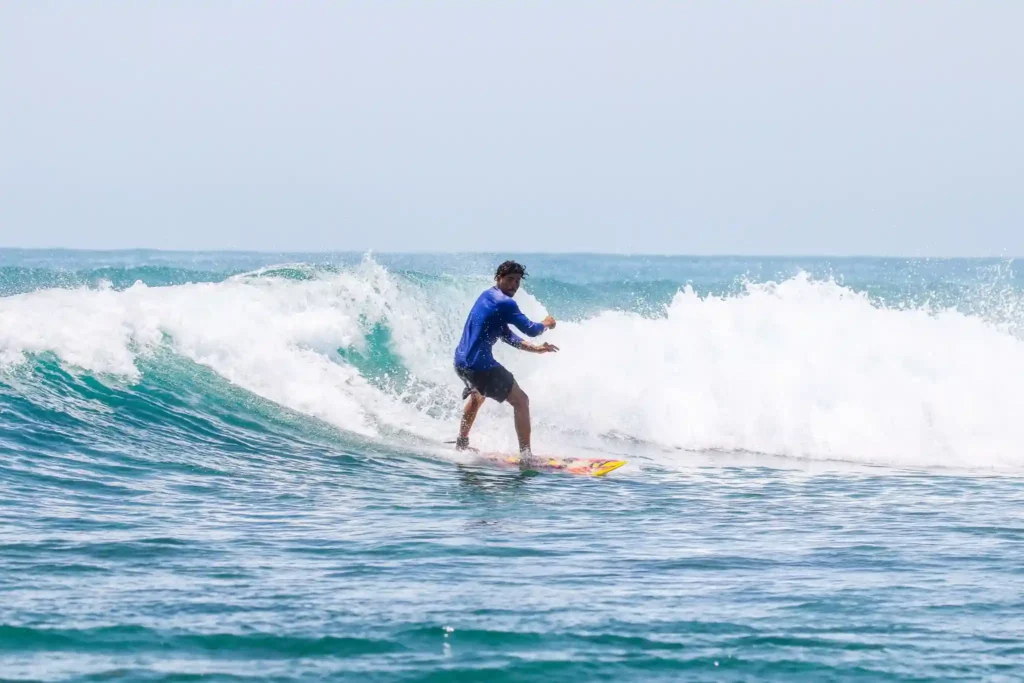
Surfing follows a different rhythm; April through October brings more consistent swells, though the monsoon season is rough and better suited to experienced surfers who understand local conditions.
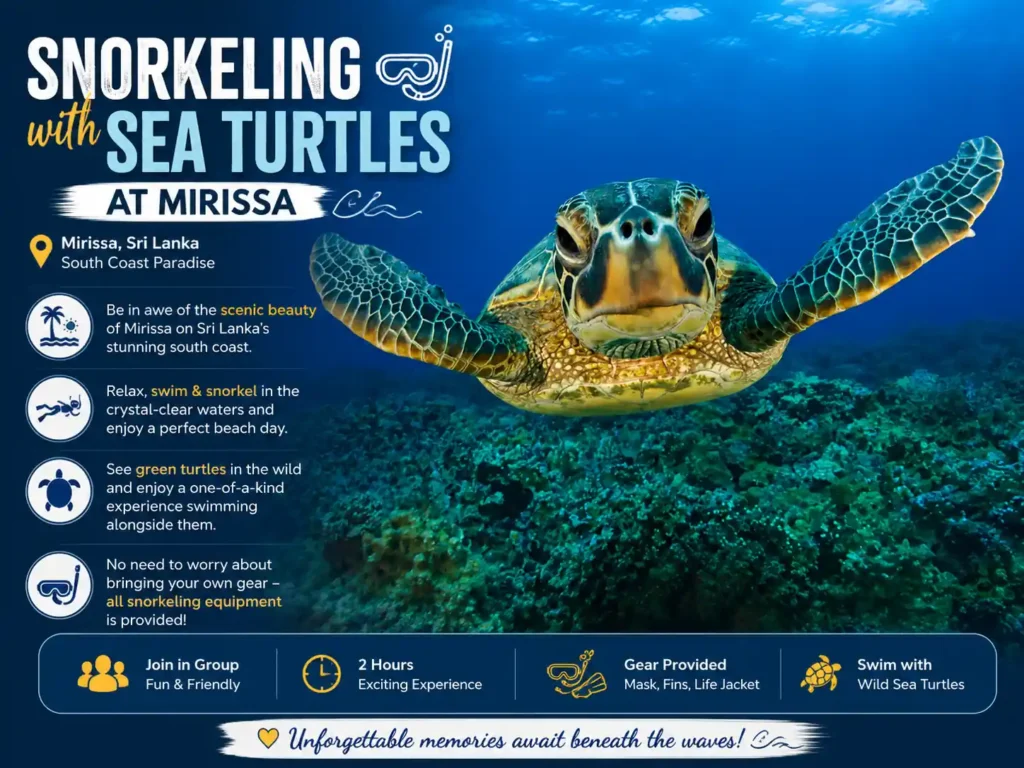
Looking for an unforgettable underwater experience? This Mirissa sea turtle snorkeling tour is hard to beat.
Best Time to Visit Mirissa to Avoid Crowds
If a quieter experience is the priority, November and early December tend to hit the right balance. You get solid weather, operating whale watching tours, and a fraction of the January crowd. Restaurants are open without long waits, beach space is easy to find, and the atmosphere feels noticeably more relaxed.
Late October can also work for visitors wanting to avoid peak crowds entirely, though sea conditions are still transitioning and some operators haven’t fully reopened yet.
Best Time to Visit Mirissa for Lower Prices
May through October offers the lowest prices on accommodation, tours, and even food. The catch is that the monsoon limits most of what makes Mirissa worth visiting in the first place. For a better balance between cost and conditions, November and April are the shoulder-season sweet spots: decent weather, fewer visitors, and rates noticeably below the peak-season ceiling.
When Should You Visit Mirissa?
The best time to visit depends on what you want to experience. If whale watching is your priority, February and March usually offer the highest chances of sightings. For sunny beach days and calm swimming conditions, December and January are excellent choices. Travelers looking to save money can consider November, which often provides good weather at lower prices.
According to the Sri Lanka Tourism Development Authority, the south coast receives the majority of its annual international visitors between December and March. That explains why accommodation availability tightens so significantly during those months. Planning a trip in the shoulder months, particularly November or April, can deliver a noticeably better experience at lower cost, without sacrificing too much on conditions.
Final Thoughts on the Best Time to Visit Mirissa
Mirissa rewards visitors who plan around its rhythm rather than against it. The dry season delivers everything the photos promise: turquoise water, whale sightings, golden mornings, and long beach evenings. The best time to visit Mirissa, for most people, sits comfortably between November and April, with February and March as the standout window for anyone prioritising whale watching.
Get the timing right, book accommodation early if you’re coming in peak season, and choose the specific months that match what you’re actually there to do. When you plan it properly, Mirissa is genuinely hard to forget.
Explore Mirissa Beach Like a Pro: Read more in Stop! Don’t Book Mirissa Beach Before Reading This.
FAQs About the Best Time to Visit Mirissa
What is the best month to visit Mirissa?
February and March are widely considered the best months. They offer the calmest seas, most consistent sunshine, and the highest whale watching sighting rates of the year, all without the very peak prices of January.
Is Mirissa good to visit in December?
Yes. December is an excellent time to visit Mirissa. The dry season is underway, whale watching tours begin operating again, and the weather is warm and sunny for most of the month. Early December tends to be quieter and more affordable than late December.
What is the weather like in Mirissa in May?
May marks the start of the southwest monsoon on Sri Lanka’s south coast. Expect heavy rainfall, rough seas, and most water-based activities operating unreliably or closing down entirely. It is not recommended for a beach-focused trip.
Can you go whale watching in Mirissa year-round?
No. Whale watching tours in Mirissa typically operate between November and April, when seas are calm enough for safe offshore departures. Most operators pause during the monsoon season from May onwards. February to April offers the highest success rates for blue whale sightings.
How crowded is Mirissa in January?
January is peak season in Mirissa. Hotels fill up quickly, and prices are at their highest of the year. Booking accommodation four to six weeks ahead, or more, is strongly recommended for January travel.