
Driving to Nacpan Beach starts on the main road out of El Nido, heading north past Corong-Corong until the smooth pavement turns into packed dirt and gravel. The first part of the ride is easy, but the last few kilometers get bumpy, with sharp turns and loose rocks along the hills. If you’re driving to Nacpan Beach after rain, go slow, because the dirt road gets soft and slippery in wet weather.
A scooter with good ground clearance handles this route much better than a small automatic bike. Give yourself at least 45 minutes for the trip, and fill up your tank before you leave, since there are almost no gas stations along the way.
Driving to Nacpan Beach: How to Get There From El Nido
Choosing the right vehicle can shape how comfortable your ride to Nacpan Beach feels. Since self-drive car rentals are rare in El Nido town, most independent travelers get to Nacpan Beach by renting a scooter, which serves as the local alternative to a car.
Riders who prefer someone else behind the wheel usually book a chartered tricycle or a seat on a shared van, both of which run the same coastal road. A private tour van, arranged through a hotel or travel desk, suits groups who want air conditioning and a fixed schedule without haggling over fares. A handful of shops have also started renting electric bikes, a quieter and lower-maintenance option for the same stretch of road.
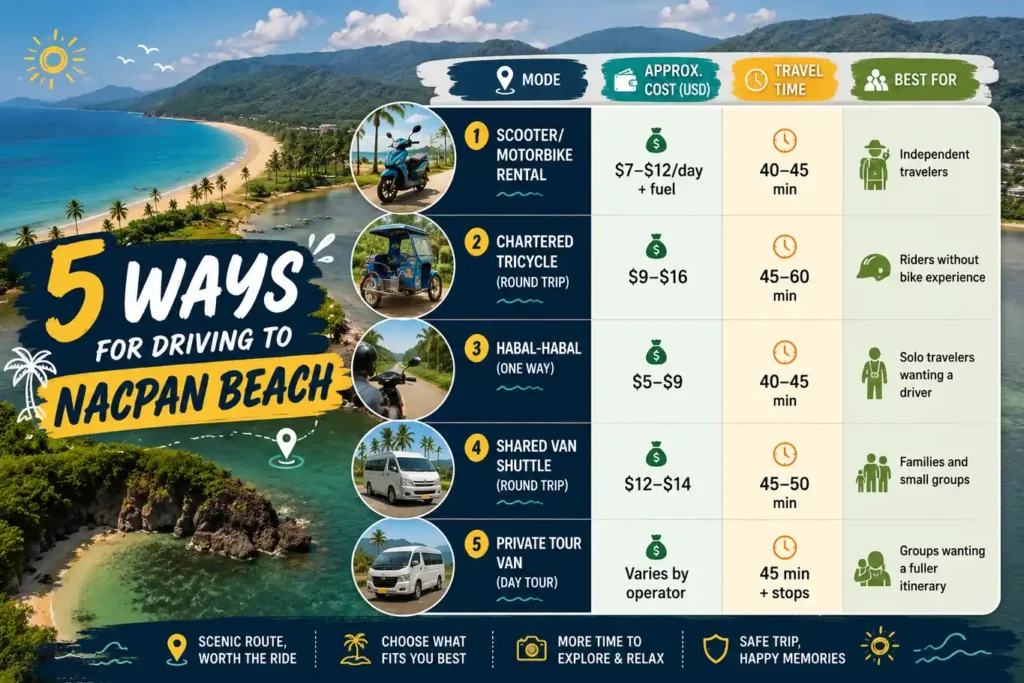
Here’s a quick comparison of the main ways to make the trip and what each one typically costs.
| Mode | Approx. Cost (USD) | Travel Time | Best For |
| Scooter/motorbike rental | $7-$12/day + fuel | 40-45 min | Independent travelers |
| Chartered tricycle (round trip) | $9-$16 | 45-60 min | Riders without bike experience |
| Habal-habal (one way) | $5-$9 | 40-45 min | Solo travelers wanting a driver |
| Shared van shuttle (round trip) | $12-$14 | 45-50 min | Families and small groups |
| Private tour van (day tour) | Varies by operator | 45 min + stops | Groups wanting a fuller itinerary |
Driving From El Nido Town to Nacpan Beach
Every route to Nacpan starts from El Nido town center, near Real Street and the rental shops that line it. The beach sits about 17 kilometers north, inside Barangay Bucana, along a road that hugs the coastline before cutting inland through farmland.
Riders leave town heading toward Corong-Corong, then follow the single main road north past Lio Beach and several smaller villages. There’s no shortcut or alternate road, so the drive is more about pacing than navigation. Fuel up before leaving, since no petrol stations operate along the way. Google Maps and similar apps track the route reliably, though signal drops in patches once you’re past Corong-Corong.
How Long Does It Take to Drive to Nacpan Beach?
The trip from El Nido town takes about 40 to 45 minutes by scooter or tricycle, covering roughly 17 kilometers. Shared vans take a similar amount of time. Rain, traffic near town, or a fully loaded scooter can stretch it closer to an hour.
Planning a Nacpan Trip? Check the Drive Time First. Read more in Planning a Nacpan Trip? Check the Drive Time First. Read More.
What Is the Road to Nacpan Beach Like?
Road quality determines how much attention the drive demands. Around three-quarters of the route is now paved, a real improvement from a few years back, winding through open farmland and patches of jungle.
The final two to five kilometers before the beach remain unsealed, alternating between hard-packed dirt and looser, sandier ground. Potholes show up on both paved and unpaved sections, so riding at constant full speed isn’t realistic anywhere on this road. Scenic viewpoints along the way, especially near the hill overlooking Nacpan and Calitang, make slower riding worthwhile anyway.
Best Route for Driving to Nacpan Beach
A clear route removes most of the guesswork on this drive. From El Nido town, head south briefly onto the main road through Corong-Corong, then turn north and stay on that single road for the rest of the trip. It passes Lio Beach and El Nido Airport, continues through smaller farming barangays, and eventually reaches a signed turnoff for Nacpan and Calitang beaches.
Part of this coastal stretch runs through the El Nido-Taytay Managed Resource Protected Area, jointly overseen by the Department of Environment and Natural Resources and the local government, which limits large-scale roadside development. Offline maps are worth downloading in advance, given the patchy signal past town.
Driving Conditions During the Rainy Season
Weather changes this drive more than almost any other factor. The wet season runs roughly from June through October, and rain turns the unpaved final stretch into slick, muddy terrain that’s genuinely tricky on two wheels.
PAGASA, the Philippines’ national weather bureau, generally places the heaviest rainfall between July and September, so afternoon downpours are common in that window. Riders without off-road experience should switch to a tricycle or van during wet months rather than risk a spill on slippery ground.
Even in dry season, sudden showers happen, so checking the forecast before heading out remains worthwhile.
The table below sums up what to expect on the road across both seasons.
| Season | Months | Road Surface | Recommended Vehicle |
| Dry Season | November-May | Mostly firm, dusty on unpaved stretch | Scooter, tricycle, or van |
| Wet Season | June-October | Muddy and slippery on final stretch | Tricycle or van preferred |
Parking at Nacpan Beach
Parking logistics at Nacpan are simple but worth knowing in advance. Motorbikes typically pay a small parking fee, generally between $0.35 and $0.55, collected at a designated lot just behind the tree line near the main cluster of restaurants.
Nacpan Beach itself carries no separate entrance fee as of 2026, though visitors doing island-hopping tours in El Nido have likely already paid the Municipal Government of El Nido‘s Eco-Tourism Development Fee, which covers many sites across town under Municipal Ordinance No. 01.
Cars are uncommon here, but the same lot accommodates vans and any four-wheeled vehicles making the trip. Arrive with small peso bills, since change is often limited. Street parking is also scarce in El Nido town itself, so most rental shops store scooters overnight rather than leaving them curbside.
Best Time to Drive to Nacpan Beach
Timing this drive well avoids both bad weather and busy roads. The dry season, from November through May, offers the most predictable conditions, with April and May typically bringing the calmest seas and clearest skies.
Within a single day, leaving El Nido town between 7:30 and 9:00 AM beats the day-tour groups and avoids the hottest midday sun on an open road. Afternoon light suits the return trip well, but riders heading out for sunset should still plan to leave the beach before it gets fully dark. Holy Week and the December-to-January stretch bring noticeably heavier traffic on this single road, so building in extra buffer time helps during those weeks.
Use this window to plan your departure time and know what to expect on the road.
| Departure Window | Conditions | Crowd Level on the Road |
| 7:30-9:00 AM | Cool, clear light | Low, ahead of day-tours |
| 9:00 AM-12:00 PM | Warmer, more road traffic | Moderate to high |
| 3:00-5:00 PM | Softer light, good for return | Low, day-trippers leaving |
| After 5:30 PM | Dark, no road lighting | Not recommended |
What Is the Best Time for Driving to Nacpan Beach?
The dry season, from November to May, is the best window, ideally departing El Nido town between 7:30 and 9:00 AM. This timing avoids afternoon rain, midday heat, and the bulk of day-tour traffic on the narrow coastal road.
Safety Tips for Driving to Nacpan Beach
A few precautions make this drive noticeably safer, especially for less experienced riders. Helmets are legally required across El Nido, and checking a rental scooter’s brakes and tires before leaving town catches problems early. The unpaved stretch punishes overconfidence, so slowing down there matters more than shaving minutes off the trip.
The Land Transportation Office enforces helmet and licensing rules nationwide, and local checkpoints near town occasionally confirm both.
- Wear a helmet at all times; it’s required under Philippine traffic law
- Check brakes, tires, and fuel before leaving El Nido town
- Avoid riding after dark, since the road has no streetlights
- Keep a safe following distance on the unpaved final stretch
- Download offline maps before losing signal past town
- Watch for stray dogs, livestock, and pedestrians near villages
Driving Back From Nacpan Beach to El Nido
The return trip follows the identical road, but timing shifts the experience considerably. Traffic is lighter in the late afternoon, though the unpaved stretch still needs the same careful pace leaving as it did arriving.
Riders who stayed for sunset should leave Nacpan by 5:30 PM at the latest, since the road has no lighting and grows genuinely hard to see within twenty minutes of dusk. A quick stop at Las Cabanas Beach on the way back works well for a second, more convenient sunset view if timing at Nacpan didn’t work out. Fuel gauges deserve a check before departing, since the return leg offers the same lack of petrol stations. Checking tire pressure before heading back is also worth the extra minute, since soft tires struggle on the unpaved stretch.
Getting to Nacpan Beach, in Short
Getting to Nacpan Beach by road comes down to a straightforward 45-minute ride over a route that’s mostly paved but genuinely rough near the end. Picking the right vehicle for your comfort level, checking the season, and leaving with enough daylight cover most of what can go wrong. Do that, and the drive itself becomes part of what makes Nacpan worth the trip.
FAQs
How far is Nacpan Beach from El Nido town?
Nacpan Beach sits about 17 kilometers north of El Nido town, inside Barangay Bucana, which typically works out to a 40 to 45 minute drive.
Is it safe to self-drive a scooter to Nacpan Beach?
Yes, for riders with basic experience. The road has a rough, unpaved final stretch, so slower riding and a helmet matter more than speed.
Can I rent a car instead of a scooter for the trip?
Car rentals are uncommon in El Nido town. Most travelers use a scooter, tricycle, or van, though the road itself can handle four-wheeled vehicles.
Is there an entrance fee for Nacpan Beach in 2026?
No separate beach entrance fee applies as of 2026. Expect only a small parking fee and, if applicable, El Nido’s Eco-Tourism Development Fee.
What is the best time of day to leave for Nacpan Beach?
Leaving El Nido town between 7:30 and 9:00 AM avoids day-tour crowds, midday heat, and gives the clearest light for the drive north.
Is the road to Nacpan Beach paved the whole way?
About three-quarters of the road is paved. The final two to five kilometers before the beach remain unsealed and can be rough.