
Glamping in the Philippines lets you sleep in a fully furnished tent or dome, complete with a real bed, private bathroom, and air conditioning, while staying close to nature. Most sites sit near a beach, a forest, or a mountain view, and nightly rates usually fall between $40 and $250 depending on the season. Palawan, Siargao, Batangas, and Zambales host the largest number of sites, and new locations open almost every year as demand keeps growing.
Many resorts also add extras like private pools, breakfast, and guided activities to make the stay feel more complete. Booking ahead is smart during peak months, since the best domes and tents fill up fast. If you want hotel-level comfort without giving up scenery, glamping in the Philippines gives you both in one stay.
What Is Glamping in the Philippines?
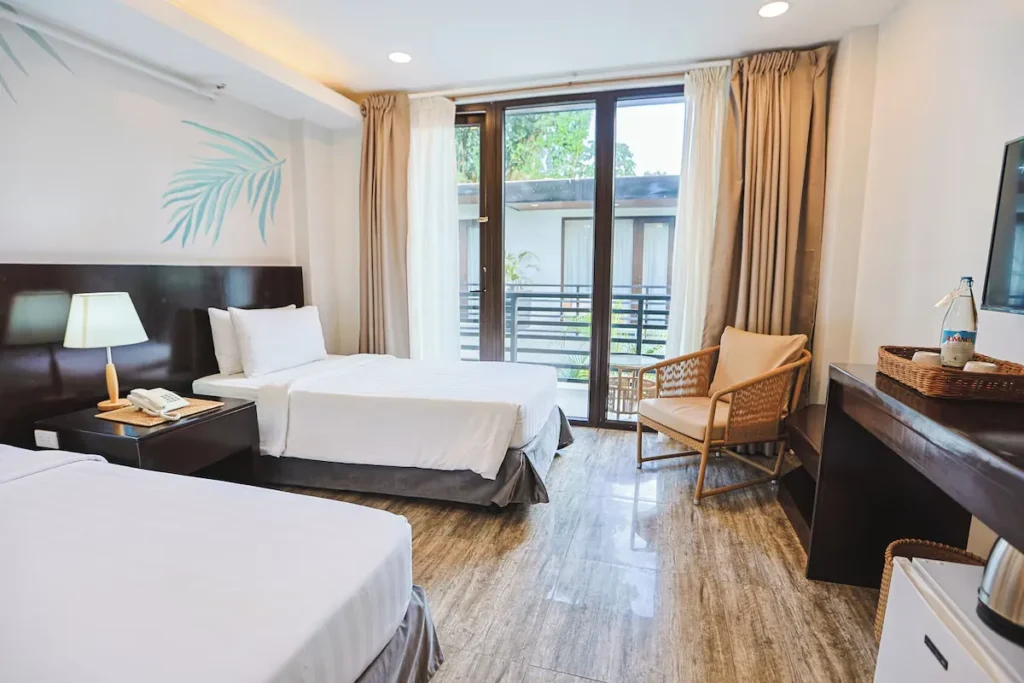
Glamping in the Philippines means staying in a furnished tent, dome, or cabin set in a natural landscape, without giving up basic comforts. Most sites include a real bed, a private or shared bathroom, and electricity, which separates it from traditional tent camping.
Operators pitch canvas bell tents, geodesic domes, or converted nipa huts on beachfront, forest, or mountain land, often beside a shared pool or open-air restaurant. Palawan and Zambales popularized the style locally in the late 2010s, and the number of sites has grown steadily since.
Best Glamping Spots in the Philippines
The type of glamping in the Philippines a traveler picks usually comes down to scenery, since beach, forest, mountain, and island settings each change the price and the facilities on offer. Beach setups still draw the most bookings nationwide, but forest and mountain sites near Manila are catching up fast. Below is a breakdown of what each style typically includes.
Beach Glamping in the Philippines
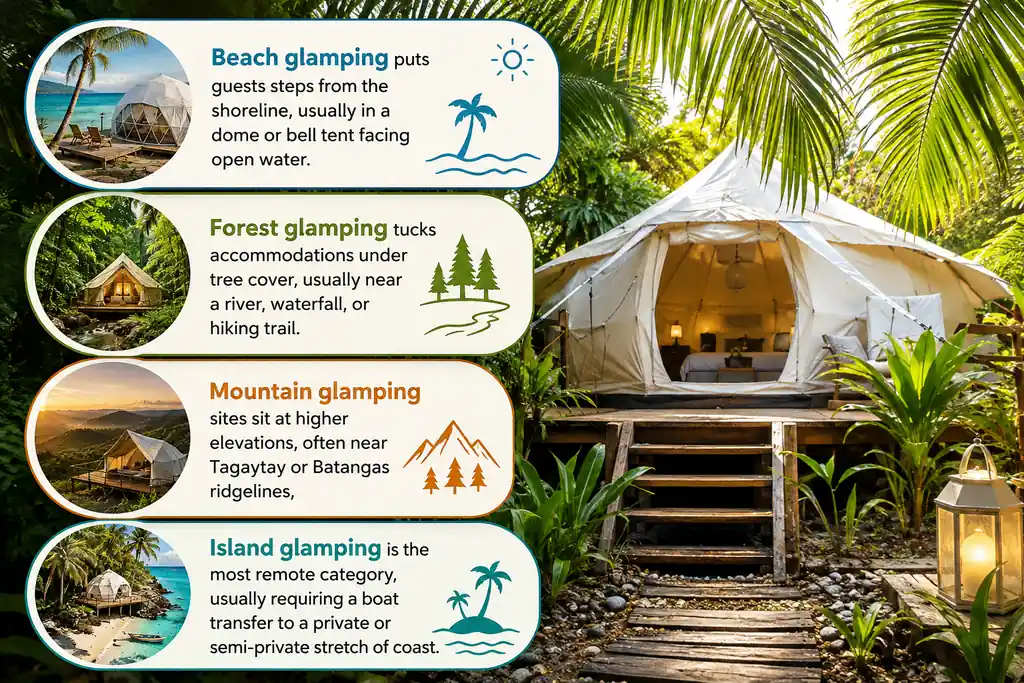
Beach glamping puts guests steps from the shoreline, usually in a dome or bell tent facing open water. Sites in Zambales, Siargao, and parts of Palawan lead this category, often bundling breakfast and beach access into the nightly rate. Tents without strong ventilation can get warm at midday.
Forest Glamping in the Philippines
Forest glamping tucks accommodations under tree cover, usually near a river, waterfall, or hiking trail. Batangas, Rizal, and Laguna host several of these properties within a two- to three-hour drive from Manila, with cooler air and fewer crowds than beach sites.
Mountain Glamping in the Philippines
Mountain glamping sites sit at higher elevations, often near Tagaytay or Batangas ridgelines, where fog and cooler air settle in overnight. Many combine domes with a viewing deck facing a volcano or valley, Hillscape in Batangas being one example.
Island Glamping in the Philippines
Island glamping is the most remote category, usually requiring a boat transfer to a private or semi-private stretch of coast. Palawan and Bohol offer this style through small operators running only a handful of tents at a time, and island glamping in the Philippines tends to sell out fastest during peak months.
Plan a Comfortable Night Under the Stars at Nacpan. Read more in Nacpan Beach in El Nido That Looks Remote but Feels Worth the Ride.
Best Glamping Destinations in the Philippines
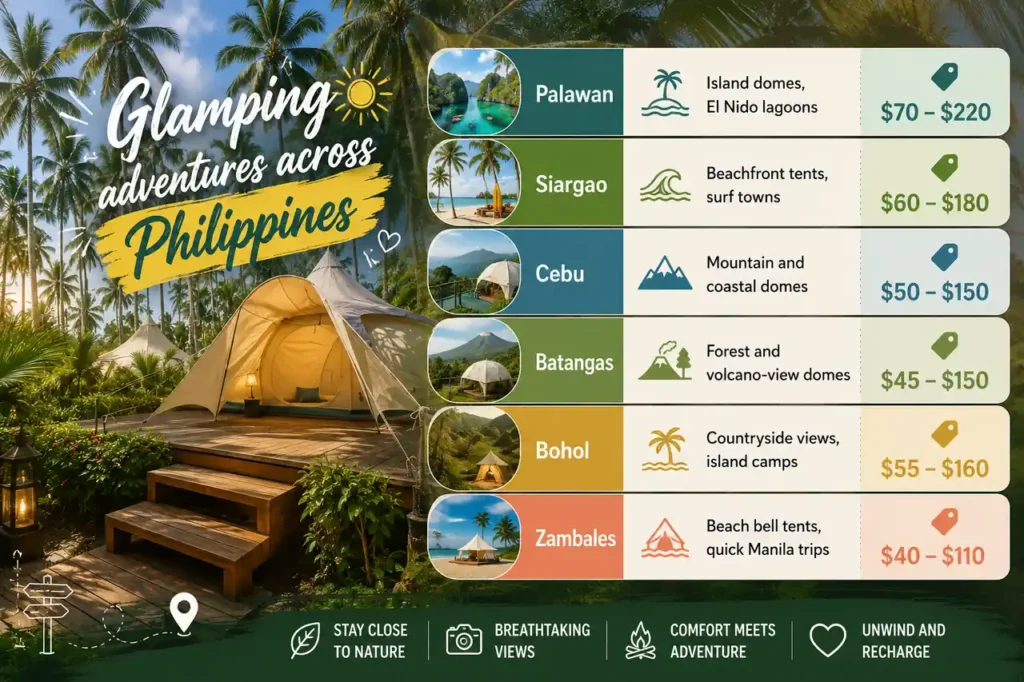
Six regions currently anchor most glamping bookings in the Philippines, each with its own landscape and price bracket. Palawan and Siargao pull the most international travelers, while Batangas, Cebu, Bohol, and Zambales serve as easier weekend options from major cities. The table below compares typical costs across each destination.
Here’s a quick look at typical nightly rates and highlights across each region.
| Region | Known For | Typical Price (USD/night) |
| Palawan | Island domes, El Nido lagoons | $70 – $220 |
| Siargao | Beachfront tents, surf towns | $60 – $180 |
| Cebu | Mountain and coastal domes | $50 – $150 |
| Batangas | Forest and volcano-view domes | $45 – $150 |
| Bohol | Countryside views, island camps | $55 – $160 |
| Zambales | Beach bell tents, quick Manila trips | $40 – $110 |
Palawan
Palawan hosts some of the country’s most photographed glamping domes, including Nacpan Beach Glamping and Aetas Glamping near El Nido. Puerto Princesa Subterranean River, a UNESCO World Heritage Site, sits within day-trip range of several properties, though transfers add extra travel time.
Siargao
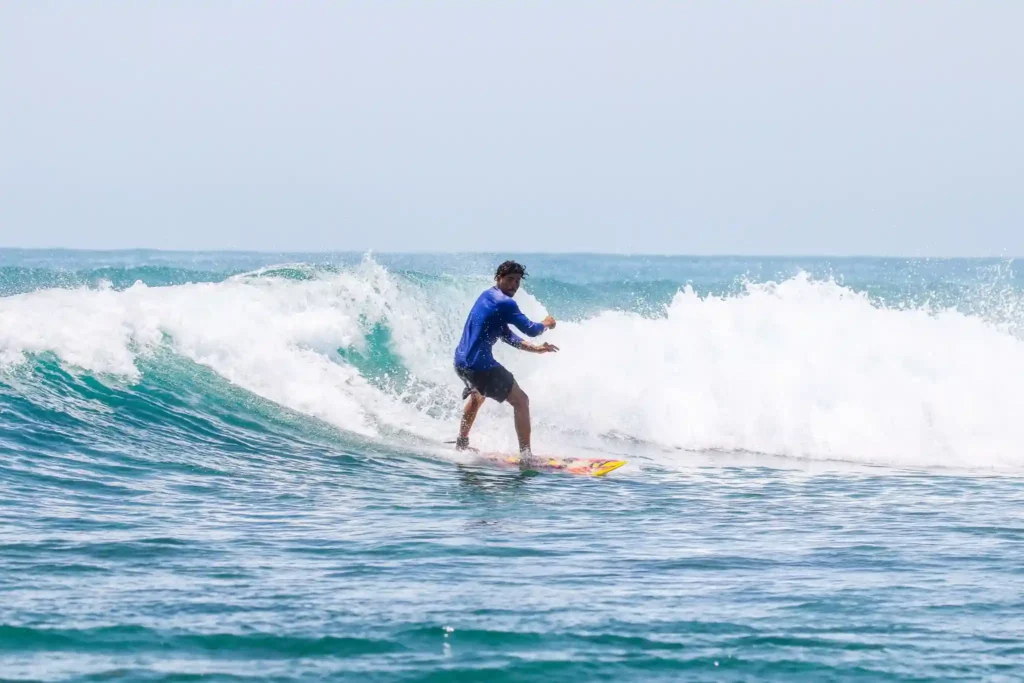
Siargao pairs surf culture with beachfront glamping tents, mostly clustered around Cloud 9 and General Luna. Sites here book out fastest from March to May, which lines up with the best surf swells and a younger, laid-back crowd.
Cebu
Cebu offers both coastal and mountain glamping, often within an hour of Cebu City. Treehouse de Valentine in Balamban is one established mountain-view option, working well for travelers combining glamping with diving or island-hopping.
Batangas
Batangas is the closest forest and mountain glamping hub to Manila, usually a two- to three-hour drive south. Nayomi Sanctuary Resort and Casa Antonio Glamping are two long-running names here, and weekend bookings fill fast.
Bohol
Bohol combines glamping with countryside views near the Chocolate Hills and nearby island beaches. Glamping Alona sits close enough to Panglao for a beach day and a countryside night in the same trip, at rates generally lower than Palawan or Siargao.
Zambales
Zambales is the budget-friendly, quick-access option for Manila-based travelers, usually a three- to four-hour drive. The Glamp, Glamp Zambales, and Kwentong Dagat Beach Resort line the coast near San Felipe and San Antonio.
Best Glamping Resorts in the Philippines
No single accreditation body ranks glamping resorts in the Philippines, so the Department of Tourism‘s general accommodation standards apply rather than a glamping-specific rating. Established names such as Aetas Glamping in El Nido, Nurture Wellness Village in Tagaytay, and Nayomi Sanctuary Resort in Batangas consistently draw repeat bookings and strong reviews. Smaller family-run domes in Zambales and Bohol often match bigger names on comfort, just with fewer extras like pools or restaurants.
Best Glamping Sites Near Manila
Travelers based in Metro Manila have the most options within a half-day drive, mostly across Batangas, Cavite, Rizal, and Zambales. Riverfront Garden Resort in Maragondon, Cavite, and Kalikasan Jungle Glamping Resort both sit within two hours from the capital, while Hillscape and Nayomi Sanctuary Resort add mountain and volcano views to that same radius. Traffic leaving Manila on Friday evenings can double the trip time, so a Saturday morning departure is usually faster.
How Much Does Glamping Cost in the Philippines?
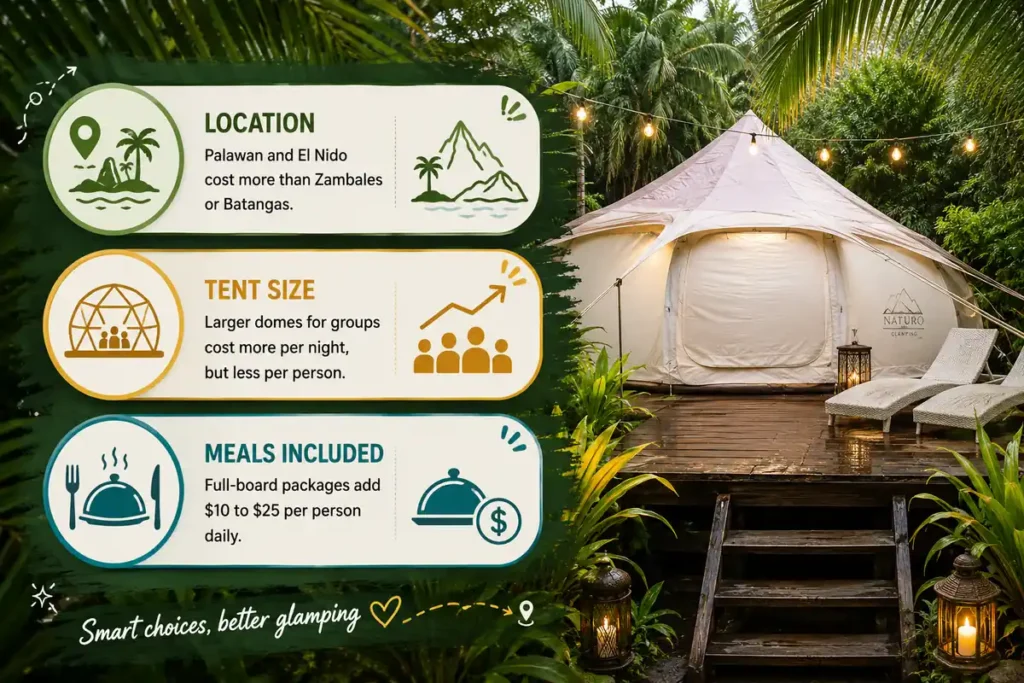
Glamping in the Philippines generally costs between $40 and $250 a night, with price shaped by location, tent size, and whether meals are included. Zambales and Batangas sit at the lower end, while private island setups in Palawan and El Nido push toward the top of that range. Weekends and Holy Week carry a noticeable markup almost everywhere.
This breakdown shows what actually drives the final nightly price.
| Factor | Typical Impact on Price |
| Location | Palawan and El Nido cost more than Zambales or Batangas. |
| Tent size | Larger domes for groups cost more per night, but less per person. |
| Meals included | Full-board packages add $10 to $25 per person daily. |
| Season | Weekends and Holy Week can raise rates by 20% to 40% |
| Extras | Kayaks, ATV rides, and island tours are often add-ons. |
What Is the Cheapest Glamping Option in the Philippines?
The cheapest glamping in the Philippines is usually found in Zambales, where basic bell tents start around $40 a night. Weekday and off-season bookings bring the biggest savings, and sharing a larger tent across a group lowers the per-person cost further.
What to Expect From a Glamping Stay
A typical glamping stay in the Philippines includes a made-up bed, a fan or air conditioning unit, and either an ensuite or shared bathroom close to the tent. Many properties bundle breakfast into the rate and offer optional add-ons like kayaking, island tours, or bonfires. Wi-Fi coverage is common near beach and forest sites but can be patchy on remote islands. Check-in and check-out times usually mirror standard hotel hours, around 2:00 PM and 11:00 AM.
Best Time for Glamping in the Philippines
The dry season, which PAGASA generally places between November and May, offers the calmest seas and clearest skies for glamping in the Philippines. March through May brings the hottest, sunniest stretches, while November and December stay slightly cooler with fewer crowds. The wet season, June through October, still has sunny mornings, but afternoon downpours are common and can affect beach and forest sites more than mountain properties.
What to Bring for Glamping in the Philippines
Packing light but smart makes a bigger difference at a glampsite than at a standard hotel, since some amenities are more basic than expected.
- Reef-safe sunscreen and insect repellent
- A power bank, since outlets can be limited at remote sites
- Water shoes for rocky shorelines or river crossings
- A light jacket for mountain or forest sites at night
- Cash in small bills, since rural sites rarely accept cards
Glamping vs Camping in the Philippines
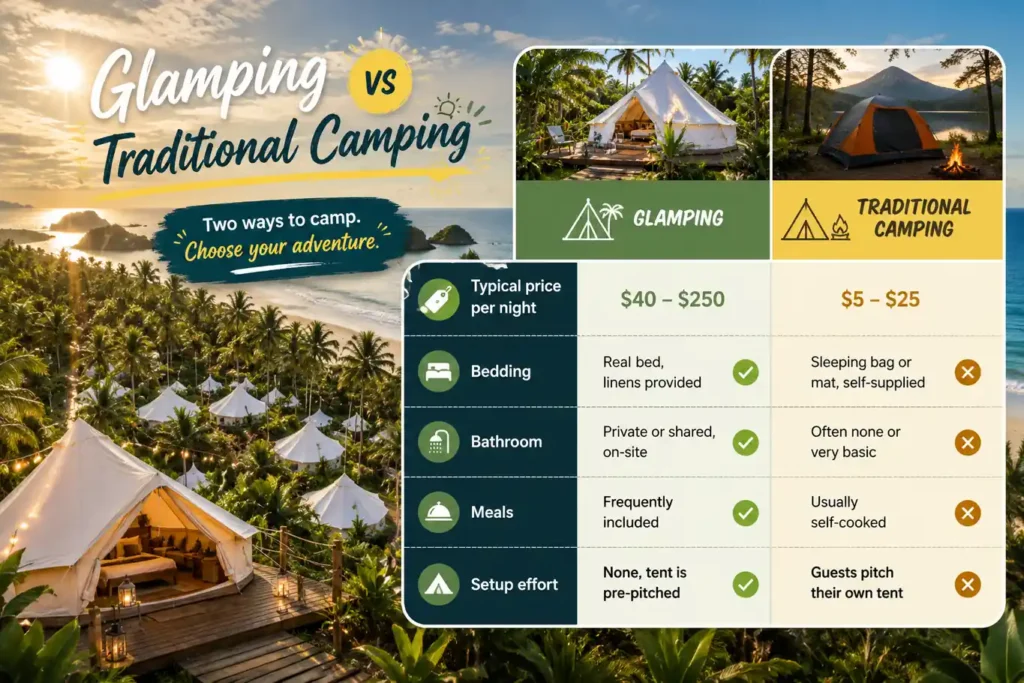
Glamping and traditional camping both put travelers outdoors, but the comfort level and the price gap between them are significant. Camping usually means bringing or renting basic gear, cooking your own food, and using shared or no facilities. Glamping removes most of that effort in exchange for a higher nightly rate.
The comparison below lays out the practical differences between the two.
| Feature | Glamping | Traditional Camping |
| Typical price per night | $40 – $250 | $5 – $25 |
| Bedding | Real bed, linens provided | Sleeping bag or mat, self-supplied |
| Bathroom | Private or shared, on-site | Often none or very basic |
| Meals | Frequently included | Usually self-cooked |
| Setup effort | None, tent is pre-pitched | Guests pitch their own tent |
Is Glamping More Expensive Than Camping in the Philippines?
Yes, glamping is considerably more expensive than traditional camping in the Philippines. Camping at a DENR–managed site or public beach can cost as little as $5 to $25 a night, while glamping typically runs $40 to $250 with furnishings and often meals included.
Tips for Booking Glamping in the Philippines
A little planning avoids the most common booking mistakes, especially at smaller, family-run sites with limited tents.
- Book at least two to three weeks ahead for weekends and Holy Week
- Confirm whether meals, transfers, and activities are included in the rate
- Ask about the bathroom setup before booking, since some sites use shared facilities
- Check the cancellation policy, since many small operators require full prepayment
Is Glamping in the Philippines Worth It?
Glamping in the Philippines is worth it for travelers who want time outdoors without giving up a proper bed, working plumbing, or air conditioning. It suits couples, families, and small groups looking for a quieter alternative to standard beach resorts, particularly across Zambales, Batangas, and Palawan. It will not satisfy travelers chasing five-star hotel service or nightlife, since most sites stay deliberately simple.
So, Where Should You Glamp
Glamping in the Philippines covers everything from $40 beach tents in Zambales to $220 island domes in Palawan, with beach, forest, mountain, and island settings to choose from. Matching the season, region, and budget to what a traveler actually wants makes the difference between a good stay and a forgettable one. Booking a few weeks ahead, especially around dry season weekends, remains the simplest way to lock in the better sites.
FAQs
What is the average price for glamping in the Philippines?
Most sites charge between $40 and $250 a night, depending on the region, tent size, and whether meals are included.
Is glamping safe in the Philippines?
Yes, established glamping sites are generally safe, though remote island properties may have limited cell signal and no lifeguard on duty.
Do I need to bring my own tent for glamping?
No, glamping tents, domes, or cabins come fully set up with bedding and furnishings already in place.
What is the best month for glamping in the Philippines?
April and May typically offer the calmest seas and clearest skies, based on PAGASA’s dry season outlook.
Are glamping sites near Manila good for a day trip?
Yes, several sites in Batangas and Cavite are bookable for day use, though overnight stays include more amenities.
Is glamping suitable for families with young kids?
Yes, most glamping sites work well for families, since beds, bathrooms, and shade are already set up on arrival.
How far in advance should I book glamping in the Philippines?
Booking two to three weeks ahead is recommended for weekends, with more lead time needed during Holy Week and major holidays.