Hidden beaches in Uluwatu, Bali, are quiet places that most tourists never find. Nyang Nyang Beach is one example. It has around 500 steps leading down the cliff to a long stretch of white sand that stays empty even on busy days. Green Bowl Beach is another hidden spot.
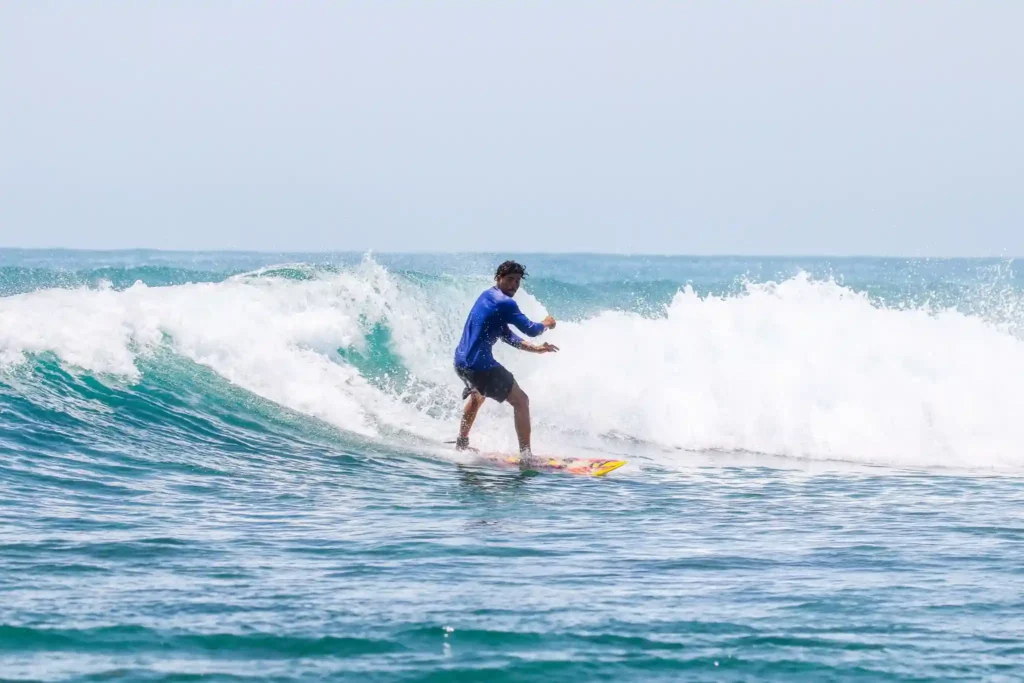
You walk down about 300 steps and pass a small cave with a tiny temple inside before you reach the shore. Suluban Beach hides behind a narrow cave entrance in the cliff, and it’s also known among surfers for its strong waves. To reach these hidden beaches in Uluwatu, Bali, you need some effort, but the reward is calm water, soft sand, and a peaceful break from Bali’s busier beach towns.
Quick Overview: Hidden Beaches at a Glance
| Beach Name | Crowd Level | Difficulty to Reach | Best For |
| Nyang Nyang | Very Low | Moderate (steep trail) | Solitude, long walks |
| Thomas Beach | Low | Easy | Swimming, relaxing |
| Green Bowl | Low-Medium | Moderate (200+ steps) | Surfing, tide pools |
| Nunggalan | Very Low | Moderate | Shipwreck views, peace |
| Suluban | Medium | Easy-Moderate | Surfing, rock caves |
| Melasti Corners | Low | Easy | Crystal water, cliffs |
If you’re comparing Bali’s quieter coastlines, check out our full guide on Nyang Nyang Beach vs Balangan Beach to see which hidden escape suits your travel style best.
Why Uluwatu Is Famous for Hidden Coastal Spots
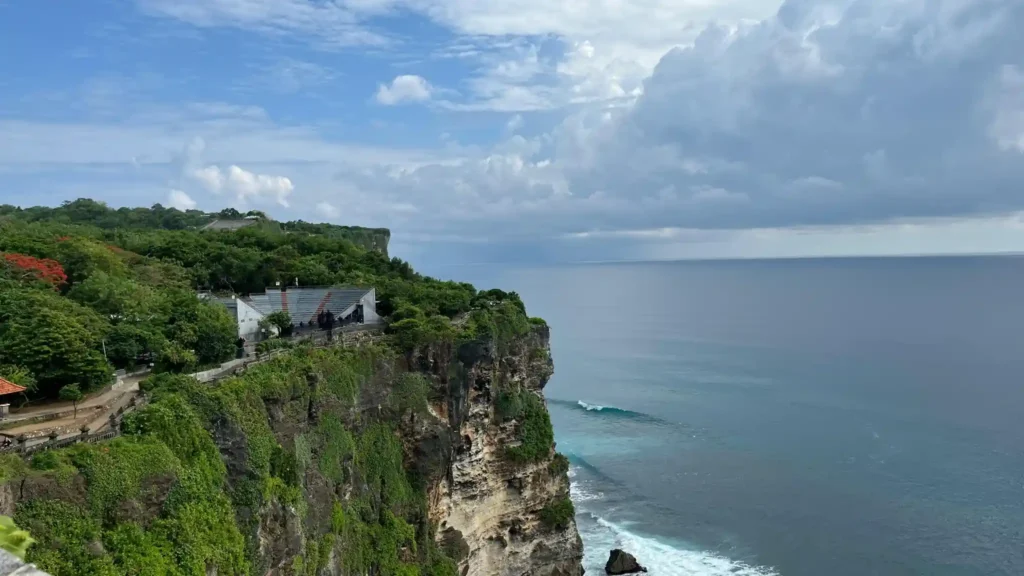
Honestly, Uluwatu is a bit of a paradox. On one side, you have the famous Uluwatu Temple and some of the most well-known surf breaks in the world. On the other side, tucked beneath those dramatic limestone cliffs, there are pockets of coastline that feel like they belong to another era. The reason Uluwatu has so many secret beaches comes down to geography. The entire southern peninsula of Bali is built on cliffs that rise anywhere from 50 to 100 meters above the Indian Ocean. Most tourists stay at the top. The beaches below remain hidden to anyone who does not actively look for them.
From my experience traveling through this region over multiple visits, what sets Uluwatu apart from other parts of Bali is the sheer variety of coastal environments you find once you start exploring. Some beaches are calm lagoons surrounded by caves. Others are open stretches battered by powerful swells. There is really something for every type of traveler who is willing to take the path less traveled.
What makes the Uluwatu beaches hidden?
Most Uluwatu beaches sit at the base of steep limestone cliffs, accessible only through narrow cliff trails, caves, or long staircases. This natural barrier keeps crowds away and preserves their unspoiled character.
Nyang Nyang Beach: The Long, Quiet Stretch Most Skip
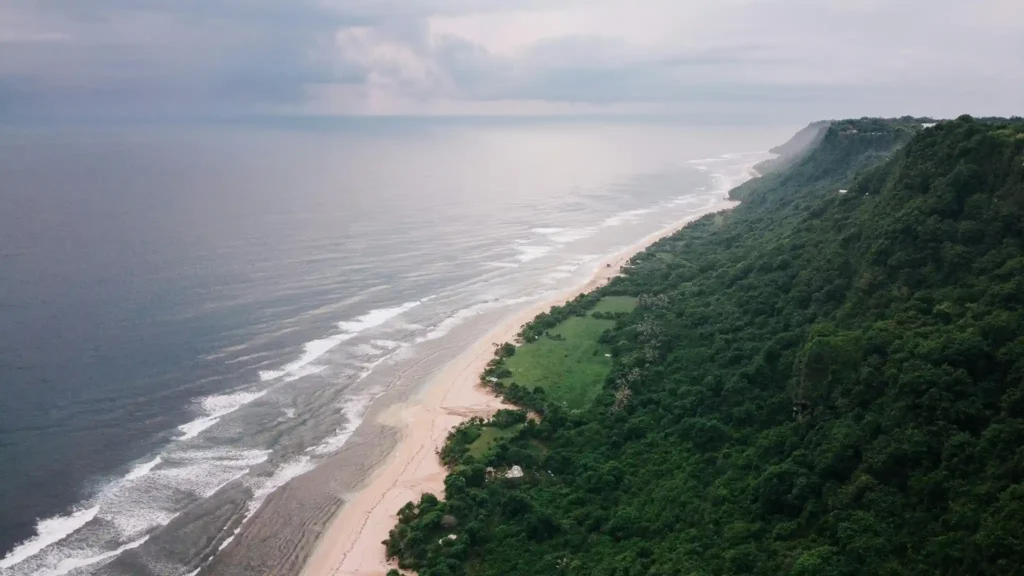
Of all the beaches on the Bukit Peninsula, Nyang Nyang is probably the least visited. And that is saying something, because even the well-known hidden beaches here are not exactly crowded. Nyang Nyang sits at the end of a dusty trail that cuts through dry scrubland before dropping steeply toward the sea. The descent takes roughly 20 to 30 minutes, depending on your pace, and you will want good shoes for this one.
Once you arrive, what you find is remarkable. A sweeping arc of white sand that stretches for nearly a kilometer with almost no one on it. There is a rusted shipwreck hull half-buried in the sand near the waterline, which has been there for decades and adds a real sense of drama to the landscape. The waves here are powerful and not always suitable for swimming, but for long walks, photography, and simply sitting in solitude while the ocean does its thing, Nyang Nyang is genuinely hard to beat.
On my last visit, I spent nearly three hours at Nyang Nyang and encountered fewer than ten other people the entire time. That kind of solitude in Bali is increasingly rare, and finding it here felt like a real privilege.
How do you get to Nyang Nyang Beach, Uluwatu?
Take the trail near Jalan Melasti in the Uluwatu area. The hike down takes around 20 to 30 minutes on a steep, rocky path. Wear closed-toe shoes and bring water. There are no facilities at the beach.
Thomas Beach: The Small Beach with Calm Waves
Thomas Beach is what you might call the most approachable of the hidden beaches in the Uluwatu region. The trail down is manageable, the beach itself is compact and sheltered, and the waves are gentle enough for casual swimmers. Unlike many of the more exposed beaches in this area, Thomas gets some natural protection from the surrounding rock formations, which keeps the water calmer on most days.
In terms of atmosphere, Thomas Beach sits somewhere between wild and comfortable. There is a small warung at the top of the stairs where you can grab a cold drink or some basic food before heading down. The sand is soft, and the water is clear. On weekends, it does get a bit busier, but compared to any of the main beaches in Bali, it still feels genuinely quiet.
What I particularly appreciate about Thomas Beach is how unpretentious it is. There is no beach club setup, no Instagram-bait swings hanging over the water. It is just a nice, calm stretch of sand with a laid-back crowd of travelers who found it the same way you did. That kind of authenticity is increasingly hard to find, even in Bali.
Difficulty & Suitability Comparison
| Beach | Swimming | Surfing | Good for Solo Travelers | Good for Couples |
| Nyang Nyang | Not ideal | Advanced only | Yes | Yes |
| Thomas Beach | Yes | Moderate | Yes | Yes |
| Green Bowl | Possible (calm days) | Yes | Yes | Yes |
| Nunggalan | Yes | No | Yes | Yes |
| Suluban | No | Excellent | Yes | Yes |
Green Bowl Beach: Caves, Tide Pools, and Real Seclusion
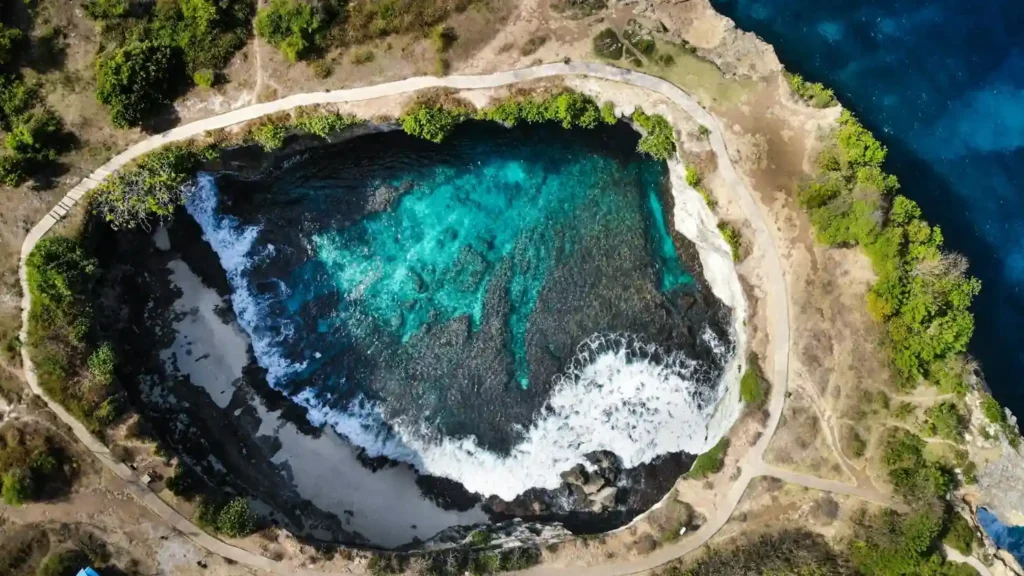
Green Bowl is one of those beaches that rewards effort in a very visible way. To get there, you walk down over 200 concrete steps cut into the cliff face. It sounds like a lot, and honestly, it is. But the entrance alone makes it worth it. You pass through a low cave opening, and suddenly the beach opens up before you. The entire cove is framed by overhanging limestone, and the color of the water shifts from deep blue to brilliant turquoise as it approaches the shore.
For surfers, Green Bowl offers a quality left-hand reef break that works best at mid to high tide. It is not a beginner spot, but experienced surfers will find the wave here genuinely fun and uncrowded. On the other hand, if surfing is not your thing, the tide pools at the base of the cliffs are fascinating. At low tide, you can explore shallow rocky pools teeming with sea urchins, small fish, and colorful starfish.
The beach also tends to attract a slightly more adventurous crowd. Most people here have come specifically for the experience, which means the overall vibe is exploratory and low-key rather than touristy. In my view, Green Bowl gives you the most complete experience of any single hidden beach in the Uluwatu area.
Are there tide pools at Green Bowl Beach?
Yes. Green Bowl Beach has excellent tide pools at the base of its limestone cliffs, best explored at low tide. You will find sea urchins, small tropical fish, starfish, and colorful coral formations in the shallow rocky pools.
Melasti Secret Corners: Where the Cliffs Meet Crystal Water
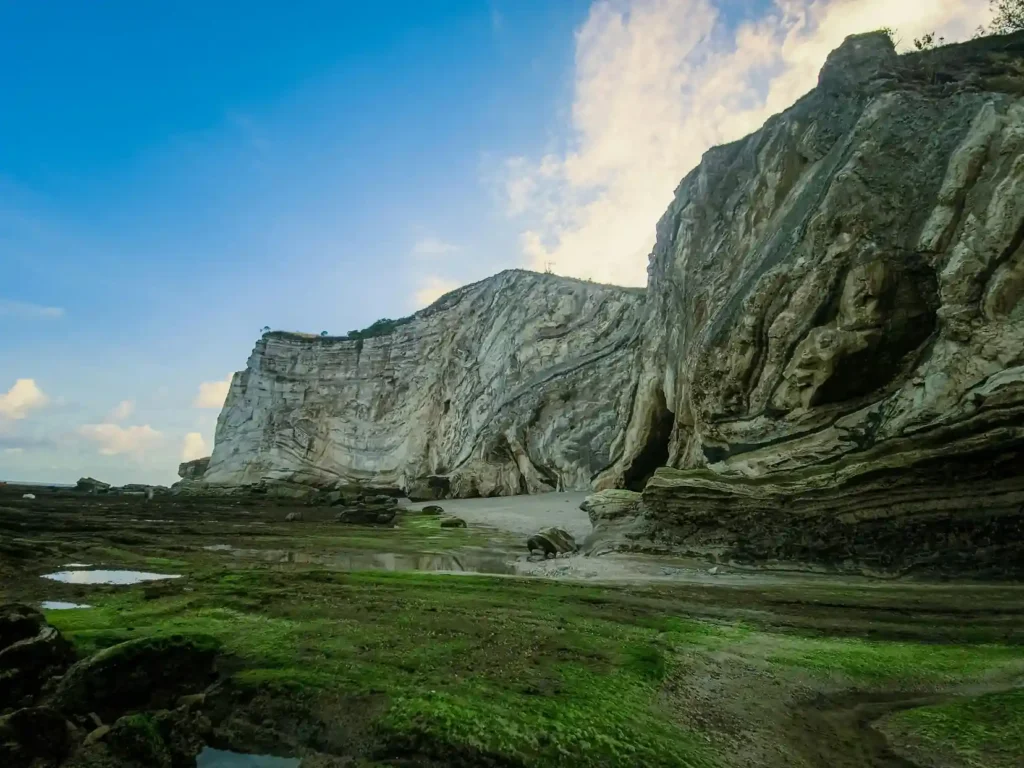
Most people who visit Melasti Beach see the main stretch, which has become more popular in recent years. But what many miss are the quieter pockets at either end of the beach, nestled against the limestone walls. These hidden corners of Melasti offer something special: the water clarity here is among the best of any beach on the Bukit Peninsula.
The cliffs surrounding these corners tower above you at dramatic angles, and at certain times of day, the way the light hits the water turns the entire scene into something almost unreal. Geologically, the area is fascinating, with deep caves carved into the cliff base and natural arches that create natural picture frames for the horizon.
From my experience, the best time to explore these corners is in the early morning, before most visitors arrive at the main Melasti stretch. You often get the place almost entirely to yourself. The combination of clear water, towering limestone, and morning light makes it one of the most photogenic hidden spots in all of Bali.
Nunggalan Beach: Remote Shoreline with a Shipwreck View
Nunggalan Beach is probably the least visited beach covered in this guide, which is exactly why it deserves a mention. Getting there requires navigating a trail through a small rice farming community, then dropping down a steep path to the beach below. The trail is not especially marked, so a little local guidance or a quick look at maps beforehand is helpful.
What you find at the bottom is a wide, windswept beach with black and white sand, powerful surf, and the kind of silence that feels almost total. The most striking feature is the visible remnant of an old vessel offshore, which creates a hauntingly beautiful focal point against the open ocean backdrop. Because Nunggalan requires genuine effort to reach, it sees almost no tourist traffic.
Is Nunggalan Beach safe to visit?
Nunggalan Beach is safe to visit but involves a moderate hike with no facilities. Swimming is not recommended due to strong currents and powerful surf. It is best visited for scenic views, photography, and peaceful exploration.
Suluban Hidden Paths: Rock Caves and Surf-Friendly Shores
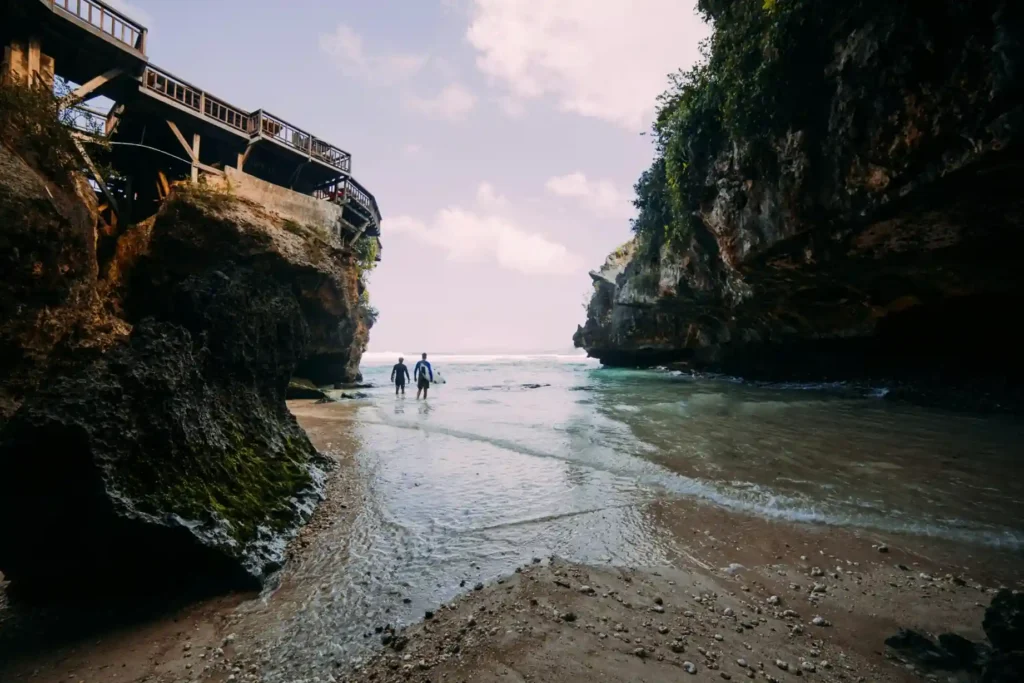
Suluban, also known as Blue Point Beach, is more well-known than the others on this list, but it still qualifies as a hidden beach experience because of the way you access it. The path down involves navigating through narrow rock passages and cave-like corridors carved naturally into the cliff. During low tide, the whole journey feels like an adventure film. During high tide, parts of the access route are underwater, which changes the experience entirely.
Once you are down at the water level, the rock formations around you are extraordinary. Natural arches, deep pools, and layered cliff faces create a setting that feels almost otherworldly. The surf at Suluban is world-class and has hosted international competitions. Even if you are not a surfer, watching the waves here from the rock platforms is genuinely exciting.
A few practical things worth knowing before you go:
- Visit at low tide for the easiest and safest access through the caves
- Bring sandals you do not mind getting wet
- The cliff-top area above has cafes and warungs where you can watch the sunset after your beach visit
- Water shoes or reef shoes are a smart choice given the sharp rocks
Best Time to Visit Each Hidden Beach
| Beach | Best Time of Day | Best Season | Tide Preference |
| Nyang Nyang | Morning | Dry season (Apr-Oct) | Any |
| Thomas Beach | Morning or afternoon | Year-round | Any |
| Green Bowl | Low tide morning | Dry season | Low tide |
| Melasti Corners | Early morning | Dry season | Any |
| Nunggalan | Morning | Dry season | Any |
| Suluban | Low tide | Year-round | Low tide essential |
Best Time to Visit: Early Mornings Win Every Time
If there is one piece of advice I would give to anyone planning to explore the hidden beaches in Uluwatu, it is this: go early. Arriving at a hidden beach at 7 am versus 11 am is often the difference between having the entire place to yourself and sharing it with a small group of other explorers. The light is also considerably better in the early hours, especially if photography matters to you.
In terms of seasons, the dry season running from April through October gives you the most reliable weather and calmer ocean conditions. November through March brings higher rainfall and stronger swells, which make some beaches more dramatic but less practical for exploring. That said, the shoulder months of April and October often combine good weather with fewer tourists, making them particularly sweet spots.
When is the best time to visit the hidden beaches in Uluwatu?
Early morning visits between 7 am and 9 am offer the quietest conditions. The dry season from April to October provides the most reliable weather. Low tide is essential for beaches like Green Bowl and Suluban.
Travel Tips Before You Head Down the Cliffs
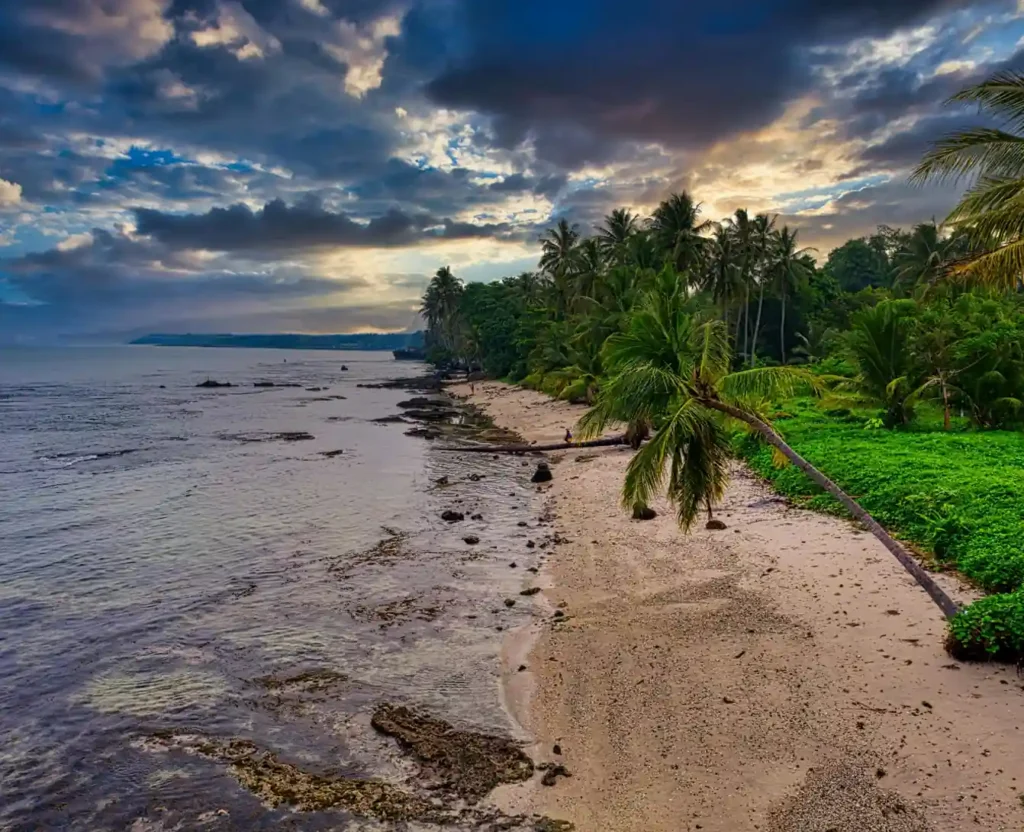
Having spent considerable time exploring these beaches across multiple trips, a few practical tips stand out as genuinely important rather than just nice-to-have.
- Carry at least 1 to 1.5 liters of water per person. None of these beaches has reliable water access, and the hikes, even short ones, get warm quickly
- Wear shoes with grip. Flip flops are fine for the beach itself, but can be genuinely dangerous on steep, loose dirt trails
- Download offline maps before you go. Mobile signal is often unreliable in the Bukit Peninsula, especially at the beach level
- Check tide schedules before visiting Suluban or Green Bowl. Tide charts are freely available on multiple apps and websites
- Tell someone where you are going, especially for beaches like Nunggalan and Nyang Nyang, where the trails are less traveled
- Bring reef-safe sunscreen to protect both your skin and the marine ecosystems in these pristine areas
Most of these beaches have little to no commercial infrastructure, which is part of what makes them special. On the other hand, it also means you are responsible for your own comfort and safety in a way that more developed beaches do not require.
For a deeper look at one of Bali’s most peaceful coastal escapes, explore our Nyang Nyang Beach Bali Travel Guide | Untouched Beauty.
Final Thought: Every Step Leads to Something Special
Bali gets a lot of visitors each year, and most of them spend their time in the same handful of well-known spots. That is completely understandable. The popular beaches are popular for a reason. But if you have the time, the curiosity, and a decent pair of walking shoes, the hidden beaches in Uluwatu Bali offer something that the crowded coastlines simply cannot: the genuine feeling of discovery.
From the windswept solitude of Nyang Nyang to the cave-framed perfection of Green Bowl, from the crystal pockets of Melasti to the shipwreck drama of Nunggalan, these beaches collectively tell a story about what Bali looked like before mass tourism reshaped its coastline. They are not always easy to reach. They do not always have a cold drink waiting for you at the bottom. But they give you something more valuable than convenience. They give you a real experience that stays with you long after you leave.
In my view, anyone who calls themselves a genuine Bali traveler owes it to themselves to explore at least a few of these spots. The hidden beaches in Uluwatu, Bali, are, without question, among the most rewarding natural experiences the island has to offer.
Frequently Asked Questions
Are the hidden beaches in Uluwatu, Bali, safe for swimming?
It depends on the beach. Thomas Beach and the calmer corners of Melasti are generally safe for swimming on most days. Beaches like Nyang Nyang, Nunggalan, and Suluban have strong currents and are not recommended for swimming. Always check local conditions and observe the water before entering.
Do I need a guide to find these secret beaches?
Most of the beaches in this guide can be found independently using a combination of offline maps and basic directions. However, for Nunggalan in particular, a local guide or detailed directions from your accommodation can be helpful since the trail is not always well marked.
Is there an entrance fee for hidden beaches in Uluwatu?
Some beaches charge a small local fee, typically between 10,000 and 20,000 Indonesian Rupiah per person. Others are completely free. The fees, when they exist, go toward basic trail maintenance by local communities.
What should I bring to the hidden beaches in Uluwatu, Bali?
Bring plenty of water, sunscreen (reef-safe preferred), a hat, closed-toe shoes for the trails, and a small first aid kit. A waterproof bag or dry pouch is useful for electronics. Do not count on buying supplies at the beach.
Which hidden beach is best for beginner surfers?
Thomas Beach is the most suitable for beginner or intermediate surfers among the hidden beaches in the Uluwatu region. The waves are smaller and more manageable. Green Bowl and Suluban are better suited for experienced surfers.
Can I visit multiple hidden beaches in one day?
Yes, it is possible to visit two or even three beaches in a single day if you plan the routes efficiently. A good combination is Suluban in the morning at low tide, followed by Thomas Beach in the afternoon. Nyang Nyang and Nunggalan require more time due to longer hikes, so they are better as standalone visits.