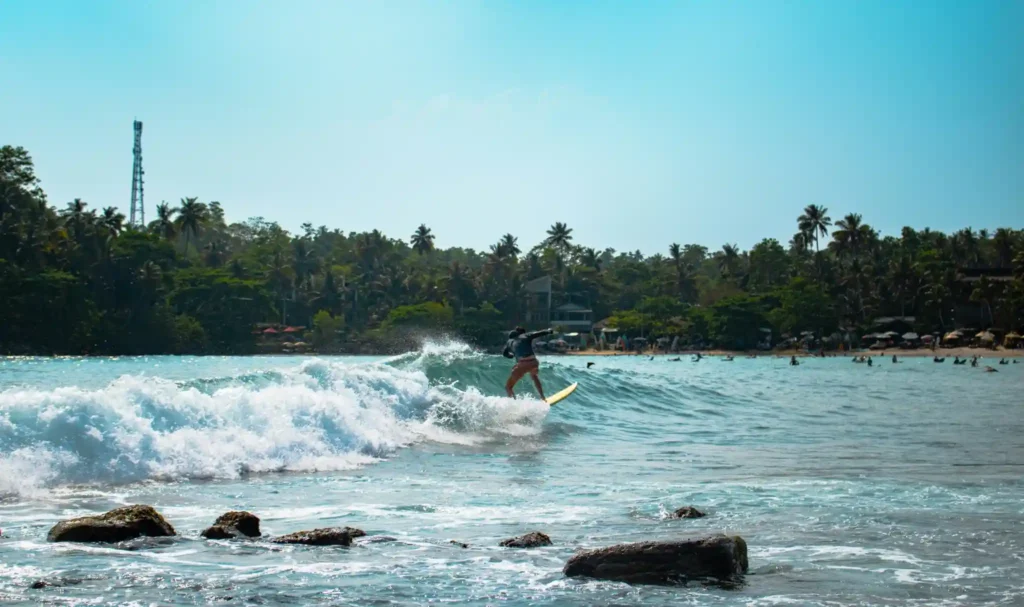
Hiriketiya travel tips are exactly what you need if you want to explore this small, horseshoe-shaped beach on Sri Lanka’s south coast without wasting time. Located near the bigger town of Dikwella, Hiriketiya is famous for its horseshoe-shaped bay with waves suitable for surfers of all levels, offering a beach break for beginners and a reef break for more experienced surfers.
The best time to visit is during the dry season, from November to April, when the sea is usually calm and perfect for surfing, snorkeling, and swimming. In this guide, you will find simple Hiriketiya travel tips on the best surf spots, budget-friendly places to stay, good cafés, easy transport options, and hidden spots that most tourists never find. Whether you are visiting for a few days or planning a longer stay, this information will help you enjoy Hiriketiya the right way, without wasting time or money.
Why Beach Lovers and Surfers Are Choosing Hiriketiya
Hiriketiya Bay is about 200 km south of Colombo, located between Dickwella and Dondra at the southern tip of Sri Lanka. The bay has a natural horseshoe shape, which creates calmer waves inside the curve and stronger waves further out at the reef. Because of this, it’s one of the rare beaches in Sri Lanka where beginners can learn to surf safely while more experienced surfers can still find proper, powerful waves.
Unlike busy spots like Hikkaduwa or Arugam Bay, Hiriketiya is still relatively quiet and not crowded with large hotels or tour buses. The shoreline is mostly lined with palm trees, small guesthouses run by local families, and relaxed open-air cafés serving good coffee. It’s a peaceful place for people who want soft sandy beaches without heavy crowds, and also for surfers who prefer good waves without too many people in the water.
What is the best month to visit Hiriketiya?
Quick Answer: The best time to visit Hiriketiya is November through April, when the southwest monsoon has passed, and the South Coast enjoys dry, sunny weather with consistent surf. December and January offer the best wave conditions for surfers.
Best Time to Visit Hiriketiya
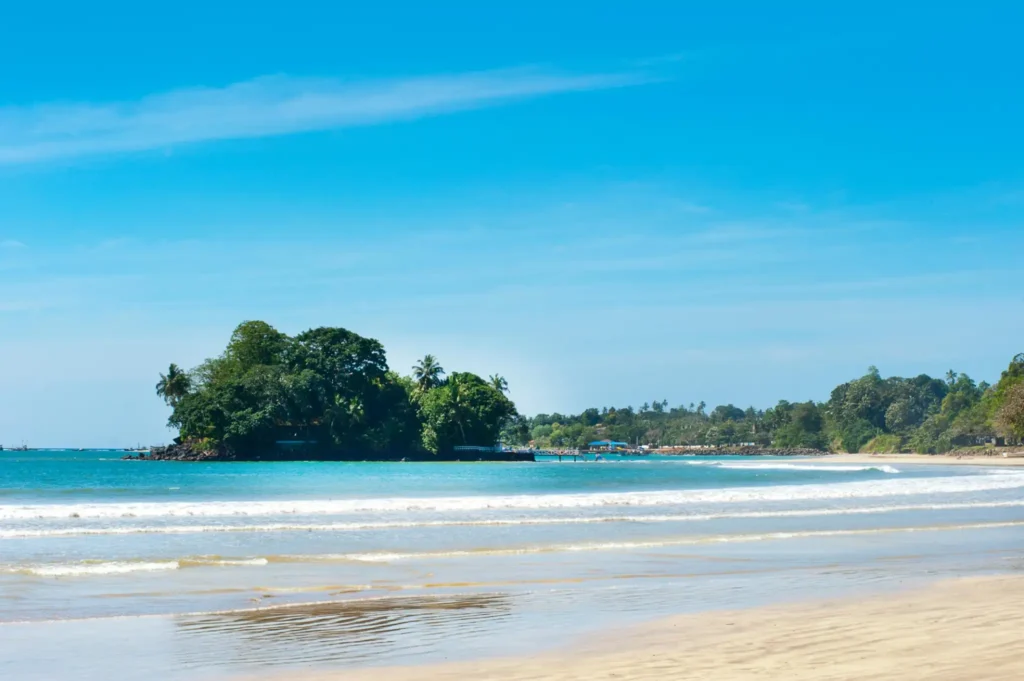
Sri Lanka has two main monsoon seasons that affect travel plans.
From May to September, the southwest monsoon brings heavy rain and strong waves to the south and west coasts. During this time, places like Hiriketiya are not ideal for swimming or surfing because the sea can be rough and unsafe.
From October to January, the northeast monsoon causes some rain in the north and east, but the south coast usually stays mostly dry and still looks beautiful, making it a better time to visit.
| Month | Weather | Surf Quality | Crowd Level |
| November | Warm & sunny | Building: good for beginners | Low |
| December | Hot & dry | Excellent, consistent swells | Moderate |
| January | Hot & dry | Peak surf season | Moderate-High |
| February | Hot, slightly dry | Good waves | Moderate |
| March–April | Warm, occasional cloud | Decent, mellowing | Low |
| May–October | Monsoon season | Rough — not recommended | Very Low |
Most experienced travellers on the South Coast Circuit, Galle, Mirissa, Dickwella, Hiriketiya, plan their visits between mid-November and the end of March. This window gives you reliable sunshine, manageable crowds, and the best surf conditions the bay produces.
How do you get to Hiriketiya from Colombo?
Quick Answer: From Colombo, take the coastal train to Weligama or Matara, then a tuk-tuk to Hiriketiya (roughly 20–30 minutes). Alternatively, hire a private car or take a bus to Dickwella and tuk-tuk the remaining 3 km.
How to Get There: Routes and Transport Options
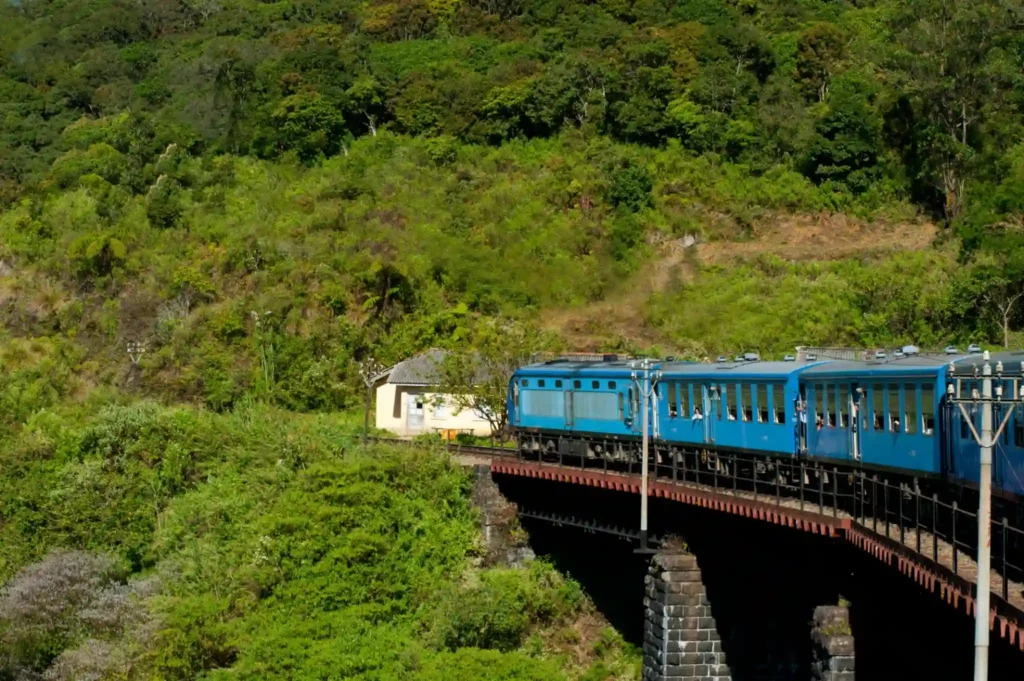
Getting to Hiriketiya takes a bit of planning, but it’s a smooth and scenic journey. The train from Colombo to Matara is one of Asia’s most beautiful coastal rides, taking about 3–4 hours with amazing ocean views.
From Matara or Dickwella, a tuk-tuk to Hiriketiya costs around 500–800 LKR and takes 20–30 minutes.
If you’re coming from Colombo Airport, a private transfer takes about 3.5–4 hours and costs roughly USD 70–100.
Where to Stay Near Hiriketiya Beach
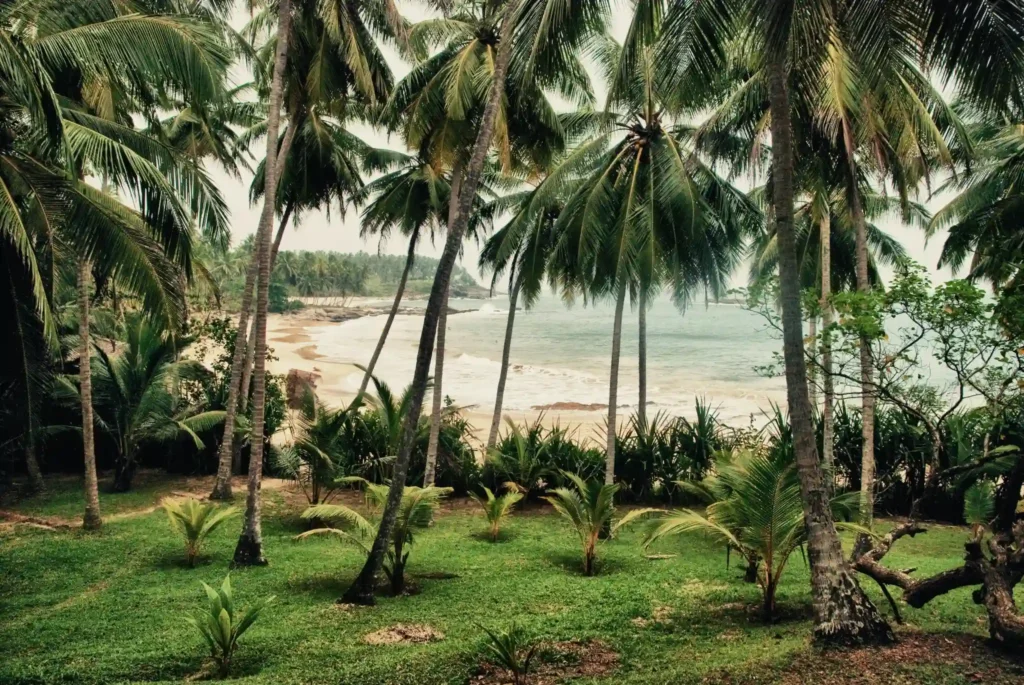
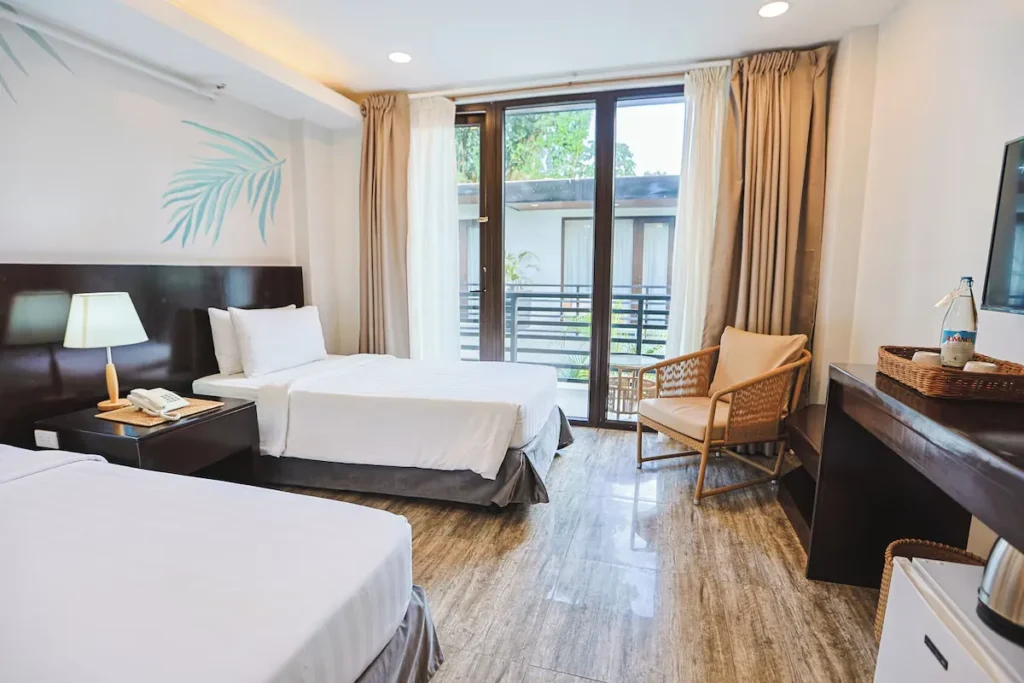
Accommodation in Hiriketiya ranges from simple surf camps, where you might end up sharing a room with a pro longboarder from Portugal, to stylish eco-lodges with open-air showers and lush jungle surroundings. You won’t find any big hotel chains here, which is part of the charm. Most places are just a short walk from the beach, and breakfast is usually included.
| Budget Range | Type | Avg. Nightly Rate (USD) | Best For |
| Budget | Surf hostels/dorms | $8–$18 | Solo travellers, surfers |
| Mid-Range | Guesthouses / B&Bs | $25–$60 | Couples, backpackers |
| Upper-Mid | Boutique guesthouses | $60–$120 | Couples, comfort seekers |
| Luxury | Eco-villas / private stays | $120–$250+ | Honeymooners, families |
If you’re planning to visit between December and February, it’s a good idea to book early because the best guesthouses often get fully booked weeks in advance during the busy surf season. Places like Dots Bay House and other boutique stays are very popular with surfers from around the world. Guests often highlight their friendly hospitality, tasty food, and how close they are to the surf spot.
Top Things to Do in Hiriketiya
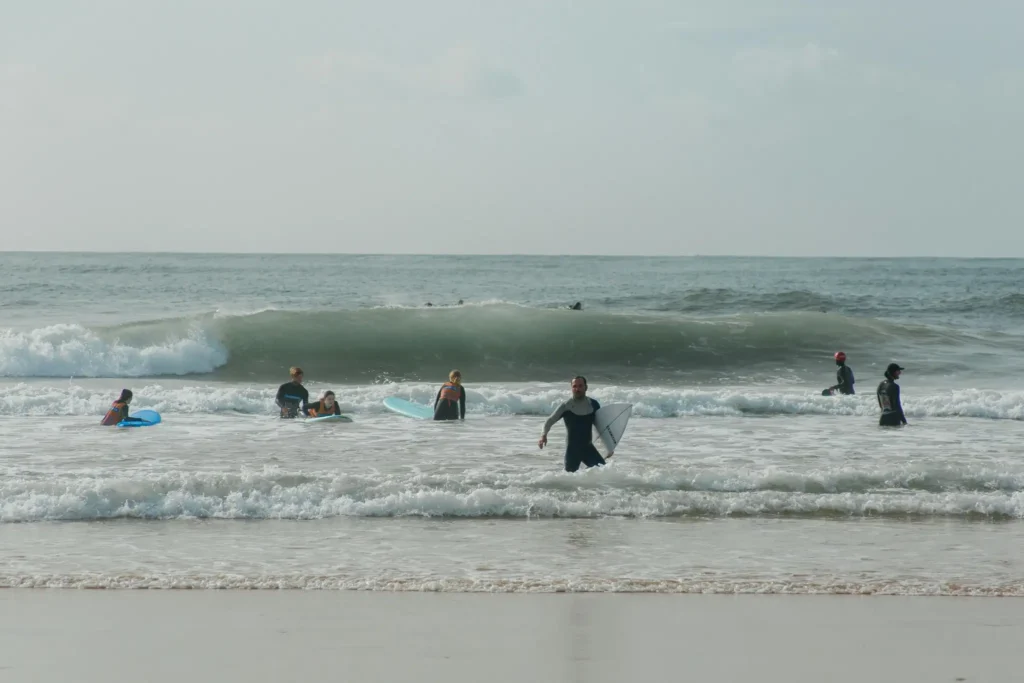
Hiriketiya is the kind of place that slows you down in the best way. It’s not really about rushing around ticking off sights, but more about staying a while and enjoying the atmosphere. Still, if you want to do more than just relax on the sand, there’s plenty to explore.
● Surf in the bay: gentle waves for beginners inside the bay, with a reef break for more experienced surfers
● Swim and snorkel around the rocky edges of the horseshoe-shaped bay
● Visit nearby Dickwella and see the blowhole at Kudawella (about 3 km away)
● Head to Dondra Lighthouse, the southernmost tip of Sri Lanka (around 10 km away)
● Go whale watching from Mirissa (about 30 km west)
● Try the amazing cafés scattered around the bay
● Join a yoga class – many guesthouses offer morning sessions
● Take a day trip to Galle Fort (about 55 km away) to explore its history and colonial charm
One thing that really surprises first-time visitors is how special the sunsets are here. Instead of watching the sun go down straight ahead like on a normal beach, the curved shape of the bay lets you walk along the rocky edges and find your own quiet spot. You can often sit there alone, looking across the whole bay as the sky changes color. It’s a simple but unforgettable moment that shows why people fall in love with places like this.
Is Hiriketiya good for beginner surfers?
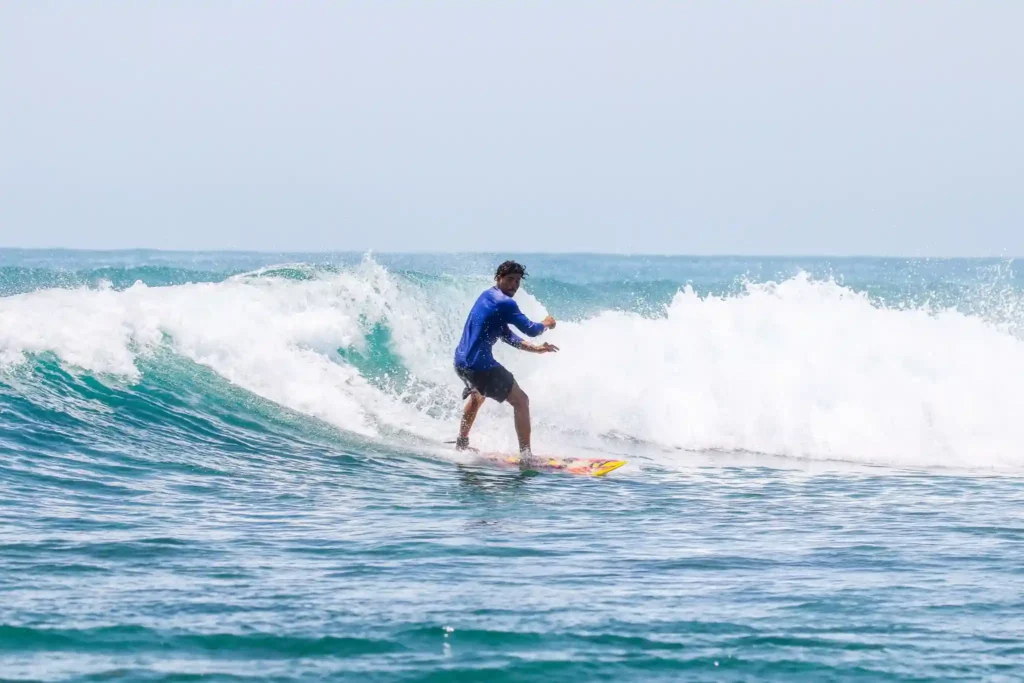
Yes. The inside of Hiriketiya Bay offers gentle, rolling waves ideal for beginners. Several surf schools operate directly on the beach, offering lessons and board rentals. The outer reef is reserved for more experienced surfers.
Surfing Tips for Hiriketiya
New to surfing here? Check out our complete Hiriketiya Beach Surfing Guide: Waves, Tips & Everything You Need to Know.
Hiriketiya is widely known as one of the best places in Sri Lanka for beginner surfers, and that reputation is well deserved. Inside the bay, the waves are steady, gentle, and break in shallow water, which gives beginners plenty of time to stand up and ride.
Surf schools here usually charge around LKR 4,000–6,000 (about USD 12–18) for a 90-minute lesson, and this normally includes a surfboard and rash guard.
For more advanced surfers, the outer reef and the right-hand point break on the eastern side of the bay offer stronger, more hollow waves. These conditions are especially good in December and January when the South Coast swell is at its peak.
Surfboard rentals cost around USD 5–10 per day, depending on the type of board. Longboards are easy to find, which suits the calm, rolling waves of the bay. If you’re bringing your own board, be careful while paddling out from the eastern side, especially at low tide, because the rocks can be tricky.
Food & Cafes: Where to Eat in Hiriketiya
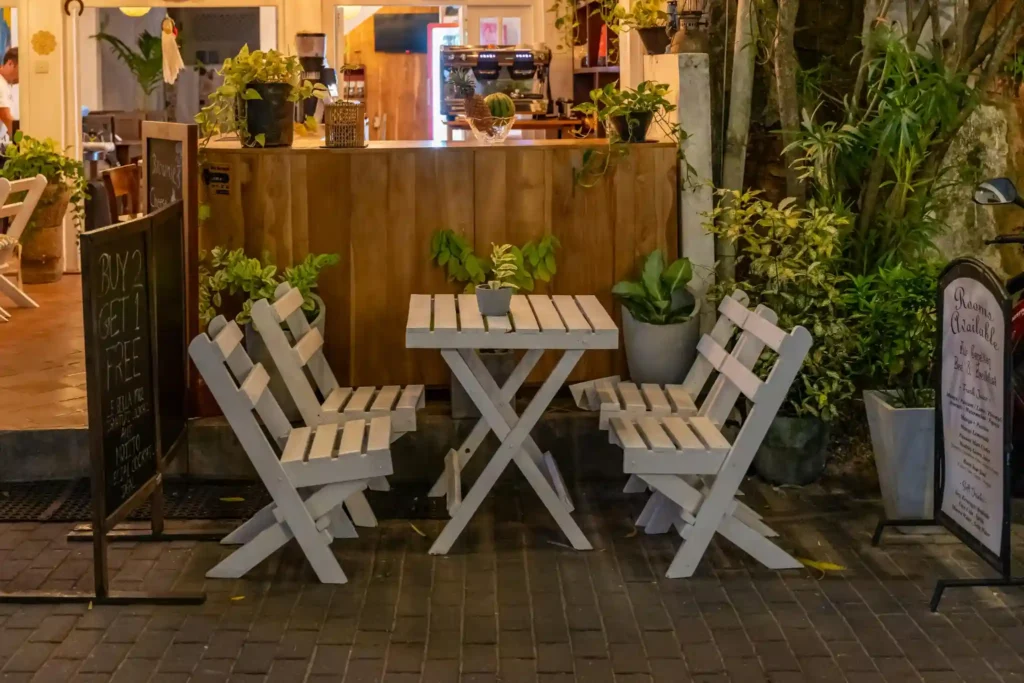
The café scene in Hiriketiya is surprisingly impressive for such a small beach town. In recent years, a bunch of great independent cafés have opened around the bay, drawing in skilled chefs who’ve chosen this relaxed coastal spot over busy city life. You’ll find everything from strong single-origin coffee and smoothie bowls to homemade granola, freshly caught seafood, traditional Sri Lankan rice and curry at lunch, and even wood-fired pizza in the evenings.
A few local tips can really help: try to get to rice and curry spots before 1 PM, since the popular ones often sell out early. For the freshest and cheapest seafood, head to the small beach shacks on the western side of the bay; most of the fish comes in fresh that same morning. Cafés closer to the main beach road are more Instagram-friendly and slightly pricier, but they make up for it with great food and a nice atmosphere.
How much does it cost per day in Hiriketiya?
Budget travellers can get by on USD 25–35 per day in Hiriketiya, covering a dorm bed, local meals, and one surf lesson. Mid-range travellers typically spend USD 60–90 per day with a private room and café dining.
Budget Tips: How to Travel Hiriketiya on a Shoestring
Hiriketiya is actually very budget-friendly when you compare it internationally. A simple local rice and curry lunch usually costs around 400–600 LKR (about $1.30–$2). A tuk-tuk ride across the bay is also cheap, typically 100–200 LKR. Even surf lessons are quite affordable compared to places like Bali, Thailand, or Portugal. The only time prices really go up is for accommodation in peak season, so it’s best to book early to get better deals instead of paying walk-in rates.
| Expense | Budget Option | Mid-Range Option |
| Accommodation | Dorm: $8–15/night | Private room: $35–70/night |
| Meals | Local spot: $1.50–3 | Cafe dining: $5–12 |
| Surf Lesson | $12–18 (90 min) | $20–30 (incl. video) |
| Transport (tuk-tuk) | $0.30–1 within bay | $3–5 to Dickwella |
| Daily Total | ~$25–35 | ~$60–90 |
Safety Tips: Staying Safe at Hiriketiya
Hiriketiya is generally considered a very safe beach destination in Sri Lanka. Serious crime against tourists is extremely uncommon, and visitors usually find the local community friendly and welcoming. Still, it helps to keep a few basic safety tips in mind.
● Rip currents: The edges of the bay can sometimes have strong rip currents, especially when the waves are bigger. It’s best to swim between lifeguard flags if they’re available, and check with locals about sea conditions before going in.
● Sun protection: The sun here is very strong because the beach is close to the equator. Use high-SPF sunscreen (SPF 50+), wear protective clothing like a rash guard, and drink plenty of water. Heat-related exhaustion is one of the most common issues for visitors.
● Small scams: Like many tourist spots, occasional overcharging can happen. To avoid problems, always agree on tuk-tuk fares before starting your ride and confirm exactly what’s included in surf lessons or tours.
● Drinking water: Stick to bottled or properly filtered water. Most good hotels and guesthouses provide safe drinking water for guests.
What should you pack for a beach trip to Hiriketiya?
Pack reef-safe sunscreen, a rash guard, flip flops, lightweight clothing, a reusable water bottle, a padlock for hostel lockers, and a universal adapter. Leave the wetsuit, water temperatures hover around 28–30°C year-round.
What to Pack for Hiriketiya
Hiriketiya has a warm, easygoing climate, so packing is pretty straightforward. The sea stays comfortably warm all year round at around 28–30°C, which means you won’t need a wetsuit at all. Instead, a rash guard is a better choice; it helps protect you from the sun during long surf sessions and works better than relying on sunscreen in the water.
Apart from beach gear, it’s a good idea to bring one or two smart-casual outfits for nicer cafés and restaurants, plus a light jacket or sweater for air-conditioned buses, flights, or cooler early mornings.
If you’re planning to bring your own surfboard, keep in mind that airlines like Sri Lankan Airlines and others usually charge extra for board bags. It’s worth adding this to your budget and comparing it with local board rentals, which can sometimes be cheaper for longer stays.
Local Etiquette: Respectful Travel in Hiriketiya
Sri Lanka is a Buddhist country with strong traditions, and Hiriketiya is still a local community despite its beach vibe. A few simple manners help you show respect:
● Dress modestly when away from the beach; swimwear is only for the sand.
● Remove shoes before entering temples, homes, or guesthouses.
● Use your right hand for eating, giving, and receiving items.
● Bargain in markets, but not in cafes or restaurants.
● Always ask before taking photos of locals, especially monks and women.
Nearby Attractions Worth a Day Trip
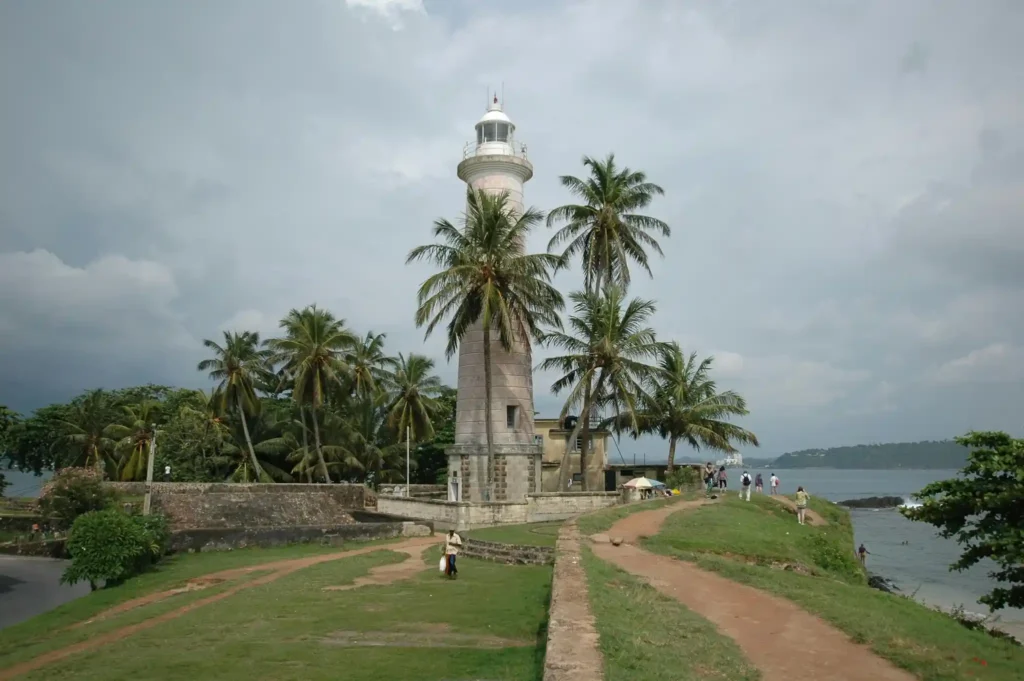
One of the most overlooked parts of planning a trip to Hiriketiya is just how close it is to so many amazing spots in southern Sri Lanka. In under an hour by tuk-tuk or car, you can explore a wide mix of nature, history, and coastal beauty.
- Kudawella Blowhole (3 km): A striking natural rock feature where seawater shoots high into the air when the waves are strong, best viewed during bigger swells.
- Dondra Lighthouse (10 km): The tallest lighthouse in Sri Lanka, located at the island’s southernmost point, with stunning views over the Indian Ocean.
- Mirissa Beach & Whale Watching (30 km): A popular spot for whale tours, especially from November to April when blue whales are commonly seen.
- Matara Fort (20 km): A historic Dutch fort area surrounded by lively streets and great local street food.
- Galle Fort (55 km): A beautifully preserved colonial fortress and UNESCO World Heritage Site, perfect for a relaxed half-day visit.
Planning your trip? Don’t miss our complete Hiriketiya Beach Travel Guide for a deeper look at where to stay, surf, and explore.
Conclusion: Is Hiriketiya Worth Visiting?
If you’re planning to visit, it’s better to go sooner rather than later. Hiriketiya is still in that sweet spot where it has just enough development to be comfortable; good food, nice places to stay, and solid surf schools; but it hasn’t been overrun or lost its original charm.
The bay still feels like it belongs to the surfers who first found it, the local fishing families, and a few expats who came for a short stay and ended up never leaving.
These travel tips are here to help you arrive well-prepared, manage your budget, stay safe, and make the most of your time there. Whether you’re traveling solo, as a couple, or chasing waves, Hiriketiya offers a more authentic Sri Lankan beach experience that often feels more special than the usual tourist spots.
Frequently Asked Questions About Hiriketiya
1. Is Hiriketiya good for people who don’t surf?
Yes, definitely. Even if you don’t surf, Hiriketiya still has a lot to offer. You can swim, relax on the beach, do yoga, or enjoy the great cafes and restaurants. The small bay is usually calm and safe for swimming when the sea is gentle.
2. How long should I stay in Hiriketiya?
A stay of around 3 to 5 days is perfect for most first-time visitors. It gives you enough time to surf, explore nearby places, and relax without feeling rushed. Many people even end up staying longer because they enjoy it so much.
3. Is Hiriketiya safe for solo female travelers?
Yes, it’s generally considered very safe. The area has a friendly surf-town vibe with lots of travelers around. Guesthouse owners are usually helpful and look out for guests. Just follow normal safety habits, like avoiding dark, empty roads at night and staying aware of your surroundings.
4. Can I use credit cards in Hiriketiya?
It’s better to carry cash. Most small shops, tuk-tuks, and local places only accept cash in Sri Lankan rupees. ATMs are available in nearby Dickwella (about 3 km away) and Matara (around 20 km away), so it’s best to withdraw money before you arrive.
5. What level of surfing is needed for Hiriketiya?
Hiriketiya is great for everyone. Beginners can learn easily in the softer inner waves, while more experienced surfers can enjoy the stronger reef and point breaks, especially during the peak surf season from December to February.
6. Are there vegetarian or vegan food options?
Yes, plenty. Many cafes offer vegetarian and vegan meals like smoothie bowls, Buddha bowls, falafel wraps, and fresh tropical fruit. Even traditional Sri Lankan rice and curry is usually easy to make vegetarian-friendly.