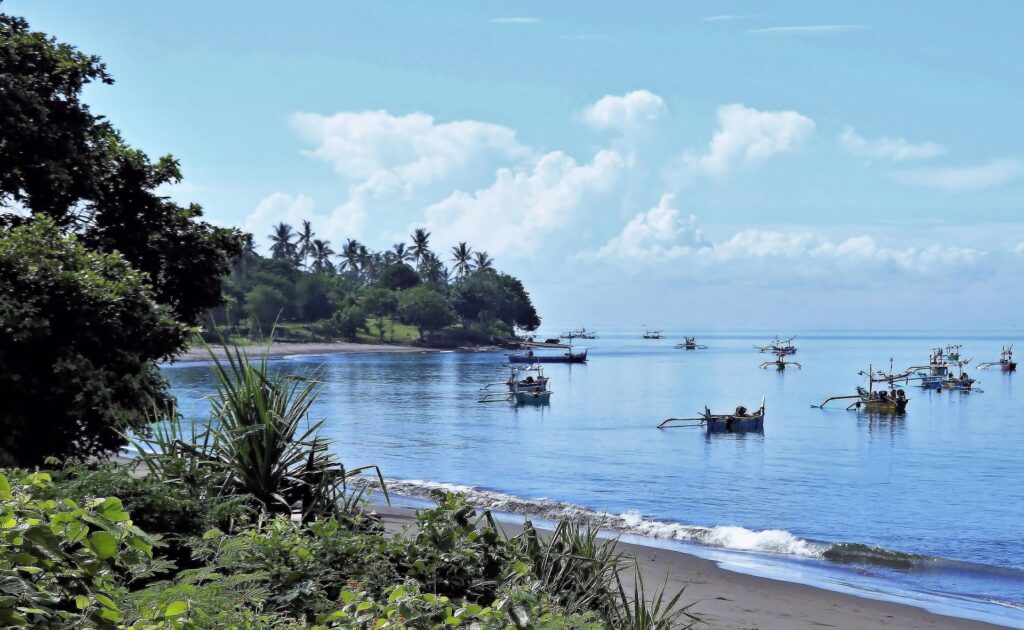
To find out how to get to Nyang Nyang Beach Bali, start by driving to a small parking area near Uluwatu, on the Bukit Peninsula. From there, you walk down a long staircase with more than 500 steps through green hills and rice terraces.
Planning to ride there yourself? Read our detailed Nyang Nyang Beach scooter route guide for the safest roads, parking tips, and the best scenic route through Uluwatu.
This walk takes about 15 to 20 minutes going down, and it can feel tiring on the way back up, especially in hot weather. Learning how to get to Nyang Nyang Beach Bali also means being ready for this walk, so wear good shoes, bring water, and start early in the morning before the sun gets too strong.
Where Exactly Is Nyang Nyang Beach?
Nyang Nyang Beach sits on the southern edge of Bali’s Bukit Peninsula, one of the most scenic and cliff-heavy parts of the island. Geographically speaking, it falls within the Pecatu village area, not far from Uluwatu. On the other hand, unlike the well-developed beaches nearby like Padang Padang or Bingin, Nyang Nyang remains gloriously underdeveloped.
The beach stretches over 800 meters and faces the open Indian Ocean, which means the waves here are strong and consistent, making it a hidden favourite among surfers who prefer isolation. Moreover, the dramatic cliffs that frame both sides of the beach give it a completely different visual character compared to the more crowded Bali beaches further north.
Everyone talks about Bali’s famous beaches; almost no one talks about this one. See why Nyang Nyang is the hidden paradise people wish they’d found years ago.
Where is Nyang Nyang Beach located?
Nyang Nyang Beach is located in the Pecatu area on the southern tip of Bali’s Bukit Peninsula, approximately 25 kilometres from Kuta and around 6 kilometres from Uluwatu Temple.
Best Starting Points Across Bali
| Starting Location | Approximate Distance | Estimated Drive Time |
| Kuta / Legian | 25 km | 40 to 55 minutes |
| Seminyak | 28 km | 45 to 60 minutes |
| Uluwatu | 6 km | 10 to 15 minutes |
| Ubud | 65 km | 90 to 120 minutes |
| Canggu | 35 km | 60 to 75 minutes |
From my experience, starting from Uluwatu is the most practical option if you are already spending the day in the southern Bukit area. You can visit Uluwatu Temple in the morning, then head over to Nyang Nyang before midday. That way, you avoid the hottest part of the afternoon for the trek down.
If you are coming from Kuta or Seminyak, the drive itself is pleasant and takes you through the increasingly dramatic Bukit landscape. Therefore, plan to leave early, ideally before 9 am, so you have the whole morning to enjoy the beach.
What is the best transport to reach Nyang Nyang Beach?
A private scooter or a hired private driver are the two most practical transport options for reaching Nyang Nyang Beach. Taxis can also work, but finding a return ride can be difficult given the remote location.
Transport Options: What Works Best?
Here is a straightforward breakdown of your main choices:

Scooter (Most Popular Among Backpackers) Renting a scooter gives you the most flexibility. The road leading to the parking area is mostly paved, though the last stretch can get a bit rough. Rental costs typically range from IDR 70,000 to IDR 100,000 per day (roughly USD 4 to 6). However, make sure you are comfortable riding on Bali roads before choosing this option, because traffic near Uluwatu can be tricky.
Private Driver (Most Comfortable) Hiring a private driver for the day is, without doubt, the most stress-free approach. A full-day driver usually costs between IDR 600,000 and IDR 900,000 (around USD 37 to 55). Many drivers in the Kuta and Seminyak areas are familiar with Nyang Nyang and will wait for you at the parking area while you trek down.
Grab or GoJek Taxi App-based taxis work in getting you to the area, but the challenge is getting a return ride from such a remote spot. As a result, this option only really works if your driver agrees to wait, which costs extra.
Road Conditions & Navigation Tips for Nyang Nyang Beach
The main road from Uluwatu towards the beach access point is generally in decent condition. Most of it is tarmac, and you will follow signs towards Dreamland or Pecatu before turning off for Nyang Nyang specifically. That said, the final 500 metres or so leading to the cliff-top parking area can get bumpy, especially after rain.
In terms of navigation, Google Maps does have the location marked, though I would suggest searching “Nyang Nyang Beach Parking” rather than just the beach name, as this gets you to the right turn-off. Additionally, if you get lost, residents in the Pecatu area are generally helpful and familiar with the location.
Parking Guide for Nyang Nyang Beach Visitors
Once you reach the top of the cliff, there is a small informal parking area managed by locals. Parking here typically costs around IDR 5,000 to IDR 10,000 for a scooter and slightly more for a car. It is a simple open-air lot with basic shade, and local warung stalls nearby sell water and snacks, which is genuinely useful before you start the descent.
Is there parking at Nyang Nyang Beach?
Yes, there is a small informal parking area at the cliff-top access point above Nyang Nyang Beach. It is managed by locals and costs a small fee. There are no formal facilities, so stock up on water before descending.
Furthermore, your driver can comfortably wait here if you have hired one for the day. From this parking spot, the trail down to the beach begins.
The Walk Down: What the Trail Is Really Like
This is the part most people want to know about before visiting. The trail from the parking area down to Nyang Nyang Beach is steep, uneven, and takes real effort. On average, it is around a 20 to 25-minute walk downhill, covering what feels like several hundred steps and narrow dirt paths through light jungle and cliff scrub.
Honestly, the descent is not dangerous if you go slowly and wear proper footwear. However, it is absolutely not suitable for sandals or flip flops, especially if the ground is wet. The path becomes noticeably more slippery after rain, so avoid visiting on days following heavy overnight rainfall.
| Trail Feature | Details |
| Trail Length | Approximately 500 to 700 metres |
| Descent Time | 20 to 30 minutes going down |
| Ascent Time | 30 to 40 minutes coming back up |
| Difficulty Level | Moderate to Challenging |
| Terrain | Steep dirt path, some stone steps |
| Best Footwear | Closed-toe shoes or trail sandals with grip |
The return climb uphill is notably harder than the descent. From my own experience going up in the midday heat without enough water, it felt considerably more exhausting than expected. Therefore, always carry more water than you think you need.
How long does it take to get to Nyang Nyang Beach from Kuta?
From Kuta, the total journey, including driving and trekking, takes approximately 1.5 to 2 hours. The drive is roughly 40 to 55 minutes, and the walk down to the beach takes an additional 20 to 30 minutes from the parking area.
Time Required From Major Bali Hubs
Here is a general time estimate for the full journey from the door to the beach:
- From Kuta or Seminyak: 1.5 to 2 hours total
- From Uluwatu: 35 to 50 minutes total
- From Ubud: 2.5 to 3 hours total
- From Canggu: 1.75 to 2.25 hours total
In all cases, building in extra time for stops, navigation, and the trail walk is strongly recommended.
What to Carry: Essentials for the Visit

Based on firsthand experience and the feedback from other travellers I spoke with at the trailhead, here is what genuinely makes the difference on this trip:
- Water: At a minimum of 1.5 litres per person. There is no shop on the beach itself.
- Closed-toe shoes or grippy trail sandals: Not flip flops. The trail demands it.
- Sunscreen and a hat: The beach is fully exposed, and the midday Bali sun is intense.
- Snacks: The beach has no food stalls, so bring your own.
- A dry bag or plastic bag: To protect your phone and valuables from sand and sea spray.
- Cash: Small notes for parking and any warung purchases before the descent.
- Fully charged phone: For navigation and photos, obviously.
Swimming at Nyang Nyang is possible but requires caution. The waves are powerful, and there are no lifeguards. Many visitors simply enjoy wading and relaxing on the long stretch of sand rather than swimming out deep.
Best Time to Visit Nyang Nyang Beach for Perfect Experience
| Time Factor | Recommendation |
| Best time of day | Early morning, 7 am to 10 am |
| Best season | April to October (dry season) |
| Avoid | November to March (wet season, slippery trail) |
| Crowd levels | Generally low year-round |
| Lighting for photography | Golden hour, 6 am to 8 am |
From a practical standpoint, arriving early keeps the trail cooler and gives you the beach largely to yourself. Moreover, the morning light on the cliffs and ocean is genuinely spectacular for photography. On the other hand, if you arrive after midday, the sun becomes relentless, and the uphill return walk in the afternoon heat is quite draining.
When is the best time to visit Nyang Nyang Beach, Bali? (Quick Answer)
The best time to visit Nyang Nyang Beach is during Bali’s dry season, from April to October. Within the day, arriving before 10am is ideal for cooler trekking conditions and smaller crowds.
A Few Things First-Time Visitors Often Overlook
Most travel guides cover the basics of getting there, but there are a few things that only come from actually making the trip. First, the beach has almost no shade, so once you are down there, sun protection is critical. Second, the parking area sometimes has local guides offering to lead you down for a small fee, and while the trail is manageable alone, having a guide on your first visit is not a bad idea.
Additionally, the mobile signal is weak near the beach itself, so download offline maps before you leave your accommodation. Google Maps works reasonably well in offline mode for navigating to the parking area.
The journey to learn how to get to Nyang Nyang Beach, Bali, truly pays off the moment you see that vast stretch of white sand with almost no one on it. It still feels like one of those places that the island used to be full of before mass tourism arrived.
Final Verdict: Is Nyang Nyang Beach Worth the Effort?
Nyang Nyang Beach is not for everyone, and that is honestly its greatest quality. It rewards effort. The relatively small number of visitors who make the drive from Kuta, Seminyak, or Uluwatu and then tackle that steep trail are treated to a beach experience that feels genuinely rare in modern Bali.
So, to summarise how to get to Nyang Nyang Beach Bali: drive or ride to the Pecatu area near Uluwatu, follow signs to the cliff-top parking area, park your vehicle, and then walk the steep 20 to 30 minute trail down to the shore. Carry water, wear proper shoes, go early, and enjoy one of the island’s most beautiful and least crowded beaches.
If you are the kind of traveller who values solitude, raw beauty, and a slight sense of adventure over convenience, this beach will genuinely become a highlight of your Bali trip.
Frequently Asked Questions
Q1: Is Nyang Nyang Beach safe to visit?
Yes, the beach itself is safe to visit. However, swimming requires caution due to strong waves and the absence of lifeguards. The trail down is steep but manageable if you wear proper footwear and go slowly.
Q2: How do I get to Nyang Nyang Beach from Kuta?
From Kuta, head south on Jalan Uluwatu towards the Bukit Peninsula. Continue through Jimbaran and into the Pecatu area. Use Google Maps and search “Nyang Nyang Beach Parking” to navigate to the cliff-top access point. The drive takes roughly 40 to 55 minutes.
Q3: Is there an entrance fee for Nyang Nyang Beach?
There is no formal entrance fee for the beach itself. However, a small parking charge of around IDR 5,000 to IDR 10,000 applies at the cliff-top parking area.
Q4: Can beginners do the trail to Nyang Nyang Beach?
Yes, but it requires moderate fitness. The trail is steep and uneven. Anyone with reasonable fitness and proper footwear should be fine going at a comfortable pace. Avoid the trail if it has rained recently due to slippery conditions.
Q5: Are there facilities at Nyang Nyang Beach?
There are no facilities on the beach itself. No toilets, no food stalls, and no shops. There are basic warung stalls near the parking area at the top where you can buy water and snacks before descending.
Q6: What is the nearest landmark to Nyang Nyang Beach?
Uluwatu Temple is the most well-known landmark nearby, sitting approximately 6 kilometres from the beach access point. Many visitors combine a Uluwatu morning visit with an afternoon at Nyang Nyang.