Koh Kood itinerary 3 days works best when you split your time between the island’s beaches, waterfalls, and boat trips. Koh Kood is Thailand’s fourth-largest island, located in Trat Province near the Cambodian border, and it stays much quieter than islands like Koh Samui or Koh Tao.
Dreaming about Koh Kood already? Before you lock in your trip, it’s worth checking out the fastest, cheapest, and easiest ways to get to Koh Kood from Bangkok it’ll save you time, money, and a bit of travel-planning stress.
A typical Koh Kood itinerary 3 days includes Day 1 for arrival and relaxing at Klong Chao Beach, Day 2 for visiting Klong Chao Waterfall and Ao Yai Beach, and Day 3 for a boat trip to nearby islands like Koh Rang before departure. This simple plan gives you enough time to see the island’s best spots without rushing.
Is 3 Days Enough for Koh Kood?
Yes, 3 days is enough to see the best of Koh Kood. You can cover the main beach, the famous Khlong Chao Waterfall, and do island hopping, and still have time to relax. If you want a slower pace, 4 to 5 days is even better.
Day 1: Arrival, First Beach & Getting Your Bearings

From my experience, the first day should always be about arriving without stress. Most people reach Koh Kood by taking a van from Bangkok’s Eastern Bus Terminal to Laem Sok Pier in Trat, then catching a speedboat or ferry. The journey from Bangkok takes around 6 to 7 hours in total. So by the time you reach the island, your body just needs to slow down.
After checking in, head straight to Ao Klong Chao Beach or Ao Bang Bao Beach. I personally spent my first afternoon at Ao Bang Bao, and it genuinely felt like arriving somewhere unspoiled. The water is clear turquoise, the sand is soft, and there are almost no crowds. On the other hand, if your resort is near the northern part of the island, Ao Tapao Beach is a beautiful option too.
Day 1 Evening: Sunset at Ao Tapao Beach
Ao Tapao is known for one of the best sunset views on the island. Locals say the best spot is right at the northern tip of the beach, where the tree line opens up, and you get an unobstructed view of the horizon.
I sat there for almost an hour, and it was completely worth it. After sunset, grab a seafood dinner at one of the small restaurants near the pier area. Fresh grilled fish with rice is a local favourite and incredibly cheap compared to more touristy Thai islands.
How Do You Get to Koh Kood from Bangkok?
Take a van or bus from Bangkok’s Eastern Bus Terminal to Laem Sok Pier in Trat (about 5-6 hours), then board a speedboat or slow ferry to Koh Kood (45 minutes to 2 hours depending on boat type). Several operators like Boonsiri and Koh Kood Express run daily services.
Day 2: Waterfalls, Jungle Trails & Local Seafood Night

Day 2 is where Koh Kood really starts to show off. Therefore, I recommend starting early, around 8 AM, before the heat picks up. The main attraction on the island, apart from the beaches, is the waterfall system, and nothing beats visiting them before noon.
Day 2 Afternoon: Khlong Chao Waterfall Visit
Khlong Chao Waterfall is the most well-known waterfall on the island, and honestly, it deserves every bit of that reputation. The hike to the falls is easy, taking about 15 to 20 minutes through jungle paths.
Furthermore, there is a natural pool at the base where you can swim. I jumped in, and the water was shockingly cold but refreshing. Local guides near the entrance can take you deeper into the jungle to see smaller, less-visited cascades. I highly recommend doing this if you have the time.
| Waterfall | Difficulty | Swimming | Best Time to Visit |
| Khlong Chao (main) | Easy | Yes, natural pool | Morning (8 AM to 11 AM) |
| Khlong Yai Ki | Moderate | Limited | Early morning |
| Nam Tok Chao Fan | Easy to Moderate | Yes | After rainfall |
| Khlong Hin Dam | Moderate | No | Dry season only |
After the waterfalls, take a motorbike (easily rented for 250 to 300 THB per day according to local rental shops) and explore the interior jungle roads. The island has minimal traffic, so riding through is genuinely enjoyable and safe for most people. Moreover, you will pass through small villages where the population is mostly Thai-Cambodian, and the culture feels different from the more developed Thai islands.
Day 2 Evening: Night Walk & Local Seafood Dinner
By evening, head to the area near Klong Chao Village for dinner. Several open-air restaurants are serving fresh catch. Locals recommend ordering the stir-fried crab with curry powder or the steamed sea bass with lime and garlic.
Both dishes are outstanding. Additionally, some nights you can hear live traditional music near the village pier, though this varies by season.
What is the Best Beach in Koh Kood?
Ao Klong Chao and Ao Bang Bao are widely considered the best beaches on Koh Kood. Both have clear water, white sand, and minimal crowds. Ao Bang Bao is popular for snorkelling due to its coral reefs, while Ao Klong Chao is more accessible and family-friendly.
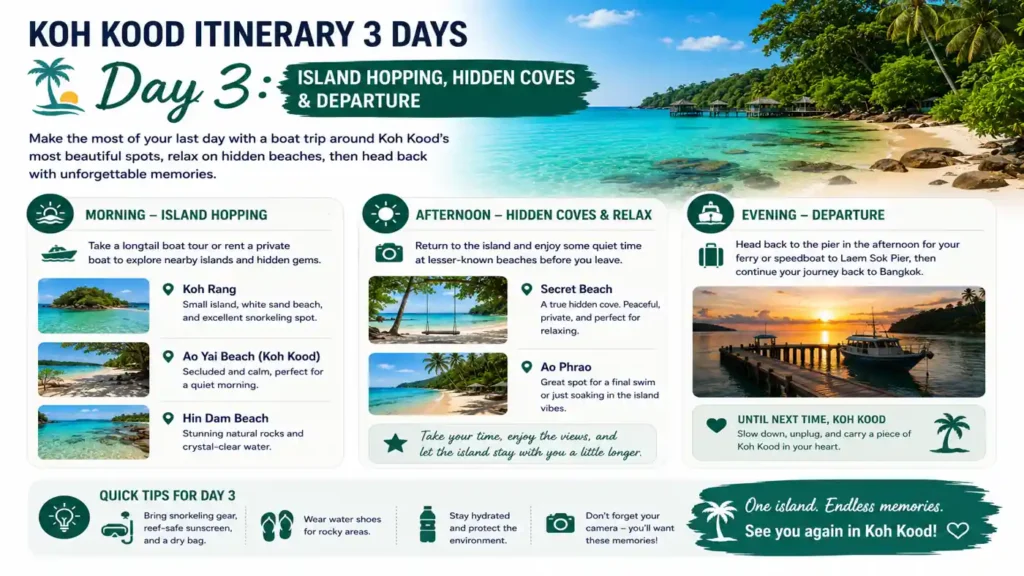
Day 3: Island Hopping, Hidden Coves & Departure
On the third day of your Koh Kood itinerary, the island-hopping tour is the highlight. Most resorts and local boat operators offer half-day or full-day trips to the surrounding islands. The most popular are Koh Maak, Koh Rayang, and the tiny uninhabited sand bars around them.
From my experience, the full-day tour is worth doing at least once, even if you’re not particularly into snorkelling.
Day 3 Morning: Kayaking & Coral Viewing

Start day 3 early with a kayaking session. Many resorts offer free or discounted kayaks to guests. The water around Koh Kood is incredibly clear, and on calm mornings, you can see coral formations through the surface without even putting your face in.
Therefore, if you have a GoPro or waterproof phone case, bring it. I paddled out about 30 minutes from the shore and found a small reef system that wasn’t marked on any map. It was filled with parrotfish and sea urchins.
Day 3 Afternoon: Secret Beaches Exploration
There are several smaller beaches on the southern and eastern sides of the island that most tourists simply don’t visit. Hat Tapho and Ao Salat are two that locals pointed me toward. As a result, I had both completely to myself.
Getting there requires a short motorbike ride and then a walk through light jungle, but the reward is 100% worth it. These are the spots that don’t show up in travel blogs because not enough people know about them yet.
Day 3 Evening: Relax & Departure Preparation
By late afternoon, head back to your resort, pack up, and enjoy one final swim or drink by the beach. Most boats back to the mainland leave early morning, so if you’re flying out, book accommodation in Trat the night before or confirm a very early speedboat. Specifically, Boonsiri Ferry runs a reliable morning schedule, and the ride is smooth in calm weather.
Is Koh Kood Good for Snorkelling?
Yes, Koh Kood has good snorkelling spots, especially around Ao Bang Bao and the surrounding small islands. The water visibility is generally 5 to 10 metres. The best snorkelling is during the dry season from November to April when the sea is calmer, and visibility is highest.
Best Time to Visit Koh Kood
The island has a clear seasonal pattern that directly affects your experience. From November to April is generally accepted as the prime season, with calm seas, sunny skies, and excellent visibility for snorkelling and diving. However, this is also when prices are higher and more visitors arrive.
| Month | Weather | Sea Condition | Crowd Level | Recommendation |
| Nov to Feb | Dry, sunny | Calm | Moderate | Best time overall |
| Mar to Apr | Hot, dry | Calm | High | Great but busy |
| May to Jun | Transitional | Mild waves | Low | Good for budget travel |
| Jul to Oct | Rainy season | Rough | Very low | Some resorts close |
According to the Thai Meteorological Department, the monsoon season in Trat Province typically runs from May through October, with the heaviest rainfall in September and October. During this period, some boat services are reduced or cancelled. Therefore, always check weather forecasts and boat schedules before booking.
How to Reach Koh Kood
koh Kood Ferry Guide 2026: Best Speedboat Routes, Prices & Insider Travel Tips
Getting to Koh Kood is not as complicated as it looks. In fact, once you understand the route, it becomes straightforward. The main gateway is Laem Sok Pier in Trat Province, roughly 400 km from Bangkok.
| Route | Transport | Duration | Approx Cost (THB) |
| Bangkok to Trat | Van / Bus | 5 to 6 hours | 300 to 450 |
| Bangkok to Trat | Flight (Bangkok Airways) | 1 hour | 1,500 to 4,000 |
| Trat to Laem Sok Pier | Minivan / Taxi | 40 minutes | 100 to 200 |
| Laem Sok to Koh Kood | Speedboat (Boonsiri) | 45 min to 1 hr | 600 to 900 |
| Laem Sok to Koh Kood | Slow Ferry | 2 hours | 350 to 500 |
For most travellers, the van plus speedboat combination offers the best balance of cost and convenience. Bangkok Airways also flies to Trat Airport from Suvarnabhumi, which saves significant time if you have a tight schedule.
What is the Cheapest Way to Get to Koh Kood?
The cheapest option is a shared van from Bangkok’s Eastern Bus Terminal to Laem Sok Pier, followed by a slow ferry to Koh Kood. This combination typically costs around 700 to 950 THB total and takes approximately 7 to 8 hours.
Where to Stay in Koh Kood
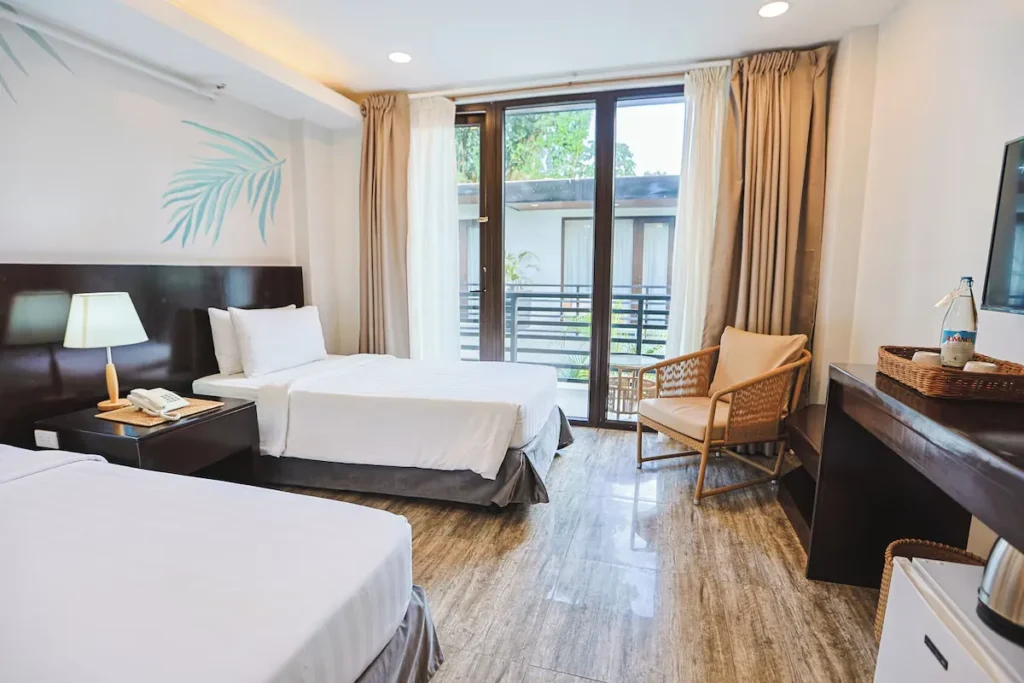
Accommodation on Koh Kood ranges from budget bungalows to some genuinely luxurious beachfront resorts. Most of the mid-range and luxury options are located along Ao Klong Chao and Ao Bang Bao. From my experience, staying near a beach rather than inland makes a huge difference to your overall trip.
- Klong Prao Resort: Good mid-range option with direct beach access near Ao Klong Chao
- Koh Kood Resort: One of the older establishments with a loyal repeat visitor base
- Siam Beach Resort: Popular with families, calm water in front, snorkelling gear available
- Koh Kut Island Resort: Upscale choice with great food and a lovely pool
- Budget guesthouses: Available near Klong Chao village for under 800 THB per night
Locally operated guesthouses tend to give you the most authentic experience, and the owners are often incredibly helpful with tips, boat bookings, and motorbike rentals. On the other hand, if comfort is your priority, the resort options on this island are genuinely high quality for what they charge compared to Samui or Phuket.
How Many Days Should You Spend on Koh Kood?
Three days is the minimum recommended time to see the main highlights of Koh Kood. For a complete experience with more exploration and relaxation, 4 to 5 days is ideal. The island is quiet and unhurried, so there is no need to rush.
Travel Tips for a 3-Day Koh Kood Trip
Cash is essential. There are very few ATMs on Koh Kood, and most small restaurants and rental shops do not accept cards. Bring enough Thai Baht from the mainland before boarding the ferry.
- Rent a motorbike for at least one day to explore the island properly. Roads are good, and traffic is minimal.
- Bring reef-safe sunscreen only. The local community is increasingly aware of coral conservation.
- Download offline maps. Mobile data coverage is patchy in some inland and southern areas.
- Book your return boat ticket in advance during peak season (December to February).
- Pack light. You really don’t need much on Koh Kood. A swimsuit, shorts, and one light jacket for the boat ride are essentially all you need.
Furthermore, if you get the chance, try to interact with the local fishing community. I visited a small fishing village near the southern coast, and the people were incredibly warm and welcoming. Some locals even offered to show me their traditional crab traps. These are the kinds of moments that a Koh Kood itinerary simply cannot plan for, but make the whole trip unforgettable.
Overall, a well-planned 3-day Koh Kood itinerary gives you a genuinely balanced trip without feeling rushed. Between the waterfalls, beaches, island hopping, and local food, there is plenty to fill three full days. More importantly, the island still has that rare quality of feeling untouched and peaceful, which becomes harder and harder to find in Southeast Asia as more destinations get discovered.
FAQs About Koh Kood Itinerary 3 Days
Q: Is Koh Kood safe for solo travellers?
Yes, Koh Kood is considered very safe for solo travellers, including solo female travellers. The island is small, and the community is tight-knit. Local resort owners and guesthouse staff are generally very helpful. That said, like any travel destination, basic common sense applies.
Q: Do I need to book accommodation in advance?
During peak season from December to February, yes, booking at least 2 to 3 weeks ahead is recommended. Outside peak season, you can often walk in and find availability, but booking even a few days ahead is still a good idea.
Q: Can I visit Koh Kood on a budget?
Absolutely. By choosing a guesthouse over a resort, renting a motorbike, and eating at local spots, you can comfortably travel Koh Kood for around 1,200 to 1,800 THB per day, including accommodation, food, and basic activities.
Q: What is the best way to get around Koh Kood?
Renting a motorbike is by far the best way to get around the island. The main road runs along the coast and is in reasonable condition. Alternatively, some resorts offer songthaew (shared pick-up trucks) rides for a small fee.
Q: Are there any visa requirements for visiting Koh Kood?
Koh Kood is part of Thailand, so standard Thailand visa rules apply. Most nationalities, including UK, US, Australian, and EU citizens, receive a 30-day visa exemption on arrival. Always check the latest rules with the Royal Thai Embassy or the official Thai government immigration website before travelling.
Q: Can children visit Koh Kood?
Yes, Koh Kood is very family-friendly. The beaches are calm, the island is quiet, and several resorts cater specifically to families. However, the speedboat ride from the mainland can be rough during certain seasons, so factor that in if travelling with young children.