
Getting to Koh Lipe sounds simple until you’re standing on a pier at 6 AM, confused about which boat is yours, watching three different operators wave tickets in your face. Trust me, it’s happened. This Koh Lipe ferry guide exists precisely to stop that from happening to you. Whether you’re arriving from the Thai mainland, island-hopping through the Andaman Sea, or crossing from Malaysia, the ferry is almost always your best option, and with a little preparation, it can be completely stress-free.
Koh Lipe sits inside the Tarutao National Marine Park, about 70 km off the coast of Satun Province. Because the island has no airport and no bridge, every single visitor arrives by boat. That makes the ferry network around this island genuinely important. This Koh Lipe ferry guide covers everything from departure points and journey times to costs, border crossings, and the little things no one tells you until it’s too late.
Why Taking a Ferry Is the Best Way to Reach Koh Lipe
Honestly, it’s the only way. Koh Lipe doesn’t have a commercial airport. While there have been ongoing talks about building one, nothing concrete has materialized as of early 2026, according to the Tourism Authority of Thailand (TAT). So for now, boats rule.
But even setting that aside, the ferry journey is genuinely part of the experience. Sailing through the clear turquoise waters of the Andaman Sea, passing limestone islands and the occasional sea turtle, is the kind of thing that reminds you why you traveled this far in the first place. Most routes are scenic, relatively comfortable on calm days, and not particularly long.
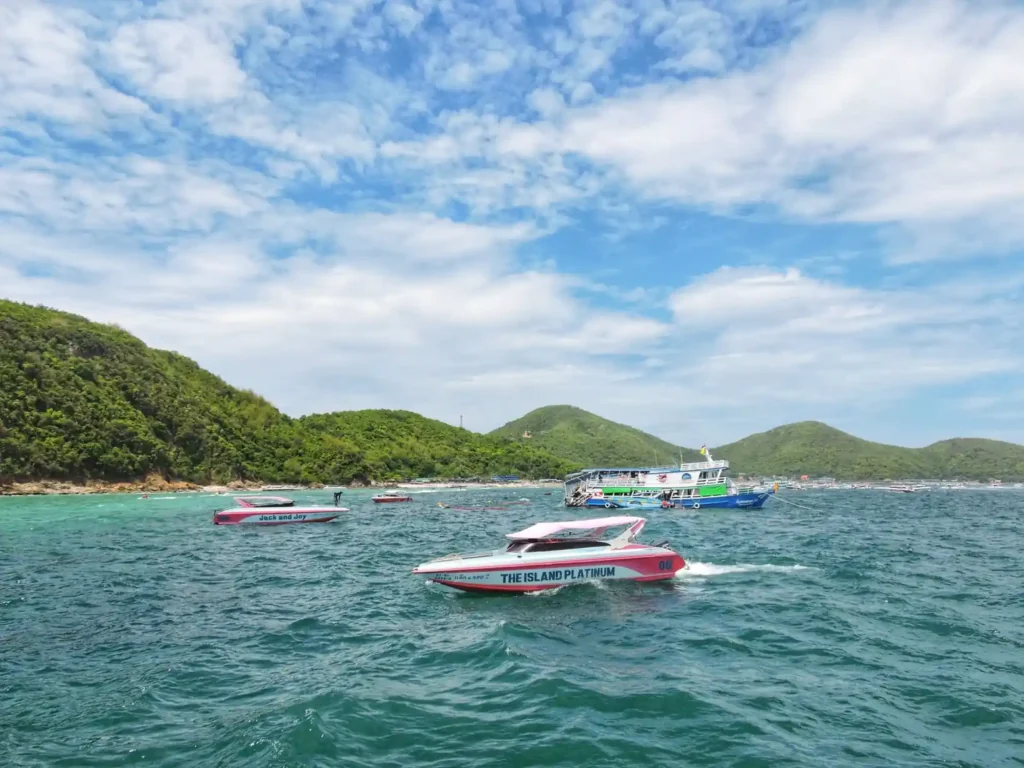
The ferry network around Koh Lipe has also matured significantly. Operators like Tigerline Ferry, Satun Pakbara Speed Boat Club, and Bundhaya Speed Boat run regular scheduled services, and booking in advance is now easy online. That wasn’t always the case.
Where Ferries to Koh Lipe Depart From
There are several main departure points, and which one you use depends entirely on where you’re starting your trip. Here’s a quick breakdown:
- Pakbara Pier (Satun Province): This is the most popular mainland departure point and the one most travelers use. Pakbara is about 60 km from Hat Yai airport. Ferries run daily from here throughout the high season.
- Hat Yai: Not a direct ferry point, but a common transit hub. Many travelers fly into Hat Yai International Airport and then take a minivan or taxi to Pakbara Pier.
- Langkawi, Malaysia: This is the main international departure point. Ferries between Langkawi and Koh Lipe operate seasonally and are popular with travelers combining Thailand and Malaysia.
- Koh Lanta: A useful option for island hoppers traveling through the Andaman chain from the north. Journey time is longer, but the route passes some stunning scenery.
- Koh Muk and Koh Ngai: Smaller departure points for travelers already island-hopping in the lower Andaman.
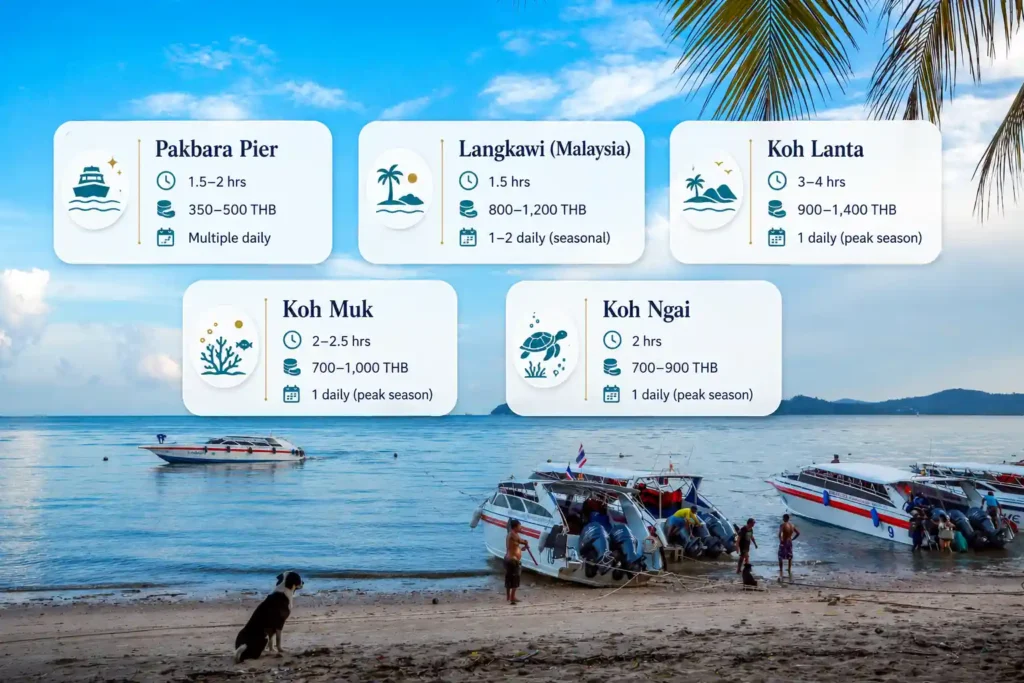
Ferry Routes to Koh Lipe at a Glance
| Departure Point | Journey Time | Approx. Price (THB) | Frequency |
| Pakbara Pier | 1.5 – 2 hrs | 350 – 500 THB | Multiple daily |
| Langkawi (Malaysia) | 1.5 hrs | 800 – 1,200 THB | 1–2 daily (seasonal) |
| Koh Lanta | 3 – 4 hrs | 900 – 1,400 THB | 1 daily (peak season) |
| Koh Muk | 2 – 2.5 hrs | 700 – 1,000 THB | 1 daily (peak season) |
| Koh Ngai | 2 hrs | 700 – 900 THB | 1 daily (peak season) |
Best Departure Points Depending on Your Travel Plans
If you’re flying into southern Thailand, Pakbara Pier is your answer. Most people land at Hat Yai (HDY) and pick up a shared minivan transfer, which costs around 250 to 350 THB per person and drops you right at the pier. The minivan-ferry combo is the single most common route to Koh Lipe among international travelers, and it works seamlessly in high season.
If you’re coming from Malaysia or doing a Thailand-Malaysia loop, the Langkawi ferry is worth seriously considering. It takes about 90 minutes, costs around 800 to 1,200 THB (roughly 22 to 34 USD), and includes a border crossing, which we’ll cover in detail later. I went this route once during a combined trip, and honestly, it’s one of the most enjoyable ferry rides in Southeast Asia.
For island hoppers coming from the north, the Koh Lanta route is the classic connector. It’s longer, but the route hugs some spectacular coastline through the lower Andaman and stops at a couple of smaller islands along the way. Tigerline Ferry operates this corridor reliably through peak season.
How long is the ferry to Koh Lipe?
From Pakbara Pier, the standard ferry takes about 1.5 to 2 hours. High-speed boats can cut this to around 1 hour. From Langkawi, expect roughly 90 minutes. From Koh Lanta, the journey takes 3 to 4 hours, depending on the route and stops.
How Long Does the Ferry to Koh Lipe Take?
Journey times vary depending on sea conditions, the type of vessel, and whether your boat makes intermediate stops. During the peak months of November through April, when the Andaman Sea is at its calmest, schedules run like clockwork. In the shoulder season, add a buffer.
Ferry Schedules and Seasonal Changes to Know
This is genuinely important. Koh Lipe ferries operate on a seasonal schedule, and the island essentially closes to regular ferry traffic from roughly mid-May through late October each year. This period coincides with the Southwest Monsoon, when the Andaman Sea becomes too rough for safe regular service.
According to the Satun Marine Department, official ferry services to Koh Lipe typically resume in late October or early November, depending on sea conditions that year. In 2024, services started around November 1st. In 2025, some operators pushed to October 20th due to favorable conditions. Always check with operators directly closer to your travel date.
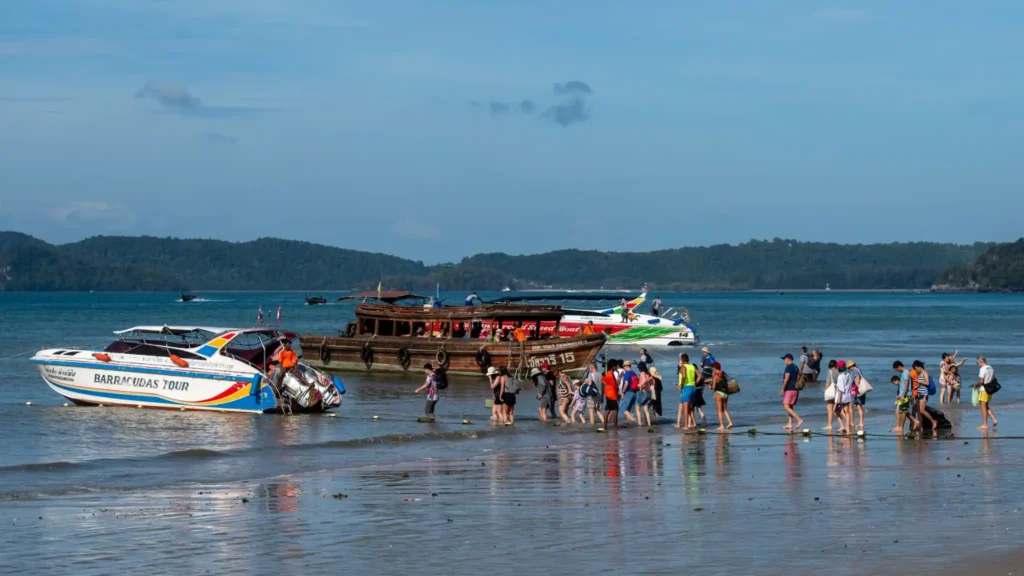
During peak season (December to March), ferries run multiple times daily from Pakbara. Outside this core window, frequency drops, so morning departures are often your only guaranteed option.
When do Koh Lipe ferries run?
Koh Lipe ferries operate seasonally from approximately late October to mid-May. Peak season runs from December through March with multiple daily departures. Most boats depart Pakbara Pier between 9 AM and 3 PM. The island is largely inaccessible by regular ferry from June through October due to monsoon conditions.
High-Speed Boat vs Ferry: Which One Should You Choose?
The honest answer is: it depends on your priorities, budget, and tolerance for waves.
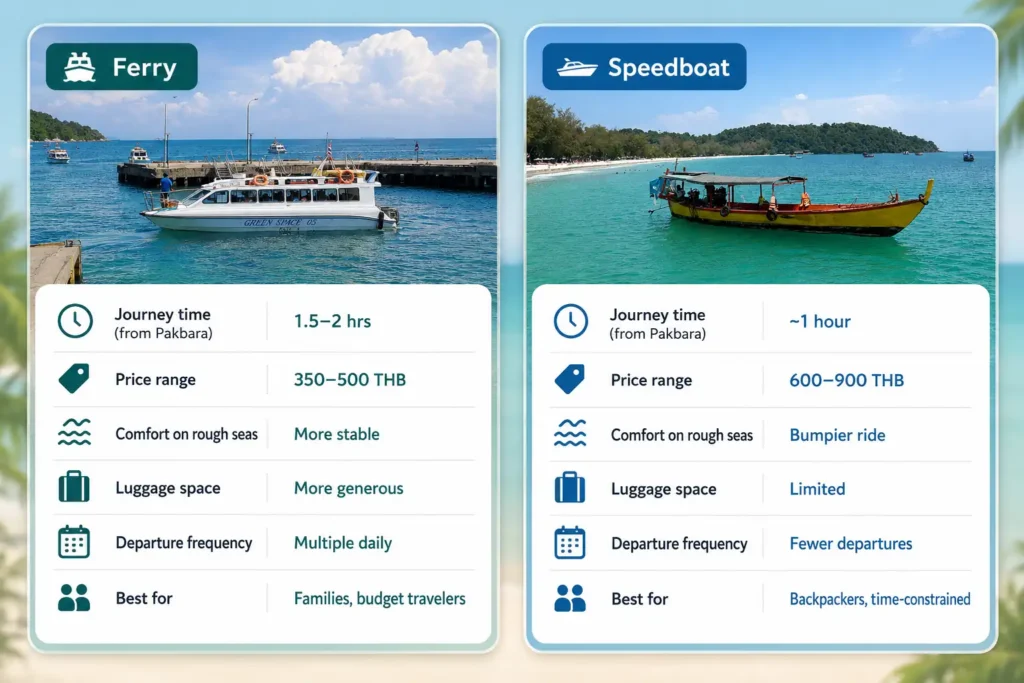
| Factor | Standard Ferry | High-Speed Boat |
| Journey time (from Pakbara) | 1.5 – 2 hrs | ~1 hour |
| Price range | 350 – 500 THB | 600 – 900 THB |
| Comfort on rough seas | More stable | Bumpier ride |
| Luggage space | More generous | Limited |
| Departure frequency | Multiple daily | Fewer departures |
| Best for | Families, budget travelers | Backpackers, time-constrained |
Locals on the island tend to prefer the regular ferries for cargo and longer hauls. The speedboats are fast and exciting on a calm day, but if you’re prone to motion sickness, the standard vessel gives you a much more manageable crossing, especially on slightly choppy days in late October or early May.
Quick Answer: What is the price of a ferry to Koh Lipe?
A standard one-way ferry ticket from Pakbara Pier to Koh Lipe costs between 350 and 500 THB (roughly 10 to 14 USD). Speedboat tickets run 600 to 900 THB. The Langkawi route costs 800 to 1,200 THB one way. Island-hopping routes from Koh Lanta typically range from 900 to 1,400 THB. Prices are slightly higher in peak season.
How Much Does a Koh Lipe Ferry Cost?
One thing to keep in mind: there’s also a national park entry fee. The Tarutao National Marine Park charges 200 THB for foreign visitors (40 THB for Thai nationals). This fee is collected either on the boat or when you arrive at the island’s pier. Don’t be surprised by it; it’s official, and the funds go toward marine conservation, which is genuinely worth supporting.
Additionally, a 20 THB pier fee is sometimes collected at Pakbara. Small, but worth knowing, so you have the right change.
Wondering how much a Koh Lipe ferry costs? Read more in Koh Lipe Cost Breakdown: What This Beautiful Island Really Costs.
Where to Book Your Ferry Tickets Without the Hassle
You have a few solid options. For most travelers, online booking through operator websites or aggregator platforms is the easiest approach. Tigerline Ferry, Bundhaya Speed Boat, and Satun Pakbara Speed Boat Club all have official booking systems. Third-party platforms like 12Go Asia and Bookaway also aggregate routes and let you compare prices quickly.
Booking in advance is strongly recommended during peak season, particularly over Christmas and New Year, when boats sell out days in advance. I once made the mistake of showing up at Pakbara Pier on December 27th without a reservation. The next available seat was two days later. Lesson learned the slightly expensive way.
If you’re flexible and traveling in the shoulder season, buying at the pier is perfectly fine and sometimes slightly cheaper. But high season is a different story.
What is the check-in process for Koh Lipe ferries?
Arrive at the pier at least 30 to 45 minutes before departure. Check in at your operator’s counter, present your booking confirmation, and collect your life jacket. Luggage is stored in the hold or on deck. Boarding is usually called 15 to 20 minutes before departure. Most Pakbara departures leave between 9 AM and 1 PM.
What to Expect on Ferry Day
The pier at Pakbara is reasonably organized but can feel chaotic during peak season with multiple operators running simultaneously. Stay close to your operator’s counter and don’t follow random touts who claim to be helping you. Stick with whoever you’ve already booked with.
On board, there are usually basic snacks and water available for purchase. Bring your own if you’re particular about what you eat. The crossing is short enough that it’s not a huge deal, but having water is always smart.
Luggage Rules and Practical Tips for Travelers
Most standard ferries allow one large bag plus a carry-on without extra charges. Speedboats are stricter given the smaller deck space. If you’re traveling with oversized luggage like a surf bag or dive equipment case, notify your operator in advance.
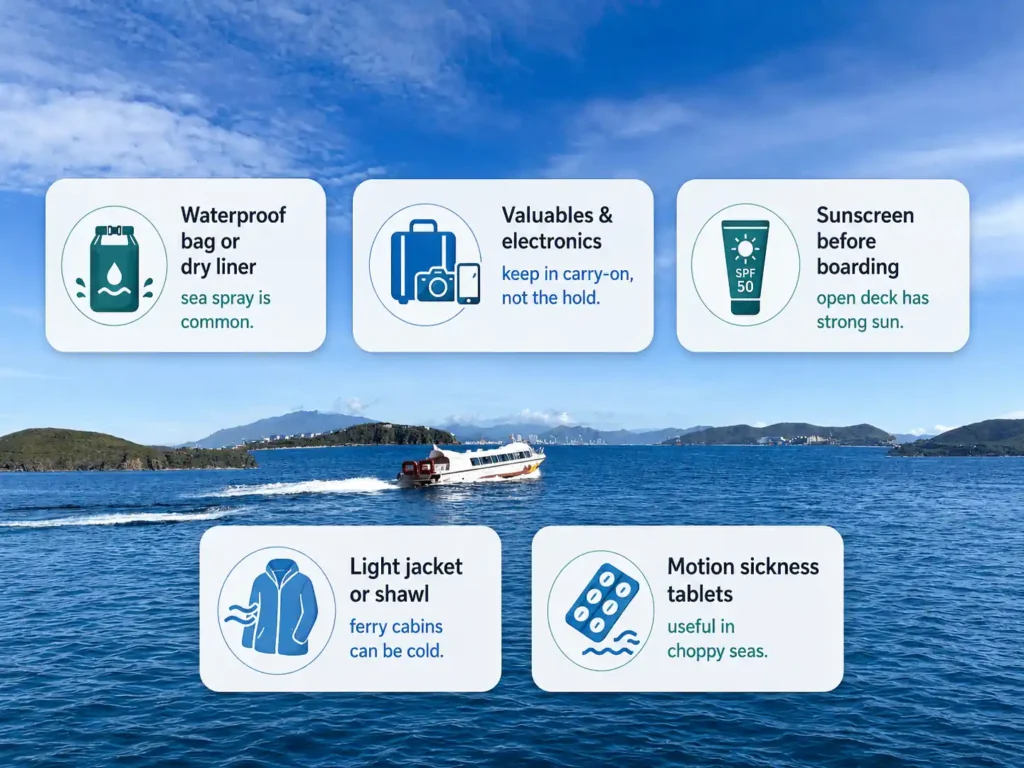
- Waterproof your bag or use a dry bag liner: spray from the sea is normal, especially on speedboats.
- Keep valuables and electronics in your carry-on, not in the hold, where bags can get wet.
- Wear sunscreen before boarding: the open deck gets intense tropical sun.
- Bring a light jacket or shawl: the air-conditioned cabin on larger ferries can be surprisingly cold.
- Motion sickness tablets are worth having on hand, particularly in choppier conditions.
Weather, Sea Conditions, and Possible Delays
The Thai Meteorological Department monitors sea conditions in the Andaman Sea year-round, and operators follow their guidance on whether to sail. During monsoon season (May through October), most ferries stop running entirely. Within the high season, weather-related delays are relatively rare but do happen.
If a trip is cancelled due to weather, reputable operators will offer you a full refund or rebooking. Less reputable ones may push back, so booking with established companies matters here. Bundhaya Speed Boat and Tigerline Ferry both have clear cancellation policies that protect passengers.
In November and April, the transition months, conditions can be unpredictable. Locals call early November ‘the testing period,’ when the sea is calming down but not fully settled. If you’re traveling in these shoulder months, give yourself at least one buffer day in your schedule.
Can you take a ferry from Langkawi to Koh Lipe?
Yes. A seasonal international ferry connects Langkawi, Malaysia, with Koh Lipe, Thailand. The route operates from approximately November through May. Journey time is about 90 minutes. Both Thai and Malaysian immigration are processed at the respective ports. Ensure your passport is valid for at least 6 months and check the current Thai visa exemption rules before traveling.
Crossing the Border: Ferries Between Thailand and Malaysia
The Langkawi to Koh Lipe crossing is one of the few overwater international border crossings in Southeast Asia, and it’s genuinely smooth. On the Thai side, immigration is processed at the pier on Koh Lipe itself, which functions as an official port of entry. The Royal Thai Police maintains an immigration office right at the Walking Street pier.
A few important things: bring printed or digital copies of onward travel documents, as immigration officers sometimes ask. Also, if you’re on a Tigerline or Bundhaya vessel, the crew usually helps passengers with the paperwork process on board. It’s much less stressful than it sounds.
Koh Lipe Border Crossing: Key Facts
| Detail | Information |
| Route | Langkawi, Malaysia → Koh Lipe, Thailand |
| Journey time | Approx. 90 minutes |
| Operators | Tigerline Ferry, Bundhaya Speed Boat |
| Season | Late October / November – mid-May |
| Thai immigration point | Koh Lipe Walking Street Pier |
| Price range | 800 – 1,200 THB (one way) |
| Thai visa exemption (most nationalities) | 30 days (check current rules) |
Koh Lipe Ferry Guide: Best Routes for First-Time Visitors
With its strategic location, Koh Lipe serves as an ideal base for exploring the lower Andaman island chain. From here, you can reach uninhabited islands within the Tarutao Marine National Park in under 30 minutes by longtail boat. Day trips to Ko Adang (literally a 10-minute ride), Ko Rawi, and Ko Dong are all extremely popular.
For multi-island trips, the Andaman island-hopping route typically runs: Koh Lanta → Koh Ngai → Koh Muk → Koh Kradan → Koh Lipe. Tigerline Ferry operates this full corridor, and you can board or exit at any stop. It’s one of the most scenic boat journeys available in Thailand.
The Tourism Authority of Thailand promotes this Andaman island trail actively, and for good reason. Each island has a completely different character, from Koh Ngai’s quiet beachside resorts to Koh Muk’s famous Emerald Cave. Koh Lipe acts as the southern anchor of the route.
How do you get from the ferry to the beach on Koh Lipe?
Koh Lipe has no deep-water pier, so ferries anchor offshore and transfer passengers to the island via longtail boat (called a water taxi). This costs 100 THB per person and is a standard part of arriving. The water taxi drops you at one of two main beaches: Pattaya Beach or Sunrise Beach, depending on the service.
Arrival at Koh Lipe: What Happens When You Reach the Island?
That 100 THB water taxi fee catches a lot of first-timers off guard. It’s not included in your ferry ticket and is paid on the longtail boat. Have cash ready. The island is largely cash-based, so withdrawing money before you leave the mainland is strongly recommended. There are ATMs on Koh Lipe, but limited supply and occasional outages.
Once you’re on the island, your guesthouse or resort can usually arrange a porter or cart for heavy luggage. Walking Street is the island’s main artery and runs between Pattaya Beach and Sunrise Beach, making navigation pretty straightforward.
What happens when you arrive in Koh Lipe? Read more in Koh Lipe Travel Guide: The Thai Island That Changes How You See Beaches.
Common Ferry Mistakes First-Time Visitors Make
- Not booking in advance during December and January: peak season boats fill up fast.
- Forgetting the national park fee: 200 THB for foreigners, paid on arrival. Have cash.
- Arriving too late at the pier: missing the last ferry to Koh Lipe can leave you stranded overnight.
- Choosing the cheapest possible operator without checking reviews: a few unregistered operators still operate informally, and safety standards vary.
- Underestimating the water taxi step: your ferry ticket does not get you to the beach. Budget the extra 100 THB.
- Traveling during monsoon season without checking: the island is basically off-limits from June to October for casual tourists.
Quick Answer: What is the best time to take a ferry to Koh Lipe?
The best time to take a ferry to Koh Lipe is in the morning, usually between 9 AM and 11 AM. Seas are often calmer, the weather feels more comfortable, and you still have enough daylight to check in, relax, and enjoy the beach after arrival.
Best Time of Year for a Smooth Ferry Journey
The best months for ferry travel to Koh Lipe are December through March. The Andaman Sea is at its calmest, schedules are most reliable, and visibility for snorkeling is at its peak. November and April offer good conditions, but with more variability. Avoid May through October entirely for ferry travel, as most services stop.
January is considered the peak of peak season. Prices are highest, boats are fullest, and the island is at maximum capacity. If you want calm seas but fewer crowds, mid-November and early April are hidden sweet spots. Locals call these shoulder months ‘the best-kept secret weeks’ because conditions are excellent and the island still feels like your own.
Looking for the best months to travel by ferry? Read more in Best Time to Visit Koh Lipe: When to Go and When to Avoid.
Monthly Ferry and Travel Conditions for Koh Lipe
| Month | Ferry Status | Sea Conditions | Crowd Level | Notes |
| November | Running (from mid-month) | Mostly calm | Low–Medium | Ideal shoulder season |
| December | Full service | Calm | High | Christmas rush begins |
| January | Full service | Very calm | Peak | Highest prices |
| February | Full service | Very calm | High | Best snorkeling |
| March | Full service | Calm | Medium–High | Great value window |
| April | Running (until mid-month) | Variable | Low–Medium | Early exit before the monsoon |
| May–October | Suspended | Rough/dangerous | Closed | Avoid ferry travel |
Final Advice for a Smooth Koh Lipe Journey
Koh Lipe rewards travelers who prepare. It’s not a place where you can just figure it out as you go, especially in peak season. Book your ferry in advance, confirm your arrival beach so your accommodation knows when to expect you, and have cash in THB before you leave the mainland.
The island itself is genuinely beautiful, one of those places that still manages to feel remote despite growing tourism. Getting there on a well-organized boat crossing, arriving on a longtail with the turquoise water under you and a coral island ahead, sets the tone perfectly for everything that follows.
Follow this Koh Lipe ferry guide, and the journey becomes part of the holiday rather than a logistics headache. That’s the goal.
Frequently Asked Questions About Koh Lipe Ferries
Is there a direct ferry from Bangkok to Koh Lipe?
No. Bangkok has no ferry connections. You’ll need to fly to either Hat Yai (HDY) or Trang (TST), then transfer to a pier. The most popular route is Bangkok → Hat Yai (flight) → Pakbara Pier (minivan) → Koh Lipe (ferry). Total journey time from Bangkok is roughly 6 to 8 hours door-to-door.
Can I bring a bicycle or motorbike on the ferry?
Motorbikes can sometimes be transported on larger cargo vessels on the Pakbara route, but this varies by operator and is not guaranteed. Contact your operator directly if you need to transport a vehicle. Bicycles are generally fine on most services.
What should I do if my ferry is cancelled?
Reputable operators will offer you a rebooking on the next available boat or a full refund. If you booked through a third-party platform like 12Go Asia, contact them directly for assistance. Always buy travel insurance that covers transportation disruptions, particularly if you’re traveling in shoulder season.
Is the Langkawi to Koh Lipe ferry safe?
Yes. The international route is operated by licensed vessels with regular safety inspections. Both Tigerline and Bundhaya maintain good safety records. Life jackets are available on board. As with any sea crossing, conditions can occasionally be choppy, but the route is well-established and routinely used.
Do I need a visa for the Koh Lipe border crossing from Malaysia?
Most nationalities receive a 30-day visa exemption on arrival at Thai border crossings, including Koh Lipe. However, visa rules change, and it’s important to verify current requirements through the Royal Thai Embassy or the official Thai Immigration Bureau website before traveling.
Are there overnight ferries to Koh Lipe?
No standard overnight ferry services operate to Koh Lipe. All regular routes are daytime crossings. There is no equivalent of a night sleeper ferry like those available on some longer Thai routes.