Mirissa cost can be very different depending on how you travel. A backpacker trip for one week costs around $180, and this covers a hostel bed, cheap local food, and public transport. A mid-range trip costs about $90 per day, with a private room, restaurant meals, and a few paid activities like whale watching. A luxury trip can cost more than $300 per day, with private villas, private drivers, and guided tours.
This shows how much the cost of Mirissa can change based on where you stay, what you eat, and how you book activities. In this guide, we explain the real cost of Mirissa in 2026, including hotels, food, whale watching, SIM cards, and hidden fees, so you know what to expect before you go.
Average Mirissa Cost for a Trip
Most travelers fall into one of three spending patterns. Here’s a snapshot of daily costs by travel style.
| Travel Style | Accommodation | Food | Transport & Activities | Daily Total |
| Backpacker | $8–$15 | $8–$12 | $8–$15 | $25–$40 |
| Mid-Range | $35–$70 | $15–$25 | $15–$25 | $65–$110 |
| Luxury | $120–$300+ | $30–$60 | $40–$100 | $190–$450+ |
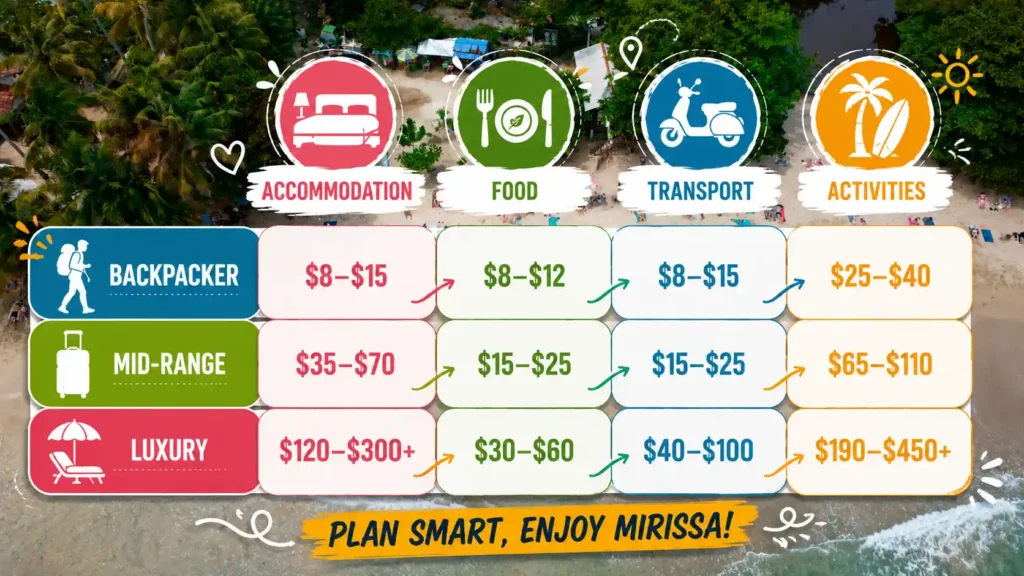
The swing between a backpacker day and a luxury day is enormous, which is fairly normal for Sri Lanka. Mirissa is a small town catering to everyone from surf-camp regulars to honeymooners.
Daily Budget for Backpackers, Mid-Range, and Luxury Travelers
A backpacker can get by on $25–$40 a day: a dorm bed or basic guesthouse, local rice and curry, a few tuk tuk rides, and maybe a sunset beer. That doesn’t leave room for daily paid tours, so most budget travelers pick just one or two splurges for the whole trip.
Mid-range travelers spend $65–$110 a day. That buys a private A/C room, a mix of local and tourist meals, a scooter rental, and one paid activity like surfing or whale watching without worrying about the bill.
Luxury travelers spend $190 a day and beyond, especially at beachfront resorts toward Weligama or Dickwella. Private drivers, spa treatments, and seafood dinners add up fast, but so does the comfort.
Quick Answer: What Is the Average Mirissa Cost Per Day?
The average Mirissa cost per day is around $60 for a mid-range traveler, covering a room, three meals, local transport, and one paid activity. Backpackers manage on $25–$40; luxury travelers spend $190 or more.
Accommodation Costs in Mirissa
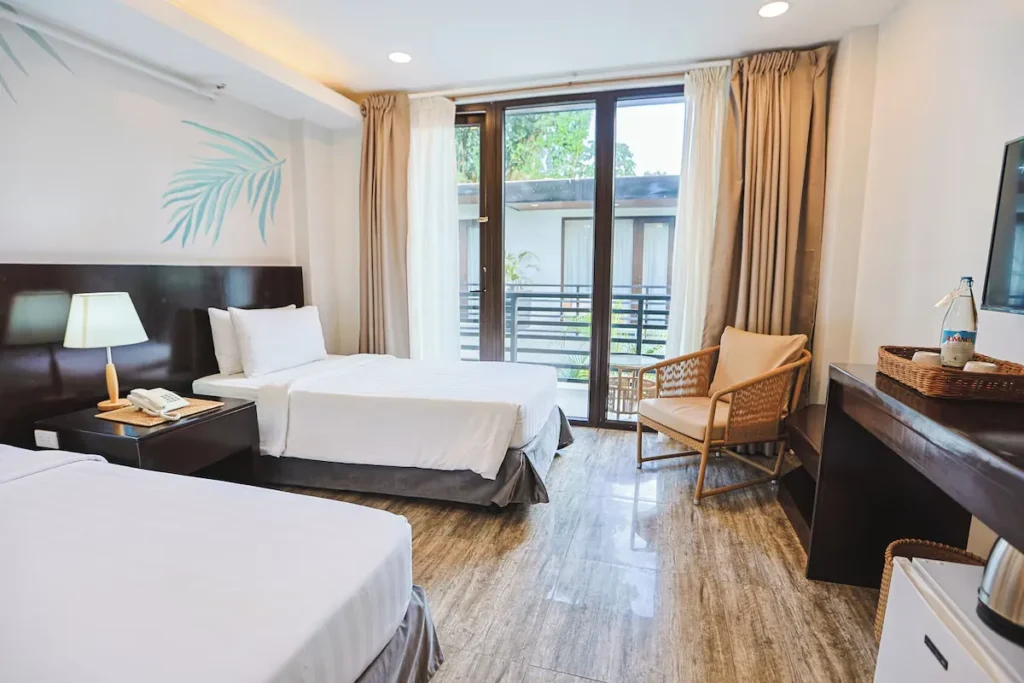
Accommodation is the biggest lever for controlling your Mirissa cost, since prices range widely within a few hundred meters of the beach. Here’s what different room types cost per night in 2026.
| Accommodation Type | Price Per Night | What to Expect |
| Hostel dorm bed | $8–$15 | Fan/A/C dorm, shared bath |
| Budget guesthouse | $18–$35 | Private room, simple breakfast |
| Mid-range hotel | $35–$75 | A/C, hot water, pool access |
| Boutique/beachfront villa | $90–$180 | Sea views, breakfast included |
| Luxury resort/private villa | $200–$500+ | Full service, private pool |
Prices climb during peak whale watching season, December through March, when surfers and beach travelers overlap. Book a few weeks ahead in that window, or you’ll pay a premium for whatever’s left.
Food and Restaurant Prices
Food is where Mirissa genuinely stays cheap, as long as you eat where locals eat rather than sticking to beachfront cafes every meal.
- Local rice and curry: $2–$4
- Short eats or roadside snacks: $0.50–$1.50
- Tourist cafe breakfast: $4–$7
- Beachfront seafood dinner: $10–$20
- Local beer or fresh king coconut: $2–$3
A realistic daily food budget is $10–$15 mixing local and tourist meals, or $25–$40 if you’re eating beachfront seafood every night, which is admittedly tempting.
Transportation Costs Around Mirissa
Mirissa itself is walkable and cheap, but getting there and exploring the coast adds to your overall Mirissa cost.
- Train from Colombo Fort to Weligama/Matara: $2–$6
- Private taxi from Colombo airport (2.5–3 hours): $45–$70
- Tuk tuk within Mirissa or to nearby beaches: $2–$5
- Scooter rental: $8–$12 per day, plus fuel
- App-based rides for longer trips (e.g., to Galle): $10–$20
The train is the most budget-friendly option, though seats can be scarce in peak season. Many mid-range and luxury travelers hire a private driver for the whole trip instead, usually $40–$60 per day.
Beach Activities and Tour Prices
Mirissa’s activities are its biggest draw, and most are affordable.
Surfing and Equipment Rental Costs
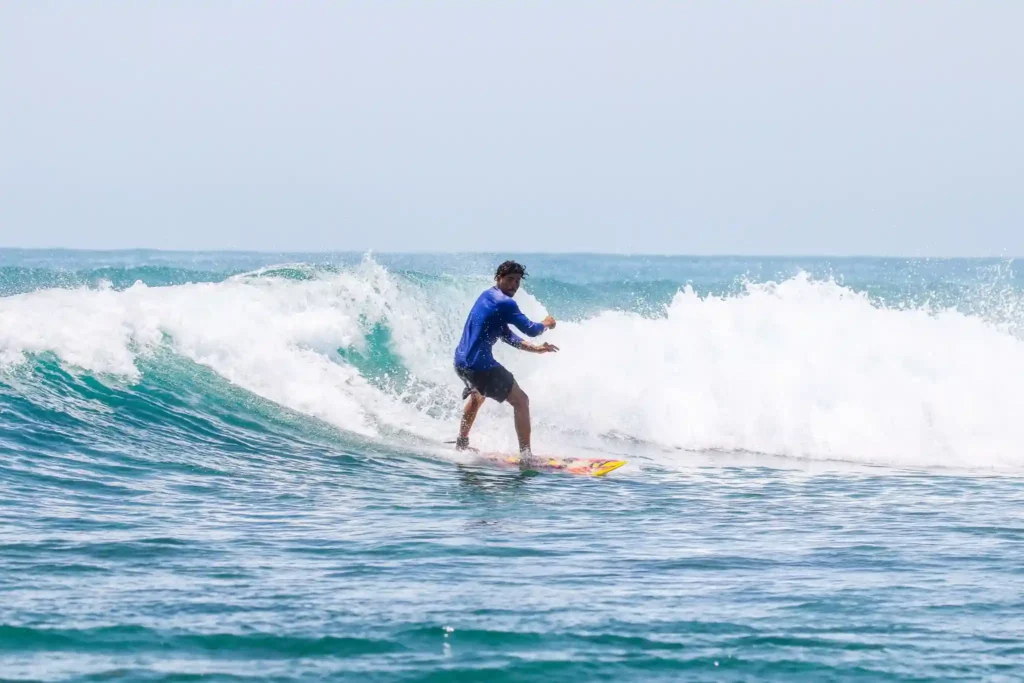
Mirissa has a gentler, beginner-friendly break than nearby Weligama. A group lesson costs $15–$25, board rental runs $8–$15 a day, and private lessons cost $30–$50.
Whale Watching Tour Cost
Whale watching is the most iconic activity here. A shared boat tour with breakfast runs LKR 6,000–8,000 (roughly $30–$40), while private speedboat charters range from $150 to $700+ for a full-day exclusive charter.
| Tour Type | Duration | Approx. Price (per person) |
| Shared boat (breakfast included) | 3–5 hours | $30–$55 |
| Luxury/small-group shared cruiser | 4–5 hours | $55–$70 |
| Private speedboat (small group) | 1.5–4 hours | $150–$300 per group |
| Private full-day exclusive charter | 5–10 hours | $700+ per group |
Season matters: the best whale watching runs November through April, when the ocean is calmer, and sightings are more common. Outside those months, tours run less often and get cancelled more due to rough seas.
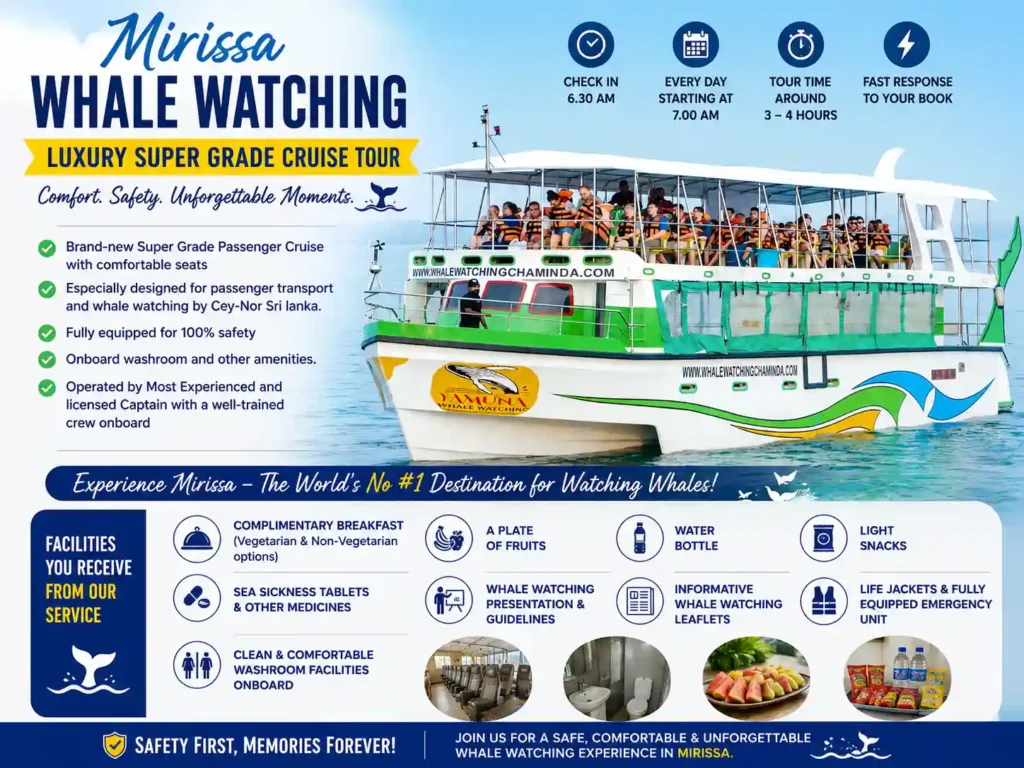
I’d recommend this luxury cruise if you want the most comfortable way to spot whales and dolphins in Mirissa.
Entrance Fees You Should Budget For
Mirissa Beach and the harbor are free to access. Most entrance fees come from day trips out of town.
- Coconut Tree Hill and Parrot Rock viewpoints: free
- Snake Island walk at low tide: free
- Yala National Park safari (shared jeep, day trip): $30–$45 per person, plus park entry fees
- Galle Fort: free to walk, though some museums charge $2–$5
Budget these separately from typical daily Mirissa spending.
Cost of Shopping and Souvenirs
Shopping in Mirissa is low-key. Beachfront stalls sell sarongs, jewelry, and beachwear for $3–$15, Ceylon tea packets cost $2–$6, and coconut oil or batik fabric run $4–$12. Bargaining is normal.
SIM Card and Internet Costs
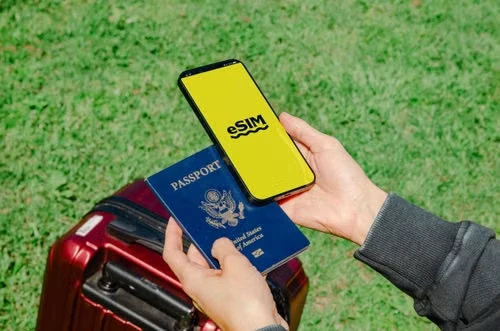
A local SIM is a great-value buy. Tourist packages from Dialog or Mobitel cost $6–$12 for 20–30GB, valid 14–30 days. Most guesthouses and cafes offer free Wi-Fi, though speeds vary during peak season.
Hidden Expenses to Keep in Mind
A few costs catch first-timers off guard.
The Sri Lanka Tourist ETA is mandatory for nearly all visitors. As of 25 May 2026, citizens of 40 countries, including the UK, most of the EU, Australia, Canada, and the US, can apply for free through the Official Department of Immigration and Emigration portal. Other nationalities pay $50, or $20 for other SAARC countries.
- Currency exchange and ATM fees: 2–5% on cash costs
- Tipping for drivers and guides: not mandatory but increasingly expected
- Credit card foreign transaction fees: usually 1–3%
- Peak season surges (Dec–Jan, April): rates can jump 20–40%
Is There a Mirissa Beach Entrance Fee?
No, Mirissa Beach itself is free to access with no entrance fee. Costs only apply to specific paid activities like whale watching tours, surf lessons, or day trips to nearby attractions such as Yala National Park.
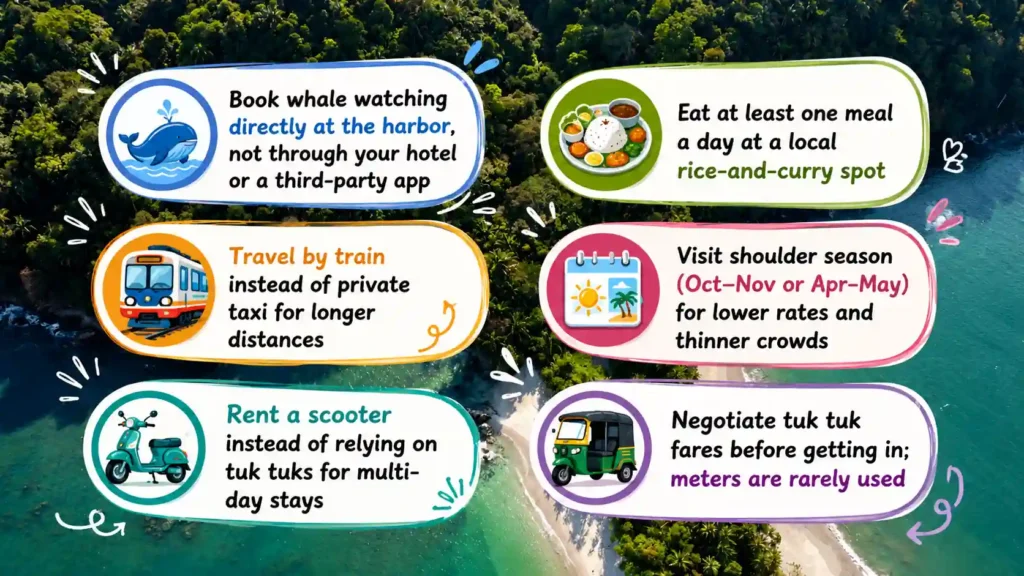
How to Save Money While Visiting Mirissa
A little planning lowers your Mirissa cost without sacrificing the experience.
- Book whale watching directly at the harbor, not through your hotel or a third-party app
- Eat at least one meal a day at a local rice-and-curry spot
- Travel by train instead of private taxi for longer distances
- Visit shoulder season (Oct–Nov or Apr–May) for lower rates and thinner crowds
- Rent a scooter instead of relying on tuk tuks for multi-day stays
- Negotiate tuk tuk fares before getting in; meters are rarely used
Everything You Need Before Visiting Mirissa: Read more in Stop! Don’t Book Mirissa Beach Before Reading This.
Is Mirissa Expensive or Budget-Friendly? The Mirissa Cost Verdict
Compared to Western beach destinations, Mirissa cost is genuinely low. A comfortable mid-range trip rarely crosses $100 a day. Compared to Unawatuna or Hikkaduwa, it sits in a similar bracket, maybe slightly cheaper for accommodation.
It feels expensive mainly for peak-season accommodation and private tours, priced closer to international rates due to high demand. Timing your visit outside December–March and April makes the biggest difference.
Quick Answer: Is Mirissa Cheap or Expensive?
Mirissa is generally budget-friendly, especially for food and local transport, with backpackers spending as little as $25–$40 a day. It becomes more expensive during peak season (December–March) and if you book private tours or beachfront villas.
Final Budget Breakdown for Different Travel Styles
Here’s roughly what a one-week trip costs by travel style, excluding flights:
- Backpacker: $180–$280 per week
- Mid-range: $450–$770 per week
- Luxury: $1,300–$3,150+ per week
Mirissa cost scales with your choices far more than most beach destinations. You can build the trip you want here, whether that’s a $30-a-day surf-camp stay or a villa with a private pool over the ocean.
Frequently Asked Questions
How much money do I need per day in Mirissa?
$25–$40 as a backpacker, $65–$110 mid-range, or $190+ for luxury, covering accommodation, food, transport, and one activity.
Is whale watching in Mirissa worth the cost?
Yes, most travelers consider the $30–$55 shared-boat price worth it, especially during peak season (November–April).
What is the cheapest way to get to Mirissa from Colombo?
The train to Weligama or Matara costs roughly $2–$6, compared to $45–$70 for a private taxi.
Do I need to pay for a visa to visit Mirissa?
Yes, a Sri Lanka Tourist ETA. As of 25 May 2026, it’s free for 40 eligible nationalities; others pay $50, or $20 for SAARC nationals.
Is Mirissa cheaper than Bali or Thailand?
Roughly comparable to or slightly cheaper than budget areas of Bali and Thailand for food and stays, though tours are similarly priced.