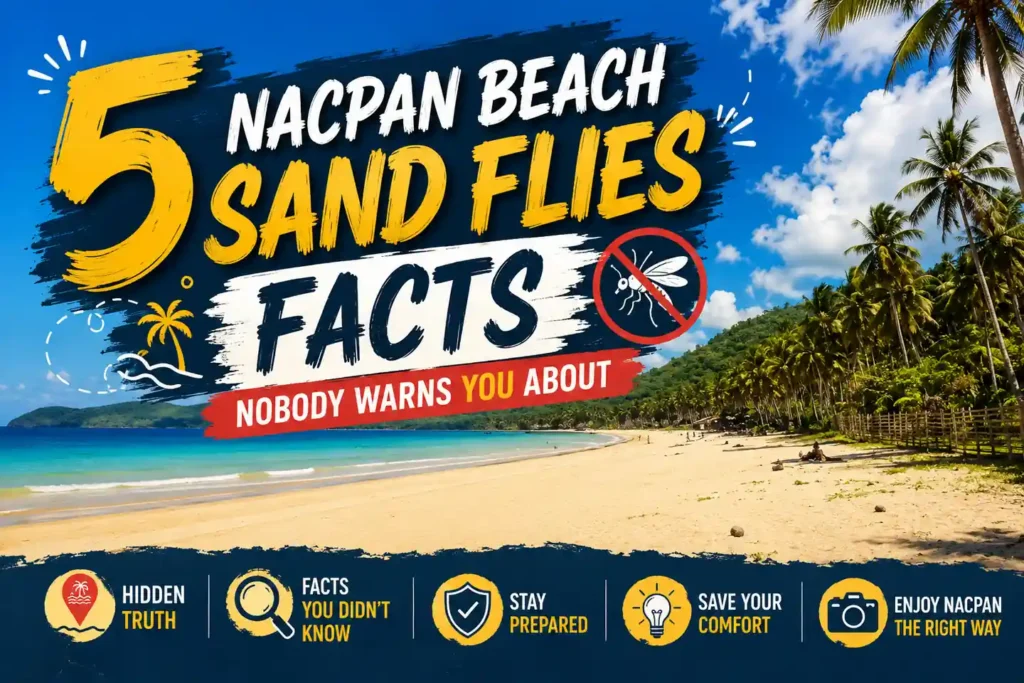
Nacpan Beach sand flies bite mostly at dawn and dusk, when the wind dies down and the air feels still and warm. They breed in the wet sand near the shoreline and in shaded grass just behind the beach, so walking barefoot through these spots is the easiest way to get bitten. Unlike mosquitoes, Nacpan Beach sand flies are almost impossible to see, and their bite leaves a small red bump that itches far more than it should.
Most bites show up on the ankles, feet, and lower legs, since these flies stay close to the ground and rarely fly higher than a few inches. The best defense is a strong repellent with DEET or picaridin, put on before sunrise and again in the late afternoon, along with light long pants if you plan to sit on the sand for a while.
Nacpan Beach Sand Flies: What They Are
Sand flies, sometimes called no-see-ums or biting midges, are tiny flying insects roughly a quarter the size of a mosquito, making them almost impossible to spot before you’re already bitten. They’re common along the tree line and grassy edges, where humidity and shade give them a comfortable place to rest during the hottest part of the day.
Unlike mosquitoes, they don’t buzz, so most people don’t realize they’ve been bitten until the itching starts. Despite the nuisance, Nacpan Beach remains a stunning destination, and a little preparation keeps your visit enjoyable.
What Do Sand Fly Bites Look Like?
Sand fly bites typically appear as small, itchy red bumps clustered together, often on the ankles and lower legs, and may develop a slightly raised or blistered center within a day of the bite.
Where Sand Flies Are Commonly Found
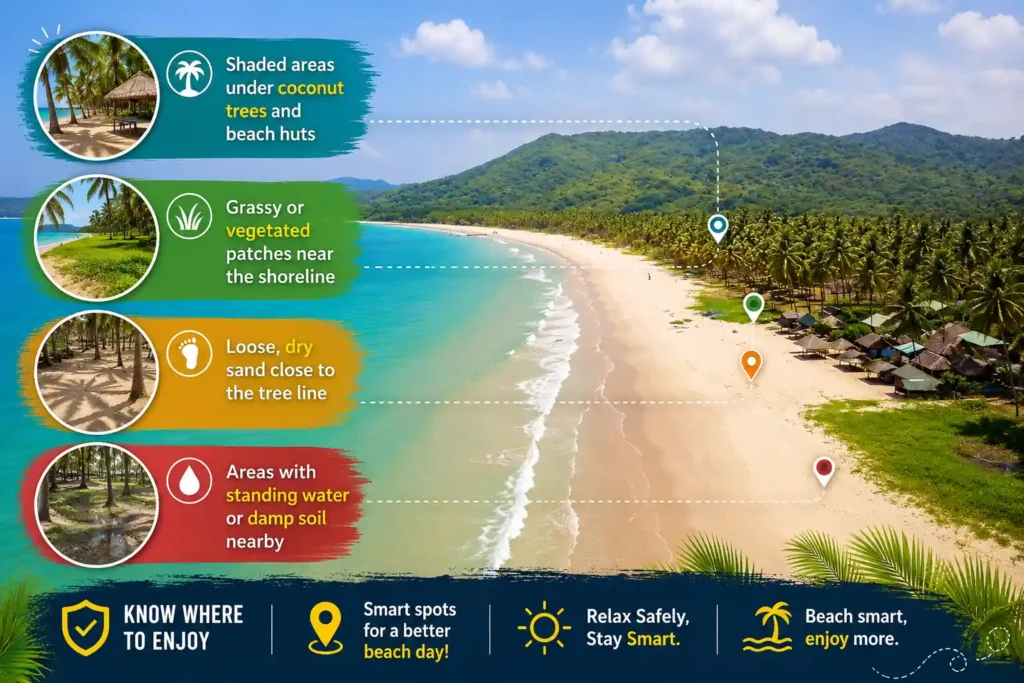
Sand flies favor shaded, humid spots rather than open, sun-baked sand, so knowing where they gather can help you plan your day. They cluster near vegetation, coconut groves, and the huts lining the back of the beach, which stay cooler and moister than the open shoreline. Visitors often report fewer bites while sitting in strong midday sun, when heat drives the insects back into cover. Loose, dry sand near grass edges is also a common breeding ground, so set up further from the tree line when you can.
- Shaded areas under coconut trees and beach huts
- Grassy or vegetated patches near the shoreline
- Loose, dry sand close to the tree line
- Areas with standing water or damp soil nearby
When Sand Flies Are Most Active
Timing matters more than almost anything else when avoiding bites here. According to the Centers for Disease Control and Prevention (CDC), sand flies are usually most active from dusk through dawn, which lines up with what travelers report.
Many describe sunrise and sunset as the worst windows, when bites can go unnoticed until the following day. Midday tends to be calmer because heat pushes the insects back into shaded, humid spots. If you’re planning a sunset dinner on the sand, apply repellent before the light fades.
What Sand Fly Bites Look Like
These bites usually appear as small, raised red bumps, often clustered in groups rather than spread out randomly. They can resemble mosquito bites at first, but many travelers notice the bumps are firmer and more defined, sometimes with a tiny blister-like center.
Because the bites are painless when they happen, they frequently show up on ankles, calves, and lower legs left loosely covered. Scratching worsens the appearance quickly, turning a small bump into a larger, inflamed welt.
How Sand Fly Bites Feel
The bite itself is usually painless, which is part of what makes these insects so frustrating. The real discomfort shows up later, often 12 to 24 hours afterward, when the area becomes intensely itchy and mildly swollen. Many travelers describe the itching as more severe than a typical mosquito bite, and it can disrupt sleep if bites spread across the legs or feet. Some also notice a slight burning sensation once the skin is scratched.
How Long Sand Fly Bites Last
One of the most common questions travelers ask is simply how long the bites will stick around, and the honest answer is longer than most expect. Mild cases usually fade within one to two weeks, but more sensitive skin can stay itchy and marked for a month or longer. Scratching, humidity, and secondary irritation can all extend the healing timeline.
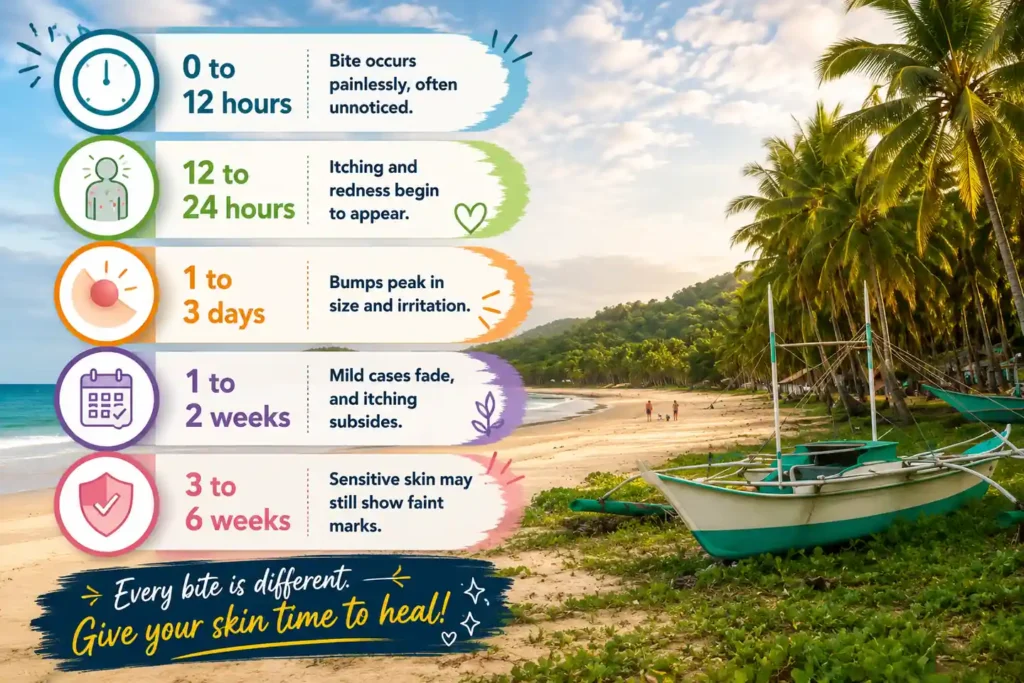
Here’s a general timeline of how these bites typically progress after exposure at the beach.
| Timeframe | What to Expect |
| 0 to 12 hours | Bite occurs painlessly, often unnoticed. |
| 12 to 24 hours | Itching and redness begin to appear. |
| 1 to 3 days | Bumps peak in size and irritation |
| 1 to 2 weeks | Mild cases fade, and itching subsides. |
| 3 to 6 weeks | Sensitive skin may still show faint marks. |
Ways to Prevent Sand Fly Bites
Prevention is by far the most effective strategy, since these bites are easier to avoid than to treat. A combination of repellent, clothing choices, and timing awareness dramatically lowers your risk during a beach day.
Insect Repellent
Repellents containing DEET, picaridin, or IR3535 are widely recommended for biting insects and should be reapplied every few hours in humid, sweaty conditions. The World Health Organization (WHO)
notes that personal repellents remain one of the few reliable individual protection measures against sand fly bites, since there’s no vaccine available. Because sand flies are so small, standard mosquito nets often aren’t fine enough to keep them out, so repellent applied directly to skin matters more.
Protective Clothing
Covering exposed skin, especially around the ankles and lower legs, meaningfully reduces bites. Lightweight long pants, closed shoes, and looser fabric create a barrier that’s harder to bite through. The U.S. Armed Forces Pest Management Board (AFPMB) recommends permethrin-treated clothing as an added layer of protection in areas with high sand fly activity. Loose ankle socks tucked into shoes help too, since bare ankles are commonly bitten.
Avoiding Direct Contact With the Sand
Sitting directly on bare sand near shaded, vegetated areas increases exposure, so a raised mat or chair helps. Choosing open sun over shaded huts during peak hours also reduces contact. If you’re setting up near the tree line, apply repellent to legs and feet first.
Extra Care Around Dawn and Dusk
Since sand flies are most active during low-light hours, be extra cautious during early morning and late afternoon visits. Reapplying repellent before sunset dinners or sunrise walks noticeably cuts down on bites. Even simple long leggings during these windows can make a real difference.
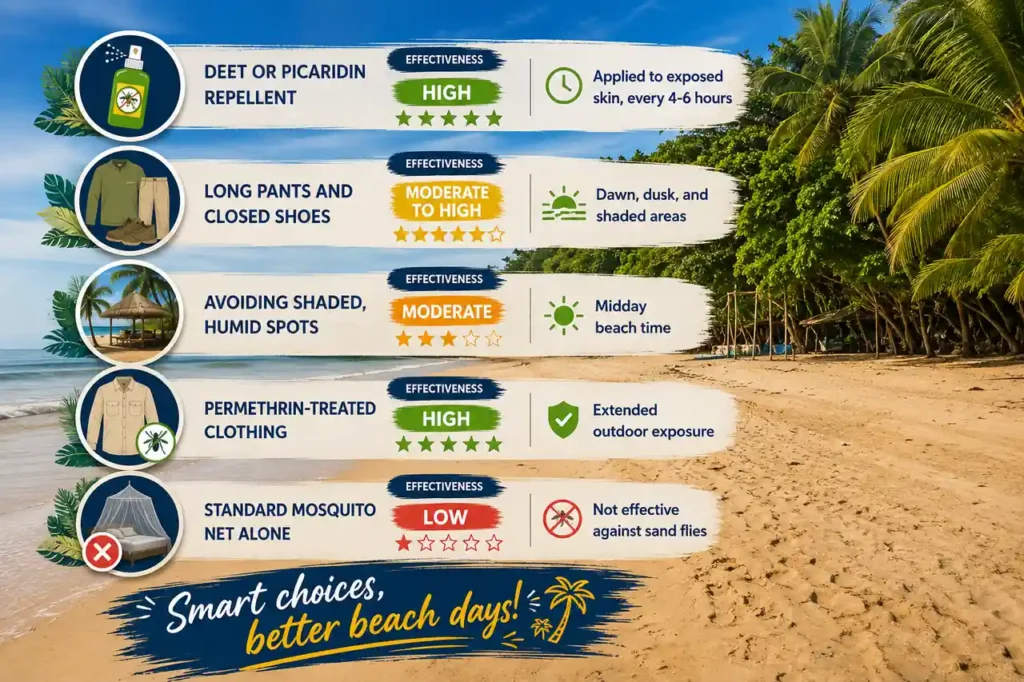
Some prevention methods work better than others, so it helps to compare them before your trip.
| Prevention Method | Effectiveness | Best Used |
| DEET or picaridin repellent | High | Applied to exposed skin, every 4-6 hours |
| Long pants and closed shoes | Moderate to High | Dawn, dusk, and shaded areas |
| Avoiding shaded, humid spots | Moderate | Midday beach time |
| Permethrin-treated clothing | High | Extended outdoor exposure |
| Standard mosquito net alone | Low | Not effective against sand flies |
Treating Sand Fly Bites
If you do end up with bites, gentle care is usually enough. Washing the area with mild soap and water reduces the risk of infection from scratching, one of the biggest complications travelers report. Over-the-counter antihistamines or hydrocortisone cream ease itching, and cold compresses reduce swelling. If a bite becomes increasingly painful, swollen, or shows pus, see a doctor, since scratched bites can become infected in humid climates.
Sand Fly Bite Risks
For most travelers, these bites are an itchy nuisance rather than a medical emergency, but it’s worth understanding the risks honestly. The biggest everyday concern is skin infection from scratching, which can turn a small bump into a serious sore if left untreated. In certain regions, sand flies can also transmit a parasitic infection, so it helps to know the basic facts.
Sand Flies and Disease Concerns
In parts of the tropics and subtropics, sand flies are known to spread a parasitic disease called leishmaniasis. According to the Centers for Disease Control and Prevention (CDC), cutaneous leishmaniasis causes skin sores that can take weeks or months to heal and, in rare cases, leave scarring if untreated.
The disease spreads through infected sand flies specifically, and cases linked to Southeast Asian beach travel remain uncommon relative to visitor numbers. Still, if a bite doesn’t heal normally weeks after your trip, mention your travel history to a doctor.
Are Nacpan Beach Sand Flies Dangerous?
For most travelers, sand fly bites here are itchy but harmless; in some parts of the world, however, sand flies can spread leishmaniasis, so unusual or slow-healing sores after travel should be checked by a doctor.
Sand Flies vs. Mosquitoes
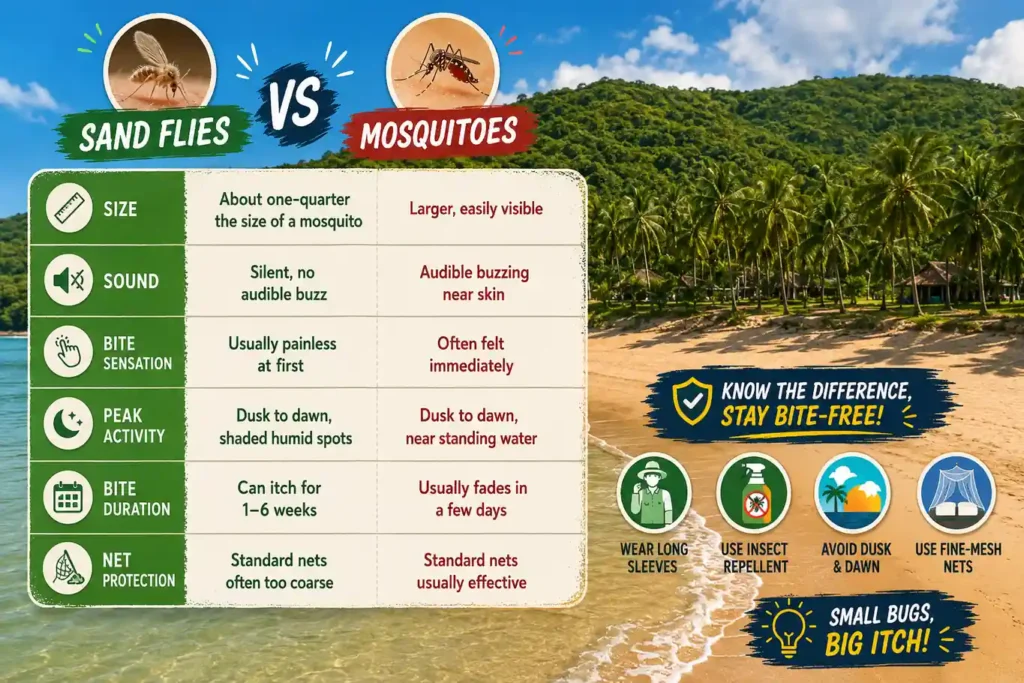
Travelers often assume mosquito precautions are enough, but sand flies behave quite differently. They’re much smaller, don’t buzz audibly, and often bite without warning. Their bites also tend to itch more intensely and last longer, catching many visitors off guard.
| Feature | Sand Flies | Mosquitoes |
| Size | About one-quarter the size of a mosquito | Larger, easily visible |
| Sound | Silent, no audible buzz | Audible buzzing near skin |
| Bite sensation | Usually painless at first | Often felt immediately |
| Peak activity | Dusk to dawn, shaded humid spots | Dusk to dawn, near standing water |
| Bite duration | Can itch for 1-6 weeks | Usually fades in a few days |
| Net protection | Standard nets often too coarse | Standard nets usually effective |
Staying Comfortable During Your Beach Visit
This beach is still very much worth the trip, and a little preparation keeps sand flies from ruining the experience. Packing a reliable repellent, choosing sun-exposed seating over shaded huts during peak hours, and covering up around dawn and dusk cover most of the risk. With a bit of planning, most visitors enjoy the turquoise water and soft sand without spending their trip distracted by itching.
Final Thoughts on Nacpan Beach Sand Flies
Nacpan Beach sand flies are a small price to pay for one of Palawan’s most beautiful stretches of coastline, and knowing what to expect makes all the difference. The bites are rarely dangerous, but they can be uncomfortable for days or even weeks if you’re unprepared.
Don’t Let Sand Flies Ruin Your Nacpan Beach Day. Read more in Nacpan Beach in El Nido That Looks Remote but Feels Worth the Ride.
Pack a strong repellent, cover your ankles and lower legs during dawn and dusk, and choose open sun over shaded huts when you can. With these simple steps, you can spend your time at Nacpan Beach enjoying the white sand and clear water instead of scratching bug bites for the rest of your trip.
Frequently Asked Questions
What are Nacpan Beach sand flies?
Nacpan Beach sand flies are tiny biting insects, sometimes called nic nics or no-see-ums, found near shaded and grassy areas of the beach, known for painless bites that itch intensely hours later.
How long do sand fly bites last?
Most bites fade within one to two weeks, though sensitive skin can stay itchy or marked for up to four to six weeks.
What time of day are sand flies worst at this beach?
Sand flies are most active at dawn and dusk, becoming much less noticeable during the hottest midday hours.
Can these sand flies spread disease?
In some regions, sand flies can spread leishmaniasis, though most bites remain a harmless, itchy nuisance; slow-healing sores after travel should be checked by a doctor.
What’s the best way to prevent sand fly bites?
A combination of DEET or picaridin repellent, protective clothing, and avoiding shaded, humid areas during dawn and dusk offers the most reliable protection.