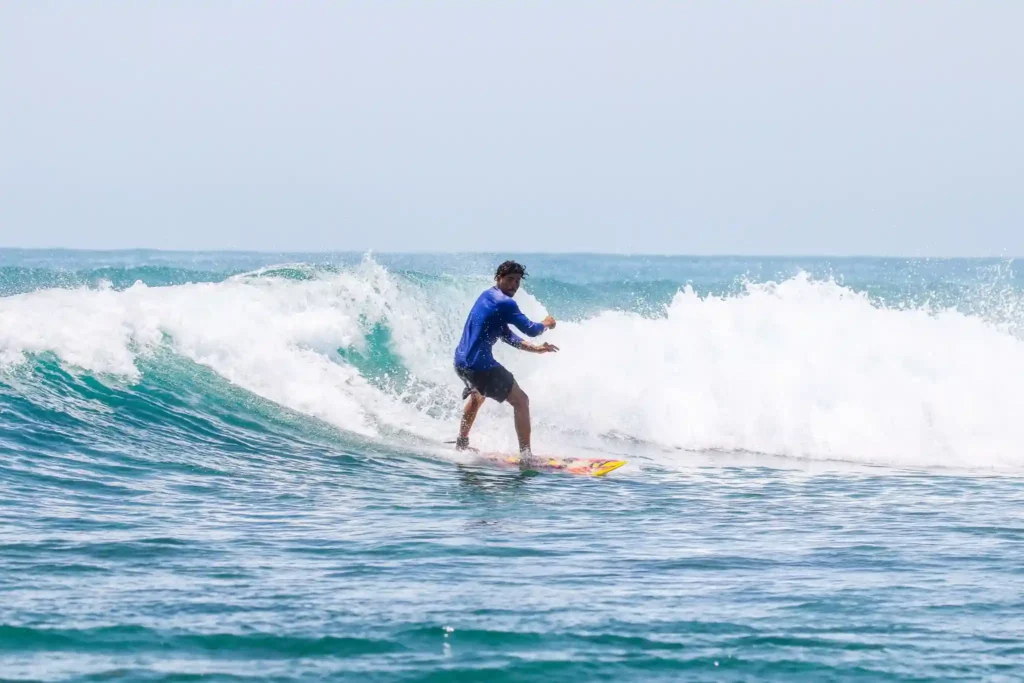

Nacpan Beach surfing means small, easy waves that are good for beginners and longboard riders. The sand here is soft, not rocky, so it’s safe if you fall. The waves are not always the same; some days you get nice small waves, and other days the sea is flat with no waves at all. This long beach in El Nido, Palawan, is better known for swimming and watching the sunset, so surfing at Nacpan Beach is more of a fun extra than the main reason people visit.
The common mistake is assuming Nacpan Beach is a reliable surf destination simply because it is exposed to the open sea. In reality, conditions can be flat or inconsistent, so surfing here works best as a bonus activity rather than the main reason to visit.
The best time to check for waves is early morning, before the wind picks up and makes the water choppy. Most surfers bring their own board, since rental shops are limited and often only have basic softboards. If you want bigger and more reliable waves, you can walk a short way north to Duli Beach instead.
Nacpan Beach Surfing: What to Expect
Nacpan Beach sits on Palawan’s west coast, facing the open South China Sea, which is what allows any swell to reach the shore at all. The beach is wide and gently sloped, with a soft sandy bottom running the full stretch between Nacpan and its twin, Calitang Beach.
Waves here are usually small and slow-breaking rather than powerful, so expect a relaxed session rather than a serious surf mission. Most people come here to swim or watch the sunset, and bring a board along almost as an afterthought.
Is Nacpan Beach Good for Surfing?
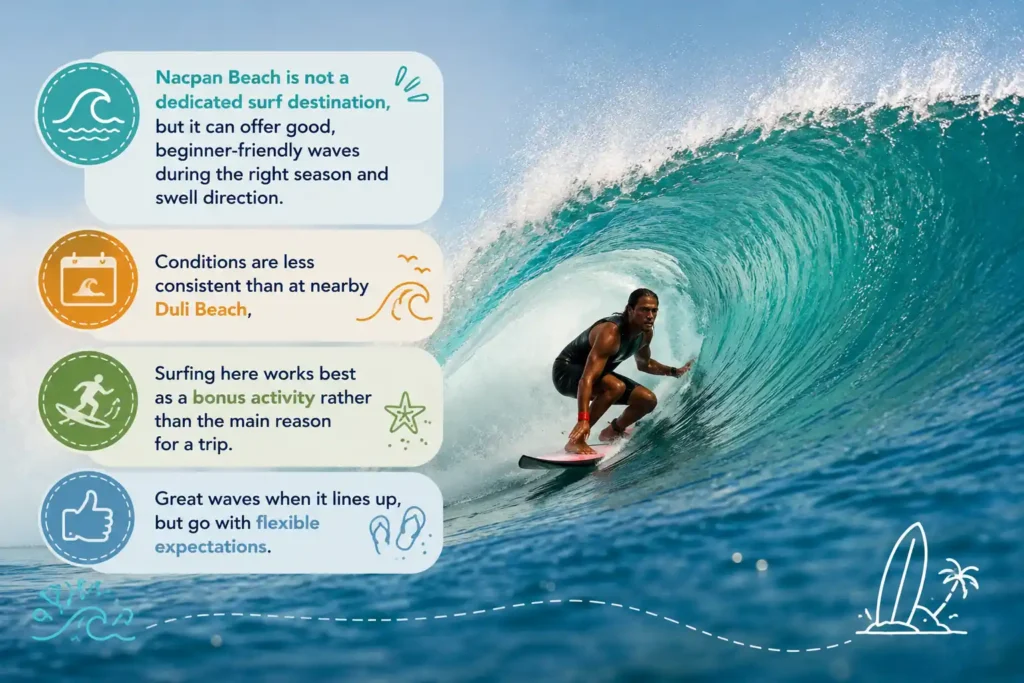
Nacpan Beach is not a dedicated surf destination, but it can offer good, beginner-friendly waves during the right season and swell direction. Conditions are less consistent than at nearby Duli Beach, so surfing here works best as a bonus activity rather than the main reason for a trip.
Everything You Need to Know Before Surfing at Nacpan Beach. Read more about Nacpan Beach in El Nido That Looks Remote but Feels Worth the Ride.
Nacpan Beach Surf Conditions
Surf conditions at Nacpan depend heavily on swell direction and time of year, since the beach only lights up when weather systems push waves in from the open sea. On a calm day, the water barely ripples, which is why most travel guides list Nacpan as a swimming beach first.
When conditions do turn on, expect knee- to waist-high waves, occasionally bigger during stronger swell events. The southern end near Calitang stays more sheltered behind a headland, keeping it calmer even when the rest of the coast is bumpy.
Best Time to Surf at Nacpan Beach
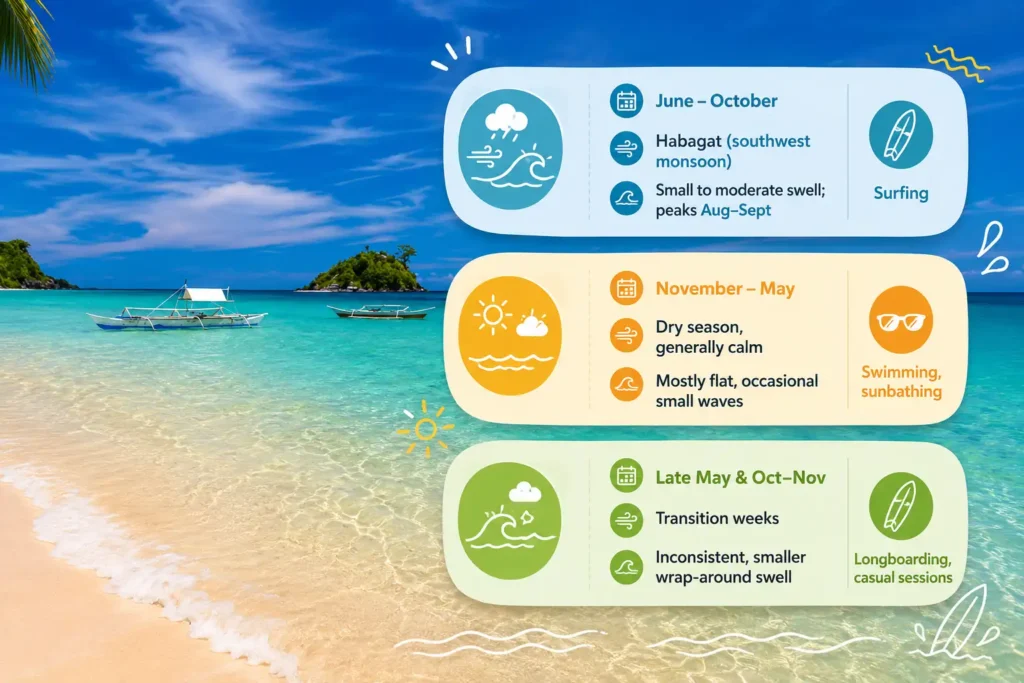
Surf season along this stretch of Palawan generally lines up with the habagat, the southwest monsoon running roughly from June to October, with August and September typically producing the most consistent swell. For up-to-date monsoon tracking, PAGASA (the Philippine Atmospheric, Geophysical and Astronomical Services Administration) publishes regular weather bulletins worth checking before a trip.
For the best time to visit Nacpan Beach, the sea is generally calm and flat from November through May, making it ideal for swimming but less suitable for surfing. However, the transition periods around October, November, and May can occasionally bring smaller, wrap-around swells, although conditions vary from year to year.
Nacpan Beach Waves and Swell
Nacpan picks up swell that wraps in from the South China Sea, and wave quality depends on wind as much as swell size. Early in the day, before the onshore breeze builds, faces tend to be cleaner and easier to read.
Wave height is generally modest, often in the one- to three-foot range, with occasional bigger sets during stronger monsoon activity. Because the beach is long and open, peaks shift around, so it helps to walk the shoreline and watch where sets break before paddling out.
The table below breaks down what to expect from Nacpan Beach surfing across the year, based on Palawan’s two main monsoon patterns.
| Period | Monsoon Pattern | Typical Conditions | Best For |
| June – October | Habagat (southwest monsoon) | Small to moderate swell; peaks Aug–Sept | Surfing |
| November – May | Dry season, generally calm | Mostly flat, occasional small waves | Swimming, sunbathing |
| Late May & Oct–Nov | Transition weeks | Inconsistent, smaller wrap-around swell | Longboarding, casual sessions |
Surfing Lessons at Nacpan Beach
Nacpan itself has few dedicated surf schools, since most formal lessons in the area are based a short walk away at Duli Beach, where small operators offer boards and basic instruction. If you’re staying at Nacpan, ask your accommodation whether they can connect you with an instructor, or plan to walk over to Duli.
A typical beginner lesson covers paddling technique, reading whitewater, and pop-up practice in the shallows before trying a green wave. Group lessons are common and cheaper than one-on-one sessions, though private instruction moves faster.
Can Beginners Surf at Nacpan Beach?
Yes, beginners can surf at Nacpan Beach when conditions are right. The waves are generally soft, slow-breaking, and sit over a sandy bottom, which makes wipeouts far less risky than at reef breaks. A short lesson with a local instructor is recommended for anyone trying to stand up for the first time.
Surfboard Rental at Nacpan Beach
Board rental at Nacpan and the surrounding beaches is informal but easy to arrange, usually through small stalls or your accommodation rather than a dedicated surf shop. Soft-top longboards are the most common option, which fit the gentle, slow-breaking waves here.
Prices are typically charged by the hour rather than the day, so it helps to check ahead if you’re planning a longer session. Bringing your own leash and reef-safe sunscreen is worthwhile, since rental gear doesn’t always include extras.
The table below gives a rough idea of rental and transport costs around Nacpan and Duli Beach, converted to US dollars at current exchange rates. Always confirm the price before you hand over payment.
| Item | Typical Price (USD) | Notes |
| Longboard rental, Nacpan | $3–5 per hour | Informal stalls; limited stock in peak season |
| Board rental, Duli Beach | $5–8 per hour | Wider board selection, small surf camps |
| Motorbike rental, El Nido town | $5–10 per day | Needed to reach Nacpan or Duli independently |
| Trike or multicab, one way/return | $6–16 | Price depends on distance and driver |
Best Surfing Spots Near Nacpan Beach
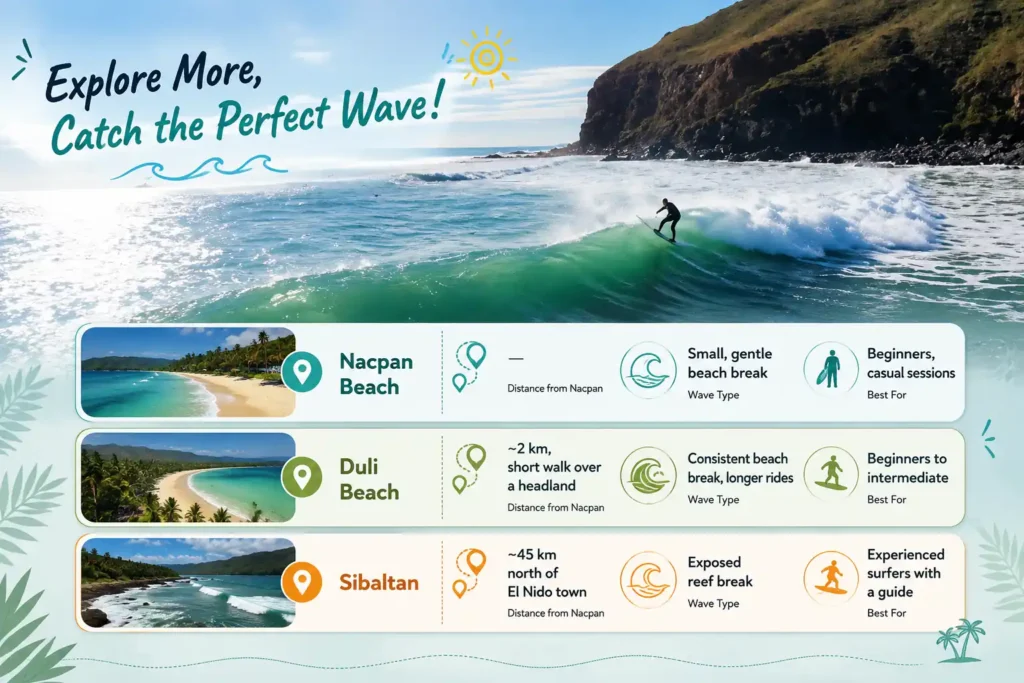
Duli Beach is the closest real alternative, connected to Nacpan by a short walk over a headland, and it has more consistent waves plus a couple of informal surf camps offering boards and lessons. Sibaltan, roughly 45 kilometres north of El Nido town, has an exposed reef break that can produce good waves during strong swell, but it suits experienced surfers going with a local guide rather than a solo first attempt.
Both spots pick up more reliable swell than Nacpan itself, which is why many surfers treat Nacpan as a bonus session rather than the main destination.
| Spot | Distance from Nacpan | Wave Type | Best For |
| Nacpan Beach | — | Small, gentle beach break | Beginners, casual sessions |
| Duli Beach | ~2 km, short walk over a headland | Consistent beach break, longer rides | Beginners to intermediate |
| Sibaltan | ~45 km north of El Nido town | Exposed reef break | Experienced surfers with a guide |
What to Know Before Surfing at Nacpan Beach
A few practical points make the difference between a good session and a frustrating one. Wave conditions shift quickly with wind and tide, so check before committing to a full day. The Department of Tourism lists Nacpan among Palawan’s top beach destinations, mainly for its scenery and swimming rather than surfing, which is a useful reminder to keep expectations realistic.
Is Nacpan Beach Safe for Surfing?
Nacpan Beach is generally safe for surfing thanks to its sandy bottom and mostly gentle wave energy. Rip currents can still form during bigger swells, particularly near the headland separating Nacpan from Calitang, so it’s best to surf with a buddy, stay within your ability, and ask locals about conditions before paddling out. During storm season, the Philippine Coast Guard occasionally issues advisories worth checking beforehand.
Best Time of Day for Surfing
Early morning is usually the best window, roughly sunrise until mid-morning, before the onshore breeze picks up and chops up the wave faces. Once the wind turns onshore, conditions get messier and harder to ride cleanly. Late afternoon sometimes offers a second short window as the wind eases before sunset, though it’s less reliable than the morning session.
Nacpan Beach Surfing Tips
- Check conditions early: ask a local operator or your accommodation before heading out, since Nacpan’s surf changes fast.
- Surf in the morning: waves are usually cleaner before the onshore wind builds.
- Bring your own gear if possible: rental stock is limited, especially in peak season.
- Stick to whitewater at first: the safest way to build confidence before catching a green wave.
- Protect your skin: reef-safe sunscreen and a rash guard go a long way under the Palawan sun.
- Respect the coastline: pack out your trash, and avoid disturbing coral or dune vegetation. Nacpan and Duli fall within an area monitored by the Palawan Council for Sustainable Development, which asks visitors to tread lightly.
Key Takeaways for Nacpan Surfers
Nacpan Beach surfing rewards travelers who stay flexible about timing and expectations. Treat any waves you find as a bonus to an already beautiful beach, check conditions each morning, and be ready to walk over to Duli if Nacpan itself is flat. Pack a light board if you can, since rental options are limited and mostly softboards for beginners. Even on flat days, the wide sandy stretch and quiet surroundings make Nacpan worth the trip on its own. That flexible mindset is really the key to enjoying surf here.
FAQs About Nacpan Beach Surfing
Is Nacpan Beach good for beginner surfers?
Yes. The waves are typically small, slow, and break over sand rather than reef, making it a forgiving spot to learn.
What is the best month to surf at Nacpan Beach?
Conditions are usually best from June to October, with August and September producing the most consistent swell.
How do I get from El Nido to Nacpan Beach?
Nacpan Beach is about a 40-minute drive from El Nido town by motorbike, trike, or an organized day tour.
Can I rent a surfboard at Nacpan Beach?
Yes, small stalls near the beach rent soft-top longboards by the hour, though stock can be limited during peak season.
Is Duli Beach better than Nacpan for surfing?
Duli generally has more consistent waves and better surf infrastructure, while Nacpan works well as a backup or bonus session.
Do I need a wetsuit to surf at Nacpan Beach?
No. Water temperatures in Palawan stay warm year-round, so board shorts or a rash guard are enough for comfort and sun protection.
Are there lifeguards at Nacpan Beach?
Nacpan Beach has lifeguards stationed on part of the beach, mainly for swimmers, so surfers should still take extra care and check conditions themselves.