
Nyang Nyang Beach photos & viewpoints show one of the last untouched beaches in Bali. It stretches almost 2 kilometers along the south coast. To reach this beach, you must walk down more than 500 steps. This stops most tourists from coming here. Because of this, the beach stays clean and quiet, and this makes it a great place for photos. Tall cliffs stand around the beach, about 80 to 100 meters high.
These cliffs make a strong background for pictures. The best time for Nyang Nyang Beach photos & viewpoints is during golden hour. This happens about 45 minutes before sunset. At this time, the sky turns orange and pink. The light makes the blue water and white sand look even more beautiful.
Where can you find the hidden cliffside views above Nyang Nyang Beach?
Quick Answer: The hidden cliffside views above Nyang Nyang are found along the steep trail leading down to the beach, offering unobstructed aerial perspectives of the coastline.
Hidden Cliffside Views Above Nyang Nyang Beach
The trail down to Nyang Nyang starts near the top of a cliff, and honestly, that descent itself is part of the experience. From my experience, the best views are actually at the top, before you even reach the sand. The cliffside overlooks give you a bird’s eye perspective of the entire beach below, stretching for almost two kilometers.
These elevated spots are perfect for wide landscape shots. The contrast between the white sand, turquoise water, and dark volcanic rock creates a naturally dramatic composition. Furthermore, the elevation gives you a clean foreground with no tourists in the frame, which is increasingly rare in Bali these days.
| Viewpoint Type | Elevation Approx. | Best For | Time of Day |
| Cliff Trail Upper Point | 80–100m | Landscape & wide-angle shots | Morning |
| Mid-Trail Rocky Ledge | 40–60m | Ocean texture shots | Afternoon |
| Beach Entry Lookout | 10–15m | Shore & cliff combo shots | Golden hour |
Quick Answer: What is the best sunrise photography spot at Nyang Nyang Beach?
The best sunrise photography spot at Nyang Nyang is the upper cliff trail, where soft backlight illuminates the beach and ocean below with warm golden tones.
Best Sunrise Photography Spots
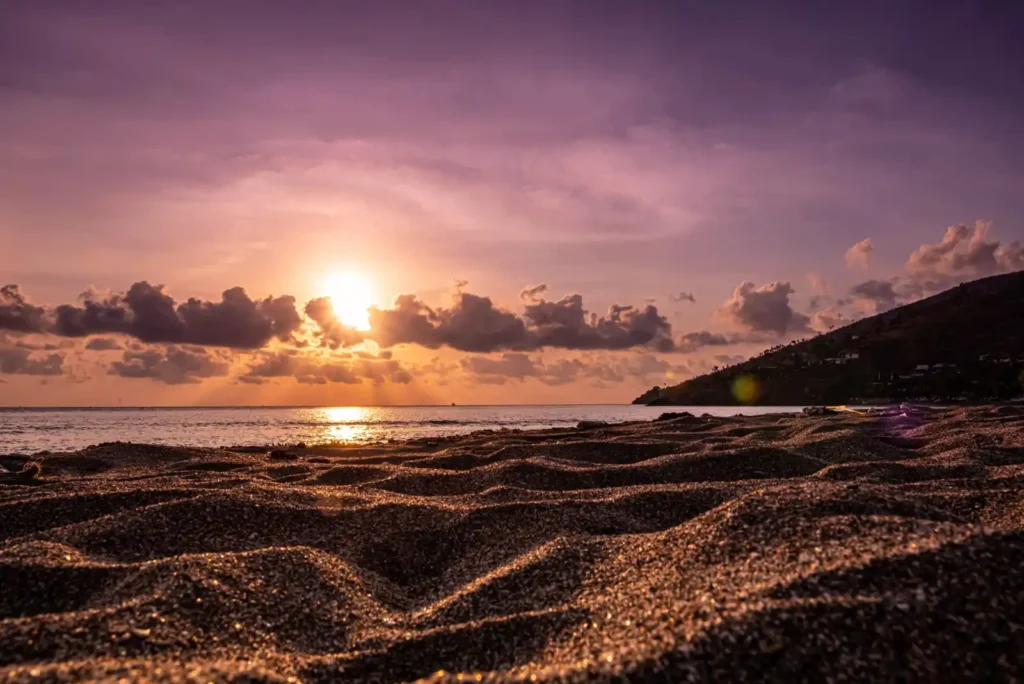
Sunrise at Nyang Nyang is something else entirely. Because the beach faces west and slightly south, the early morning light hits the cliffs from behind and creates a soft, warm glow across the sand. In addition to that, the lack of crowds at sunrise means you get completely clean, undisturbed compositions.
The sea is usually calmer in the early hours, too, so long-exposure shots of the waves are more manageable. From my own visits, arriving around 6:00 AM gives you the best mix of light and stillness. Bring a tripod if you can manage the hike down.
Quick Answer: Where to stand for the best limestone cliff shots?
For dramatic limestone cliff shots, position yourself at the southern end of the beach and shoot looking north. This angle captures the full cliff face with ocean reflections in the foreground.
Dramatic Limestone Cliff Angles
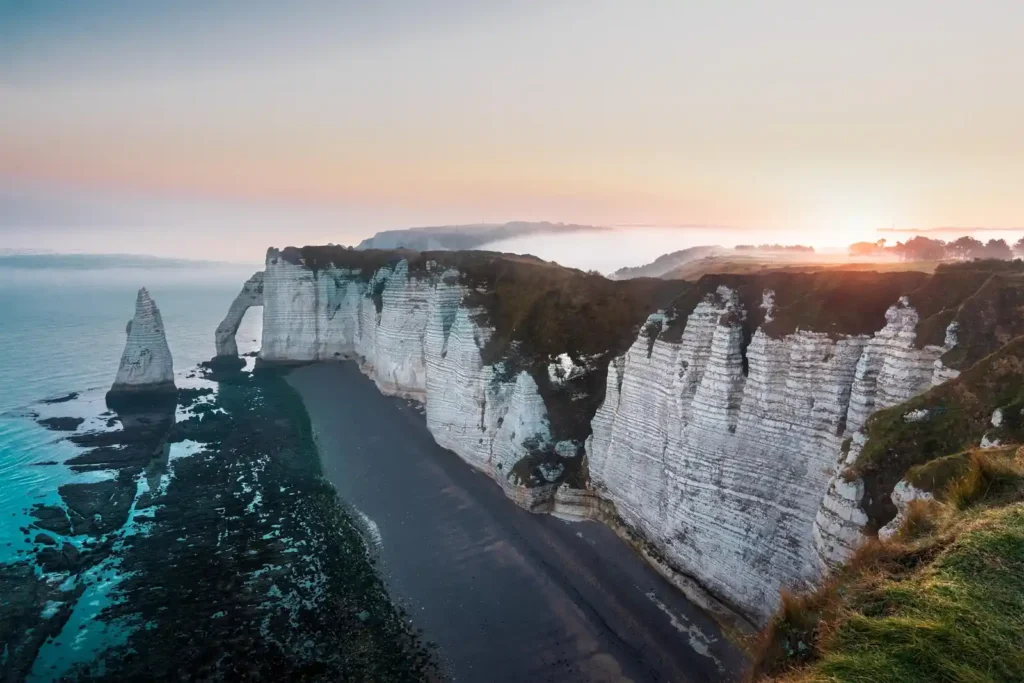
The limestone cliffs that frame Nyang Nyang are honestly the star of the show. They are tall, layered, and weathered in a way that adds incredible texture to photos. Moreover, depending on the angle you shoot from, they can make the beach look completely different in every frame.
Some of the most compelling angles include shooting from ground level with a wide lens to emphasize the towering height of the cliffs. On the other hand, shooting from halfway up the cliff trail with a longer focal length compresses the distance and makes the cliffs look even more imposing. Therefore, bringing at least two lens options will serve you well here.
| Cliff Photography Angle | Lens Type | Effect | Difficulty |
| Ground level, wide angle | 16–24mm | Towering, dramatic scale | Easy |
| Mid-cliff, standard zoom | 35–50mm | Balanced scene, good depth | Moderate |
| Top of the trail, telephoto | 70–200mm | Compressed coastal layers | Moderate |
Quick Answer: Where are the best viewpoints at Nyang Nyang Beach?
The best panoramic ocean viewpoints at Nyang Nyang are located at the top of the cliff trail, roughly 80 to 100 meters above sea level, offering unobstructed 180-degree ocean views.
Panoramic Ocean Viewpoints
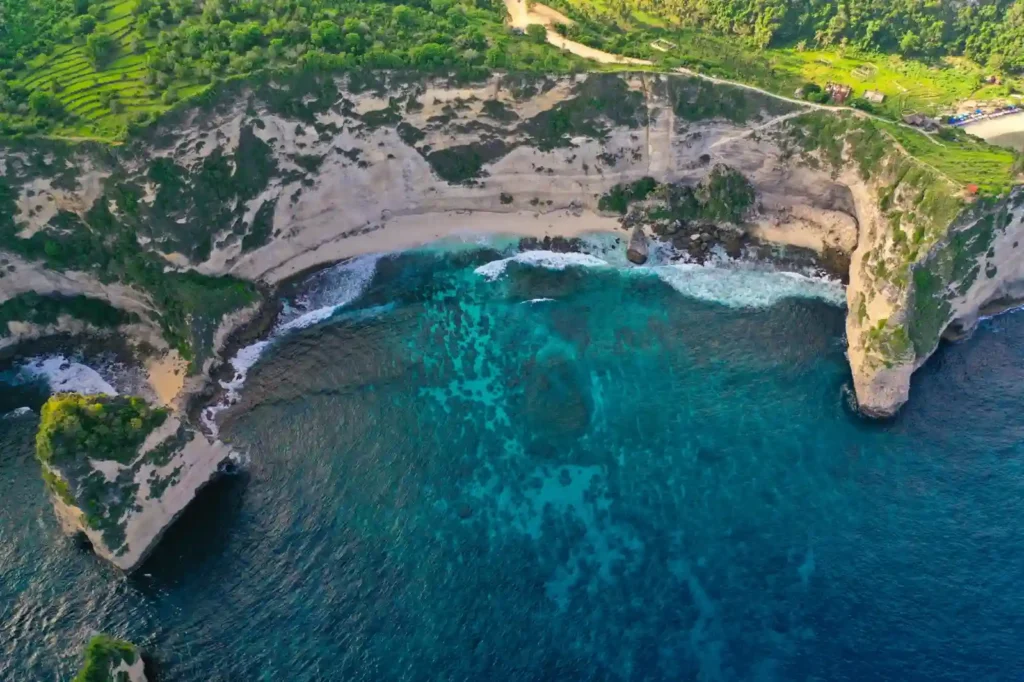
Standing at the upper viewpoints and looking out over the Indian Ocean from Nyang Nyang is genuinely breathtaking. The ocean stretches endlessly with no land in sight, and on clear days, the water shifts through at least four or five shades of blue and green. As a result, panoramic shots here come out incredibly vivid even without heavy editing.
The key to a great panorama here is patience. I have found that waiting for a moment when the wind drops slightly means the ocean surface becomes more reflective, adding beautiful mirror-like patches to your wide shots. Additionally, shooting in portrait orientation and stitching together a vertical panorama gives you both the cliffs and the ocean in one frame.
Secret Photo Spots Along the Trail
The trail down to Nyang Nyang is about 500 steps, and honestly, most people are too focused on reaching the beach to stop and look around. However, the trail itself hides some genuinely great photography opportunities that most visitors completely miss.
Along the way, you will find:
- Narrow gaps between rocks that frame the ocean like a natural window
- Overhanging vegetation that creates natural canopy shots with the sea below
- Small flat ledges where you can safely stop and shoot back toward the cliffs
- Loose rock formations near the bottom that make interesting foreground elements
From my experience, slowing down on the descent and treating the trail itself as a photo location rather than just a path makes a huge difference. Furthermore, the light through the vegetation at mid-morning has a quality that is nearly impossible to replicate artificially.
Quick Answer: How to capture wide-angle beach shots at Nyang Nyang?
For the best beachfront wide-angle shots at Nyang Nyang, use a 16–24mm lens, shoot from low to the ground during golden hour, and aim toward either end of the beach to capture the full curve of the shoreline.
Beachfront Wide-Angle Shots
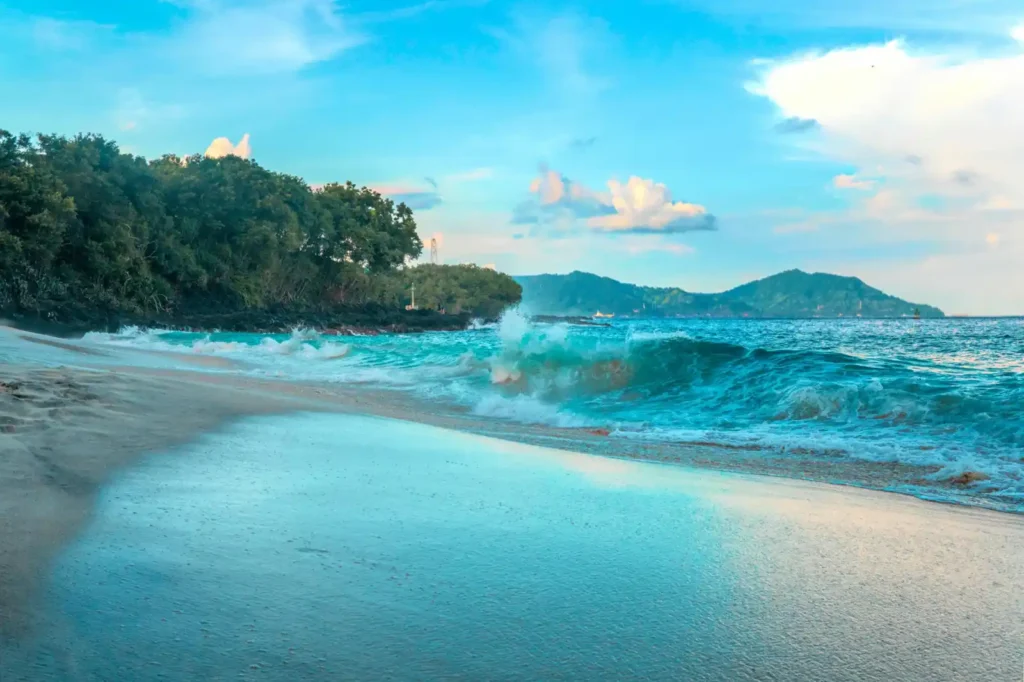
Once you are actually on the sand, the scale of Nyang Nyang really hits you. The beach runs for close to two kilometers and is rarely more than a handful of people wide. Therefore, wide-angle shots here have a sweeping, almost cinematic quality.
The wet sand near the waterline reflects the sky beautifully, especially during golden hour. In addition to that, the occasional wave rushing up the shore adds natural motion blur to long-exposure shots, creating a silky foreground that contrasts with the sharp cliff background. Because the beach is so uncrowded, getting a completely human-free wide shot is genuinely achievable here.
Quick Answer: Where is the Nyang Nyang Beach shipwreck, and when is it best visible?
The shipwreck at Nyang Nyang Beach sits near the southern end of the shoreline and is best photographed during low tide when more of the structure is visible above the waterline.
Shipwreck Photo Opportunity

Most travelers never find this abandoned shipwreck hidden along Nyang Nyang Beach.
One of the most unexpected and photographically exciting features of Nyang Nyang is the old shipwreck sitting on the beach. This rusted hull has been there for years and has become one of the most iconic subjects for Nyang Nyang beach photography. Consequently, it draws photographers specifically looking for that gritty, abandoned aesthetic.
The rust-orange tones of the wreck contrast beautifully with the white sand and blue ocean. Moreover, shooting during golden hour turns the entire structure into a glowing amber silhouette. For dramatic effect, try a low-angle shot looking up at the hull with the cliffs in the background. Because the wreck is large enough to walk around, there are multiple unique compositions available from different sides.
| Shipwreck Shot Type | Best Time | Tide Condition | Key Element |
| Full structure wide shot | Golden hour | Low tide | Cliffs as backdrop |
| Close-up rust texture | Midday | Any | Macro or standard lens |
| Silhouette against sunset | Sunset | Low tide | Sky as the main subject |
| Reflection in wet sand | Just after the wave | Low tide | Sand mirror effect |
Quick Answer: When is golden hour at Nyang Nyang Beach and the best photo spots?
Golden hour at Nyang Nyang Beach starts approximately 45 minutes before sunset. The best locations for golden hour shots are the upper cliff trail for wide landscapes and the beachfront near the shipwreck for close-up warm-toned compositions.
Golden Hour Lighting Locations
Golden hour at Nyang Nyang is arguably the best time to visit for photography. Because the beach faces west, it catches the full sunset light directly. As a result, the cliffs turn deep amber, the sand glows warm gold, and the ocean takes on a pinkish hue that feels almost unreal.
The best part is that the cliffs create natural shadows and highlights simultaneously during this period, giving your images a naturally dramatic look without any filters. Furthermore, if there are clouds on the horizon, the reflected light bounces off them and doubles the color intensity across the sky and water.
Drone Photography Perspectives
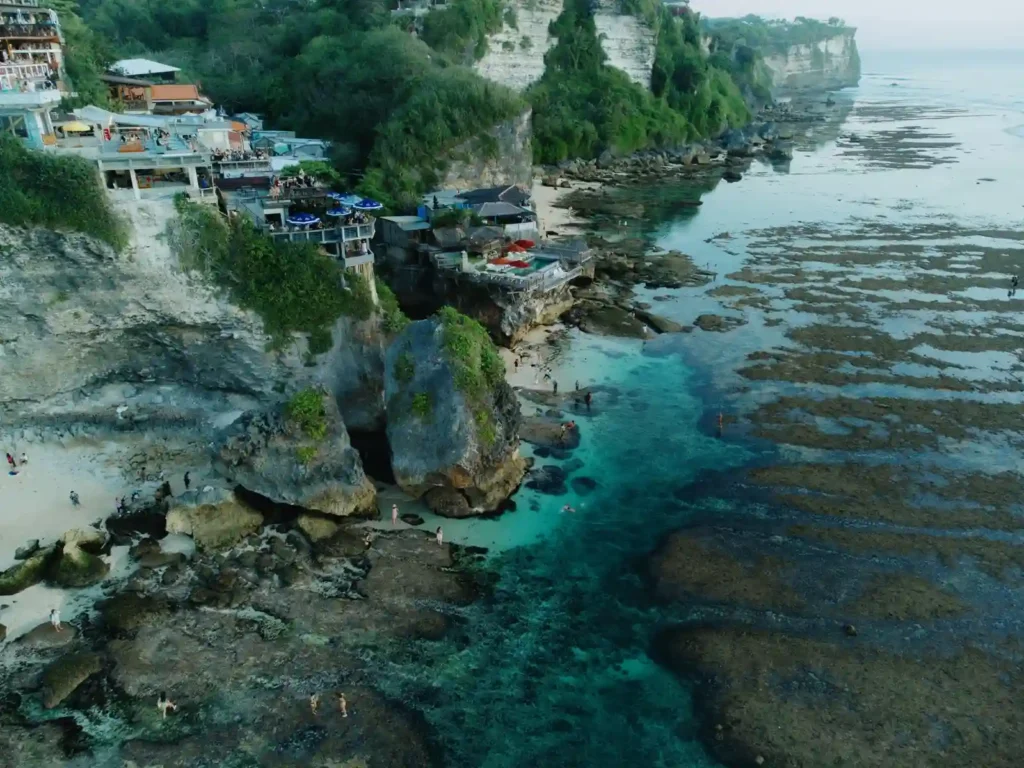
Nyang Nyang is genuinely one of the best drone photography locations in Bali. The combination of untouched beach, dramatic cliffs, clear water, and the shipwreck gives aerial footage a cinematic quality that very few locations can match. Moreover, because the beach is rarely crowded, you have wide open airspace without the safety concerns of busy tourist areas.
From experience flying drones at various Bali beaches, Nyang Nyang stands out because of its natural color variety. The water changes from light turquoise in the shallows to deep navy further out, and the contrast with the white sand creates compositions that look stunning even from high altitude. Additionally, the cliffside aerial view looking down the beach from the north end is particularly impressive.
A few practical points for drone photographers:
- Check local regulations before flying, as Bali has designated drone zones
- Fly early morning or late afternoon for the best light and minimal wind
- The cliff updrafts near the rock face can be unpredictable, so maintain a safe distance
- Battery life matters here because the hike down is long, and you want maximum flight time
Quick Answer: What is the best Instagram shot at Nyang Nyang Beach?
The most Instagram-worthy composition at Nyang Nyang is the shipwreck framed by the limestone cliffs during golden hour, shot from a low angle with wet sand reflection in the foreground.
Instagram-Worthy Frames & Compositions
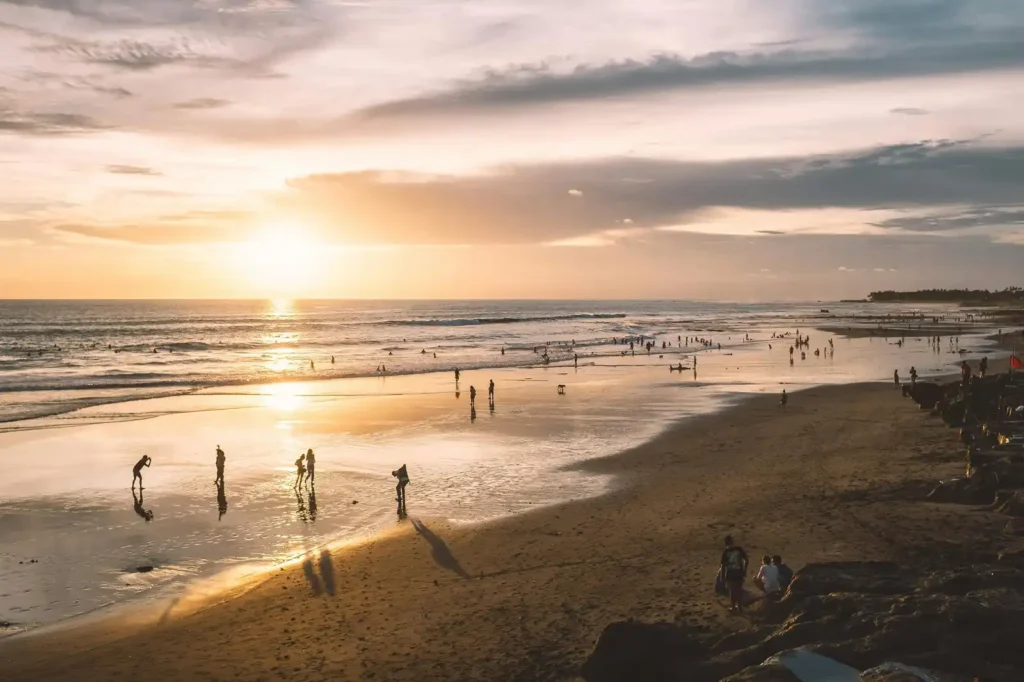
If you are specifically shooting for social media, Nyang Nyang delivers a wider variety of Instagram-ready compositions than most well-known Bali beaches. Interestingly, because it is less visited, your images look genuinely unique rather than like copies of a thousand other posts.
Some of the most engaging compositions include shooting through the natural rock arches along the cliff base, framing the shipwreck between two rock formations, and using the long leading line of the beach curve to draw the eye into the frame. In addition to those, the cliff reflection pools left by retreating waves make excellent foreground mirrors for portrait shots.
Tips for Capturing Clear Coastal Shots
After visiting Nyang Nyang multiple times and shooting in all kinds of conditions, here are the practical tips that made the biggest difference in image quality:
- Protect your gear. The walk down involves dust, and the beach has salt spray. Use a weather-sealed camera or a protective cover.
- Use a polarizing filter. The ocean glare at Nyang Nyang is intense midday. A circular polarizer cuts through surface reflection and makes the water color far more vivid.
- Shoot in RAW. The dynamic range between the bright sky and shadowed cliffs is extreme here. RAW files give you the flexibility to recover both ends in post-processing.
- Arrive early. The trail takes 15 to 20 minutes. If you want to be in position for sunrise, that means leaving the top well before first light.
- Bring extra batteries. There is no electricity at the beach, and long exposure and drone work drain power fast.
Best Time of Day for Photography
Understanding light at Nyang Nyang is the difference between average shots and genuinely stunning ones. The beach orientation means different times of day produce completely different moods.
| Time of Day | Light Quality | Best Subjects | Crowd Level |
| 6:00–8:00 AM | Soft, warm backlight | Landscapes, wide beach shots | Almost empty |
| 9:00–11:00 AM | Crisp, neutral light | Cliff details, watercolor | Low |
| 12:00–3:00 PM | Harsh, high contrast | Avoid or use shade | Low to moderate |
| 4:00–6:30 PM | Warm golden to amber | Shipwreck, silhouettes, portraits | Low |
| Around sunset | Deep orange to red | Panoramas, cliff reflections | Low to moderate |
Based on multiple visits, the sweet spot is arriving at the top of the trail around 5:30 PM. By the time you reach the beach, it will be perfect golden hour, and you have the full sunset to work with before making the climb back up before dark. Similarly, an early morning visit around 6:00 AM captures the quietest and most atmospheric light of the day.
Why Nyang Nyang Beach Is Bali’s Most Underrated Hidden Beach
Why Nyang Nyang Beach Is Bali’s Ultimate Hidden Photography Spot
Nyang Nyang Beach is one of those places that genuinely earns its reputation among serious photographers and casual travelers alike. Between the towering limestone cliffs, the rusted shipwreck, the sweeping ocean panoramas, and the golden light that rolls in every evening, the variety of Nyang Nyang beach photos & viewpoints available here is remarkable.
Furthermore, because the beach remains relatively uncrowded compared to the more famous spots nearby, you still have the freedom to set up shots, take your time, and find angles that feel entirely your own. If you are planning a photography trip to Bali and you only pick one hidden location to visit, make it Nyang Nyang. You will not regret the 500 steps down.
FAQs
Q1: What is the best time to visit Nyang Nyang Beach for photography?
A: The best times are early morning, around 6:00 AM, for soft backlit landscapes, and late afternoon from 4:30 PM onward for golden hour and sunset shots near the shipwreck and cliffs.
Q2: Is Nyang Nyang Beach good for drone photography?
A: Yes, Nyang Nyang is one of the best beaches in Bali for drone photography due to its uncrowded airspace, dramatic cliffs, clear water color gradients, and the photogenic shipwreck. Always check local regulations before flying.
Q3: Where is the shipwreck at Nyang Nyang Beach located?
A: The shipwreck sits near the southern end of the beach and is best photographed at low tide during golden hour when the structure is most visible and the warm light enhances its rust tones.
Q4: How long is the trail down to Nyang Nyang Beach?
A: The trail involves approximately 500 steps and takes around 15 to 20 minutes to descend. Factor in the same time for the climb back up.
Q5: Can beginners get good photos at Nyang Nyang Beach?
A: Absolutely. The natural scenery, color variety, and low crowd levels make it easy to capture compelling shots even with a smartphone. The golden hour light does a lot of the work for you.
Q6: What photography gear should I bring to Nyang Nyang Beach?
A: A wide-angle lens, polarizing filter, tripod for long exposures, extra batteries, and weather protection for your camera are the most useful items. If you plan to fly a drone, bring fully charged batteries since there is no power at the beach.