Before you walk down to the beach, you should know the Nyang Nyang entrance fee and rules, since the local community takes them seriously. The fee is small; you usually pay 10,000 IDR per person in cash at a simple gate near the parking area. Along with the fee, you must follow basic rules, such as no loud music, no littering, and no camping overnight. Knowing the Nyang Nyang entrance fee and rules ahead of time helps you avoid confusion and makes your visit smooth and stress-free.
Quick Overview: What You Need to Know First
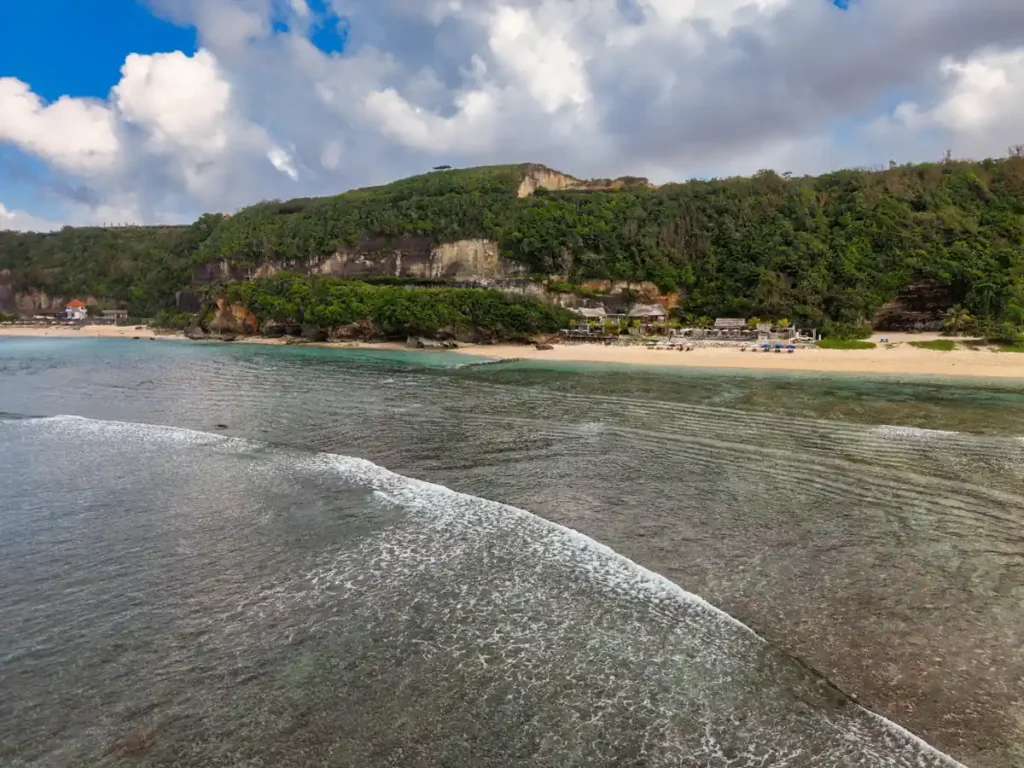
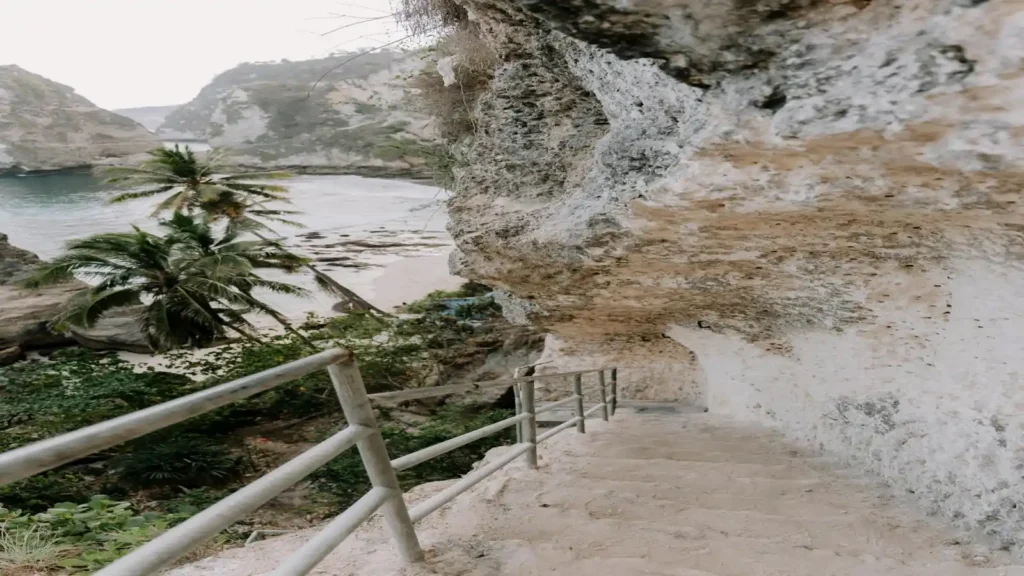
Nyang Nyang Beach sits in the southern part of Bali, near Uluwatu in the Pecatu area. It’s one of those places that rewards visitors who put in a bit of effort. You can’t drive directly to the beach; instead, you’ll walk down a steep trail that takes around 20 to 30 minutes each way. Because the beach is so remote, the local community manages access and enforces clear rules to keep it clean and safe.
From my experience, most visitors who skip reading about the rules ahead of time end up confused at the entrance or caught off guard by the trail conditions. So let’s go through everything step by step.
Quick Answer: What Is the Nyang Nyang Entrance Fee?
The current entrance fee at Nyang Nyang Beach is IDR 20,000 per person (approximately USD 1.20 to USD 1.50). Additional parking charges apply for motorbikes and cars.
Location and How to Reach There
Nyang Nyang Beach is located on the Bukit Peninsula, roughly 15 to 20 kilometers from central Seminyak. The nearest landmark is the famous Uluwatu Temple. Most visitors arrive by scooter or car, which is also the most practical option since public transportation doesn’t reach this area.
You’ll find the entrance point off Jalan Gunung Payung, just past the small parking area. You’ll notice a sign and a local warung (small shop) near the top of the trail. That’s where you pay your entrance fee and get basic information from the staff, so it helps to know the Nyang Nyang entrance fee and rules before you arrive.
Locals say the road leading to the parking area can be narrow and bumpy in certain parts, so if you’re driving a larger vehicle, go carefully. Interestingly, many travel bloggers and Bali tourism platforms, including resources listed on the official Bali Tourism Board’s website, now mention Nyang Nyang as one of the island’s top hidden gems worth visiting. Still, knowing the Nyang Nyang entrance fee and rules ahead of time makes the trip much smoother once you’re there.
Quick Answer: Where Is Nyang Nyang Beach Located?
Nyang Nyang Beach is located near Uluwatu in Pecatu, Bukit Peninsula, South Bali. It is accessible via Jalan Gunung Payung and requires a 20-30 minute walk down a steep trail.
Check the full Nyang Nyang Beach Entrance Fee & Cost Guide before planning your visit.
Nyang Nyang Entrance Fee: Latest Update

Based on updated information from local community managers and recent visitor reports from 2024 to 2025, here is the breakdown of what you’ll pay at the gate:
| Visitor Type | Entrance Fee (IDR) | Approx. USD |
| Adult (domestic or foreign) | IDR 20,000 | ~USD 1.20 |
| Children under 5 | Free | Free |
| Children (5-12 years) | IDR 10,000 | ~USD 0.60 |
This fee goes directly to the local Pecatu community, which uses it to maintain the trail, manage waste collection, and keep basic facilities running near the entrance. It’s a small amount for what you get in return, which is one of the most dramatic and beautiful beaches in all of Bali.
Additionally, during the rainy season, some caretakers ask visitors for a voluntary donation of IDR 5,000 to IDR 10,000 to help maintain the trail, since the path gets slippery and needs more upkeep. This isn’t mandatory, but visitors appreciate contributing.
Parking Charges at the Entrance
Beyond the entrance ticket, you’ll also need to budget for parking. The parking area at the top of the trail is managed by local staff, and rates are straightforward:
- Motorbike parking: IDR 5,000 per vehicle
- Car parking: IDR 10,000 per vehicle
- Larger vehicles (vans or minibuses): IDR 20,000 per vehicle
On the other hand, if you visit during peak season (July to August and over the New Year), the parking area fills up quickly, especially on weekends. Arriving before 9 AM gives you the best chance of getting a spot without waiting.
I personally saw cars parked along the road when I went on a Saturday in high season, which added a bit of extra walking to the trip.
Opening Hours and Entry Restrictions
This is one area where Nyang Nyang Beach rules are firm. The beach follows a clear schedule, and the trail is not accessible outside of these hours for safety reasons.
| Day | Opening Time | Last Entry | Closing Time |
| Monday to Friday | 7:00 AM | 5:00 PM | 6:00 PM |
| Saturday and Sunday | 6:30 AM | 5:00 PM | 6:00 PM |
| Public Holidays | 6:30 AM | 4:30 PM | 5:30 PM |
Importantly, the last entry time is when you must start your descent down the trail. Visitors who arrive after the last entry will be turned away by the staff at the top. Furthermore, all visitors must be back at the top by closing time. The trail becomes dangerous after dark, and there is no artificial lighting on the path.
Quick Answer: What Are the Opening Hours for Nyang Nyang Beach?
Nyang Nyang Beach is open from 7:00 AM to 6:00 PM on weekdays, and from 6:30 AM on weekends. Last entry is at 5:00 PM daily.
Access Path Rules: Using the Trail Safely
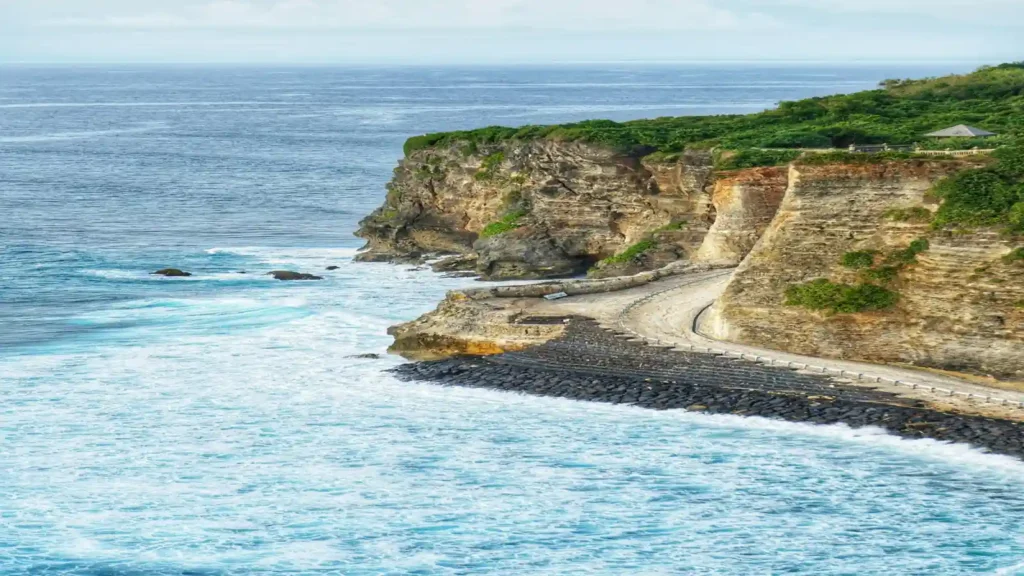
The trail down to Nyang Nyang is steep, long, and uneven. In fact, this is probably the most important part of understanding the Nyang Nyang entrance fee and rules because the path itself has specific guidelines that you must follow.
- Wear proper footwear, sandals are acceptable, but shoes with grip are strongly recommended.
- Do not run on the stairs or path, especially during and after rain.
- Stay on the marked trail at all times. Going off-path can disturb the natural vegetation and erode the hillside.
- You can take photos along the trail; however, avoid stopping in narrow sections so other visitors can pass.
- So, parents must supervise children at all times during the descent.
From my experience, the path down takes about 20 to 25 minutes for an average adult. Coming back up is harder and can take 30 to 40 minutes, depending on your fitness level. Locals near the entrance recommend taking at least 500ml of water per person and starting early in the morning before the sun gets too strong.
Safety Regulations at the Beach
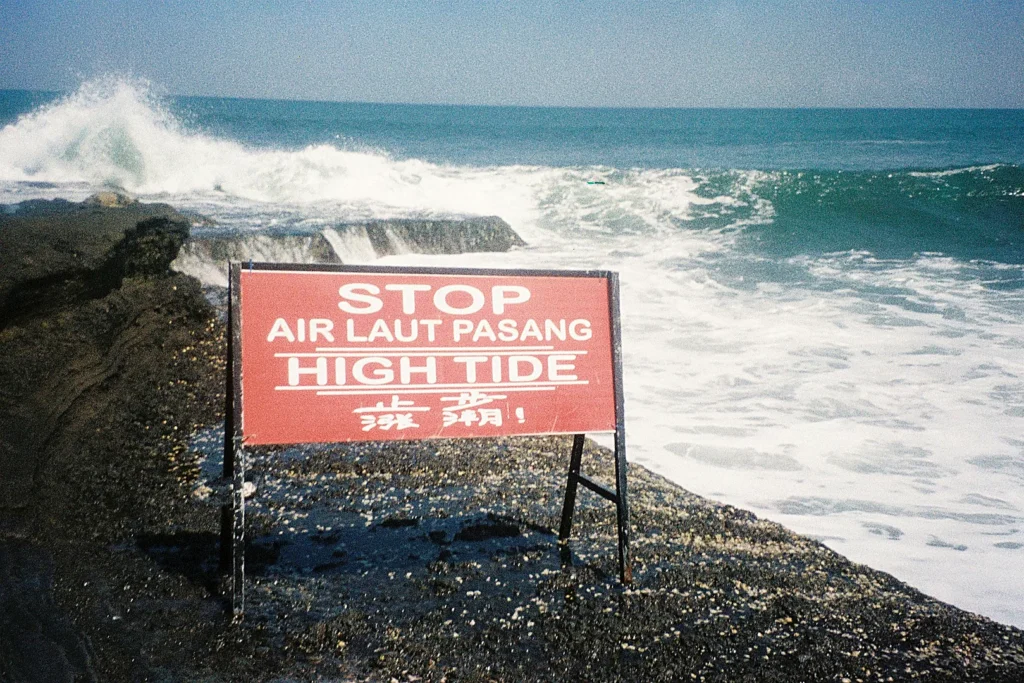
The rules at Nyang Nyang Beach include a set of safety guidelines that are enforced by the local community managers and, in some cases, local Bali authority representatives (Pecatu Village Administration).
- Swimming is at your own risk. There are no lifeguards stationed at the beach.
- Do not swim near the rocky cliff areas on the north and south ends of the beach.
- Be aware of rip currents, which are common along the Bukit Peninsula coastline.
- During the wet season (November to March), the surf can be extremely strong. Swimming during this period is not advised by local community leaders.
- Cliff jumping is strictly prohibited and carries a fine.
According to the Bali Beach Safety Awareness Campaign (run jointly by local government and tourism associations), beaches on the Bukit Peninsula have stronger rip currents than most other parts of Bali due to the deep underwater shelf formations. Therefore, even strong swimmers should be cautious.
Quick Answer: Is Swimming Safe at Nyang Nyang Beach?
Swimming at Nyang Nyang Beach is allowed but risky. There are no lifeguards. Avoid swimming near cliffs and during the wet season due to strong rip currents.
Cleanliness and Environmental Rules
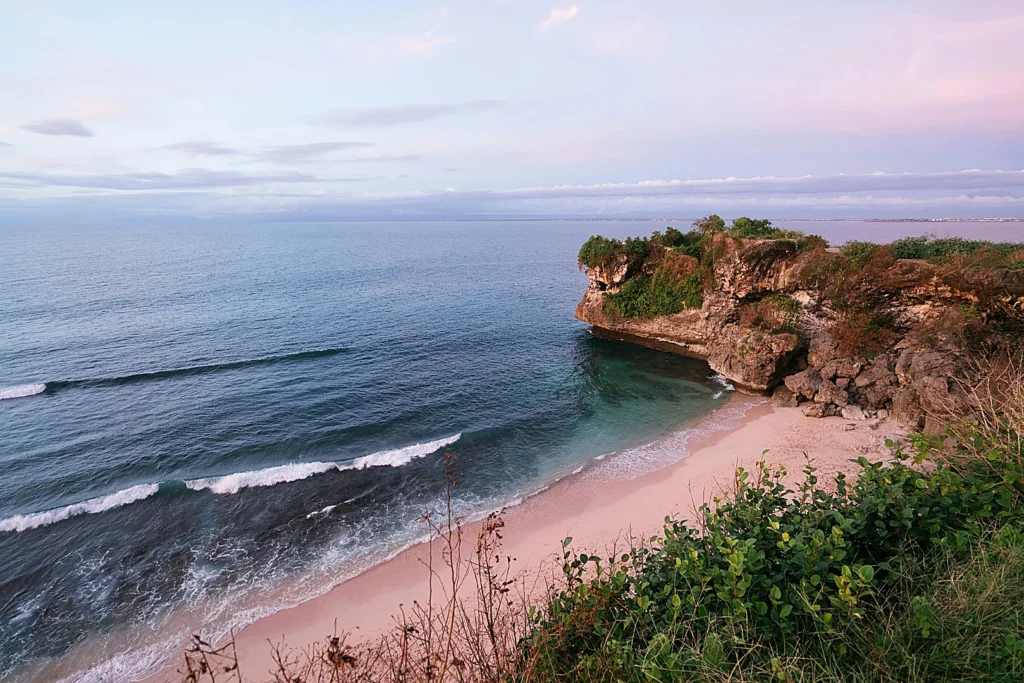
One of the most important Nyang Nyang Beach regulations is around waste and environmental behavior. Because the beach is relatively pristine, the community has strict rules about keeping it that way.
- No plastic bags or single-use plastics are allowed on the beach.
- All waste must be carried back up the trail and disposed of in the bins near the entrance.
- Campfires and open fires are completely banned.
- Do not disturb or remove any wildlife, plants, coral, or stones from the beach.
- Smoking is restricted to designated areas near the top of the trail only.
Interestingly, Nyang Nyang is one of the few beaches in Bali where the local community has self-organized regular beach cleanup days. Visitors who happen to be there on those days are encouraged to join in. This initiative is recognized by the Bali Environmental Agency as a model for community-led conservation.
Local Authority Guidelines and Community Rules
The Pecatu Village Administration, in cooperation with the local community group managing the site, has established a broader framework of visitor rules. These go beyond just keeping the beach clean.
Drone use requires a separate permit obtained from the local community management at least 24 hours in advance. Commercial photography and videography also require a permit and a small additional fee ranging from IDR 100,000 to IDR 500,000, depending on the scale of the shoot.
Additionally, loud music is not allowed on the beach. This is a rule that locals enforce genuinely, not just nominally. On the other hand, acoustic instruments and quiet speakers for personal listening are generally tolerated as long as they don’t disturb other visitors.
Alcohol consumption is allowed in moderation, but public intoxication can result in being asked to leave the beach by local staff. From my experience, the community managers are friendly but take their responsibility seriously.
Visitor Do’s and Don’ts
| Do’s | Don’ts |
| Bring sufficient water and snacks. | Bring single-use plastic bags. |
| Wear sunscreen and protective clothing. | Leave trash on the beach or trail. |
| Arrive early to avoid crowds and heat | Swim near rocky cliffs or in rough surf |
| Carry your entrance ticket until you leave | Play loud music or disturb other visitors |
| Respect the local staff and community rules | Attempt cliff jumping or dangerous stunts |
| Take all the waste back up with you | Fly drones without a permit |
Quick Answer: What Is the Best Time to Visit Nyang Nyang Beach?
The best time to visit is April to June or September to October, arriving between 7:00 AM and 9:00 AM for cooler temperatures, softer light, and fewer crowds.
Best Time to Visit Based on Entry Rules and Conditions
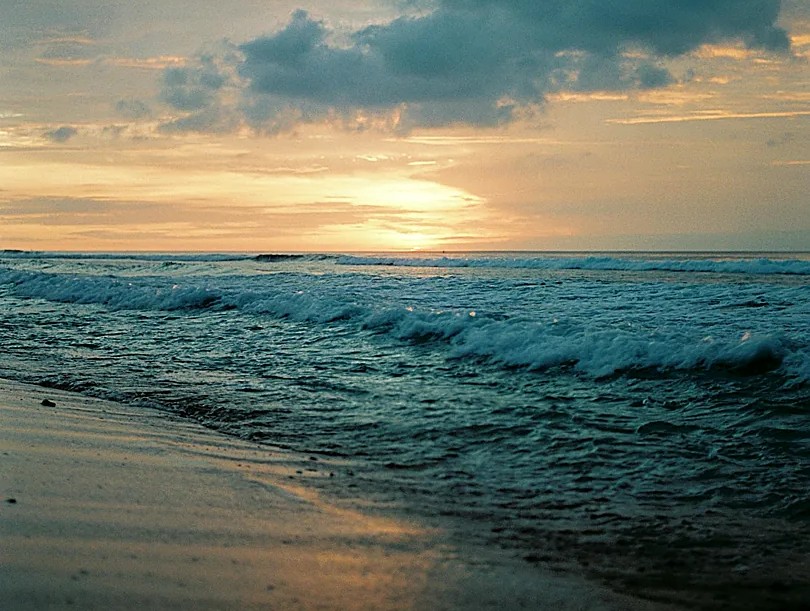
Knowing the Nyang Nyang Beach access rules and seasonal conditions together helps you plan a much better visit.
The best time to visit Nyang Nyang is between April and June or September and October. During these shoulder seasons, the weather is dry, the surf is calmer, and the beach is less crowded. Moreover, you’ll avoid the July-August peak season when the trail can become congested with visitors, and parking fills up fast.
From a practical standpoint, arriving between 7:00 AM and 9:00 AM is ideal. You’ll get the softer morning light, cooler temperatures for the trail walk, and the beach mostly to yourself for the first hour or two.
Conversely, visiting after 2:00 PM in the afternoon means you’ll be walking back up in peak heat, and you risk not making it out before closing time if you stay too long.
Quick Answer: How Much Does It Cost in Total to Visit Nyang Nyang Beach?
Total estimated cost: IDR 25,000 to IDR 30,000 per person (entrance fee + motorbike parking). Car visitors pay around IDR 30,000 to IDR 40,000 per couple.
Read the full Nyang Nyang Beach Bali Travel Guide (2026) for tips and local insights.
The Hidden Bali Beach That’s Absolutely Worth the Effort
After going through all the Nyang Nyang entrance fees and rules in detail, the honest answer is yes, absolutely worth it. The fee is tiny, the rules are reasonable, and the reward is a massive stretch of white sand beach with turquoise water that feels nothing like the crowded beaches of Seminyak or Kuta.
The trail is challenging but manageable for most healthy adults. The community management is genuine and transparent about where the money goes. Furthermore, the environmental rules actually work. When I visited, the beach was remarkably clean compared to many other Bali beaches. That’s a direct result of the community enforcement.
To summarize: pay the Nyang Nyang Beach entrance fee, follow the trail and beach rules, go early, carry your trash back out, and you’ll have one of the best beach experiences Bali has to offer. It’s the kind of place that stays with you long after the holiday is over.
Frequently Asked Questions (FAQ)
1. What is the Nyang Nyang entrance fee in 2025?
The current entrance fee is IDR 20,000 per person. Children aged 5 to 12 pay IDR 10,000, and children under 5 enter for free. This fee is collected at the top of the trail before you begin your descent.
2. How long is the walk down to Nyang Nyang Beach?
The walk takes approximately 20 to 30 minutes for most adults. Coming back up takes longer, usually 30 to 40 minutes. The trail involves steep stairs and uneven ground, so proper footwear is strongly recommended.
3. Is there parking at Nyang Nyang Beach?
Yes, there is a small parking area at the top of the trail. Motorbike parking costs IDR 5,000, and car parking costs IDR 10,000. The parking area fills up quickly on weekends and during peak season.
4. Can you swim at Nyang Nyang Beach?
Swimming is allowed, but there are no lifeguards on duty. Additionally, the beach has strong rip currents, especially during the wet season from November to March. Therefore, visitors should avoid swimming near the rocky cliff areas on either end of the beach.
5. Are drones allowed at Nyang Nyang Beach?
Drone use requires a permit from the local community management, which must be arranged at least 24 hours in advance. Flying a drone without a permit is not allowed and can result in being asked to leave.
6. What should I bring to Nyang Nyang Beach?
Bring plenty of water (at least 500ml per person), sunscreen, a hat, snacks, and a bag to carry your trash back out. Bring cash for the entrance fee and parking, as there are no card payment facilities at the entrance.
7. Is Nyang Nyang Beach suitable for children?
The beach itself is suitable for children, but the trail is steep and long, which can be challenging for young kids. If you’re visiting with small children, start early, take your time on the trail, and supervise them closely near the water.
8. What are the opening hours for Nyang Nyang Beach?
The beach is open from 7:00 AM to 6:00 PM on weekdays and from 6:30 AM on weekends. The last entry time is 5:00 PM daily. Visitors must be back at the top by closing time, as the trail is unsafe after dark.