

Boracay Island Entrance Fee and Rules mean every visitor must pay two fees at Caticlan Jetty Port before going to the island. The first is an environmental fee of 300 pesos, about $5, for foreign tourists. The second is a terminal fee, which is 150 pesos, about $2.50, per person. Note that fee amounts can change, so it’s best to check the current price at the port or on the Boracay iPass website before you go.
You pay these fees both when you arrive and when you leave, so you need money for both trips, not just one. Many travelers also register online through the Boracay iPass system before their trip, which saves time and avoids long lines at the port. Bringing small bills in Philippine pesos makes payment faster and easier at the counter. Learning the Boracay Island Entrance Fee and Rules before your trip helps you avoid confusion, extra costs, and scams at the port.
How Much Is the Boracay Island Entrance Fee?
The Boracay Island Entrance Fee and Rules structure splits into two separate government charges rather than one flat entrance fee. An environmental fee of 300 pesos, around $4.90, covers the entire length of a stay and is collected only once, at first entry. A terminal fee of 150 pesos, about $2.45, applies both when boarding for the island and when leaving it, adding another $2.45 on the way out. Round-trip mandatory charges therefore total roughly 600 pesos, or close to $9.80 per adult traveler. Boat fare sits separately from these government fees and typically runs an extra 25 to 50 pesos depending on the ferry operator.
Prices stay fixed by provincial ordinance, though the Province of Aklan reviews rates periodically, so a small increase before a future trip should surprise no one. Budget travelers often overlook the exit terminal fee, then get caught short at the Caticlan pier on departure day.
Boracay Island Entrance Fee and Rules at a Glance
In 2026, the total mandatory cost to enter Boracay runs about $9.80 per adult, covering a 300-peso environmental fee and two 150-peso terminal fees. Every tourist must also present a confirmed hotel booking and valid identification at Caticlan Jetty Port.
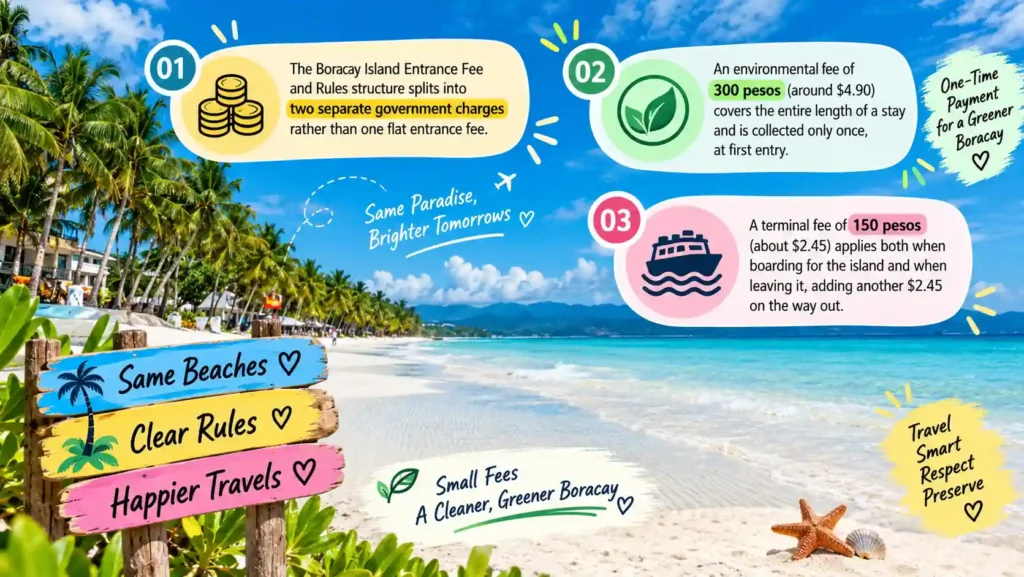
The table below breaks down every mandatory charge a tourist pays at the jetty port in 2026.
| Fee Type | Amount (PHP) | Amount (USD) | When Charged |
| Environmental Fee | ₱300 | ~$4.90 | Once, at first entry |
| Terminal Fee (Entry) | ₱150 | ~$2.45 | On arrival at the island |
| Terminal Fee (Exit) | ₱150 | ~$2.45 | On departure from the island |
| Boat Fare (approx.) | ₱25–₱50 | ~$0.40–$0.80 | Each boat crossing |
Boracay Environmental Fee and Other Charges
Environmental fee revenue funds waste management, coastal cleanup, and the ongoing rehabilitation work that reopened the island in October 2018. Local government agencies, including the Municipal Government of Malay, allocate part of this fund toward public toilets, drainage systems, and beach patrols. Beyond the environmental and terminal fees, some private transfers or resort packages bundle in a service charge that has nothing to do with government collection.
- Wristbands or printed receipts issued at the jetty prove payment, so keeping that slip until departure avoids repeat charges.
- Digital payment through the official Boracay iPass portal lets travelers settle both fees before ever reaching the pier.
- Cash remains accepted at manual windows for anyone who skips online registration.
- Refunds are not issued for unused days, since the environmental fee covers the whole visit regardless of length.
Who Needs to Pay the Boracay Entrance Fee?
Every tourist entering through Caticlan Jetty Port, Filipino or foreign, must pay the environmental and terminal fees, including OFWs and returning residents without Aklan proof of residency. Only Aklanons with a valid residency ID are exempt. Business travelers and day-trippers pay the same fees as regular tourists, with day-trippers covering both entry and exit terminal charges plus the environmental fee.
Cruise passengers using tender boats often get reduced or bundled rates through their operator, while those arriving by private yacht or helicopter should confirm fee rules directly with port authorities.
Boracay Tourist Entry Requirements
A confirmed booking at a Department of Tourism-accredited hotel, resort, or homestay now forms the legal basis for entry clearance at the port. Officials at Caticlan or Kalibo may ask to see that reservation confirmation before allowing boarding toward the island. Valid government-issued identification, such as a passport or a Philippine national ID, must accompany every traveler through the checkpoint.
Foreign nationals need whatever visa category already applies to entry into the Philippines, since Boracay carries no separate visa process of its own. Health declarations or travel forms are not currently required, though this could change if health authorities issue new advisories. Filling out the short arrival form at the jetty, which records passport details, takes only a couple of minutes per person.
Missing paperwork at the counter can delay boarding, so printing hotel confirmations in advance saves time during peak season.
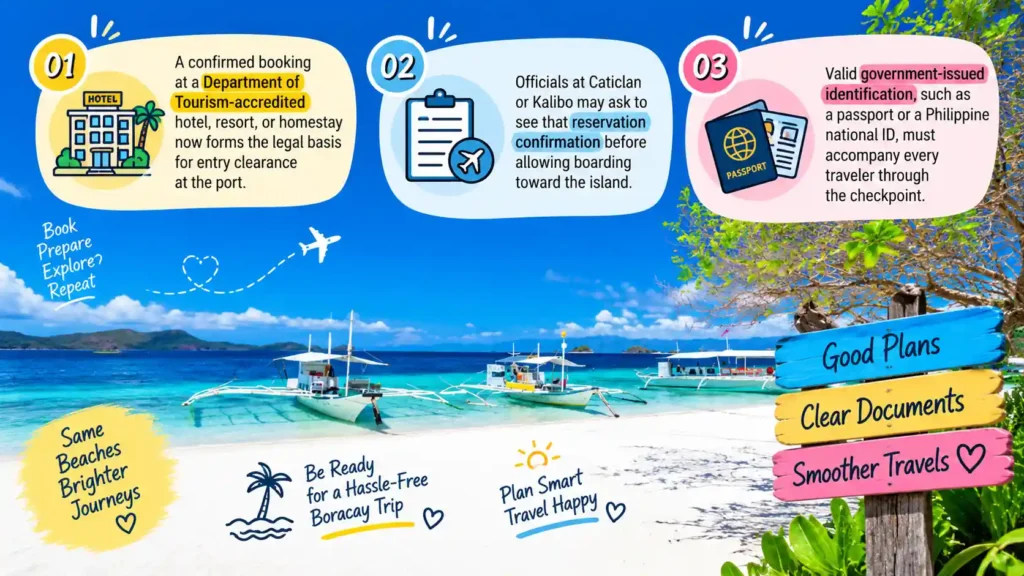
The checklist below covers what every traveler should carry before reaching the jetty port.
| Requirement | Details |
| Accommodation proof | Confirmed booking at a Department of Tourism-accredited hotel or resort |
| Valid ID | Passport or Philippine national ID |
| Fee payment | Environmental fee (₱300) plus terminal fee (₱150 each way) |
| Boracay iPass (optional) | Online prepayment through boracayipass.ph |
Boracay Island Rules for Tourists
Local ordinances now govern most everyday behavior on the island, enforced actively by the Boracay Inter-Agency Task Force and municipal marshals. Single-use plastics, including straws, stirrers, and thin sando bags, are banned across the island, with fines starting around $43, or 2,500 pesos, for a first offense. Loud, unpermitted parties along the shoreline are no longer allowed, a shift from the pre-2018 party-island reputation Boracay once carried.
- Wristbands or printed receipts issued at the jetty prove payment, so keeping that slip until departure avoids repeat charges.
- Digital payment through the official Boracay iPass portal lets travelers settle both fees before ever reaching the pier.
- Cash remains accepted at manual windows for anyone who skips online registration.
- Refunds are not issued for unused days, since the environmental fee covers the whole visit regardless of length.
Boracay Beach Rules and Restrictions
Smoking anywhere on the sand is prohibited by ordinance, with designated smoking areas set up slightly inland, such as near D’Mall. Drinking alcohol directly on the beach is also banned, though beachfront bars, restaurants, and hotel grounds remain fair game for a cold San Miguel. Bonfires, beachside grilling, and roasting street food along the shore got phased out during the island’s rehabilitation years.
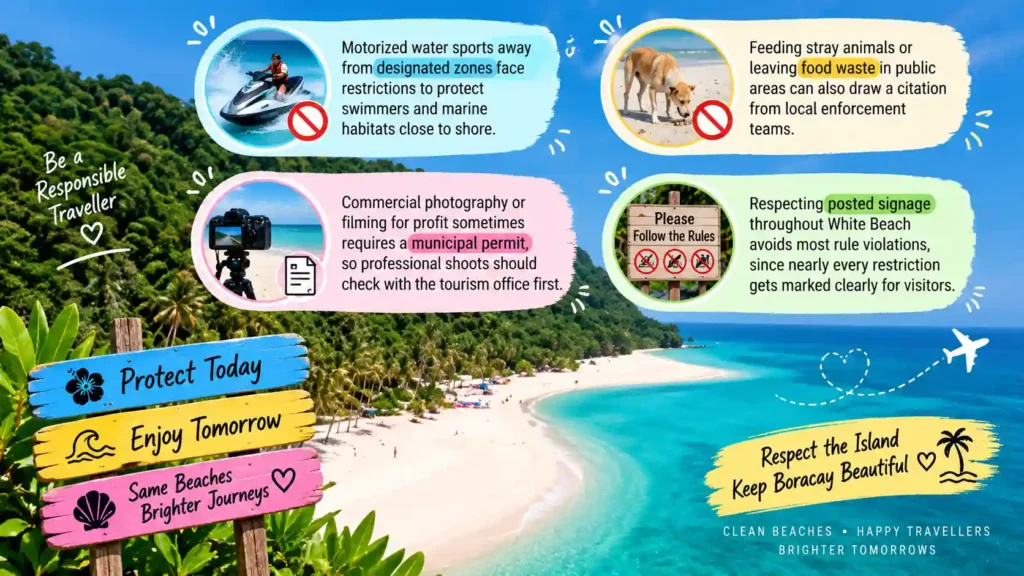
- Motorized water sports away from designated zones face restrictions to protect swimmers and marine habitats close to shore.
- Feeding stray animals or leaving food waste in public areas can also draw a citation from local enforcement teams.
- Commercial photography or filming for profit sometimes requires a municipal permit, so professional shoots should check with the tourism office first.
- Respecting posted signage throughout White Beach avoids most rule violations, since nearly every restriction gets marked clearly for visitors.
Is Alcohol Allowed on Boracay Beaches?
Drinking alcohol directly on the open sand is banned island-wide under current ordinances. Alcohol is allowed only inside licensed bars, restaurants, and hotel grounds.
What You Cannot Bring to Boracay
Certain items face outright restriction the moment a bag gets checked at the jetty terminal. Common examples include:
- Single-use plastic bags, straws, and stirrers
- Styrofoam containers and packaging
- Fireworks or other flammable materials
- Illegal drugs or unregistered firearms
- Large sound systems intended for beach parties
Personal pets face no blanket ban, though enforcement varies by resort and by each property’s specific policy. Drones require prior coordination with local aviation and tourism authorities before flying near the shoreline or over crowds. Coral, sand, and shells collected elsewhere should also stay out of luggage, since inspectors watch for smuggled marine specimens. Checking a hotel’s packing guidance before departure helps avoid confiscation at the port.
Boracay Rules for Swimming and Beach Activities
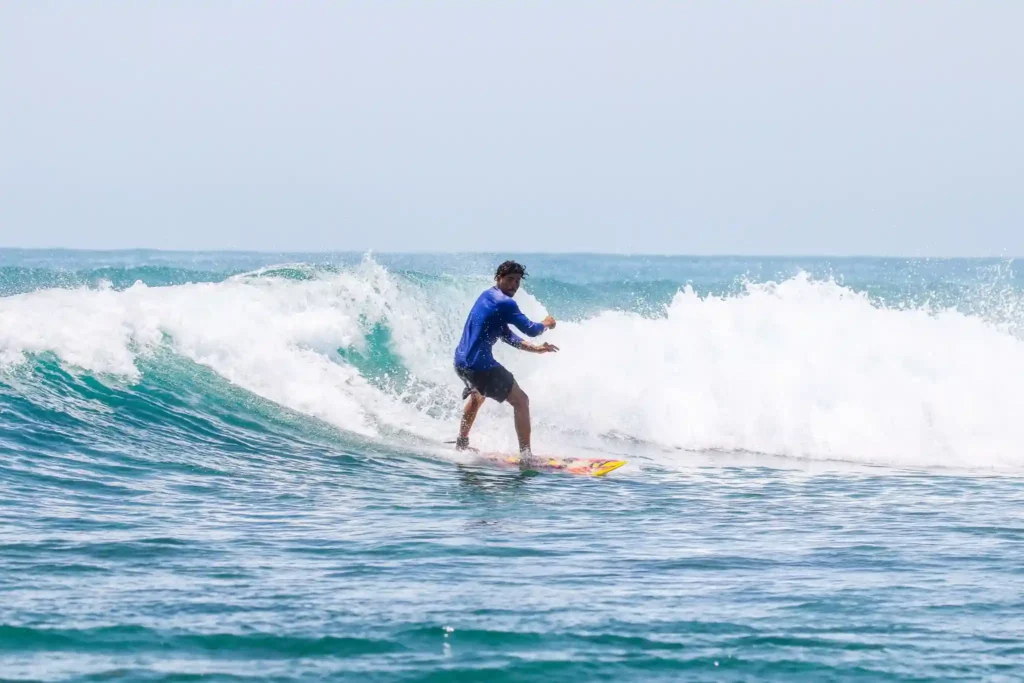
Flag systems mark safe swimming zones during choppy weather, particularly through the amihan wind season from November through February. Lifeguards patrol the main stretches of White Beach during daylight hours, though remote coves often have no supervision at all. Jet skis, parasailing, and banana boats operate only within roped-off activity lanes, keeping motorized traffic away from swimmers.
Snorkeling near coral reefs requires care, since touching or standing on live coral damages ecosystems that took decades to grow. Night swimming is generally discouraged and, in some zones, actively restricted after dark for safety reasons. Renting gear from licensed operators rather than informal beach vendors ensures proper safety certification and equipment maintenance. Strong currents near Bulabog Beach make it a kitesurfing hotspot but a riskier spot for casual swimmers compared with the calmer White Beach.
Are There Entrance Fees for Puka Beach and Other Beaches?
Puka Beach, on Boracay’s northern tip, has no separate entrance fee beyond the standard environmental fee paid at the jetty. Getting there by tricycle or habal-habal costs extra, but that’s for transport, not beach access. Some resorts near Puka Beach charge for chairs or umbrellas, separate from any government fee.
Bulabog, Diniwid, and Ilig-Iligan beaches follow the same rule: no extra entrance charge, since the one-time environmental fee covers the whole island. Private resorts may limit their beach to guests only, which is different from a public entrance fee. Always check with resorts directly to avoid surprise charges once you arrive.
How to Pay the Boracay Entrance and Environmental Fees
Caticlan Jetty Port has manual payment windows, but most travelers now use the Boracay iPass portal (boracayipass.ph) to pay fees online in advance and get a QR code for faster boarding. Cash in Philippine pesos is the standard payment method, since card acceptance is limited.
Some airport or hotel transfer packages already include these fees, so check your voucher first to avoid paying twice. Keep your payment proof handy during your stay, and always pay only through official windows or the verified iPass portal; never trust anyone near the port offering a “cheaper” shortcut.
The comparison below sums up the most commonly broken rules and their typical first-offense penalties.
| Rule | Typical Penalty (First Offense) |
| Smoking on the beach | Fine from ₱2,500 (~$43) |
| Using single-use plastics | Fine from ₱2,500 (~$43) |
| Removing sand, shells, or coral | Fine and possible confiscation |
| Drinking alcohol on the open beach | Warning or fine from marshals |
| Littering in public areas | Fine from ₱2,500 (~$43) |
Do Children Pay the Boracay Entrance Fee?
Children aged five and below travel free of both the environmental and terminal fees, provided proof of age is shown at the window. Kids aged six and above pay the same rate as adults, since no discounted youth tier currently exists at the jetty. Some older sources mention reduced fees for students, though current 2026 provincial guidance applies the standard adult rate to school-age children and teens.
Bringing a birth certificate or passport for young children avoids disputes over age verification at the counter. Infants and toddlers still count toward hotel occupancy limits, even while traveling free of entrance charges. Family travel packages sometimes bundle children’s fees into a flat group rate, which can simplify payment during busy travel periods. Confirming the current age cutoff directly with Boracay iPass before departure protects against outdated blog information.
Frequently Asked Questions About Boracay Island Entrance Fee and Rules
How much is the Boracay Island entrance fee in 2026?
The mandatory round-trip cost runs about $9.80 per adult, made up of a 300-peso environmental fee and two 150-peso terminal fees.
Can tourists pay the Boracay entrance fee online?
Yes, the Boracay iPass portal at boracayipass.ph allows advance payment before arriving at Caticlan Jetty Port.
Is smoking allowed on Boracay beaches?
No, smoking on the sand is banned, and violators face fines starting around $43.
Do children need to pay the Boracay entrance fee?
Children aged five and below are exempt, while anyone six or older pays the standard adult rate.
Is there a separate entrance fee for Puka Beach?
No, Puka Beach and the island’s other beaches share the same island-wide environmental fee, with no extra gate charge.
What happens without a hotel booking confirmation?
Entry may be denied at the port, since a confirmed reservation at a Department of Tourism-accredited property is required.
One Response