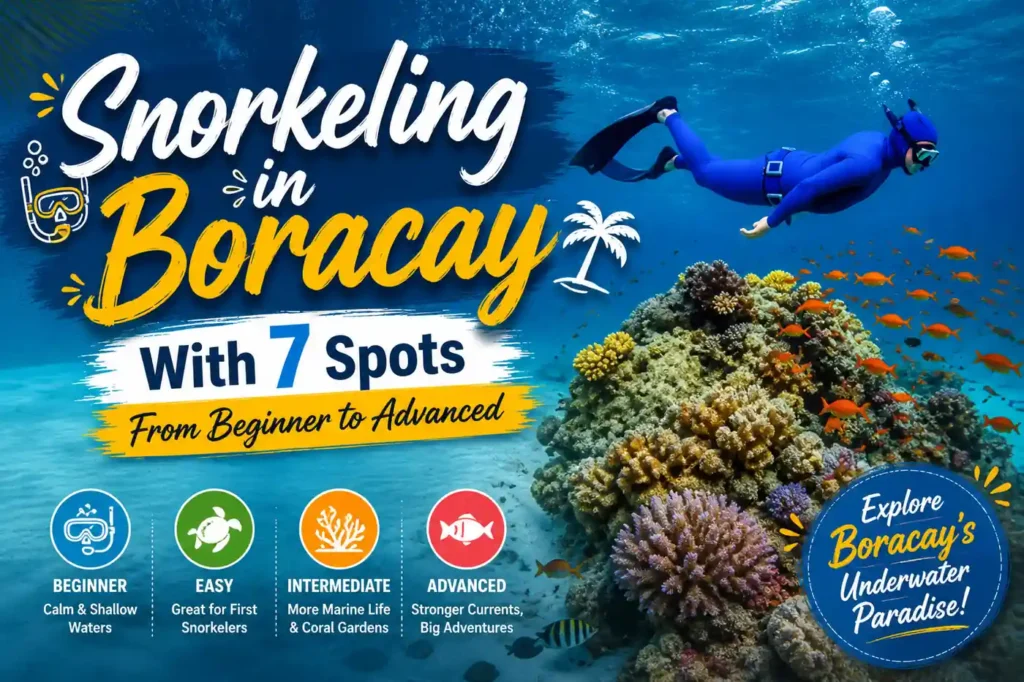
Snorkeling in Boracay works best between November and May, when the Amihan wind keeps the sea calm and clear. During these months, visibility can reach 15 to 20 meters, so you can see coral, fish, and even sea turtles without swimming far from shore. Snorkeling in Boracay is much harder from June to October, because the Habagat season brings stronger winds, bigger waves, and murky water full of sand and runoff.
Many boat trips to popular spots like Crocodile Island or Puka Beach also get cancelled during this rainy period due to unsafe currents. If you want clear water, calm conditions, and the best chance to see marine life up close, plan your trip during the dry season months.
Snorkeling in Boracay Philippines: Is It Worth It
Snorkeling in Boracay, Philippines earns its reputation honestly, backed by healthy coral patches, warm water, and marine life that stays close to shore. Beginners get an easy entry point because several spots sit just a short walk from White Beach, no boat required. Confident swimmers, meanwhile, get real payoff at Crocodile Island and the outer reef edges, where fish density and coral variety jump noticeably.
Comparisons to Palawan or Cebu’s Moalboal come up often, and Boracay genuinely holds its own for a half-day or full-day outing rather than a dedicated dive trip. Gear rental costs less than a coffee at a beachfront cafe, which keeps the barrier to entry low. Crowded boat tours during peak months can dent the experience somewhat, so shoulder-season timing helps. Overall, snorkeling here rewards planning far more than luck.
Is the Water at Boracay Clear Enough for Snorkeling?
Boracay’s water reaches 5 to 15 meters of visibility on calm days, especially around Crocodile Island and Angol Point during the dry season. Visibility drops sharply during the Habagat monsoon, from June through October, when runoff and wind chop the surface.
Best Beach for Snorkeling in Boracay
Angol Point stands out as the best beach for snorkeling in Boracay for most visitors, sitting a six-minute walk from Station 3 with steady, beginner-friendly currents. Crocodile Island ranks as the most photographed spot, though its current runs stronger and suits confident swimmers better than first-timers. Puka Beach, on the island’s northern tip, offers a quieter alternative with fewer boats and a slower pace, ideal for a relaxed afternoon.
Balinghai Cove rewards the effort of reaching it with anemones, sea urchins, and sharp coral formations that beginners should approach carefully. Coral Garden lives up to its name near Station 1, showing dense coral cover close to the surface. Tambisaan and Ilig-Iligan round out the list for travelers chasing quieter, less commercial reef access.
- Angol Point, easiest access, steady current, near Station 3
- Crocodile Island, best variety, stronger current, boat required
- Puka Beach, calm, uncrowded, good for slow exploring
- Balinghai Cove, rich marine life, sharp coral underfoot
- Coral Garden, dense coral close to Station 1
Explore Crystal-Clear Waters and Vibrant Marine Life. Read more in 9 Reasons Boracay Island Is Famous but Not for Everyone.
Best Snorkeling in Boracay: What Can You See?
Marine variety around Boracay surprises most first-time snorkelers, given how close the reefs sit to a busy tourist beach. Clownfish, parrotfish, and angelfish move through the shallow reef zones in numbers, making them the easiest species to spot within minutes. Banded sea snakes and moray eels show up in the rockier corners near Crocodile Island, generally harmless if left undisturbed.
Sea cucumbers and starfish rest along the sandy patches at Puka Beach and Angol Point, easy finds for less confident swimmers. Cornetfish and sweetlips add to the mix at deeper sections, rewarding a slower, more patient approach. Coral coverage ranges from soft, swaying formations to harder branching structures depending on the site. Together, this range of species explains why so many operators build a full day around a handful of stops.
Coral Reefs and Tropical Fish
Coral gardens near Station 1 and Crocodile Island stay close enough to the surface that even a shallow float reveals detail. Parrotfish graze visibly on the coral itself, adding motion and color that photographs well even with a basic underwater camera. Schools of sergeant majors and damselfish tend to cluster near the reef edges, unbothered by nearby swimmers who keep a respectful distance.
Sea Turtles and Other Marine Life
Sea turtle sightings happen at Boracay, though less predictably than at dedicated turtle sites elsewhere in the Philippines. Guides at Crocodile Island and the outer reef sections report occasional encounters, usually during calmer, clearer months. Chance favors patient snorkelers who stay still rather than those chasing movement across the reef.
Best Time to Visit Boracay for Snorkeling
The best time to visit Boracay for snorkeling is during Amihan season, from November through May. Northeast winds keep White Beach and other west-facing shores calm. December to February brings the coolest, most comfortable weather, while March to May offers the clearest water thanks to low rainfall. Habagat season, from June to October, brings southwest winds, murky water, and frequent boat cancellations due to typhoon risk. For calm seas with fewer crowds, November and May are the best shoulder months to visit.
Here’s a season-by-season snapshot of what to expect underwater before booking a trip.
| Season | Months | Snorkeling Conditions | Notes |
| Amihan (Dry) | November – May | Excellent | Calm seas, strong visibility |
| Peak Clarity | March – May | Best of the year | Lowest rainfall, warmest water |
| Habagat (Wet) | June – October | Caution advised | Choppier seas, lower visibility |
| Shoulder Months | November & May | Good | Fewer crowds, mostly stable |
Best Months for Clear Water
March, April, and May consistently deliver the clearest water around Boracay, based on seasonal patterns tracked by the PAGASA. Rainfall drops to its yearly low during this stretch, which keeps runoff and sediment out of the shallow reef zones. December and January come close behind, trading slightly cooler air for water that’s nearly as clear.
Best Time of Day to Snorkel
Early morning, roughly 7:00 to 10:00 AM, gives snorkelers the calmest water and the fewest boats crowding popular stops like Crocodile Island. Wind typically builds through the afternoon, adding chop that reduces visibility and makes fish spotting harder. Midday sun also intensifies glare on the surface, so morning sessions consistently outperform afternoon ones for photography and clarity alike.
Boracay Snorkeling Tours
Boracay snorkeling tours typically bundle several stops into a single half-day or full-day boat trip, covering Crystal Cove, Crocodile Island, and Puka Beach in one run. Group joiner tours depart from stations along White Beach, usually between 9:00 and 10:00 AM, with lunch included on most itineraries. Private charters exist for travelers wanting a set schedule or a smaller group, though they cost noticeably more per person.
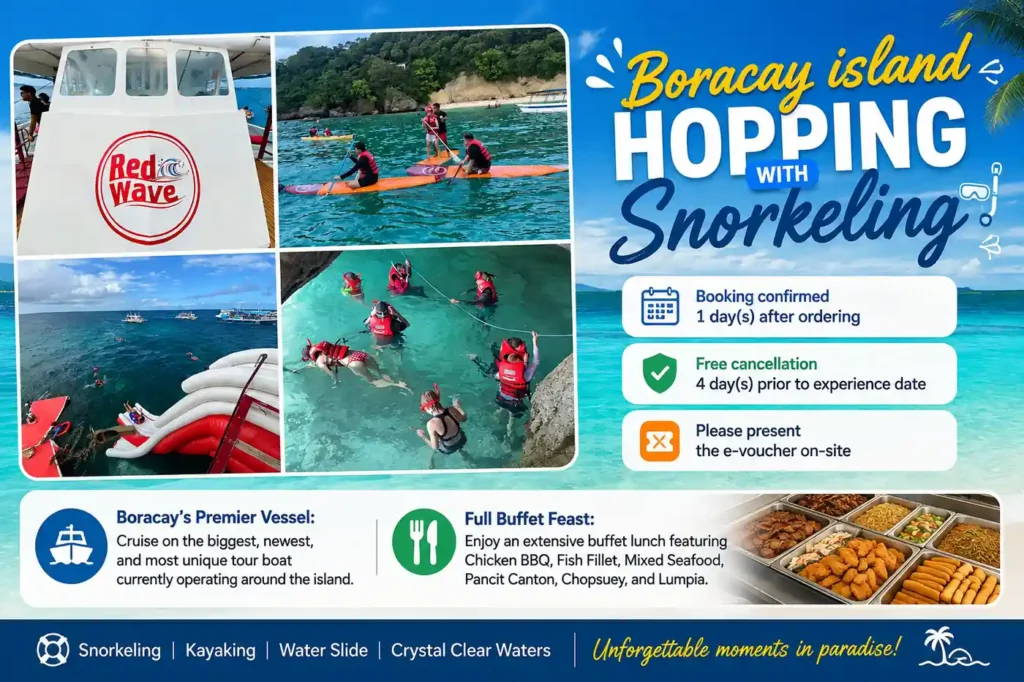
This feels like one of those days where you can just show up and have fun. There’s snorkeling, a crystal kayak, paddleboarding, a water slide, and plenty of food waiting for you.
Snorkeling gear comes included on nearly every organized tour, removing the need to source or carry equipment separately. Weather cancellations happen occasionally, mostly during Habagat season, and reputable operators offer rebooking or a refund when conditions turn unsafe. Life vests stay standard even for confident swimmers, largely because currents around Crocodile Island can surprise people. Booking a day or two ahead during peak months avoids the frustration of a fully booked boat.
Island-Hopping and Snorkeling Tours
Island-hopping tours combine Crystal Cove’s sea caves, Crocodile Island’s reef, and a stretch of Puka Beach into one five-hour outing. Crystal Cove alone charges a separate entrance fee of roughly $3, occasionally bundled into the tour price and occasionally billed on-site. Buffet lunch, a life vest, and a local guide round out what most operators include for the standard rate.
Do You Need a Guide to Snorkel in Boracay?
Independent snorkeling is allowed at beach-accessible spots like Angol Point and Puka Beach without a guide. Boat-only locations such as Crystal Cove and Crocodile Island require joining a licensed tour operator, since access depends on boat transport.
How Much Is Snorkeling in Boracay?
Snorkeling costs in Boracay depend on whether you rent gear or book a tour. Basic mask, snorkel, and fin rental costs about $4 to $5 per day. Group island-hopping tours with snorkeling run $19 to $43 per person, while private boat charters cost $60 to $115 for the whole boat. Crystal Cove adds a $3 entrance fee and sometimes a separate $1.60 snorkeling fee. Budget an extra $5 to $10 for tips, drinks, and other small expenses.
This price breakdown makes it easier to compare independent snorkeling against a full guided tour before booking.
| Option | Price (USD) | What’s Included |
| Gear rental only | $4 – $5 | Mask, snorkel, fins (per day) |
| Group island-hopping tour | $19 – $43 | Boat, snorkel stops, lunch, life vest |
| Private boat charter | $60 – $115 | Whole boat, full-day, private group |
| Crystal Cove entrance | ~$3 | Separate site fee, sometimes bundled |
| On-site snorkeling fee | ~$1.60 | Covers all snorkel stops that day |
How Much Does Snorkeling in Boracay Cost?
Prices for snorkeling in Boracay are lowest for independent travelers who skip the tour and rent gear near Angol Point or Puka Beach directly. Tour-based pricing climbs with group size flexibility, meal quality, and how many stops the itinerary covers. Confirming what’s included before paying avoids the common surprise of an unbundled entrance or snorkeling fee showing up later.
Snorkeling for Beginners in Boracay
Snorkeling for beginners in Boracay works best at Angol Point or Puka Beach, where currents stay gentle, and the reef sits close to shore. First-timers should practice breathing through the snorkel in shallow, waist-deep water before heading toward deeper coral sections. A life vest removes most of the anxiety around staying afloat, letting beginners focus on breathing and observation instead of treading water.
Guided tours help considerably here, since local guides know which reef sections stay calm on a given day. Crocodile Island, despite its popularity, suits stronger swimmers better due to its current, so beginners might want to save it for a second visit. Short sessions of 20 to 30 minutes prevent the fatigue that often turns a first snorkeling trip into an exhausting one. Building confidence gradually, rather than jumping straight to the most advertised spot, makes the experience far more enjoyable.
What to Bring for Snorkeling in Boracay
- Reef-safe sunscreen (avoid oxybenzone and octinoxate)
- Rash guard or light long-sleeve shirt for sun protection
- Reef shoes or aqua socks for rocky entry points
- Waterproof bag for phones, cash, and valuables
- A dry change of clothes and towel for the boat ride back
Snorkeling Safety Tips
- Snorkel with a buddy or guide, never entirely alone
- Check tide charts and skip sessions during strong current warnings
- Stay aware of boat traffic near popular stops like Crocodile Island
- Avoid touching coral or standing on the reef bed
- Exit the water immediately if jellyfish or strong currents appear
Is Boracay Snorkeling Safe for Non-Swimmers?
Non-swimmers can still snorkel at Boracay using a life vest and staying in shallow, guided sections near shore. Deeper spots like Crocodile Island carry stronger currents and are not recommended without confident swimming ability.
Boracay Snorkeling Rules and Marine Conservation
Boracay snorkeling rules and marine conservation efforts tightened considerably after the island’s 2018 rehabilitation closure, and enforcement remains active today. The Department of Tourism (DOT), working with the Boracay Inter-Agency Task Force, caps the island’s carrying capacity at 19,215 people at any given time to protect its ecosystem. Single-use plastics, including straws and stirrers, face an outright ban, with fines starting at 2,500 pesos for a first offense. Touching, standing on, or collecting coral counts as a violation at most managed reef sites, not just a suggestion.
The Provincial Government of Aklan collects entry fees through its official Boracay iPass portal, funding the cleanup and monitoring efforts that keep the reef healthy. Feeding fish disrupts natural feeding patterns and is discouraged by nearly every licensed tour operator. Respecting these rules keeps the reef in the condition that makes marine conservation here worth writing about in the first place.
The table below sums up the core dos and don’ts every snorkeler should know before entering the water.
| Do | Don’t |
| Use reef-safe sunscreen | Use sunscreen with oxybenzone/octinoxate |
| Watch marine life from a distance. | Touch or stand on coral. |
| Carry out all your trash. | Feed fish or collect shells and coral. |
| Snorkel with a buddy or guide. | Snorkel alone in unfamiliar currents. |
| Check tides and conditions first. | Ignore guide instructions or warning flags. |
Last Tips Before Your Boracay Snorkeling Trip
Snorkeling in Boracay rewards travelers who plan around the Amihan season, from November through May, when calm seas and clear water bring the reef’s fish, coral, and turtles within easy reach. Beginners can wade in straight from Angol Point or Puka Beach, while confident swimmers get more variety at Crocodile Island and the outer reefs.
Whether you rent basic gear for a few dollars or book a full island-hopping tour, following local safety habits and marine conservation rules keeps the experience good for you and the reef alike. Time it right, respect the water, and Boracay delivers one of the easiest, most rewarding snorkeling trips in the Philippines.
FAQs About Snorkeling in Boracay
Where is the best snorkeling in Boracay?
Crocodile Island offers the widest variety of coral and fish, making it the best all-around snorkeling spot in Boracay. Angol Point works better for beginners thanks to its steadier, gentler current.
What is the best beach for snorkeling in Boracay?
Angol Point, near Station 3, stands out as the best beach for snorkeling in Boracay due to its easy shore access and calm water. Puka Beach offers a quieter, less crowded alternative for a slower pace.
How much is snorkeling in Boracay?
Gear rental alone costs around $4 to $5 per person for the day. Guided tours with snorkeling included generally range from $19 to $43 per person.
How much does snorkeling in Boracay cost?
Total cost depends heavily on the route chosen, ranging from under $5 for independent gear rental to over $100 for a private boat charter. Entrance fees at sites like Crystal Cove add a few dollars on top of whichever option gets booked.
Can you snorkel directly from the beach in Boracay?
Spots like Angol Point and Puka Beach allow direct beach entry without needing a boat. Crystal Cove and Crocodile Island, by contrast, require boat transport to reach.
What is the best time to visit Boracay for snorkeling?
The best time to visit Boracay for snorkeling falls between November and May, during the dry Amihan season when seas stay calm and visibility peaks. March through May specifically offers the clearest water of the year.
2 Responses