
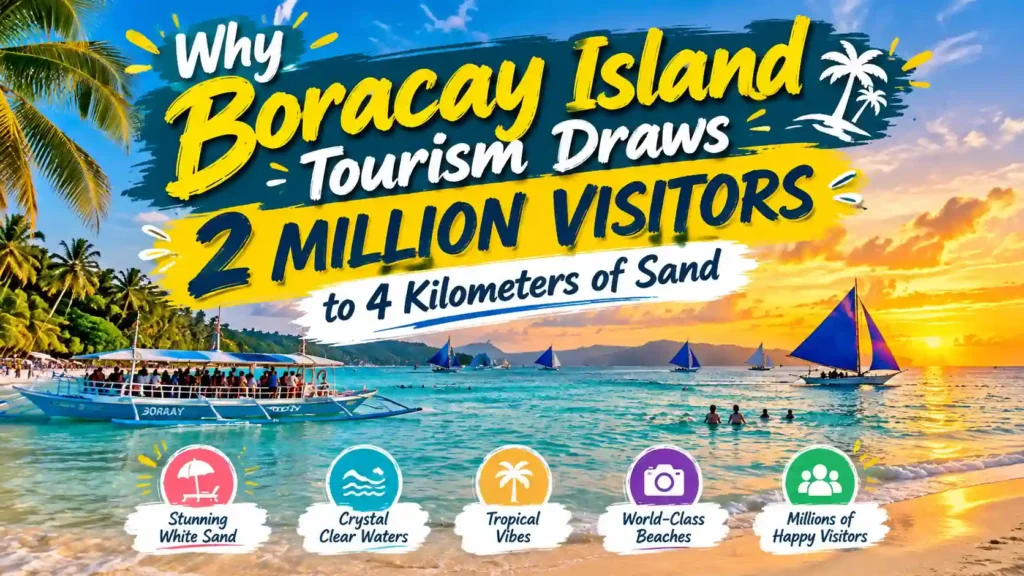
Boracay Island tourism centers on a small, four-kilometer stretch of white sand that draws more than two million visitors every year, making it one of the most visited beach destinations in the Philippines. The island offers powder-soft sand, calm turquoise water, and a busy stretch called White Beach, where most hotels, restaurants, and bars are located.
Visitors also enjoy island-hopping trips, paraw sailing at sunset, and water sports like parasailing and snorkeling near the reefs. Since the 2018 rehabilitation, Boracay Island tourism has grown under stricter environmental rules, including a daily visitor cap, better sewage systems, and cleaner beaches, which have helped the island keep its reputation as one of the best tropical getaways in Southeast Asia.
Why Is Boracay Island Famous for Tourism?
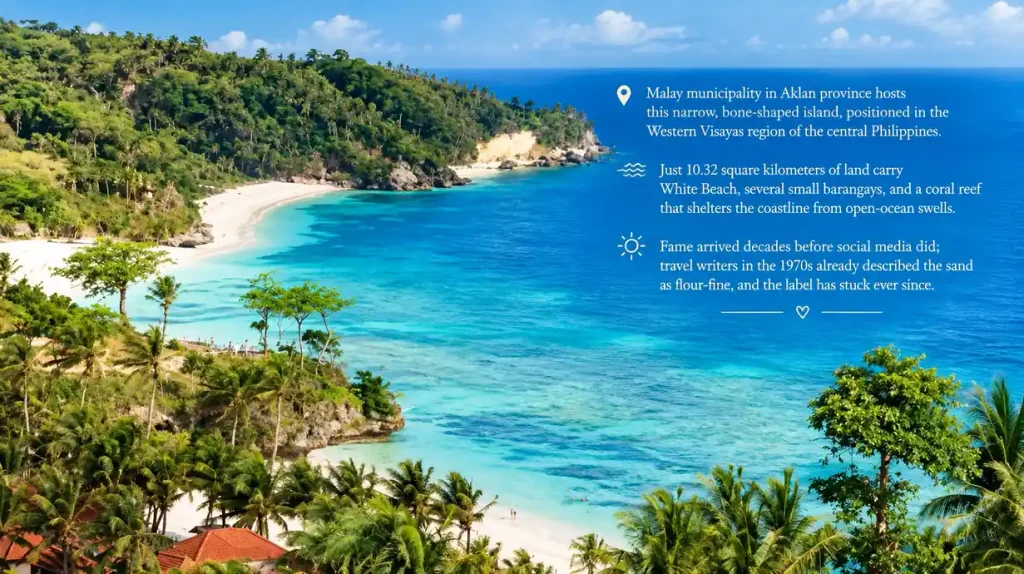
Malay municipality in Aklan province hosts this narrow, bone-shaped island, positioned in the Western Visayas region of the central Philippines. Just 10.32 square kilometers of land carry White Beach, several small barangays, and a coral reef that shelters the coastline from open-ocean swells. Fame arrived decades before social media did; travel writers in the 1970s already described the sand as flour-fine, and the label has stuck ever since.
A near-total collapse followed that early success, though. Unchecked construction and failing sewage systems had pushed water quality beyond safe limits by 2018, so the national government closed the entire island for six months to fix the problem. The Department of Environment and Natural Resources (DENR) rebuilt drainage systems, tore down illegal structures standing within 30 meters of the shoreline, and reset the standard for how a beach destination gets managed. Boracay reopened cleaner than it had been in a generation, and arrival numbers climbed right back within a couple of years.
Ready for a Beach Getaway? Discover Boracay Island. Read more in 9 Reasons Boracay Island Is Famous but Not for Everyone.
What Makes Boracay Island Tourism So Popular?
Powder-fine white sand, calm turquoise water, and a four-kilometer beach with almost no waves make Boracay ideal for swimmers of nearly every skill level. A strict 2018 rehabilitation removed illegal structures and rebuilt the island’s sewage system, restoring water quality that had failed for years. That mix of natural beauty and enforced environmental standards keeps Boracay near the top of global beach rankings.
Top Tourist Attractions in Boracay
Six spots consistently top every visitor’s list, and each delivers a different side of the island. White Beach anchors most itineraries, yet Boracay’s smaller attractions round out a full week just as easily. Reef-fringed waters keep most of these spots swimmable even for cautious visitors, and none of them require a guide to reach on your own.
The table below sums up where to go first and why each stop earns the trip.
| Attraction | Type | Why Visit |
| White Beach | Beach | 4km of powder sand, calm water, famous sunsets |
| Puka Shell Beach | Beach | Coral-and-shell sand, quieter, free entry |
| Crystal Cove Island | Island & caves | Snorkeling, cliff jumping, sea caves |
| Mount Luho | Viewpoint | Highest point on the island, 360° views |
| D’Mall | Shopping & dining | Restaurants, night market, souvenirs |
| Bulabog Beach | Beach | Kitesurfing and windsurfing hub |
Entrance to every attraction listed here is either free or bundled into an island-hopping fare, aside from the short boat ride out to Crystal Cove. Most first-time visitors cover three or four of these spots in a single day using a habal-habal (motorbike taxi) or a rented e-trike, both easy to flag down near the main road.
White Beach Tourism in Boracay
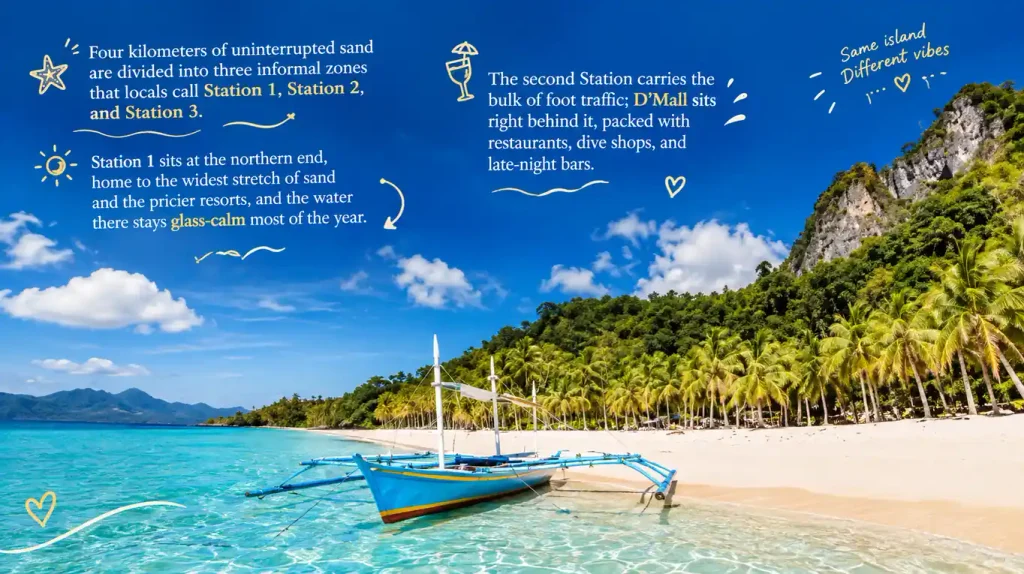
Four kilometers of uninterrupted sand are divided into three informal zones that locals call Station 1, Station 2, and Station 3. Station 1 sits at the northern end, home to the widest stretch of sand and the pricier resorts, and the water there stays glass-calm most of the year. The second Station carries the bulk of foot traffic; D’Mall sits right behind it, packed with restaurants, dive shops, and late-night bars.
Station 3 runs quieter and cheaper, closer to budget guesthouses and a shorter walk from the boat docking areas. Fine, talc-like sand covers the entire stretch, a texture locals attribute to crushed coral and shell fragments that wash ashore over time. Swimming conditions stay mild across the whole beach thanks to a barrier reef offshore, so even nervous swimmers manage fine in the shallows near any station.
Best Beaches to Visit in Boracay
Boracay carries more than one beach worth a visit, and each has a personality of its own. White Beach draws the biggest crowds for good reason, but the calmer stretches earn loyal repeat visitors too. This comparison shows which beach fits which kind of day.
| Beach | Vibe | Best For |
| White Beach | Lively, developed | Sunsets, swimming, nightlife |
| Puka Shell Beach | Rugged, quiet | Shell hunting, peaceful mornings |
| Diniwid Beach | Small, secluded | Cliffside dining, quiet swims |
| Bulabog Beach | Windy, sporty | Kitesurfing, windsurfing lessons |
| Ilig-Iligan Beach | Wild, forested | Cave exploring, birdwatching |
Free entrance applies to nearly every beach on the island, apart from a handful of resort-fronted stretches with private loungers. Getting between them costs little more than a short tricycle fare, since none of Boracay’s coastline sits more than twenty minutes from another. Morning light tends to suit the quieter beaches best, while White Beach comes alive from midafternoon onward.
Things to Do in Boracay
Boracay packs an unusual range of activities into a small footprint, well beyond lounging on the sand. Adventure options sit a short tricycle ride from the beach:
- ATV rides through inland hills and small farming villages
- Zip-lining across Bulabog Beach with ocean views mid-flight
- Cliff jumping at Ariel’s Point on the island’s south side
- Spa treatments and massages, widely available and inexpensive by international standards
- Night markets at D’Mall and Station 2, busy well past midnight
Food deserves its own mention here. Fresh seafood grilled tableside, halo-halo stalls, and Filipino classics like chicken inasal show up on nearly every corner of the island. Evenings shift toward fire dancers on the sand and beach bars stacked three deep along Station 2, a scene that runs later than most Philippine destinations allow.
Water Activities in Boracay
Clear water and a protected reef make Boracay one of the more approachable dive destinations in Southeast Asia. Beginners typically start with a shallow reef dive off Station 1 or 2, while certified divers head toward Yapak or Crocodile Island for deeper walls and better visibility. Parasailing, jet skiing, and banana boat rides operate from the main beach for travelers chasing speed rather than stillness.
Helmet diving, a Boracay specialty, lets non-swimmers walk the seafloor in a full metal helmet fed with air from the surface; no swimming skills required at all. Bulabog Beach handles the wind sports; kitesurfing and windsurfing schools line the shore there, and the windiest months line up conveniently with the dry season. Snorkeling gear rents cheaply from nearly every beachfront stall, and guided reef tours run daily from most stations.
Boracay Island Hopping
Boracay’s island hopping tours generally cover three stops in half a day: Crystal Cove for its sea caves, Crocodile Island for snorkeling and a viewpoint climb, and a swing past Puka Shell Beach. Group joiner boats fit ten to twenty passengers on a fixed schedule, priced around ₱1,700 to ₱2,500 (roughly $29 to $42) per person, and they work fine for a first visit. Private charters cost more per boat, generally ₱3,500 to ₱6,900 (about $59 to $116) for four to six passengers, but the freedom to linger at a good snorkel spot or skip a crowded one often makes the extra cost worthwhile.
Boats leave from Stations 1 through 3 most mornings between 8:00 and 9:00 AM, before the afternoon wind picks up. Snorkeling gear and life vests usually come included in the tour price, so packing light works fine for a half-day trip. Calmer seas in the morning make the crossing between islands smoother, which matters most for anyone prone to motion sickness.
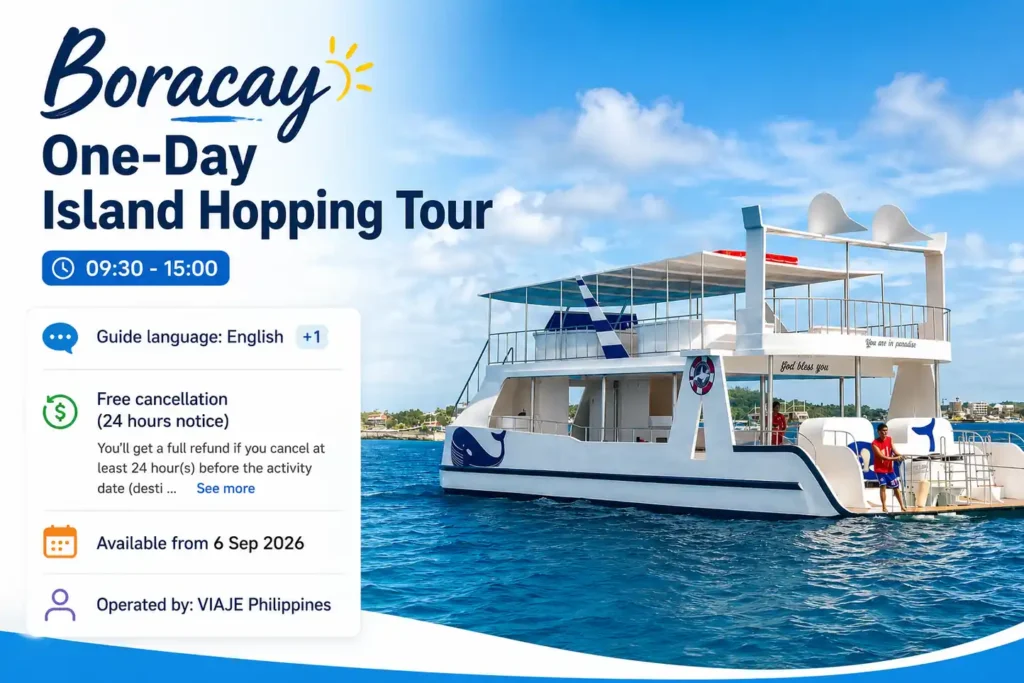
For a relaxed day out on the water, this Coral Garden island-hopping trip is worth checking out. You get to explore Boracay by boat, enjoy the marine spots, and still have your afternoon free.
How Much Does Island Hopping Cost in Boracay?
A joiner-boat island hopping tour in Boracay costs roughly ₱1,700 to ₱2,500 (about $29 to $42) per person, while a private charter for the whole boat runs ₱3,500 to ₱6,900 (about $59 to $116), typically split among four to six passengers.
Boracay Sunset and Paraw Sailing
A paraw, the double-outrigger sailboat unique to the Philippines, has carried island residents for generations and now doubles as Boracay’s signature sunset activity. Wind alone powers the boat, and passengers sit on a net strung between two bamboo outriggers while the crew angles the wooden sail toward the color show over the horizon. A thirty-minute sunset sail starts around ₱3,700 (about $62) per boat and climbs to roughly ₱7,700 for groups up to ten, priced per boat rather than per person.
Rides typically depart Station 1 between 5:00 and 5:30 PM, timed to the day’s changing light, though crews adjust the schedule slightly around the tide. Beyond the boat itself, Station 1’s northern tip and the cliffside bars near Diniwid Beach both offer unobstructed views for anyone who prefers to watch from solid ground. A cold drink and a west-facing seat are really all a good Boracay sunset requires.
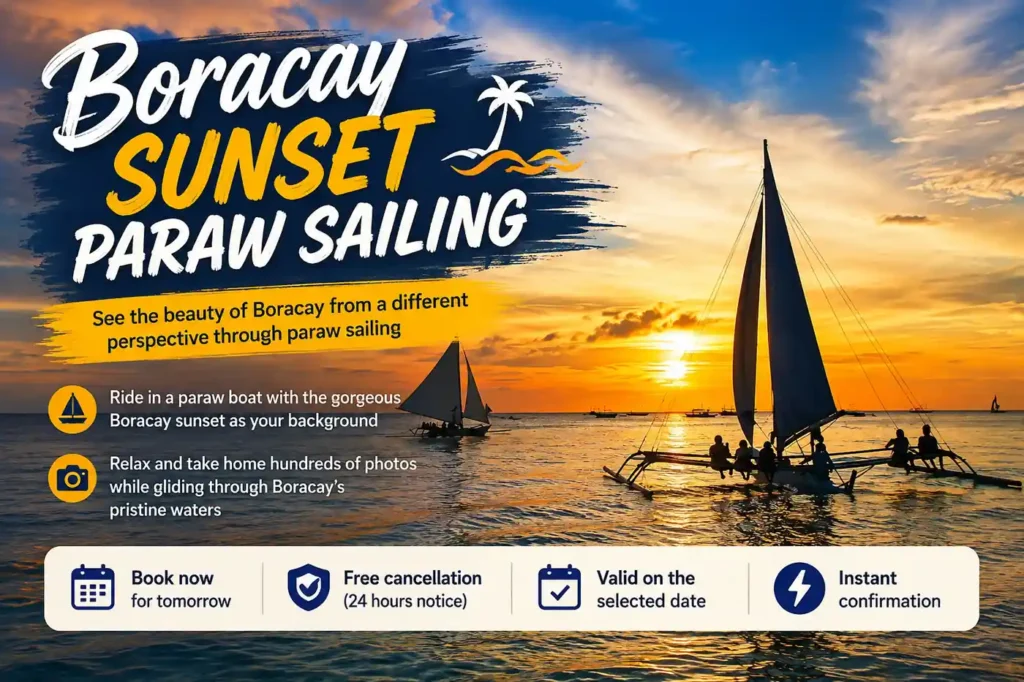
Want to do something relaxing before the night starts? A sunset Paraw ride is perfect, just sit back, enjoy the breeze, and watch Boracay light up around you.
Boracay Tourism and Local Culture
Aklanon families have called this island home for generations. Their culture still lives beyond the busy beach bars. About an hour away, Kalibo hosts the Ati-Atihan Festival every January. The celebration features tribal costumes, loud drums, and lively street dancing. You can also taste local flavors in Boracay’s smaller eateries. Try fresh grilled seafood or chicken inasal, marinated with calamansi and annatto. For dessert, cool off with a generous bowl of halo-halo.
English is widely spoken across Boracay. Still, a simple Filipino or Aklanon greeting can bring a warmer response from vendors and boat crews. Sunday mass still shapes life in some barangays. It is a reminder that Boracay is a home first and a resort second. Respecting local customs matters here. Dress modestly near barangay halls and keep noise down in residential areas near the beach.
Best Time for Boracay Tourism
Two monsoon patterns define Boracay’s calendar, and picking the right window changes the entire trip. Amihan, the cool dry-season wind, and Habagat, its wetter counterpart, split the year almost evenly between them. This table breaks down what each season actually delivers.
| Season | Months | Weather | Crowd Level |
| Dry (Amihan) | November – April | Sunny, low rainfall, cool breeze | High, esp. Dec–Feb |
| Wet (Habagat) | May – October | Frequent rain, typhoon risk Jul–Sep | Low |
| Shoulder | Mar–May, late Oct–Nov | Mixed, mostly sunny | Moderate |
December through February draws the heaviest crowds and the highest hotel rates, so travelers chasing lower prices without rough weather often land on March, April, or late November instead. June typically brings the heaviest single-month rainfall, while July through September carries the greatest typhoon risk. Shoulder months reward flexible travelers with a rare mix: manageable weather, thinner crowds, and noticeably better hotel deals.
Is Boracay Beach Free to Enter?
Boracay’s beaches carry no separate entrance fee of their own. Every visitor to the island pays a one-time ₱300 (about $5) environmental fee plus a ₱150 (about $2.50) terminal fee each way, but once on the island, walking onto White Beach or any other beach costs nothing extra.
Boracay Tourism Rules and Regulations
Boracay Island tourism runs on a stricter rulebook than most Philippine destinations, and knowing the requirements before arrival saves headaches at the port. Every visitor pays two mandatory charges before setting foot on the island: a ₱300 (about $5) environmental fee collected once, and a ₱150 (about $2.50) terminal fee charged both on arrival and departure.
The Boracay iPass portal, run by the Provincial Government of Aklan, lets travelers prepay both online, though the manual counters at Caticlan Jetty Port still process walk-up payments for anyone who skips it. Total island population, counting tourists, workers, and residents together, is capped at 19,215 persons at any given time, a limit the Boracay Inter-Agency Task Force (BIATF) enforces to protect the reef and water quality. Single-use plastics, including straws and stirrers, are banned outright, with fines starting at ₱2,500 for a first offense. Smoking and drinking alcohol are restricted to designated zones rather than allowed across the open sand, a rule left over from the 2018 rehabilitation that locals seem to genuinely support.
Frequently Asked Questions About Boracay Island Tourism
Is Boracay Island good for a first-time visit to the Philippines?
Yes. Boracay Island tourism offers an easy entry point for first-time visitors, with English widely spoken, direct flights connecting to nearby Caticlan and Kalibo airports, and enough infrastructure to handle travelers who want convenience without giving up natural scenery.
What is the entrance fee for Boracay Island?
Visitors pay a one-time ₱300 (about $5) environmental fee plus a ₱150 (about $2.50) terminal fee charged on both arrival and departure, payable online through Boracay iPass or in cash at Caticlan Jetty Port.
How many days are enough for Boracay?
Three to four days cover the main beaches, one island-hopping trip, and a sunset paraw sail without feeling rushed. Travelers focused on diving or wind sports often extend their stay to a full week.
Is Boracay safe for tourists?
Boracay ranks among the Philippines’ more tourist-friendly islands, with visible local marshals enforcing beach rules, a capped visitor population, and generally low crime rates within the main tourist zones. Standard travel precautions still apply after dark.
What is the best month to visit Boracay?
December through February typically delivers the driest weather and calmest seas, though March, April, and late November offer nearly identical conditions with smaller crowds and lower hotel rates.
Do I need a visa to visit Boracay?
Most nationalities, including the US, UK, EU, and Australia, can enter the Philippines visa-free for up to 30 days for tourism purposes. Current requirements should be confirmed against Philippine Bureau of Immigration guidelines before booking, since rules vary by nationality.
One Response