

Kumana National Park from Arugam Bay is roughly 35–40 km away, and the journey usually takes about 1.5–2 hours by road, depending on conditions and your starting point. Most visitors leave early in the morning for a jeep safari, when temperatures are cooler and wildlife is generally more active. Kumana is particularly known for its wetlands and birdlife, with more than 255 recorded bird species.
The park also supports elephants, leopards, spotted deer, crocodiles, and other wildlife, making it a worthwhile day trip from Arugam Bay. If you are planning a visit, arrange your safari and park entry in advance and allow enough time for the journey and game drive.
How to Get to Kumana National Park from Arugam Bay
Travelers heading south generally choose between a hired tuk-tuk, a private jeep safari with pickup included, or a self-driven vehicle. Roads toward Panama are mostly sealed, though the final stretch toward the park gate turns into rougher, dusty track once the safari zone begins.
Most licensed safari operators in Arugam Bay offer pickup directly from hotels within a few kilometers of town, folding the transfer into the safari price. Independent travelers with their own scooter or tuk-tuk can also reach the gate on their own, though a private vehicle cannot enter the park itself without a licensed tracker and jeep.
For a smooth trip:
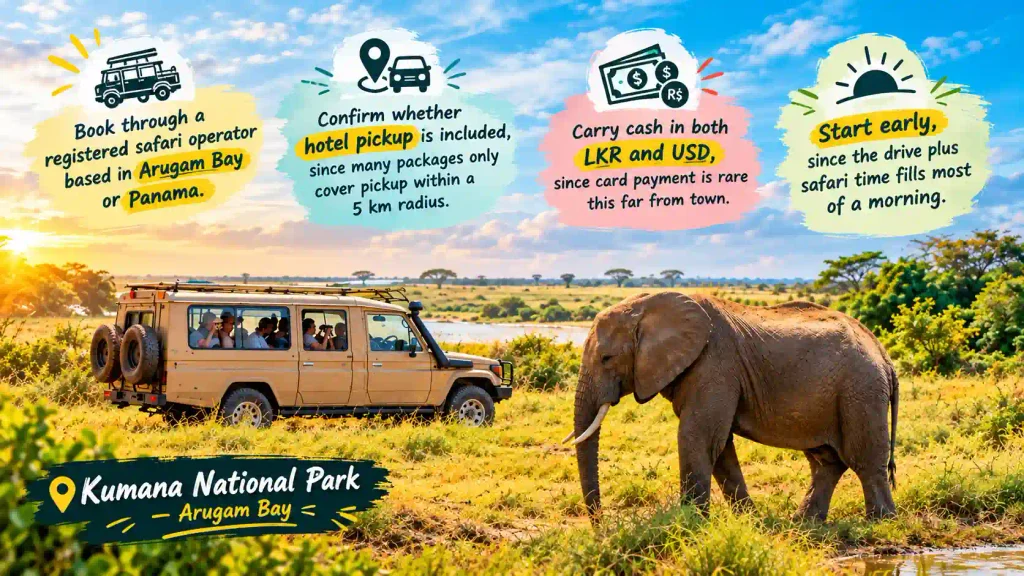
- Book through a registered safari operator based in Arugam Bay or Panama.
- Confirm whether hotel pickup is included, since many packages only cover pickup within a 5 km radius.
- Carry cash in both LKR and USD, since card payment is rare this far from town.
- Start early, since the drive plus safari time fills most of a morning.
How far is Kumana National Park from Arugam Bay?
Kumana National Park sits roughly 35 to 40 kilometers south of Arugam Bay, which usually takes about 1.5 to 2 hours by jeep depending on the road conditions and starting point in town.
Kumana National Park Safari: What a Trip Involves
A typical Kumana National Park safari from Arugam Bay runs three to six hours, split between the drive and the actual jeep game drive inside the park. Morning safaris usually depart between 5:00 AM and 6:00 AM, catching animals during their most active hours before the midday heat sets in.
Jeep safaris follow sandy tracks through grassland, forest edges, and along the lagoon shorelines where birds cluster in the thousands. Guides and trackers who work this route regularly know which waterholes attract elephants and where leopards have recently been spotted, though sightings are never guaranteed in any wild park.
Here is a quick look at how safari options typically compare for travelers coming from Arugam Bay.
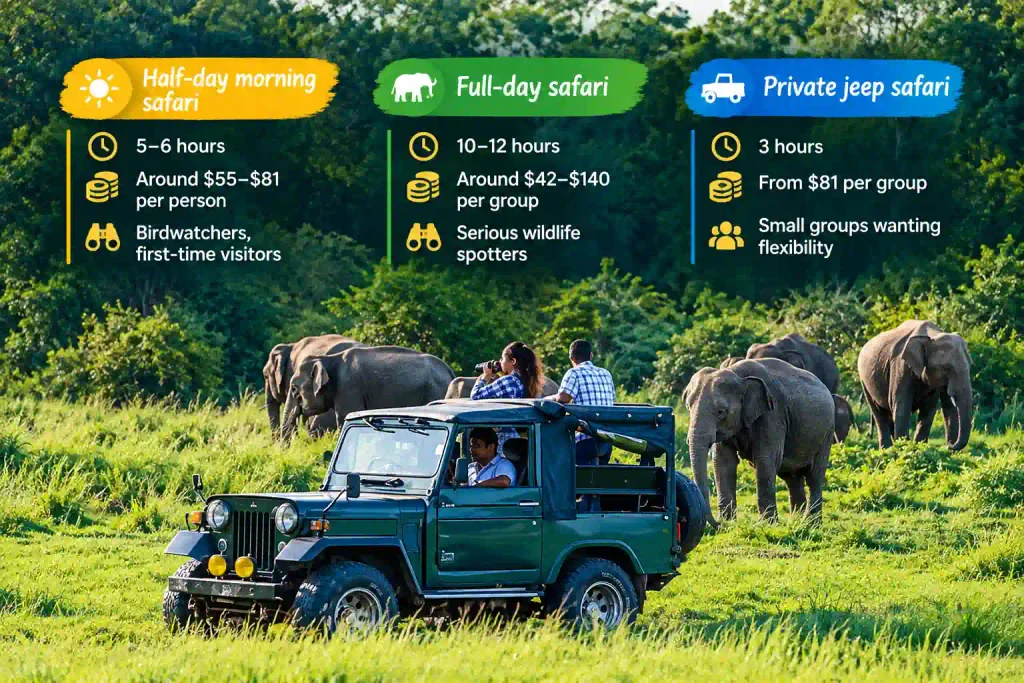
| Safari Type | Duration | Typical Starting Price | Best For |
| Half-day morning safari | 5–6 hours | Around $55–$81 per person | Birdwatchers, first-time visitors |
| Full-day safari | 10–12 hours | Around $42–$140 per group | Serious wildlife spotters |
| Private jeep safari | 3 hours | From $81 per group | Small groups wanting flexibility |
| Shared group safari | Varies | Lower per-person cost | Budget travelers, solo visitors |
Prices vary by operator and season, so confirming the latest quote directly with a licensed Arugam Bay safari provider before booking is always the safer move.
What animals can you see on a Kumana safari?
Kumana National Park is home to elephants, leopards, sloth bears, wild buffalo, golden jackals, spotted deer, mugger crocodiles, and more than 255 recorded bird species, making it one of Sri Lanka’s most complete wildlife destinations outside Yala.
Kumana National Park Opening Hours
Park opening hours are 6:00 AM to 6:00 PM every day, and the ticket office usually closes a little earlier in the afternoon. Most visitors arrive right at 6:00 AM because early morning is the best time to see birds and animals. The park can close for short periods, especially during the Okanda festival in July, so ask your jeep driver to confirm the dates before you go. Since you need about two hours to reach the gate from Arugam Bay, leave around 4:00 AM to enter the park at opening time.
Kumana National Park Entrance Fee
Kumana National Park entrance fees vary by visitor category and the current Department of Wildlife Conservation (DWC) tariff. Since fees can change, check the latest DWC ePermit information before your visit. The entrance fee is separate from the safari jeep cost in many packages. Always confirm the total price with your safari operator before booking.
Your total safari cost may include:
- Park entrance and permit fees
- Safari jeep and driver
- Guide or tracker
- Hotel pickup, if included
Tip: If booking from Arugam Bay, confirm whether the quoted safari price includes park entrance fees or charges them separately.
Best Time to Visit Kumana National Park
The dry season from late April through August lines up with the best wildlife viewing at Kumana, largely because shrinking water sources concentrate animals around the remaining lagoons and tanks. June and July tend to be the driest stretch of the year, offering the most reliable conditions for uninterrupted safari days.
This window also overlaps with the tail end of Arugam Bay’s famous surf season, making it easy to combine a morning safari with an afternoon in the water. Visiting in April or early May often means smaller crowds and slightly lower accommodation rates before the peak season fills up.
Plan around this seasonal snapshot before booking a Kumana trip.
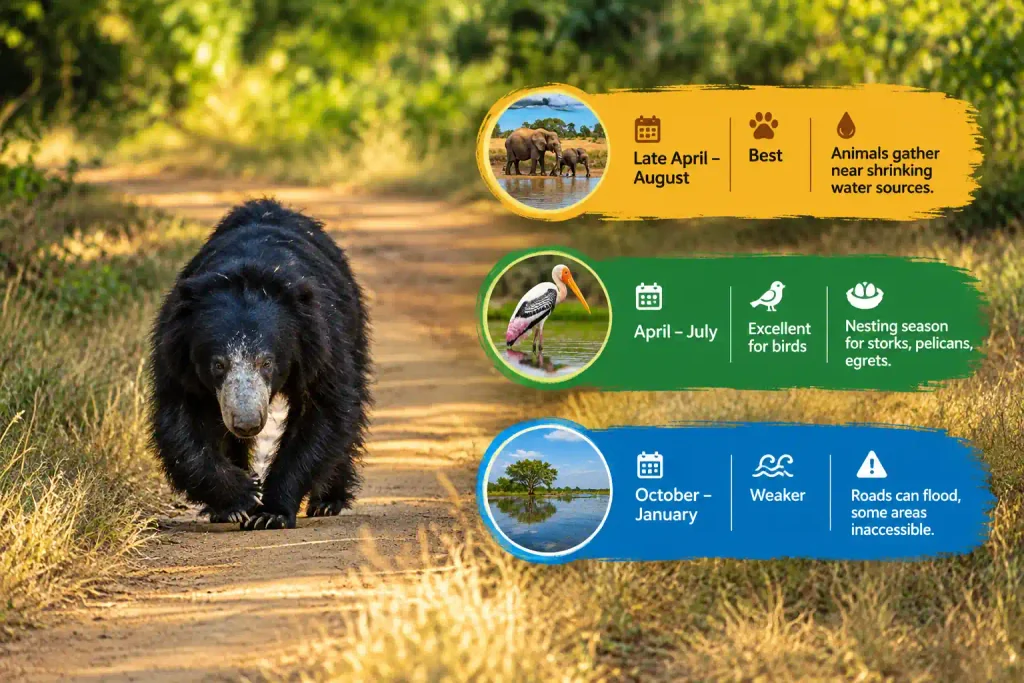
| Season | Months | Wildlife Viewing | Notes |
| Dry season | Late April–August | Best | Animals gather near shrinking water sources |
| Peak birdlife | April–July | Excellent for birds | Nesting season for storks, pelicans, egrets |
| Wet season | October–January | Weaker | Roads can flood, some areas inaccessible |
| Shoulder months | September, February–March | Moderate | Mixed conditions, fewer crowds |
Visiting outside the dry season is not impossible, but heavy rain can flood certain safari tracks and reduce the number of open routes inside the park.
Kumana National Park Wildlife Beyond the Big Names
Kumana’s reputation rests heavily on birds, and for good reason. The park’s centerpiece, Kumana Villu, is a roughly 200-hectare natural swamp lake that draws tens of thousands of migratory waterbirds every breeding season, pulling in species that travel from as far as Siberia.
Painted storks, pelicans, spoonbills, herons, egrets, and white ibis arrive in large nesting colonies, making the lagoon one of the most important avian breeding grounds in South Asia. Beyond the birds, the dry thorn forest and grassland support a full range of mammals that share territory with neighboring Yala.
- Sri Lankan elephants roaming near lagoons and open grassland
- Leopards moving through the forest edges, particularly around dawn and dusk
- Sloth bears foraging in denser brush areas
- Wild water buffalo grazing near marshy zones
- Mugger crocodiles resting along lagoon banks
- Golden jackals and spotted deer across open terrain
The coastal dunes bordering the park also serve as nesting grounds for sea turtles, including Olive Ridley turtles, a species monitored by the Turtle Conservation Project along Sri Lanka’s southeastern coast, adding another layer to the park’s ecological importance beyond birds and land mammals.
Is Kumana good for spotting leopards?
Kumana holds a healthy leopard population thanks to its connection with Yala, though sightings remain less frequent than in Yala’s more crowded blocks simply because the terrain is denser and safari traffic is lower.
Combining Kumana with the Rest of Arugam Bay
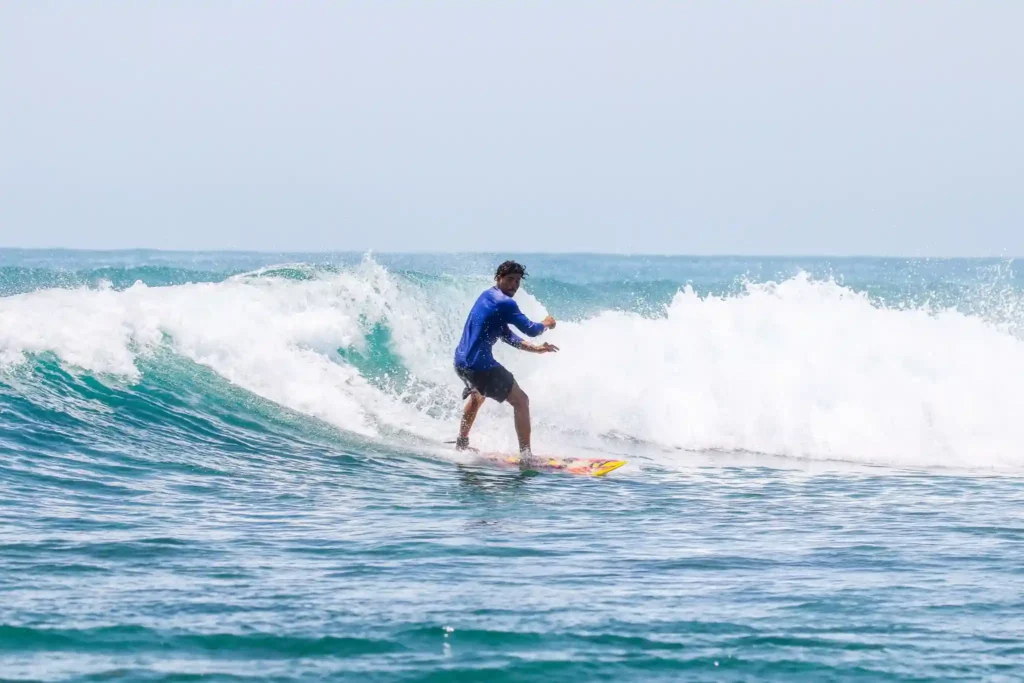
A safari day does not need to replace surf time entirely. Morning departures typically return by early afternoon, leaving time for a late surf session or a relaxed walk along the beach before sunset.
Nearby stops worth adding to the day include the ancient Kudumbigala Monastery, dating back to around 246 BC and set on a rocky outcrop with sweeping views over the surrounding jungle, and Okanda Devalaya, a coastal temple that also serves as a gathering point for the traditional Pada Yatra pilgrimage route.
For travelers building a short itinerary:
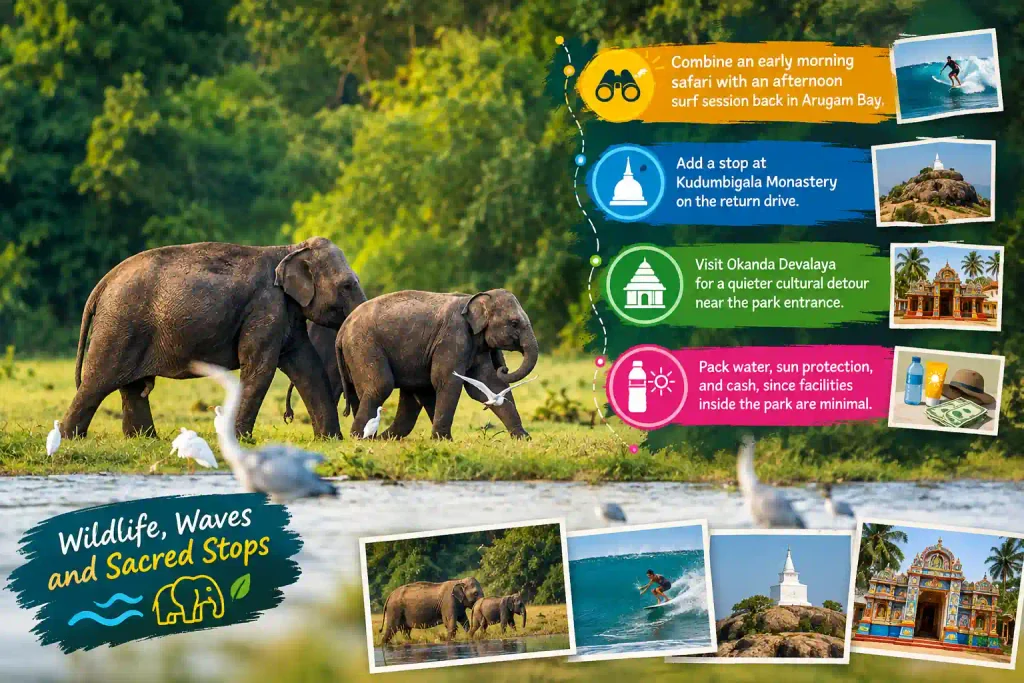
- Combine an early morning safari with an afternoon surf session back in Arugam Bay.
- Add a stop at Kudumbigala Monastery on the return drive.
- Visit Okanda Devalaya for a quieter cultural detour near the park entrance.
- Pack water, sun protection, and cash, since facilities inside the park are minimal.
Final Thoughts on Visiting Kumana
You can also stop at Kudumbigala Monastery or Okanda Devalaya to make it a full day. Fees and opening hours can change, so check current details before you leave. Birdlife is the main highlight, but you may also spot elephants, leopards, and sloth bears along the way. Book a licensed jeep driver early and start before sunrise, and you will have a safari day you won’t forget.
Frequently Asked Questions
How far is Kumana National Park from Arugam Bay?
The park sits roughly 35 to 40 kilometers south of Arugam Bay, translating to about 1.5 to 2 hours of driving depending on road conditions and the exact pickup point in town.
What is the entrance fee for Kumana National Park?
Entrance fees vary by visitor category and change periodically through official gazette updates. Foreign adult visitors have typically paid in the range of $10 to $25, though confirming current rates with the Department of Wildlife Conservation before visiting is strongly recommended.
What is the best time to visit Kumana National Park?
The dry season from late April through August offers the best wildlife viewing, with June and July standing out as the driest months. This period also overlaps with peak bird nesting season at Kumana Villu.
Can leopards be seen at Kumana National Park?
Leopards live within Kumana thanks to its shared border with Yala, though sightings are less frequent than in Yala’s busier blocks due to denser terrain and lower visibility.
How long does a Kumana safari from Arugam Bay take?
Most safaris run between three and six hours for a half-day trip, or up to ten to twelve hours including transfer time for a full-day option covering more of the park.




One Response